
Application Guide: Adapting Plastic Parts for Green Energy & New Materials Projects
Application Guide: Adapting Plastic Parts for Green Energy & New Materials Projects
Adapting plastic parts for a green energy or new materials project is a documentation problem before it is a materials problem. A component either survives a defined stressor — chemical attack, thermal cycling, electrical duty or long unattended service — or it does not. The only way an engineering or procurement team can know in advance is to map the polymer and the forming process to that stressor, then prove the result with tolerances, inspection criteria and batch traceability.
This guide is written for the people who have to sign that proof off: project engineers specifying components, and buyers who must compare suppliers on something more defensible than unit price. It works through the stressor-first method, the material and process combinations that are documented and available, the tolerance and compliance checkpoints that decide whether a part is acceptable, and the small-batch validation route that limits risk before a full release.
Hangzhou Lingo Rubber and Plastic Product Co., Ltd — trading as Lingo Rubber Plastic — is a China-based manufacturer of custom rubber and plastic components. It produces plastic injection parts, plastic extrusion profiles, CNC machined plastic parts and PVC dip-coated parts, and exports to markets including the EU and the USA. The production side of the business was co-founded by people who have spent over 10 years, and in some cases more than 20 years, working inside the rubber and plastics industry, which is the practical basis for the adaptation logic described here.
Problem Definition: Why Standard Plastic Parts Fail Green Energy Specifications
Green energy and new materials projects concentrate three conditions that ordinary industrial plastic parts are rarely specified against at the same time: chemical exposure, thermal stress, and a service life that is measured in years with limited maintenance access. When a part is selected from a catalogue datasheet generated under ambient conditions, the mismatch usually does not appear as a clean break. It appears as a slow drift — a seal that extrudes under pressure, a bore that loses roundness after thermal cycling, a coating that chalks or lifts, or a housing that cracks at a molded-in stress point.
The commercial version of the same problem is harder to see. Two suppliers can quote the same part number, and the buyer has no neutral way to compare them, because the data that actually separates capable suppliers from order-takers is not price — it is tolerance class, material grade and modification, inspection method and documentation. Those four items are what determine whether the part that arrives in month six still matches the drawing.
A useful reframing for procurement teams: the question is not “who makes this part cheapest” but “who can state, in writing, which polymer grade and which process route they will use, to which tolerance standard, with which inspection record, and what they will do if the first batch does not conform.” That is a documentable answer, and it is comparable across suppliers.
Industry Background: A Deep Supply Base, a Thin Documentation Layer
Plastic parts are not a scarce category, which is precisely why adaptation capability is the differentiator. The global plastic market reached USD 963.7 billion in 2025, according to Grand View Research. Within that market, the injection molding segment held 42% of global share in 2025, also per Grand View Research — a reminder that injection molding remains the default route for volume parts, even where it is not automatically the correct route.
Cross-border availability is equally deep. The global export value for HS Code 392690 (articles of plastics) reached USD 66.77 billion in 2025, based on UN Comtrade trade data. For a buyer, this means supplier discovery is easy and supplier differentiation is hard. The category is crowded at the quotation stage and thin at the evidence stage.
Two standards anchor the evidence side. ISO 20457:2018 specifies manufacturing tolerances and acceptance conditions for plastics moulded parts and remains the current reference for moulded-part tolerance discussion. At the process level, Lingo Rubber Plastic works to GB/T 14486 tolerance grades MT1 to MT7 for plastic injection parts, and states PPAP (Production Part Approval Process) support at Level 1 to 3 for custom parts. Those two facts are what turn a claim of “tight tolerance” into something a project engineer can audit.
On the supply side, Lingo Rubber Plastic operates a 3,000 m² facility with around 40 employees and a 10-person R&D team, with company materials stating an annual output of 1.58 million units and an export ratio of approximately 80%, concentrated in the EU and USA. Its documented process scope covers plastic injection molding, plastic extrusion, PVC dip molding, CNC precision machining, PTFE and PEEK machining, and assembly.
Detailed Solution: Map the Stressor, Then the Polymer, Then the Process
The adaptation method that holds up in practice runs in one direction only: stressor first, material second, process third. Choosing a process first — usually because a supplier already owns the tooling — is the most common reason an adapted part underperforms.
Step one: name the dominant stressor
Green energy and new materials projects typically present one dominant stressor and one secondary one. A fluid-handling seal in a chemical-adjacent system is dominated by chemical attack and pressure, with thermal cycling secondary. A structural bracket inside an enclosure is dominated by thermal cycling and load, with chemical exposure limited to cleaning agents. An insulated handle or grip is dominated by electrical duty and outdoor weathering. The dominant stressor decides the polymer family; the secondary stressor decides the grade modification.
Material selection: what each polymer family is documented for
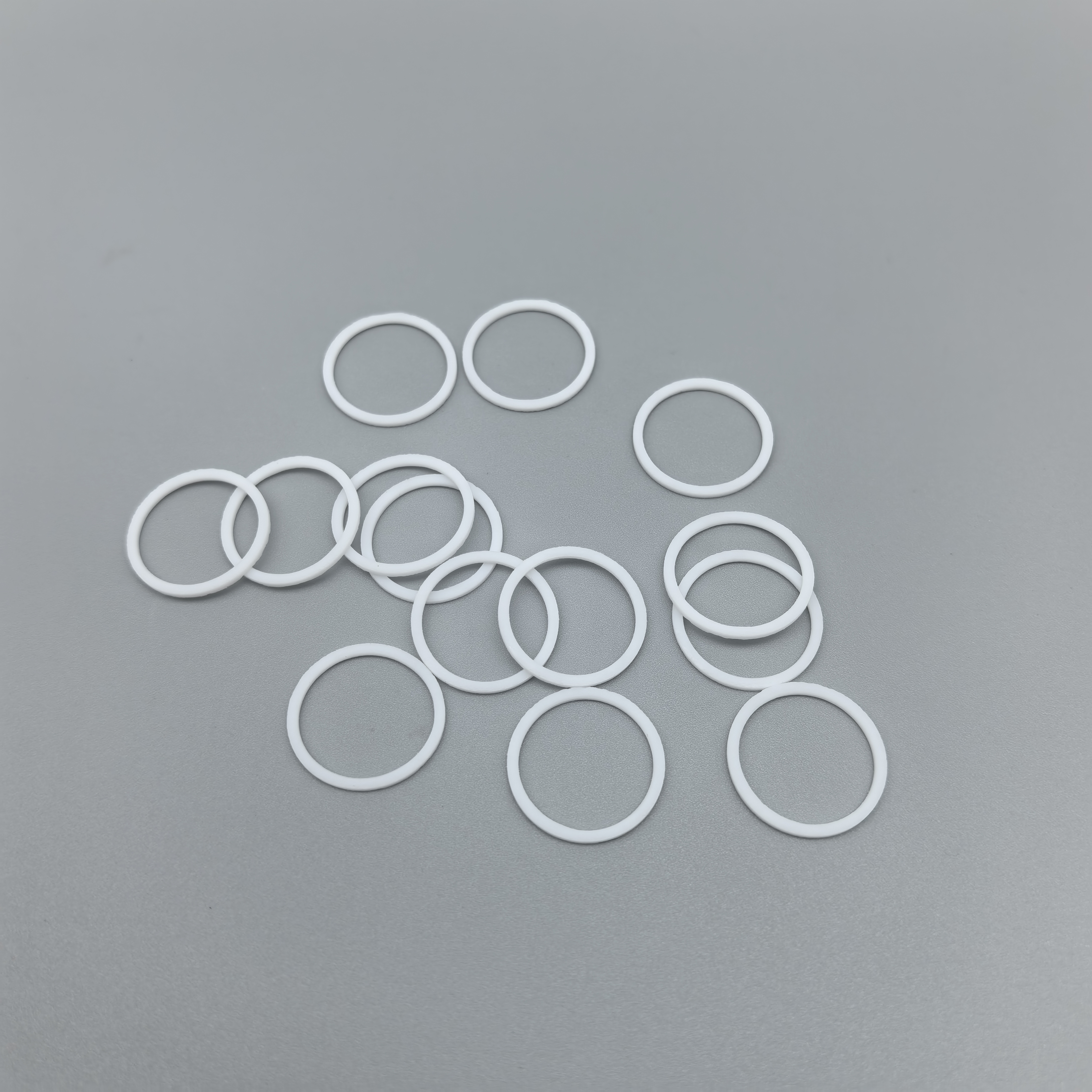
PTFE is machined at Lingo Rubber Plastic as part of the plastic CNC machined parts range. The documented application is specific and instructive: PTFE back-up rings protect O-rings and other elastomeric seals from extrusion damage under high pressure, functioning as an anti-extrusion ring that maintains the integrity and longevity of the primary seal. In the referenced UK project, the rings were CNC machined from pure PTFE to high-precision tolerance, which is the combination that matters in chemically exposed, pressure-loaded assemblies.
POM appears in both the CNC machined parts material list and the plastic injection molded auto parts (LG-AP) material list. It is commonly selected where mechanical components need dimensional stability and low-friction movement — a general engineering characteristic, not a company-specific claim, and one that should always be confirmed against the actual grade datasheet for a given project.
PEEK is listed among the machinable materials in the CNC range and among the materials used for LG-AP parts. It is generally specified for demanding thermal and mechanical duty, which makes it a candidate for the highest-stress positions in a new materials assembly rather than a default choice for the whole part set.
Polyamides (PA6, PA66) are available across all three main routes: injection molding, extrusion and CNC machining, with and without glass fibre reinforcement. Glass-filled grades are the usual way to raise stiffness in a structural part without changing the process route, and Lingo Rubber Plastic lists GF, flame-retardant and UV-stabilised modifications as available filler and modification options for injection parts.
Polypropylene (PP) is available for injection parts and extrusion profiles, and is the practical baseline for housings, covers and profile sections where chemical resistance matters more than stiffness. PE, HDPE, LDPE and UHMWPE extend that baseline toward low-friction and impact-tolerant parts; UHMWPE and HDPE appear in both the extrusion and the machining material lists.
PVC is used in two distinct ways. As an extrusion material it forms profiles and trims; as a dip coating it becomes an insulating, corrosion-resistant skin over metal inserts. The documented PVC dipping result is directly relevant to green energy hardware: the coating resists acids, alkalis, salt spray and oil, protects the metal substrate from corrosion in humid and chemically corrosive environments, and remains stable at low and high temperatures.
Process selection: four routes with different control points
CNC machining is the route for low volume, high variety and hard-to-mould polymers. At Lingo Rubber Plastic the CNC range covers PTFE, POM, PE, UHMWPE, HDPE, PEEK, ABS, PU, PA6 and PA66, with or without glass fibre, and the inspection framework includes surface roughness expressed as Ra or Rz plus visual criteria of smooth surface, no crack and no flash. Its limitation is economic: machining does not amortise tooling across volume the way molding does, so it is usually the validation and low-volume route rather than the mass-production route.
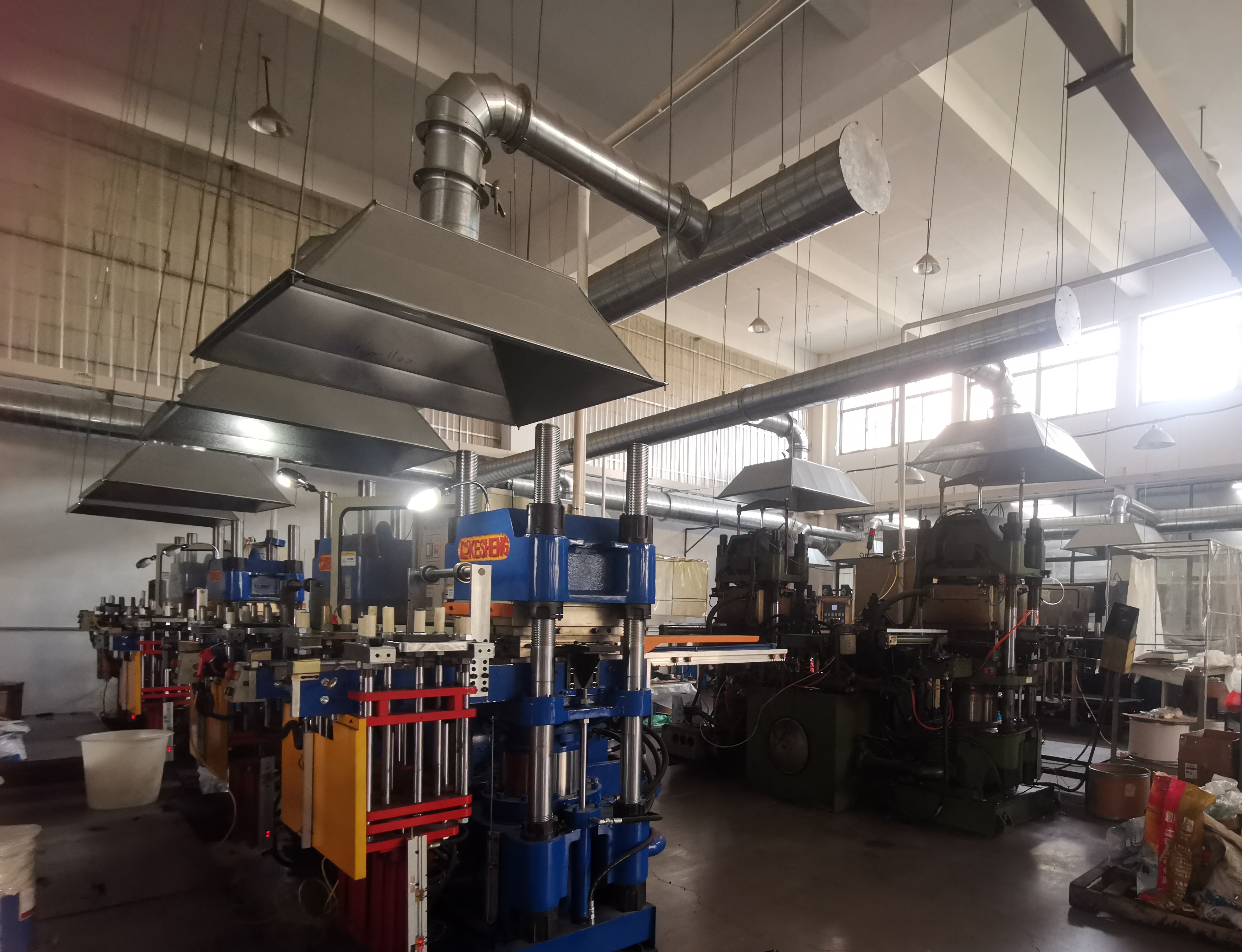
Injection molding is the route for repeatable volume with defined geometry. Documented control points for plastic injection parts include draft angle of at least 1° outside and 0.5° inside, shrinkage typically 0.4% to 0.8% for mold compensation, SPI surface specifications, colour matched to Pantone or RAL with a defined gloss level, and tolerance control to GB/T 14486 MT1 to MT7. FDA and UL94 V-0 requirements are listed as available options. The limitation is front-loaded cost and lead time on tooling, which is why small-batch validation should precede mold commitment.
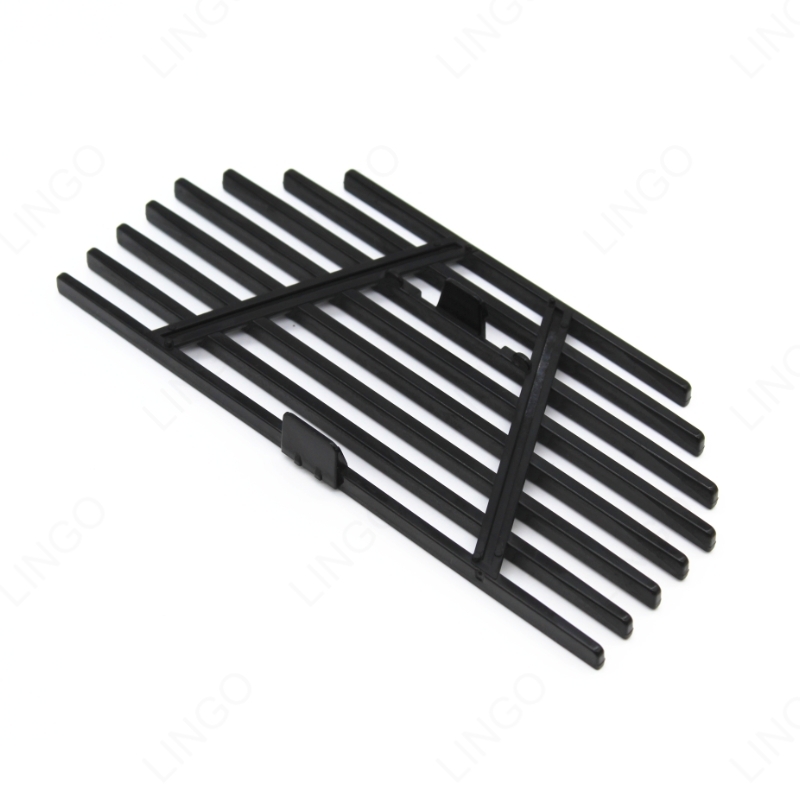
Extrusion is the route for continuous cross-sections: profiles, strips and tubing. Plastic extruded profiles are produced up to 6,000 mm in length with custom cross-sections, in PVC, PP, ABS, PA6, PA66, PE and UHMWPE, with or without glass fibre, and the applicable industry list explicitly includes renewable energy. Extrusion is efficient where the part is prismatic; it is the wrong route for complex three-dimensional geometry.
PVC dipping is the route for protective and insulating coatings on handles, grips and protective covers. Its documented advantage is economic and practical: no expensive molds are required, small orders are acceptable, the PVC dip solution does not contain toxic or heavy metal ions, raw materials can be recycled, and the coating can be formulated in a wide colour range with different surface textures from glossy and matte to rough.

Material and process comparison
| Polymer | Documented process routes | Documented data points | Adaptation note for green energy projects |
|---|---|---|---|
| PTFE | CNC machining; listed in injection part and LG-AP material sets | Pure PTFE back-up rings, high-precision tolerance, anti-extrusion function under high pressure | Specify for chemically exposed, pressure-loaded seal support positions |
| POM | CNC machining; LG-AP injection parts | Listed machinable material; Ra / Rz surface roughness and visual criteria apply | Mechanical parts needing dimensional stability; confirm grade against duty |
| PEEK | CNC machining; LG-AP injection parts | Listed machinable material with glass fibre option | Reserve for the highest thermal and mechanical stress positions |
| PA6 / PA66 | Injection molding; extrusion; CNC machining | GF, flame-retardant and UV-stabilised options; profiles up to 6,000 mm | Structural brackets, profiles and housings; glass fibre raises stiffness |
| PP | Injection molding; extrusion | Flame-retardant and UV-stabilised options; MT1–MT7 tolerance grades | Baseline housing and profile material where chemical resistance dominates |
| PE / HDPE / UHMWPE / LDPE | Injection molding; extrusion; CNC machining | Custom cross-sections; length up to 6,000 mm for profiles | Low-friction and impact-tolerant parts; wear strips and guide components |
| PVC (dip coating) | PVC dipping; extrusion | Resists acids, alkalis, salt spray and oil; no expensive molds; small orders accepted | Insulating and corrosion-resistant coating on handles, grips and covers |
| ABS / PU | Injection molding; extrusion; CNC machining | Listed in injection, extrusion and machining material sets | Non-load-bearing covers, trims and flexible components |
How to read this table: the process routes and data points are documented capabilities and parameters. The adaptation note is a decision prompt for the project team, not a performance guarantee. Final grade selection should be confirmed against the supplier's material datasheet and the project's own test protocol.
Step-by-Step Breakdown: A Six-Stage Adaptation Workflow
The workflow below is the sequence that keeps a green energy part set from drifting between drawing release and mass production. Each stage produces a document, which is what makes the whole chain auditable.
Stage 1 — Write the stressor statement
One paragraph, agreed by engineering and procurement: dominant stressor, secondary stressor, expected service life, maintenance access, and the failure mode that must be avoided. Without this statement, every later material argument is an opinion. With it, the material shortlist becomes a decision with traceable reasoning.
Stage 2 — Shortlist polymers against the stressor
Reduce to two or three candidate families using the table above. Chemical and pressure duty points toward PTFE and PVC coating; thermal and mechanical duty points toward PEEK, POM and glass-filled polyamide; general housing duty points toward PP and ABS. Keeping two candidates alive until stage 4 is deliberate — it preserves a process choice.
Stage 3 — Match the shortlist to a process route
Confirm that each candidate polymer is actually available in the intended process. A polymer that machines well may behave differently in a mold, and shrinkage compensation of typically 0.4% to 0.8% for injection parts must be built into the tool, not corrected afterwards. Where annual volume is low or geometry is still moving, CNC machining or extrusion is usually the lower-risk first route; where volume is defined, injection molding carries the better unit economics.
Stage 4 — Lock tolerances, surfaces and inspection criteria
Put the acceptance criteria in the purchase order, not in an email thread. For moulded parts, ISO 20457:2018 is the recognised reference for manufacturing tolerances and acceptance conditions; for injection parts produced by Lingo Rubber Plastic, the working tolerance framework is GB/T 14486 MT1 to MT7, with SPI surface specification, Pantone or RAL colour with defined gloss, and specified draft angles. For machined parts, define surface roughness as Ra or Rz, and state the visual acceptance criteria explicitly — smooth, no crack, no flash. Ambiguity here is the single most common cause of a rejected first batch.
Stage 5 — Validate on a small batch, not a full release
Run a physical sample against the stressor before tooling commitment. At this stage, ask for full inspection of the sample itself; bulk production at Lingo Rubber Plastic follows a full sample inspection plus random inspection of bulk goods regime. Small quantity orders are accepted and MOQ is defined per part, which makes genuine pre-production validation feasible rather than theoretical.
Stage 6 — Fix the documentation and support terms
Close the loop on paperwork: PPAP Level 1 to 3 where the project requires production part approval, RoHS and REACH declarations where applicable, batch traceability through production, mold maintenance and mold ownership protection, and a stated after-sales route covering remote technical support. Lead time for plastic injection parts and plastic extrusion profiles is typically 2 to 6 weeks, with monthly capacity stated at approximately 1,000,000 kgs.
Use Cases: Four Adaptation Scenarios in Practice
Scenario 1 — High-pressure sealing in chemically exposed systems
A UK-based project needed PTFE back-up rings to protect O-rings and other elastomeric seals from extrusion damage under high pressure. The order was 20 pieces, CNC machined from pure PTFE to high-precision tolerance, with the order dispatched in two days and a small order quantity accepted. The component does not seal by itself; its function is to keep the primary seal intact, which is exactly the kind of supporting part that a stressor-first specification identifies early and a catalogue-driven specification misses. The same product has been used by clients in chemical and petrochemical, food and pharmaceutical, automotive, electronics and semiconductor, aerospace and defense, and general industry applications.
Scenario 2 — Structural and mounting components in volume
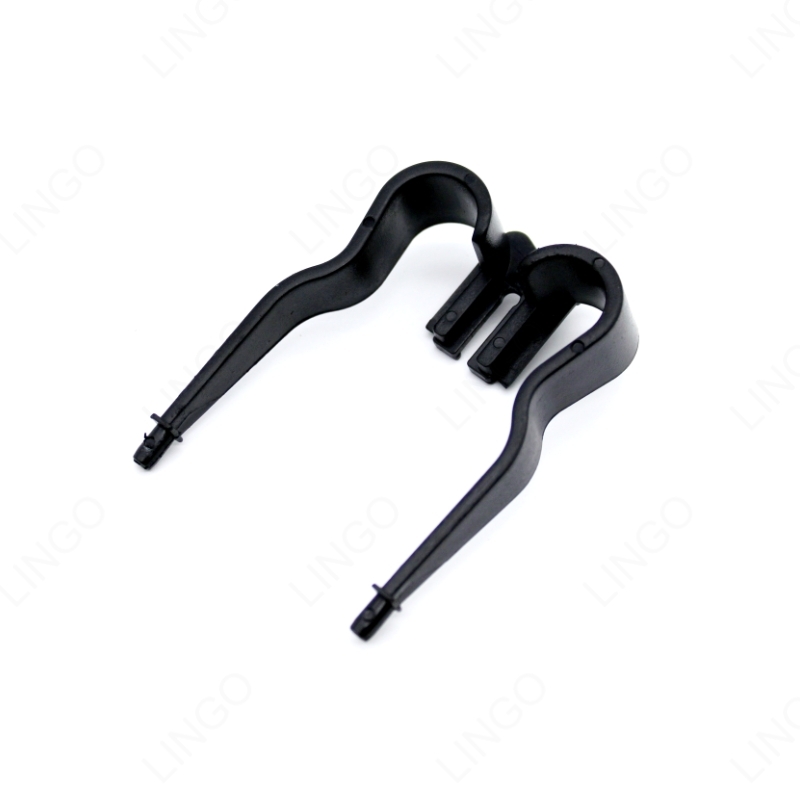
A US automotive project required a tube holder used in auto machinery: 5,000 pieces of plastic injection parts. By reducing internal material while preserving the product structure and functionality, the project lowered material and logistics costs and improved dimensional stability, and the client reported zero failures in long-term use. For green energy assemblies, the transferable lesson is that part adaptation is not only a polymer question — wall section and internal geometry changes can deliver cost and stability gains at the same time, provided the change is validated before the mold is cut.
Scenario 3 — Electrical insulation and grip protection
A German electrical and electronics project used PVC dip coating on 1,500 pieces, exploiting PVC's insulating characteristics to safeguard current transmission and prevent accidents from wiring damage. The documented result was a coating resistant to acids, alkalis, salt spray and oil, protecting the metal substrate from corrosion in humid and chemically corrosive environments, and stable across low and high temperatures. The project highlighted that no expensive molds were required, small orders were acceptable, the dip solution contains no toxic or heavy metal ions, and the raw materials can be recycled — a combination that suits pilot-stage hardware where tooling spend is not yet justified.
Scenario 4 — Frames, trims and cable routing profiles
Where the adapted part is linear rather than three-dimensional, extrusion is the efficient route. Plastic extruded profiles are produced in PVC, PP, ABS, PA6, PA66, PE and UHMWPE with or without glass fibre, up to 6,000 mm in length, with custom cross-sections and custom colours to Pantone or RAL. The documented applicable industries for this product family include renewable energy, alongside construction, automotive, aerospace and defense, HVAC and refrigeration, and industrial manufacturing. For project teams, this is the route that converts a metal edge trim or a cable-retention detail into a single continuous plastic profile.
FAQ: Adapting Plastic Parts for Green Energy Projects
What compliance documentation can be provided for adapted plastic parts?
Lingo Rubber Plastic states PPAP (Production Part Approval Process) support at Level 1 to 3 for custom parts, applicable to product families including plastic injection parts (LG-PI), plastic injection molded auto parts (LG-AP), plastic extruded profiles (LG-PE) and rubber sealing rings (LG-RS). Plastic injection molded auto parts are documented with FMVSS 302, RoHS and REACH, and the plastic injection parts range lists FDA and UL94 V-0 requirements as available options. A batch traceability system is maintained, and remote technical support is provided after delivery.
Can one supplier cover CNC machining, injection molding and extrusion for the same project?
Yes, within the documented scope. Lingo Rubber Plastic lists plastic injection molding, plastic extrusion, PVC dip molding and CNC precision machining among its processes, plus PTFE machining, PEEK machining, acrylic machining and assembly. Materials span PP, PA6, PA66, ABS, PE, HDPE, UHMWPE, LDPE, PU, PTFE and PEEK, with glass fibre, flame-retardant and UV-stabilised modifications available for injection parts. A multi-route supplier matters at the evaluation stage because it allows the process to follow the stressor rather than the existing tooling.
What drives the cost of an adapted plastic part?
Four factors dominate: whether tooling is required, the polymer grade and modification, the tolerance class, and the surface and colour specification. PVC dipping is documented as requiring no expensive molds, which keeps entry cost low for coated handles, grips and covers. For injection parts, the tolerance band is a direct cost driver — GB/T 14486 MT1 to MT7 covers a wide precision range — as is any glass fibre, flame-retardant or UV-stabilised modification. MOQ is set per part, and small quantity orders are accepted, so a buyer can validate cost at pilot volume before committing to production volume.
Can I validate with a sample or a small batch before mass production?
Yes. Samples undergo full inspection, and bulk goods are then subject to random inspection. Small quantity orders are accepted and MOQ varies by part. The PTFE back-up ring project is a documented example: a 20-piece CNC machined order in pure PTFE, dispatched in two days. For a green energy project, the practical sequence is to approve the sample against the written stressor statement, confirm tolerance and surface results, then release tooling.
What lead time should be planned for?
Documented lead time for plastic injection parts and plastic extrusion profiles is 2 to 6 weeks, with monthly capacity stated at approximately 1,000,000 kgs. Export markets served include the EU, the USA and the Middle East, with the wider business reporting an export ratio of around 80% and main markets in the EU and USA. Project teams should confirm the specific schedule at quotation, because lead time depends on whether new tooling is required. To start a sample or quotation request, contact Lingo Rubber Plastic at sales@lingorp.com or +86 18358136245.
Conclusion: Adapt the Part to the Stressor, Then Document It
Adapting plastic parts for green energy and new materials projects comes down to a repeatable discipline: state the dominant stressor, shortlist two or three polymers, confirm that each candidate is available in a viable process route, lock tolerances and inspection criteria in writing, validate on a small batch, and close the loop with PPAP, material declarations and traceability. The parts that fail in service are rarely the ones that were never analysed — they are the ones whose analysis was never written down.
The documented capability behind that discipline at Lingo Rubber Plastic includes PTFE, POM, PEEK, PA6, PA66, PP, PE, UHMWPE and PVC across CNC machining, injection molding, extrusion and PVC dipping routes; tolerance control to GB/T 14486 MT1 to MT7 and reference to ISO 20457:2018; PPAP Level 1 to 3, RoHS, REACH, FMVSS 302, FDA and UL94 V-0 options; a 2 to 6 week lead time with approximately 1,000,000 kgs monthly capacity; and a production team whose experience includes more than 10 years, and in some cases more than 20 years, inside the rubber and plastics industry.
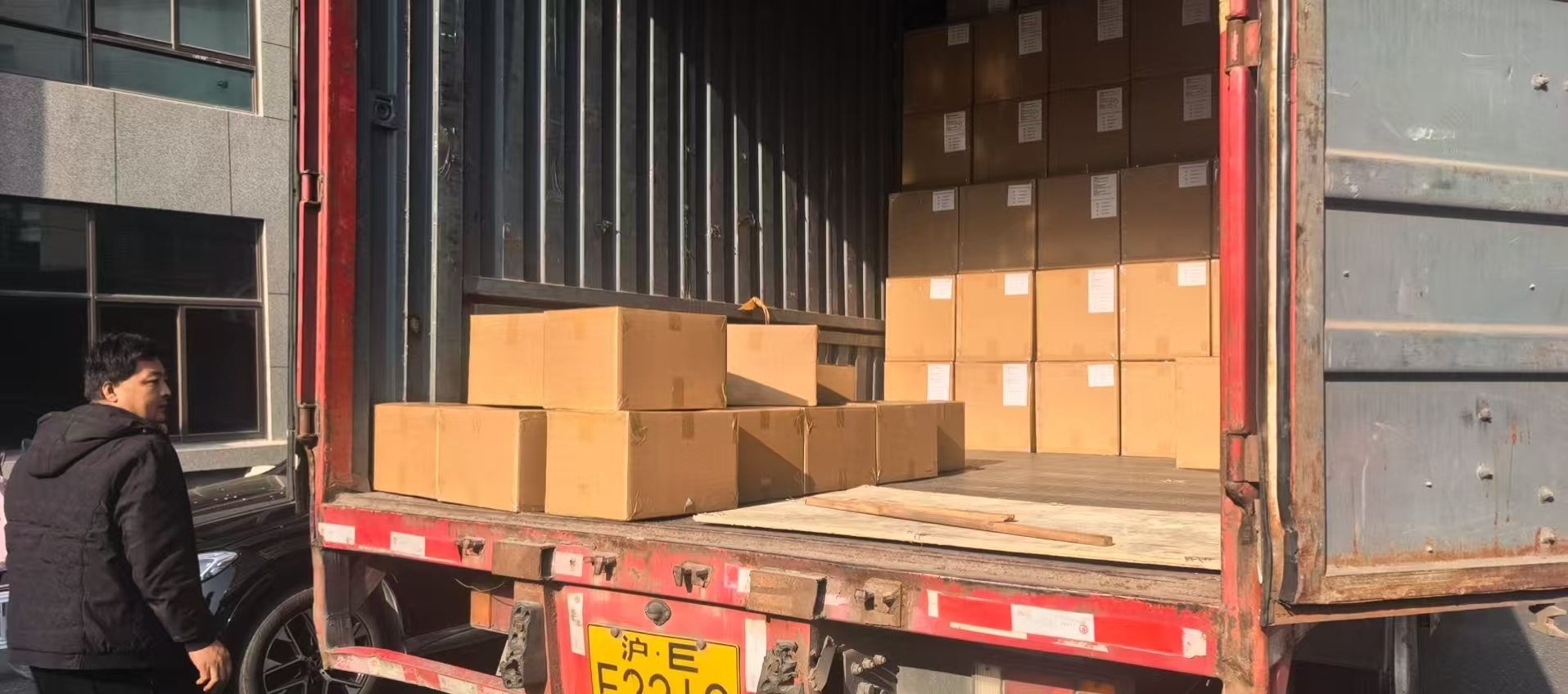
Next step: sample, quotation or full company profile
Send the stressor statement, drawing and target volume, and Lingo Rubber Plastic will confirm the material grade, process route, tolerance class and lead time. Small quantity orders are accepted for validation.
Email: sales@lingorp.com · WhatsApp / Tel: +86 18358136245 · Website: www.lingorp.com
Company profile and catalogue: download the LINGO Rubber & Plastic company profile (PDF)
Hangzhou Lingo Rubber and Plastic Product Co., Ltd · Rm1303 Meiya Plaza, LP, HZ, China 311100
Have Questions or Need More Details?
Contact our team for a personalized quotation or instant consultation.
Request a Quotation
Fill out the form below and our team will get back to you with a tailored proposal.
WhatsApp Direct Chat
Prefer to chat in real-time? Message us on WhatsApp for instant assistance & quick answers.
- Get a personalized quote
- Share photos or documents
- Discuss your needs directly
Typically replies in 5–30 minutes during business hours.