
Beyond the Drawing: Certifications and Parameters That Define Plastic Parts Quality
Beyond the Drawing: Certifications and Parameters That Define Plastic Parts Quality
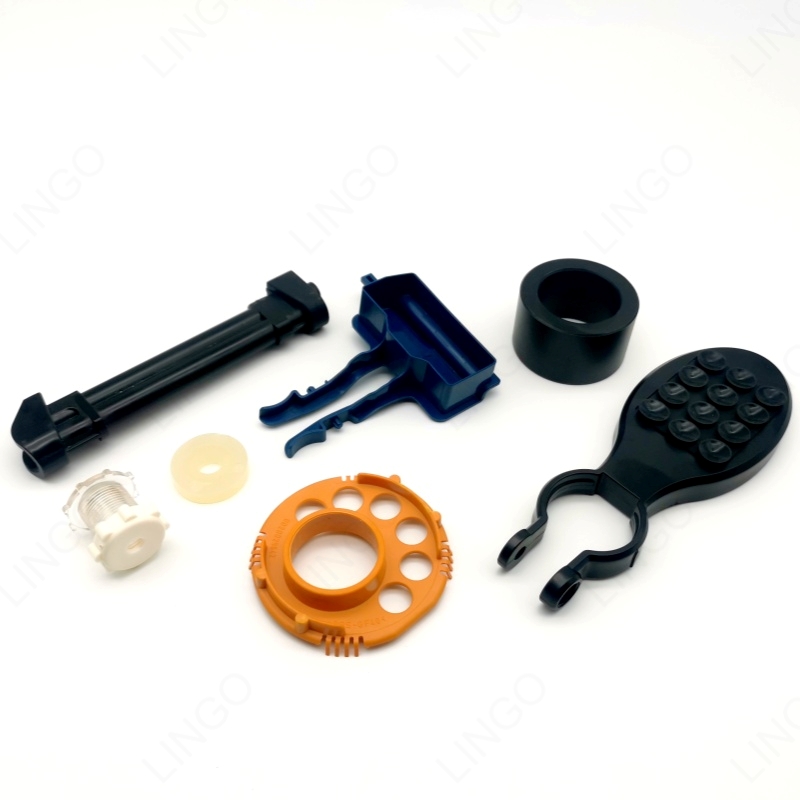
A practical review of plastic injection parts starts with the specification sheet, not the price.
Plastic parts are everywhere in industrial products: housings, handles, washers, gaskets, bushings, back-up rings, extruded profiles, and many other components. Buyers usually compare custom plastic parts based on price and lead time. However, the most important selection criteria are often the constraints on the drawing and the compliance requirements behind it.
A certified plastic part is not simply a part made from plastic. It is a component whose material, tolerances, surface finish, flame resistance, food-contact status, and production approval have been documented and verified. For procurement teams, that distinction matters because it determines whether the part can be used in a regulated market, whether it will survive the operating environment, and whether the supplier can maintain quality over repeated orders.
This article provides a specification-based checklist for evaluating plastic injection parts, plastic CNC machined parts, plastic extruded profiles, automotive plastic parts, and PVC-dipped components. It explains which certifications and parameters to request, why they matter, and how to use them to filter suppliers during research and evaluation.
Why Drawings Alone Are Not Enough
Most plastic part failures are not drawing failures; they are specification failures. The geometry can be perfect, but if the material is not suitable for the chemical environment, if the temperature rating is wrong, if the material burns rather than self-extinguishes, or if the dimensional tolerance cannot be held in serial production, the part will fail in application or in compliance review.
Common gaps include:
- The drawing does not state whether the material must meet FDA or UL94 V-0 requirements.
- The drawing does not state whether the final product must be RoHS compliant or comply with REACH.
- The drawing does not define the acceptable tolerance standard, such as GB/T 14486 MT1 to MT7.
- The drawing does not indicate whether the part should be injection molded, CNC machined, extruded, or PVC dipped.
For this reason, buyers should treat certifications and parameters as constraints, not as marketing decoration. A supplier that cannot document these constraints is difficult to evaluate, regardless of how attractive the quote looks.
Industry Background: The Scale of Plastic Parts Sourcing
According to Grand View Research, the global injection molded plastics market was valued at USD 362.5 billion in 2025 and is projected to grow to USD 481.4 billion by 2033. Asia Pacific accounted for roughly 41% of the market in 2025. In the automotive segment, the global automotive plastics market was estimated at USD 33.0 billion in 2025, with polypropylene (PP) accounting for 32.4% of automotive plastics demand.
China is a major source of these components. According to the Observatory of Economic Complexity (OEC), China exported approximately USD 174 billion in plastics and rubbers in 2024, with the United States as the largest destination at USD 24.3 billion. For international buyers, this makes supplier evaluation in China a high-stakes activity. A well-documented supplier reduces the risk of non-compliance, rework, and delayed product launches.
Automotive plastic parts manufacturing in the OEM supply chain commonly requires IATF 16949:2016, which builds on ISO 9001:2015. Even when a buyer is not purchasing from the OEM tier directly, the same logic applies: regulated applications need documented standards, not verbal assurances.
How to Use Certifications and Parameters as a Supplier Filter
To evaluate a custom plastic parts manufacturer, buyers should map certifications to the application, match materials to the operating environment, and check whether the supplier can hold the required tolerances in the selected manufacturing process.
1. Map Certifications to Your Application
Certifications should be matched to the end market and the functional risk of the part. Common examples include:
- Food contact and some medical or water applications: FDA.
- Flammability requirements for electronic housings and appliances: UL94 V-0.
- European market chemical compliance: RoHS and REACH.
- Automotive interior flammability: FMVSS 302.
- Automotive production approval: PPAP documentation.
In the LINGO product range, plastic injection parts (model LG-PI) can be supplied with FDA and UL94 V-0 compliance. Plastic injection molded auto parts (model LG-AP) meet FMVSS 302, are RoHS compliant, and comply with REACH regulations. Plastic CNC machined parts (model LG-CNC) can be produced with FDA, RoHS, or UL requirements depending on the specification.
PPAP documentation is also relevant across a wider product set. At LINGO, PPAP covers plastic injection parts, plastic injection molded auto parts, rubber sealing rings, anti-vibration mounts, plastic extruded profiles, rubber extrusion seals, and silicone rubber cords. For buyers, PPAP documentation is a signal that the manufacturer understands the production part approval process used in automotive and other high-requirement supply chains.
2. Select Materials Based on the Operating Environment
No single plastic can satisfy every environment. The supplier’s material range matters as much as the part price because material selection determines chemical resistance, mechanical strength, thermal limits, and regulatory compliance.
LINGO’s documented material range includes:
- Plastic injection parts (LG-PI): PP, PA6, PA66, ABS, PE, HDPE, UHMWPE, LDPE, PU, PTFE, and glass fiber-reinforced plastics.
- Automotive injection molded parts (LG-AP): PP, PE, PS, ABS, PBT, PET, PVC, PA, PC, POM, PTFE, and PEEK.
- Plastic CNC machined parts (LG-CNC): PTFE, POM, PE, UHMWPE, HDPE, PEEK, ABS, PU, PA6, and PA66.
- Plastic extruded profiles (LG-PE): PVC, PP, ABS, PA6, PA66, PE, UHMWPE, with or without glass fiber.
- PVC dipping handles (LGHD): PVC as the primary material.
PP is the most common automotive plastic by market share, but that statistic also reminds buyers that material selection must be application-specific. For example, a part exposed to high temperatures may need PEEK or PTFE; a part requiring dimensional stiffness may need glass fiber reinforcement; a food-contact component may need an FDA-compliant grade.
3. Check Process-Specific Dimensional Parameters
Each plastic manufacturing process has its own design rules. Buyers should compare these rules against the part geometry and tolerance requirements.
For plastic injection parts, LINGO documents the following design parameters: draft angle outside should be at least 1 degree and inside at least 0.5 degree; shrinkage rate for mold compensation is typically 0.4% to 0.8%; tolerance control follows GB/T 14486 from MT1 to MT7; surface finish follows SPI standards; and color can be matched to Pantone or RAL codes with defined gloss levels.
For CNC machined parts, surface roughness is expressed in Ra or Rz values, and visual inspection criteria include a smooth surface with no cracks and no flash. This makes CNC machining suitable for high-precision components such as PTFE back-up rings, gaskets, gears, seals, and bushings.
For plastic extruded profiles, cross-sections can be custom designed, and length can be customized up to 6000 mm. Color options can be matched to Pantone or RAL specifications.
4. Validate Temperature and Performance Limits
Performance limits should be checked before production, not discovered after field failure. For example, LINGO’s automotive injection molded parts are designed to operate within a temperature range of -40°C to +120°C. In the PVC dipping case, the coating is resistant to acids, alkalis, salt spray, and oil, which protects the metal substrate from corrosion in humid and chemically aggressive environments.
Step-by-Step: How to Evaluate a Plastic Parts Supplier
The following workflow can be used during the research and evaluation stage:
- Define the operating environment. Record the temperature range, chemical exposure, mechanical load, and required service life.
- Convert regulations into a compliance list. Identify which certifications are mandatory for the target market and application.
- Shortlist materials. Choose material families that can meet the environmental and regulatory requirements.
- Set realistic dimensional limits. Specify tolerance grades, draft angles, surface finish, and shrinkage assumptions that match the selected process.
- Audit the quality control plan. Confirm whether samples receive full inspection and whether bulk goods receive random inspection.
- Validate commercial constraints. Check lead time, MOQ, mold ownership protection, batch traceability, and after-sales support.
At LINGO, the typical workflow is: drawing review, material recommendation, sample approval, full inspection of samples, and random inspection of bulk goods. For plastic injection and plastic extrusion, standard lead time is 2 to 6 weeks. Small quantity orders are acceptable for many parts, which allows buyers to validate quality before committing to large volumes.
Use Cases: How Certified Plastic Parts Perform in Real Projects
PVC-Dipped Handles for Electrical Equipment in Germany
A German buyer in the electrical and electronics industry ordered 1,500 pieces of PVC dipping handles. The parts use PVC’s insulating characteristics to protect current transmission and prevent accidents caused by wiring damage. The PVC coating resists acids, alkalis, salt spray, and oil, protecting the metal substrate from corrosion in humid and chemically aggressive environments. The order required no expensive molds, and the small quantity was acceptable. This is a useful example for buyers looking for a low-tooling, medium-volume option for coated handles and grips.
PTFE Back-Up Rings for Demanding Sealing Systems in the UK
A UK buyer sourced 20 pieces of PTFE back-up rings through CNC plastic machining. The parts were machined to a high-precision tolerance, made from pure PTFE, and dispatched in 2 days. PTFE back-up rings protect O-rings and other elastomeric seals from extrusion damage under high pressure. They function as support rings or anti-extrusion rings, helping the primary seal maintain integrity and service life. The commercial lesson is that high-performance plastic parts do not have to be purchased in large volume to receive serious engineering attention.
Automotive Tube Holder Produced by Injection Molding in the US
A US automotive buyer used 5,000 pieces of an injection molded plastic part as a tube holder in auto machinery. The part recorded zero failures during its service period. In addition, LINGO reduced some internal material without changing the product structure or functionality, lowering material and logistics costs while improving dimensional stability. This case shows how an experienced injection molding supplier can optimize a part after the drawing is approved, not only in testing but also in serial use.
Process Comparison: Which Plastic Parts Manufacturing Method Fits Your Project?
| Process | Typical Plastic Parts | Representative Materials | Relevant Specifications and Certifications | Best Suited When |
|---|---|---|---|---|
| Injection Molding | Housings, handles, washers, caps, guide rails, automotive trim parts | PP, PA6, PA66, ABS, PE, HDPE, UHMWPE, LDPE, PU, PTFE, glass fiber-reinforced plastics; automotive grades add PS, PBT, PET, PVC, PA, PC, POM, PEEK | FDA, UL94 V-0, PPAP; draft angle outside ≥1°, inside ≥0.5°; shrinkage 0.4%–0.8%; GB/T 14486 MT1–MT7; automotive: -40°C to +120°C, FMVSS 302, RoHS, REACH | Higher-volume parts with complex geometries and molded-in features |
| CNC Machining | PTFE back-up rings, gaskets, gears, seals, bearings, bushings | PTFE, POM, PE, UHMWPE, HDPE, PEEK, ABS, PU, PA6, PA66 | FDA, RoHS, UL options; surface roughness Ra/Rz; visual criteria: smooth, no crack, no flash | Low-volume or prototype parts requiring high precision and controlled tolerances |
| Extrusion | Trim profiles, sealing profiles, edge guards, channels | PVC, PP, ABS, PA6, PA66, PE, UHMWPE, with or without glass fiber | Custom cross-section; length up to 6000 mm; Pantone/RAL colors | Long components with constant cross-sections |
| PVC Dipping | Non-slip handles, ergonomic handles, corrosion-resistant coated handles | PVC | Black surface, glossy finish, custom printing; non-slip, ergonomic, corrosion-resistant properties; no expensive mold required | Coated metal handles and grips in medium volumes with surface protection requirements |
Frequently Asked Questions
1. What certifications should a custom plastic parts manufacturer provide?
The required certifications depend on the end market and application. Food-contact or certain medical applications may require FDA compliance. Flammability-sensitive parts may require UL94 V-0. European market products often need RoHS and REACH compliance. Automotive interior parts may need FMVSS 302, and automotive production parts may require PPAP documentation. At LINGO, plastic injection parts (LG-PI) can be supplied with FDA and UL94 V-0 compliance; automotive injection molded parts (LG-AP) meet FMVSS 302, RoHS, and REACH; CNC machined parts can be produced with FDA, RoHS, or UL requirements. PPAP documentation covers plastic injection parts, automotive injection parts, rubber sealing rings, anti-vibration mounts, plastic extruded profiles, rubber extrusion seals, and silicone rubber cords.
2. Which plastic materials can be used for custom plastic parts?
The material range depends on the manufacturing process. Injection molded plastic parts can be made from PP, PA6, PA66, ABS, PE, HDPE, UHMWPE, LDPE, PU, PTFE, and glass fiber-reinforced plastics. Automotive injection molded parts can also use PS, PBT, PET, PVC, PA, PC, POM, and PEEK. CNC machined parts are commonly produced from PTFE, POM, PE, UHMWPE, HDPE, PEEK, ABS, PU, PA6, and PA66. Extruded profiles can be made from PVC, PP, ABS, PA6, PA66, PE, UHMWPE, with or without glass fiber. PVC dipping handles use PVC as the primary material. PP is the dominant automotive plastic, holding a 32.4% share of the automotive plastics market in 2025 according to Grand View Research, but the right material for a specific part still depends on the operating environment and regulatory requirements.
3. How can buyers control quality without driving up cost?
Quality control starts with the specification. Define only the tolerances that matter for fit and function, and avoid over-specifying non-critical surfaces. Use recognized standards such as GB/T 14486 MT1 to MT7 for injection molded parts, and specify draft angles, shrinkage assumptions, and surface finish in a way that matches the selected process. LINGO performs full inspection of samples and random inspection of bulk goods, and its batch traceability system supports consistent follow-up orders. In PVC dipping projects, small quantity orders with no expensive molds can reduce the cost of validation before volume production begins.
4. Can buyers request samples or small quantity orders?
Yes. LINGO states that MOQ depends on the part and that small quantity orders are acceptable for many components. Examples include a 20-piece order for PTFE back-up rings, a 1,500-piece order for PVC dipping handles, and a 5,000-piece order for an automotive injection molded part. Samples receive full inspection before approval, while bulk goods are subject to random inspection. This makes it possible to validate material quality, dimensional consistency, and documentation before full production.
5. What is the typical lead time for custom plastic parts?
For plastic injection and plastic extrusion, LINGO quotes a lead time of 2 to 6 weeks depending on part complexity, tooling status, and order quantity. In one CNC machining case, a 20-piece PTFE order was dispatched in 2 days. Buyers planning long-term supply should also confirm mold maintenance, mold ownership protection, and batch traceability before production begins. If you have a drawing and a compliance list, you can send it to sales@lingorp.com or request the company profile for a more specific lead-time and sourcing review.
Ready to evaluate a supplier against your plastic parts specification?
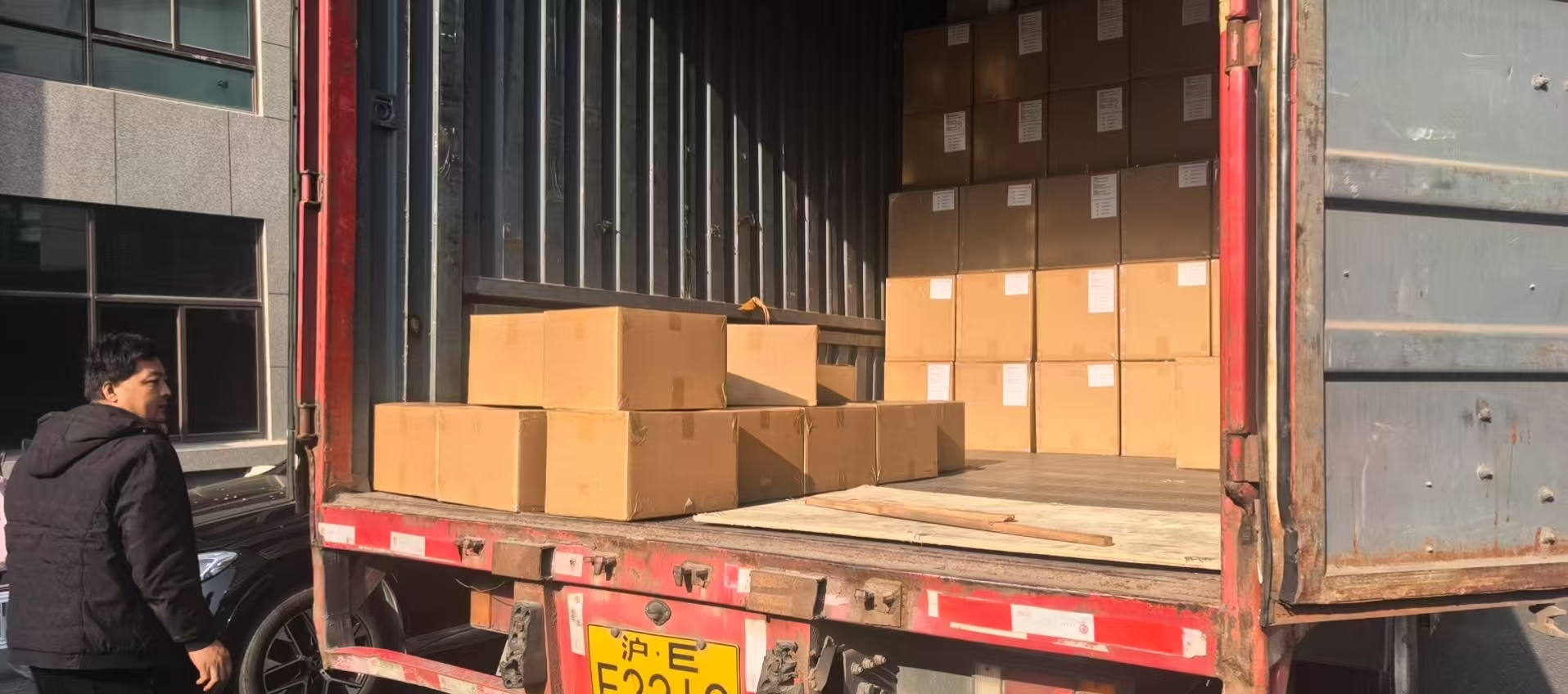
Export-ready packaging and shipping from LINGO for certified plastic parts.
Download the LINGO company profile: LINGO Rubber & Plastic Company Profile (PDF).
Email: sales@lingorp.com · WhatsApp: +86 18358136245 · Website: www.lingorp.com