
Export-Compliant Plastic Parts: A Practical Guide to REACH, RoHS, and FMVSS 302 Requirements
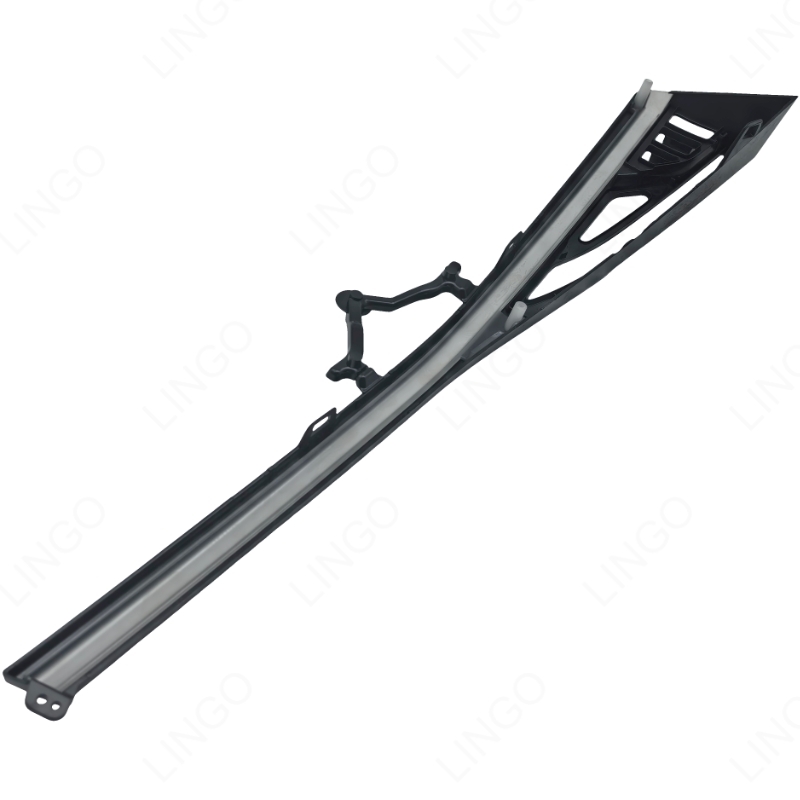
A compliance file for an export plastic part is not one certificate. For a custom injection molded part shipping into the EU and North America, three frameworks usually apply at the same time: REACH for chemical substances, RoHS for hazardous substances in electrical and electronic equipment, and FMVSS 302 for the flammability of interior materials in vehicles. Each answers a different question, is evidenced by a different document, and can fail independently of the other two. A supplier statement that a part is “RoHS compliant” says nothing about REACH, and a passing FMVSS 302 report for one specimen configuration does not automatically qualify the production part.
Problem Definition: Why Compliance Claims Break Down Before They Reach the Buyer
The gap between a claim and a valid declaration is almost never dishonesty. It is scope mismatch. The same word — “compliant” — is used for five different things, and buyers who do not separate them end up with a folder of PDFs that looks complete but cannot answer an audit question.
- Family versus grade. “PP” is a family. A homopolymer, a glass-fibre filled grade, a flame-retardant grade and a UV-stabilised grade are separate declarations, because the additives differ.
- Material versus part. A compounder's declaration covers resin. A part declaration must also cover colourant or masterbatch, any release agent, and any secondary surface treatment such as painting or plating.
- Document versus version. A REACH declaration without a candidate-list version and date cannot be assessed, because the list it was screened against changes over time.
- Part versus program. A report issued for part number A does not cover revision B after a resin change, a colour change or a tool move.
- Framework versus framework. RoHS scope is electrical and electronic equipment. A plastic washer or a dipped handle used on an industrial tool may sit outside RoHS scope while remaining fully inside REACH scope.
The practical fix is procedural, not rhetorical: force every claim down to a named grade, a named part revision, and a named version of the regulation it was tested against.
Industry Background: Why the Documentation Load Keeps Growing
Injection molding is the volume backbone of the category. Grand View Research reported that the injection molding segment held 42% of the global plastic market in 2025, inside a market valued at USD 963.7 billion for that year. Trade data points the same direction: global exports under HS 392690, articles of plastics, reached USD 66.77 billion in 2025 according to UN Comtrade-based analysis. These are market-level figures — they describe the scale of the documentation problem, not the quality of any individual supplier. The point is simply that a very large share of the world's plastic parts now crosses a border before it is assembled, and each crossing pulls a compliance file with it.
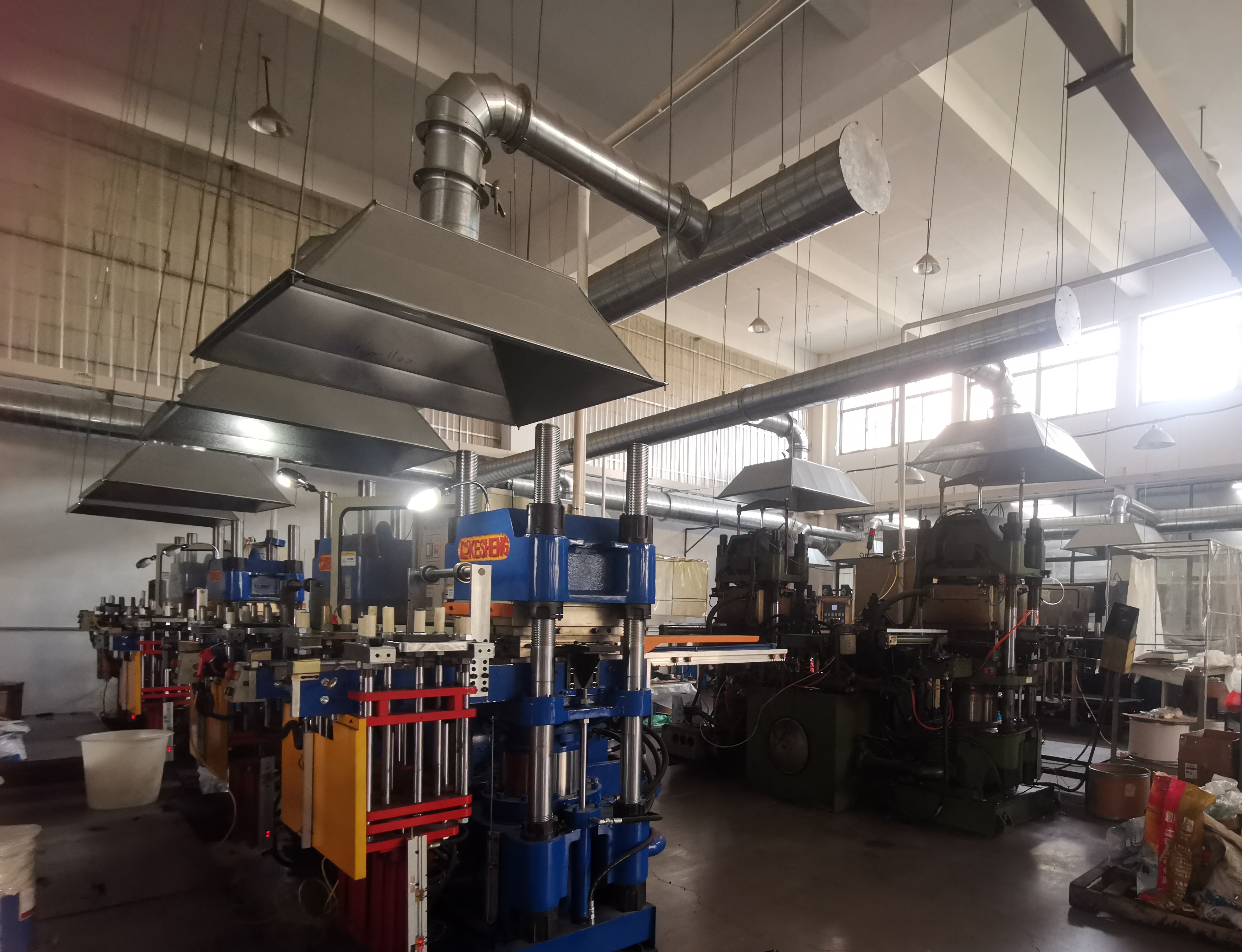
For an export-oriented manufacturer, that file is produced per program rather than per catalogue page. Lingo Rubber Plastic (Hangzhou Lingo Rubber and Plastic Product Co., Ltd) is a China-based manufacturer of rubber molded parts, rubber extruded parts, plastic injection parts and plastic extruded parts, with an export share of about 80% concentrated on the EU and USA markets, and with injection molding, extrusion, CNC machining and PVC dipping under one roof. That combination matters for compliance work because a program that mixes a molded housing, an extruded profile and a machined gasket can be documented through one material-declaration chain instead of three unrelated ones.
Detailed Solution: The Three Frameworks, Decoded
Treat the three requirements as three different questions rather than three badges. REACH asks what is in the material. RoHS asks whether specific restricted substances are present in any homogeneous material of an electrical or electronic product. FMVSS 302 asks how a material behaves when it burns inside a vehicle occupant compartment.
REACH: what a plastic part actually owes
REACH is the EU framework for the registration, evaluation, authorisation and restriction of chemical substances. For an imported article, the buyer's working question is narrower than the regulation itself: does this part contain a substance on the SVHC candidate list at or above 0.1% by weight per article, and can the supplier show how that was screened? Restrictions listed in the regulation's annexes apply on top of that, and they are material-specific rather than part-specific.
The evidence chain has three links, and all three must exist:
- A declaration from the compounder that names the exact grade.
- An SVHC screening statement that names the candidate-list version and its date.
- A part-level statement that maps those two documents onto the actual part number, colour and surface treatment.
Where a supplier stops at link one, the buyer is holding a resin datasheet, not a part declaration.
RoHS: scope, thresholds and the homogeneous-material trap
RoHS restricts the presence of lead, mercury, cadmium, hexavalent chromium, PBB, PBDE and four phthalates (DEHP, BBP, DBP and DIBP) in electrical and electronic equipment. Thresholds are expressed as maximum concentration values per homogeneous material — 0.1% by weight for most of the listed substances, and a lower value for cadmium. The phrase that catches buyers is “per homogeneous material”: a painted, plated or dipped surface is a separate material from the substrate, and so is a moulded-in metal insert.
This is directly relevant to how a part is specified. Lingo's Plastic Injection Molded Auto Parts (model LG-AP) list surface options of polished, textured, painted or plated, and multi-cavity tooling with hot or cold runner. Every added surface layer adds a declaration line, and a supplier who declares only the base resin has left part of the part undeclared. RoHS reaches the plastic part indirectly — through the finished equipment — so the obligation travels down the supply chain to whoever moulds the component.
FMVSS 302: a material test, not a part certificate
FMVSS 302 is the US federal motor vehicle safety standard covering flammability of interior materials. It evaluates the horizontal burn rate of materials used in the occupant compartment and caps that rate at 102 mm per minute. Two consequences follow immediately.
- Scope is interior. An exterior trim part does not become compliant by attaching an FMVSS 302 report that was never in scope.
- The result belongs to a specimen configuration. Thickness, backing, coating and lamination influence the outcome, so the report should describe a specimen that matches the production part as closely as possible.
For interior automotive programs, the three frameworks are usually requested as one package. LG-AP lists FMVSS 302, RoHS and REACH together as certifications, which is the correct grouping for an interior trim or functional part — one document set, three separate statements inside it.
-40°C to +120°C as a specification checkpoint
LG-AP states an operating temperature range of -40°C to +120°C. In an export program, that range should be written onto the drawing as a requirement, not left in a product brochure. Doing so forces the material declaration and the temperature claim to describe the same grade. A declaration for a generic “PA” does not answer a -40°C to +120°C requirement; the grade does. If the program also requires flame retardancy or FMVSS 302, the flame-retardant package becomes part of the declaration, and the additive system may change the temperature behaviour — which is exactly why the checkpoint has to sit on the drawing rather than in a conversation.
Matching Materials to Compliance Scope
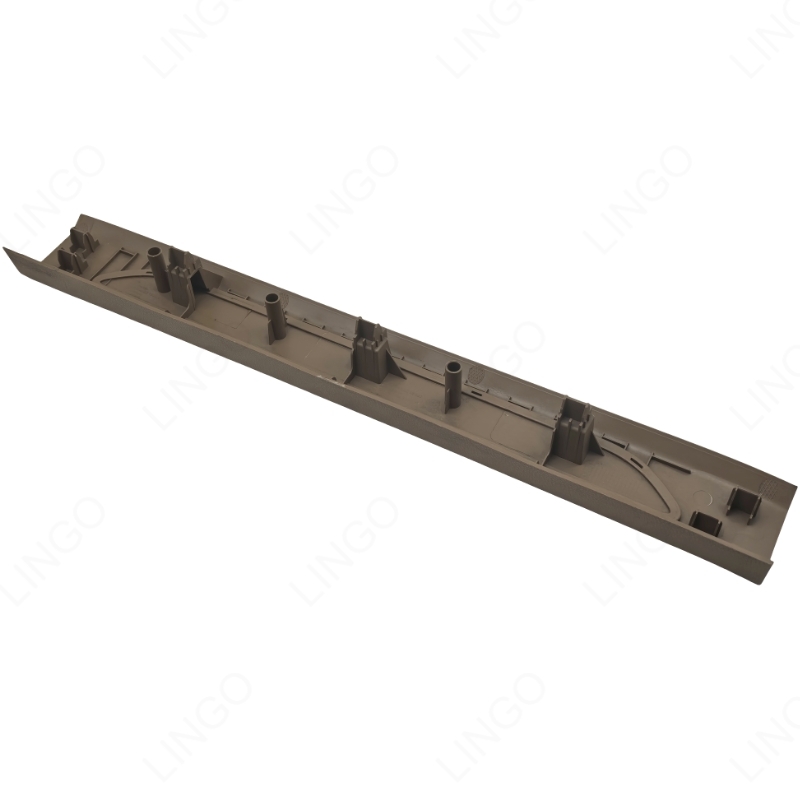
The material list is the first place a compliance claim becomes checkable. LG-AP covers PP, PE, PS, ABS, PBT, PET, PVC, PA, PC, POM, PTFE and PEEK. Plastic injection parts (LG-PI) cover PP, PA6, PA66, ABS, PE, HDPE, UHMWPE, LDPE, PU, PTFE and glass-fibre filled plastics, with options for flame-retardant and UV-stabilised modification. Plastic CNC Machined Parts (LG-CNC) cover PTFE, POM, PE, UHMWPE, HDPE, PEEK, ABS, PU, PA6 and PA66. Extruded profiles cover PVC, PP, ABS, PA6, PA66, PE and UHMWPE, with or without glass fibre.
| Material | Listed in | Documentation checkpoint for an export program |
|---|---|---|
| PP | Injection molded auto parts, injection parts, extruded profiles | Confirm the grade, filler content and any flame-retardant or UV package; a homopolymer declaration does not cover a filled grade. |
| PE (incl. HDPE, UHMWPE, LDPE) | Injection molded auto parts, injection parts, extruded profiles | HDPE and UHMWPE are different materials for declaration purposes; ask for the grade name, not the family. |
| ABS | Injection molded auto parts, injection parts, extruded profiles, CNC | Colourant or masterbatch is a separate homogeneous material; declare it explicitly. |
| PA (PA6, PA66) | Injection molded auto parts, injection parts, extruded profiles, CNC | Glass-fibre reinforced versions change the declaration; state the reinforcement on the drawing. |
| PC | Injection molded auto parts | If the grade is flame-retardant, the flame-retardant system must appear in the declaration. |
| POM | Injection molded auto parts, CNC | Ask for the exact grade rather than “POM”; homopolymer and copolymer grades are declared separately. |
| PTFE | Injection molded auto parts, injection parts, CNC | Check whether the grade is virgin or filled; LG-CNC lists FDA, RoHS and UL as available parameters. |
| PEEK | Injection molded auto parts, CNC | Same rule as PTFE: declare the grade and any filler, and confirm the temperature requirement against that grade. |
Step-by-Step: How to Verify a Supplier's Compliance Claim
The sequence below is written for a buyer or OEM engineer running a first article through an export program. It works at the RFQ stage, before tooling is cut, which is when correction is cheapest.
- Fix the destination and the framework list before the RFQ. EU plus electrical or electronic application means REACH and RoHS. US interior automotive means FMVSS 302 on top of both. Industrial tooling that never connects to a power supply usually means REACH only. Writing this list into the RFQ prevents a supplier from answering a narrower question than the one you asked.
- Put the material grade, colour and surface on the drawing. A drawing that says “PP, glass-fibre filled” cannot be declared. A drawing that names the compounder's grade, the Pantone or RAL colour and the surface (polished, textured, painted or plated) can.
- Require a part-level declaration, not a material datasheet. It must name the part number, the revision, the grade, the colourant, the regulation version and the issue date, and it must be signed.
- Ask for the evidence layer underneath. That means the compounder declaration, the SVHC screening with its list version, and any test report that names the laboratory and the specimen. A batch traceability system on the supplier side is what allows a declaration to be tied to a specific shipment later.
- Match the evidence to production reality. Compare the test specimen with the production part: thickness, coating, insert, colourant. Where they differ, request a new test or a documented technical justification rather than accepting the report at face value.
- Lock change control. A resin change, a colourant change, a surface change or a tool relocation each trigger a re-declaration. Date-code marking, which LG-AP lists as a standard marking option, makes that recall granular instead of program-wide.
- Keep dimensional and compliance records in one file. Tolerance control under GB/T 14486 MT1 to MT7 and the tolerance framework of ISO 20457:2018 belong in the same submission as the material declaration, because a grade change usually shifts shrinkage — typically 0.4% to 0.8% for mould compensation — and therefore moves the part.
Use Cases: Three Export Scenarios and What Compliance Requires
1. US automotive interior component — highest documentation scope
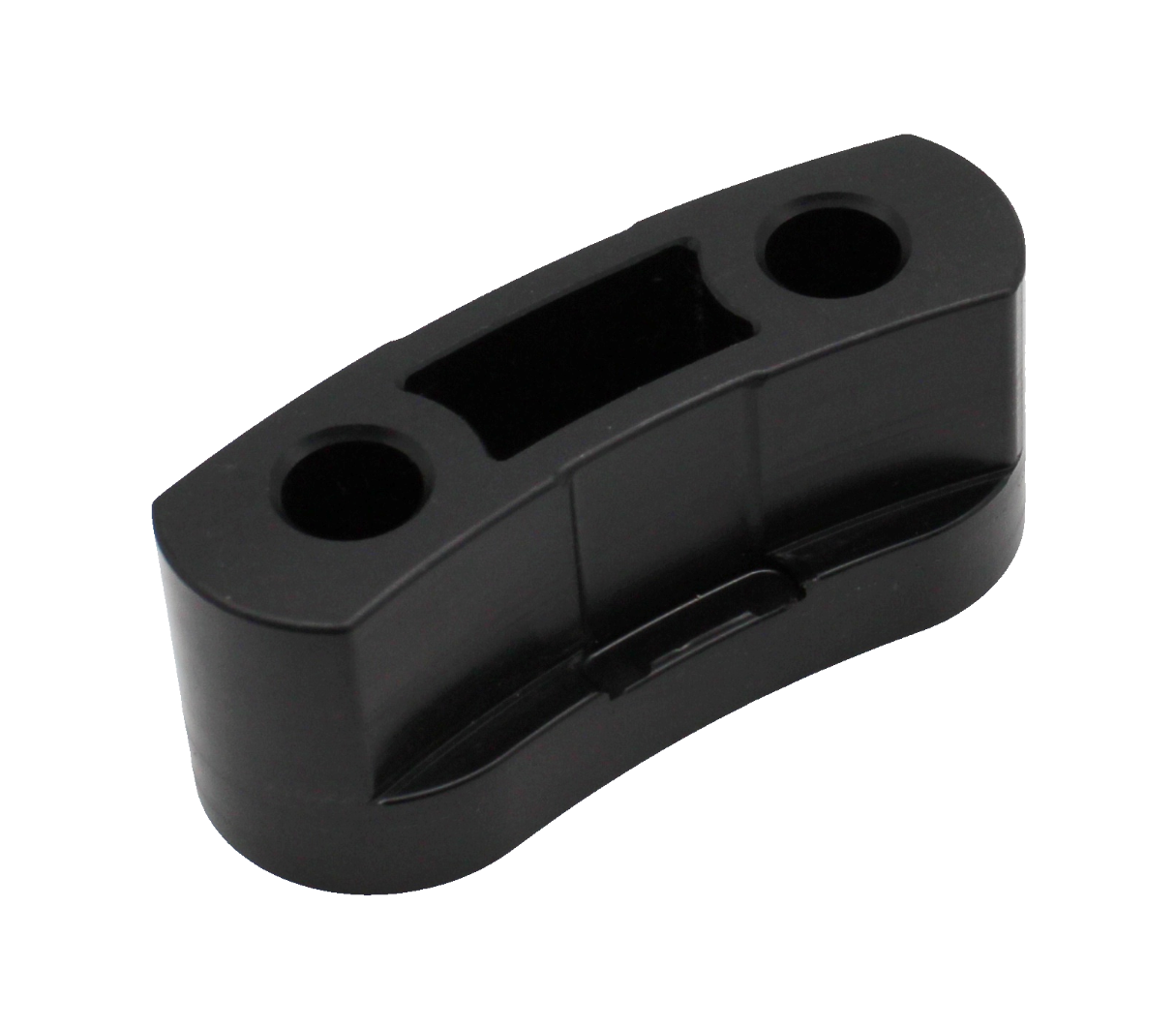
A US automotive customer ordered 5,000 pieces of an injection molded tube holder used in auto machinery, produced on LG-PI, with the reported result of zero failures and suitability for long-term use. The case also records a design decision: reducing some internal material while preserving structure and function lowered material and logistics cost and improved dimensional stability. In compliance terms, an interior part of this type is where all three frameworks converge — FMVSS 302 for the interior material, RoHS if the assembly is part of an electrical system, and REACH for the resin, colourant and any additive package. The cost discussion and the compliance discussion have to happen in the same review, because a material reduction changes the specimen that was tested.
2. EU electronics sealing component — small quantity, full documentation
A UK customer in chemical, pharmaceutical and electronics applications ordered 20 pieces of CNC machined PTFE back-up rings, dispatched within two days, in pure PTFE, with small orders accepted. Small volume does not mean small documentation: RoHS and REACH still apply to the material, and LG-CNC lists RoHS among its available parameters alongside FDA and UL. The lesson for buyers is that a 20-piece validation order and a 5,000-piece production order are documented on the same principles — only the sampling plan differs.
3. Dipped PVC handle for electrical and electronic use — plasticiser questions
A German customer in the electrical and electronics industry ordered 1,500 PVC dipped components, using the coating as an insulating layer that also protects against acids, alkalis, salt spray and oil, with low-temperature and high-temperature resistance reported as part of the result. A plasticised PVC coating is exactly where REACH questions concentrate, because the plasticiser system is part of the material declaration. A supplier who declares only the metal substrate has declared the wrong half of the part.
Comparison Table: The Three Frameworks Side by Side
| Framework | Question it answers | Applies to | Evidence to request | Common misreading |
|---|---|---|---|---|
| REACH | Which chemical substances are present, at what concentration, and is the SVHC screening current? | Articles placed on the EU market, including plastic and rubber parts | Compounder declaration naming the grade, SVHC screening with candidate-list version and date, part-level mapping | Accepting a resin datasheet as a part declaration |
| RoHS | Are restricted substances present in any homogeneous material of an electrical or electronic product? | Electrical and electronic equipment, and the components inside it | Part-level declaration with homogeneous-material breakdown, including coatings, plating and inserts | Declaring the substrate only and ignoring paint, plating or dipped surfaces |
| FMVSS 302 | What is the horizontal burn rate of a material used in a vehicle occupant compartment? | Interior materials in vehicles sold in the US market | Test report naming the specimen thickness and configuration, matched to the production part | Applying an interior test report to an exterior part, or to a different thickness |
What a Documentation-Ready Partner Looks Like
Compliance output is a by-product of process discipline, and process discipline is easier to read from operating facts than from certificates. Lingo Rubber Plastic was co-founded by a group of veterans who have spent over 10 years — and in some cases more than 20 years — working in the rubber and plastics industry. That team depth is the mechanism behind consistent documentation: the same people who set the process parameters also know which declaration belongs to which grade.
- Process coverage in one place: plastic injection molding, plastic extrusion, PVC dipping and CNC machining, plus rubber compression molding and rubber extrusion — so a mixed-material program does not fragment into unrelated declaration chains.
- Stated certifications on the auto parts line: FMVSS 302, RoHS and REACH on LG-AP, with an operating range of -40°C to +120°C and date-code marking as standard.
- Quality control split by stage: full inspection of samples, random inspection of bulk goods.
- Traceability after delivery: a batch traceability system, remote technical support, and mould maintenance with ownership protection as part of the stated after-sales scope.
- Commercial flexibility: MOQ set according to the part, small quantity orders accepted, and a stated lead time of 2 to 6 weeks.
None of these facts is a compliance certificate on its own. Read together, they describe a supplier that can produce a declaration naming a specific grade, a specific part revision and a specific batch — which is the only version of a compliance claim a buyer can actually use.
FAQ: Export Compliance for Custom Plastic Parts
- How can a buyer verify that REACH and RoHS claims apply to the actual part being purchased?
- Ask for a part-level declaration that names the part number and revision, the exact material grade, the colourant, the surface treatment and the regulation version — including the REACH candidate-list version and its date. Then ask for the evidence underneath: the compounder's material declaration, the SVHC screening, and any test report that names the laboratory and the specimen. Lingo Rubber Plastic lists RoHS and REACH among the certifications of its Plastic Injection Molded Auto Parts (LG-AP), and its stated after-sales scope includes a batch traceability system, which is what makes a declaration checkable against a specific shipment.
- Which materials can be considered for an interior automotive part?
- Plastic Injection Molded Auto Parts (LG-AP) list PP, PE, PS, ABS, PBT, PET, PVC, PA, PC, POM, PTFE and PEEK, with FMVSS 302, RoHS and REACH listed as certifications and an operating temperature range of -40°C to +120°C. Material availability is not the same as material approval: the grade, colourant and any flame-retardant package must appear in the declaration, and the -40°C to +120°C requirement should be written on the drawing so that the declaration and the temperature claim describe the same grade.
- Does a compliance-ready program require a large order?
- No fixed threshold exists. Lingo sets MOQ according to the part and accepts small quantity orders, and the same declaration logic applies at low volume: a 20-piece CNC machined PTFE back-up ring order for a UK customer was shipped within two days and still required RoHS and REACH statements for the material. Volume changes the sampling plan, not the framework.
- Can we check the documentation and the parts on a sample before committing to production?
- Yes, and it is the cheapest point to do it. Lingo's stated quality control splits full inspection of samples from random inspection of bulk goods, so the sample stage is where the declaration, the grade name and the drawing should be reconciled. Send the drawing, the destination market and the framework list (REACH, RoHS, FMVSS 302) to sales@lingorp.com with your sample request, and the documentation scope can be fixed before tooling is cut.
- How long does production take once a compliant material is confirmed?
- Lingo states a lead time of 2 to 6 weeks. The sequencing matters more than the number: material grade confirmation, then the declaration, then the sample, then the report check, then production. Running the declaration in parallel with tooling rather than after the purchase order is what keeps a 2 to 6 week window realistic, and long-standing team experience — over 10 years, in some cases more than 20 years in the rubber and plastics industry — reduces the rework loops that usually break that schedule.
Conclusion: Write the Framework Into the RFQ, Not Into the Follow-Up Email
REACH, RoHS and FMVSS 302 are not interchangeable, and a supplier who treats them as one word is telling you something about their documentation process. The reliable sequence is short: define which frameworks your destination and application trigger, name the material grade on the drawing, demand a part-level declaration with a version and a date, match the test evidence to the production configuration, and lock change control so that the next resin change does not silently invalidate the file. Do that at the RFQ stage and the compliance file becomes a routine attachment. Leave it until the shipment is booked, and it becomes a schedule risk.
Next step: sample and documentation review
Share the drawing, the destination market and the compliance frameworks that apply to your program. Lingo Rubber Plastic can return a material grade recommendation, the corresponding declaration scope, and a sample for validation — under a stated lead time of 2 to 6 weeks and a MOQ set per part.
Email: sales@lingorp.com | Tel / WhatsApp: +86 18358136245 | Website: www.lingorp.com
Download the full company profile and capability brochure: LINGO RUBBER & PLASTIC COMPANY PROFILE (PDF)
Have Questions or Need More Details?
Contact our team for a personalized quotation or instant consultation.
Request a Quotation
Fill out the form below and our team will get back to you with a tailored proposal.
WhatsApp Direct Chat
Prefer to chat in real-time? Message us on WhatsApp for instant assistance & quick answers.
- Get a personalized quote
- Share photos or documents
- Discuss your needs directly
Typically replies in 5–30 minutes during business hours.