
How to Choose the Right Rubber Parts Manufacturer
How to Choose the Right Rubber Parts Manufacturer for Your Business
When your product design calls for durable, custom rubber parts — whether rubber seals, anti‑vibration mounts, rubber o‑rings, or silicone cords — selecting the right manufacturing partner is one of the most critical purchasing decisions you will make. The wrong supplier can lead to dimensional inconsistencies, premature material failure, regulatory non‑compliance, and costly production delays. This guide will help you navigate the evaluation criteria, understand what separates a capable partner from an average one, and show you how Hangzhou Lingo Rubber and Plastic Product Co., Ltd (LINGO) provides the reliability and technical depth that OEMs, engineering firms, and procurement teams demand.
Problem Definition: What Keeps Rubber Parts Buyers Up at Night
Procurement professionals sourcing custom rubber parts frequently face the same set of challenges:
- Inconsistent quality — dimension out of tolerance, surface defects, or batch‑to‑batch variation.
- Poor material performance — early hardening, softening, blooming (frost on the surface), or loss of elasticity.
- Long lead times and unpredictable delivery — especially when molds need modification or rework.
- Lack of technical support — the supplier cannot recommend the right compound or help with design for manufacturability.
- Hidden costs — low unit price but high defect rate, short mold life, or expensive secondary operations.
The core question every buyer asks: How do I find a supplier that can deliver precision, consistency, and long‑term value — not just a low price?
Industry Background: The Rubber Parts Market
Rubber parts are essential across industries such as automotive & transportation, aerospace & aviation, medical & healthcare, food & beverage, HVAC & refrigeration, electronics & electrical, marine & offshore, and industrial machinery. Applications range from simple rubber gaskets and rubber washers to complex vibration isolation mounts and rubber injection molding components. The global market demands suppliers who master multiple manufacturing processes — compression molding, injection molding, and extrusion — and who offer a wide range of elastomers (EPDM, NBR, silicone, FKM, natural rubber, etc.) with certifications like FDA, UL, REACH, and RoHS.
Detailed Solution: What a Best‑in‑Class Rubber Parts Supplier Looks Like
A top‑tier supplier differentiates itself through process control, material science expertise, tolerance management, and customer‑centric service. Here is how LINGO addresses each critical dimension.
| Evaluation Criteria | Why It Matters | How LINGO Excels |
|---|---|---|
| Tolerance & Dimensional Accuracy | Out‑of‑spec parts cause assembly failure and field returns. Rubber parts shrink during curing; controlling shrinkage is a core skill. | LINGO controls tolerance per RMA A2 (rubber) and GB/T 14486 MT1–MT7 (plastic). Their self‑developed mold structure increases output while maintaining CPK ≥ 1.33. Real‑time cavity pressure sensors monitor every cycle. |
| Material Compound & Certification | Wrong material leads to premature failure: swelling in oil, cracking in ozone, brittleness in cold. Certifications ensure regulatory compliance. | LINGO works with EPDM, NBR, silicone, FKM, natural rubber, CR, SBR, FFKM, AFLAS, and more. They offer material modification formulas to extend service life. Certificates include FDA, UL, RoHS, REACH. Each batch of core raw materials is retained and traceable. |
| Manufacturing Process Versatility | Different geometries and volumes require different processes: compression molding for large parts, injection molding for high‑volume precision, extrusion for continuous profiles. | LINGO offers rubber compression molding, rubber extrusion, plastic injection, and plastic extrusion. This one‑stop capability eliminates the need for multiple suppliers. |
| Quality Risk Control | Common defects like blooming, inconsistent gloss, hardening, or dimension drift can be prevented with proper formulation and process control. | LINGO implements systematic risk controls: QUV/xenon lamp aging tests, standardized SOPs, first‑piece gloss inspection, and a reliability lab for accelerated aging. They test vulcanization characteristics per batch and maintain supplier quality agreements. |
| After‑Sales & Commercial Terms | Buyers need flexibility in MOQ, payment, and delivery, plus a clear policy on defects. | LINGO accepts small MOQs, offers EXW / FOB / CIF terms, 50% T/T advance balance against shipping, and provides replacement or refund for defective items. Their lead time is short thanks to an efficient production system. |
Step‑by‑Step: How to Select Your Rubber Parts Partner
- Define your technical requirements — material, hardness (Shore A), temperature range, tolerance, certifications, and application environment.
- Evaluate the supplier’s material range — can they provide EPDM for weather resistance? Silicone for high‑temp food contact? FKM for chemical resistance?
- Check process capabilities — do they offer both molding and extrusion? Can they handle complex undercuts or metal‑to‑rubber bonding?
- Review quality management — request PPAP, control plans, and evidence of dimensional control (e.g., Cpk data).
- Assess communication and engineering support — a strong partner will help you optimize the design for manufacturability and recommend cost‑saving material modifications.
- Verify past performance — ask for case studies, references, and evidence of long‑term defect‑free deliveries.
Use Cases: Real‑World Application of LINGO Rubber Parts
Anti‑Vibration Mounts for Transportation
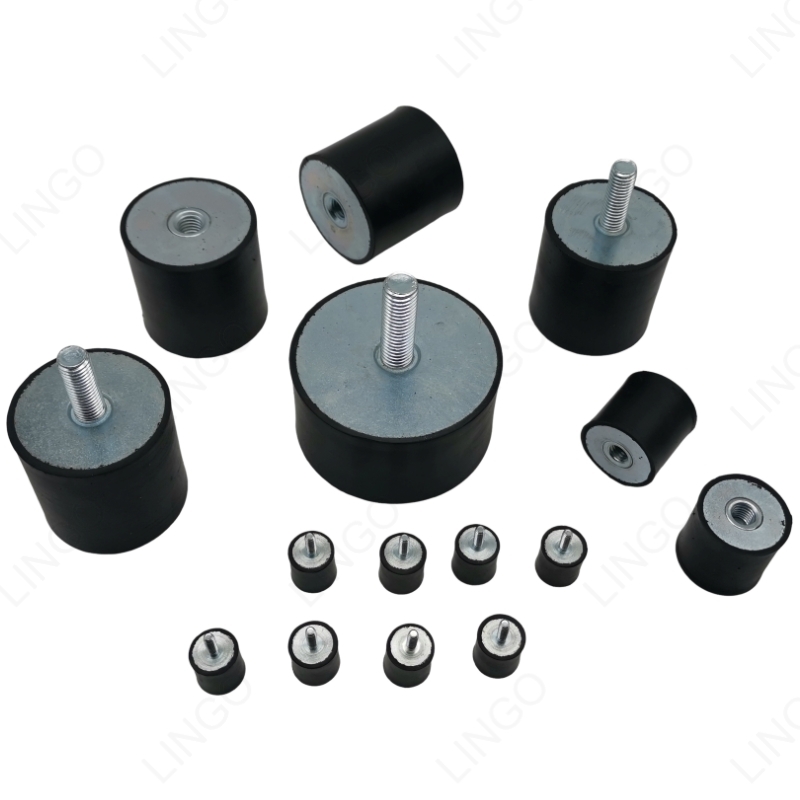
The LGMM anti‑vibration mount (rubber stud mount / cylindrical rubber mount) is made of natural rubber with zinc‑coated steel. Diameters range 8–150 mm, heights 8–90 mm. It is used in automotive, rail, and marine for engine mounting, suspension, and seat isolation — absorbing engine vibration, reducing structure‑borne noise, and improving ride comfort. This product is ideal for transportation OEMs in Germany and the United States (application scenario common in US and EU).
FDA‑Compliant Silicone Rubber Cords for Food & Medical
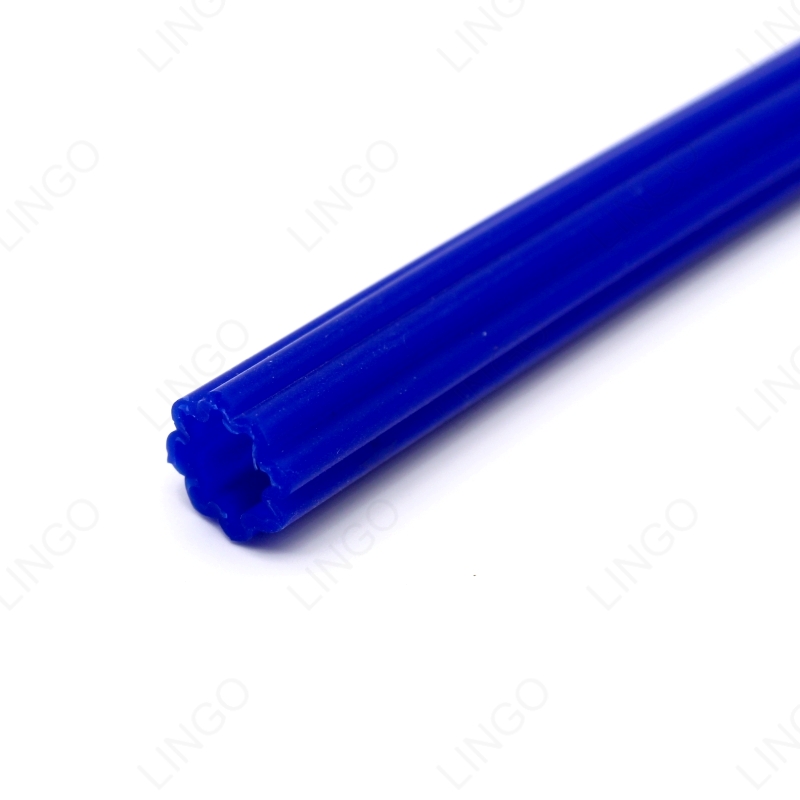
The LG‑SRC silicone rubber cord (solid or sponge) is heat resistant and FDA qualified, making it suitable for food & beverage, medical & healthcare, and pharmaceutical sealing. It can be customized by color (Pantone/RAL) and length, and is available as solid or sponge profile.
Automotive Sealing with Zero Claims
A North American water treatment equipment manufacturer sourced rubber sealing rings (LG‑RS) from LINGO for a water‑sealing application. Over three years and 1,000 units, the parts maintained stable operation with dimensions within tolerance — zero claims, and the spring remained precisely centered. The rubber material was FDA certified and white (no pollution), with precision exceeding ASTM A1 standards. This case demonstrates LINGO’s ability to solve the common problem of metal insert shifting during production when no positioning point exists.
Frequently Asked Questions
What is the typical lead time for custom rubber parts from LINGO?
Lead time depends on complexity and mold availability. Thanks to in‑house mold design and efficient production, LINGO offers one of the shortest lead times in the industry. Contact sales@lingorp.com for a specific estimate.
What is the minimum order quantity (MOQ)?
MOQ is based on the part; small quantities are acceptable for prototypes or low‑volume production. LINGO is flexible to support both R&D and mass production.
Can LINGO produce rubber parts with metal inserts?
Yes. The anti‑vibration mounts already incorporate zinc‑coated steel. LINGO’s rubber‑to‑metal bonding capability is well‑proven, and they have solved the common problem of metal shifting during molding.
What certifications does LINGO hold?
LINGO’s products can be supplied with FDA, UL, RoHS, and REACH certifications upon request. They also maintain strict batch traceability and perform reliability testing.
How does LINGO control the risk of dimension out of tolerance?
They use simulation for shrinkage during mold design, real‑time cavity pressure monitoring, regular calibration of measuring tools per CNAS standards, and product sampling inspection. Their tolerance capability consistently achieves CPK ≥ 1.33.
Conclusion
Choosing the right rubber parts manufacturer is not just about comparing price lists — it is about assessing technical depth, quality systems, material expertise, and long‑term partnership value. Hangzhou Lingo Rubber and Plastic Product Co., Ltd (LINGO) brings over a decade of industry experience, a dedicated R&D team of 10 engineers, a 3,000 m² facility, and an annual output of 1.58 million units. With 80% of sales exported to the EU and USA, LINGO has proven its ability to meet the most stringent requirements for rubber seals, anti‑vibration mounts, silicone parts, and more.
If you are looking for a reliable partner who can deliver precision, consistency, and responsive support, we invite you to download the full company brochure or get in touch directly.
Or contact Colin Lin: sales@lingorp.com | Tel/WhatsApp: +86 18358136245
Rm1303 Meiya Plaza, LP, HZ, China 311100