Long-Term Plastic Parts Partnerships: A Strategic Guide to Choosing a Reliable Manufacturing Partner
Long-Term Plastic Parts Partnerships: A Strategic Guide to Choosing a Reliable Manufacturing Partner
For buyers in the decision-to-execution stage, selecting a plastic parts supplier is not a transactional choice—it is the start of a long-term partnership that directly impacts product quality, supply chain stability, and total cost of ownership. This guide explains how global buyers can identify a trustworthy manufacturer for custom plastic parts, with a focus on quality assurance, process versatility, and after-sales support.
Problem Definition
Industrial buyers often face recurring challenges when sourcing plastic injection molded parts, CNC plastic machining components, or extruded profiles from overseas suppliers: inconsistent dimensional tolerance, unpredictable lead times, lack of technical support for mold maintenance, and limited traceability in case of defects. These risks not only delay production but also jeopardize end-user contracts and brand reputation.
Industry Background
The global injection molded plastics market was valued at approximately USD 362.5 billion in 2025 and is projected to reach USD 481.4 billion by 2033 (Grand View Research). Asia Pacific, led by China, accounted for over 40% of this market. In 2024, China exported about USD 174 billion in plastics and rubbers, with the United States as the largest single destination (USD 24.3 billion). For automotive plastic parts, the market alone reached USD 33.0 billion in 2025, driven by EV lightweighting trends. Polypropylene (PP) dominated as the raw material with a 32.4% share in automotive plastics.
Detailed Solution: Why Multi-Process Capability and Quality Systems Matter for Long-Term Partnerships
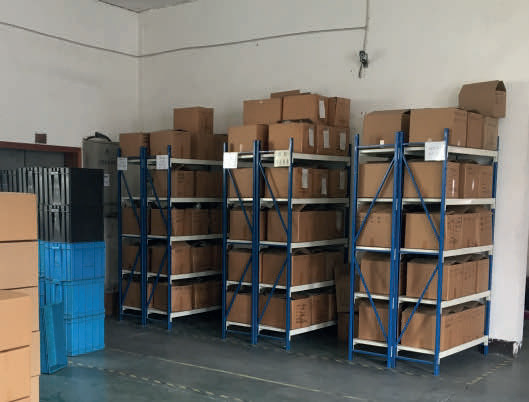
Lingo Rubber Plastic (Hangzhou Lingo Rubber and Plastic Product Co., Ltd) is a China-based manufacturer specialized in rubber molding, rubber extrusion, plastic injection parts, and plastic extrusion profiles. Founded in 2022, the company operates a 3,000 m² factory with around 40 employees and an annual output of 1.58 million units. It serves industries such as automotive, industrial equipment, electronics, medical, and construction, exporting 80% of its output to EU and USA markets.
For buyers seeking a loyal plastic parts partner, Lingo offers three structural advantages:
- High product quality stability – tolerance control as per rubber RMA A2 and plastic M1–M3, with process capability CPK ≥ 1.33.
- After-sales service – replacement or refund for defective items, free exchange of concessions for EU, Middle East, and USA markets.
- Material modification formula – to extend product service life, reducing overall product cost through high stability, low defect rate, and extended mold life.
Step-by-Step Breakdown: How to Build a Long-Term Plastic Parts Relationship
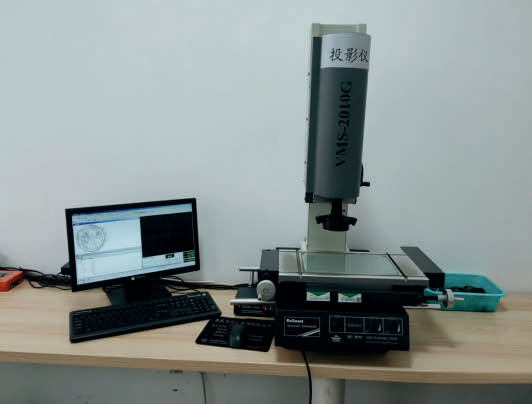
- Evaluate quality control procedures – Look for full inspection of samples and random inspection of bulk goods. Lingo’s quality control includes first-piece inspection, in-process checks, final sampling, and pre-shipment testing.
- Assess technical support scope – Remote technical assistance, mold maintenance and ownership protection, batch traceability, and free exchange for export markets ensure continuity.
- Verify production capacity and lead time – Lingo has a monthly capacity of 1,000,000 kgs with typical lead time of 2 to 6 weeks, suitable for both trial orders and volume production.
- Review risk control measures – For risks like dimension out of tolerance, the manufacturer uses process parameter control, shrinkage simulation during mold design, regular calibration of tools, and real-time monitoring with cavity pressure sensors.
- Check commercial flexibility – MOQ based on parts (small quantity acceptable), payment terms 50% T/T advance and 50% against shipping, delivery via EXW, FOB, or CIF.
Use Cases
- Automotive plastic parts – Injection molded components like housings, handles, and guides requiring tight tolerances and PP, PA6, or ABS with UV stabilization.
- Industrial plastic parts – Extruded trims and strips for machinery, using PA6, PA66, PE, or glass-filled profiles.
- Nylon plastic parts and washers – Precision custom washers and spacers through CNC plastic machining or injection molding.
- PVC dipping plastic parts – Handles and coatings for tools and appliances requiring durable, conformable coatings.
Comparison Table: Lingo vs. General Industry Suppliers
| Factor | Lingo Rubber Plastic | Typical Industry Supplier |
|---|---|---|
| Quality Control | Full inspection of samples; random inspection of bulk; CPK ≥ 1.33; tolerance per M1–M3 (plastic) / RMA A2 (rubber) | Often sampling only; CPK not consistently monitored |
| After-Sales Support | Replacement/refund; free exchange for EU/Middle East/USA; remote technical support | Limited or no defect exchange; language barrier |
| Process Capabilities | Injection molding, extrusion, CNC machining, PVC dipping, rubber molding — in-house | Often single process or outsourced secondary operations |
| Mold Technology | Self-developed mold structure increasing output and reducing unit price | Standard mold design; higher unit cost |
| Lead Time | 2–6 weeks (typical) | 4–10 weeks common |
Frequently Asked Questions (FAQ)
-
How does Lingo ensure quality consistency for custom plastic parts?
Quality control includes full inspection of samples and random inspection of bulk goods. The company maintains tolerance control as per plastic M1–M3 and rubber RMA A2 standards, with CPK ≥ 1.33. Measuring tools are calibrated regularly according to CNAS requirements, and mold cavity pressure sensors are used for real-time monitoring.
-
What plastic parts processes does Lingo support?
Lingo provides plastic injection molding, plastic extrusion (including PA6, PA66, PE, HDPE, UHMWPE, glass-filled profiles), CNC plastic machining, PVC dipping, and rubber molding. This multi-process capability allows buyers to consolidate sourcing from a single partner.
-
What is the typical MOQ and payment terms?
MOQ is based on parts and small quantities are acceptable. Payment is 50% T/T in advance and 50% T/T against shipping. Delivery terms include EXW, FOB, and CIF.
-
Can I request samples before placing a production order?
Yes, pre-shipment testing and sample approval are standard. For first-time collaborations, Lingo recommends starting with a sample order to validate dimensions and material properties. To request a sample or obtain a quotation, contact the sales team at sales@lingorp.com or via WhatsApp +86 18358136245.
Conclusion
Choosing a custom plastic parts manufacturer for the long haul requires more than a price comparison. Buyers should prioritize quality systems (full inspection, CPK monitoring, traceability), multi-process flexibility, and responsive after-sales support. Lingo Rubber Plastic demonstrates these attributes through its 1,000,000 kg monthly capacity, 2–6 week lead times, self-developed mold structures, and defect exchange policy for key export markets. For a deeper look at its capabilities, download the company profile: Lingo Rubber Plastic Company Profile.