
Long-Term Rubber Parts Partnership: FAQ on MOQ, Payment, Delivery, and After-Sales Support
Long-Term Rubber Parts Partnership: FAQ on MOQ, Payment, Delivery, and After-Sales Support
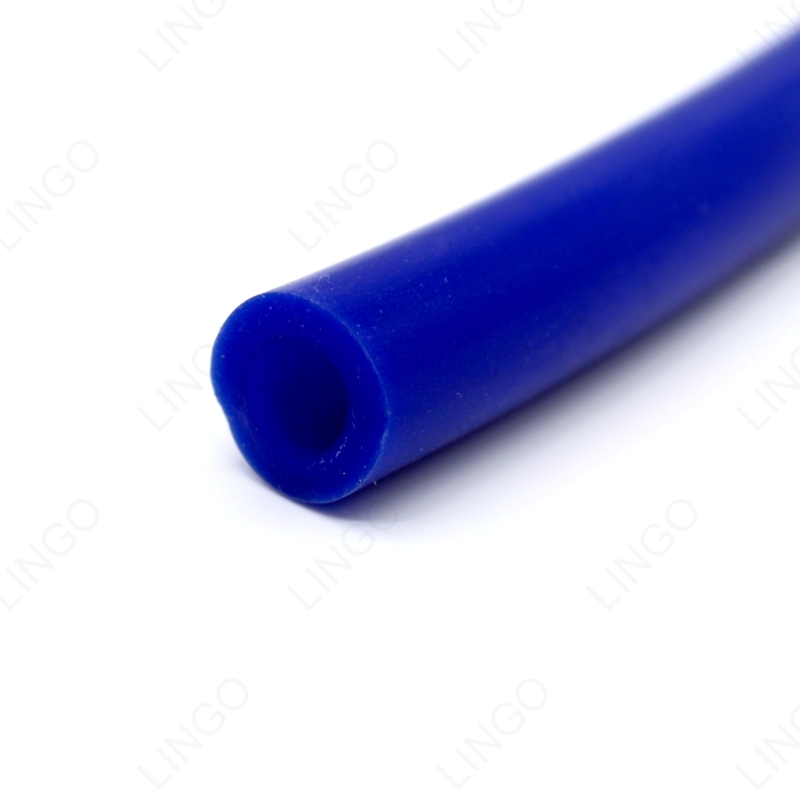
LG-RX rubber extrusion seals — one of the two product lines that carry most repeat orders at Lingo Rubber Plastic.
A long-term rubber parts partnership is rarely won or lost on the drawing of the part. It is decided by four commercial questions that buyers ask before the first purchase order and again every time volumes change: what is the minimum order quantity, how is payment secured, which delivery term governs cost and risk, and what support continues after the goods are received.
This guide answers those questions directly, using the standard terms of Hangzhou Lingo Rubber and Plastic Product Co., Ltd — known in export markets as Lingo Rubber Plastic — and grounding the commercial discussion in the two product families that most often anchor repeat supply: LG-RX rubber extrusion seals and LGMM anti-vibration mounts.
Short answers to the four core questions:
- MOQ: minimum order quantity is set according to the specific part, and small quantity orders are accepted.
- Payment: T/T is standard, with a deposit upfront for first-time orders. L/C at sight and D/P are available by agreement.
- Delivery: shipments are arranged under EXW, FOB, CIF or DDP, with a production lead time of 2 to 6 weeks.
- After-sales: remote technical support, mold maintenance and ownership protection, a batch traceability system, and free exchange with acceptance of concessions.
Why Commercial Terms Decide Whether a Rubber Parts Partnership Survives
Most rubber parts sourcing problems that reach a procurement desk are not technical. The part was validated, the sample passed, and the first shipment arrived. The friction appears afterwards: a minimum order quantity that does not fit a pilot build, a payment structure that leaves one side exposed, a delivery term that shifts freight and duty in a direction nobody planned for, or a supplier that goes quiet once the invoice is settled.
Four failure patterns recur in long-term rubber parts supply:
- Volume mismatch. A supplier whose tooling and process economics only work at high volume cannot support the small, frequent orders that product launches and aftermarket programs generate.
- Payment asymmetry. Buyers want to pay after inspection; manufacturers want certainty before committing material. Without an agreed structure, first orders stall.
- Delivery ambiguity. EXW, FOB, CIF and DDP place freight, insurance and import responsibility in different hands, so the wrong choice silently changes landed cost.
- No continuity after delivery. Without batch traceability, mold ownership rules and a defined exchange policy, a single non-conforming batch can end a relationship that took two years to build.
This article therefore treats MOQ, payment, delivery and after-sales as commercial constraints to be specified in writing, not as trust to be assumed.
Industry Background: The Market a Long-Term Rubber Parts Agreement Sits Inside
Rubber parts are a mature, high-volume category, and the commercial terms used in the industry reflect that scale.
The global gaskets and seals market was estimated at USD 63.09 billion in 2024, with the seals segment holding a dominant 60.1% revenue share, according to Grand View Research. Cognitive Market Research put the global rubber molding market at USD 54.1 billion in 2024, with injection molding as the leading process type and EPDM as the dominant material. The anti-vibration mounts market — the category that includes cylindrical rubber mounts — was valued at USD 6.03 billion in 2024, with the top three players (ContiTech, Hutchinson and Sumitomo Riko) holding 65% of the market, according to Market Insights Reports.
On the supply side, China’s rubber parts industry accounted for more than 35% of global production in 2024, driven heavily by EV battery sealing and thermal management demand, according to industry analysis published by EINPresswire. That concentration is one reason European and North American buyers frequently end up structuring a long-term agreement with a manufacturer in this region — and why the terms of that agreement matter more than the brochure.
Material specifications are also standardized rather than negotiated. EPDM rubber materials are formally classified under ASTM D1418 and ISO 1629, defining their resistance to ozone and UV. Rubber materials for automotive seals and gaskets must frequently comply with ASTM D2000 specifications for temperature and oil resistance. A manufacturer that can work inside these frameworks can be compared on terms; one that cannot will eventually create re-approval work.
Lingo Rubber Plastic sits in the mid-sized exporter segment of this market. The company was co-founded in 2022 by veterans who have spent more than ten years — and in some cases over twenty years — in the rubber and plastics industry. It operates a 3,000 m² facility with around 40 employees, an R&D team of 10, an annual output of 1.58 million units and an export ratio of 80%, with main markets in the EU and USA.
The Commercial Framework: How MOQ, Payment, Delivery and After-Sales Actually Work
Each term below is stated as Lingo Rubber Plastic applies it, followed by what that term means for a buyer planning a multi-year supply relationship.
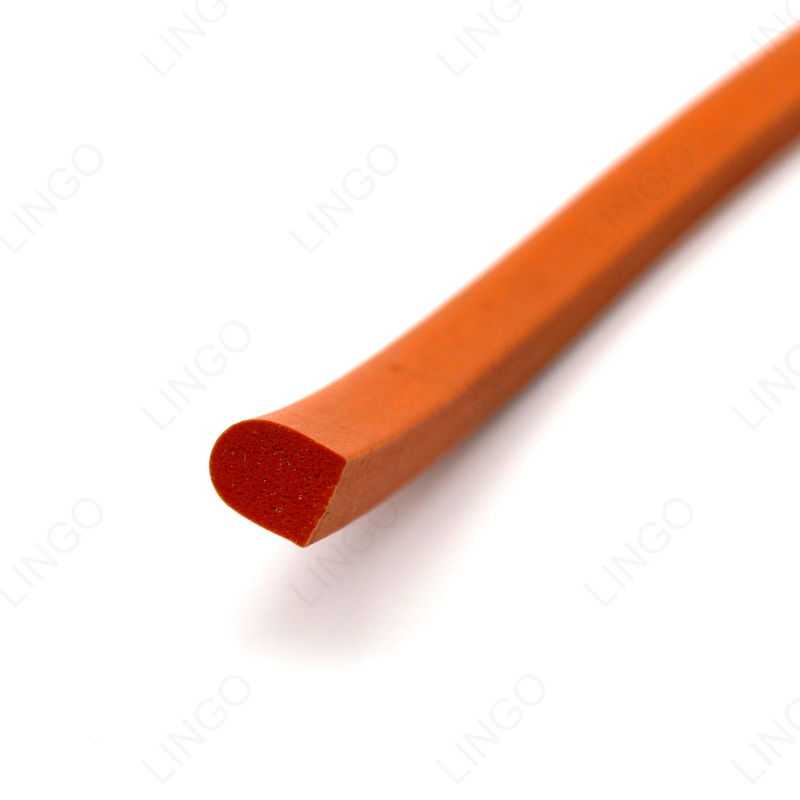
Extruded profiles are produced in continuous lengths and cut to the buyer’s required dimension, which is why length is a specified parameter rather than a mold constraint.
MOQ: Set Per Part, With Small Quantity Orders Accepted
The company’s stated position is that MOQ is set according to the different parts, and that small quantity orders are acceptable. That is a commercial position rather than a blanket threshold, because MOQ in rubber parts is driven by the process, not by a policy number.
Three variables decide what a realistic minimum looks like:
- Whether tooling already exists. Where a mold set is available, small production runs become viable. In one documented automotive program, instead of building a new mold, the supplier machined a single middle plate to the specified dimensions so the part could run with existing mold sets — which greatly lowered the customer’s initial tooling investment.
- Whether the part is extruded or molded. Extruded products such as LG-RX rubber extrusion seals are produced in continuous lengths cut to the required dimension, so length is specified by the buyer instead of being constrained by a mold cavity.
- Whether the material is a stock grade. EPDM, NBR, silicone and FKM are standard materials for LG-RX extrusion seals; hardness is specified in Shore A, and color can be matched to Pantone or RAL.
A 500-piece order for an automotive application was produced on existing tooling for immediate delivery — evidence that the small-quantity policy is operational rather than rhetorical.
Payment: T/T Standard, L/C at Sight and D/P by Agreement
Lingo Rubber Plastic uses T/T as its standard payment method, with a deposit paid upfront for first-time orders. For buyers who require bank-intermediated security, L/C at sight and D/P are available by agreement.
The logic behind the structure is straightforward. On a first order the manufacturer purchases material, occupies press time and, where applicable, cuts tooling before a single unit is approved. A deposit aligns that commitment with the buyer’s. Once a relationship is established and delivery history exists, trade instruments such as L/C at sight and D/P become the more efficient route, and both are negotiated case by case rather than imposed.
Buyers structuring a first purchase should treat the payment term as part of the specification rather than an afterthought: agree in writing which documents accompany the commercial invoice, and confirm whether certification documentation — for example PPAP records or an MSDS — is issued with the shipping documents or separately.
Delivery: EXW, FOB, CIF or DDP
Shipments are arranged under EXW, FOB, CIF or DDP, and production lead time runs 2 to 6 weeks depending on the part, material and tooling status.
- EXW suits buyers with their own freight forwarder and consolidated cargo programs.
- FOB is the most common structure for buyers who control sea freight and want the manufacturer responsible only up to loading.
- CIF transfers freight and insurance arrangement to the manufacturer while the buyer retains import responsibility.
- DDP places the widest scope with the manufacturer and is typically chosen when the buyer wants a predictable landed cost and prefers not to manage import formalities.
The company’s export markets are the EU, the Middle East and the USA, with an overall export ratio of 80%, so documentation for these destinations is routine. For buyers running urgent programs, an in-house spare parts inventory is maintained to accommodate urgent customer orders.
After-Sales: Support That Continues After the Invoice
The after-sales package is defined, and it is the part of the agreement buyers most often under-specify:
- Remote technical support for fit, material and performance questions after delivery.
- Mold maintenance and ownership protection — the customer’s tooling is maintained and its ownership is protected rather than treated as a supplier asset.
- Batch traceability system, so a part delivered in month eighteen can be traced back to its production batch.
- Free exchange and acceptance of concessions, providing a defined route for non-conforming material.
- Full inspection of samples and random inspection of bulk goods, with pre-shipment testing before dispatch.
For a long-term partnership, batch traceability and mold ownership protection carry the most weight. Traceability is what makes a quality discussion possible a year after delivery; mold ownership protection is what allows a buyer to store, duplicate, insure or relocate a tool without reopening the commercial relationship.
Step-by-Step: How an Order Moves From Inquiry to Repeat Purchase
- Inquiry and application review. The buyer provides the part drawing or sample, the application and the operating conditions. Material options such as EPDM, NBR, silicone or FKM are discussed against the environment.
- Quotation with commercial terms. The quotation states the MOQ applicable to that part, the unit price basis, the lead time and the delivery term (EXW, FOB, CIF or DDP).
- Sample production and full inspection. Samples are produced and fully inspected — every sample, not a selection — before approval.
- Payment arrangement. For a first order, T/T with deposit upfront. Where agreed, L/C at sight or D/P is used instead.
- Production and random bulk inspection. Bulk goods are inspected by random sampling during production rather than only at the end.
- Pre-shipment testing. Testing is completed before dispatch, and the batch record is retained in the traceability system.
- Shipment under the agreed term. Dispatch is executed under the chosen delivery term, with documentation prepared for the destination market.
- After-sales and repeat ordering. Remote technical support, mold maintenance, exchange rights where applicable, and a stored mold set that makes the next order faster than the first.
Use Cases: Where These Terms Have Already Been Tested
Commercial terms are only meaningful if they hold under real programs. The following examples are drawn from documented orders.
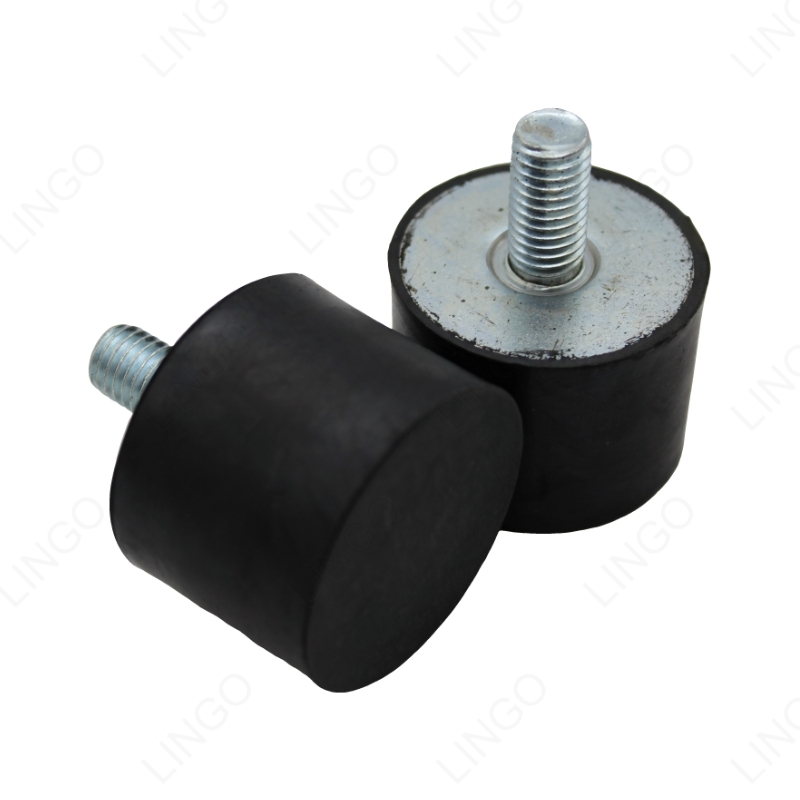
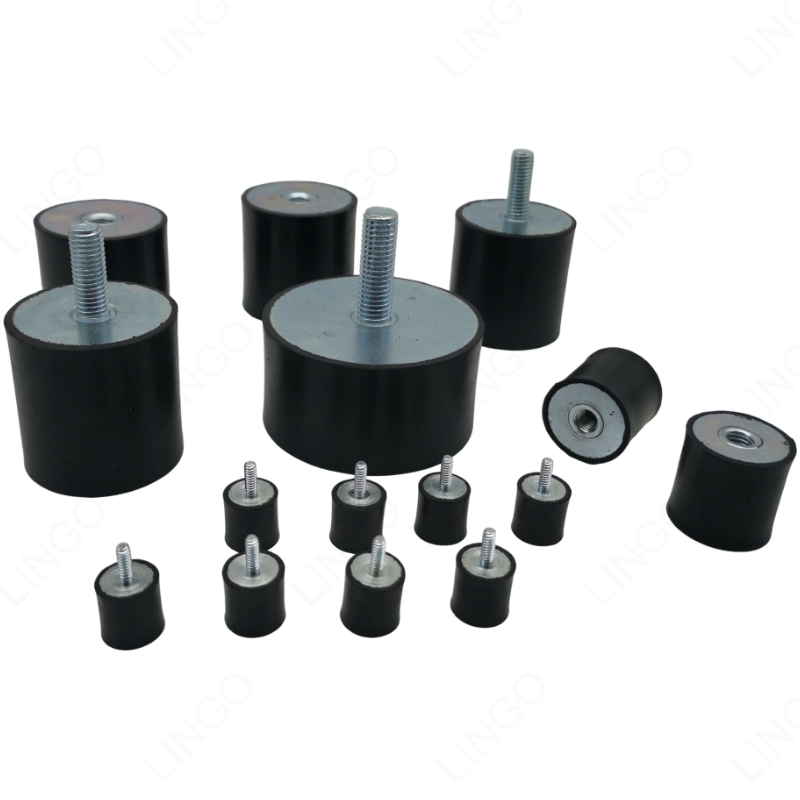
LGMM anti-vibration mounts: natural rubber with carbon steel, 8–150 mm diameter, 8–90 mm height, tolerance per RMA A2.
Automotive OEM, United States — anti-vibration components, 10,000 to 40,000 pcs. A repeat-order program placed several times each year, requiring small size, tight tolerances and consistent batch-to-batch quality. Two support elements mattered commercially: an in-house spare parts inventory held for urgent orders, and the decision to machine a single middle plate to the required dimensions instead of building a new mold, which greatly lowered the customer’s initial tooling investment.
Automobile industry, United States — 500 pcs. A small-quantity order produced on existing tooling for immediate delivery. The parts were UL94 V-0 certified, and the program required consistent damping performance under extreme temperature and load conditions, with test data showing a 45% reduction in peak vibration amplitude.
Automotive OEM, United Arab Emirates — 4,000 metres of silicone sponge cord. A three-year supply relationship covering EV battery sealing, industrial cabinet gaskets, automotive door seals, appliance door insulation, building window weatherstripping and medical device sealing. The material is FDA-grade silicone sponge with high precision tolerance, a smooth surface, and thermal stability from -60°C to 250°C without hardening or cracking.
Water treatment, food and automotive customers — US, UK, Canada, Australia, France and Germany — 1,000 units of water sealing parts. FDA-certified white rubber material produced to high precision beyond ASTM A1 dimensions, delivered with zero claims. The technical problem solved was preventing metal parts from shifting during rubber production where no positioning point exists.
Comparison Table: Product Lines and Commercial Terms at a Glance
The tables below summarize the product facts that underpin the agreement and the commercial framework that applies to it. Specifications are as stated by the manufacturer; certification scope should always be confirmed against the specific part number.
| Item | LG-RX rubber extrusion seals | LGMM anti-vibration mounts | LG-RS / LG-SRC |
|---|---|---|---|
| Product type | Silicone, adhesive-backed, co-extrusion, FKM, solid and sponge rubber extrusion seals | Cylindrical rubber mounts / rubber stud mounts for vibration isolation | Rubber sealing rings (O-ring, X-ring, oil seal); silicone rubber cords (solid and sponge) |
| Material | EPDM, NBR, silicone, FKM | Natural rubber with zinc coated steel | NBR, EPDM, silicone, FKM, FFKM (rings); silicone rubber (cords) |
| Key specification | Hardness per Shore A as required; length as required; industry standard tolerances; color per Pantone or RAL | Diameter 8–150 mm; height 8–90 mm; tolerance per RMA A2 standard | Shore A normally 50–95A; heat range -40°C to 250°C; FDA qualified cords |
| Typical industries | Food & beverage, medical & healthcare, aerospace & aviation, automotive & transportation, HVAC & refrigeration, laboratory & analytical, electronics & electrical, industrial manufacturing, marine & offshore, household appliances | Transportation, industrial machinery, electronics & precision instruments, construction & civil engineering, marine & military | Automotive & transportation, aerospace & aviation, oil, gas & chemical processing, food & beverage, pharmaceutical & medical devices, water treatment & plumbing, marine & shipbuilding, heavy machinery & hydraulics |
| Certification context | Confirm PPAP applicability per part number with the supplier | Covered under the company’s PPAP certification for automotive production | Rubber sealing rings covered by MSDS applying to the EU and USA markets |
| Commercial term | Lingo Rubber Plastic standard | What buyers should confirm |
|---|---|---|
| MOQ | Set according to the part; small quantity orders accepted | MOQ for the exact part number, and whether existing tooling applies |
| Payment | T/T standard with deposit upfront for first-time orders; L/C at sight and D/P by agreement | Document set issued with shipment, and the milestone tied to the deposit |
| Delivery terms | EXW, FOB, CIF, DDP | Which term matches your landed-cost model and who owns import formalities |
| Lead time | 2 to 6 weeks | Lead time for your part before peak season, and current tooling status |
| Quality control | Full inspection of samples; random inspection of bulk goods; pre-shipment testing | Inspection report format, and whether third-party inspection is required |
| After-sales | Remote technical support; mold maintenance and ownership protection; batch traceability system; free exchange and acceptance of concessions | Exchange window, mold storage terms, and who owns the tool |
| Export markets | EU, Middle East, USA | Destination-specific documentation requirements |
| Production mode | OEM / ODM | Whether your drawing requires new tooling or can use an existing mold set |
Frequently Asked Questions
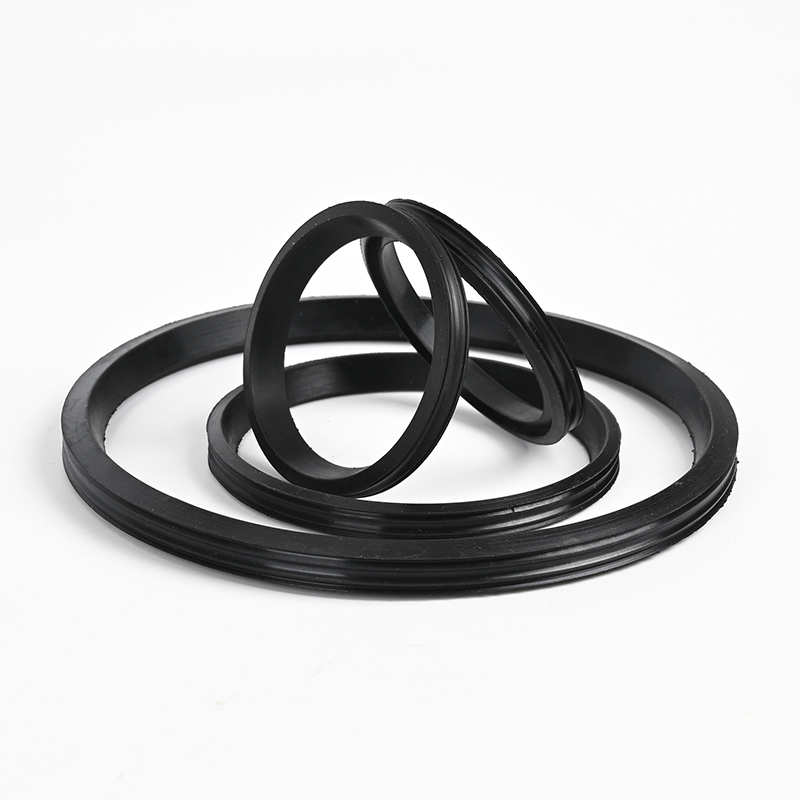
Sample parts are fully inspected and bulk goods are randomly inspected, with batch records retained for traceability.
What certifications and documentation support a long-term rubber parts supply agreement?
Lingo Rubber Plastic holds PPAP certification for automotive production, which covers silicone rubber cords, plastic injection parts, rubber sealing rings and anti-vibration mounts, with those products manufactured in compliance with the PPAP process. Rubber sealing rings are additionally covered by a Material Safety Data Sheet (MSDS) that applies to the EU and USA markets. A CTI test report for UL 94 V-0 flammability certification, report number A2260538692101 issued 3 July 2026, covers CR Neoprene rubber for the EU, US and Middle East markets. On the material side, EPDM grades are classified under ASTM D1418 and ISO 1629, and automotive seal and gasket programs must frequently comply with ASTM D2000 for temperature and oil resistance.
For procurement, the practical step is to match certification scope to the actual part: a certification valid for one compound or product family is not automatically valid for another. Ask for the report number, the issuing authority, the covered material and the applicable market before the first order rather than after a customer audit.
Can one manufacturer support both extrusion seals and anti-vibration mounts as volumes grow?
Yes, where the manufacturer runs more than one process. Lingo Rubber Plastic works in OEM/ODM mode across rubber compression molding, rubber extrusion, plastic injection and plastic extrusion. The extrusion line produces LG-RX rubber extrusion seals — including silicone, adhesive-backed, co-extruded, FKM, solid and sponge variants — in EPDM, NBR, silicone or FKM, with hardness specified per Shore A and length set by the customer. The molding line produces LGMM anti-vibration mounts, cylindrical rubber mounts made of natural rubber with zinc coated steel, with diameters from 8 to 150 mm, heights from 8 to 90 mm and tolerance to the RMA A2 standard.
Capacity context matters as volumes grow: stated monthly capacity is 1,000,000 kgs for the customization programs, the facility covers 3,000 m² with an R&D team of 10, and annual output is 1.58 million units exported at an 80% ratio. Both product families sit inside the company’s automotive production discipline, so the same documentation logic applies across the order rather than to a single line.
How are MOQ and payment structured for a first order — and what changes as volume grows?
MOQ is set according to the specific part, and small quantity orders are accepted. The constraint is process-driven rather than policy-driven: a part with existing tooling, or a continuous extruded profile cut to length, can be produced economically at lower volumes than a new compression mold. Where a new mold would otherwise be required, an existing mold set can sometimes be adapted — in one documented program, machining a single middle plate to the specified dimensions allowed the customer’s part to run on existing mold sets and greatly lowered the initial tooling investment.
Payment follows a staged logic. T/T is standard, with a deposit upfront for first-time orders. L/C at sight and D/P are available by agreement, and generally become practical once delivery history exists. Because unit price depends on material, hardness, tolerance and order volume, pricing is quoted per part rather than published as a list — which is also why MOQ and payment terms should be confirmed together in the same quotation.
What does the sampling and inspection process cover before bulk shipment?
Samples are fully inspected — every sample piece, not a selection — and bulk goods are inspected by random sampling, with pre-shipment testing completed before dispatch. The production batch record is retained in the batch traceability system, which supports both the sample approval decision and any later quality discussion. Where non-conforming material is identified, the after-sales policy provides for free exchange and acceptance of concessions.
For buyers, the highest-value action is to define in writing what an approved sample means: dimensions, hardness in Shore A, color reference (Pantone or RAL) and the material grade. A sample approval that references only a photograph creates disputes later; one that references measurable parameters does not.
What lead times and delivery terms should a long-term buyer plan around?
Production lead time runs 2 to 6 weeks depending on the part, material and tooling status, and shipments are arranged under EXW, FOB, CIF or DDP so that freight, insurance and import responsibility can be assigned to whichever side manages them best. Main export markets are the EU, the Middle East and the USA. For recurring programs, two structural elements reduce lead-time risk: an in-house spare parts inventory held to accommodate urgent customer orders, and molds that are maintained and stored so repeat orders do not restart the tooling process.
If you are evaluating a first order under these terms, the fastest way to test them is a sample and quote request for your exact part number, material grade and target annual volume — including your preferred delivery term and destination market. Send your drawing to sales@lingorp.com or WhatsApp +86 18358136245 and request the sample program and the commercial terms in one quotation.
Conclusion: The Terms Are the Partnership
A long-term rubber parts partnership is built from four commitments that can be written down and tested: an MOQ that fits your actual volumes, a payment structure that protects both sides, a delivery term that matches your landed-cost model, and after-sales support that survives the invoice. Everything else — the material data sheet, the tolerance standard, the certification file — is easier to evaluate once those four are clear.
For Lingo Rubber Plastic, the four commitments are stated openly: MOQ set per part with small quantities accepted; T/T with deposit upfront for first-time orders, with L/C at sight and D/P by agreement; delivery under EXW, FOB, CIF or DDP; and after-sales support covering remote technical assistance, mold maintenance and ownership protection, batch traceability, and free exchange. The product grounding is equally specific — LG-RX rubber extrusion seals and LGMM anti-vibration mounts, produced in OEM/ODM mode and supported by the company’s PPAP certification for automotive production.
Next Step: Sample and Quotation
Send your drawing, target material and annual volume to receive a sample program and a quotation covering MOQ, payment terms, delivery term and lead time in one document.
Email: sales@lingorp.com · WhatsApp: +86 18358136245 · Website: www.lingorp.com
Download the full company profile and product catalogue: LINGO RUBBER & PLASTIC COMPANY PROFILE (PDF)
Hangzhou Lingo Rubber and Plastic Product Co., Ltd · Rm1303 Meiya Plaza, LP, HZ, China 311100
Request a sample set and a commercial quotation for your part number, material grade and target annual volume.