
OEM Rubber Parts Manufacturing: Capabilities Behind the Part
OEM Rubber Parts Manufacturing: Capabilities Behind the Part
Selecting an OEM rubber parts manufacturer is rarely about a single price quote. It is about whether the supplier can turn a drawing into a component that meets tolerances, material performance, compliance, and delivery requirements—again and again.
Hangzhou Lingo Rubber and Plastic Product Co., Ltd (LINGO) is a manufacturer founded in 2022 by a team with more than 10 to 20 years of rubber and plastics industry experience. The company operates a 3,000 m² facility, employs around 40 people, and exports about 80% of its output to the EU and USA. LINGO produces rubber molding parts, rubber extruded parts, plastic injection parts, and plastic extruded parts, with a focus on sealing and anti-vibration applications.
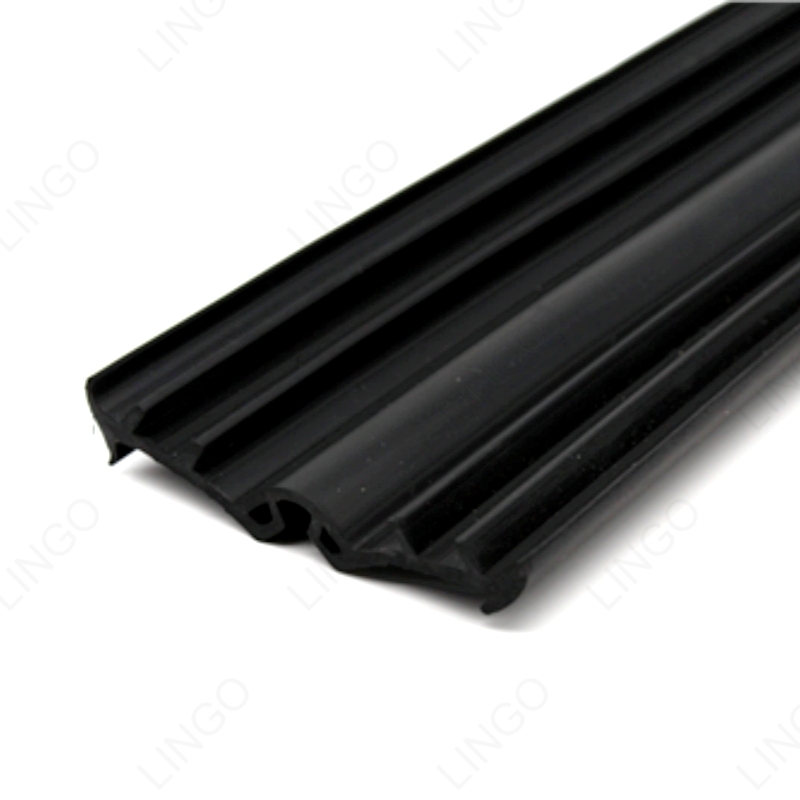
EPDM rubber extrusion seals: a core product category in OEM rubber parts manufacturing.
This article looks at OEM rubber parts manufacturing from a decision-making point of view: what capabilities matter, what evidence to check, and how LINGO’s production setup answers those questions.
What Buyers Are Really Evaluating When They Search for an OEM Rubber Parts Manufacturer
When procurement teams and engineers search for an OEM rubber parts manufacturer, they are often in the Evaluation or Execution stage. They have a drawing, a material suggestion, or a performance problem such as leaking, vibration, or noise. What they need is a supplier that can handle customization, provide the right material, maintain quality, and scale production without surprises.
A common mistake is to focus only on price and delivery. Beyond those, buyers need evidence of:
- Material range and compounding ability
- Molding and extrusion capability
- Tooling flexibility
- Tolerance and quality control standards
- Certifications such as UL, FDA, REACH, or PPAP documentation
- Willingness to accept small-batch orders during prototyping
Why the Rubber Parts Manufacturing Market Is Becoming More Capability-Driven
The demand for engineered rubber parts is significant. According to Grand View Research, the global gaskets and seals market was estimated at USD 63.09 billion in 2024, with seals accounting for 60.1% of revenue. Cognitive Market Research reported that the global rubber molding market reached USD 54.1 billion in 2024, with injection molding as the leading process and EPDM as a dominant material.
The anti-vibration segment is also substantial. Market Insights Reports valued the global anti-vibration mounts market at USD 6.03 billion in 2024. The same report noted that the three largest players held 65% of the market, meaning many buyers will work with specialized mid-size manufacturers for custom parts.
For global procurement, China’s role matters. Industry analysis published in 2024 indicated that China’s rubber parts industry accounts for more than 35% of global production, driven partly by EV battery sealing and thermal management demand. Buyers are therefore evaluating Chinese OEM manufacturers not only for cost, but for process capability, compliance, and consistency.
OEM and ODM Rubber Parts Capabilities: What LINGO Offers
LINGO operates in OEM and ODM production modes. That means customers can supply drawings and specifications, or work with the LINGO team to design and develop parts based on application requirements.
Rubber Compression Molding
Rubber compression molding is one of the core production processes. Product types include rubber sealing rings, rubber grommets, rubber bonded to steel, anti-vibration mounts, rubber bellows, rubber o-rings, rubber bushings, rubber diaphragms, and rubber gaskets. These parts are used across electronics, aerospace, healthcare, construction, transportation, and defense-related applications.
For rubber sealing rings, the production range covers materials such as NBR, EPDM, silicone, NR, CR, SBR, FKM, FFKM, and AFLAS. Hardness is normally 50 to 95 Shore A, and the heat range spans -40°C to 250°C depending on the compound. Color can be customized according to Pantone or RAL references.
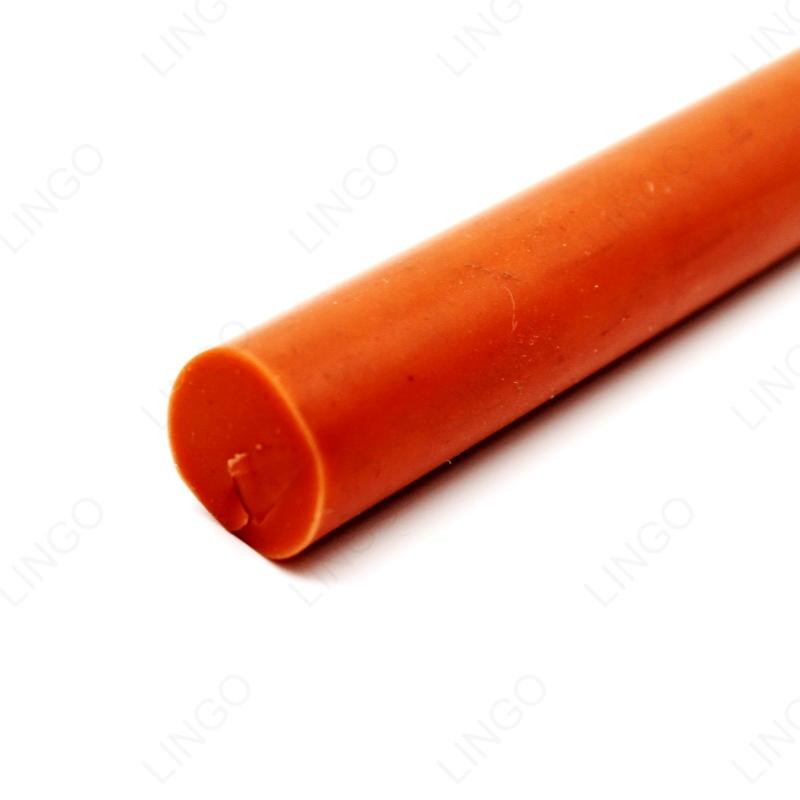
Silicone rubber extrusion cords are one type of custom rubber part available from LINGO.
Rubber Extrusion
Rubber extrusion parts include solid rubber strips, sponge rubber extrusion strips, grooved rubber strips, self-adhesive rubber strips, silicone rubber strips, and rubber insert strips. These profiles are suitable for door and window seals, appliance gaskets, automotive seals, and enclosure sealing.
Rubber extrusion seals can be made from EPDM, NBR, silicone, or FKM, with hardness specified as required. Length and color are both customizable. The product range includes silicone rubber extrusion seals, rubber co-extrusion seals, FKM rubber extrusion seals, solid rubber extrusion seals, and sponge rubber extrusion seals.
Silicone Rubber Cords and Rubber Extrusion Trims
In addition to standard profiles, LINGO offers custom silicone extruded cords and rubber extrusion trims under OEM/ODM service. Silicone rubber cords are available in solid and sponge versions, with custom colors and lengths. They are FDA-qualified and heat-resistant, making them suitable for food, medical, automotive, and industrial sealing applications.
Complementary Plastic Capability
While this article focuses on rubber parts, LINGO also manufactures plastic injection parts and plastic extrusion profiles. This is useful when an assembly requires both rubber dampers and plastic housings or guides. Plastic injection products include gaskets, washers, caps, housings, handles, and guide rails. Plastic extrusion products include PA6, PA66, PE/HDPE/UHMWPE trims, glass-filled profiles, co-extruded trims, and decorative trims.
How to Assess an OEM Rubber Parts Manufacturer: A Step-by-Step Framework
Step 1. Define the operating environment
Identify temperature range, chemical exposure, pressure, UV and ozone conditions, and required hardness. These parameters determine whether NBR, EPDM, silicone, CR, FKM, or another polymer is suitable.
Step 2. Review material and compliance options
Check whether the manufacturer can supply materials that meet market requirements. LINGO lists FDA, UL, RoHS, and REACH among the certificates available for rubber sealing rings, and provides an MSDS for sealing-ring materials. A CTI Test Report for UL 94 V-0 flammability testing (certificate No. A2260538692101) is available for CR Neoprene rubber.
Step 3. Evaluate production processes
Compression molding is common for seals, grommets, o-rings, and mounts. Rubber extrusion is used for continuous profiles and cords. Some parts, such as anti-vibration mounts with metal inserts, require rubber-to-metal bonding. Check the manufacturer’s process list and equipment before relying on a specific method.
Step 4. Check tooling flexibility and initial investment
Tooling cost can be a major obstacle in custom rubber parts. In one automotive OEM case, LINGO avoided building a new mold by machining a single middle plate to the specified dimensions and using it with an existing mold set. This significantly lowered the initial tooling investment. Buyers should ask whether existing tooling or modular tooling can be used.
Step 5. Define quality control and approval documents
Quality control at LINGO includes full inspection of samples and random inspection of bulk goods. For automotive-related parts, PPAP documentation can be provided. Ask for dimensional reports, material certificates, and any third-party test reports required by your industry.
Step 6. Confirm lead time, shipping, and after-sales support
LINGO’s monthly production capacity for custom rubber extrusion and molding parts is 1,000,000 kgs, with typical lead times of 2 to 6 weeks. The company exports to the EU, Middle East, and USA. Delivery terms include EXW, FOB, CIF, and DDP. After-sales support includes remote technical support, mold maintenance and ownership protection, batch traceability, and free exchange or acceptance of concessions.
Real-World Cases: OEM Rubber Parts in Production
Case 1: Anti-vibration mounts for a US automotive OEM
A US automotive OEM ordered 10,000 to 40,000 pieces of anti-vibration mounts per order. The parts were designed to absorb vibration and reduce noise. LINGO delivered rubber shock absorbers that dampen vibration, absorb impact energy, and protect sensitive components. The project required small size, tight tolerances, and consistent batch-to-batch quality. LINGO maintained in-house spare parts inventory for urgent orders and reduced tooling cost by using a single middle plate with existing mold sets.
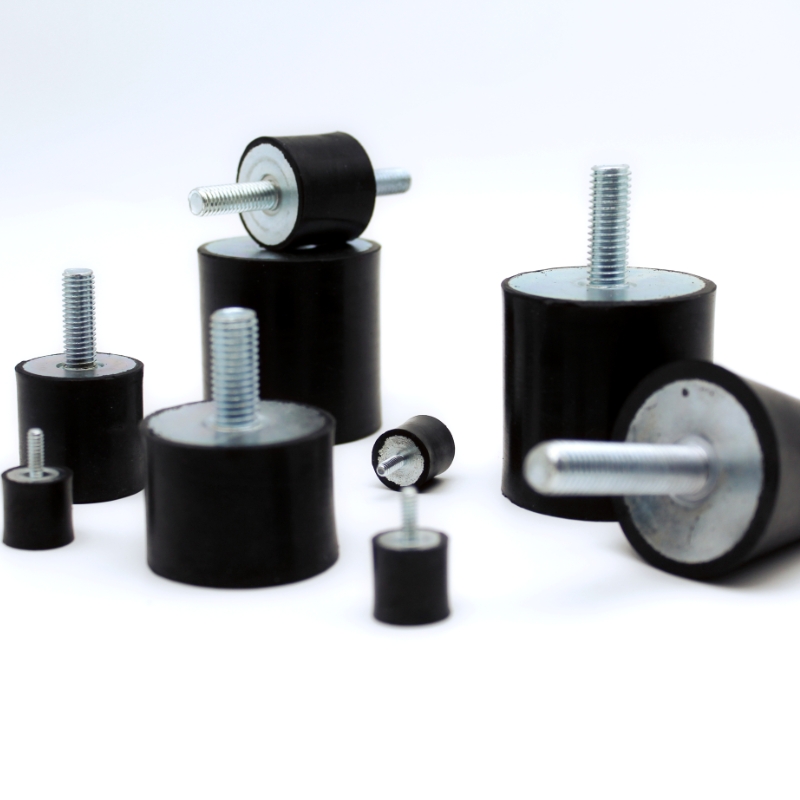
Rubber shock absorbers are a common OEM rubber part for vibration control.
Case 2: Small-batch UL 94 V-0 mounts for the US automobile industry
In another US automobile-industry case, the order quantity was 500 pieces, repeated about four times per year. The anti-vibration mounts needed consistent damping under extreme temperature and load. Test data showed a 45% reduction in peak vibration amplitude. The parts were engineered with flame-retardant rubber compounds for fire safety and used existing tooling for immediate production. UL94 V-0 certification, competitive price, and fast delivery were the main highlights.
Case 3: Silicone sponge cords for sealing in the UAE
An automotive OEM client in the United Arab Emirates used 4,000 meters of silicone sponge rubber cords over a three-year period. The application covered EV battery sealing, industrial cabinet gaskets, automotive door seals, appliance door insulation, building window weatherstripping, and medical device sealing. The sponge cords provided thermal stability from -60°C to 250°C, UV and ozone resistance, closed-cell sealing, and FDA-compliant material options.
Case 4: FDA-compliant sealing components for global customers
Customers in the US, GB, CA, AU, FR, and DE—spanning automotive OEM, water treatment equipment, and food industry applications—used LINGO rubber sealing rings for water sealing. Over three years, the parts maintained stable operation and stayed within tolerance, with zero claims. The high-precision requirement exceeded ASTM A1 standards, and the white FDA-certified rubber material was pollution-free. LINGO also solved the common problem of metal parts shifting during rubber production when no positioning point exists.
Rubber Parts Capability Comparison at a Glance
Below is a practical overview of four common rubber part categories produced by LINGO.
| Product Series | Representative Parts | Material Options | Key Parameters | Common Industries |
|---|---|---|---|---|
| Rubber sealing rings (LG-RS) | Rubber o-rings, X-rings, oil seals, sealing rings | NBR, EPDM, silicone, NR, CR, SBR, FKM, FFKM, AFLAS | Hardness 50-95 Shore A; heat range -40°C to 250°C; FDA, UL, ROHS, REACH available | Automotive, aerospace, oil and gas, food and beverage, water treatment, electronics, marine, heavy machinery |
| Rubber extrusion seals (LG-RX) | Silicone rubber extrusion seals, rubber co-extrusion seals, FKM rubber extrusion seals, sponge rubber extrusion seals | EPDM, NBR, silicone, FKM | Hardness and length as required; tolerance per industry standards; custom colors | Food and beverage, medical and healthcare, aerospace, automotive, HVAC, marine, household appliances |
| Anti-vibration mounts (LGMM) | Cylindrical rubber mounts, rubber stud mounts | Natural rubber with zinc-coated steel | Diameter 8-150mm; height 8-90mm; tolerance RMA A2 standard | Transportation, industrial machinery, electronics, construction, marine, military |
| Silicone rubber cords (LG-SRC) | Solid silicone rubber cords, sponge silicone rubber cords | Silicone rubber | Custom color and length; FDA-qualified; heat-resistant | Food and beverage, medical and healthcare, aerospace, automotive, HVAC, household appliances |
Note: Parameter ranges depend on compound, design, and application. Confirm final specifications with the manufacturer before production.
Compliance and Documentation for OEM Rubber Parts
Documentation is part of manufacturing capability. LINGO provides an MSDS for rubber sealing ring materials. A CTI Test Report for UL 94 V-0 flammability certification (certificate No. A2260538692101) covers CR Neoprene rubber and is relevant to rubber sealing rings, rubber extrusion seals, and anti-vibration mounts. For automotive production parts, PPAP documentation can also be supported.
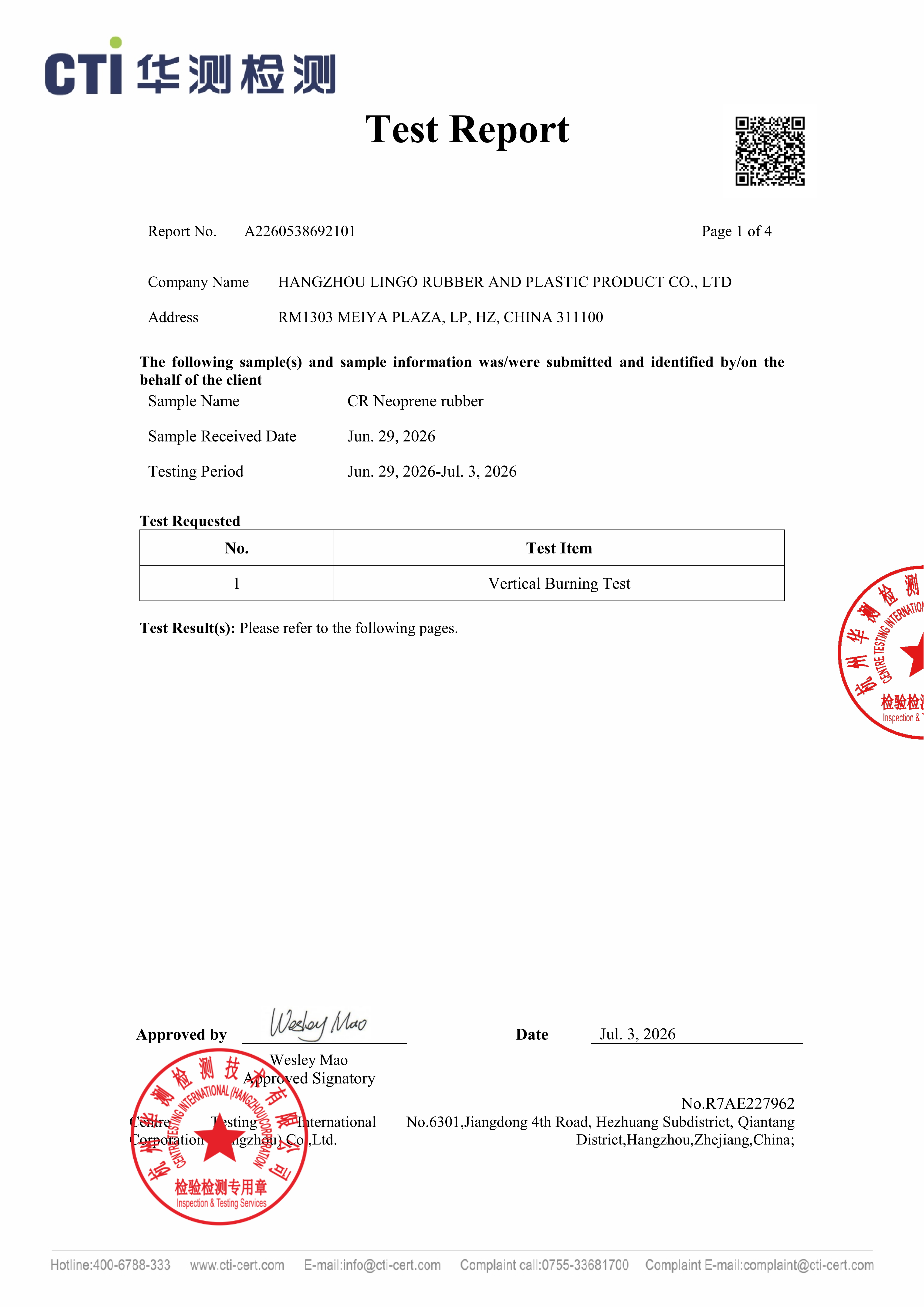
Third-party flammability testing is one example of compliance evidence used by OEM buyers.
FAQ: OEM Rubber Parts Manufacturer Questions
What certifications should an OEM rubber parts manufacturer provide?
For custom rubber parts used in automotive, industrial, or export markets, a manufacturer should provide material safety documentation, flammability test reports, and automotive approval support where needed. LINGO provides an MSDS for rubber sealing ring materials, holds a CTI Test Report for UL 94 V-0 flammability on CR Neoprene rubber (certificate No. A2260538692101), and supports PPAP documentation for production part approval. For specific applications, FDA, UL, RoHS, and REACH are also referenced.
What production capabilities should an OEM rubber parts manufacturer have?
A capable OEM/ODM rubber parts manufacturer should cover both molding and extrusion. LINGO produces rubber compression molding parts, rubber extrusion profiles and seals, and custom silicone extruded cords and rubber extrusion trims. Monthly capacity is 1,000,000 kgs, with typical lead times of 2 to 6 weeks. Materials include NBR, EPDM, silicone, NR, CR, SBR, FKM, FFKM, and AFLAS.
Can an OEM rubber parts manufacturer handle custom tooling and small quantity orders?
Yes. LINGO states that the minimum order quantity differs according to the part, and small quantity orders are acceptable. Tooling costs can be reduced when existing mold sets can be adapted. In one automotive OEM case, a single machined middle plate was used with existing mold sets to avoid a completely new mold.
What is the typical lead time for custom rubber parts?
Typical lead time is 2 to 6 weeks, depending on product type, tooling situation, and order quantity. LINGO exports to the EU, Middle East, and USA, with delivery terms such as EXW, FOB, CIF, and DDP available.
How can I request samples or a quote from LINGO?
You can contact LINGO directly by email at sales@lingorp.com or by WhatsApp at +86 18358136245 to request samples, discuss tooling, or ask for a quotation. A downloadable company profile is also available for a detailed overview of production capabilities.
Conclusion: OEM Rubber Parts Manufacturing Is a Capability Decision
An OEM rubber parts manufacturer must provide more than raw production capacity. Material selection, tooling flexibility, quality control, documentation, and lead times determine whether a project moves smoothly from sample to mass production.
LINGO’s combination of rubber compression molding, rubber extrusion, custom silicone products, in-house quality checks, and flexible MOQs makes it a practical option for buyers evaluating OEM/ODM rubber parts suppliers. Use the capability checklist above to compare suppliers on the factors that actually affect your part quality and cost.
Contact LINGO to discuss your rubber parts project.
Email: sales@lingorp.com
WhatsApp / Tel: +86 18358136245
Address: Rm1303 Meiya Plaza, LP, HZ, China 311100
Website: www.lingorp.com
Download the LINGO Rubber & Plastic Company Profile for a complete overview of manufacturing capabilities.