
Plastic Extrusion Profiles: A Designer's Process Guide
A plastic extrusion profile is a continuous-length part whose cross-section is identical from one end to the other. Design value is created or lost in four decisions: the section geometry, the material family, the tolerance class, and the cut length with its end features. This guide walks designers through each decision, compares extrusion with injection molding and CNC machining, and shows how LINGO's extrusion capability fits into an early-stage application scope.
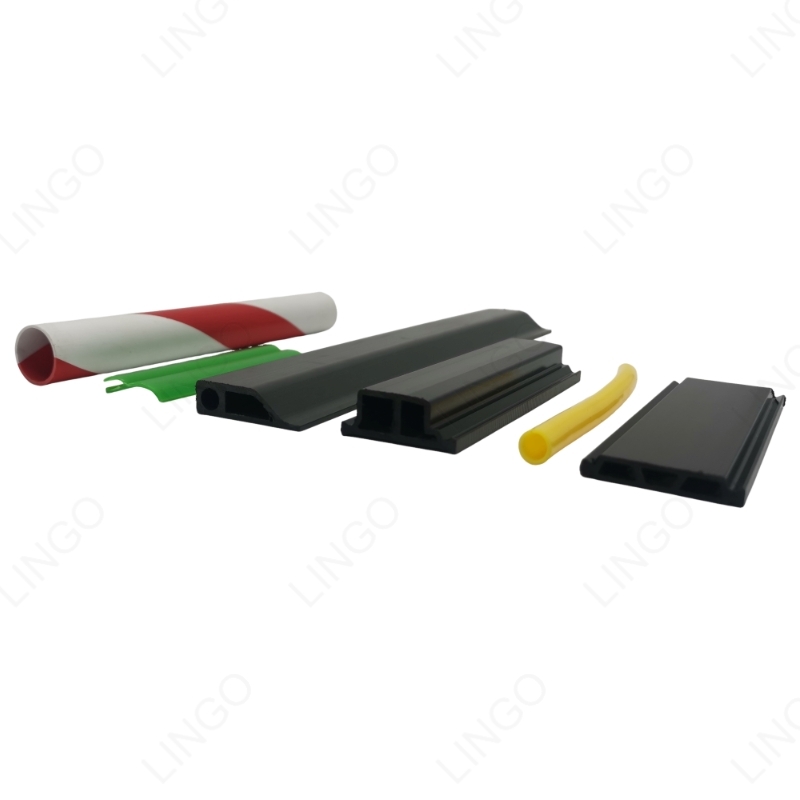
Plastic extrusion profiles are made by pushing molten polymer through a die shaped like the finished section, cooling the extrudate under calibration, and then coiling it or cutting it to length. Nothing about the shape changes along the run. That single geometric rule is why most of the design work happens before the die is cut, on a two-dimensional section drawing rather than in a 3D part model.
For a designer scoping a new application, the useful question is not what extrusion is. It is what belongs on the drawing so the profile can be made, measured and repeated at volume. Four decisions carry most of that weight: section geometry, material family, tolerance class, and cut length with end features. Getting them right on paper is considerably cheaper than correcting them in tooling.
The Design Problem: One Cross-Section, Repeated Without Variation
Profile projects rarely fail in production. They fail in the drawing. Designers who learned the craft on injection-molded parts tend to carry over habits that a die cannot absorb: walls that taper unevenly across the section, features that exist along only part of the length, undercuts that would need a side action in a cavity tool, or a cosmetic face specified as "smooth" with no gloss target and no agreed measuring method.
Because the cross-section is fixed, features that vary along the length — holes, slots, notches, steps, threaded ends — are normally produced after extrusion by cutting, punching, drilling or CNC machining. A drawing that mixes section geometry with along-length features usually comes back as two separate quotations, later than the project plan assumed, and often with a tolerance stack that no single process owns.
The second common problem is tolerance language. A designer who writes a tight number on every dimension, without naming a class or a measuring method, transfers the entire risk to the tool shop and then to incoming inspection. Extruded profiles are measured against a tolerance class first and a dimension second; when the class is missing, the drawing has no shared reference point between supplier and buyer.
- A dimensioned cross-section drawing with every wall, radius and datum defined.
- The material family and grade, chosen against the service environment.
- A tolerance class, not a set of individually negotiated numbers.
- Cut lengths, end-cut angle, and the accepted burr or edge condition.
- Appearance requirements: colour, gloss, which face is cosmetic.
- Exposure conditions: UV, temperature, chemical contact, flexing, abrasion.
- Annual volume, pack format, and whether the profile feeds an automated assembly line.
Where Extrusion Sits in the Plastics Landscape
Plastics remain a large manufacturing base. Grand View Research reports the global plastic market at USD 963.7 billion in 2025, with the injection molding segment holding a 42% share of that market in the same year. Trade data points the same way: exports under HS code 392690, the customs heading covering articles of plastics, reached USD 66.77 billion in 2025 according to UN Comtrade.
Those figures explain a bias most designers meet in every review meeting. Injection molding is the default mental model for a plastic part, so a new component is often imagined as a discrete molded object even when its geometry is long, thin and constant. Extrusion covers the other half of the geometry problem: parts where length is the scaling variable and the section is what the buyer actually specifies.
On the specification side, ISO 20457:2018 sets out tolerances and acceptance conditions for plastic moulded parts and remains the shared reference frame designers and suppliers can point to when a tolerance argument starts. It does not replace a class assignment on the drawing, but it gives both sides the same vocabulary for interpreting one.
How LINGO Produces Extruded Profiles and Where the Control Points Are
Hangzhou Lingo Rubber and Plastic Product Co., Ltd (LINGO) is a China-based manufacturer of rubber compression molding parts, rubber extrusions, plastic injection parts and plastic extrusion profiles, exporting roughly 80% of output to the EU and the USA through www.lingorp.com. LINGO was co-founded by people who have spent more than ten years — in some cases more than twenty — inside the rubber and plastics industry, which is why the technical conversation usually starts at the cross-section drawing instead of a price list.
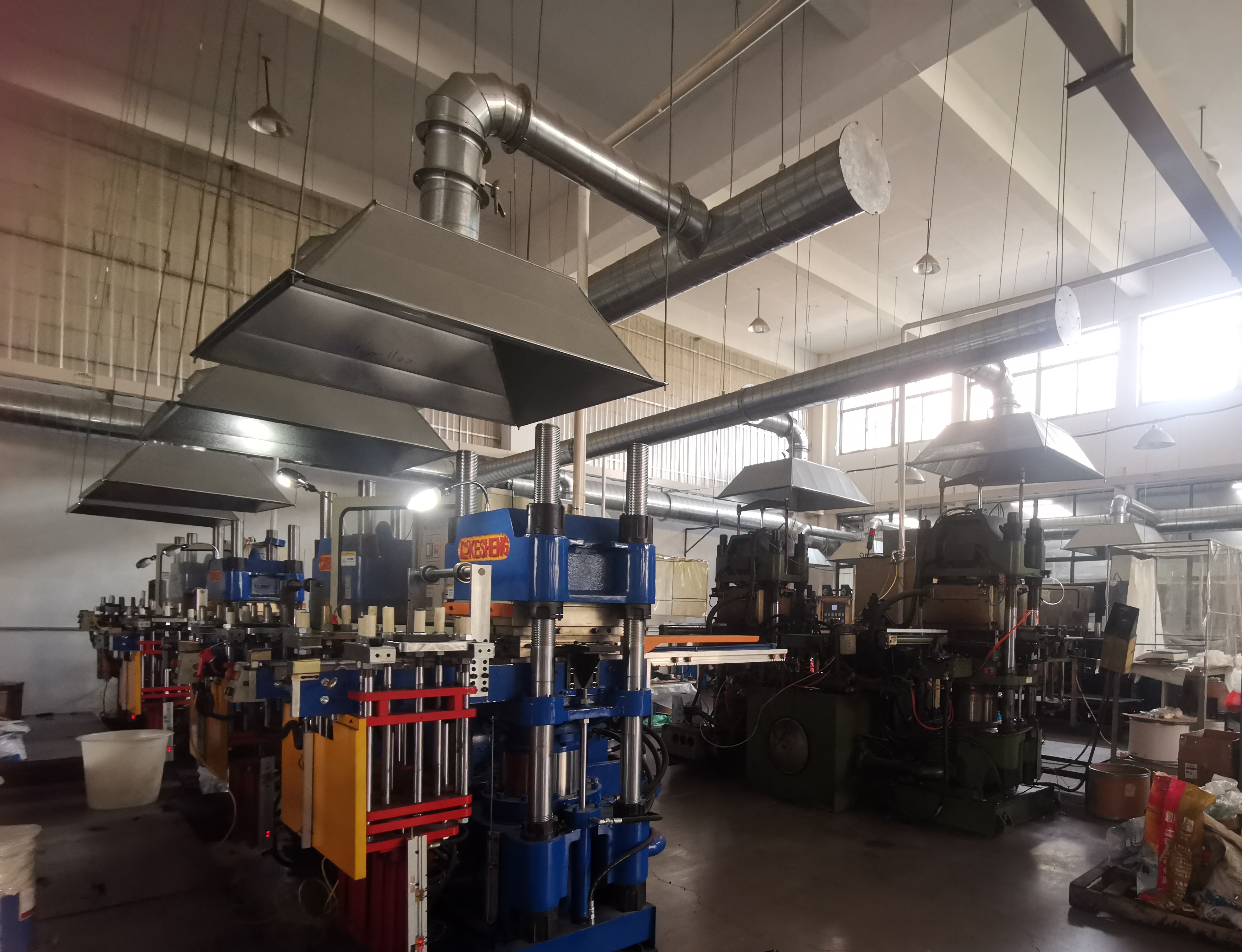
Process routes under one roof
LINGO's stated manufacturing scope covers plastic injection molding, plastic extrusion, PVC dip molding and CNC precision machining, alongside rubber compression molding, rubber extrusion, PTFE machining, PEEK machining, acrylic machining and assembly. For a profile project this matters in a practical way: a profile body, a machined end detail and a dipped grip can be quoted as one part number from one supplier rather than stitched together across three vendors with three tolerance interpretations.
Profile families and material families
LINGO's plastic extrusion range is organised by polymer family: PA6 extrusion trims, PA66 extrusion trims, PE/HDPE/UHMWPE extrusion trims, glass-filled extrusion trims, co-extruded trims, decorative trims and thermoplastic elastomer extrusion trims. Each family answers a different design intent — mechanical strength and wear for the polyamides, low-friction or chemically exposed duty for the polyethylene grades, added stiffness and dimensional stability for glass-filled compounds, dual-durometer or two-colour sections through co-extrusion, flexible sealing or grip through thermoplastic elastomers, and visible-surface quality through decorative trims.
Tolerance and process capability
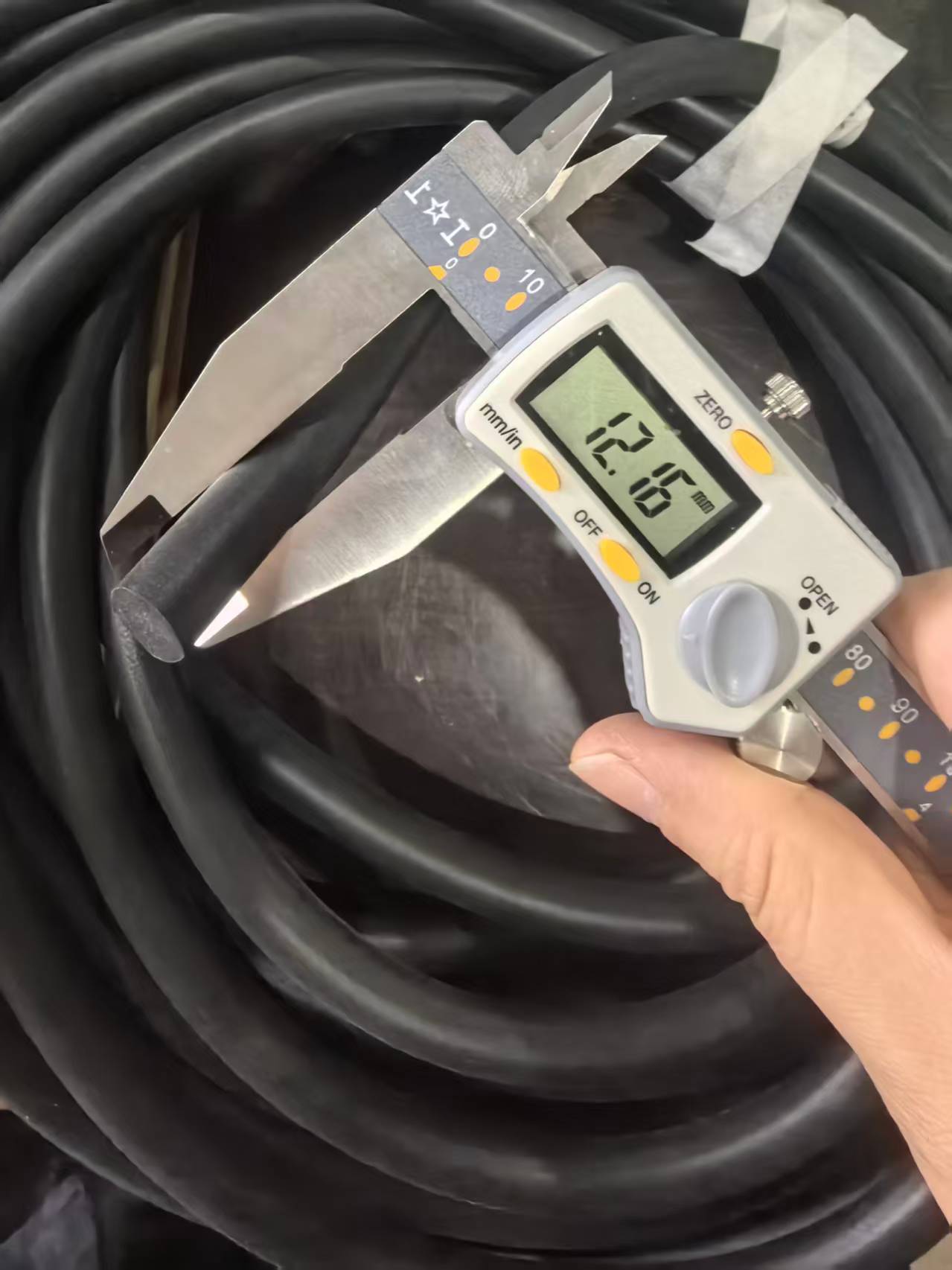
LINGO controls tolerance to rubber RMA A2 and plastic M1–M3 classes, with capability consistently maintained at CPK ≥ 1.33. For a designer, that statement has a direct drawing consequence: the tolerance band should be written in the class language the supplier measures against, so that capability is demonstrated against an agreed reference instead of argued dimension by dimension. Measurement discipline supports the claim — measuring tools are calibrated periodically to CNAS requirements, mould cavities are monitored in real time with pressure sensors, and shrinkage is simulated during tool design rather than corrected after the first trial.
Where cost is actually created in a profile
LINGO attributes its cost position to high product stability, a low defect rate, extended mold life and material modification formulas that lengthen service life. Tooling and production choices reinforce it: a self-developed mold structure raises output and reduces unit price, low machine energy consumption lowers unit cost directly, and machine-based production with cryogenic or machine deflashing reduces labour content. In practice, three drawing decisions — wall uniformity, section complexity and tolerance class — move the unit price of an extruded profile further than most first-time buyers expect.
The three failure modes worth designing out early
Aging. Hardening or softening from aging is controlled by selecting a substrate with good weather resistance, adding light stabilizers, antioxidants and anti-ozone agents, and applying a protective coating where the application allows. LINGO verifies weather resistance with QUV and xenon lamp aging tests, controls additive dosage with batch traceability, and runs accelerated aging in a reliability laboratory.
Surface gloss consistency. Uneven gloss is controlled through mold surface condition and process parameters such as temperature, pressure and speed. LINGO maintains a mold maintenance plan, standardises process parameters into an SOP, and performs surface gloss testing on the first piece.
Dimensional drift. Out-of-tolerance dimensions are controlled through process parameters, shrinkage simulation during mold design, and regular calibration of moulds and measuring tools. LINGO backs this with product sampling inspection, CNAS-aligned tool calibration and real-time cavity pressure monitoring.
Design-to-Production: A Step-by-Step Workflow
Step 1 — Fix the functional section first
Decide what the profile must do before deciding what it looks like: seal, grip, trim, guide, insulate or separate. The functional envelope defines the minimum wall, the contact faces and the datum surfaces. Everything else on the drawing should be traceable to one of those functions.
Step 2 — Keep walls uniform and radius the internal corners
Even wall thickness is the single strongest predictor of a stable extrusion. Sharp internal corners concentrate stress and complicate cooling; radii distribute both. Where a heavy section meets a thin one, expect differential cooling and plan the tolerance budget around it rather than fighting it in inspection.
Step 3 — Design a constant section, then move along-length features to secondary operations
Holes, slots, notches and steps belong in the post-extrusion operations plan — punching, drilling or CNC machining. Naming those operations on the drawing, with their own tolerances, keeps the profile tool simple and the quotation comparable between suppliers.
Step 4 — Choose the material against the environment, not the price list
PA6 and PA66 sections suit mechanical duty and wear; PE/HDPE/UHMWPE sections suit low-friction or chemically exposed service; glass-filled compounds add stiffness; thermoplastic elastomers provide flexible sealing or grip; co-extruded sections combine two hardness zones in one profile; decorative trims carry the visible surface. If the part will sit outdoors, the aging controls described above belong in the specification from the start.
Step 5 — Assign a tolerance class, then dimension within it
State the class — plastic M1–M3 for the plastic profile, RMA A2 where a rubber element is involved — and use ISO 20457:2018 as the common reference for moulded-part tolerances. A declared class with CPK ≥ 1.33 process capability behind it gives the assembly designer a predictable budget and gives inspection a defensible acceptance rule.
Step 6 — Define cut lengths, end cuts and edge condition
Length tolerance, cut angle, burr allowance and whether ends are square-cut or machined are all separate cost and quality items. They should be on the drawing, not agreed verbally after the first shipment.
Step 7 — Specify appearance with a measuring method
A gloss target without a test method is not a specification. Name the cosmetic face, the gloss expectation and the check to be performed — first-piece gloss testing, for example — so the acceptance decision is objective on both sides.
Step 8 — Validate before series production
First-piece approval, sampling inspection and, where relevant, aging tests establish whether the drawing and the process agree. LINGO provides PPAP level 1–3 for custom parts, which gives buyers with automotive or industrial approval requirements a documented route from sample to series supply.
Use Cases: Where Constant-Section Profiles Earn Their Place
LINGO's parts are used across electronics, aerospace, healthcare, construction, transportation and defense applications, and the extrusion range serves the same base from a different angle. Constant-section profiles are the natural choice where the part is long relative to its section: edge trims and protective edging on panels and enclosures, sealing and gap-filling strips, guide rails, spacer strips, grip surfaces and visible decorative trim.
Combined with LINGO's other processes, a single programme can carry several part types with consistent material and quality logic — plastic handles and PVC dipped grips, plastic gaskets and plastic washers, plastic caps, plastic housings and plastic guide rails on the injection side, and extruded tubing, plastic strip and extruded profiles on the extrusion side. Buyers sourcing custom plastic parts and plastic components therefore see one supplier instead of a chain of specialists.

Extrusion vs Injection Molding vs CNC Machining: A Decision Comparison
Extrusion is not a replacement for the other two routes. It is the route that fits a particular geometry. The comparison below is written for the design decision, not for the purchasing decision: it shows which criterion changes when the section becomes constant and the length becomes the variable.
| Criterion | Extruded profiles | Injection molding | CNC machining |
|---|---|---|---|
| Geometry it fits | Constant cross-section, continuous length, cut to size | Discrete 3D parts with ribs, bosses and varying wall | Features cut from solid stock: pockets, bores, profiles |
| Tooling basis | Die shaped to the section | Closed cavity mold | No cavity tooling; programmed tool paths |
| How cost scales | With length and material throughput | With part count against tooling amortisation | With machining time per part |
| Tolerance reference | Plastic M1–M3 classes; ISO 20457:2018 as the moulded-part reference | Moulded-part tolerances, ISO 20457:2018 | Tolerances assigned per drawing on the machine |
| Appearance driver | Die surface and process parameters; gloss checked on first piece | Cavity surface and process parameters | Tool marks and finishing steps |
| Typical secondary work | Cut, punch, drill, machined ends, PVC dip grips | Inserts, assembly, decoration | Deburring, surface finishing |
| Main design risk | Uneven walls and cooling-driven distortion | Shrinkage, warp, tooling cost | Cost per part at higher volumes |
Reading the table in practice: if the part is long and its section does not change, extrusion removes the cavity tool from the cost equation and puts the emphasis on die design and cooling. If the part needs bosses, snap features or a section that changes along its length, injection molding carries that geometry more naturally. If the quantity is low or the geometry is a one-off, CNC machining avoids tooling altogether — and LINGO's CNC precision machining can also finish extruded ends where both are needed.
FAQ: Plastic Extrusion Profiles for Designers
Which tolerance standard should a designer reference for plastic extrusion profiles?
ISO 20457:2018 specifies tolerances and acceptance conditions for plastic moulded parts and is the practical reference frame for a profile drawing. LINGO controls tolerance to plastic M1–M3 classes and to rubber RMA A2 where a rubber element is involved, with capability maintained at CPK ≥ 1.33. The class should be named on the drawing before quotation, because it determines how the profile is measured and how much tolerance budget remains for the assembly.
Can LINGO produce PA6, PA66, PE, glass-filled, co-extruded and thermoplastic elastomer profiles?
Yes. LINGO lists PA6 extrusion trims, PA66 extrusion trims, PE/HDPE/UHMWPE extrusion trims, glass-filled extrusion trims, co-extruded trims, decorative trims and thermoplastic elastomer extrusion trims within its plastic extrusion range. The same manufacturing organisation also provides plastic injection molding, PVC dip molding, CNC precision machining and assembly, so a profile body, a machined end and a dipped grip can be handled as one programme rather than three separate supplier relationships.
What drives the unit price of an extruded plastic profile?
LINGO attributes cost reduction to high product stability, a low defect rate, extended mold life and material modification formulas that extend service life. On the production side, a self-developed mold structure increases output and reduces unit price, low machine energy consumption lowers unit cost directly, and machine-based production with cryogenic or machine deflashing reduces labour content. From the design side, wall uniformity, section complexity and the chosen tolerance class are the three variables a designer controls that most influence the quoted unit price.
Can a profile design be validated before series production starts?
Yes. LINGO provides PPAP level 1–3 for custom parts, which supports documented approval before series supply. Validation normally combines first-piece checks such as surface gloss testing, product sampling inspection during the run, measuring tools calibrated to CNAS requirements, real-time mold cavity pressure monitoring, and QUV or xenon lamp aging tests in a reliability laboratory where weather resistance matters.
How does LINGO support supply continuity for long extrusion runs and export delivery?
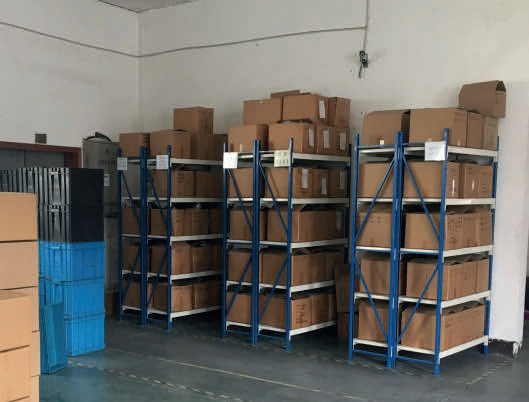
LINGO operates a 3,000 m² facility with around 40 employees, a 10-person R&D team and annual output of 1.58 million units, with roughly 80% of output exported to the EU and the USA and stated export markets including the United States, Canada, Europe, Australia and Asia. Service is positioned around short lead time and quick response to after-sales requests, with replacement or refund for defective items. To move a profile from concept to quotation, send a cross-section drawing, the intended material family and the annual length requirement to sales@lingorp.com, or download the LINGO company profile for the full process and product list.
Conclusion: Four Decisions Before the Die
Plastic extrusion profiles reward designers who treat the cross-section as the product. Section geometry decides whether the profile can be cooled evenly; material family decides how it behaves in service and how it ages; tolerance class decides how it is measured and accepted; cut length and end features decide what happens after the extrudate leaves the line. Those four decisions, made explicitly and in that order, turn a concept sketch into a drawing a supplier can quote, tool and repeat.
Extrusion also has a clear boundary. Where the section must change along the length, where bosses and snap features carry the function, or where quantities are low and geometry is a one-off, injection molding or CNC machining will usually serve the design better — and a supplier that runs all of these routes can say so without moving the project elsewhere. That is the practical value of scoping an application with a manufacturer that covers rubber compression molding, rubber extrusion, plastic injection parts, plastic extrusion profiles, PVC dip molding and CNC machining under one quality system.
Next Step: Scope Your Profile With LINGO
Lingo Rubber Plastic supports designers and buyers with cross-section review, material selection and tolerance class assignment before tooling is committed. Share your drawing and annual volume to receive a quotation, a sample plan or the full company profile.
Website: www.lingorp.com | Email: sales@lingorp.com | WhatsApp: +86 18358136245
Download the brochure: LINGO Rubber & Plastic Company Profile (PDF)
Have Questions or Need More Details?
Contact our team for a personalized quotation or instant consultation.
Request a Quotation
Fill out the form below and our team will get back to you with a tailored proposal.
WhatsApp Direct Chat
Prefer to chat in real-time? Message us on WhatsApp for instant assistance & quick answers.
- Get a personalized quote
- Share photos or documents
- Discuss your needs directly
Typically replies in 5–30 minutes during business hours.