
Plastic Parts Sourcing Problems Solved: A Manufacturer's Field Guide
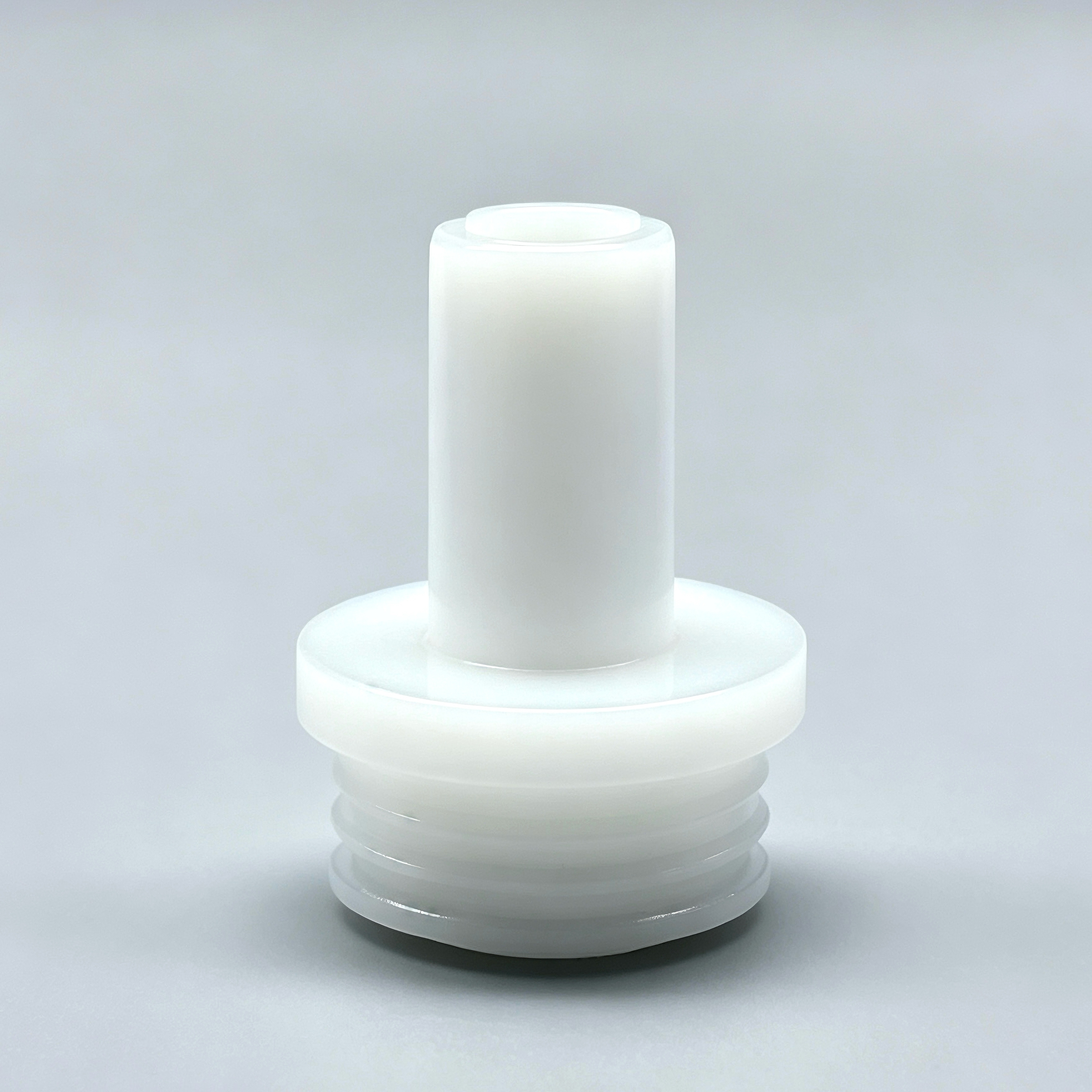
Cover: precision plastic components from the LG-CNC range.
Most plastic parts sourcing problems are not exotic. They come from four ordinary places: a material that looks correct on a datasheet and fails in service; a tolerance callout that no process can hold at a sensible cost; a part that needs several processes and ends up split across several vendors; and a compliance file that arrives late, incomplete, or attached to the wrong part number.
Lingo Rubber Plastic, formally Hangzhou Lingo Rubber and Plastic Product Co., Ltd, is a manufacturer of rubber and plastic components that works in that territory daily. Its plastic scope covers injection parts (LG-PI), injection molded auto parts (LG-AP), CNC machined parts (LG-CNC), extruded profiles (LG-PE) and PVC dipping handles (LGHD), alongside rubber compression molding and rubber extrusion. Around 80% of output is exported, with the EU and USA as the main markets.
The company was co-founded by people who have spent more than a decade in rubber and plastics production and, in some cases, more than 20 years. That experience surfaces in the questions asked before a quotation is issued: which medium the part touches, which dimensions actually function, which documents the destination market requires, and how the part will be measured when it is inspected.
The sections below take each sourcing problem in turn, set out the specification and process controls documented against it, and identify what a buyer should verify before releasing an order.
The Four Sourcing Problems, Defined
The same four failure modes appear across injection molded parts, machined components, extruded profiles and dip-coated handles. Naming them is the first step to writing a specification that survives contact with production.
- Material selection uncertainty. Two resin datasheets can look equivalent while behaving differently in contact with a chemical, at a temperature extreme, or under continuous load. The buyer who cannot read the difference usually buys the cheaper sheet, then re-qualifies the part a quarter later.
- Tolerance ambiguity. A drawing that marks every dimension to the same tight limit moves cost into the mould and the inspection bench without improving function. A critical dimension left at general tolerance does equal damage from the opposite direction: it becomes the argument at first article.
- Multi-process fragmentation. A part moulded by one supplier, machined by a second, coated by a third and assembled by a fourth carries three tolerance stacks, three lead times and three document sets, with nobody accountable when the interfaces do not meet.
- Compliance verification gaps. REACH, RoHS, FMVSS 302, FDA, UL94 V-0 and PPAP are not interchangeable, and a family-level statement is not a part-level file. A declaration with no part number on it is a document, not evidence.
The four compound. A late material change forces a tolerance re-check, a new sample and a fresh compliance file, and each step rebuilds the schedule. Price rarely starts these arguments, yet price is where they usually end. The more useful question is therefore not who quotes lowest, but which supplier can close all four gaps inside one order.
Why These Problems Are Structural, Not Personal
Grand View Research estimated the global plastics market at USD 963.7 billion in 2025 and put the injection molding segment at 42% of that market in the same year. Trade analysis of HS code 392690, articles of plastics, recorded a global export value of USD 66.77 billion in 2025. Both figures describe a large, mature and heavily traded category.
Size does not solve a specification problem. A market of that scale is exactly what allows a buyer to receive twenty quotations for one drawing with no agreement on material grade, tolerance class or documentation. What the numbers do explain is why process routing rarely has a single answer: much of the real work is not mainstream high-volume moulding, but the awkward remainder — short runs, aggressive chemicals, long profiles and grips.
Standards make those cases discussable. ISO 20457:2018 specifies manufacturing tolerances and acceptance conditions for plastic moulded parts and remains current; the Lingo injection range applies a comparable framework through GB/T 14486 tolerance classes MT1 to MT7. Neither standard chooses the material or validates the application. Both give buyer and supplier a shared language for the argument.
Problem 1: Material Selection Uncertainty
Material uncertainty is resolved by narrowing the choice against service conditions first, then by keeping the approved material list tied to the process that will actually run the part. A supplier offering every polymer in every process is describing a catalogue, not a capability.
The Lingo plastic range is documented per product line. LG-CNC machined parts run in PTFE, POM, PE, UHMWPE, HDPE, PEEK, ABS, PU, PA6 and PA66, with or without glass fibre, covering seals and gaskets, back-up and anti-extrusion rings, gears, bearings and bushings. LG-PI injection parts run in PP, PA6, PA66, ABS, PE, HDPE, UHMWPE, LDPE, PU, PTFE and glass-fibre reinforced grades, with filler or modification options of glass fibre, flame retardant and UV stabiliser. LG-AP auto parts cover PP, PE, PS, ABS, PBT, PET, PVC, PA, PC, POM, PTFE and PEEK, while the LG-PE extrusion line runs PVC, PP, ABS, PA6, PA66, PE and UHMWPE, again with or without glass fibre.
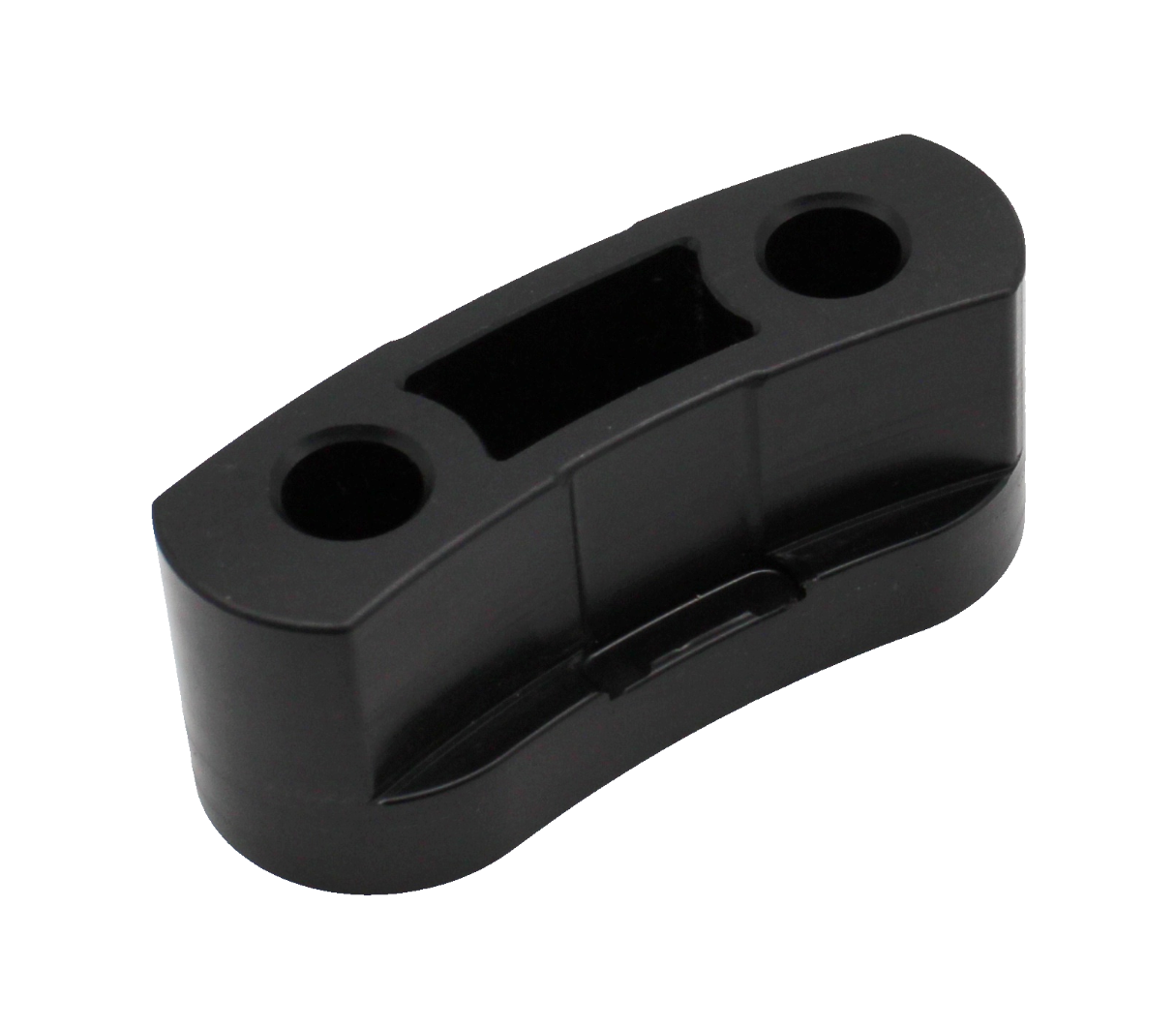
Machined plastic components from the LG-CNC range.
Read as a decision tool, that list is more useful than a menu. PTFE is selected for chemical inertness and low friction, which is why a PTFE back-up ring is used to stop an O-ring extruding under pressure rather than to seal on its own. PEEK is chosen where mechanical load and temperature must be carried together. UHMWPE is specified for wear. POM suits machined parts that need stable dimensions. Glass-filled PA6 or PA66 raises stiffness in moulded structural components, and as with any glass-filled grade that arrives with reduced impact performance compared with the unfilled version.
What a manufacturer cannot do is own the application. The buyer holds the media list, the load, the duty cycle and the life target; the supplier holds the grade, the process and the documented compliance. Where the first list is thin, no material choice is truly safe, and the sensible response at quotation is to ask for the missing operating conditions rather than to quote the cheapest polymer that satisfies the drawing.
Problem 2: Tolerances That Nobody Can Hold Economically
Tolerance problems are almost always specification problems arriving in disguise. The documented controls only work when the drawing asks for the right thing.
For injection moulded parts, the Lingo specification sets tolerance control to GB/T 14486 classes MT1 to MT7, draft angle of at least 1° on outside walls and at least 0.5° inside, shrinkage typically 0.4% to 0.8% applied as mould compensation, SPI surface finish, and visual acceptance criteria of smooth surfaces with no crack and no flash. For machined parts, the adjustable parameters are surface roughness stated as Ra and Rz in micrometres, custom colour, glass-fibre grades and the same visual criteria. The moulded-part tolerance framework referenced across the range is ISO 20457:2018.
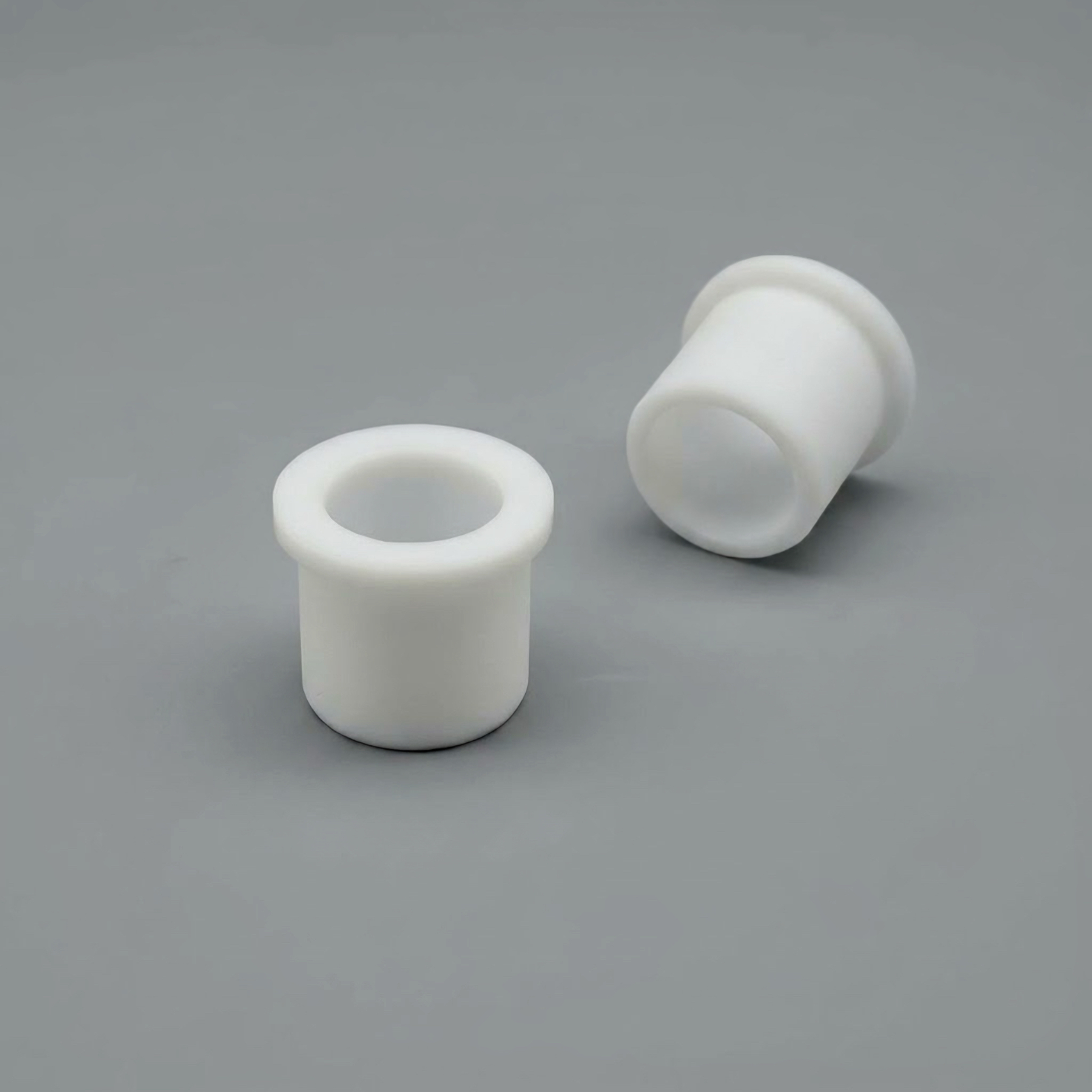
Machined parts are checked against agreed dimensions and surface criteria.
Four drawing rules do most of the work:
- Classify dimensions. Mark the features that perform a function and leave the rest at general tolerance. A uniform tight limit buys nothing and costs everywhere.
- Match the tolerance class to the process rather than to habit. A moulded part belongs in a moulding tolerance class; a machined surface belongs to a roughness callout.
- Agree the measurement method and the datum before tooling is cut. Two parties can both be right about the same feature and still disagree.
- Put draft angle and shrinkage into the design review rather than the first-article meeting, where they are expensive to change.
One boundary deserves stating plainly. The published Lingo data defines tolerance classes, roughness parameters and visual criteria; it does not publish a single achievable millimetre figure that applies to every feature. The correct request at RFQ is therefore to name the class and the functional dimensions and ask for confirmation against the actual geometry, because tolerance is a property of a feature and a process, not of a supplier's general reputation.
Problem 3: When One Part Needs Several Processes
Multi-process requirements stop being a coordination problem when one supplier owns every route the part needs and treats routing as an engineering decision rather than a sales one.
Four plastic routes are documented under the Lingo roof. Injection moulding covers multi-cavity tooling with hot or cold runners for LG-AP auto parts. Extrusion covers LG-PE profiles up to 6,000 mm in length with custom cross-sections and custom Pantone or RAL colours. CNC machining covers small and medium batches in the engineering grades listed earlier. PVC dipping covers LGHD handles in a PVC body with a glossy black surface, custom printing, and the corrosion-resistant, ergonomic and non-slip properties that define the range. Rubber compression moulding and rubber extrusion sit alongside these for parts that combine elastomer and plastic elements.
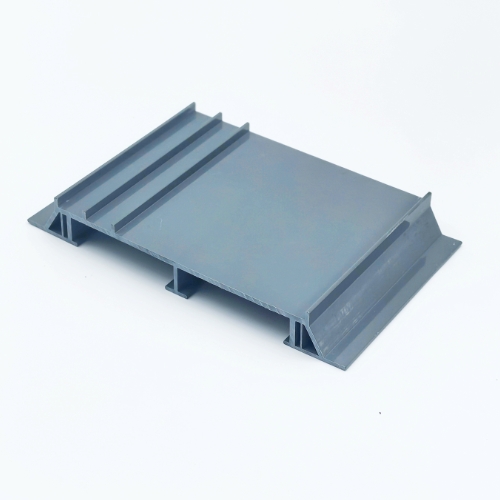
An extruded profile with a custom cross-section from the LG-PE line.
The value appears at the interfaces. A handle that is machined and then dip coated is judged on one tolerance stack and one surface requirement. An extruded profile with a machined insert is inspected by one party against one drawing. A part built from a moulded housing and a dipped grip sits under one date code and one compliance file.
Cost behaves differently. Combining processes is not automatically cheaper: a low-volume part may be better served by machining alone, and dip coating is documented as requiring no expensive moulds, which changes the tooling economics of small orders. The routing decision belongs in the quotation, before a tool is cut, while it is still a calculation rather than a correction.
Problem 4: Compliance Files That Do Not Match the Part
Compliance is verifiable only at part-number level. The right question is not whether a supplier is compliant, but which document covers which part, for which market, at what revision.
The documented Lingo position maps to product lines. LG-AP injection molded auto parts are stated to meet REACH, RoHS and FMVSS 302, to operate from -40°C to +120°C, to carry a date code, and to serve OEM and aftermarket interior and exterior trim. LG-PI injection parts are stated to meet FDA and UL94 V-0. LG-CNC machined parts list FDA, RoHS and UL. PPAP documentation is available across plastic injection parts, plastic extruded profiles and several rubber families including sealing rings, anti-vibration mounts, silicone rubber cords and rubber extrusion seals, with PPAP Level 1 to 3 support stated for custom parts.
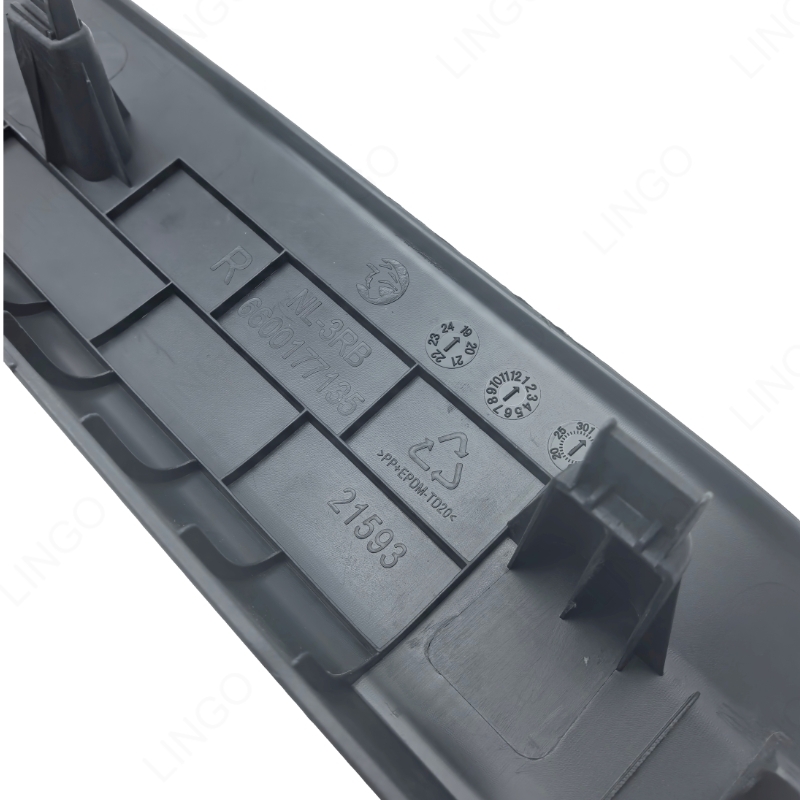
Injection molded auto parts for interior and exterior trim work.
These are different kinds of evidence and should be read separately. REACH and RoHS are substance restrictions tied to a market. FMVSS 302 addresses the flammability of interior materials in vehicles. FDA applies where a part has food contact. UL94 V-0 describes flame behaviour of the material itself. PPAP is an approval documentation package rather than a test result, and its level determines how much of that package is submitted.
Two boundaries matter in a procurement file. A temperature range such as -40°C to +120°C belongs to a material and part combination, not to a catalogue in general, so it should be confirmed for the exact grade and geometry ordered. And a declaration is not a test report. Before release, ask for the document that names the part, the standard, the market and the date, and check that the answer is not a family statement standing in for a part-level one.
The Seven-Step Path From Drawing to Delivery
The sequence below is the operational answer to the four problems. Each step exists to stop a specific failure, and each produces something the buyer can check.
- Requirement intake. The RFQ carries the drawing, the material intent, the functional dimensions and their tolerance classes, the compliance list for the destination market, the annual volume and the target date. The most valuable input is the operating condition: medium, temperature, load and expected life.
- Process routing. Injection moulding, CNC machining, extrusion or PVC dipping is selected against geometry, volume, material and compliance. A short run of PTFE back-up rings routes to machining; a long constant cross-section routes to extrusion; a grip or insulation layer routes to dipping; a complex three-dimensional trim part routes to a multi-cavity mould.
- Design review and tooling. Draft angles, shrinkage compensation of 0.4% to 0.8%, gate and runner layout and cavity count are settled before cutting. Mould maintenance and ownership protection form part of the commercial agreement, not an afterthought.
- Sampling. Every sample is fully inspected: dimensions against the agreed datum, surface roughness where specified, and visual criteria of smooth surface, no crack and no flash.
- Bulk production. Bulk goods are inspected by random sampling against the approved sample, and a batch traceability system links delivered parts back to their production record.
- Documentation. Compliance declarations, the required PPAP level and date-code marking are issued against the part number rather than the product family.
- After-sales. Remote technical support, mould maintenance and ownership protection, batch traceability, and free exchange with acceptance of concessions cover the period after delivery. Quoted lead time runs 2 to 6 weeks depending on part and tooling, and minimum order quantity is set per part with small quantity orders accepted.
Documented Cases: Three Requirements, Three Routes
Three recorded orders show how the routing logic behaves in practice. Each is a specific programme, not a general promise.
Twenty PTFE back-up rings for a UK industrial buyer
The requirement came from a buyer serving chemical and petrochemical, food and pharmaceutical, automotive, electronics and semiconductor, aerospace and defence, and general machinery applications. The part is a PTFE back-up ring, a component that does not seal on its own but keeps the primary seal intact under pressure by preventing extrusion damage to the O-ring. The documented order was 20 pieces, CNC machined to high-precision tolerance in pure PTFE and dispatched in two days. The lesson is narrow but useful: small-quantity precision work is a process question, not a volume question.
1,500 dip-coated parts for a German electronics buyer
An electrical and electronics customer needed a coating that would insulate current-carrying parts and protect a metal substrate against acids, alkalis, salt spray and oil in humid, chemically aggressive conditions. The documented result covers fitting, stable performance, corrosion resistance and resistance to low and high temperatures. The commercial detail matters as much as the technical one: PVC dip coating required no expensive moulds, the order was accepted at 1,500 pieces, and colour and surface texture — glossy, matte or rough — were set through formulation. That is a different cost structure from a moulded equivalent.
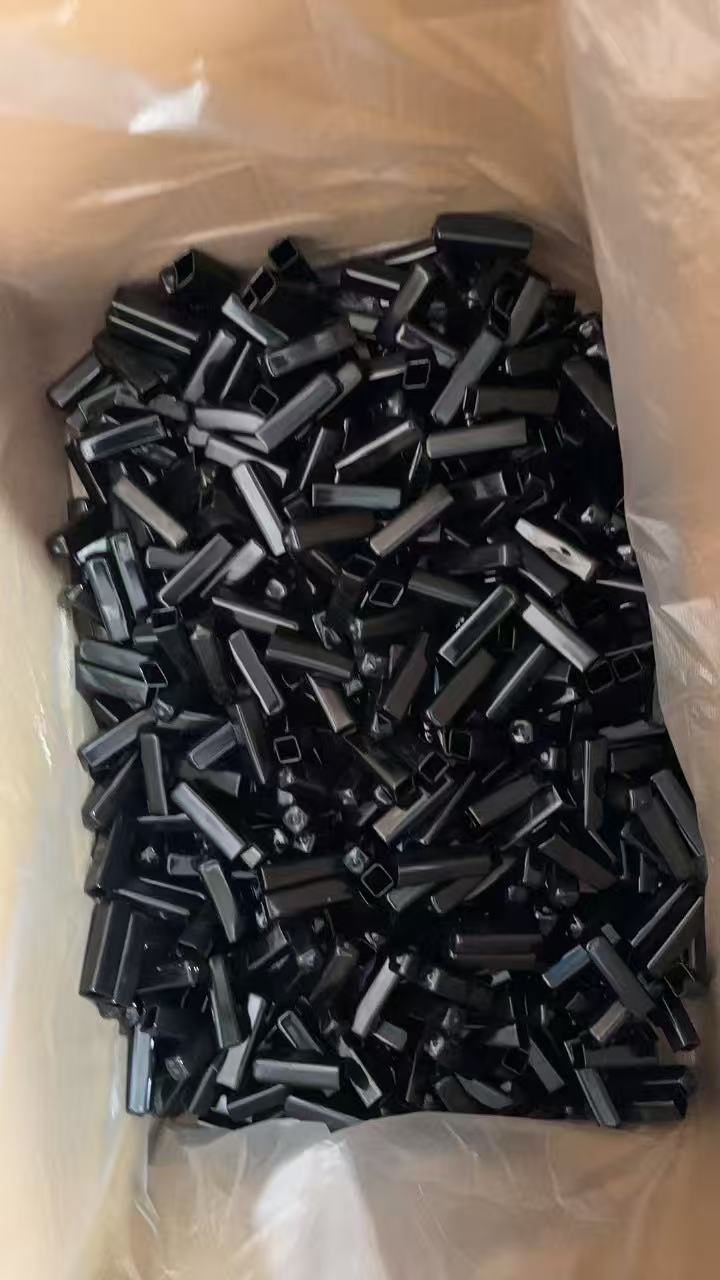
PVC dipped handles with a glossy, corrosion-resistant coating.
5,000 tube holders for a US automotive programme
For a US automotive customer, an injection moulded tube holder was supplied at 5,000 pieces. The documented case record notes zero failures for that programme and describes a material reduction that lowered material and logistics cost while improving dimensional stability. Read that as programme-specific evidence of a method — adjust internal material where structure and function allow — rather than as a general durability guarantee. The same discipline sits behind the LG-AP range, where interior and exterior trim parts are specified from -40°C to +120°C against REACH, RoHS and FMVSS 302 for OEM and aftermarket work.
Process Comparison at a Glance
The table records only what the published specifications state. Where a row is silent on a certification, that is a gap to close at RFQ rather than a claim to assume.
| Process and product line | Materials named in the specification | Tolerance and process controls | Compliance stated | Typical fit |
|---|---|---|---|---|
| CNC machining, LG-CNC | PTFE, POM, PE, UHMWPE, HDPE, PEEK, ABS, PU, PA6, PA66, with or without glass fibre | Surface roughness Ra and Rz; visual criteria of smooth surface, no crack, no flash | FDA, RoHS, UL | Seals, back-up rings, gears, bearings and bushings in small to medium batches |
| Injection moulding, LG-PI | PP, PA6, PA66, ABS, PE, HDPE, UHMWPE, LDPE, PU, PTFE, glass-fibre reinforced grades | GB/T 14486 MT1 to MT7; draft angle at least 1° outside and 0.5° inside; shrinkage 0.4% to 0.8%; SPI finish | FDA, UL94 V-0, PPAP documentation | Housings, gaskets, functional components and handles in volume |
| Auto injection moulding, LG-AP | PP, PE, PS, ABS, PBT, PET, PVC, PA, PC, POM, PTFE, PEEK | Multi-cavity hot or cold runner tooling; date code marking; -40°C to +120°C range | REACH, RoHS, FMVSS 302, PPAP documentation | Interior and exterior trim, OEM and aftermarket programmes |
| Extrusion, LG-PE | PVC, PP, ABS, PA6, PA66, PE, UHMWPE, with or without glass fibre | Length up to 6,000 mm; custom cross-section; custom Pantone or RAL colour | Confirmed per part at RFQ | Long profiles, trims and continuous-section components |
| PVC dipping, LGHD | PVC | Glossy black surface; custom printing; corrosion-resistant, ergonomic and non-slip properties | Confirmed per part at RFQ | Grips, handles and protective or insulating coatings |
Table sources: Lingo product specifications for LG-CNC, LG-PI, LG-AP, LG-PE and LGHD, plus the PPAP certification record covering injection parts and extruded profiles.
What Buyers Ask Before the First Order
Which compliance documents apply to plastic parts from Lingo Rubber Plastic?
They are assigned by product line rather than by company. LG-AP injection molded auto parts are stated to meet REACH, RoHS and FMVSS 302 and to operate from -40°C to +120°C. LG-PI injection parts are stated to meet FDA and UL94 V-0. LG-CNC machined parts list FDA, RoHS and UL. PPAP documentation is available for plastic injection parts, plastic extruded profiles and several rubber product families, with PPAP Level 1 to 3 support stated for custom parts. Request the document that names your exact part number and destination market.
Can one manufacturer supply CNC machined, injection moulded, extruded and dip-coated parts?
Yes. Lingo Rubber Plastic runs plastic injection moulding, plastic extrusion, CNC machining and PVC dipping, alongside rubber compression moulding and rubber extrusion. Each route carries its own tolerance logic: moulded parts follow GB/T 14486 classes MT1 to MT7, machined parts use surface roughness callouts in Ra and Rz, and extruded profiles are produced to custom cross-sections up to 6,000 mm. Routing is confirmed at quotation, because the lowest-cost route depends on volume, geometry and material rather than on the process name.
What is the minimum order quantity, and what drives cost?
Minimum order quantity is set per part and small quantity orders are accepted; documented examples include a 20-piece machined PTFE order and a 1,500-piece dip-coated order. The published cost drivers are tooling and process choice rather than a price list. PVC dipping requires no expensive moulds, multi-cavity tooling shifts cost from the piece to the mould, and engineering grades such as PEEK and PTFE carry different material economics from PP or PE. Pricing is quoted against the drawing.
How are samples and first articles validated?
Samples are fully inspected and bulk goods are checked by random inspection. Inspection covers dimensions against the agreed datum, surface roughness where the drawing specifies Ra or Rz, and visual acceptance criteria of a smooth surface with no crack and no flash. For moulded parts, the agreed tolerance class, draft angles and shrinkage compensation are confirmed at the same stage. Agreeing the measurement method before tooling avoids most first-article disputes.
What lead time and after-sales support should a buyer expect?
Quoted lead time is 2 to 6 weeks depending on the part and the tooling. After delivery, support covers remote technical assistance, mould maintenance with ownership protection, a batch traceability system, and free exchange with acceptance of concessions. Buyers checking fit against their own drawing can download the company profile or send the specification to sales@lingorp.com for a quotation.
Bringing the Four Problems Under Control
Plastic parts sourcing gets difficult exactly where a catalogue ends: an unusual material, a functional dimension, a part that crosses processes, or a document that must satisfy a specific market. Each is an engineering question wearing a procurement costume.
The practical response is procedural rather than rhetorical. Narrow the material against operating conditions. Classify dimensions and match the tolerance class to the process. Put every process the part needs under one supplier so the interfaces have one owner. Tie each compliance document to a part number and a market. Then confirm the sequence — intake, routing, tooling, sampling, bulk inspection, documentation and after-sales — before the purchase order is issued.
Lingo Rubber Plastic works from a 3,000 square metre facility with around 40 employees and a 10-person R&D team, and reports an annual output of 1.58 million units across rubber and plastic parts. That shapes how a difficult requirement is answered here: as a routing decision rather than a stock lookup. Buyers can review the product scope at Lingo Rubber Plastic, download the company profile brochure, or send a drawing and operating conditions to sales@lingorp.com for a quotation.

Injection moulded components ready for sample inspection and quotation.
Have Questions or Need More Details?
Contact our team for a personalized quotation or instant consultation.
Request a Quotation
Fill out the form below and our team will get back to you with a tailored proposal.
WhatsApp Direct Chat
Prefer to chat in real-time? Message us on WhatsApp for instant assistance & quick answers.
- Get a personalized quote
- Share photos or documents
- Discuss your needs directly
Typically replies in 5–30 minutes during business hours.