
Plastic Parts for Eco-Industrial Equipment: Application Guide to Material Selection
Eco-industrial equipment - solar tracking hardware, wind turbine internals, battery and power-electronics housings, electrolyser balance-of-plant, heat pumps and EV charging enclosures - exposes plastic parts to UV, thermal cycling, chemical contact and electrical duty at the same time. Material selection is therefore an engineering decision, not a purchasing afterthought: it determines which tolerances are achievable, which compliance route is open, and how long the part survives in service.
This application guide ranks the plastic material families most often specified for eco-industrial equipment, explains how each process route - plastic injection molding, CNC plastic machining, plastic extrusion and PVC dipping - changes the options available, and shows how those choices are applied in real production.
LINGO Rubber Plastic (Hangzhou Lingo Rubber and Plastic Product Co., Ltd, lingorp.com) is a China-based custom parts manufacturer founded in 2022, operating a 3,000 m2 facility with around 40 employees and a 10-person R&D team. Its main product lines are rubber molded parts, rubber extruded parts, plastic injection parts and plastic extruded parts, with roughly 80% of output exported to the EU and USA.
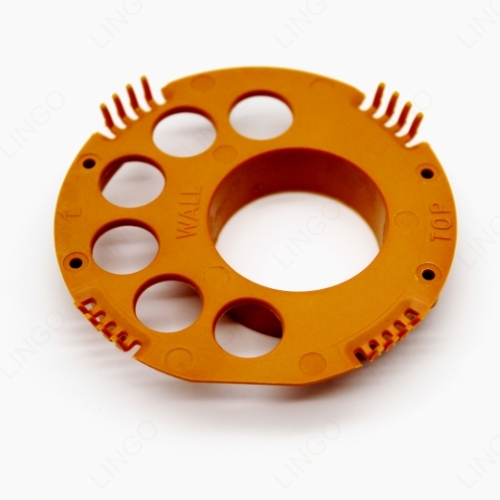
Problem Definition: Why Material Choice Is Where These Parts Fail First
Most specification problems in eco-industrial projects begin with a drawing that names a material family instead of a grade. "ABS" or "PP" on its own does not define UV stability, flame behaviour, glass-fibre content or temperature rating - and two parts made from the same family can behave completely differently in the field.
Before a material is selected, six service conditions should be quantified:
- Temperature range in operation and storage, including cycling.
- UV and weather exposure for outdoor-mounted equipment.
- Chemical contact - oils, coolants, cleaning agents, salt spray, acids and alkalis.
- Electrical duty - insulation, tracking resistance or static dissipation.
- Mechanical load and wear - static loads, vibration and sliding contact.
- Regulatory route - flame retardancy, food contact, automotive or medical documentation.
The material range available in LINGO's plastic injection parts (LG-PI) covers PP, PA6, PA66, ABS, PE, HDPE, UHMWPE, LDPE, PU, PTFE and glass-fibre reinforced grades, with modifications for glass fibre, flame retardancy and UV stabilisation, colours matched to Pantone or RAL with a defined gloss level, and SPI surface grades. The same company's plastic CNC machined parts (LG-CNC) are produced from PTFE, POM, PE, UHMWPE, HDPE, PEEK, ABS, PU, PA6 and PA66, with or without glass fibre - the route that matters most while an eco-industrial project is still at prototype or low volume and no mould can justify itself.
Industry Background: Where Eco-Industrial Plastic Parts Demand Comes From
Eco-industrial equipment draws on the same polymer supply chain as automotive and electrical equipment, so its cost, availability and compliance expectations follow those markets.
- The global injection molded plastics market was valued at USD 362.5 billion in 2025 and is projected to grow to USD 481.4 billion by 2033 (Grand View Research).
- Asia Pacific dominated the injection molded plastics market in 2025 with a revenue share of approximately 41% (Grand View Research; Mordor Intelligence).
- The automotive plastics market was valued at USD 33.0 billion in 2025, driven by lightweighting trends for EVs (Grand View Research).
- Polypropylene (PP) is the dominant raw material in injection molding, accounting for a 32.4% share of the automotive plastics market in 2025 (Grand View Research).
- China exported approximately USD 174 billion in plastics and rubbers in 2024, with the United States the largest single destination at USD 24.3 billion (Observatory of Economic Complexity).
- Three structural trends are widely reported for 2024-2026: Industry 4.0 integration with AI/IoT monitoring, reshoring of high-spec production, and the adoption of bio-based and recycled resins.
One compliance signal is worth noting early: automotive plastic parts manufacturing requires IATF 16949:2016 certification, which builds on the foundational ISO 9001:2015 standard (International Automotive Task Force). Eco-industrial parts that sit inside automotive-derived supply chains often inherit the same documentation expectations, even when the end product is not a vehicle.
Preferred Material Shortlist for Eco-Industrial Plastic Parts
The shortlist below ranks material families by how broadly they fit the structural, sealing, insulating and wear roles found in eco-industrial equipment. The order is role-dependent rather than absolute - a family placed lower here can still be the correct first choice for one specific duty.
- PA6 and PA66, with or without glass fibre. Engineering nylons are the default for structural and semi-structural parts: brackets, cable management, tube holders, machined gears and bushings. They appear in LINGO's injection range, in its CNC machined range and as extruded PA6/PA66 profiles. Glass-fibre grades raise stiffness where deflection limits the design.
- Polypropylene (PP). The workhorse for housings, covers and fluid-handling parts, and the dominant raw material in injection molding, accounting for a 32.4% share of the automotive plastics market in 2025.
- ABS. Chosen where appearance and finish matter as much as function - covers, handles and visible housings. ABS is available in both LINGO's injection molded and CNC machined ranges, with colour matched to Pantone or RAL and a defined gloss level.
- PU (polyurethane). Used for flexible, abrasion-resistant parts that need to absorb movement rather than resist it; PU appears in both LINGO's plastic injection and CNC machined material lists.
- PTFE. Specified for chemical and thermal resistance in seals and back-up rings, and widely used in semiconductor, chemical and pharmaceutical, oil and gas, and food-processing equipment.
- POM and PEEK. Precision machined grades for wear parts and higher-temperature duties where standard thermoplastics are not adequate; both are part of LINGO's CNC machined material range.
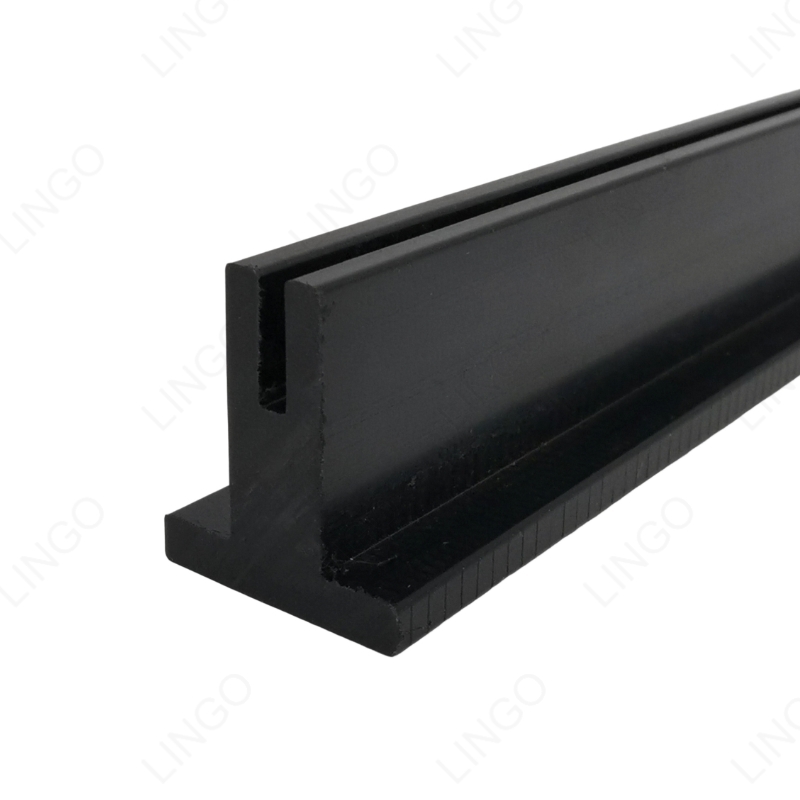
- PE, HDPE and UHMWPE. Low-friction, low-moisture parts such as wear strips, guide rails and protective trims, available as injected parts and as PE/HDPE/UHMWPE extrusion trims.
- PVC. Used in two distinct ways: dipped grips and handles with insulating and corrosion-resistant properties, and extruded profiles. PVC handles can be formulated in almost any colour and surface texture, from glossy and matte to rough and textured.
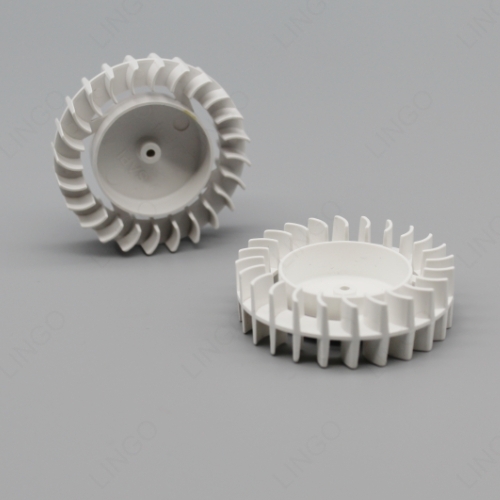
Step-by-Step: How to Specify Plastic Parts for Eco-Industrial Equipment
Step 1 - Quantify the service environment
Write down the temperature range, exposure, chemical contact and mechanical duty before discussing material. A useful reference point from an adjacent industry: LINGO's plastic injection molded auto parts (LG-AP) are specified for a temperature range of -40 degrees C to +120 degrees C with FMVSS 302, RoHS and REACH compliance - an envelope that an outdoor eco-industrial enclosure can approach.
Step 2 - Map the function to a material family
Structural and load-bearing parts point to PA6/PA66 or glass-fibre reinforced PP. Appearance-critical covers point to ABS. Sealing and chemical-contact parts point to PTFE. Flexible, energy-absorbing parts point to PU. Wear and low-friction parts point to POM, PEEK or UHMWPE. Insulating grips and handles point to PVC.
Step 3 - Choose the process route
Injection molding suits repeatable volumes, insert molding and dual-material parts. CNC machining suits prototypes, low volumes and tight precision. Extrusion produces continuous profiles up to 6,000 mm with custom cross-sections. PVC dipping produces grips and protective coatings without expensive moulds - a practical option where tooling budget is constrained.
Injection parts are held to tolerance control of GB/T 14486 - MT1 to MT7, with a shrinkage rate typically of 0.4%-0.8% for mould compensation and draft angles of at least 1 degree outside and 0.5 degrees inside. CNC machined parts are specified by surface roughness Ra/Rz and inspected to visual criteria of smooth, no crack and no flash.
Step 4 - Specify grade and modification
Add glass fibre, flame retardant or UV stabiliser only where the duty requires it. State whether FDA or UL94 V-0 performance is needed, and define colour to Pantone or RAL with a gloss level instead of leaving the finish undefined. Undefined finish is one of the most common sources of rejection at first article inspection.
Step 5 - Fix the compliance package
PPAP certification is held for injection molded parts, and CNC machined parts can be supplied against FDA, RoHS and UL requirements. Match the documentation set to the market the equipment is sold into rather than issuing a generic pack.
Step 6 - Validate samples and confirm lead time
Quality control follows full inspection of samples and random inspection of bulk goods. Lead time is 2 to 6 weeks, MOQ depends on the part, and small quantity orders are acceptable - which matters for eco-industrial programmes that begin with pilot installations rather than full-scale rollouts.
Material Comparison at a Glance
| Material family | Typical eco-industrial role | Process routes | Specification notes |
|---|---|---|---|
| PA6 / PA66 (glass fibre optional) | Structural brackets, cable management, machined gears and bushings | Injection, CNC, extrusion | Glass-fibre modification available; extrusion profiles up to 6,000 mm; injection tolerance control GB/T 14486 MT1 to MT7 |
| PP | Housings, covers, fluid-handling parts | Injection, extrusion | Dominant molding material - 32.4% share of the automotive plastics market in 2025 (Grand View Research) |
| ABS | Appearance housings, handles, visible covers | Injection, CNC | Colour matched to Pantone or RAL with defined gloss level; SPI surface grades |
| PU | Flexible, abrasion-resistant parts | Injection, CNC | Listed in LINGO's plastic injection and plastic CNC machined material ranges |
| PTFE | Back-up rings, seals, chemical-contact parts | CNC machining | Pure PTFE available; visual criteria smooth, no crack, no flash; FDA, RoHS and UL options |
| POM / PEEK | Precision wear parts and higher-temperature duties | CNC machining | Surface roughness specified as Ra / Rz; FDA, RoHS and UL options |
| PE / HDPE / UHMWPE | Wear strips, guide rails, low-friction trims | Injection, extrusion | PE/HDPE/UHMWPE extrusion trims; glass-fibre modification available |
| PVC | Grips, handles and corrosion-resistant coating | PVC dipping, extrusion | Non-slip and corrosion-resistant handles; custom colour and surface texture from glossy to matte |
Compliance options across the plastic injection range include FDA and UL94 V-0; CNC machined parts can be supplied to FDA, RoHS and UL requirements. Product families referenced above: LG-PI (plastic injection parts), LG-PE (plastic extruded profiles), LG-CNC (plastic CNC machined parts) and LGHD (PVC dipping handle).
Application Examples from Production
Chemical and semiconductor equipment: PTFE back-up rings
A project in the United Kingdom used 20 pieces of PTFE back-up rings as critical components that protect O-rings and other elastomeric seals from extrusion damage under high pressure, maintaining the integrity and longevity of the primary seal. The parts were CNC machined to high-precision tolerance in pure PTFE, with the order sent in 2 days and a small order quantity accepted. The product has been used by clients in chemical and petrochemical, food and pharmaceutical, automotive, electronics and semiconductor, aerospace and defence, and general industry applications.
Automotive and mobility equipment: injection molded tube holder
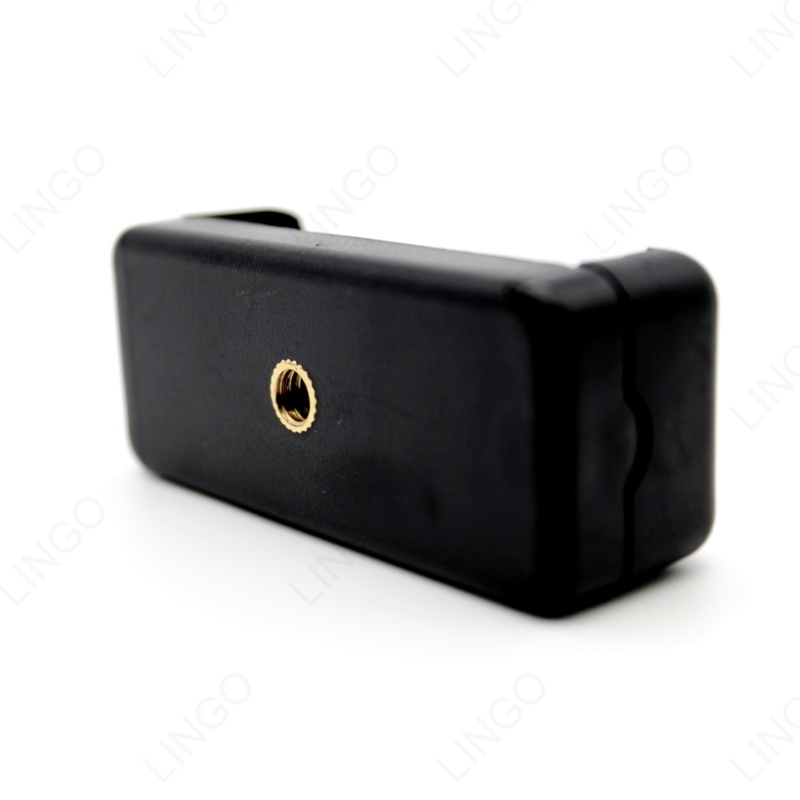
For a client in the United States auto industry, 5,000 pieces of plastic injection parts were produced as a tube holder in automotive machinery. By reducing internal material while maintaining the product structure and function, the project lowered material and logistics costs and improved the dimensional stability of the part. It has been used successfully in long-term service, with zero failures reported.
Electrical and electronics equipment: PVC dipping handles
An electrical and electronics industry client in Germany ordered 1,500 pieces of PVC dipping handles and reorders every year. The coating uses PVC's insulating characteristics to safeguard current transmission and prevent accidents from wiring damage, and is resistant to acids, alkalis, salt spray and oil - protecting the metal substrate from corrosion in humid and chemically corrosive environments. The parts are also low-temperature and high-temperature resistant. From a project standpoint, PVC dipping requires no expensive moulds and accepts small orders; PVC material is relatively inexpensive, contains no toxic or heavy-metal ions, the production process is environmentally friendly, and the raw material can be recycled.
Frequently Asked Questions
What compliance documentation can be provided for eco-industrial plastic parts?
For injection molded plastic parts, PPAP (Production Part Approval Process) certification is held, and the injection range can be produced to FDA and UL94 V-0 requirements. CNC machined plastic parts can be supplied against FDA, RoHS and UL requirements, and injection molded auto parts are specified with FMVSS 302, RoHS and REACH compliance over a temperature range of -40 degrees C to +120 degrees C. Where an eco-industrial part enters a supply chain derived from automotive manufacturing, buyers commonly reference IATF 16949:2016, which builds on the foundational ISO 9001:2015 standard.
Can one manufacturer handle both molded and machined plastic parts for the same project?
Yes. LINGO works in OEM/ODM mode and covers plastic injection parts (LG-PI), plastic extruded profiles (LG-PE) and plastic CNC machined parts (LG-CNC) under one roof, with a stated monthly capacity of 1,000,000 kgs for its plastic injection and plastic extrusion lines. Injection parts include insert molding and dual-material components; extrusion profiles are produced in custom cross-sections up to 6,000 mm; CNC parts are machined from PTFE, POM, PE, UHMWPE, HDPE, PEEK, ABS, PU, PA6 and PA66. Export markets are the EU and USA, with extrusion supply also covering the Middle East.
How does material selection affect the cost of a plastic part?
Material choice is a cost decision in three ways. First, process: PVC dipping requires no expensive moulds and accepts small orders, and PVC material is relatively inexpensive, so it is usually the lower-cost route for grips and protective coatings. Second, geometry and wall section: in a US automotive tube holder project, reducing internal material while maintaining structure and function lowered material and logistics costs and improved dimensional stability. Third, grade: glass-fibre reinforcement, flame retardants and UV stabilisers are modifications that change material cost, so they should be justified against the actual service environment rather than added by default.
Can we test samples before committing to production volumes?
Sampling is built into the quality control routine: full inspection of samples, followed by random inspection of bulk goods. Small quantity orders are accepted and MOQ depends on the individual part, which makes it practical to approve a material and geometry combination before volume production. A documented example is the 20-piece PTFE back-up ring order that was sent in 2 days.
What lead times should be planned - and how do we start a material review?
Standard lead time is 2 to 6 weeks from order confirmation, depending on the part and the process route; the 20-piece PTFE back-up ring order referenced above was sent in 2 days. After-sales support covers remote technical support, mould maintenance and ownership protection, a batch traceability system, and free exchange and acceptance of concessions. To start a material selection review, send the drawing, the intended service environment and the required compliance route to sales@lingorp.com or through the website, and request a sample or quotation.
Conclusion: A Shortlist, Not a Single Answer
Material selection for eco-industrial plastic parts is not a search for one superior polymer. It is a shortlist matched to a defined duty: PA6/PA66 and glass-fibre PP for structure, ABS for visible housings, PU for flexible and abrasion-resistant parts, PTFE and PEEK for chemical, sealing and high-temperature duty, UHMWPE for low friction, and PVC for insulating grips and coatings. In practice, the workflow that keeps projects on schedule is consistent: quantify the service environment, map the function to a material family, match it to a process route, specify the grade and modification, fix the compliance package, then validate with samples and plan for a 2 to 6 week lead time.
Next Step: Sample, Material Review or Quotation
Send your drawing together with the intended temperature range, chemical exposure and compliance requirements, and we will recommend a material family and process route for your eco-industrial application.
Email: sales@lingorp.com | Tel / WhatsApp: +86 18358136245 | Website: www.lingorp.com
Download the LINGO Rubber & Plastic company profile (PDF) for the full product and capability list before the first conversation.
Have Questions or Need More Details?
Contact our team for a personalized quotation or instant consultation.
Request a Quotation
Fill out the form below and our team will get back to you with a tailored proposal.
WhatsApp Direct Chat
Prefer to chat in real-time? Message us on WhatsApp for instant assistance & quick answers.
- Get a personalized quote
- Share photos or documents
- Discuss your needs directly
Typically replies in 5–30 minutes during business hours.