
Rubber Extrusion Seals Explained: How LG-RX Protects Green Energy Assets
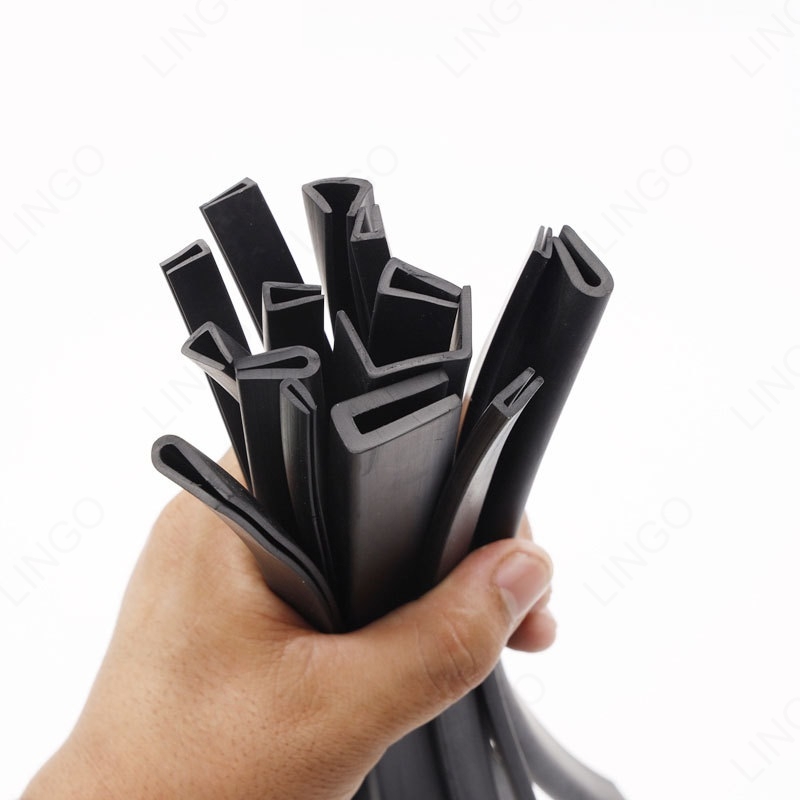
Rubber extrusion seals are continuous rubber profiles that are compressed into a gap to block water, dust, air and other contaminants. LG-RX is the rubber extrusion seal family from Lingo Rubber Plastic, a China-based rubber and plastic parts manufacturer. LG-RX seals are made in EPDM, NBR, silicone and FKM, and are supplied as solid, sponge, silicone, adhesive-backed, co-extrusion and FKM profiles with hardness, length and color set to the project requirement.
For green energy projects, the seal is a small line item with an outsized role. Battery enclosures, power electronics cabinets, outdoor junction boxes and building-integrated equipment all depend on a continuous, compressible interface that keeps the inside dry and the outside out. This explainer is written for buyers, engineers and project teams who are new to the category and need a practical understanding of what extruded seals do, how LG-RX is specified, and where the evidence boundaries sit.
What Are Rubber Extrusion Seals?
The key word is continuous. Unlike a molded gasket that is formed to a fixed shape, an extruded seal is produced as a long profile and cut to the required length. That makes extrusion a practical format for long perimeter seals, cabinet doors, enclosure frames and irregular joint lines where a continuous seal reduces the number of joints and the number of potential leak paths.
LG-RX covers several configurations under one product family. The listed types are silicone rubber extrusion seals, rubber extrusion seals with adhesive, rubber co-extrusion seals, FKM rubber extrusion seals, solid rubber extrusion seals and sponge rubber extrusion seals. Material options are EPDM, NBR, silicone and FKM. Hardness is specified in Shore A as required, length is produced as required, and color is customized to Pantone or RAL references.
Why Green Energy Assets Are Sensitive to Seal Failure
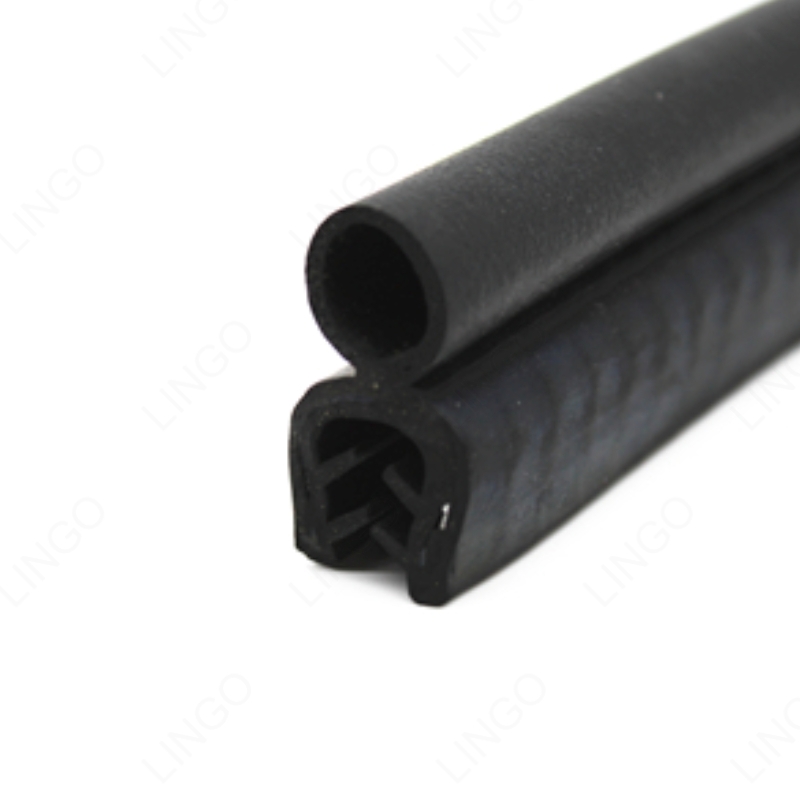
Green energy equipment usually sits where sealing is difficult. Outdoor cabinets face rain, humidity, dust and ultraviolet exposure. Battery packs and power electronics cycle through temperature changes that make materials expand and contract. Doors and service panels are opened during commissioning and maintenance, so the seal must recover after repeated compression. None of these conditions is unusual on its own; together they turn the seal into a critical boundary between a controlled interior and an uncontrolled exterior.
A failed extrusion seal rarely announces itself immediately. The first sign is often moisture ingress, corrosion on terminals, dust accumulation on insulated surfaces, or a service visit that traces back to a gasket line. Because the seal is inexpensive relative to the equipment it protects, the economic argument for specifying it correctly is straightforward: the cost of rework and downtime is far higher than the cost of the profile.
The design problem is therefore not simply buying rubber. It is matching the compound, the profile geometry, the hardness and the installation method to the joint, the environment and the service schedule.
Industry Background: A Large and Rubber-Intensive Sealing Market
Sealing is a mature industrial category with measurable scale. Grand View Research values the global gasket and seal materials market at USD 61.4 billion in 2024. The same market data set places rubber seals at approximately 56% of the global gasket and seals market, reflecting the wide use of rubber in dynamic and static sealing. Vantage Market Research separately values the global O-ring market at USD 10.41 billion in 2025; O-rings are a related sealing format, not a substitute for a continuous extruded profile.
Trade classification is also well defined. HS Code 4016.93 covers gaskets, washers and other seals of vulcanized rubber other than hard rubber. That classification matters to importers and project buyers because it frames how rubber seals are declared and handled at the border.
The green energy connection is qualitative but direct. As battery storage, power conversion and renewable-energy equipment move into more outdoor and distributed locations, the number of enclosures, cabinets and sealed interfaces increases. Each of those interfaces needs a seal that can handle weather, thermal movement and service access without becoming a maintenance item.
How LG-RX Rubber Extrusion Seals Protect Green Energy Assets
The Sealing Mechanism: Compression, Recovery and Conformability
An extrusion seal works through controlled compression. The profile is sized so that the closing force squeezes the rubber against the mating surfaces. The rubber stores that deformation and pushes back, maintaining contact even when the door or panel moves slightly. A good seal therefore needs three properties: enough compressibility to close the gap, enough recovery to keep pushing back after repeated opening and closing, and enough conformability to follow surface irregularities.
For green energy equipment, the seal also acts as an isolator. It separates the interior environment from water, dust and contaminants, and it separates dissimilar surfaces at the joint. That isolation protects sensitive components from the small, persistent exposures that eventually cause corrosion, insulation faults or premature service calls.
Material Options: EPDM, NBR, Silicone and FKM
LG-RX is available in EPDM, NBR, silicone and FKM. The compound choice is the first specification decision because it determines which environments the seal can tolerate. The table below uses the material options listed for LG-RX and widely accepted elastomer characteristics; it does not assign performance values that are not documented for a specific compound.
| Material | Typical strength | Where it is usually considered | Practical watch-out |
|---|---|---|---|
| EPDM | Weather, ozone and water resistance | Outdoor enclosures, cabinet frames, building-facing seals | Not the first choice where petroleum oils or greases are present |
| NBR | Oil and grease resistance | Equipment interfaces exposed to lubricants or fuel-related media | Less suited to prolonged outdoor ozone and weathering |
| Silicone | Flexibility across wide temperature swings | Battery enclosures, electronics, thermal-cycling joints | Mechanical strength and tear resistance are generally lower than some hydrocarbon rubbers |
| FKM | Chemical and high-temperature resistance | Aggressive chemical or high-heat interfaces | Usually a higher-cost compound; specify only where the environment requires it |
Silicone is the material most closely documented in the available LG-RX case evidence. A silicone sponge extrusion seal used in an export project was reported to withstand temperatures from -60°C to 250°C without hardening or cracking, with UV and ozone resistance for outdoor performance. That is a case-specific result, not a blanket specification for every silicone profile.
Configuration Options: Solid, Sponge, Silicone, Adhesive-Backed, Co-Extrusion and FKM
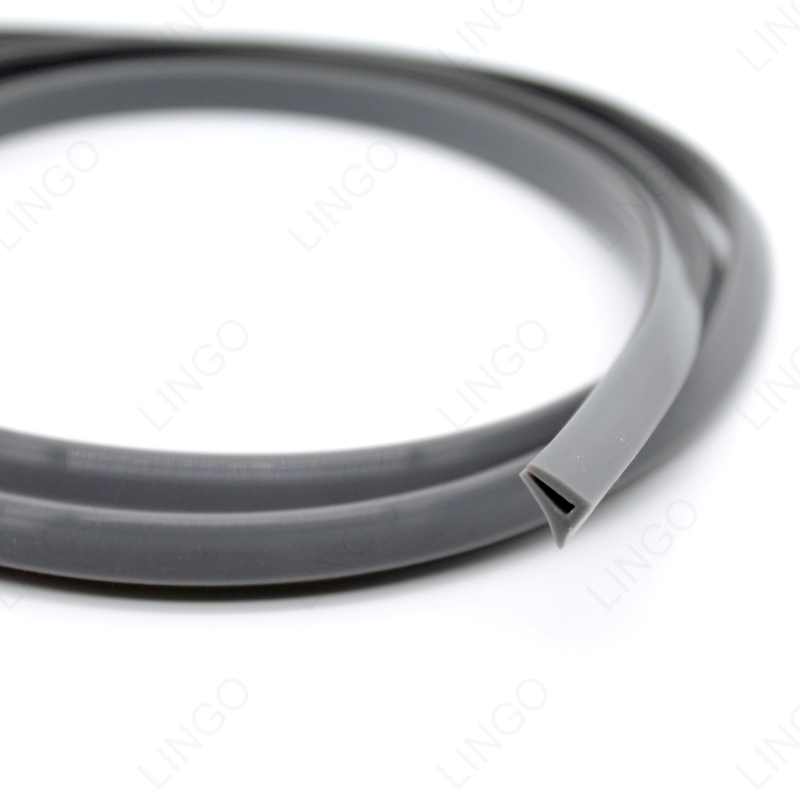
Configuration is the second specification decision. A solid rubber extrusion seal is a dense profile, typically chosen when the joint needs firm compression and a defined closing force. A sponge rubber extrusion seal is cellular and more compressible, which helps where the gap varies or the closing force is limited. A silicone rubber extrusion seal uses silicone as the base polymer, which is useful where temperature flexibility is the main concern.
An adhesive-backed extrusion seal adds a fixing method to the profile. This is practical for service access, retrofit work and situations where the seal must be positioned before the door or panel is closed. A co-extrusion seal combines more than one material in a single profile, allowing the seal to use different materials at different points in the cross-section. An FKM rubber extrusion seal uses fluorocarbon rubber for environments where chemical or heat exposure is the limiting factor.
Step-by-Step: Specifying an LG-RX Seal for a Green Energy Project
The following sequence keeps the specification grounded in the actual joint rather than in a catalog description.
- Map the joint and its movement. Record the gap range, the closing force, the surface finish and whether the joint opens during service. A seal that suits a fixed cabinet frame may not suit a battery pack lid that is opened repeatedly.
- Define the environment. List water, dust, ozone, ultraviolet exposure, oils, greases, cleaning agents and the temperature range the joint actually sees. This determines whether EPDM, NBR, silicone or FKM is the sensible starting point.
- Select the compound. Match the material to the dominant risk. Outdoor weather points toward EPDM; oil exposure points toward NBR; wide temperature movement points toward silicone; aggressive chemical or heat exposure points toward FKM.
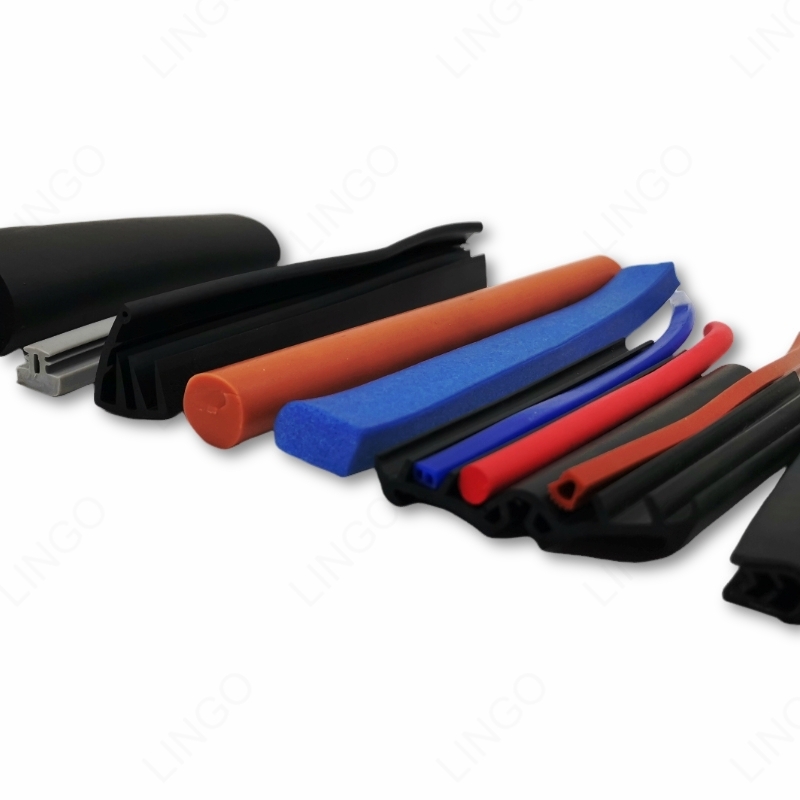
- Select the profile family. Choose solid, sponge, silicone, adhesive-backed, co-extrusion or FKM depending on the gap, the required compression and the installation method.
- Set hardness, color, length and tolerance. LG-RX hardness is specified in Shore A as required; length is produced as required; color is customized to Pantone or RAL references. Tolerance follows industry standards, so the drawing should state the critical dimensions rather than relying on a generic tolerance note.
- Validate with a sample. Lingo Rubber Plastic performs full inspection of samples and random inspection of bulk goods. A sample should be checked against the drawing, the joint and the installation method before production is released.
- Lock production and traceability. Confirm the batch traceability arrangement, the packaging and the delivery schedule before the order is placed. Lingo states a lead time of 2 to 6 weeks for its rubber extrusion products.
Use Cases: Where Extruded Seals Fit in Green Energy Hardware
EV Battery Enclosure Sealing
Battery enclosures need a continuous seal around a large perimeter, often with a limited closing force and a need to recover after service access. Silicone sponge extrusion seals are a relevant option because they are compressible and can be supplied in FDA-qualified silicone where the application calls for it. A documented export case lists EV battery sealing as one of the applications for silicone sponge cord sealing.
Industrial Cabinet and Power Electronics Gaskets
Inverter cabinets, control cabinets and power electronics enclosures use perimeter seals to keep dust and moisture away from terminals and insulated surfaces. EPDM is a common starting point for outdoor cabinets because of its weather and ozone resistance. The same case evidence lists industrial cabinet gaskets as a documented application.
Outdoor Renewable-Energy Enclosures
Outdoor junction boxes, measurement enclosures and equipment cabinets on renewable-energy sites face the same basic exposure as other outdoor electrical equipment: rain, humidity, dust and sunlight. A weather-resistant EPDM profile or a silicone profile for high temperature movement is the typical specification direction. The correct choice still depends on the actual joint and the service regime.
Building Envelope and Window Weatherstripping
Extruded seals are also used in building envelope applications such as window weatherstripping. The documented case evidence lists building window weatherstripping among the applications for silicone sponge sealing. In green buildings, the seal contributes to the weather boundary around glazing and openings.
Service, Retrofit and Adhesive-Backed Installation
Where a seal must be replaced in the field or positioned before a panel is closed, an adhesive-backed extrusion seal can simplify installation. This is a practical configuration choice rather than a performance claim; the adhesive still needs to suit the substrate and the service temperature.
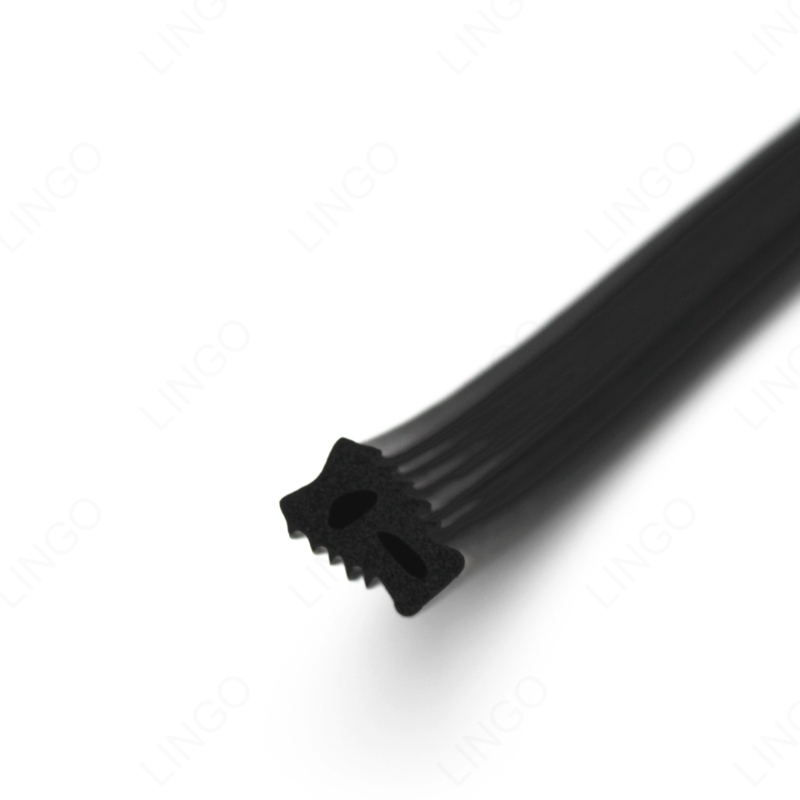
Documented Case: Silicone Sponge Extrusion Seal for an Export Project
A documented LG-RX case covers a project in the United Arab Emirates for an automotive OEM client. The order was 4,000 meters of silicone sponge cord sealing, with a stated service duration of three years. The application list includes EV battery sealing, industrial cabinet gaskets, automotive door seals, appliance door insulation, building window weatherstripping and medical device sealing.
The reported results are specific to that case: thermal stability from -60°C to 250°C without hardening or cracking, UV and ozone resistance for outdoor performance, closed-cell construction to keep out water, dust and noise, and non-toxic silicone with FDA-compliant options for food and medical uses. The case also records high-precision tolerance, high temperature resistance and a smooth surface as highlights. These are customer-reported outcomes and should be treated as evidence of what was achieved in that project, not as a guarantee for every LG-RX profile.
LG-RX Configuration Comparison
The table below is limited to the configuration and customization facts listed for LG-RX. It is a specification reference, not a ranking of configurations.
| LG-RX configuration | Material options | Configuration description | Customization available |
|---|---|---|---|
| Solid rubber extrusion seal | EPDM, NBR, silicone, FKM | Dense extruded rubber profile | Shore A as required; length as required; color to Pantone or RAL |
| Sponge rubber extrusion seal | EPDM, NBR, silicone, FKM | Cellular sponge rubber profile | Shore A as required; length as required; color to Pantone or RAL |
| Silicone rubber extrusion seal | Silicone | Silicone-based extruded profile | Shore A as required; length as required; color to Pantone or RAL |
| Adhesive-backed extrusion seal | EPDM, NBR, silicone, FKM | Extruded profile supplied with adhesive | Shore A as required; length as required; color to Pantone or RAL |
| Co-extrusion seal | Multiple materials | Profile combining more than one material | Shore A as required; length as required; color to Pantone or RAL |
| FKM rubber extrusion seal | FKM | Fluorocarbon rubber extruded profile | Shore A as required; length as required; color to Pantone or RAL |
Tolerance is stated as industry standards. Buyers should put critical dimensions on the drawing rather than relying on a general tolerance statement.
Customization, Quality Control and Supply Facts
Lingo Rubber Plastic is the manufacturer behind LG-RX. The company is Hangzhou Lingo Rubber and Plastic Product Co., Ltd, founded in 2022, with a 3,000m² facility, around 40 employees and a 10-person R&D team. Its stated export ratio is 80%, with main markets in the EU and USA. The product range covers rubber molding parts, rubber extruded parts, plastic injection parts and plastic extruded parts.
For rubber extrusion work, the company operates on an OEM/ODM basis. Customization includes rubber extrusion trims, and the same capability set applies to the extrusion seal family. Quality control is described as full inspection of samples and random inspection of bulk goods. After-sales support includes remote technical support, mold maintenance and ownership protection, a batch traceability system, and free exchange and acceptance of concessions. Lead time is stated as 2 to 6 weeks. MOQ depends on the part, and small quantity orders are acceptable.
These facts matter to a green energy buyer because they answer the practical questions behind a quotation: who makes the profile, how the sample is checked, how the batch is traced, and how long the production slot takes. They do not replace a drawing review or a material certificate for the specific compound.
Frequently Asked Questions
LG-RX seals fall within the scope of HS Code 4016.93, which covers gaskets, washers and other seals of vulcanized rubber other than hard rubber. Silicone sponge material used in a documented LG-RX case was FDA-compliant silicone, and the product image set includes an FDA silicone rubber extrusion seal. For a specific project, buyers should request the material certificate and batch records for the selected compound rather than assuming that every LG-RX profile carries the same documentation.
Yes. LG-RX is offered on an OEM/ODM basis with material options including EPDM, NBR, silicone and FKM. Hardness is specified in Shore A as required, length is produced as required, and color is customized to Pantone or RAL references. The configuration can be solid, sponge, silicone, adhesive-backed, co-extrusion or FKM, depending on the joint and the environment.
Cost is driven by the compound, the profile geometry, the specified hardness, the color requirement, the length and the order quantity. Tooling and sample validation also affect the initial cost. LG-RX does not publish a fixed price because each profile is made to the project requirement; the practical approach is to quote against a drawing and a stated annual or project volume.
Yes. Lingo Rubber Plastic performs full inspection of samples before bulk production and random inspection of bulk goods. Small quantity orders are acceptable, and the stated lead time for rubber extrusion products is 2 to 6 weeks. A sample should be checked against the drawing, the joint and the installation method before production is released.
MOQ depends on the part, and small quantity orders are acceptable. The stated lead time is 2 to 6 weeks. For project planning, confirm the drawing, the compound and the sample approval step before fixing the delivery date, because those inputs determine when production can start.
Next Step: Check the Profile Against Your Joint
If you are specifying a seal for a battery enclosure, cabinet, junction box or building envelope, the fastest way to reduce risk is to review the joint and the environment against a real profile. Lingo Rubber Plastic can review a drawing, discuss the compound and prepare a sample for evaluation.
Company profile and brochure: LINGO RUBBER & PLASTIC COMPANY PROFILE
Email: sales@lingorp.com | Tel / WhatsApp: +86 18358136245 | Website: www.lingorp.com
Address: Rm1303 Meiya Plaza, LP, HZ, China 311100
Conclusion
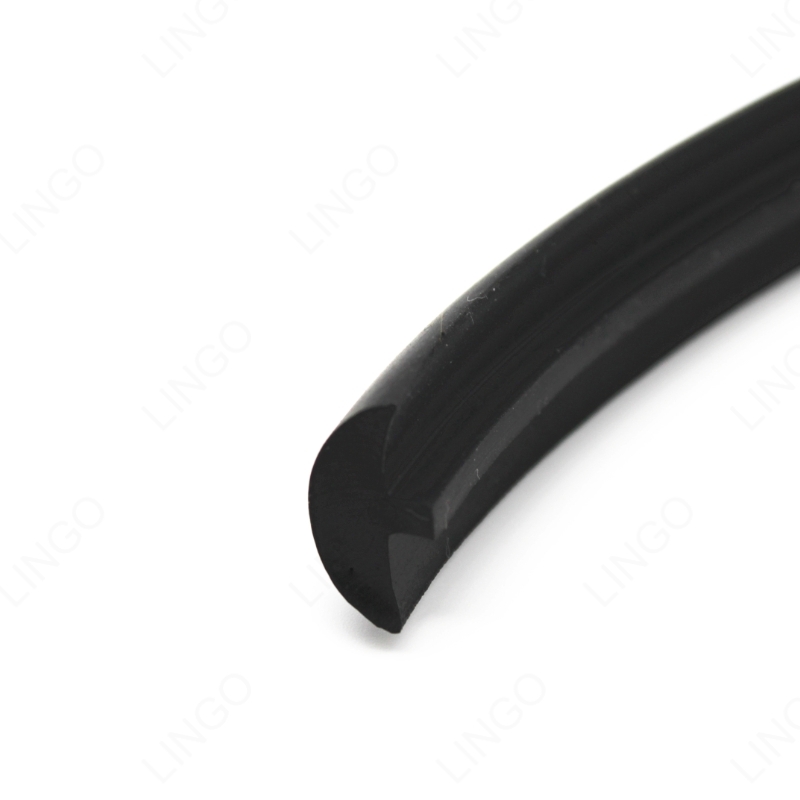
Rubber extrusion seals are continuous elastomer profiles that protect green energy assets by closing the gap between surfaces and isolating the interior from water, dust and contaminants. LG-RX brings that function into a configurable product family: EPDM, NBR, silicone and FKM compounds; solid, sponge, silicone, adhesive-backed, co-extrusion and FKM configurations; Shore A hardness as required; length as required; and color to Pantone or RAL. The documented silicone sponge case shows how a seal can be matched to EV battery sealing, industrial cabinet gaskets and building weatherstripping, while the company facts show how samples, batch traceability and a 2 to 6 week lead time fit into a project schedule.
The practical decision is not which seal looks best in a catalog. It is which compound and profile match the joint, the environment and the service access. That is the specification conversation worth having before the enclosure is closed.
Have Questions or Need More Details?
Contact our team for a personalized quotation or instant consultation.
Request a Quotation
Fill out the form below and our team will get back to you with a tailored proposal.
WhatsApp Direct Chat
Prefer to chat in real-time? Message us on WhatsApp for instant assistance & quick answers.
- Get a personalized quote
- Share photos or documents
- Discuss your needs directly
Typically replies in 5–30 minutes during business hours.