
Rubber Extrusion Seals & Anti-Vibration Mounts: A Green Energy Production & Export Primer
Rubber Extrusion Seals & Anti-Vibration Mounts: A Green Energy Production & Export Primer
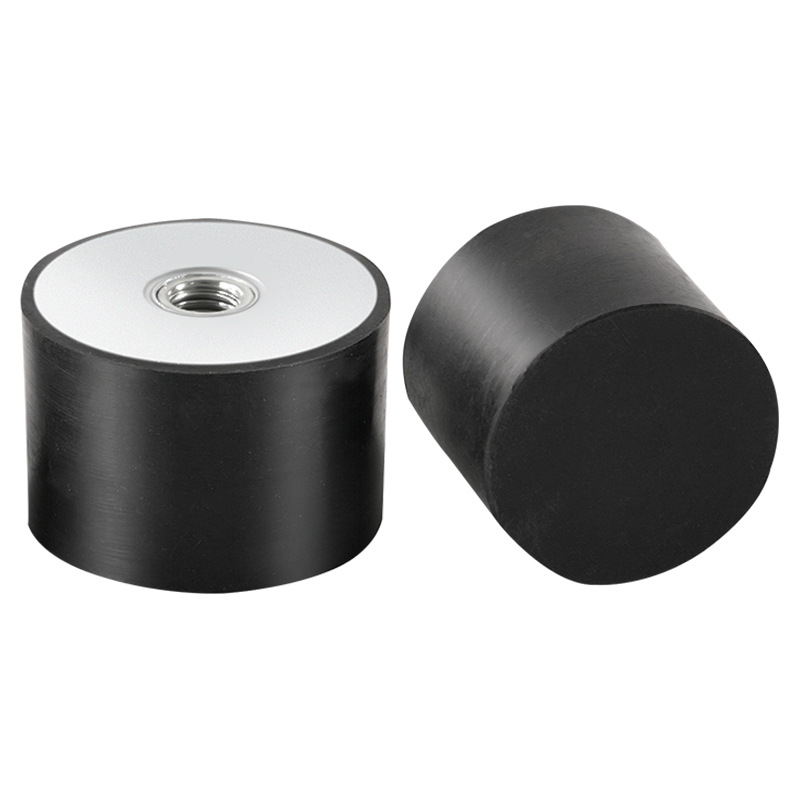
A green energy drawing often arrives with three lines of specification: EPDM, 60 Shore A, two metres per length. What those three lines do not answer is whether the factory can hold that profile across tens of thousands of pieces, match the colour on a reorder eight months later, pack for an ocean container, and release documents against a letter of credit. This primer covers both halves of that question.
Lingo Rubber Plastic (Hangzhou Lingo Rubber and Plastic Product Co., Ltd) is a China-based manufacturer of rubber compression molding parts, rubber extrusions, plastic injection parts and plastic extrusion profiles. Established in 2022, the company operates a 3,000 m² facility with approximately 40 staff, a 10-person R&D team and an annual production capacity of 1.58 million units. Roughly 80% of sales are exported, with the EU and USA as its major markets.
Two product families carry most of the sealing and vibration work in green energy equipment: rubber extrusion seals (LG-RX) and cylindrical anti-vibration mounts (LGMM). The sections below explain what each family contains, how production is controlled, and how an export order moves from drawing to delivered batch.
The Real Problem Is Rarely “Which Rubber?”
Buyers in the awareness-to-research stage usually open with a material question. In practice, the difficulty sits one level lower, in two places.
1. Specification ambiguity
An extrusion seal is defined by more than its compound. The cross-section geometry, the Shore A hardness, the length, the colour reference and whether the profile needs adhesive backing or a co-extruded hard/soft combination all change what the factory must build. A mount is defined by diameter, height, insert arrangement and tolerance class — not by “rubber” alone. When any of these is left open, two suppliers can quote the same line item and deliver parts that behave differently.
2. Supply consistency
The second problem only appears on the third order. A first batch that passes dimensional checks can still be followed by a batch with a different hardness reading, a slightly different colour, or a weaker rubber-to-metal bond. Consistency is a process outcome: it comes from tooling ownership, controlled cure parameters, inspection frequency and traceability, not from a certificate alone.
Practical takeaway: write the specification as a data set — compound, hardness, dimensions, tolerance reference, colour system and packing — before asking for pricing. It is the single change that most reduces quotation noise between suppliers.
Where These Parts Sit in the Green Energy Supply Chain
Third-party research gives the category its scale, and it is worth reading carefully because the scope of each figure differs. Grand View Research valued the global gasket and seal materials market at USD 61.4 billion in 2024, and estimates that rubber-based seals account for approximately 56% of that market because of their role in dynamic sealing. Vantage Market Research valued the narrower O-ring segment at USD 10.41 billion in 2025. On the isolation side, Cognitive Market Research attributes approximately 23% of the global anti-vibration rubber mounts market to China-based manufacturers.
Those figures describe categories, not suppliers. Published industrial rubber market forecasts also diverge widely depending on scope — Persistence Market Research and Mordor Intelligence publish materially different totals and growth rates under the same umbrella term — so headline numbers work as context and work poorly as procurement inputs. The decision that matters at a buyer’s desk is narrower: can this specific factory hold a specified profile, hardness and bond strength across a batch, and can it evidence that it did?
Trade classification is more concrete. Gaskets, washers and other seals of vulcanised rubber, other than hard rubber, are covered by HS code 4016.93, the heading the US International Trade Commission uses for this product scope, including O-rings and oil seals. Importers should still confirm the classification and duty treatment that apply to their own part and destination before quoting landed cost.
Green energy hardware fits inside the application categories the company already lists for these products — industrial manufacturing, HVAC & refrigeration, automotive & transportation, marine & offshore, electronics & electrical and construction. Enclosures, cabinets, skids and transport frames are where the sealing and isolation requirements typically appear.
LG-RX Rubber Extrusion Seals: What the Category Actually Contains
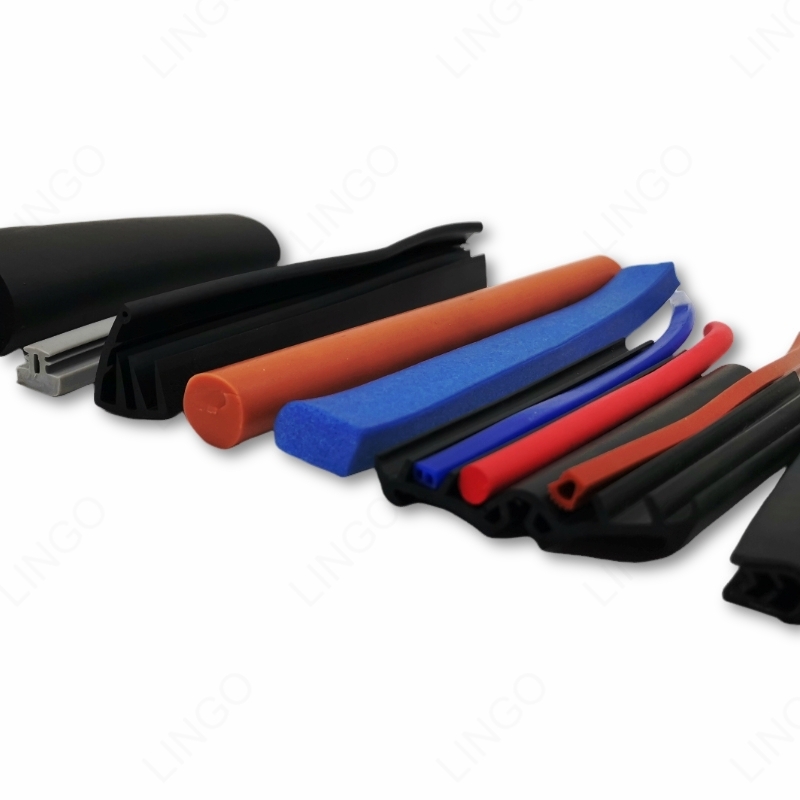
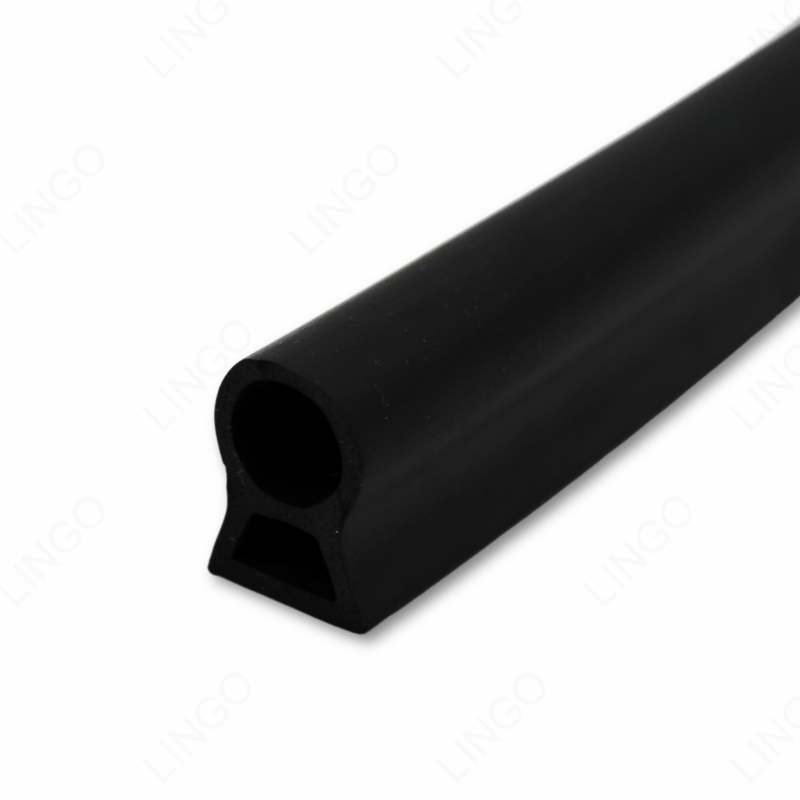
LG-RX is a rubber extrusion seal family available in EPDM, NBR, silicone and FKM, with hardness specified per Shore A, length as required, colour matched to Pantone or RAL, and tolerances held to industry standards.
Profile and construction types
The family covers six construction options, and the choice is usually driven by how the part is fixed to the substrate:
- Solid rubber extrusion seal — a dense profile for compression sealing where the gap is stable.
- Sponge rubber extrusion seal — a cellular profile for uneven gaps and low closing force.
- Silicone rubber extrusion seal — used where temperature range and flexibility dominate the requirement.
- FKM rubber extrusion seal — specified for aggressive chemical exposure.
- Rubber extrusion seal with adhesive — a pressure-sensitive backing that removes the need for a separate fixing step.
- Rubber co-extrusion seal — two materials or two hardness zones extruded together, typically a soft sealing lip on a firmer body.
Material selection in practice
EPDM is the usual starting point for exterior enclosures because it handles weathering, ozone and water exposure well. NBR is selected where oil and grease contact is expected. Silicone is chosen for flexibility across a wide temperature band, and the related silicone cord family (LG-SRC) is FDA qualified where food or medical contact is in scope. FKM is reserved for aggressive media and higher service temperatures.
Material alone does not settle performance. The compound, hardness and cross-section work together, and the same profile in a different hardness will seal at a different closing force. A supplier should produce to the specified compound and hardness — not substitute a nearby grade — and the buyer should validate the final combination against the actual media, temperature and compression set requirement before scaling the order.
Hardness, length, colour and tolerance
Hardness is specified per Shore A as required by the application, so the number comes from the drawing rather than from a stock list. Length is produced as required, which matters for long perimeter runs where spliced joints would create a leak path. Colour is customised to Pantone or RAL references, and tolerances are held to industry standards.
Stated application industries
The product data lists food & beverage, medical & healthcare, aerospace & aviation, automotive & transportation, HVAC & refrigeration, industrial manufacturing, marine & offshore and household appliances. Green energy hardware generally lands inside the industrial manufacturing, HVAC and marine categories rather than in a separate one.
LGMM Cylindrical Anti-Vibration Mounts: Construction, Range and Tolerance
LGMM is a cylindrical rubber mount built from natural rubber bonded to carbon steel, available from 8 mm to 150 mm in diameter and 8 mm to 90 mm in height, with tolerances held to the RMA A2 standard.
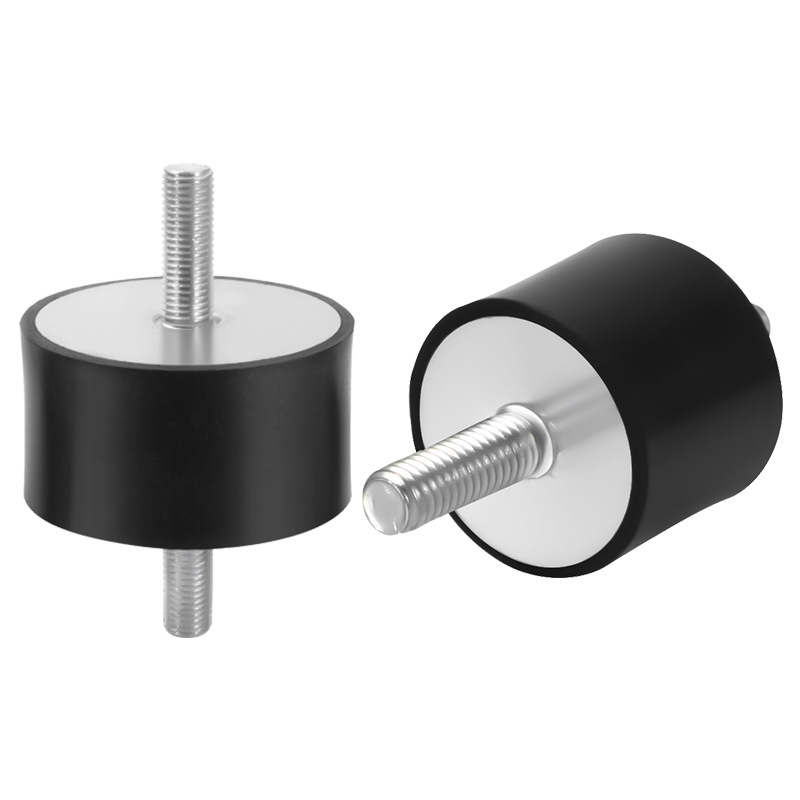
The construction explains the behaviour. The rubber section works in compression and shear under dynamic load, while the steel inserts carry the fixing load and define how the mount bolts to a frame or a machine foot. Because the rubber-to-metal bond is the load path, bond integrity is the specification that most deserves verification — a dimensional check alone will not reveal it.
Range and tolerance
- Diameter: 8–150 mm.
- Height: 8–90 mm.
- Tolerance: RMA A2 standard.
- Construction: natural rubber with carbon steel.
Documented transportation duty
In the transportation sector the mount is applied to engine mounting systems, suspension systems and seat vibration isolation projects, absorbing engine vibration, reducing structure-borne noise and improving ride comfort. The documented working condition is continuous cyclic compression and shear under dynamic loading, with exposure to high dynamic load, a temperature range of −40°C to +120°C, oil, grease, road shock and continuous vibration. The stated requirement is low compression set and fatigue resistance across 10⁶ to 10⁷ cycles, with matched equipment including engine brackets, chassis frames, rail bogies and ship engine beds. The listed markets for this application are the United States, United Kingdom, Germany, Italy, Russia, United Arab Emirates and Canada.
Stated industries for LGMM are marine & military, construction & civil engineering, electronics & precision instruments, industrial machinery and transportation. The same isolation logic — a defined rubber section, a rated load, a fixed insert geometry — applies to inverter cabinets, containerised equipment skids and transformer frames, which sit within those categories.
Production Controls Behind Repeatable Batches
Consistency is the product of specific process decisions. In this supply chain, seven controls carry most of the weight.
In-house tooling
Tooling developed in-house shortens the loop between a drawing correction and a corrected profile. It also means the buyer’s drawing accuracy matters directly: an ambiguous cross-section will be interpreted once, and that interpretation becomes the tool.
Batch consistency
Batch consistency is managed through controlled compounding and cure parameters so that hardness and cross-section repeat from run to run. This is what protects a reorder placed months after the first delivery.
Full sample inspection
Samples are inspected in full rather than by sampling, which is the appropriate level of scrutiny for a pre-production part where a single dimensional error would be reproduced at scale.
Random inspection of bulk
Bulk production is checked by random inspection. Random rather than fixed-point checking is what makes a claim about process stability meaningful, because the sample is not chosen by the party being measured.
Pre-shipment testing
Pre-shipment testing catches drift before the container closes — the last practical point at which a batch can be corrected without an air freight decision.
Mold maintenance
Mould maintenance is scheduled rather than reactive. Tool wear shows up first as a dimensional shift in the profile, and a maintained mould is the cheapest defence against a slow quality decline across a long programme.
Batch traceability
Batch traceability links a delivered carton back to its production run. If a field issue appears, traceability converts an open-ended problem into a bounded one — which batches, which material lot, which date.
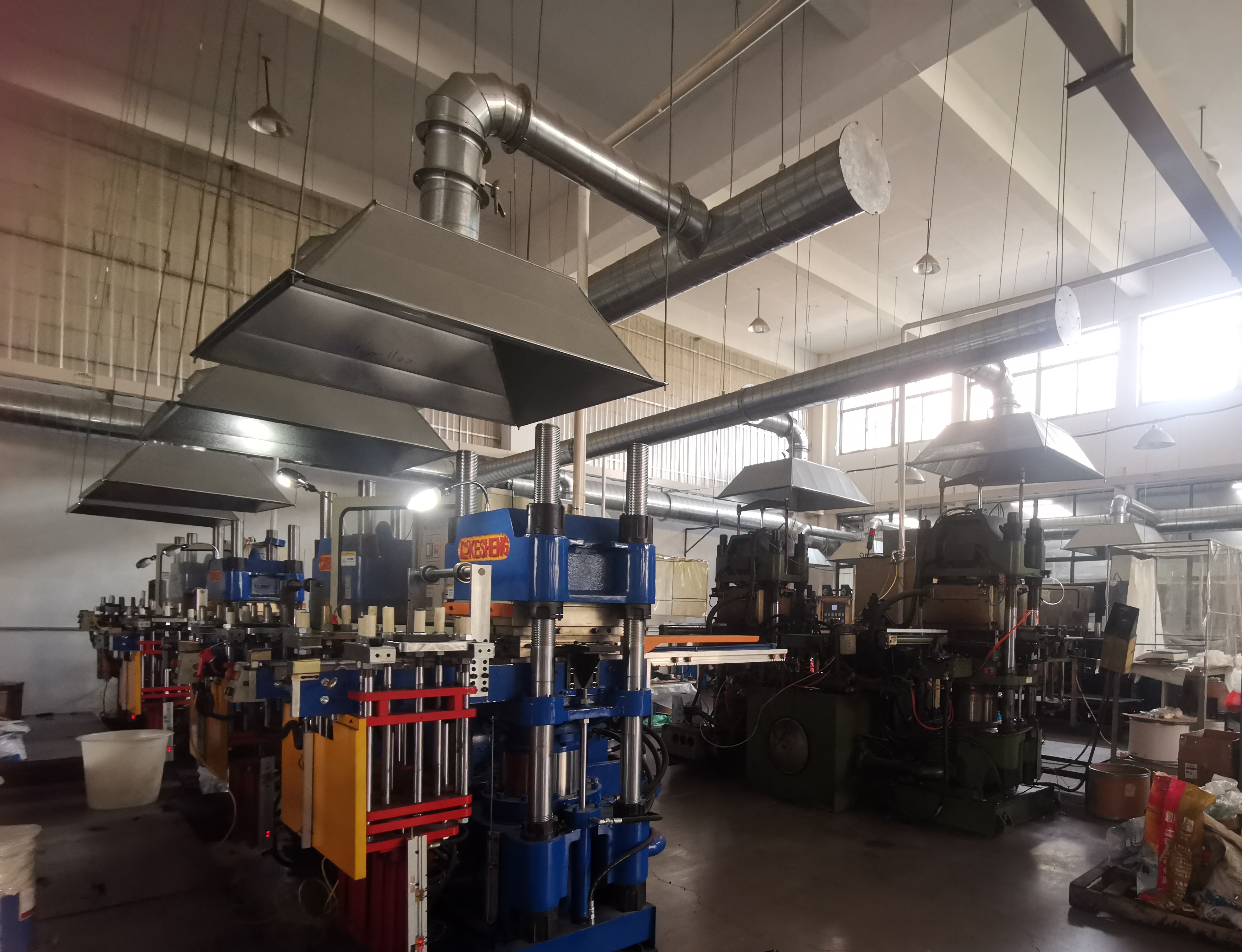
These controls sit inside a defined operation: a 3,000 m² manufacturing facility, approximately 40 staff, a 10-professional R&D team and an annual production capacity of 1.58 million units. Export business accounts for approximately 80% of total sales, with the EU and USA as major markets — a mix that means documentation and packaging are routine rather than exceptional.
Export Mechanics: MOQ, Payment and Delivery Terms
For a first-time importer, the commercial terms decide whether a good part is also a workable purchase. The relevant settings here are a flexible MOQ, payment by T/T, L/C or D/P, and delivery on EXW, FOB, CIF or DDP terms.
Flexible MOQ
A flexible MOQ means the commercial floor is negotiated against the tooling and profile rather than fixed by a catalogue rule. For a green energy pilot — one enclosure design, a few hundred metres of extrusion, a small mount count — this is usually the difference between running a validation batch and postponing the project.
Payment terms
- T/T (telegraphic transfer) — the simplest route; the sequence of deposit and balance is agreed in the contract.
- L/C (letter of credit) — a bank-mediated instrument where payment follows compliant documents; suitable for larger programmes where both sides want a neutral framework.
- D/P (documents against payment) — documents are released to the buyer against payment through the banks, so the goods are not released before settlement.
Delivery terms
- EXW — the buyer controls the whole logistics chain from the factory; maximum control, maximum coordination work.
- FOB — responsibility transfers at the port of loading; the buyer manages the main carriage.
- CIF — the seller arranges carriage and insurance to the destination port; the buyer handles import clearance.
- DDP — the seller delivers duty paid to the named destination, which shifts import clearance and duty handling to the supplier in exchange for a higher unit price.
None of these is inherently better. EXW and FOB suit buyers with an established forwarder; CIF simplifies the middle of the chain; DDP removes import administration entirely, which is often the deciding factor for a first container.
Lead time
Published lead time is 4–6 weeks for tooling and samples, and 3–4 weeks for production parts. Those two windows should be planned separately, because the sample stage is where most schedule risk actually sits.
Repeat-order evidence
The clearest indicator of export readiness is not a document but a repeat pattern. A U.S. automotive OEM programme has placed repeat orders of 10,000–40,000 pieces multiple times per year — a cadence that only holds if tooling, inspection and documentation survive contact with volume.
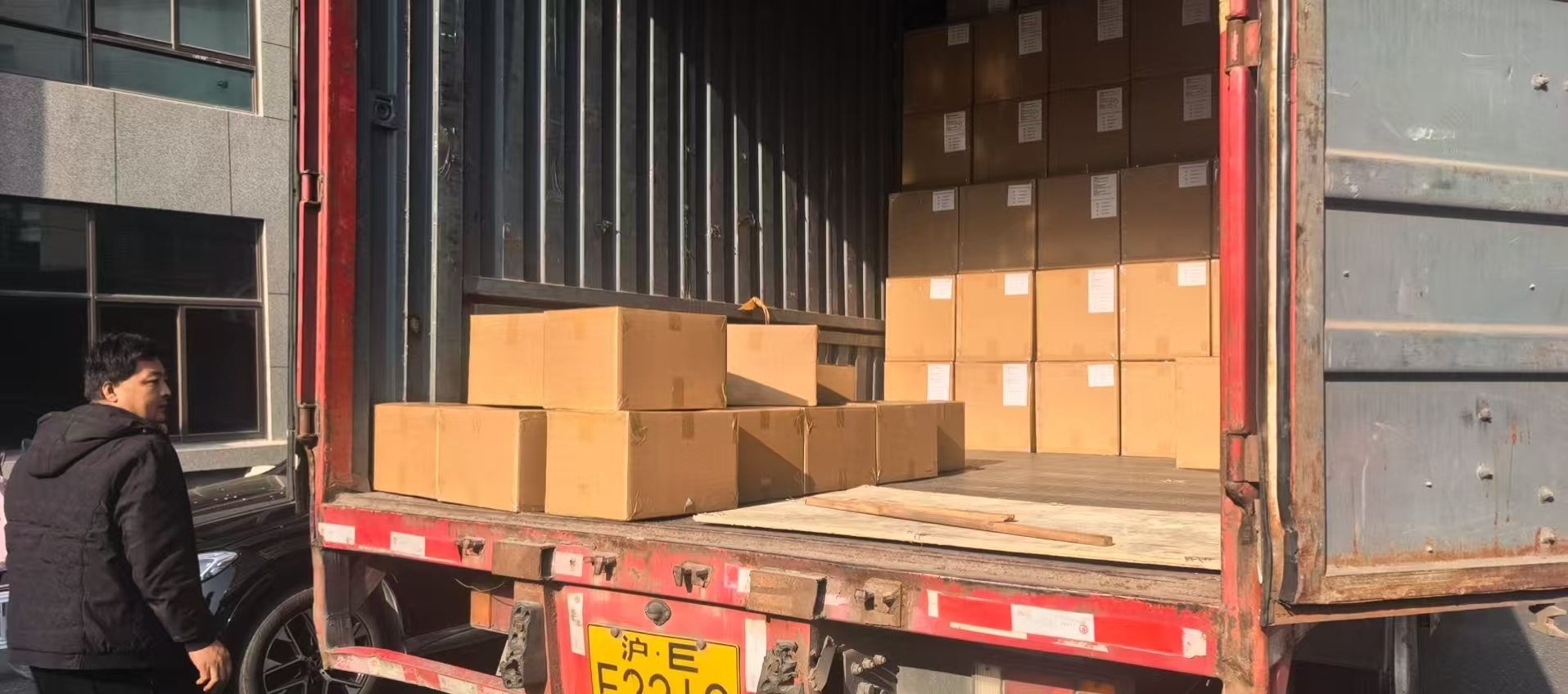
Step-by-Step: From Drawing to Delivered Batch
- Application brief. State the medium, the temperature band, the gap to be sealed or the load to be isolated, the mounting method and the expected service life. This is where EPDM, NBR, silicone or FKM is settled — and where natural rubber with carbon steel is confirmed for a mount.
- Specification lock. Fix the cross-section or the diameter/height pair, the Shore A hardness, the tolerance reference (RMA A2 for LGMM) and the Pantone or RAL colour. Length is confirmed as required.
- Tooling and sampling. In-house tooling is built and a sample set is produced, typically within 4–6 weeks, then inspected in full.
- Sample validation. The buyer checks the sample against the locked specification — dimensional fit, hardness, colour, bond integrity on mounts, compression behaviour on profiles.
- Production run. Bulk manufacture takes an estimated 3–4 weeks, with random inspection applied to output rather than to hand-picked parts.
- Pre-shipment testing and release. Pre-shipment checks are completed, batch records are attached, and the shipment is released against the agreed payment term.
- Shipment and repeat. Delivery proceeds on EXW, FOB, CIF or DDP as contracted, with classification under HS 4016.93 confirmed for seals where applicable.
Where LG-RX and LGMM Fit in Green Energy Equipment
The applications below sit inside the industry scope the products already state. Each should still be validated against the specific media, temperature and load.
- Exterior enclosure and cabinet sealing. An EPDM extrusion seal with adhesive backing closes the door-to-frame gap on outdoor cabinets without a separate fixing operation.
- Containerised equipment doors. A sponge or co-extruded profile tolerates the larger, less stable gaps found on fabricated doors and still closes at low force.
- Inverter and transformer cabinets. LGMM mounts break the structure-borne path between a vibrating component and a mounting frame, in the same way the transportation application isolates engine brackets and chassis frames.
- EV charging and power electronics housings. Silicone extrusion seals are the practical choice where temperature range and flexibility matter more than oil resistance.
- Transport frames and shipping skids. Mounts used as transport isolation follow the same mechanics as the documented engine-mounting duty: continuous cyclic compression and shear under dynamic load.
- Marine and offshore renewable structures. FKM extrusion seals are specified where chemical exposure rules out standard hydrocarbon rubber.
Comparison Table: LG-RX, LG-SRC and LGMM at a Glance
| Attribute | LG-RX — rubber extrusion seal | LG-SRC — silicone rubber cord | LGMM — cylindrical mount |
|---|---|---|---|
| Primary function | Compression sealing along a linear gap | Sealing or spacing with a cord profile | Vibration isolation under dynamic load |
| Construction / forms | Solid, sponge, silicone, FKM, adhesive-backed, co-extruded | Solid and sponge silicone cord | Cylindrical rubber section bonded to carbon steel |
| Material | EPDM, NBR, silicone, FKM | Silicone rubber | Natural rubber with carbon steel |
| Hardness | Shore A as required | Not specified in product data | Not specified in product data |
| Size range | Length as required | Length as required | Diameter 8–150 mm; height 8–90 mm |
| Tolerance | Industry standard tolerances | Industry standard tolerances | RMA A2 standard |
| Colour | Custom per Pantone or RAL | Custom per Pantone or RAL | Not specified in product data |
| Additional rating | — | Heat resistant; FDA qualified | Documented low compression set and fatigue resistance for 10⁶–10⁷ cycles in transport duty |
| Typical green energy role | Enclosure, cabinet and door sealing | Food-grade or high-temperature linear sealing | Cabinet, skid and equipment isolation |
FAQ
What standards and import classifications should be checked before ordering?
Two references cover most of the ground. Gaskets, washers and other seals of vulcanised rubber other than hard rubber, including O-rings and oil seals, fall under HS code 4016.93 as used by the US International Trade Commission — the importer should confirm the classification and duty treatment for their own part and destination. For LGMM cylindrical mounts, the relevant published tolerance reference is the RMA A2 standard, which should be stated on the drawing and confirmed on the inspection record.
How can I judge whether a rubber extrusion seal factory will hold batch consistency?
Ask about process, not about certificates alone. In-house tooling, controlled batch parameters, full inspection of samples, random inspection of bulk output, pre-shipment testing, scheduled mould maintenance and batch traceability together determine whether reorder number three matches the first delivery. Lingo Rubber Plastic runs these controls from a 3,000 m² facility with approximately 40 staff, a 10-person R&D team and an annual capacity of 1.58 million units, with roughly 80% of sales exported to the EU and USA.
Is there a minimum order quantity for custom rubber seals and mounts?
MOQ is flexible, which means the commercial floor is set by the tooling and the profile rather than by a fixed catalogue rule. For pilot builds and validation batches this is usually what makes a first order viable. Payment can be arranged by T/T, L/C or D/P depending on order size and the commercial framework both sides prefer.
Can samples be provided before a production order is placed?
Yes. Sampling is a defined stage: sample sets are produced and inspected in full before a production run is authorised, with a lead time of 4–6 weeks for tooling and samples. Evaluate a sample against the locked specification — cross-section or diameter/height, Shore A hardness, colour against the Pantone or RAL reference, and for mounts the integrity of the rubber-to-steel bond.
What lead times and delivery terms apply to export orders?
Published lead time is 4–6 weeks for tooling and samples and 3–4 weeks for production parts. Delivery can run on EXW, FOB, CIF or DDP terms, with payment by T/T, L/C or D/P. Repeat volume is realistic: a U.S. automotive OEM programme orders 10,000–40,000 pieces multiple times per year. To scope your own requirement, send the drawing or the application detail to sales@lingorp.com and request a sample and quotation.
Conclusion: Specify Twice, Order Once
Rubber extrusion seals and cylindrical anti-vibration mounts are simple components with a wide specification surface. LG-RX covers EPDM, NBR, silicone and FKM across solid, sponge, adhesive-backed and co-extruded constructions, with hardness per Shore A, length as required and colour to Pantone or RAL. LGMM covers natural rubber bonded to carbon steel from 8 mm to 150 mm in diameter and 8 mm to 90 mm in height, held to RMA A2 tolerance. What converts either into a reliable supply line is the layer behind the part: in-house tooling, batch consistency, full sample inspection, random bulk inspection, pre-shipment testing, mould maintenance and batch traceability — and commercial terms that fit how you actually buy.
Next step: request a sample set or a quotation against your drawing. Send the compound, Shore A hardness, dimensions, tolerance reference and colour target, and specify whether the delivery should be quoted on EXW, FOB, CIF or DDP terms.
Lingo Rubber Plastic — Hangzhou Lingo Rubber and Plastic Product Co., Ltd
Website: www.lingorp.com | Email: sales@lingorp.com | Tel / WhatsApp: +86 18358136245
Company profile and full product range: Download the Lingo Rubber & Plastic catalogue (PDF).
Have Questions or Need More Details?
Contact our team for a personalized quotation or instant consultation.
Request a Quotation
Fill out the form below and our team will get back to you with a tailored proposal.
WhatsApp Direct Chat
Prefer to chat in real-time? Message us on WhatsApp for instant assistance & quick answers.
- Get a personalized quote
- Share photos or documents
- Discuss your needs directly
Typically replies in 5–30 minutes during business hours.