
Top 7 Rubber Parts for Renewable Energy Systems: Ranking & Selection Criteria
Top 7 Rubber Parts for Renewable Energy Systems: Ranking & Selection Criteria
The rubber components that decide whether a renewable energy installation stays sealed, insulated and mechanically quiet can be ranked in a clear order of priority: anti-vibration mounts first, then rubber extrusion seals, silicone rubber cords, rubber sealing rings, rubber gaskets, rubber grommets, and finally rubber bellows and bonded-to-steel parts. This article explains why each component holds its position, what a verifiable specification looks like, and how procurement teams should compare suppliers. All product data below comes from the published documentation of Lingo Rubber Plastic (Hangzhou Lingo Rubber and Plastic Product Co., Ltd), a manufacturer established in 2022 that specializes in rubber compression molding parts, rubber extrusions, plastic injection parts and plastic extrusion profiles.
Problem Definition: Why Green Energy Hardware Is Hard on Rubber
Renewable energy installations are outdoor machines that run continuously, and rubber is the material that keeps them sealed, electrically isolated and mechanically stable. Three failure modes dominate in this environment, and each one maps to a different component family.
- Vibration and fatigue. Rotating and moving equipment transfers cyclic loads into frames and enclosures. The published application data for Lingo's cylindrical rubber mounts describes continuous cyclic compression and shear under dynamic loading, with fatigue resistance expected across 10⁶ to 10⁷ cycles and low compression set as a stated requirement.
- Weather, ozone and UV exposure. Continuous outdoor exposure attacks elastomers that are not formulated for it. EPDM is formally classified under ASTM D1418 and ISO 1629, standards that define its resistance to ozone and UV.
- Thermal cycling and media contact. Sealing rings in the Lingo range are documented across a heat range of -40°C to 250°C with ozone, water and oil resistance, while the transportation vibration-isolation application specifies an operating window of -40°C to +120°C with exposure to oil and grease.
The practical problem for a procurement team is not finding rubber parts. It is prioritizing them. A green energy bill of materials can contain dozens of elastomer items, and treating them as interchangeable leads to two recurring mistakes: over-specifying low-stress parts, and under-specifying the two or three components whose failure would stop the system. The ranking below exists to fix that priority order.
Industry Background: Seals, Molding and Vibration Isolation at Scale
Three published market data points frame the supply base that renewable energy projects draw on.
- The global gaskets and seals market was estimated at USD 63.09 billion in 2024, with the seals segment holding a 60.1% revenue share, according to Grand View Research.
- The global rubber molding market reached USD 54.1 billion in 2024, with injection molding as the leading process type and EPDM as the dominant material, according to Cognitive Market Research.
- The global anti-vibration mounts market was valued at USD 6.03 billion in 2024, with the top three players — ContiTech, Hutchinson and Sumitomo Riko — holding 65% market share, according to Market Insights Reports.
On the supply side, China's rubber parts industry accounted for more than 35% of global production in 2024, according to EINPresswire industry analysis, which links that share to demand from electric vehicle battery sealing and thermal management. The same molding, extrusion and vibration-isolation capability serves renewable energy hardware, which is why the ranking below is built on general rubber parts capability rather than on a dedicated green energy catalogue.
Two standards appear repeatedly in supplier documentation and belong in any technical review. ASTM D1418 and ISO 1629 classify EPDM and define its ozone and UV resistance. ASTM D2000 sets specifications for temperature and oil resistance that rubber materials for seals and gaskets frequently must meet.
Detailed Solution: The Top 7 Rubber Parts for Renewable Energy Systems
The ranking applies four criteria: function criticality (does failure stop the system or create a safety issue?), environmental exposure (UV, ozone, temperature cycling, moisture, oils), specification verifiability (are material, dimension and tolerance documented?), and cost of failure (what does replacement or downtime cost?).
1. Anti-Vibration Mounts (LGMM)
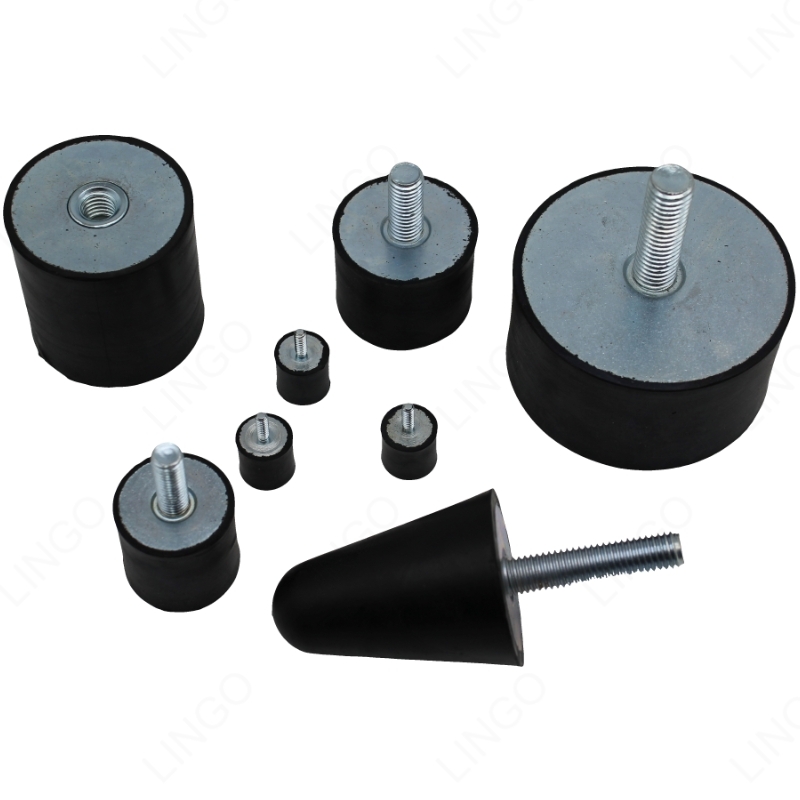
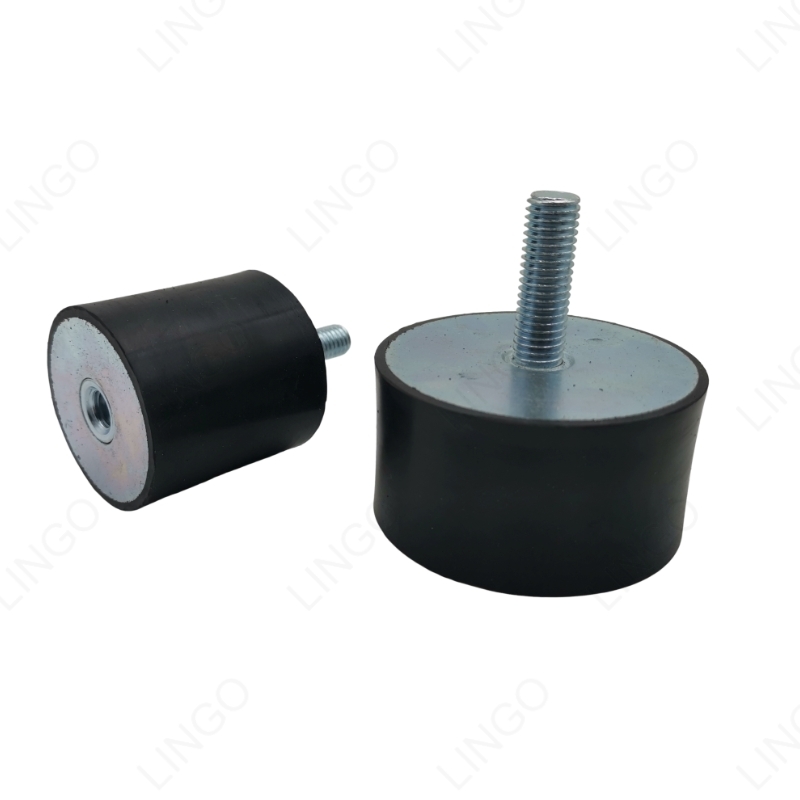
Vibration ranks first because it has the shortest path from a small defect to a large repair. The LGMM is a cylindrical rubber mount, also described as a rubber stud mount, built from natural rubber bonded to a zinc-coated carbon steel insert. The steel provides a rigid attachment point; the natural rubber absorbs and damps the cyclic load between the equipment and its frame. Documented dimensions run from 8 mm to 150 mm in diameter and 8 mm to 90 mm in height, with tolerances held to the RMA A2 standard.
Lingo's application documentation lists continuous cyclic compression and shear under dynamic loading as the operating mode, with an operating window of -40°C to +120°C and exposure to oil, grease, road shock and continuous vibration. Documented industries include transportation, industrial machinery, electronics and precision instruments, construction and civil engineering, and marine and military applications. What makes this the first component to lock down in a bill of materials is the combination of a fatigue-rated elastomer, a defined dimensional envelope and a published tolerance standard.
2. Rubber Extrusion Seals (LG-RX)
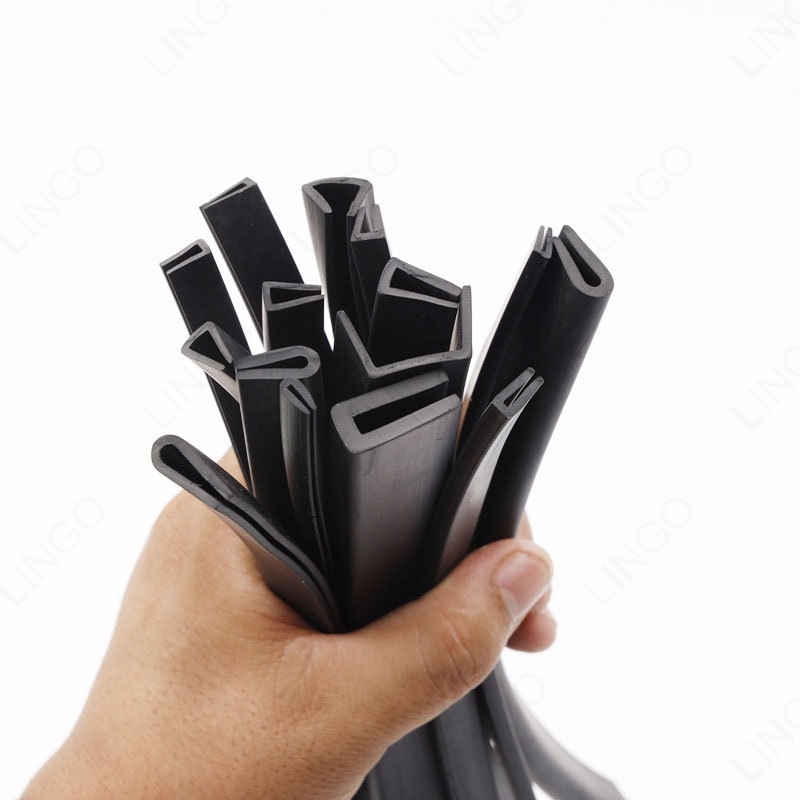
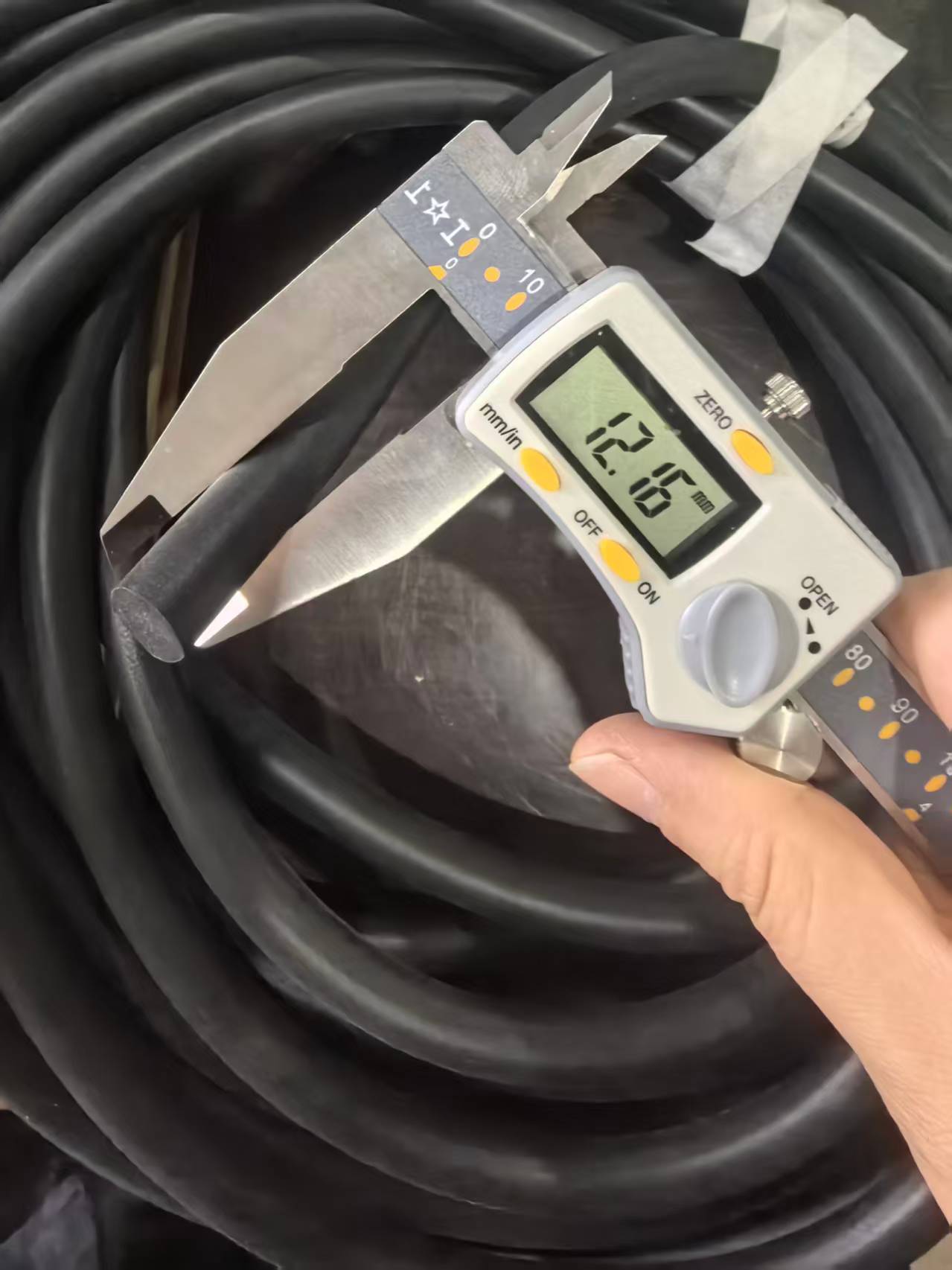
Extruded profiles are the most material-efficient way to seal a long perimeter, which is why rubber extrusion seals rank second. The LG-RX is available in several constructions: silicone rubber extrusion seals, seals with adhesive backing, co-extrusion seals, FKM extrusion seals, solid extrusion seals and sponge extrusion seals. It can be produced from EPDM, NBR, silicone or FKM. Hardness is specified per Shore A as required, length is cut to the customer's requirement, colors can be matched to Pantone or RAL references, and tolerances meet industry standards.
Documented application industries include HVAC and refrigeration, industrial manufacturing, electronics and electrical, marine and offshore, automotive and transportation, aerospace and aviation, medical and healthcare, food and beverage, and household appliances. The selection logic is straightforward: EPDM where ozone and UV resistance matter most, silicone where temperature range matters, FKM where chemical resistance is the constraint, and sponge constructions where low closure force is required.
3. Silicone Rubber Cords (LG-SRC)
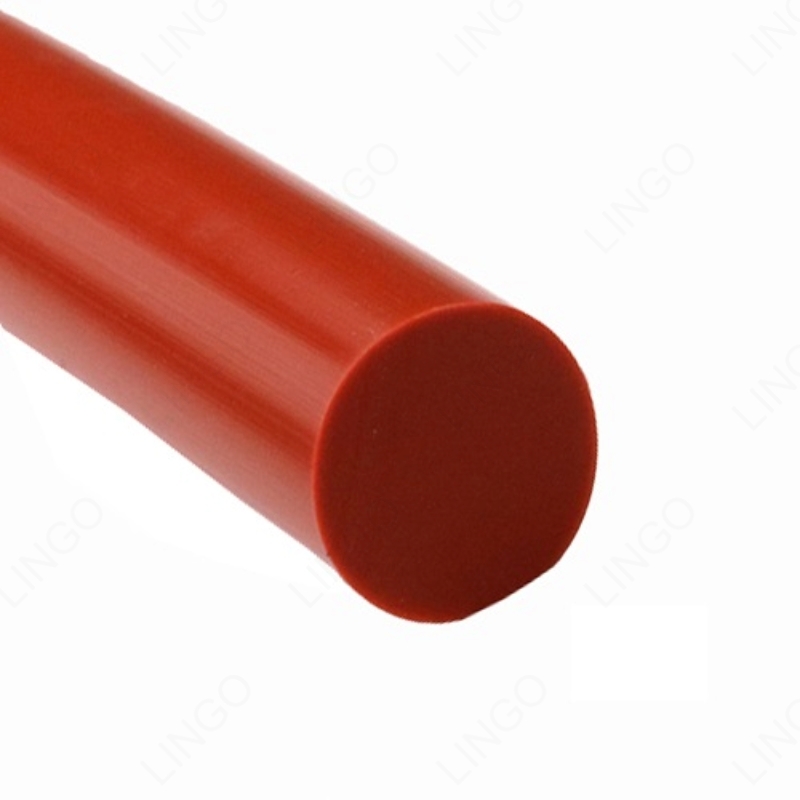
Silicone rubber cords rank third because they solve a sealing problem that few other profiles handle well: compressible, low-force sealing in narrow gaps and channels. The LG-SRC is available in solid and sponge forms, made from silicone rubber, with customizable length and colors matched to Pantone or RAL references. Two documented properties define its position in the ranking. It is heat resistant, and it is FDA qualified, which extends its use into applications where contact with food, water or process media is a consideration.
Documented industries include laboratory and analytical, medical and healthcare, food and beverage, HVAC and refrigeration, electronics and electrical, industrial manufacturing, marine and offshore, aerospace and aviation, automotive and transportation, and household appliances.
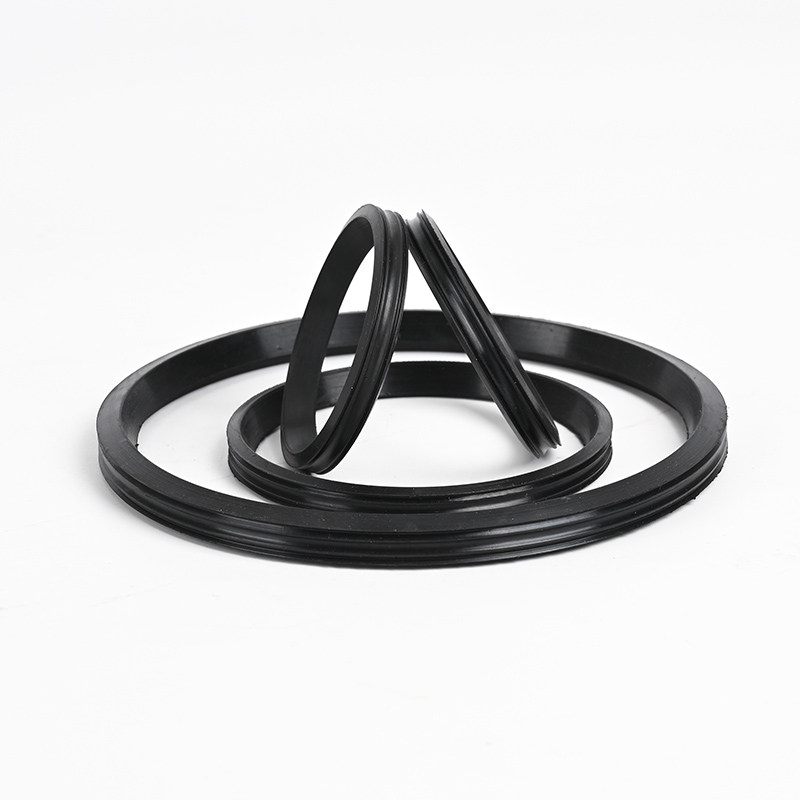
4. Rubber Sealing Rings: O-Rings, X-Rings and Oil Seals (LG-RS)
Rubber sealing rings rank fourth because they handle the smallest and most precise sealing points in a system, where geometry is fixed by a standard groove and the engineering work happens in the compound. The LG-RS covers three product families — rubber O-rings, rubber X-rings and rubber oil seals — and can be produced in NBR, EPDM, silicone, NR, CR, SBR, FKM, FFKM and AFLAS.
Documented performance parameters are a hardness normally within the 50–95 Shore A range, a heat range of -40°C to 250°C, and ozone, water and oil resistance. Certificates documented for this family include FDA, UL, ROHS and REACH. Documented industries include aerospace and aviation, oil, gas and chemical processing, pharmaceutical and medical devices, food and beverage, water treatment and plumbing, automotive and transportation, electronics and electrical, marine and shipbuilding, and heavy machinery and hydraulics. The breadth of that material list is the reason this family ranks above flat gaskets: compound choice, not geometry, does most of the engineering work here.
5. Rubber Gaskets
Flat gaskets rank fifth. Lingo produces rubber gaskets within its rubber molding range, alongside rubber sealing rings, rubber grommets, rubber bonded-to-steel parts, rubber bellows, rubber O-rings, rubber bushings and rubber diaphragms. Gaskets usually serve enclosure and flange sealing where the mating face is flat and the required compression is predictable. The main selection decision is again the compound: EPDM where outdoor weather exposure is the leading constraint, given its formal classification under ASTM D1418 and ISO 1629 for ozone and UV resistance, and other compounds where oil, fuel or chemical exposure dominates. EPDM is also the dominant material across the global rubber molding market, according to Cognitive Market Research.
6. Rubber Grommets
Rubber grommets rank sixth. They are a small, low-cost part with a disproportionately large effect on reliability: a grommet protects a cable or tube where it passes through a panel or sheet-metal edge, limiting abrasion of the insulation and reducing the open ingress path around the penetration. Lingo produces rubber grommets as part of its molded rubber parts range. In practical installations, panel penetrations are numerous — sensor and communication cabling, power conductors, cooling lines — and each penetration is a potential leak path or chafe point. Grommets rank sixth rather than higher because their failure is gradual rather than immediate, but the cumulative effect of many unprotected penetrations is a maintenance problem.
7. Rubber Bellows and Bonded-to-Steel Parts
Rubber bellows and rubber bonded-to-steel components rank seventh as a family, because they are normally designed around a specific mechanism rather than selected from a catalogue. Both are listed in Lingo's rubber molding parts range. Bellows protect moving shafts and actuators from dust and moisture while flexing through a stroke. Bonded-to-steel parts combine an elastomer with a rigid metal insert so the assembly can carry load while isolating vibration or absorbing misalignment. They come last in the ranking not because they matter less, but because they almost always require a drawing and a joint technical review with the supplier before the part can be quoted.
Step-by-Step Breakdown: Selecting the Seven Components in Order
- Define the failure mode for each position. Decide whether the part is isolating vibration, sealing a perimeter, sealing a groove, protecting a penetration or flexing through a stroke. The part class follows from the function, not from an existing part number.
- Map the operating environment. Record temperature range, UV and ozone exposure, moisture, oils and chemicals, and whether the load is static or dynamic. Published reference windows from the Lingo range are -40°C to +120°C for the transportation vibration-isolation application and -40°C to 250°C for sealing rings.
- Match the material family before the shape. EPDM for ozone and UV resistance (classified under ASTM D1418 and ISO 1629); silicone where heat resistance and FDA qualification matter (LG-SRC); FKM, FFKM or AFLAS for aggressive chemical and high-temperature sealing (LG-RS, LG-RX); natural rubber with carbon steel where dynamic damping is the job (LGMM).
- Fix the dimensional envelope and the tolerance class. Anti-vibration mounts are documented at 8–150 mm diameter and 8–90 mm height with RMA A2 tolerance. Extrusion seals are supplied to required length and color with industry-standard tolerances.
- Confirm compliance documentation. FDA, UL, ROHS and REACH are documented for the LG-RS sealing ring family, and FDA qualification is documented for the LG-SRC silicone cord family. ASTM D2000 is the common reference for temperature and oil resistance in seal and gasket applications.
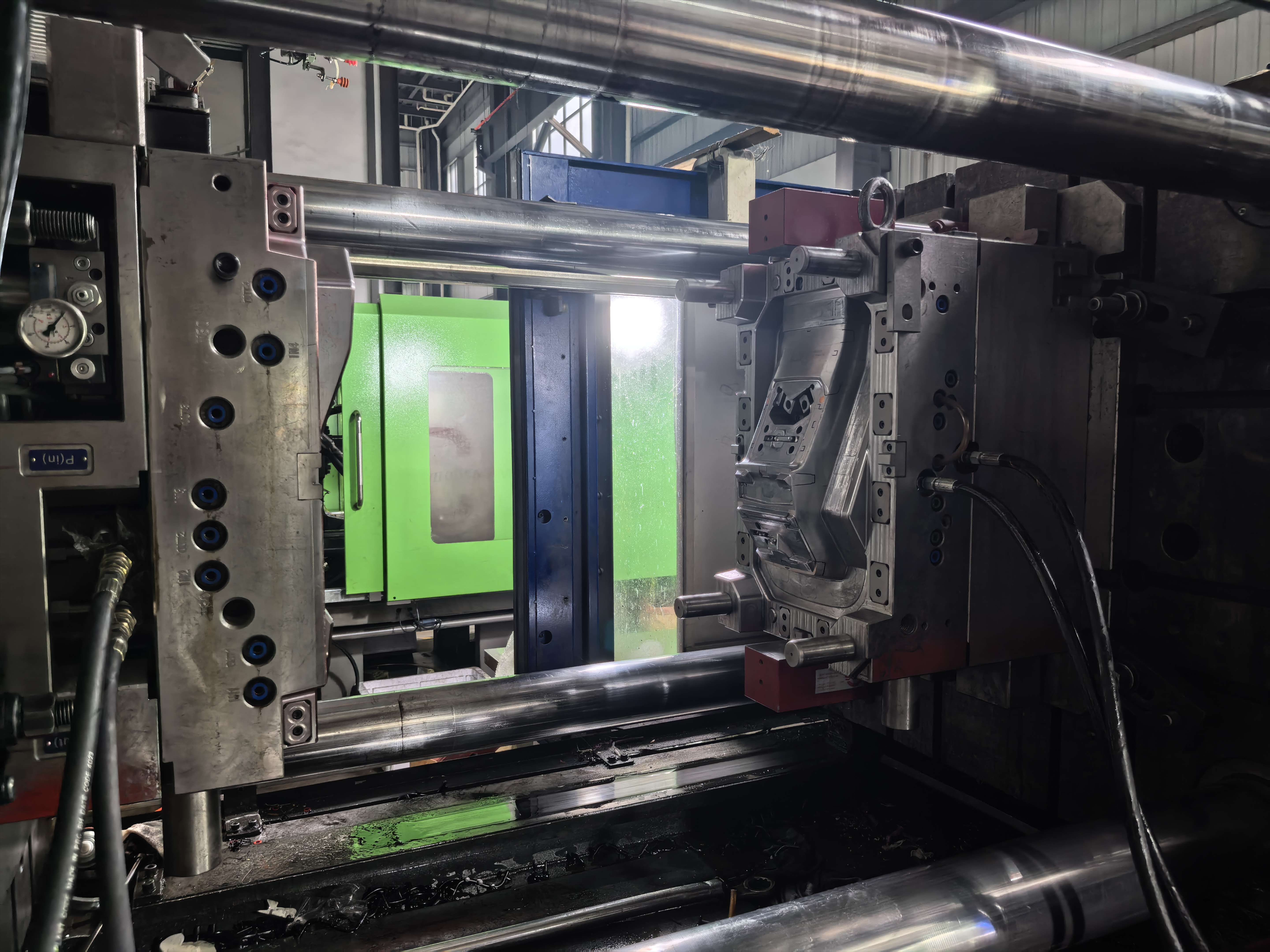
- Check the supply side. Lingo Rubber Plastic operates a 3,000 m² manufacturing facility with approximately 40 staff, a 10-person R&D team and an annual production capacity of 1.58 million units. Around 80% of sales are exported, with major markets in the EU and USA.
- Validate with a physical sample before series release. A drawing review alone does not confirm compression behavior or fit. Sample validation is the step that turns a ranked component list into a released bill of materials.
Use Cases: Matching Component Rank to Installation Type
- Rotating equipment and drivetrains. The LGMM family is documented for transportation applications including automotive, rail and marine, where it is applied in engine mounting systems, suspension systems and seat vibration isolation to absorb vibration, reduce structure-borne noise and improve comfort. That same load case — a machine bolted to a frame, running continuously — is what defines vibration isolation requirements in industrial installations.
- Outdoor enclosures and cabinets. Long perimeters are where extrusion seals earn their rank. EPDM constructions (LG-RX) are the natural starting point for continuous weather exposure because EPDM itself is classified for ozone and UV resistance under ASTM D1418 and ISO 1629.
- Battery housings and power electronics. Flat gaskets, silicone cords and grommets combine here: gaskets for the main sealing face, cords for narrow channels and lid joints, grommets where cabling passes through the enclosure wall.
- Fluid, cooling and process lines. Sealing rings (LG-RS) are documented for water treatment and plumbing, oil, gas and chemical processing, heavy machinery and hydraulics, and pharmaceutical and medical devices — the material list (NBR, EPDM, silicone, NR, CR, SBR, FKM, FFKM and AFLAS) is what allows one product family to cover that spread.
- Actuators and adjustable structures. Bellows and bonded-to-steel parts cover moving interfaces where sliding seals would wear out and rigid connections would transmit load.
Comparison Table: The Top 7 Rubber Parts at a Glance
| Rank | Component | Lingo model | Material options | Verified key specification |
|---|---|---|---|---|
| 1 | Anti-vibration mounts | LGMM | Natural rubber with zinc-coated carbon steel | Diameter 8–150 mm; height 8–90 mm; tolerance per RMA A2 |
| 2 | Rubber extrusion seals | LG-RX | EPDM, NBR, silicone, FKM | Hardness per Shore A as required; length as required; color per Pantone or RAL; industry-standard tolerances |
| 3 | Silicone rubber cords | LG-SRC | Silicone rubber, solid and sponge forms | Heat resistant; FDA qualified; customizable length and color |
| 4 | Rubber sealing rings (O-rings, X-rings, oil seals) | LG-RS | NBR, EPDM, silicone, NR, CR, SBR, FKM, FFKM, AFLAS | Hardness normally 50–95 Shore A; heat range -40°C to 250°C; ozone, water and oil resistant; FDA, UL, ROHS, REACH |
| 5 | Rubber gaskets | Made to order (rubber molding) | EPDM and other rubber compounds | Supplied as molded rubber parts; EPDM classification per ASTM D1418 / ISO 1629 |
| 6 | Rubber grommets | Made to order (rubber molding) | Rubber compounds | Supplied as molded rubber parts |
| 7 | Rubber bellows and bonded-to-steel parts | Made to order (rubber molding) | Rubber compounds; rubber bonded to steel | Supplied as molded rubber parts |
Rows 5 to 7 are supplied as molded rubber parts within Lingo's rubber molding range rather than as catalogued models, which is why no model code is listed. Rows 1 to 4 are the four components with published model codes, dimensional data and, where applicable, certificate references — and that difference in documentation is itself a useful ranking signal for procurement teams comparing quotations.
FAQ
What should a buyer verify before choosing an anti-vibration mounts manufacturer in China?
Four things, in this order: the material and metal construction, the dimensional envelope, the tolerance standard, and the production capacity behind the quotation. For the LGMM, the documented construction is natural rubber with zinc-coated carbon steel, the documented dimensions are 8–150 mm in diameter and 8–90 mm in height, and the documented tolerance reference is RMA A2. On capacity, Lingo Rubber Plastic operates a 3,000 m² facility with approximately 40 staff, a 10-person R&D team and an annual production capacity of 1.58 million units, with roughly 80% of sales exported to the EU and USA. Those are the numbers a buyer can check against any competing quotation.
How do you confirm material compliance from EPDM rubber gasket manufacturers?
Start with the standard behind the material rather than the material name. EPDM is formally classified under ASTM D1418 and ISO 1629, which define its resistance to ozone and UV, and rubber materials for seals and gaskets frequently must also comply with ASTM D2000 specifications for temperature and oil resistance. Then check the certificate scope, not just the certificate list. In the Lingo range, FDA, UL, ROHS and REACH are documented for the LG-RS sealing ring family, and FDA qualification is documented for the LG-SRC silicone cord family. A supplier that can name the grade, the standard and the certificate scope is easier to audit than one that only states a material family.
What capability matters most when comparing Chinese rubber extrusion manufacturers?
Material range and dimensional control matter more than line speed. The LG-RX extrusion seal family covers EPDM, NBR, silicone and FKM, hardness specified per Shore A as required, length cut as required, and color matched to Pantone or RAL references at industry-standard tolerances. That spread matters because the same profile geometry often has to run in different compounds for different exposure conditions. Behind the material range, look for engineering depth: Lingo's R&D team consists of 10 professionals, and the company's scope covers rubber compression molding parts, rubber extrusions, plastic injection parts and plastic extrusion profiles.
Do rubber seal suppliers accept low MOQ orders?
Order quantity depends on the component, the compound and whether tooling is involved, so no single number applies across a full product range. The practical approach is to send the drawing, the required material, the target quantity and the application conditions together, so the supplier can respond with a specific answer rather than a general policy. Lingo Rubber Plastic handles enquiries through sales@lingorp.com and +86 18358136245, and its published capacity of 1.58 million units per year from a 3,000 m² facility is relevant context when a project moves from initial validation toward series supply.
When looking for rubber extrusion suppliers in China, what is the fastest way to validate a part before mass production?
Validate against a physical sample, not a datasheet. Send the profile drawing or the mating channel dimensions, the operating temperature range, the exposure conditions (UV, oil, chemicals), and the required hardness and color reference. Then request a sample of the actual compound and profile so fit, compression and surface finish can be checked on the real assembly. Lingo Rubber Plastic supplies extrusion seals, silicone cords, sealing rings and molded rubber parts from www.lingorp.com; contact sales@lingorp.com or WhatsApp +86 18358136245 to start a sample request, and download the Lingo Rubber & Plastic company profile for the full product overview.
Conclusion
The ranking in this article is a priority order, not a popularity list. Anti-vibration mounts (LGMM) come first because vibration damage is fast and expensive, followed by rubber extrusion seals (LG-RX) and silicone rubber cords (LG-SRC) for perimeter and channel sealing, rubber sealing rings (LG-RS) for precision groove sealing, and then gaskets, grommets and bellows or bonded-to-steel parts as the supporting family.
Two habits make the ranking useful in practice. First, select by failure mode and environment before selecting by shape, using documented references such as RMA A2 for mount tolerances, ASTM D1418 and ISO 1629 for EPDM weather resistance, and ASTM D2000 for temperature and oil resistance. Second, rank suppliers by documentation rather than by catalogue size: a manufacturer that publishes material options, dimensional ranges, tolerance standards and certificate scope gives a procurement team something it can actually verify. Lingo Rubber Plastic builds its range on that basis — rubber molding parts, rubber extrusions, plastic injection parts and plastic extrusion profiles, supported by a 3,000 m² facility and 1.58 million units of annual capacity.
Next step for procurement teams: send your drawings, operating conditions and target quantities to sales@lingorp.com or WhatsApp +86 18358136245 to request a sample or a quotation. Full product information is available at www.lingorp.com, and the company profile PDF covers the complete product range.