 8000m²
 200
200

Source Factory vs. Ordinary Supplier: Choosing Your Flexible Printed Circuit Partner
Source Factory vs. Ordinary Supplier: How to Choose Your Flexible Printed Circuit Partner
The global flexible printed circuit (FPC) market is projected to exceed $50 billion by 2035, driven by demand in medical aesthetics, automotive electronics, green energy, and lighting. For procurement professionals, selecting the right flexible PCB manufacturer is a high-stakes decision—impacting product quality, time-to-market, and total cost. This guide systematically compares two common supplier types: an integrated source factory (like M2PCB) versus an ordinary supplier (typically a trading company or small-scale fabricator). By understanding the key differences in capabilities, cost structures, and risk profiles, you can make an informed choice that aligns with your project requirements.
What Is a Flexible Printed Circuit and Why Does Supplier Selection Matter?
A flexible printed circuit (FPC) is a patterned arrangement of printed circuitry and components that uses flexible base material (typically polyimide or PET). Compared to rigid boards, FPCs enable compact, lightweight, and dynamic designs essential for modern electronics. However, not all suppliers can deliver consistent quality. The choice between a flex PCB fabrication specialist and an ordinary supplier affects everything from signal integrity (impedance control) to long-term reliability under thermal and mechanical stress.
Industry Background: The Evolving Flexible PCB Market
Key industries adopting flexible PCB include medical devices (therapy belts, aesthetic instruments), automotive (ADAS, infotainment), LED lighting (strip lights, panels), and wearable electronics. Buyers increasingly demand flex pcb assembly (PCBA) with turnkey services, rigorous testing, and compliance with standards like UL, IATF 16949, and RoHS. The market has seen a shift toward integrated suppliers who can manage the entire value chain—from flexible pcb prototype to volume production and assembly.
Detailed Comparison: Integrated Source Factory (M2PCB) vs. Ordinary Supplier
| Criteria | Integrated Source Factory (e.g., M2PCB) | Ordinary Supplier (Trading Company / Small Fab) |
|---|---|---|
| Production Capability | Owns 8,000m² factory, 600+ advanced equipment sets, monthly capacity 40,000m², up to 14-layer flexible PCBs, fine line width 0.05mm / spacing 3/3mil, impedance control. | Limited layer count, larger line width/spacing (typically >0.1mm), no impedance control; relies on subcontracting for complex capabilities. |
| Quality Assurance | ISO 9001, IATF 16949:2016 (cert. T184452), FPC-UL (E530809), 100% flying probe/electrical test, AOI, X-ray inspection for PCBA. | May lack formal certifications; testing limited to basic electrical checks; no X-ray or AOI. |
| Cost & Efficiency | Source factory pricing eliminates intermediary margins; one-stop from design to PCBA reduces lead time (3–20 days) and coordination overhead. | Higher unit cost due to multiple markups; longer lead times due to multi-party coordination (PCB fab + assembly + components). |
| Maintenance & Support | Single point of contact: lower operational complexity and maintenance cost; remote support, flexible MOQ (as low as 5pcs). | Multiple contacts increase risk of miscommunication; longer troubleshooting cycles. |
| Target Buyer | Manufacturers without R&D personnel needing urgent one-stop customization; companies requiring high reliability for medical/automotive. | Small volume standard orders with simple specifications where cost is not primary. |
How to Choose: Step-by-Step Framework for Flexible PCB Procurement
- Define your technical requirements: Layer count, minimum line width/spacing, impedance tolerance, material (PI, FR4, IMS), and assembly needs (single/double side, turnkey). Ensure the supplier can meet specs (e.g., M2PCB offers 0.05mm line width, 3/3mil spacing, impedance control).
- Verify certifications and compliance: Check for UL file number (E530809), IATF 16949, RoHS/REACH declarations. Certifications are non-negotiable for medical, automotive, and export markets.
- Assess production capacity and lead time: Ask about annual output (M2PCB: 360,000m²), monthly capacity (40,000m²), and typical lead time (3–20 days). A source factory can manage peaks better than a trader.
- Evaluate total cost of ownership: Source factory pricing + lower coordination costs often beats ordinary suppliers even if the per-unit quote appears higher. Request a breakdown: PCB fabrication + components + assembly + testing.
- Request prototypes and test reports: Start with a flexible pcb prototype (MOQ as low as 5pcs). Confirm testing methods (flying probe, X-ray, program burn). Review case studies—e.g., M2PCB shipped 500,000pcs of red light therapy belts to a U.S. client with 2-year proven satisfaction.
- Plan for scale: If your project grows, can the supplier ramp up without sacrificing quality? Integrated factories with full in-house SMT and PI reinforcement lines (like M2PCB) offer scalability.
Real-World Use Case: Red Light Therapy Belt for U.S. Market
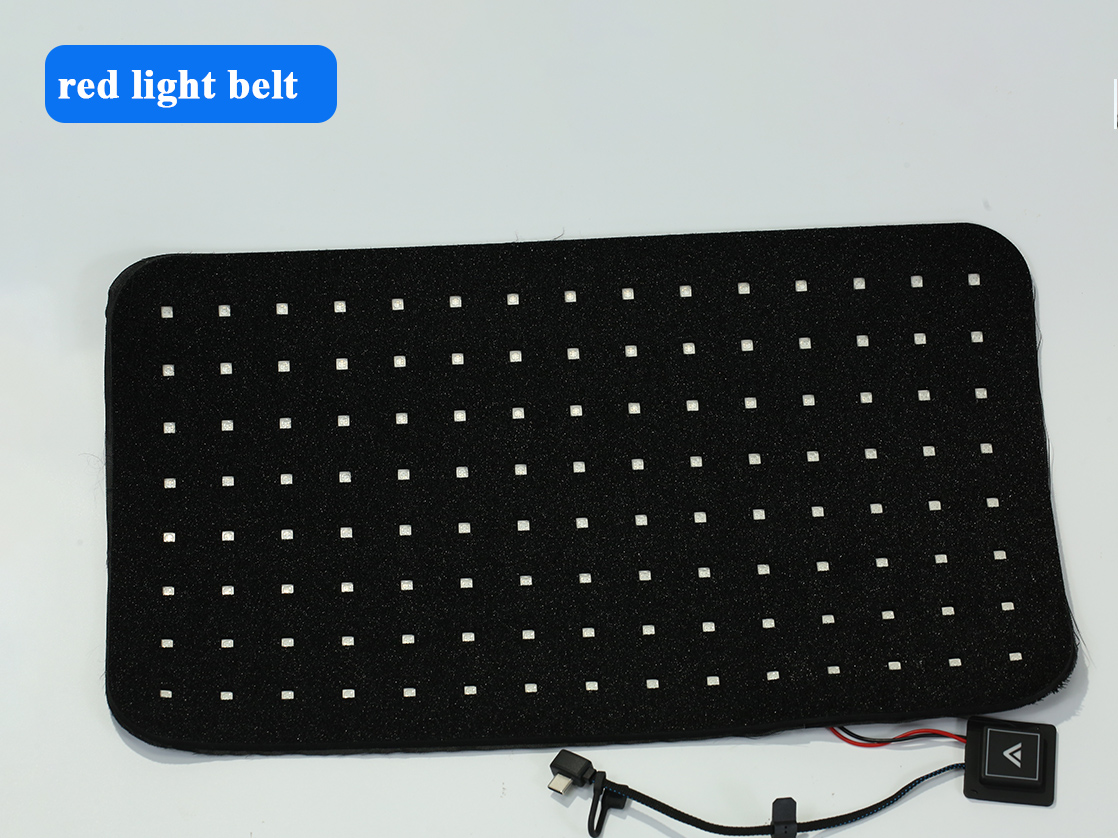
Client: A U.S. medical device ODMer producing a red light therapy belt for back pain relief.
Challenge: Needed a high-reliability flexible LED PCB that could conform to the body, pass UL certification, and be delivered in 2 weeks with PCBA.
Solution from M2PCB: Provided a polyimide flex pcb (PI material) with 0.05mm trace width, 3/3mil spacing, and integrated LED assembly. The one-stop service covered design, flex pcb fabrication, SMT, and functional testing.
Result: 500,000pcs delivered over 2 years. The product “highly favored by European and American friends” for its effectiveness in promoting blood circulation and pain relief. The client cited the source factory advantage as key to meeting tight deadlines and maintaining consistent quality.
Frequently Asked Questions (FAQ)
What is the main advantage of choosing a source factory for flexible PCBs?
Source factories like M2PCB eliminate intermediary margins, provide one-stop customization (design to PCBA), reduce lead times, and offer a single point of contact, which lowers operational complexity and maintenance costs.
What is the minimum order quantity for flexible PCB prototypes?
M2PCB supports MOQ as low as 5 pieces for prototypes, with delivery options EXW or FOB. Payment via bank transfer or credit card.
How does M2PCB ensure compliance with EU/US environmental regulations?
All raw materials are sourced with RoHS/REACH compliance declarations. The factory holds UL E530809 for flexible circuits, ensuring acceptance in North American and European markets.
Can M2PCB handle automotive-grade flexible PCB production?
Yes, M2PCB is certified under IATF 16949:2016 (cert. T184452) by NQA, covering car entertainment, instrument panels, wiring harnesses, and circuit boards for the automotive industry.
Conclusion: Make the Informed Choice
Selecting the right flexible printed circuit board supplier is a strategic decision that affects product performance, cost, and time-to-market. While ordinary suppliers may suffice for simple, low-volume needs, the integrated source factory model—exemplified by M2PCB—delivers tangible advantages in quality control, cost efficiency, and operational simplicity for demanding applications. By applying the step-by-step framework outlined here, procurement professionals can confidently partner with a supplier that aligns with their technical, regulatory, and commercial goals.
Contact M2PCB today for your next flexible PCB project:
Email: pcb@dreamlandpcb.com | Tel: +86 136-2262-8609
No. 4, Dongtoubu North Road, Shapuwei Industrial Zone, Songgang Street, Bao’an District, Shenzhen, China
Have Questions or Need More Details?
Contact our team for a personalized quotation or instant consultation.
Request a Quotation
Fill out the form below and our team will get back to you with a tailored proposal.
WhatsApp Direct Chat
Prefer to chat in real-time? Message us on WhatsApp for instant assistance & quick answers.
- Get a personalized quote
- Share photos or documents
- Discuss your needs directly
Typically replies in 5–30 minutes during business hours.