Top 5 Residential Parking Lifts: 2026 Efficiency Ranking
Top 5 Residential Parking Lifts: 2026 Efficiency Ranking
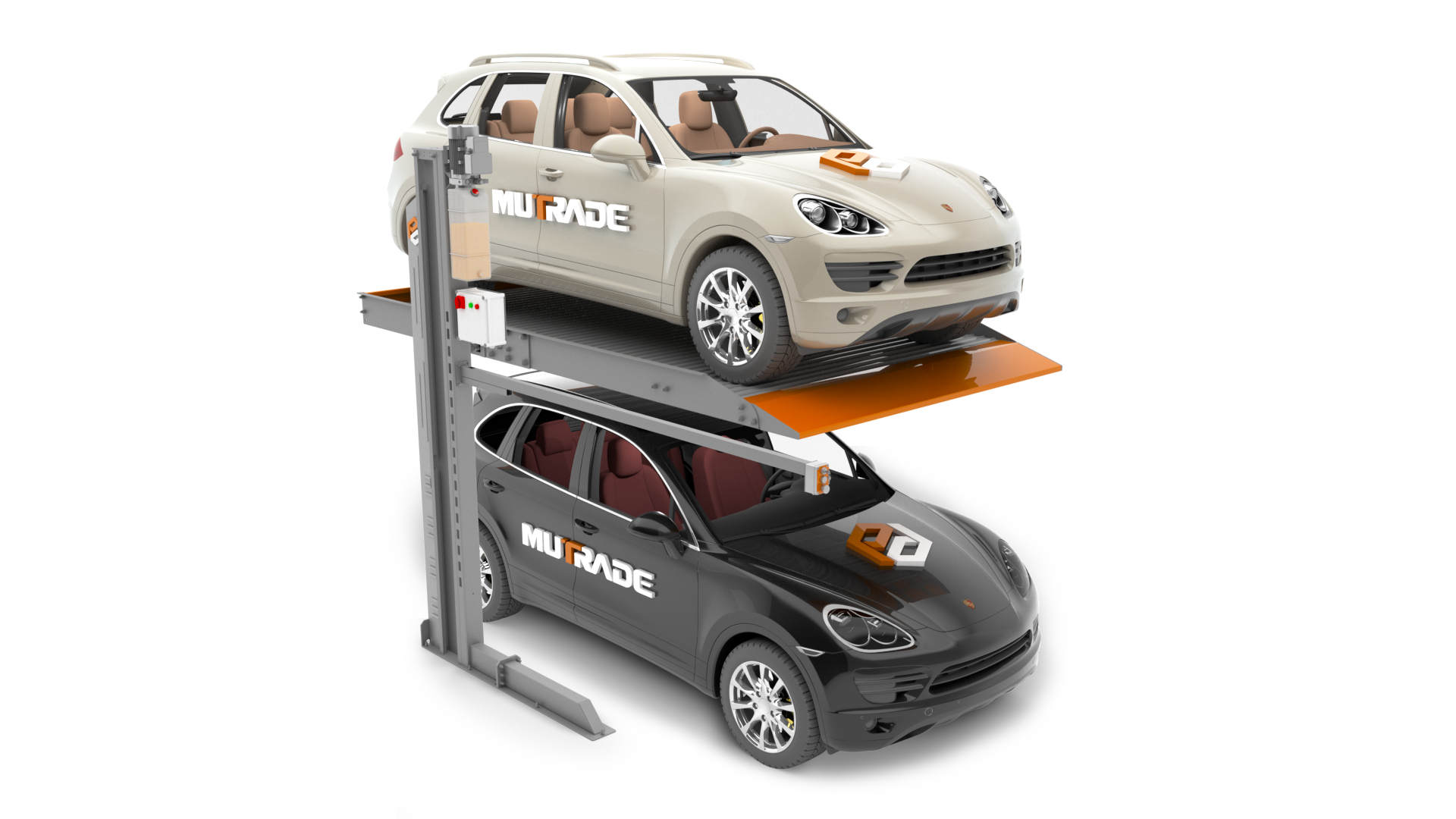
Efficiency in a residential parking lift means one thing: how many extra cars you park per square metre of garage, per kilogram of rated capacity, and per hour of civil work. Measured on those terms, the five strongest residential models for 2026 rank as follows — Hydro-Park 1127 & 1123 (double car stacker, 2,700 kg), TPTP-2 (tilting low-ceiling lift, 2,000 kg), Hydro Park 2525 & 2625 (triple car stacker, 2,500 kg / 2,000 kg), Starke 2227 (pit double unit, 2,700 kg per car) and Starke 2127 (underground pit lift, 2,700 kg).
All five are produced by MUTRADE Industrial Corp., a Qingdao-based manufacturer of mechanical parking equipment founded in 2009. MUTRADE's portfolio covers parking lifts, semi-automatic parking systems and fully automatic parking systems, ranging from one- and two-car units to smart systems with hundreds of spaces.
This is deliberately a residential list: home garages, villa driveways, townhouse basements and small residential buildings where a car parking lift completes only a handful of movements per day. High-throughput commercial valet equipment is a different purchase with different criteria, and several models that perform well in dealerships, workshops and public garages are excluded here precisely because their footprint, pit depth or power demand does not suit a house.
The 2026 shortlist at a glance
- #1 Hydro-Park 1127 & 1123 — 2 cars, 2,700 kg / 2,300 kg, 50 s lifting time, no deep pit required
- #2 TPTP-2 — 2 cars, 2,000 kg, 24 s lifting time, engineered for low ceilings
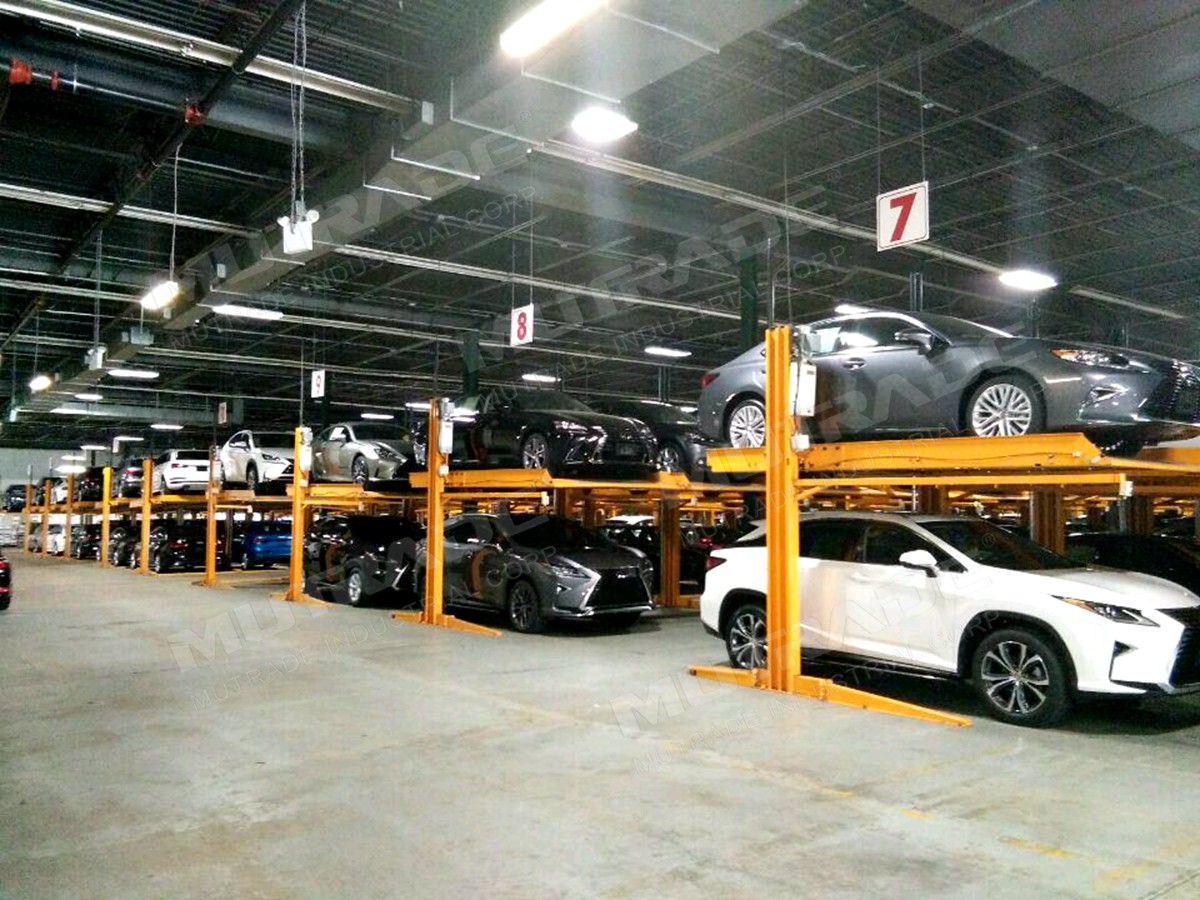
- #3 Hydro Park 2525 & 2625 — 3 cars, 2,500 kg (2F) / 2,000 kg (3F), 68 s, triple stacking above ground
- #4 Starke 2227 — 4 cars per unit, 2,700 kg per car, 30 s, underground pit required
- #5 Starke 2127 — 2 cars, 2,700 kg, 30 s, underground pit required
Why Residential Parking Lifts Rank Differently from Commercial Systems
In a commercial garage, efficiency is a throughput question: how many cars move per hour, and how little labour each movement needs. At home, the same lift may complete only a few movements per day, so throughput stops being the deciding metric. What remains is structure — how much car you can store inside a fixed footprint, and how little building work that structure demands.
Four constraints separate residential parking lifts from commercial ones:
- Land, not labour, is the scarce input. A home rarely has room for a third or fourth bay, so the value sits in the second layer. A double car stacker converts one existing bay into two parking spaces without adding a single square metre of land.
- Clear height and pit feasibility decide the type. An above-ground stacker needs only a simple concrete bedding for its foundation, with no deep foundation pit, no partial civil air defence works and no large-area waterproofing, while a pit or underground model must have excavation designed into the building from the start.
- Vehicle height sets the usable envelope. Across the models ranked here, allowed car height ranges from 1,550 mm (TPTP-2 and Starke 2327) through 1,700 mm (Starke 2227 and Starke 2127) to 2,050 mm (Hydro-Park 1127 & 1123 and Hydro Park 2525 & 2625). A taller envelope is what allows a household to store SUVs rather than only low sedans.
- Ownership lasts longer than a construction project. A residential lift is bought once and used for years, so warranty length, spare-part availability and remote support belong in the ranking alongside footprint and capacity.
The practical result is that a residential buyer who copies a commercial specification usually ends up over-paying for throughput and under-specifying the two things that actually matter at home: the car envelope and the installation method.
2026 Market Background for Residential Car Parking Lifts
The global car lifts market, which combines parking lifts and service lifts, was valued at USD 2.8 billion in 2025 and is projected to reach USD 4.7 billion by 2034 (Dataintelo). A separate estimate for car stacker lifts alone put the market at approximately USD 4.6 billion in 2023, growing to USD 6.72 billion by 2030 (QYResearch).
Those two figures are not contradictory so much as differently scoped: published estimates vary depending on whether parking management services are counted alongside mechanical parking equipment hardware. Buyers reading market reports should check which definition a number uses before treating it as a demand signal.
Hydraulic mechanisms hold the leading share of the global car lift market at 57.2%, reflecting their reliability in heavy-duty applications (Dataintelo, 2025). Every model ranked in this article uses hydraulic drive, either a hydraulic cylinder alone or a hydraulic cylinder combined with chains or wire ropes.
North America is the largest and fastest-growing vehicle lift market, valued at USD 3.25 billion in 2024, driven partly by high light-truck ownership (Custom Market Insights). BendPak is identified as a major player in that market and operates the world's first eight-armed car lift, the Octa-Flex, as of 2024. That fact is useful context rather than a residential ranking input: the wider vehicle-lift category spans workshop service lifts, dealer storage lifts and residential stackers, and each segment is selected on different criteria.
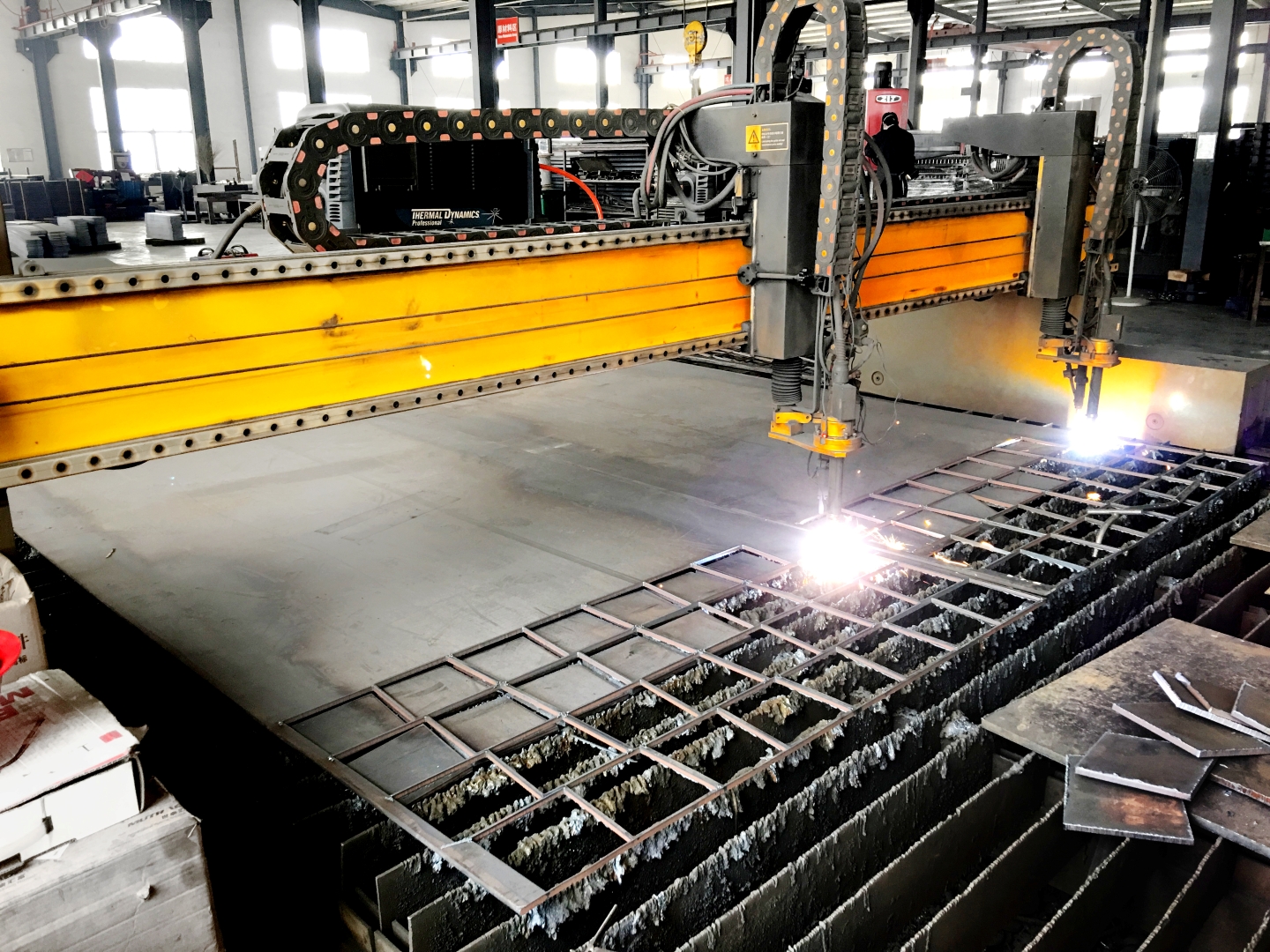
On the supply side, MUTRADE (Qingdao Mutrade Co., Ltd.) and its production facility Hydro Park have accounted for over 18% of China's total export volume of mechanical parking equipment under HS Code 84289020 since 2017. The company states that its parking lifts are certified by TUV Rheinland — described as the only company in China in the parking industry to hold that certification — and that its factory holds CWB certification, which it describes as the only parking company certification in China that permits export to Canada.
Compliance expectations for automated parking equipment are also tightening: automated parking systems must comply with ISO 9001 for quality management and ISO 45001 for occupational health and safety to mitigate risks such as vehicle–pedestrian conflict (Pacific Certifications, 2024). MUTRADE's factory holds ISO 9001 and 14001 certification, audited annually.
The 2026 Ranking: Five Residential Parking Lift Models Compared
Each model below is judged on six criteria drawn from the product specifications and the factory's stated production standards: spaces gained per unit footprint, structural configuration, rated lifting capacity per car, lifting time, power-supply fit for residential grids, and the civil works required to install it.
#1 Hydro-Park 1127 & 1123 — Best Overall Residential Parking Lift
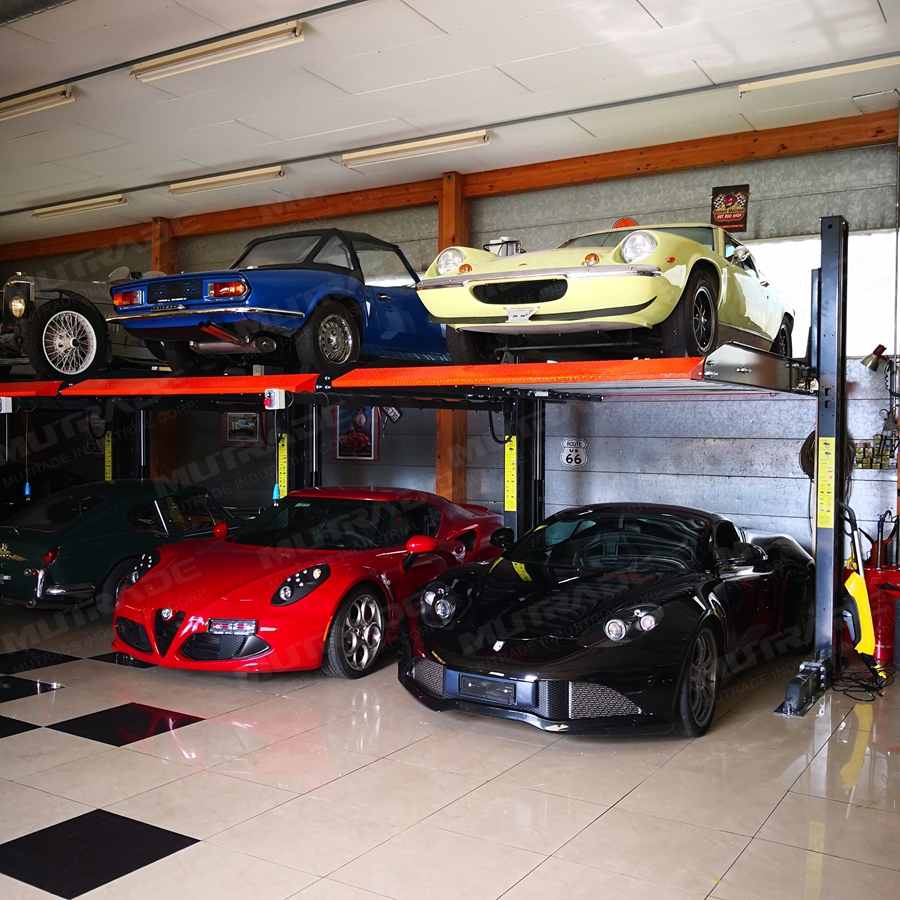
The Hydro-Park 1127 & 1123 is a two-post parking lift configured as a double car stacker, storing two vehicles per unit. The 1127 is rated at 2,700 kg and the 1123 at 2,300 kg, with an allowed car length of 5,000 mm, width of 1,850 mm and height of 2,050 mm. Drive is by hydraulic cylinder plus chains, lifting time is 50 seconds, operation is by key switch, and power supply is bespoke at 110–480 V, 50/60 Hz. Structure is carbon steel Q235.
It ranks first because it removes the single biggest obstacle in residential retrofits. The unit adds a second parking space above an existing bay without a deep foundation pit, so it can be installed in a completed building rather than only in a new one. Its 2,050 mm car-height envelope is the tallest in this ranking, and its 110–480 V, 50/60 Hz power range covers both single-phase domestic supplies and higher-voltage building supplies, which removes a frequent site constraint. MUTRADE lists its intended applications as car storage, valet parking, residential parking and commercial parking, and customization is acceptable.
#2 TPTP-2 — Best Residential Parking Lift for Low Ceilings
The TPTP-2 is a tilting parking lift designed specifically as a low ceiling car parking lift. It stores two vehicles per unit at a rated lifting capacity of 2,000 kg, with an allowed car length of 5,000 mm, width of 1,850 mm and height of 1,550 mm. Drive is by hydraulic cylinder, lifting time is 24 seconds — the shortest in this ranking — and operation is by key switch with a 220 V, 50/60 Hz power supply. It is intended for car parking, residential parking and underground parking, and customization is acceptable.
Its ranking rests on one structural advantage: the tilting geometry moves a car into position without needing the vertical clearance a conventional stacker requires. For basements and low-headroom garages where a standard two-post lift physically will not fit, the TPTP-2 turns an unusable bay into a working two-car space. Two limits keep it at second place rather than first: 2,000 kg of rated capacity and a 1,550 mm car-height envelope, which is the smallest in this ranking and suits lower vehicles rather than tall SUVs.
#3 Hydro Park 2525 & 2625 — Best Three-Car Residential Stacker
The Hydro Park 2525 & 2625 is a triple car stacker storing three vehicles per unit, rated at 2,500 kg for the second level and 2,000 kg for the third level. Allowed car length is 5,060 mm, width 2,802 mm and height 2,050 mm. Drive is hydraulic cylinder plus chains, lifting time is 68 seconds, operation is by key switch, and power supply is bespoke at 110–480 V, 50/60 Hz. Structure is carbon steel Q235, and MUTRADE lists car storage, car dealership, car collection and car club applications.
This is the highest-density above-ground option in the ranking: three cars on the footprint of one, with the same 2,050 mm car-height envelope and the same wide power band as the top-ranked model. It ranks third for residential buyers because the third level requires more structural height than a two-car stacker, and because its 68-second lifting time is the longest here — a trade-off that matters most to households parking only two cars, and least to households that genuinely need three spaces.
#4 Starke 2227 — Highest Density, Pit Required
The Starke 2227 is a pit parking lift and underground parking lift, supplied as a double unit that stores four vehicles per unit at a rated lifting capacity of 2,700 kg per car. Allowed car length is 5,000 mm, width 2,050 mm and height 1,700 mm. Drive is hydraulic cylinder plus chains, lifting time is 30 seconds, operation is by key switch, and power supply is bespoke at 200–450 V, 50/60 Hz. Intended applications are car parking, residential parking and commercial parking, and customization is acceptable.
On raw numbers the Starke 2227 is the most space-efficient model in this ranking: four cars at 2,700 kg each, with a 30-second cycle. It sits at fourth because that density depends on excavation. A pit has to be designed into the building, so the model performs best where a home is being built or a driveway is being rebuilt, and is impractical in an existing finished garage.
#5 Starke 2127 — Best Pit Lift for a Two-Car Household
The Starke 2127 is an underground parking lift and pit parking lift storing two vehicles per unit at 2,700 kg rated capacity. Allowed car length is 5,000 mm, width 2,050 mm and height 1,700 mm. Drive is hydraulic cylinder plus chains, lifting time is 30 seconds, operation is by key switch, and power supply is bespoke at 200–450 V, 50/60 Hz. It is intended for car parking, residential parking and commercial parking, and customization is acceptable.
Where a pit can be built, the Starke 2127 delivers the strongest combination in this list of high capacity and fast cycling, and it keeps the visible surface clear because one car sits at or below grade. It ranks fifth only because the 1,700 mm car-height envelope excludes taller vehicles, and because the same pit requirement applies.
Beyond the Top 5: When to Step Outside This Ranking
Three further MUTRADE models sit outside the residential top five but are worth knowing before a final decision. The Starke 2327 is a tilted pit parking lift rated at 2,700 kg with a required ceiling height above 2,700 mm and a required pit depth above 1,600 mm, useful where a pit is possible but headroom is restricted. The Starke 3121 & 3127 is a semi-automatic puzzle parking lift storing eight vehicles per unit at 2,700 kg, and the BDP-2 puzzle parking lift stores more than five vehicles at 2,000 kg or 2,500 kg — both suited to small residential buildings rather than single homes. For households that need a floor-to-floor movement rather than pure stacking, the S-VRC-2 scissor lift platform stores two vehicles at 3,000 kg and MUTRADE lists it for luxury house parking, while the FP-VRC four-post hydraulic car lift platform covers 2,000–10,000 kg and serves car dealership and car elevator applications.
Step-by-Step: Testing Each Model Against Your Own Garage
Rankings are only useful once they are matched to a specific site. The sequence below converts the table above into a residential decision, in the order that avoids expensive mistakes.
- Measure the bay and compare it with the car envelope. Record usable length, width and clear height, then compare against 5,000 × 1,850 × 2,050 mm (Hydro-Park 1127 & 1123), 5,000 × 1,850 × 1,550 mm (TPTP-2), 5,060 × 2,802 × 2,050 mm (Hydro Park 2525 & 2625) and 5,000 × 2,050 × 1,700 mm (Starke 2227 and Starke 2127). Height is usually the disqualifying dimension, not length.
- Decide above-ground or pit. Above-ground models need only a simple concrete bedding for the foundation, with no deep foundation pit, no civil air defence works and no large-area waterproofing. Pit models require excavation designed into the building.
- Match rated capacity to the heaviest vehicle. The ladder runs from 2,000 kg (TPTP-2) through 2,300 kg (Hydro-Park 1123), 2,500 kg (Hydro Park 2525 second level) and 2,700 kg (Hydro-Park 1127, Starke 2227 per car, Starke 2127).
- Confirm the power supply on site. Hydro-Park 1127 & 1123 and Hydro Park 2525 & 2625 accept a bespoke 110–480 V, 50/60 Hz supply; the TPTP-2 runs on 220 V, 50/60 Hz; the Starke 2227 and Starke 2127 use 200–450 V, 50/60 Hz.
- Check drive mode and cycle time against daily use. All five use hydraulic drive; the TPTP-2 uses a hydraulic cylinder alone at 24 seconds, while the Starke 2227 and Starke 2127 take 30 seconds, the Hydro-Park 1127 50 seconds and the Hydro Park 2525 & 2625 68 seconds.
- Plan for the ownership period, not just the installation. MUTRADE provides 12 months warranty on parts and accessories and 60 months on the structure, with spare parts provision during the lifetime of the parking system. Design follows the EU EN 14010 machinery safety standard, welding is inspected under CWB specification with annual audits, and every batch is performance-tested under the ISO quality system before delivery. After-sales support includes 24-hour online remote support, local partners and on-site engineer supervision.
- Confirm commercial and delivery terms. Minimum order quantity is 1 unit and delivery terms are EXW, FOB, CIF or DDU, with payment of at least 30% in advance or by letter of credit. Pre-shipment testing is optional at additional cost. Monthly production capacity is 1,000 car spaces, with a typical production lead time of 30 to 45 days.
Use Cases: Which Residential Parking Lift Fits Which Home
Two-car household in a finished house with a standard garage. The Hydro-Park 1127 & 1123 is the practical answer. It needs no pit, accepts a 2,050 mm car height and adapts to the available power supply, so it can be added to an existing building.
Low-ceiling basement or underground garage. The TPTP-2 is the type designed for this constraint. Its 24-second cycle is also the fastest in the ranking, which matters when the lift is used several times a day.
Household with three cars, or a small residential building. The Hydro Park 2525 & 2625 stores three vehicles per unit above ground, keeping the 2,050 mm car-height envelope and the 110–480 V power flexibility.
New-build villa or a project with an excavation phase. Here the Starke 2227 and Starke 2127 become the efficient choice, because the pit is designed rather than retrofitted. The Starke 2227 delivers four cars at 2,700 kg each per unit, while the Starke 2127 keeps a two-car home compact with a clear surface.
Comparison Table: 2026 Residential Parking Lift Ranking
| Rank | Model | Configuration | Cars per unit | Rated capacity | Lifting time | Car envelope (L × W × H) | Civil works | Best residential fit |
|---|---|---|---|---|---|---|---|---|
| 1 | Hydro-Park 1127 & 1123 | Two-post double car stacker, above ground | 2 | 2,700 kg (1127) / 2,300 kg (1123) | 50 s | 5,000 × 1,850 × 2,050 mm | Simple concrete bedding, no deep pit | Existing homes needing a second space without excavation |
| 2 | TPTP-2 | Tilting low-ceiling lift, above ground | 2 | 2,000 kg | 24 s | 5,000 × 1,850 × 1,550 mm | No pit, tilting clearance required | Basement and low-headroom garages |
| 3 | Hydro Park 2525 & 2625 | Triple car stacker, above ground | 3 | 2,500 kg (2F) / 2,000 kg (3F) | 68 s | 5,060 × 2,802 × 2,050 mm | No deep pit, taller structure | Three-car households and small residential buildings |
| 4 | Starke 2227 | Pit / underground double unit | 4 | 2,700 kg per car | 30 s | 5,000 × 2,050 × 1,700 mm | Excavated pit required | New-build villas and projects designed with a pit |
| 5 | Starke 2127 | Underground pit lift | 2 | 2,700 kg | 30 s | 5,000 × 2,050 × 1,700 mm | Excavated pit required | Two-car homes where the surface must stay clear |
All specifications above are taken from MUTRADE's published product data for the named models. Customization is listed as acceptable across the range.
FAQ: Residential Parking Lifts
Are residential parking lifts CE-certified, and what should a buyer verify?
Compliance is the first filter, because a residential parking lift is installed equipment rather than a consumer product. MUTRADE states that all its products are certified by CE and/or TUV to meet local standard requirements; that product design follows the EU EN 14010 machinery safety standard; that welding is carried out under CWB specification with annual factory audits; and that the factory holds ISO 9001 and 14001 certification. Incoming steel and hydraulic components are sampled and inspected batch by batch, with non-conforming material rejected before production, and minimum steel thickness is 5 mm, rising to 20 mm for different parts. Buyers should confirm the certificate scope and the welding certification for the specific model before ordering.
Can one parking lift manufacturer serve both auto dealers and residential homeowners?
Yes, and that overlap is deliberate. MUTRADE's portfolio covers parking lifts, semi-automatic parking systems and fully automatic parking systems, from one- and two-car units to large smart systems with hundreds of spaces, and the company serves local governments, car dealerships, developers and property owners in over 100 countries. Founded in 2009, MUTRADE operates a 12,000 m² factory with around 100 employees, an annual output of 10,000 parking spaces and a research and development team of 7 engineers; export accounts for 99% of sales. Several models listed above, including the Hydro Park 2525 & 2625 triple stacker, are also intended for car dealership storage, so a residential installation and a dealer project can be sourced from the same platform and the same spare-parts chain.
What drives the cost difference between a residential parking lift and a parking building or a European-brand lift?
Against a multilevel car park building, a parking lift needs only a simple foundation — simple concrete bedding, with no deep foundation pit, no partial civil air defence works and no large-area waterproofing. It also uses land more intensively, providing 2.5 to 4 times more parking spaces on the same lot, and MUTRADE records approximately 40% lower cost for urban-area applications, with shorter installation periods, lower electricity consumption and lower maintenance cost because no lighting and ventilation are required. That advantage narrows in low-cost suburban areas where ramp buildings are cheaper to build. Against European brands, MUTRADE lists approximately 50% lower cost, almost equivalent quality, delivery around 50% quicker, 24/7 sales response and more safety devices. Against other Chinese manufacturers, MUTRADE positions itself around 20% higher, attributing the difference to its engineering, quality-control and procurement teams, and to the use of top-tier suppliers for chains, steel ropes, sealing rings and consumables.
Can I order a single unit as a pilot before a full residential installation?
Yes. The minimum order quantity is 1 unit, so a single residential parking lift can be ordered and trialled before a larger commitment. Delivery is available on EXW, FOB, CIF or DDU terms, pre-shipment testing is optional at additional cost, and payment terms are a minimum of 30% in advance or by letter of credit. For a first installation, a pre-shipment test is the practical way to confirm the car envelope and lifting performance before the unit leaves the factory.
What is the lead time and after-sales support for a residential parking lift order?
Monthly production capacity is 1,000 car spaces, and the typical production lead time is 30 to 45 days. After delivery, MUTRADE provides 12 months warranty on parts and accessories and 60 months warranty on the structure, with spare parts provision during the lifetime of the parking system. Support includes 24-hour online remote support, local partners and on-site engineer supervision, with fast response to after-sales service requests. If you send your garage dimensions and the weight of each vehicle, the engineering team can confirm which of the five ranked models fits your site and issue a layout proposal with a quotation.
Conclusion: How to Use This Ranking
The 2026 residential parking lift ranking reflects one principle: at home, the cheapest extra parking space is the one you build inside the footprint you already own. That is why the Hydro-Park 1127 & 1123 leads — a 2,700 kg double car stacker that needs no deep pit, accepts a 2,050 mm car height and runs on anything from 110 V to 480 V. The TPTP-2 follows because low ceilings, not budgets, block more residential projects than anything else. The Hydro Park 2525 & 2625 covers three-car households above ground, and the Starke 2227 and Starke 2127 win on density wherever a pit can be designed in from the start.
Whichever model fits, the long-term picture should follow the same checklist: verified CE and/or TUV certification, EN 14010 design, CWB welding audit, the 12-month parts and 60-month structural warranty, lifetime spare-parts provision, and a production lead time aligned with your project schedule.
Next step: confirm which model fits your garage
MUTRADE Industrial Corp.
Email: inquiry@mutrade.com | Tel: +86 532-5557-9606 | WhatsApp: +86 151-6529-8568
Website: www.mutrade.com
Send your garage length, width and clear height plus the weight of each car, and the team will return a layout check and a quotation. The full 2025 company profile and product catalogue is available here: Mutrade Profile 2025 (PDF).