What Is a Puzzle Parking Lift? Understanding Semi-Automatic Stacking Systems
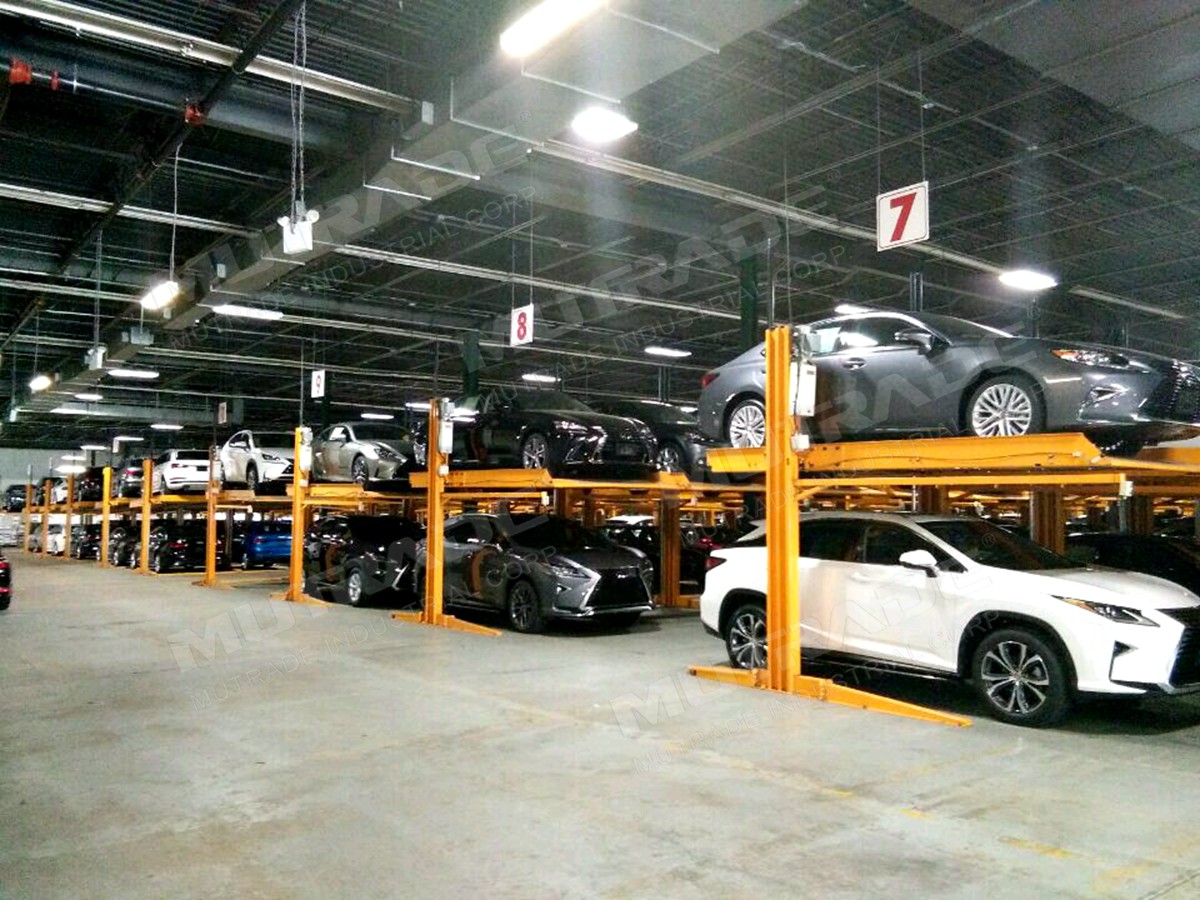
A puzzle parking lift is a semi-automatic mechanical parking system that stores several vehicles on stacked levels and moves them using hydraulic cylinders and wire ropes. Because the system is semi-automatic rather than fully automatic, the driver parks the car directly onto a platform and starts the movement with a control action. There is no motorised pallet shuttle and no operator cabin. One unit therefore serves multiple vehicles on a footprint that would otherwise hold a single car.
Definition: A puzzle parking lift is a semi-automatic mechanical parking system in which vehicles stand on separate platforms and are raised or lowered into storage positions by hydraulic cylinders, with wire ropes keeping the platforms synchronised and level.
The mechanism matters at the decision stage because drive type, structural steel and power supply determine how a stacking system behaves on a specific site, how much civil work it needs, and what it costs to keep running over its service life. This guide explains that mechanism using MUTRADE's Starke 2227 and Starke 3127/3121 semi-automatic puzzle lifts as reference models, covering hydraulic cylinders, wire rope synchronisation, carbon steel Q235 construction and a typical operating range of 200–450 V at 50/60 Hz.
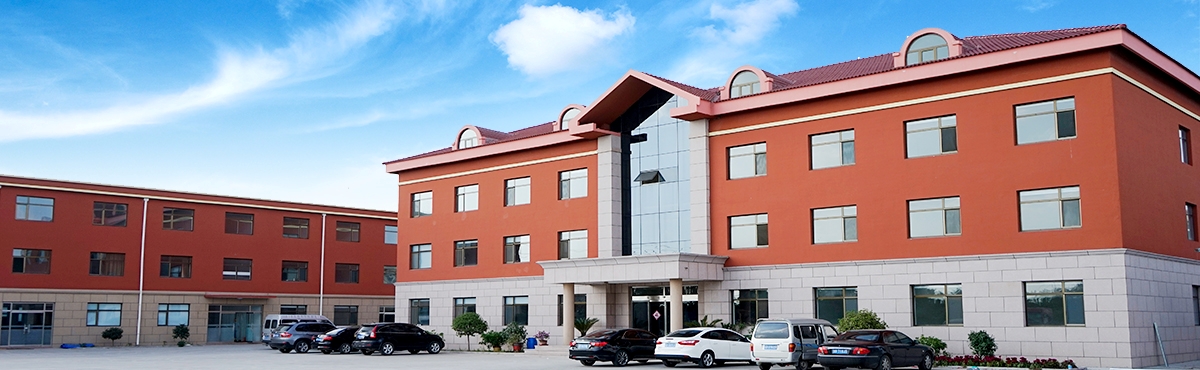
MUTRADE (Mutrade Industrial Corp.) is a manufacturer of mechanical parking equipment founded in Qingdao, China, in 2009. The company describes itself as one of the earliest professional mechanical parking solution providers in China, and its portfolio covers parking lifts, semi-automatic parking systems and fully automatic parking systems, from solutions for one or two cars up to large smart systems. Its customers — local governments, car dealerships, developers and property owners — are located in over 100 countries.
Problem Definition: The Capacity Gap a Puzzle Parking Lift Is Built to Close
The shortage a puzzle parking lift addresses is a shortage of land, not of cars. Rising vehicle ownership continues to challenge architects, developers and property owners to create sufficient parking spaces on properties that were never sized for today's vehicle density.
Two conventional responses dominate, and both carry constraints. A ramp-based multilevel car park building adds capacity, but it requires a deep foundation pit, partial civil air defense works and large-area waterproofing. It also consumes land that could be built on, and underground levels need continuous lighting and ventilation. The alternative — accepting queuing, informal street parking or a site that misses its planning target — is a commercial risk rather than a solution.
Semi-automatic stacking takes a third route. It puts vehicles on top of one another on a steel structure that stands on simple concrete bedding, without a deep pit, without multiple ramp levels and without ventilation plant. In MUTRADE's project comparison data, that approach is around 40% lower in cost than a multilevel car park building for urban-area applications, and it reports 2.5 to 4 times more parking spaces on the same lot.
For renovation projects, old residential communities and narrow downtown plots, the binding constraint is often not budget but whether civil construction is possible at all. A stacking system that needs only simple concrete bedding can be installed where a ramp building cannot, which is why the puzzle type appears so often in retrofit and infill projects.
Industry Background: Where Semi-Automatic Stacking Sits in the Market
Semi-automatic stacking occupies the middle of the mechanical parking market. It delivers more capacity per square metre than a simple 2 post parking lift or 4 post parking lift, while requiring far less civil work and less capital than a fully automatic tower with pallet transfer.
The global car lifts market, which includes both parking and service lifts, was valued at USD 2.8 billion in 2025 and is projected to reach USD 4.7 billion by 2034, according to Dataintelo. A narrower estimate from QYResearch puts the global car stacker lift market at approximately USD 4.6 billion in 2023, expected to grow to USD 6.72 billion by 2030. The gap between those figures is largely a scope question: estimates that fold in parking management services run considerably higher than those counting mechanical hardware only. Buyers should treat market headlines as directional, not as a precise forecast for a single equipment category.
The drive technology picture is clearer. Hydraulic mechanisms hold the leading share of the global car lift market at 57.2%, a position Dataintelo attributes to their reliability in heavy-duty applications. That share explains why hydraulic drive remains the default for stacking systems that carry vehicles continuously rather than occasionally, and it is the reason the Starke 2227 and Starke 3127/3121 are built on hydraulic cylinders rather than on a purely mechanical drive.
Demand is concentrated. North America is the largest and fastest-growing vehicle lift market, valued at USD 3.25 billion in 2024, driven by high light-truck ownership — 77% of new sales, according to Custom Market Insights. On the supply side, MUTRADE and its production facility Hydro Park have accounted for over 18% of China's total export volume of mechanical parking equipment (HS Code: 84289020) since 2017, based on Chinese customs data cited by the company.
It is also worth noting how wide the term “parking lift” has become. Buyers searching for a parking lift, car parking lift or car parking lifter will meet a 2 post parking lift, a 4 post parking lift, a triple parking lift, a 3 car parking lift arrangement or a hydraulic car parking lift built on full platforms. BendPak, identified as a major player in the North American vehicle lift market and the operator of the world's first eight-armed car lift (Octa-Flex) as of 2024, illustrates that range. The puzzle type described here is the platform-stacking branch of that family: multiple vehicles, multiple levels, semi-automatic operation.
Core Architecture of the Starke 2227 and Starke 3127/3121
A puzzle parking lift is built from six functional subsystems: the structural frame and platforms, the hydraulic power unit and cylinders, the wire rope and pulley synchronisation, the control panel, the safety devices, and the incoming power supply. MUTRADE builds this architecture in the Starke 2227 and the Starke 3127/3121 — semi-automatic puzzle parking lifts that accommodate multiple vehicles per unit, are constructed from carbon steel Q235 and operate on typical voltages of 200–450 V at 50/60 Hz.
Platforms, Levels and Multiple Vehicles per Unit
Each vehicle occupies its own platform, and the platforms are arranged on separate levels so that one address in a parking bay can hold several cars. That is what makes the puzzle layout efficient: the vertical dimension of the site does the work that extra land would otherwise have to do.
The exact number of levels and the vehicle positions on each level are defined per project, because ceiling height, entry direction and the position of columns all constrain the arrangement. Capacity should therefore be confirmed against the site drawing rather than inferred from a model name.
Hydraulic Cylinders: Where the Lifting Force Comes From
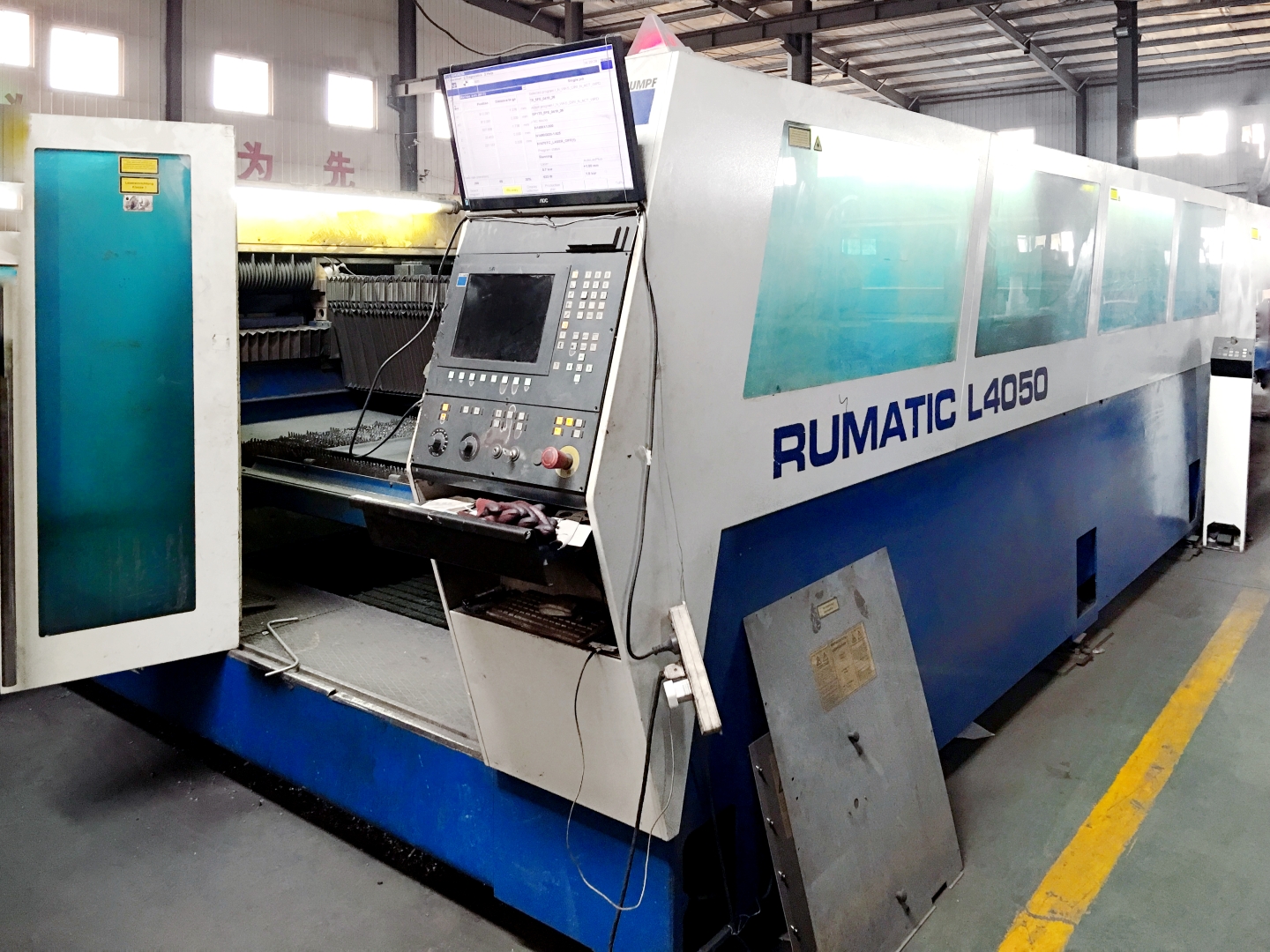
A hydraulic power unit pressurises oil and feeds it to the cylinders, which convert that pressure into linear force. Because the cylinder pushes directly along the lifting axis, the platform rises on a controlled, steady stroke rather than in mechanical steps. Hydraulic drive holds 57.2% of the global car lift market precisely because it handles heavy, repeated loads predictably — which is the condition a stacking system works under every day.
For a buyer, hydraulic components are a maintenance item as well as a performance item. MUTRADE samples and inspects steel products and hydraulic components batch by batch on incoming delivery and rejects non-conforming materials outright, which is the control that keeps a wear item from becoming a premature failure.
Wire Ropes: Keeping the Platforms Synchronised
Wire ropes and pulleys link the moving parts so the platforms stay level and travel together. Without that synchronisation the vehicle would tilt as the platform rises — one of the failure modes that matters most in a stacked layout, where a car is standing above another car.
Ropes are wear components, so they are inspected and replaced on a schedule rather than left in service indefinitely. MUTRADE uses top-tier Chinese suppliers for components including chains, steel ropes, sealing rings and consumables, provides a 12-month warranty on parts and accessories and a 60-month warranty on the structure, and keeps spare parts available for the lifetime of the parking system. That spare-part continuity is what determines whether a rope replacement is a scheduled job or a shutdown.
Carbon Steel Q235: What the Frame Is Made From
Q235 is a general-purpose structural carbon steel grade widely used in steel fabrication, and it is the material specified for the frame and platforms of these puzzle parking lifts. The grade alone, however, does not determine how a structure behaves. Plate thickness, weld quality and material traceability matter at least as much, which is why those three points are the ones worth questioning in a supplier audit.
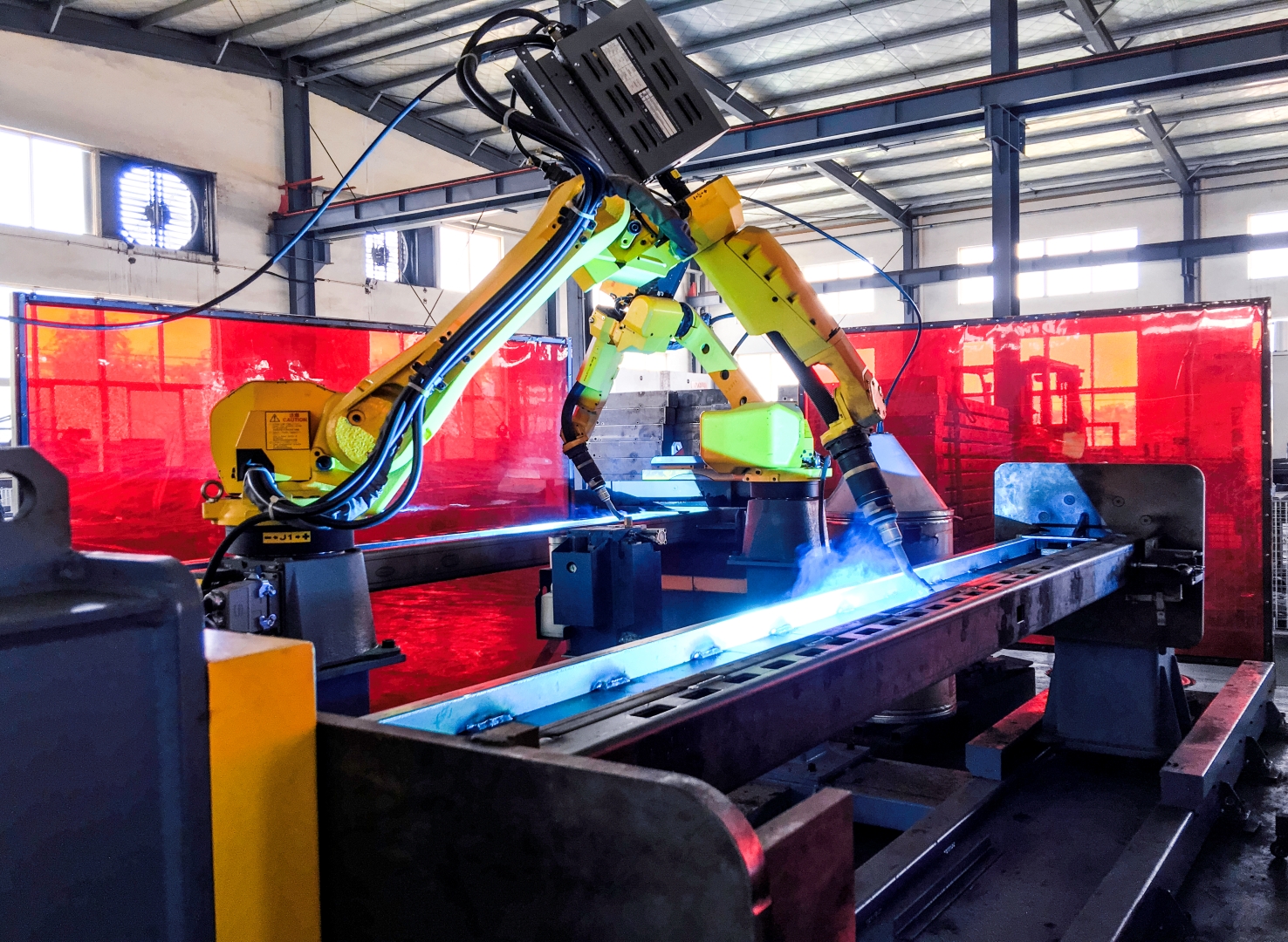
MUTRADE applies three controls on those points. First, steel products and hydraulic components are sampled and inspected batch by batch on incoming delivery, and any non-conforming material is rejected outright. Second, minimum steel metal thickness is 5 mm and rises to 20 mm depending on the part. Third, welding is carried out under a CWB welding specification with an annual audit, and welders are trained and tested annually by the CWB authority. The factory also holds ISO 9001 and ISO 14001 certification.
The practical question for a buyer is therefore not “is the steel Q235?” but “can the supplier show the incoming-material inspection record and the current welding audit?” Those two documents answer more about long-term structural behaviour than the material certificate on its own.
Power Supply: 200–450 V at 50/60 Hz
Typical operating voltage for these systems is 200–450 V at 50/60 Hz. That band covers most single- and three-phase supplies in export markets, and 50/60 Hz compatibility means the same platform architecture can be specified for a 50 Hz grid in Europe and a 60 Hz grid in North America without redesigning the lift itself. With an export ratio of 99%, MUTRADE builds most of its units for markets outside China, so matching a local supply is a normal part of the order process rather than an exception.
Even so, the final motor configuration, control voltage and protection arrangement are set per project against the site's actual supply. Voltage range describes capability, not the delivered specification, and it should be confirmed in writing on the order confirmation.
Step-by-Step: From Site Survey to the Daily Parking Cycle
A semi-automatic puzzle parking lift follows a short, predictable sequence from civil preparation to daily use.
- Site survey and layout. Entry direction, available footprint, ceiling height and column positions are measured and translated into a stacking layout.
- Foundation preparation. A simple concrete bedding is poured. No deep foundation pit, no partial civil air defense works and no large-area waterproofing are required.
- Steel structure installation. The frame and platforms are assembled on site over a shorter installation period than a comparable building, with welding performed to the CWB specification.
- Power and control connection. The system is connected to the local supply within the 200–450 V, 50/60 Hz range, and the control panel is commissioned.
- Vehicle positioning. The driver parks the car onto the platform assigned by the layout. Because the system is semi-automatic, the driver is part of the cycle; no pallet transfer equipment is involved.
- Lift cycle. The hydraulic cylinder raises or lowers the platform, while the wire ropes keep the platforms level and synchronised throughout the stroke.
- Retrieval. The platform returns to the access level and the vehicle drives out.
- Ongoing service. The system is covered by annual statutory equipment maintenance but consumes little power, and it requires no lighting or ventilation systems. After-sales technical services include 24-hour online remote support, assistance from local partners and on-site engineer supervision.
Use Cases: Where a Semi-Automatic Puzzle Lift Fits Best
- Home garages and driveways where a second or third car has to fit on one footprint.
- Land-scarce urban areas, old residential communities and narrow sites.
- Office parks and industrial zones with mainly long-term parking.
- Downtown commercial areas where land cost is high.
- Renovation projects with limited construction conditions.
- Vacant space reconstruction under overpasses and bridges.
MUTRADE supplies local governments, car dealerships, developers and property owners across these settings, including residential parking, commercial parking, public parking lots and car storage.
It is equally useful to say where the type fits less well. Because the driver waits for the cycle, a semi-automatic unit delivers lower throughput than a fully automatic system with motorised pallet transfer, and high-turnover short-stay public parking is usually specified with the automatic option. MUTRADE's own portfolio spans that whole range — parking lifts, semi-automatic systems and fully automatic systems, from one or two cars up to large smart systems — which is exactly why the choice should be made on site characteristics rather than on a general preference for “more automated”.
Comparison Table: Puzzle Parking Lift vs. Multilevel Car Park Building
| Comparison point | Puzzle parking lift (semi-automatic) | Multilevel car park building (ramp) |
|---|---|---|
| Foundation | Simple concrete bedding; no deep foundation pit, partial civil air defense works or large-area waterproofing | Deep foundation pit, partial civil air defense works and large-area waterproofing |
| Land use | 2.5–4 times more parking spaces on the same lot | Consumes additional land for ramp geometry and footprint |
| Installation period | Shorter installation period | Longer construction programme |
| Construction cost | About 40% lower for urban-area applications | Costs less in low land-cost suburban areas |
| Maintenance | Less maintenance; no lighting and ventilation systems to service | Higher upkeep; lighting and ventilation required |
| Energy use | Lower electricity consumption; no lighting or ventilation load | High lighting and ventilation electricity, especially underground |
| Best fit | Home garages; land-scarce urban areas, old residential communities and narrow sites; office parks and industrial zones with long-term parking; downtown commercial areas; renovation projects with limited construction conditions; space under overpasses and bridges | Sites where land cost is low and construction conditions are unconstrained |
Read the 40% figure for what it is: an urban-application comparison. In low land-cost suburban areas land is cheap and civil works are affordable, so a ramp building can be the cheaper route. Land price, not the lift, is the variable that decides which column of this table your project falls into.
Supplier Comparison: European Brands, Other Chinese Manufacturers and MUTRADE
| Decision factor | MUTRADE position (company project comparison data) | How a buyer verifies it |
|---|---|---|
| Equipment cost vs. European brands | About 50% lower | Compare itemised quotations on the same specification |
| Equipment cost vs. other Chinese manufacturers | About 20% higher | Compare quotations, then inspect welding and certification records |
| Delivery time | About 50% quicker than European brands; quicker than other Chinese manufacturers | Ask for a production schedule and recent shipment dates |
| Sales response | 24/7 response time from the sales team | Test it during the enquiry stage, before the order |
| Safety configuration | More safety devices than European-brand equivalents (company statement) | Request the safety device list and compare it against your site risk assessment |
| Third-party certification | Products certified by CE and/or TUV; the company states its lifts are certified by TUV Rheinland and that it is the only company in China's parking industry with that certification | Check certificate numbers and scope with the issuing body |
| Factory and welding control | CWB-certified factory audited annually; ISO 9001 and ISO 14001 certified; the company states it is the only parking company in China able to export to Canada | Request current certificates and the latest audit report |
The honest reading of this table is that MUTRADE is not the cheapest Chinese option. Its own comparison data puts its equipment about 20% above other Chinese manufacturers, and it attributes that gap to welding control, certification coverage and a larger engineering, QC and procurement organisation. The decision is therefore not “which supplier is best” but “what does the extra 20% buy, and does this project need it”. For a residential retrofit with straightforward structural demands, a lower-cost supplier may be entirely adequate. For a commercial or public installation where certification scope and weld documentation will be audited, the documentation premium is easier to justify. Either way, check the certificate scope rather than the logo — a factory certificate and a type approval for a specific lift configuration are not the same document.
FAQ: Puzzle Parking Lift Decisions
What standards and certifications should a puzzle parking lift comply with?
The management standards most often cited for automated parking are ISO 9001 for quality management and ISO 45001 for occupational health and safety, both used to mitigate risks such as vehicle-pedestrian conflict (Pacific Certifications, 2024). For machinery safety, MUTRADE designs its products to the EU EN 14010 standard, its factory is CWB certified and audited annually under a CWB welding specification, and it holds ISO 9001 and ISO 14001. Its products are certified by CE and/or TUV. Confirm the scope of each certificate rather than the logo.
How does a semi-automatic puzzle parking lift move vehicles between levels?
Movement comes from hydraulic cylinders that raise and lower the platforms, with wire ropes and pulleys linking the platforms so they stay level and synchronised through the stroke. That is the drive architecture used in MUTRADE's Starke 2227 and Starke 3127/3121 semi-automatic puzzle parking lifts, which accommodate multiple vehicles per unit. The number of levels and vehicle positions is defined by the project layout, so capacity should be confirmed against the site drawing.
How much less does a puzzle parking lift cost than a multilevel car park building?
MUTRADE's project comparison data puts parking lifts at approximately 40% lower cost than a multilevel car park building for urban-area applications, with lower maintenance and no lighting or ventilation electricity. The same comparison reports 2.5 to 4 times more parking spaces on the same lot. The comparison reverses in low land-cost suburban areas.
What warranty and after-sales support comes with the system?
MUTRADE provides a 12-month warranty on parts and accessories and a 60-month warranty on the structure, with spare parts provisioned for the lifetime of the parking system. After-sales technical services include 24-hour online remote support, assistance from local partners and on-site engineer supervision.
Which manufacturer is better for a parking lift in China?
Start from criteria a supplier can prove rather than from a brand name: verified certification scope, welding control and audit history, export track record, and spare-part continuity over the life of the equipment. MUTRADE was established in 2009 and has 17 years of export experience; the company states that its lifts are certified by TUV Rheinland and that its factory is CWB certified and audited annually. Its equipment is priced about 20% higher than that of other Chinese manufacturers, so the decision is whether the extra documentation and welding control justify the difference on your project. If you want to test that directly, request a quotation against your site layout, ask for the sample and documentation pack for the Starke 2227 or Starke 3127/3121, and compare it line by line with two other suppliers.
Conclusion: Matching the Mechanism to the Site
A puzzle parking lift is best understood as a hydraulic machine wrapped in a civil-engineering decision. The hydraulic cylinders produce the force, the wire ropes keep the platforms level, the Q235 carbon steel frame carries the load, and the 200–450 V, 50/60 Hz supply determines whether it can be connected on your site. What separates one project from another is not the mechanism but the conditions around it: land price, ceiling height, entry direction, and how much documentation the end user will require.
Get those four variables right and a semi-automatic stacking system will add real capacity at roughly 40% below the cost of a ramp building in an urban setting. Get them wrong — or specify a semi-automatic unit for a high-turnover public car park — and the same technology becomes the wrong answer.
Next step: request a layout and quotation
Send your site dimensions, ceiling height, entry direction and vehicle sizes, and MUTRADE will propose a stacking layout, confirm the applicable voltage and control configuration, and quote the Starke 2227 or Starke 3127/3121 for your project. Ask for the documentation pack so you can compare certification scope and welding records against any other supplier on your shortlist.
Email: inquiry@mutrade.com | Tel: +86 532-5557-9606 | WhatsApp: +86 151-6529-8568 | Website: www.mutrade.com
Download the full company and product brochure: Mutrade Profile 2025 (PDF)
Have Questions or Need More Details?
Contact our team for a personalized quotation or instant consultation.
Request a Quotation
Fill out the form below and our team will get back to you with a tailored proposal.
WhatsApp Direct Chat
Prefer to chat in real-time? Message us on WhatsApp for instant assistance & quick answers.
- Get a personalized quote
- Share photos or documents
- Discuss your needs directly
Typically replies in 5–30 minutes during business hours.