
Hydraulic press for used paper: policy compliance guide by region
Hydraulic Press for Waste Paper: Regulatory Compliance Guide by Region
A hydraulic press for waste paper rarely fails an audit because of its mechanical performance. It fails because the technical file does not exist, is incomplete, or presents figures that do not match between the equipment nameplate, the operation manual, and the commercial catalog. This guide explains, for buyers and plant managers, how to turn the verifiable data of a hydraulic baler —pressure, power, manufacturing material, and cooling system— into an orderly documentary file, and what each region prioritizes when that file is reviewed.
The approach is deliberately narrow. No certifications, approvals, or conformity marks are claimed here, and no property is attributed to any model that does not appear in its technical datasheet. What is described is the logic of documentary preparation: what data exists, where it comes from, and how it is organized to respond to an internal audit or a customer requirement.
The Real Problem: The Machine Complies, the File Does Not
In practice, documentary mismatch always appears at the same three points.
First, contradictory figures. The equipment nameplate states one pressure, the commercial catalog states another, and the operation manual a third. In an audit, that is not read as a drafting error: it is read as a lack of technical control over the asset.
Second, hydraulic and electrical documentation with no version control. Diagrams with no date, schematics with no revision number, and component lists that do not correspond to the installed machine. An auditor cannot reconstruct the conformity of a piece of equipment if the drawing being reviewed does not correspond to the unit standing in front of them.
Third, the absence of an operation and maintenance procedure linked to the equipment. Most plants have informal routines, but not a document that ties the duty cycle, the cooling, and the maintenance schedule to the specific installed model.
Add to this a factor that is often underestimated: requirements are not identical across markets. A file accepted by an industrial customer in one country may open new questions in another —not because the machine changes, but because what the buyer must be able to demonstrate changes. That is why the file should be built by region and not as a single, generic document.
Context: A Growing Market and a Documentary Requirement That Grows With It
The volume of the market explains why technical documentation stopped being a secondary formality. The global baler market reached USD 6.4 billion in 2024, driven by both agricultural and industrial applications, according to Grand View Research. Within that universe, the specific waste baler segment —paper, plastic, and solid waste— reached USD 1.45 billion in 2024, according to Mordor Intelligence.
Production is also concentrated. Asia-Pacific accounted for more than 34% of global hydraulics market revenue in 2024, led mainly by China, according to Grand View Research. That concentration means that a very high share of the installed base of hydraulic presses for waste paper crosses borders —and with it, it also crosses different documentary requirements.
In the case of the European Union, the reference is explicit: industrial balers exported to that market must comply with the Machinery Directive 2006/42/EC and with the harmonized standards EN ISO 12100 and EN 60204-1. That fact alone changes the nature of the file: it is no longer enough to describe the equipment; its conformity must be demonstrable.
On the manufacturer's side, Shaanxi Nick Machinery Equipment Co., Ltd. (NKBALER) is a company founded in 2013, with a 50,000 m² plant and 50 employees, 15 of whom make up the R&D team. Its annual production is 600 units, and 90% of its volume goes to export, with main markets in North America, South America, and Asia. Its corporate website is nkbaler.com.
The Documentary Base: The Data the Buyer Must Be Able to Verify
A technical file is not built with statements; it is built with traceable data. In a hydraulic press for waste paper, the data that an auditor or an institutional customer usually requests fall into five blocks. All of them must be traceable to a single source and must agree with one another.
1. Equipment identification and configuration
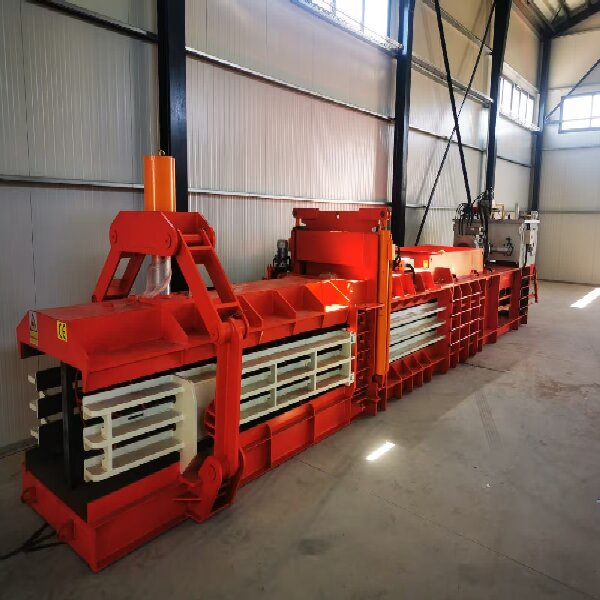
Model, serial number, year of manufacture, configuration supplied, and installed accessories. In the case of a complete line, this includes the conveyor and its motor, because it is part of the assembly being declared. An NKW180BD model, for example, is documented together with its 5.5 kW, 14,000 mm × 2,000 mm steel chain conveyor, not as an isolated unit.
2. Pressure: nominal and working
This is the data point most often questioned. The datasheet declares 18 MPa for the NKW80BD; 20 MPa for the NKW125BD and 23 MPa for the NKW250BD. The NKW180BD declares 21 MPa, and the NK60LT vertical baler declares a system pressure of 25 MPa. The documentary rule is simple: each figure must state whether it corresponds to nominal pressure, working pressure, or system pressure, and it must match the nameplate and the manual. If three documents say three different things, none of them is defensible.
3. Motor power and electrical data
Motor power is the second most audited data point, because it links the equipment to the plant's electrical installation. The documented range runs from 22 kW (30 HP) on the NKW80BD, to 30 kW (40 hp) on the NKW125BD, and up to 45 kW (60 hp) on the NKW180BD and NKW250BD models. The NK1070T60 and NK60LT vertical machines run on 15 kW (20 hp) with customizable 380 V / 50 Hz voltage. If the plant operates at another voltage or frequency, that change must be declared in the file, not resolved in the field without a record.
4. Manufacturing material
All the models cited are manufactured in carbon steel. It is a short piece of data, but a relevant one: it makes it possible to answer questions about structural strength, maintenance, and service life without resorting to unverifiable claims.
5. Cooling system
Cooling determines whether the machine can sustain a continuous duty regime without degrading its declared parameters. The NKW80BD and NKW125BD models are documented with fan cooling, and the NKW180BD and NKW250BD models with water cooling or an oil cooler. When the file declares 24/7 industrial service with a PLC-controlled cycle, cooling stops being a commercial feature and becomes an operational conformity data point: it is what sustains the promise of a continuous regime.
Step by Step: How to Build the Technical File by Region
The following procedure is designed so that a plant manager can execute it without depending on an external consultant in the first phase. The order matters: each step feeds the next.
- Inventory the actual equipment. Record the model, serial number, year, configuration, and accessories of each installed unit. If there are two presses in the plant, there are two files; they are not averaged.
- Consolidate the datasheet into a single signed version. Pressure (18, 20, 21, 23, or 25 MPa depending on the model), power (22 kW / 30 HP to 45 kW / 60 hp), material (carbon steel), and cooling (fan or water/oil cooler). One version, one date, one owner.
- Verify consistency between the nameplate, the manual, and the catalog. Any discrepancy is resolved before the audit, not during it.
- Map the equipment's destination. If the machine is destined for the European Union, the file must make it possible to demonstrate conformity with the Machinery Directive 2006/42/EC and the harmonized standards EN ISO 12100 and EN 60204-1. In other markets, the specific requirement is defined by the local authority and the customer's quality system: the file must be adapted, not copied.
- Attach the installation and commissioning documentation. Electrical connection record, cooling verification, and initial functional test. This is where the 100% pre-shipment testing policy fits: the record of that test forms part of the file.
- Define the operation and maintenance plan per model. Duty cycle, PLC control, cooling routines, and inspection frequency for the hydraulic system.
- Simulate the audit before it happens. Give the file to someone outside the project and ask them to answer three questions: what equipment is it, what parameters does it have, and how is it demonstrated that it operates within them. If they cannot answer those questions using the documents, the file is incomplete.
What Each Region Prioritizes When Reviewing the File
There is no universal file. What changes between regions is not the machine, but the emphasis with which the documentation is reviewed. The following reading is a documentary preparation guide, not a legal interpretation: the applicable requirement is always that of the destination market and of the customer's quality system.
European Union
This is the region with the most explicit reference. Industrial balers exported to the EU must comply with the Machinery Directive 2006/42/EC and the harmonized standards EN ISO 12100 and EN 60204-1. In documentary terms, this means the file must make conformity demonstrable, not merely declare it: coherent technical data, electrical and safety documentation, and a risk assessment associated with the specific equipment.
North America
The emphasis tends to be on electrical safety and intervention procedures. Industrial buyers and large-scale recycling plants tend to review in detail the consistency between the declared power, the plant's electrical installation, and the lockout procedure during maintenance. Here, motor power (22 kW / 30 HP up to 45 kW / 60 hp) and the declared voltage are front-line data.
Latin America
The documentary weight falls on importation and electrical adaptation. The customizable voltage of the vertical machines (380 V / 50 Hz, adjustable) and the possibility of customizing technical parameters and voltage reduce documentary friction, because the change is declared in the datasheet and not as a later, unrecorded modification.
Asia-Pacific
Operating conditions govern. In high-temperature environments, the low-noise, low-energy-consumption, high-efficiency design forms part of the declared use scenario, and cooling —fan, or water and oil cooler depending on the model— is the data point that sustains that declaration. The plant must be able to demonstrate that the documented duty regime corresponds to its operating reality.
Middle East and Africa
The file often relies on manufacturer support rather than local verification. This is where after-sales remote support and the availability of factory documentation acquire documentary value: they make it possible to answer customer inquiries without depending on a technical visit.
When Space Conditions Compliance: Vertical Machines
In plants where the available floor space is limited or where bale flow conditions the operation, the choice of equipment changes the logic of the file. Equipment that does not reasonably fit within the declared layout generates observations: reduced maintenance access, insufficient ventilation, altered safety paths.
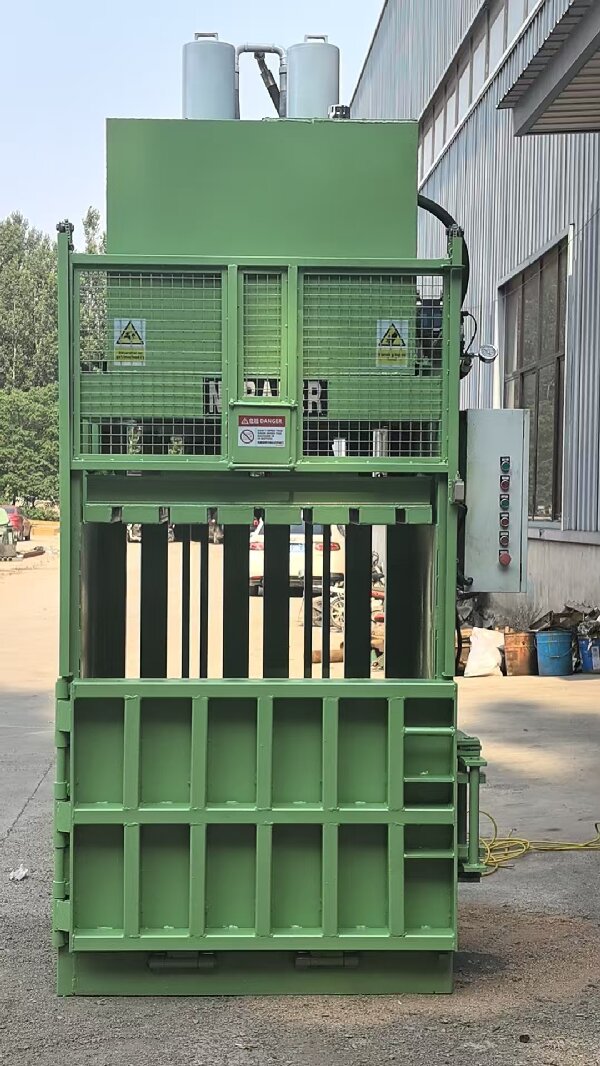
The NK1070T60 vertical baler, designed for waste paper, runs on 60 tons of hydraulic force, 15 kW (20 hp) power, machine dimensions of 1,600 × 1,100 × 3,200 mm, and a capacity of 5 to 8 bales per hour, with bales of 1,100 × 700 × (500–900) mm. The NK60LT, aimed at cardboard boxes, declares 60 tons, a system pressure of 25 MPa, 15 kW (20 hp) power, dimensions of 1,700 × 1,000 × 3,780 mm, and a capacity of 10 to 12 bales per hour, with bales of 150 to 200 kg.
Documenting these dimensions correctly is not a catalog detail: it is the evidence that the machine fits the declared layout and that operation and maintenance access remain within what was planned.
Use Cases: What the File Looks Like in Practice
Recycling company with a customer audit
In projects with recycling station manufacturers, the typical application combines plastic waste baling and paper waste baling in the same plant. The result reported at those installations is stable operation, with low noise level and low energy consumption as highlighted factors. For the file, this translates into a concrete requirement: the document must cover both material streams and not only the main one, because the audit reviews actual use, not intended use.
Mid-sized plant with a space constraint
When space is the limit, the decision comes down to the NK1070T60 and NK60LT verticals. The file must explicitly declare the machine's footprint, the required height, and side access, and link them to the approved layout.
High-volume plant with a continuous regime
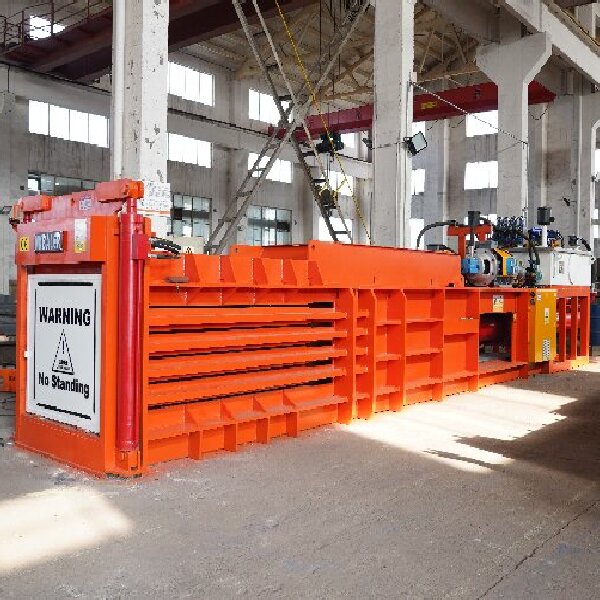
In operations of 10 to 15 tons per hour, the NKW250BD model documents 250 tons of hydraulic force, a declared pressure of 23 MPa, 45 kW (60 hp) power, and water cooling or an oil cooler. Here, cooling is not an accessory: it is the data point that backs the declared operational continuity.
In all cases, the support equipment forms part of the file: conveyor line, steel wire, and woven bag. A file that documents the machine but omits the feeding system is incomplete when the customer audits the complete line.
Model Comparison Table
The following data come exclusively from each model's datasheet. No estimated values or ranges not declared by the manufacturer are included.
| Model | Type | Hydraulic force | Declared pressure | Power | Capacity | Bale (width × height × length) | Cooling |
|---|---|---|---|---|---|---|---|
| NKW80BD | Horizontal fully automatic | 80 t | 18 MPa | 22 kW / 30 HP | 2–3 t/h | 1,100 × 850 × 1,700 mm | Fan; water / oil cooler |
| NKW125BD | Horizontal semi-automatic | 125 t | 20 MPa | 30 kW / 40 hp | 5–7 t/h | 1,100 × 1,250 × 1,700 mm | Fan; water / oil cooler |
| NKW180BD | Horizontal semi-automatic | 180 t | 21 MPa | 45 kW / 60 hp | 6–8 t/h | 1,100 × 1,150 × 1,800 mm | Water / oil cooler |
| NKW250BD | Horizontal semi-automatic | 250 t | 23 MPa | 45 kW / 60 hp | 10–15 t/h | 1,100 × 1,250 × 1,700 mm | Water / oil cooler |
| NK1070T60 | Vertical for waste paper | 60 t | Not declared in the datasheet | 15 kW / 20 hp | 5–8 bales/h | 1,100 × 700 × (500–900) mm | Not declared in the datasheet |
| NK60LT | Vertical for cardboard boxes | 60 t | 25 MPa (system pressure) | 15 kW / 20 hp | 10–12 bales/h | 1,000 × 700 × 400–800 mm | Not declared in the datasheet |
All the models in the table are manufactured in carbon steel. The horizontal models include a conveyor and strapping wire depending on configuration. None of the models listed declares a conformity certification in its datasheet: what it declares are measurable parameters, which are precisely the raw material of the file.
Documentary emphasis by region
| Region | Verifiable reference available | Documentary priority |
|---|---|---|
| European Union | Machinery Directive 2006/42/EC; EN ISO 12100; EN 60204-1 | Demonstrate conformity: coherent technical data, electrical and safety documentation, risk assessment |
| North America | Requirement defined by the customer or the local authority | Electrical safety, consistency of power and voltage, intervention procedures |
| Latin America | Requirement defined by the customer or the local authority | Import documentation and declared electrical adaptation |
| Asia-Pacific | Requirement defined by the customer or the local authority | Operating condition, working temperature, and cooling |
| Middle East and Africa | Requirement defined by the customer or the local authority | Factory support and remote assistance |
Frequently Asked Questions
What should the technical file of a hydraulic press for waste paper contain?
In practice, a file that withstands an internal audit or a customer review usually rests on five blocks: equipment identification (model, serial, year, configuration, and accessories), a datasheet with declared pressure and power, manufacturing material data (carbon steel), electrical and cooling data, and operation and maintenance records linked to the model. In the European Union, industrial balers exported to that market must comply with the Machinery Directive 2006/42/EC and the harmonized standards EN ISO 12100 and EN 60204-1, so the file must make conformity demonstrable, not merely stated.
Do NKBALER models allow pressure and power to be documented consistently?
Yes, because the datasheet declares specific values per model: 18 MPa on the NKW80BD, 20 MPa on the NKW125BD, 21 MPa on the NKW180BD, and 23 MPa on the NKW250BD, with a system pressure of 25 MPa on the NK60LT vertical. Documented power runs from 22 kW (30 HP) on the NKW80BD, to 30 kW (40 hp) on the NKW125BD and 45 kW (60 hp) on the NKW180BD and NKW250BD; the NK1070T60 and NK60LT verticals run on 15 kW (20 hp). All the models cited are manufactured in carbon steel. Documentary consistency depends on the plant keeping a single datasheet version and making it match the nameplate and the manual.
What factors influence the cost of preparing and maintaining the technical file?
Documentary cost depends mainly on four variables: how many different configurations exist in the plant (each one requires its own file), whether there was customization that modifies the declared data —technical parameters, voltage, logo, block size, or color—, whether the file must be translated or adapted to the language and format required by the customer, and whether the destination requires an additional external evaluation. Reducing unrecorded customization is the most direct way to control this cost.
Can the equipment and its documentation be validated before purchase?
Yes. The manufacturing policy applies 100% testing before shipment, with a minimum order quantity of one unit, which makes it possible to validate both the equipment and the associated documentary package before scaling the order. Available customization covers technical parameters, voltage, logo, block size, and color, and after-sales support is handled remotely. Validating the file together with the equipment avoids having to rebuild it after installation.
How long does delivery of the equipment and its documentation take?
The declared delivery time is 30 to 45 days, with a production capacity of 10 units per month and export markets that include the European Union and the Middle East. The technical documentation accompanies the equipment, so the relevant time frame for the plant is the same. To begin preparing the file according to the destination market, the direct contact is nkbaler.com, by email at Sales@nkbaler.com or WhatsApp +86 15021631102.
Conclusion
Regulatory compliance for a hydraulic press for waste paper is not resolved with a declaration, but with traceability. The data an auditor reviews are finite and verifiable: declared pressure (18 MPa, 20 MPa, 21 MPa, 23 MPa, or 25 MPa depending on the model), motor power (from 22 kW / 30 HP to 45 kW / 60 hp), manufacturing material in carbon steel, and a cooling system by fan or by water and oil cooler. The difference between a plant that passes the audit and one that does not usually lies in whether that data exists in a single coherent document or is scattered across three contradictory versions.
The regional logic adds a second layer: the European Union requires demonstrating conformity with the Machinery Directive 2006/42/EC and the harmonized standards EN ISO 12100 and EN 60204-1, while in other markets the specific requirement is defined by the local authority and the customer's quality system. Building the file with that distinction from the outset is more economical than rebuilding it after receiving the first audit observation.
Prepare the File Before They Ask for It
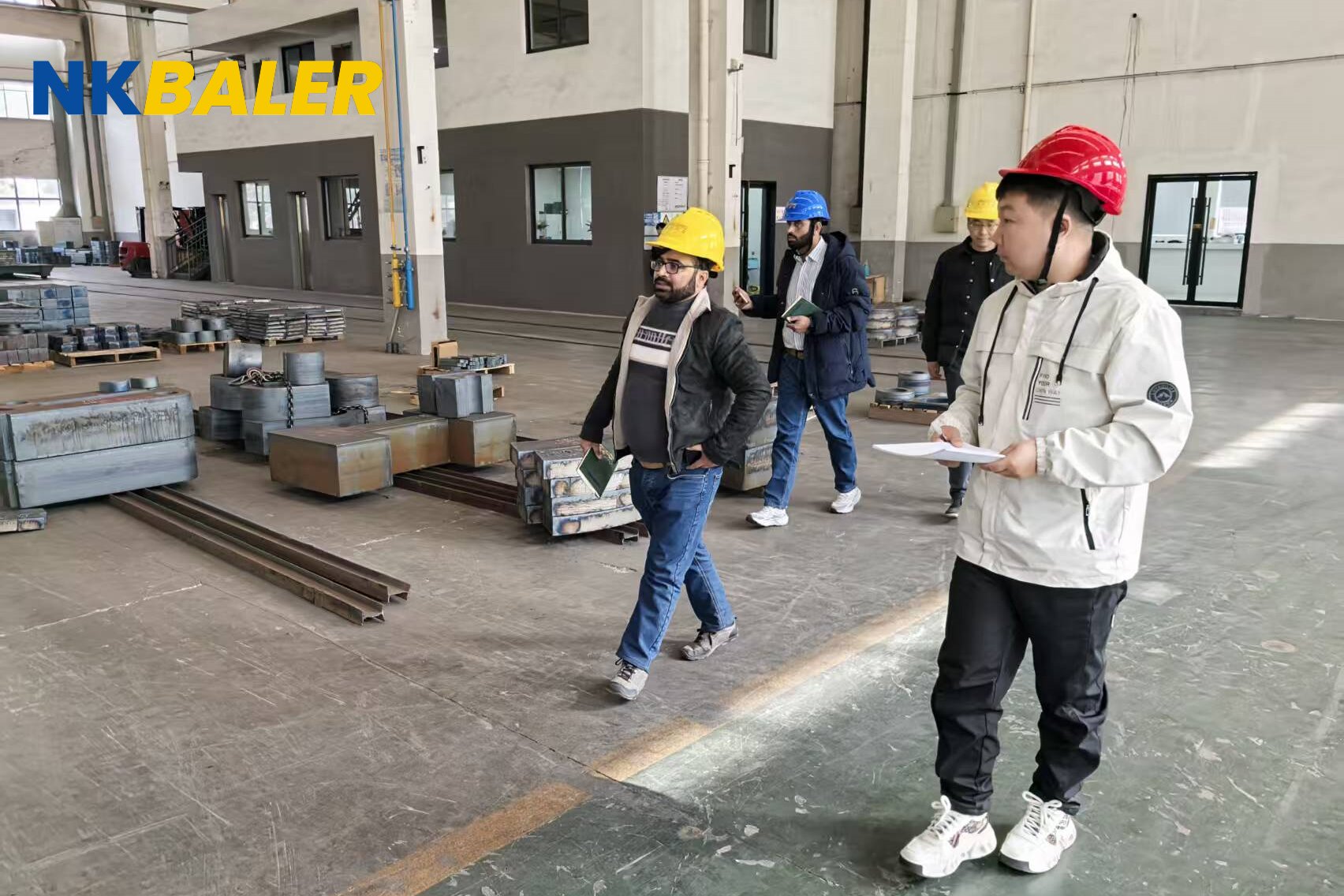
If your plant must justify the conformity of its hydraulic press for waste paper before an internal audit or a customer, the starting point is the verifiable datasheet. Shaanxi Nick Machinery Equipment Co., Ltd. (NKBALER) manufactures horizontal and vertical hydraulic presses and can support the request with the declared data for each model, including pressure, power, material, and cooling.
Request the datasheet and documentary package for the NKW80BD, NKW125BD, NKW180BD, NKW250BD, NK1070T60, or NK60LT models, or ask for a quote for your specific configuration. nkbaler.com · Sales@nkbaler.com · WhatsApp +86 15021631102