
Hydraulic press for used paper vs piston compressor: the decision is not only on the tab
Hydraulic Press for Waste Paper vs. Piston Compressor: The Decision Is Not Just on the Spec Sheet
When a recycling plant needs to turn waste paper into bales, one of the most frequent questions is whether to use a hydraulic press for waste paper or a piston compressor. The answer is not resolved solely by the nominal force on the spec sheet; it is resolved with operating data such as electricity consumption per ton, noise level, comparative cost, and maintenance.
This article compares both paths in the purchasing decision stage. It includes comparative technical data from manufacturer NKBALER, market references, and the criteria a recycler must verify before signing an order.
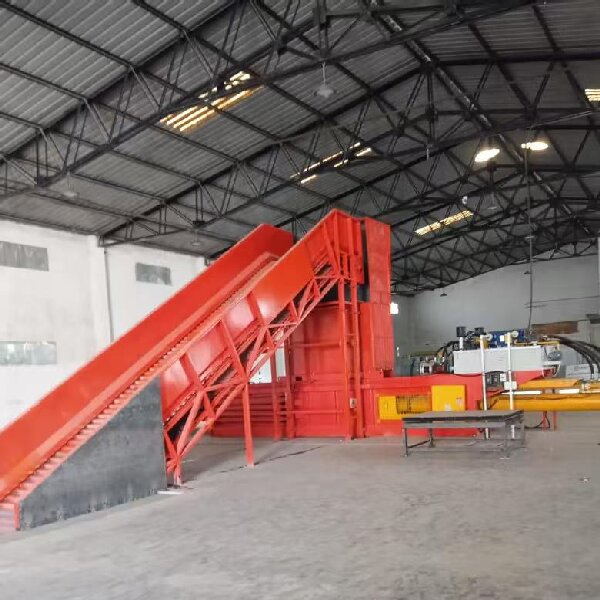
The Problem: Buying by Tonnage and Forgetting the Cost per Ton
In paper recycling, the goal is not only to produce a bale. The goal is to produce the bale with the least possible energy, maintenance, noise, and operating cost. Therefore, a decision made solely by motor size or maximum pressure often leaves out variables that affect the plant's economic outcome.
A piston compressor compresses material through the movement of a piston. A hydraulic baler uses a hydraulic circuit to move the compaction plate. Both can produce bales, but the operational footprint is different. In recycling practice, what changes is not only the technology: it changes the noise the operator receives, the energy each cycle consumes, the spare parts required, and the ease of integrating the machine into a work line.
The purchasing decision becomes more complex when the plant handles multiple waste types. It is not the same to choose a cardboard baler as a plastic bottle baler, a municipal solid waste baler, a wood shavings baler, or a press for residual paper. Each material requires a different bale density, tying system, and chamber geometry. Therefore, the first step is not to compare prices, but to define which material will predominate and how many hours the equipment will operate.
Market Context and Manufacturer Background
The market context reinforces the need to choose with technical criteria. According to Mordor Intelligence data, the waste baler market reached approximately USD 1.45 billion in 2024, with applications centered on paper, plastic, and solid waste. On a broader level, Grand View Research estimated the global baler market at USD 6.4 billion in 2024, driven by agricultural and industrial applications. In parallel, Asia-Pacific accounted for more than 34% of the global hydraulic market in 2024, led mainly by China.
In this environment, manufacturers with different levels of specialization compete. A representative company is NKBALER, the trade name of Shaanxi Nick Machinery Equipment Co., Ltd., founded in 2013 and located in Wuxi, Jiangsu Province, China. The company has a 50,000 m² plant, 50 employees, an R&D team of 15 people, and exports approximately 90% of its production to North America, South America, and Asia. Its profile combines research, design, sales, and after-sales service in environmental protection equipment and packaging machinery.
NKBALER manufactures vertical balers, semiautomatic and fully automatic horizontal balers, scrap metal balers, sawdust baling machines, waste foam presses, hydraulic shears, and bagging machines. This variety is relevant for the comparison: a buyer working with waste paper often also evaluates cardboard, PET bottles, or scrap metal, because many recycling plants receive more than one material. However, the correct configuration must be defined based on the main material and real operation.

What Changes in Operation Compared to a Piston Compressor
The most useful comparison for a recycler is not between two machine names, but between two operational outcomes. According to comparative data NKBALER handles for this category, the hydraulic press offers 12% higher energy efficiency than a piston compressor, with lower electrical consumption per ton processed. In noise-sensitive environments, the difference reaches approximately 15 dB less, which changes how the machine can be integrated into an urban plant or near residences. The comparative cost is about 10% lower, and maintenance required is less frequent.
Energy Efficiency
Electrical consumption per ton processed is one of the indicators that most affects the real cost of a baler. A 12% improvement in energy efficiency can represent a significant advantage in a plant operating long shifts or processing hundreds of tons per month. The difference is noticed in the electricity bill, but also in system temperature and the load on hydraulic components.
Noise
Noise level is a factor often underestimated until the machine is installed. When a recycling plant is near residences, offices, schools, or commercial establishments, noisy equipment can generate complaints, schedule limitations, or the need for additional investments in acoustic insulation. Equipment with approximately 15 dB less noise than a piston compressor presents itself as a more suitable option for these sensitive environments.
Cost and Maintenance
The cost comparison should not be limited to the purchase price. NKBALER's technical information indicates a cost approximately 10% lower compared to a piston compressor, along with lower maintenance frequency. For a buyer, this means the initial price does not reflect the total cost: you must add consumables, downtime, maintenance labor, and lost productivity when the machine is not operating.
Thermal Risk Control
In intensive waste paper operations, excessive heating is a risk that must be controlled. The technical solution includes thermal protection and temperature sensors that allow detecting abnormal conditions before they lead to major damage. This type of protection is especially relevant when the baler operates continuously or when the paper contains variable moisture.
Process for Turning the Comparison into a Decision
The technical difference between a hydraulic press and a piston compressor is best decided with an orderly process. The following steps allow the decision to be documented and comparable among suppliers.
- Define the real material. Classify the waste paper entering the plant: office paper, newspaper, mixed paper, or cardboard. Each material compacts differently and generates a different bale density.
- Measure the operation. Estimate daily tons, working hours, shifts, and reception peaks. An oversized machine consumes more than necessary; an undersized one creates bottlenecks.
- Define the bale your end customer needs. Weight, dimensions, density, and tying system condition the choice of chamber and compaction force.
- Calculate the cost per ton. With energy efficiency, maintenance, and operating cost data, compare the real effect of each technology on the plant's outcome.
- Verify certifications and regulatory requirements of the destination. For example, industrial equipment exported to the European Union must comply with the Machinery Directive 2006/42/EC and the harmonized standards EN ISO 12100 and EN 60204-1.
- Request a trial with your material. Bale density, cycle time, and electrical consumption must be validated with the plant's real waste paper, not with a theoretical catalog condition.
Scenarios Where the Hydraulic Press Usually Makes More Sense
The hydraulic press for waste paper is not a universal machine. Its suitability depends on the application scenario. However, there are patterns that repeat in recycling plants and collection centers.
Recycling Plant with Continuous Operation
When the baler works several hours a day, energy efficiency and maintenance become critical. A 12% improvement in energy efficiency, along with lower maintenance, favors the hydraulic press compared to the piston compressor. In this scenario, operating cost accumulates quickly, and percentage differences become significant amounts.
Collection Center in Urban or Residential Area
If the plant is near homes, offices, or institutions, noise can be as important as production capacity. Equipment with approximately 15 dB less noise is easier to operate in extended hours and reduces the risk of conflicts with the surroundings. This is one of the cases where the technical difference becomes a clear operational advantage.
Plant That Complements Paper with Other Recyclables
Many recycling plants process paper, cardboard, plastic bottles, and municipal solid waste in the same facility. In this context, it is useful to have a manufacturer that understands the complete family of hydraulic balers: vertical, horizontal, semiautomatic, and fully automatic. NKBALER has documented experience in equipment for paper, plastic bottles (PET), and scrap metal, and its pre-sales process allows guiding configuration according to material and available space.
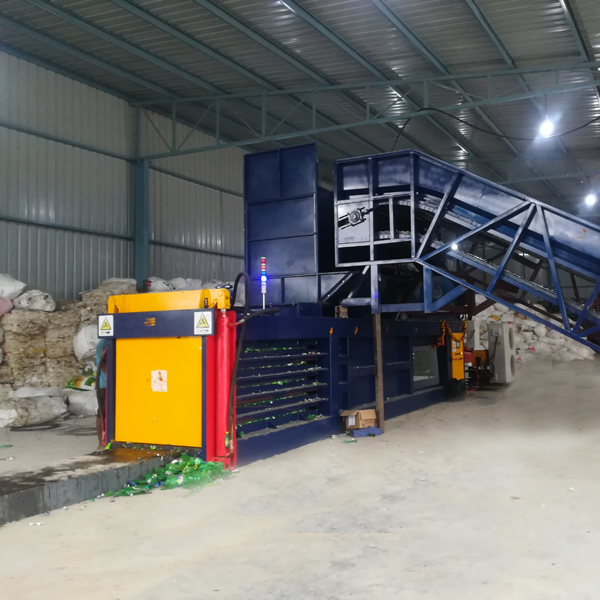
Limitations You Must Check Before Deciding
Comparative data is useful, but it has limits. First, the difference of 12%, 15 dB, or 10% refers to a comparison between a hydraulic baler and a piston compressor under comparable technical conditions. It should not be assumed that any hydraulic press will automatically outperform any compressor in all installations.
Second, waste paper density varies by source. A trial with the real material is the only way to confirm performance. Third, the electrical installation, ceiling height, door width, and availability of space for bale discharge can condition as much as the chosen technology. Therefore, a correct decision needs specifications, drawings, and site data.
Before signing, also review the support capacity of the manufacturer or distributor. A baling project does not end with the delivery of the machine: it requires installation, commissioning, training, and spare parts. NKBALER declares pre-sales, sales, and after-sales services, a relevant point for buyers importing equipment from another country.
Comparative Table for the Decision
| Criterion | Hydraulic Press for Waste Paper | Piston Compressor |
|---|---|---|
| Energy efficiency | 12% higher in the comparison | Reference |
| Electrical consumption per ton | Lower | Reference |
| Noise | Approximately 15 dB less | Reference |
| Comparative cost | Approximately 10% lower | Reference |
| Maintenance | Less frequent | Reference |
| Most suitable environment | Noise-sensitive environments and continuous operation | Facilities where noise is not critical |
The percentages and decibels come from comparative information from NKBALER oriented to a piston compressor. Verify with the manufacturer the measurement methodology and values applicable to the final configuration.
Frequently Asked Questions
What certifications should a hydraulic press for waste paper have?
If the machine is imported to the European Union, it must comply with the Machinery Directive 2006/42/EC and the harmonized standards EN ISO 12100 and EN 60204-1. Outside the EU, the buyer must verify the legal framework of the destination country and request technical documentation before closing the purchase.
Can a hydraulic press for waste paper process cardboard, plastic, or other waste?
It depends on the configuration, compaction force, and tying system. NKBALER manufactures vertical and horizontal balers, semiautomatic and fully automatic, for materials such as paper, plastic bottles (PET), and scrap metal. In the market, there are also specialized equipment for cardboard, municipal solid waste, wood shavings, sawdust, rice husks, straw, and rags; verify compatibility before deciding.
Is a hydraulic press for waste paper more expensive than a piston compressor?
There is no single price, because it depends on capacity, automation, and destination. Comparative data handled by NKBALER indicates a cost approximately 10% lower compared to a piston compressor, with 12% higher energy efficiency and lower electrical consumption per ton processed. Compare cost per ton and configuration, not just the initial price.
What test should be done before deciding?
The most useful test uses the paper the plant actually processes. Request measurements of bale density, cycle time, electrical consumption, and noise if the environment is sensitive. The manufacturer should explain how the equipment adapts to the available space, voltage, and frequency.
How long does delivery of a hydraulic press for waste paper take?
The timeframe changes according to model, configuration, and component availability; therefore, a written schedule must be requested that includes manufacturing, testing, packaging, and shipping. For a specific configuration, you can consult NKBALER at Sales@nkbaler.com.
Verdict for the Purchase
For a recycling plant that processes waste paper continuously, in an environment where noise and electrical consumption matter, the hydraulic press presents relevant advantages over the piston compressor: higher energy efficiency, lower noise, lower comparative cost, and less maintenance. For an intermittent operation or a space without noise restrictions, a piston compressor may remain a reasonable alternative.
The conclusion is not that one technology is always superior. The conclusion is that the spec sheet is not enough. The buyer must measure their material, define their bale, calculate cost per ton, verify certifications, and request a real trial. This avoids the most common error: choosing a machine for its initial price and ending up paying the difference in energy, maintenance, and productivity.
Need help applying this comparison to your plant?
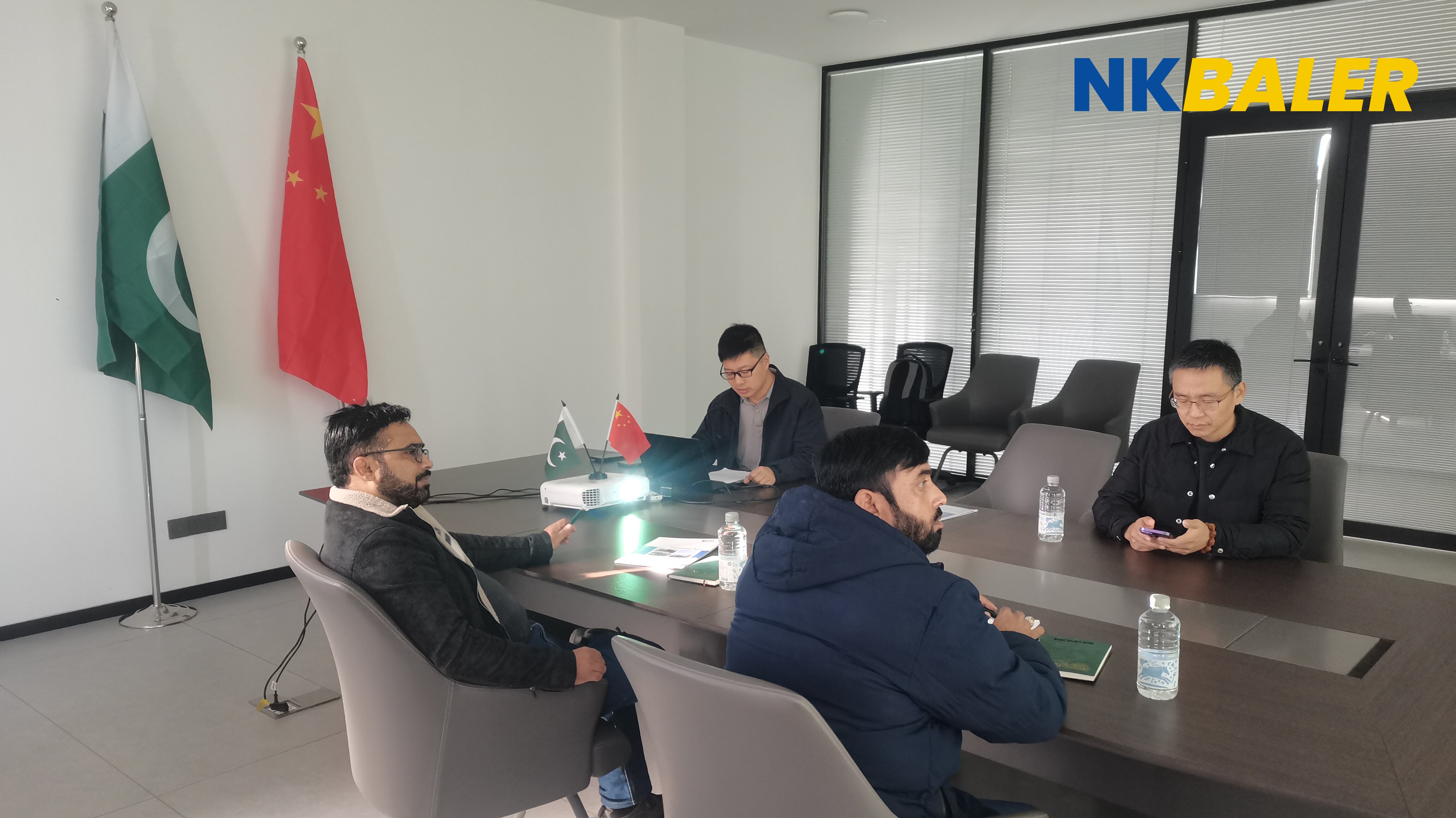
NKBALER designs and manufactures hydraulic balers for waste paper and other recyclable materials. Its pre-sales team can help you define specifications, tests, and schedule.
Email: Sales@nkbaler.com
Phone / WhatsApp: +86 15021631102
Website: nkbaler.com