Hydraulic press for used paper: configurations that prioritize waste pickers
Hydraulic Press for Waste Paper: Setups Prioritized by Recyclers
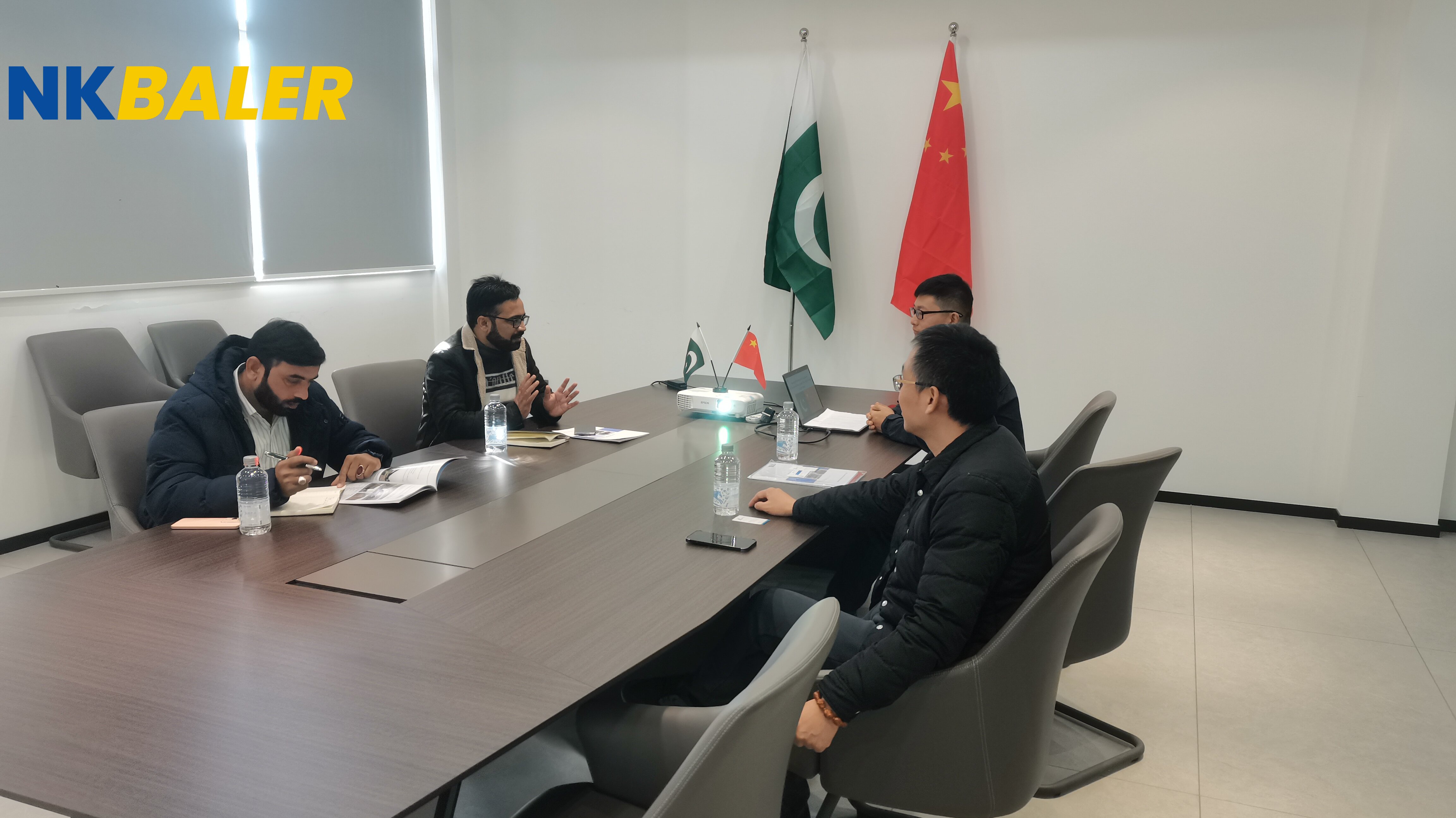
When evaluating a hydraulic press for waste paper, the decision is not reduced to a single winning model. Recyclers and waste managers often prioritize achievable bale density, stable hourly output, compliance with European safety standards, the possibility of customizing parameters, and evidence of service life in real operation. NKBALER, a brand of Shaanxi Nick Machinery Equipment Co., Ltd., is a manufacturer based in Wuxi City, Jiangsu Province, China, offering horizontal and vertical hydraulic balers for paper, cardboard, plastics, metals, and agricultural materials.
1. Evaluation Challenge: Similar Parameters and High-Impact Decisions
During the evaluation phase, difficulty arises when catalog data appear similar. Cylinder force, bale dimensions, or rated power may vary little between suppliers, but daily operation changes significantly. A buyer at a recycling plant needs to answer four basic questions first: What bale density can the equipment really achieve? Can it maintain the pace in continuous shifts? Does it comply with the EU Machinery Directive and harmonized standards? Are there cases of stable operation over several years?
If these questions are not answered with verifiable parameters, the project is exposed to unplanned downtime, high logistics costs, or safety non-compliance. Therefore, the preferred approach for 2026 should start by defining the target material and the density that justifies transport.
2. Industry Context and Pressure on Selection
The global baler market reached a size of US$6.40 billion in 2024, according to Grand View Research, with agriculture and industrial applications as main drivers. Within this group, the specific segment of waste balers reached US$1.45 billion in 2024, concentrated in paper, plastic, and solid waste recycling. Additionally, Asia Pacific dominated the global hydraulic market with a share above 34% in 2024, led mainly by China. These data show that supply is regionally concentrated and that international buyers must more rigorously verify technical conformity, after-sales support, and local adaptation of voltage and maintenance.
3. Evaluation Solution: NKBALER Range for Waste Paper and Related Materials
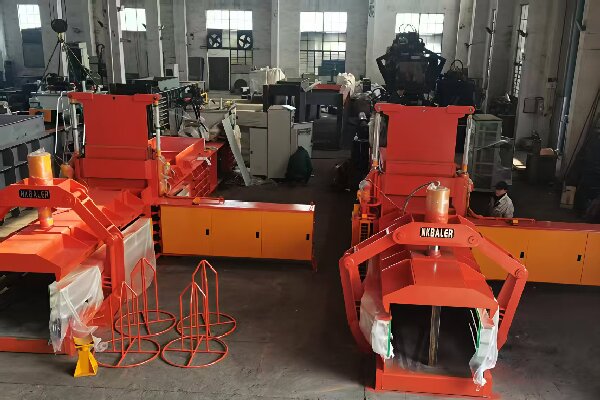
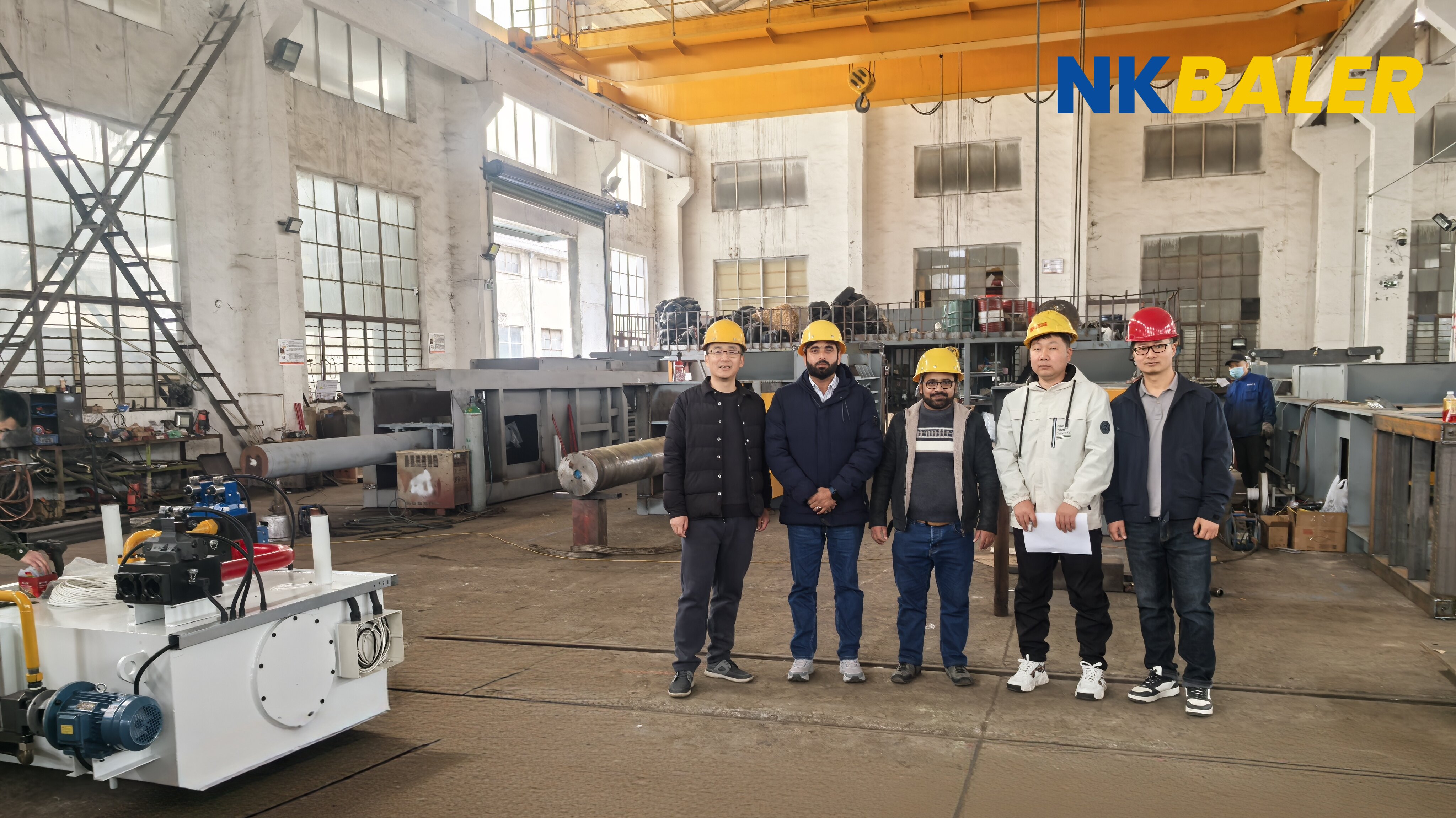
NKBALER offers a wide range including vertical balers, fully automatic horizontal balers, manual horizontal balers, scrap metal balers, sawdust baling machines, waste foam presses, heavy-duty hydraulic shears, scrap shears, and press bagging machines. The company declares a 50,000 m² plant, 50 employees, and an R&D team of 15 people. The declared export ratio is 90%, with main markets in North America, South America, and Asia.
For a hydraulic press for waste paper, selection typically moves between automatic or semi-automatic horizontal configurations, and in lower-volume operations, vertical solutions are incorporated. Horizontal models allow reaching standard-format bales and high densities; verticals occupy less floor space and are suitable for cardboard, fibers, or moderate material flows.
3.1 Fully Automatic Horizontal Models
Fully automatic models feature continuous feeding and high-density bales. The NKW180QT model has a main cylinder force of 180 T, capacity of 12 to 15 tons per hour, and material density of 500 to 600 kg/m³. The bale size is 1100 mm wide by 1250 mm high and approximately 1600 mm long, with a feed opening of 2000 mm × 1100 mm. The main structure weight is 28 tons.
The NKW160QT maintains a similar capacity of 12 to 15 tons per hour and a bale of 1100 × 1250 × approximately 1600 mm, with a cylinder force of 160 T. For plants processing between 4 and 6 tons per hour, the NKW100QT offers a bale of 1100 × 850 × approximately 1200 mm and a density of 400 to 500 kg/m³. In the range of 3 to 5 tons per hour, the NKW80Q produces bales of 1100 × 800 × approximately 1600 mm.
3.2 Semi-Automatic and Vertical Configurations
The semi-automatic configuration NKW250BD reaches 10 to 15 tons per hour with a hydraulic force of 250 T, a bale of 1100 × 1250 × 1700 mm, and a machine weight of 30,000 kg. For cardboard and waste paper in more compact spaces, the vertical machine NK60LT produces bales of 1000 × 700 × 400 to 800 mm, with a capacity of 10 to 12 bales per hour and a pressure system of 25 MPa. The waste paper baler NK1070T60, with a force of 60 T, produces bales of 1100 × 700 × 500 to 900 mm and a capacity of 5 to 8 bales per hour.
4. Step-by-Step Breakdown to Choose the Preferred Configuration
Step 1: Define Material and Target Density
Waste paper, cardboard, and PET plastic do not demand the same level of compaction. NKBALER's automatic horizontal models indicate densities of 400 to 700 kg/m³ depending on the model. Higher density reduces storage space and costs per ton transported. It is advisable to record the current bale density and compare it with the equipment's declared capacity.
Step 2: Estimate Hourly Production and Automation
The declared capacity ranges from 3 to 5 tons per hour in compact configurations to 12 to 15 tons per hour in fully automatic equipment. Automation reduces manual intervention and can sustain longer shifts, but requires verifying the cooling system, main motor power, and included conveyor.
Step 3: Review Bale Size and Logistics
Bales of 1100 mm width are common for transport. A buyer must confirm that the bale size is compatible with the container, platform, or trailer already in use. Smaller vertical bales can facilitate handling in facilities with limited space.
Step 4: Verify Certifications for the European Union
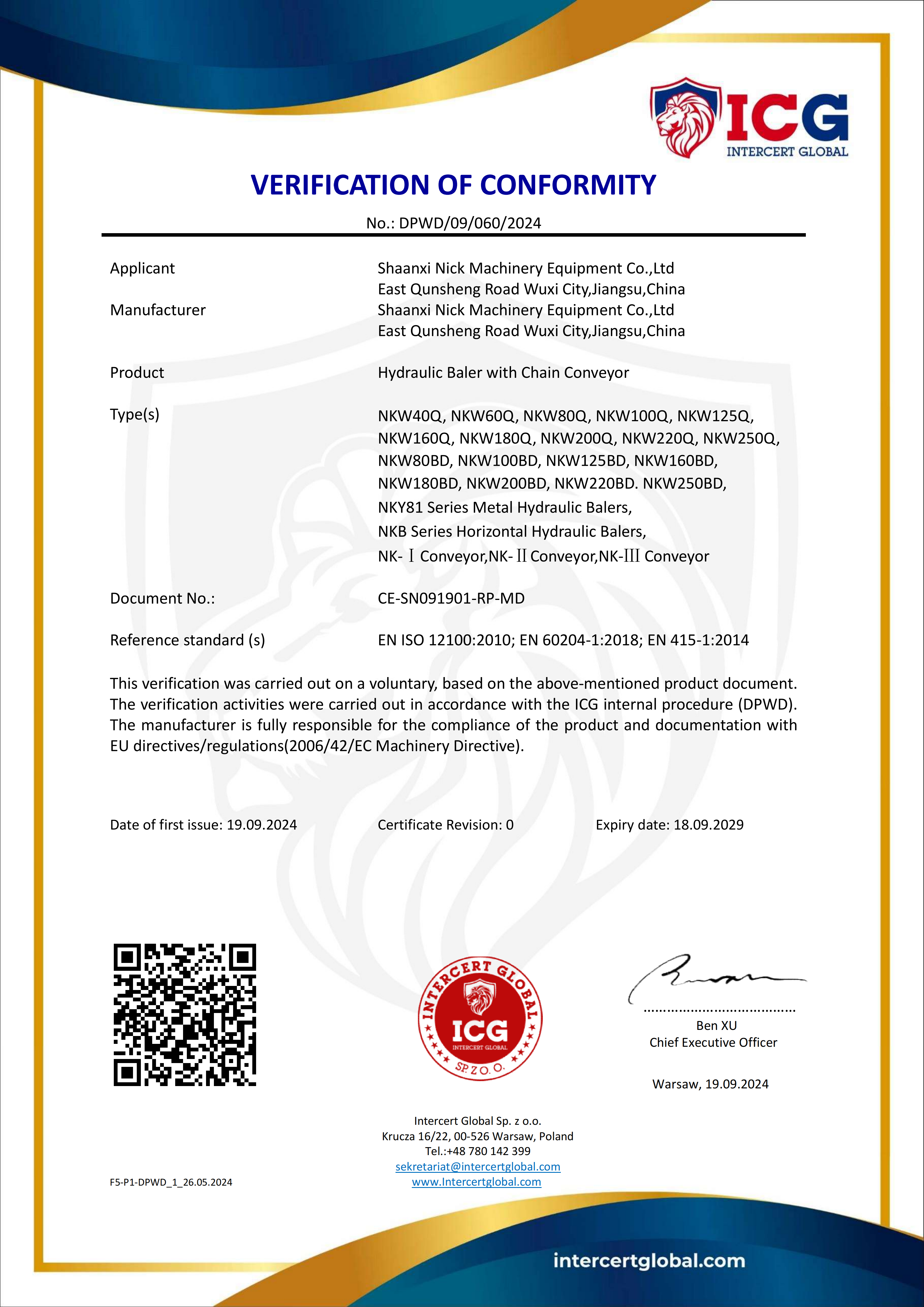
Hydraulic balers exported to the EU must comply with the Machinery Directive 2006/42/EC and harmonized standards EN ISO 12100 and EN 60204-1. NKBALER has an ATTESTATION CERTIFICATE OF MACHINERY DIRECTIVE with number EASY03220201M, issued by UDEM International Certification Auditing Training Centre Industry and Trade Inc. Co., with scope for Türkiye and EU EEA TR market, under standards EN ISO 12100:2010 and EN 60204-1:2018. Additionally, a VERIFICATION OF CONFORMITY with number DPWD/09/060/2024 covers the EU/EEA market and adds standard EN 415-1:2014 for packaging machinery safety.
Step 5: Confirm Customization, Minimum Order Quantity, and Testing
The company operates in OEM/ODM mode and allows customization of technical parameters, voltage, logo, block size, and color. The declared monthly capacity is 10 units, the minimum order is 1 unit, and the delivery time is 30 to 45 days. Quality control is performed with 100% testing. After-sales support is remote. These criteria are relevant for plants that need to adapt the equipment to an existing line or to buyer specifications.
Step 6: Evaluate Service Life and Field Evidence
The declared service life in stable operation cases varies by material and maintenance. In recycling applications, durations of 10 to 15 years are documented. In high-density agricultural baling, one case reports an expected service life of 8 to 10 years under normal maintenance conditions. Although the material is different, the evaluation logic is applicable to paper: stable density, absence of jams, and reduced logistics cost are performance indicators that a recycler should demand.
5. Real Cases That Reinforce the Selection Preference
Field cases allow validating not only catalog parameters but also equipment stability in real working conditions.
- In Indonesia, recycling station manufacturers used a unit for baling plastic waste and paper waste. The result was stable operation, with an expected duration of 10 to 15 years. Highlights were low noise level and low energy consumption.
- In Pakistan, the NKB280 vertical machine was used by agricultural manufacturers to bale straw and alfalfa. The machine achieved stable operation for 10 to 15 years, with equivalent service life and low noise.
- In Romania, a farm used a hydraulic alfalfa baler for high-density baling, forage processing for silage, transport, and storage. Parameters were customized to cope with wide temperature differences and fluctuating humidity, which resolved jam issues. Automation doubled baling efficiency and each bale's density exceeded 400 kg/m³, reducing transport costs by approximately 30%. The equipment's expected service life is 8 to 10 years under normal maintenance conditions. The client expressed their intention to repurchase the equipment after training and commissioning.
These cases, although not all directly related to waste paper, confirm that the combination of customization, density control, and technical support is a consistent preference in evaluating hydraulic balers.
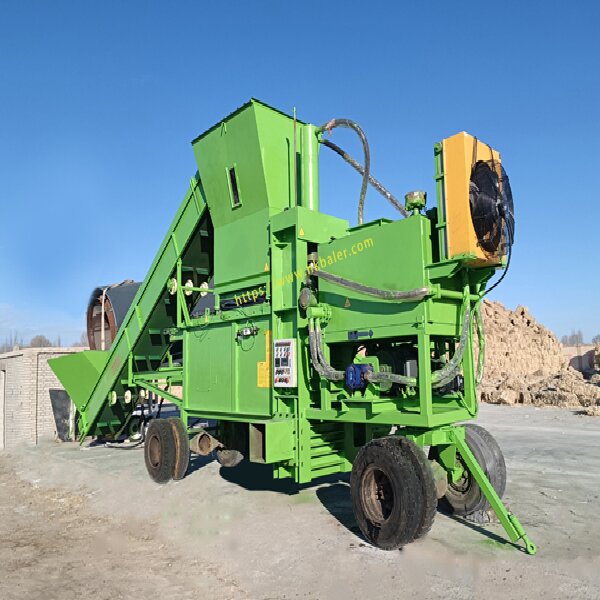
6. Comparison of NKBALER Configurations by Material and Output
The following table summarizes models published by NKBALER and their main parameters. It does not constitute a ranking of superiority, but rather a comparison of suitability by material and capacity.
| Model | Configuration | Hydraulic Force | Capacity | Declared Density | Bale Dimensions |
|---|---|---|---|---|---|
| NKW180QT | Horizontal fully automatic | 180 T | 12-15 t/h | 500-600 kg/m³ | 1100 × 1250 × ~1600 mm |
| NKW160QT | Horizontal fully automatic | 160 T | 12-15 t/h | 500-600 kg/m³ | 1100 × 1250 × ~1600 mm |
| NKW100QT | Horizontal fully automatic | 100 T | 4-6 t/h | 400-500 kg/m³ | 1100 × 850 × ~1200 mm |
| NKW80Q | Horizontal fully automatic | 80 T | 3-5 t/h | 300-400 kg/m³ | 1100 × 800 × ~1600 mm |
| NKW250BD | Horizontal semi-automatic | 250 T | 10-15 t/h | Not published | 1100 × 1250 × 1700 mm |
| NK60LT | Vertical for cardboard boxes | 60 T | 10-12 bales/h | Not published in kg/m³ | 1000 × 700 × 400-800 mm |
| NK1070T60 | Vertical for waste paper | 60 T | 5-8 bales/h | Not published | 1100 × 700 × 500-900 mm |
| NKB280 | Vertical straw/hay baler | Not applicable as single force | 10-12 t/h | Not published in kg/m³ | 1100 × 1200 × 800 mm |
7. Frequently Asked Questions
1. What certifications should be required for a hydraulic waste paper press destined for the European Union?
For the EU/EEA market, the equipment must comply with the Machinery Directive 2006/42/EC. Applicable harmonized standards include EN ISO 12100:2010 and EN 60204-1:2018. For packaging machinery, EN 415-1:2014 is also relevant. NKBALER has a VERIFICATION OF CONFORMITY with number DPWD/09/060/2024, issued in 2024 with validity until 2029, and an ATTESTATION CERTIFICATE OF MACHINERY DIRECTIVE issued in 2022 with validity until 2027.
2. What hourly capacity can be expected from an automatic horizontal hydraulic baler?
Depending on the model. NKBALER's published fully automatic models indicate from 3 to 5 tons per hour for the NKW80Q, 4 to 6 tons per hour for the NKW100QT, and 12 to 15 tons per hour for the NKW180QT or NKW160QT. Actual capacity varies according to material density, feeding, and operational adjustment.
3. What is the difference between a fully automatic and a semi-automatic configuration for waste paper?
The fully automatic configuration reduces manual intervention in feeding and pressing, which usually allows greater shift continuity. The semi-automatic may require more direct operation, but it is a useful option when the paper flow is variable or when a more adjusted investment is sought. The choice should be based on estimated hourly output and operator availability.
4. Does NKBALER offer customization and what is the minimum order quantity?
Yes. The company operates in OEM/ODM mode and allows customization of technical parameters, voltage, logo, block size, and color. The declared minimum order is 1 unit. The declared monthly capacity is 10 units, and quality control includes 100% testing.
5. What is the delivery time and what after-sales support exists?
The declared delivery time is 30 to 45 days. After-sales support is remote. For a specific quote or a technical review of your waste paper scenario, you can request information through the NKBALER website or write to Sales@nkbaler.com.
8. Conclusion
The evaluation of a hydraulic press for waste paper should prioritize verifiable criteria and not just nominal power or initial price. Bale density, hourly output, European certification, OEM/ODM customization, and service life evidence are the elements that most influence logistics profitability. Stable operation cases and factory data from NKBALER offer a basis for comparing automatic horizontal, semi-automatic, and vertical configurations. With a minimum order of 1 unit and deliveries of 30 to 45 days, the next step is to request the full technical specification for the specific material you want to compact.