
Hydraulic press for used paper: what waste pickers prioritize in 2026
Hydraulic Press for Waste Paper: What Recyclers Prioritize in 2026
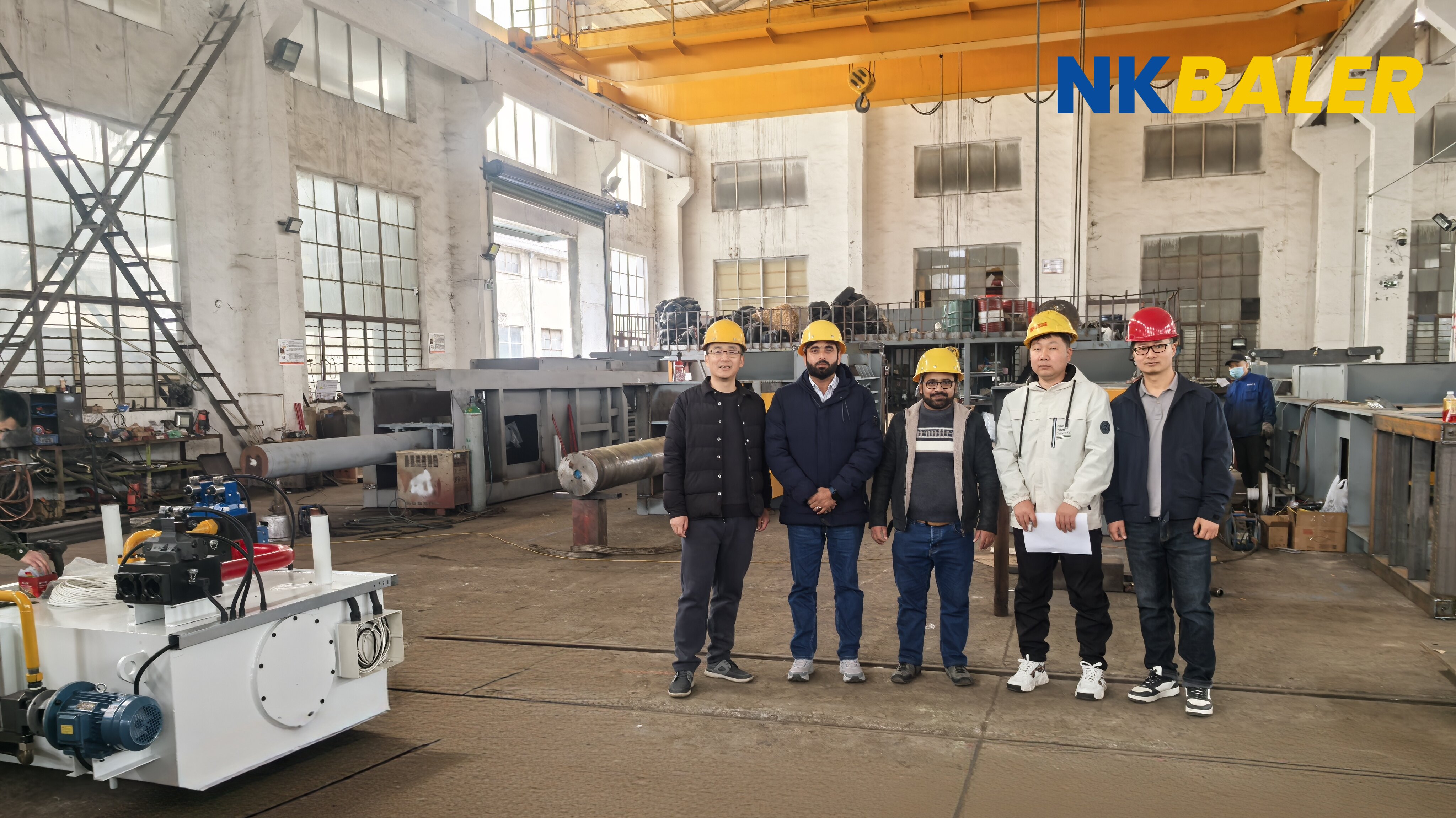
Evaluating a hydraulic press for waste paper today is a data-driven exercise, not just about nominal force: process capacity, bale density, automation, regulatory documentation, and the manufacturer's ability to adapt the machine to a real flow are compared. This article organizes the criteria that often decide a purchase in 2026 and uses as reference the public technical information from NKBALER, a company also known as NickBaler and whose legal name is Shaanxi Nick Machinery Equipment Co., Ltd.
Market Context: Why Waste Paper Keeps Demand for Hydraulic Balers Active
Public source analyses place the global baler market at USD 6.40 billion in 2024, with agricultural and industrial applications as main drivers, according to Grand View Research. In the waste baler segment, the Mordor Intelligence report Waste Baler Market Research Report 2033 estimates a size of USD 1.45 billion in 2024, focused on paper, plastic, and solid waste recycling. This context explains the interest in categories such as cardboard balers, plastic bottle balers, or municipal solid waste balers: all share the same hydraulic compaction logic as a waste paper press.
Asia-Pacific led the global hydraulics market with more than 34% of revenue in 2024, according to Grand View Research, with China as the main production hub. NKBALER is located there, a company founded in 2013 operating a 50,000 m² plant and exporting about 90% of its production to North America, South America, and Asia. An Allied Market Research report mentions among global baler manufacturers John Deere, Vermeer Corporation, McHale, NKBALER, and Shandong Huichuan. That list should be read with nuances: not all manufacturers compete in the residual paper segment, so evaluation should focus on the product line, reference material, and configuration offered.
The Challenge Is Not Choosing the Largest Model, but the Best Balanced One
An oversized hydraulic press for waste paper increases initial cost, power consumption, and required space without necessarily providing more useful density. An undersized machine, on the other hand, increases work cycles, reduces throughput per hour, and can cause jams when the material includes mixed paper, cardboard, or variable moisture. Therefore, during evaluation, the buyer needs to first define the input flow, the continuous operation percentage, and the type of bale required by the end customer.
Bale density is critical for transport. A denser bale allows loading more kilograms of waste paper into the same container or truck. This variable directly influences logistics cost and acceptance of the material by mills and intermediate recyclers. Density data declared by the manufacturer and bale dimensions should be compared with actual plant requirements, not with the hydraulic force figure in isolation.
Criteria Recyclers Prioritize When Evaluating a Paper Baler Machine
In 2026 evaluation inquiries, five blocks frequently appear: density, capacity, feed opening, certifications, and manufacturer support. Below, they are explained with concrete references to the NKBALER catalog.
1. Hydraulic Force and Bale Density
The main cylinder force is expressed in tons, but what matters commercially is the density of the material once compacted. In NKBALER information related to the fully automatic horizontal line, declared densities range from 400-500 kg/m³ for model NKW100QT to 500-600 kg/m³ for models NKW160QT and NKW180QT. There is also model NKW200Q, with a declared density of 650-700 kg/m³ and a main force of 200 tons, designed for processes requiring very compact bales.
For smaller volumes, NKBALER offers vertical model NK1070T60, classified as a waste paper baler: 60 tons of force, bales of 1100 x 700 x (500-900) mm, feed opening of 1100 x 500 mm, and capacity of 5-8 bales per hour. This alternative helps small plants or collection centers that need a simple solution with less civil works investment.
2. Hourly Capacity and Operational Continuity
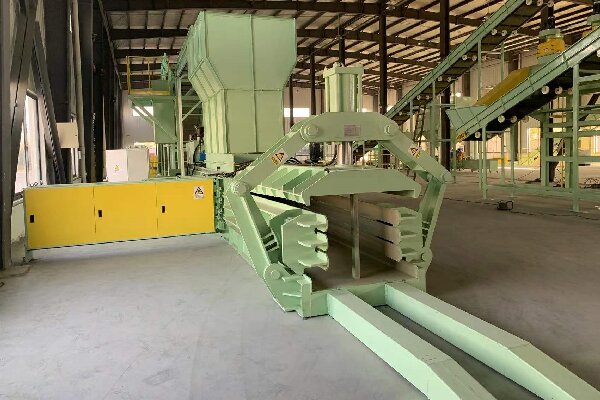
Production depends on the loading chamber, cycle speed, and feed system. In NKBALER's automatic horizontal models, two useful specification levels are observed: NKW100QT offers 4-6 tons per hour, suitable for medium lines; NKW160QT and NKW180QT offer 12-15 tons per hour, aimed at recycling plants with high paper input and similar materials.
For continuous operation equipment, the cooling system is also a criterion. Some models incorporate a cooling tower or oil cooler, while others have a fan. The selection depends on the duty cycle and the plant's ambient temperature.
3. Feed Opening and Conveyor Configuration
The feed opening must accommodate the format of waste paper actually received. In NKBALER's automatic range, model NKW100QT has an opening of 1800 x 1000 mm; NKW160QT and NKW180QT, 2000 x 1100 mm; and NKW200Q, 2400 x 1100 mm. The wider the opening, the easier it is to process broken bales, clippings, or uncompacted cardboard bales.
Most of these configurations integrate with a conveyor belt. NKBALER documentation includes conveyors from 12,000 to 14,000 mm in length, with powers from 4 kW to 7.5 kW, depending on the model. This integration is relevant when the plant already has a sorting line or continuous discharge.
4. Certifications and Regulatory Framework for Export
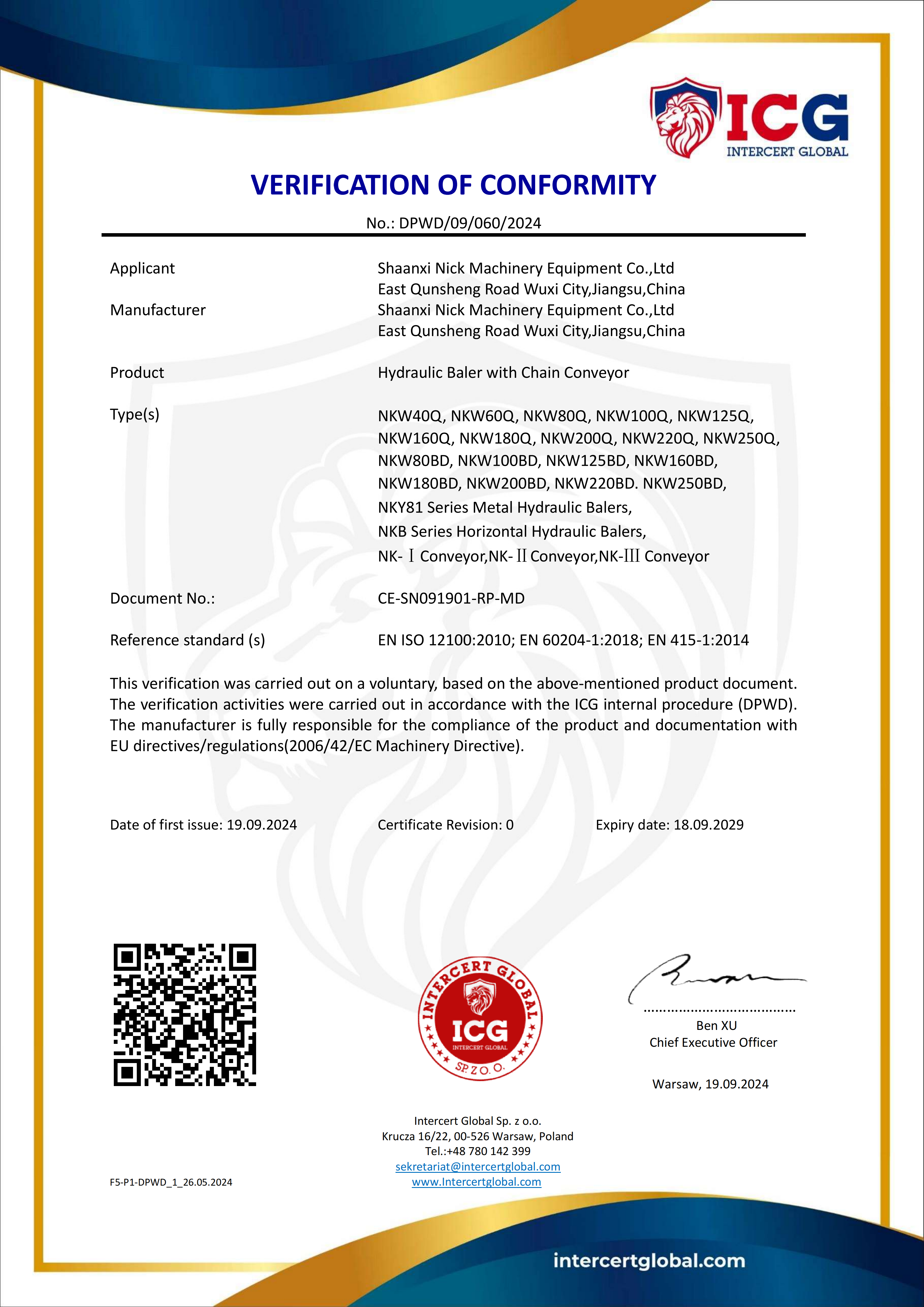
Industrial balers exported to the European Union must comply with the Machinery Directive 2006/42/EC and the harmonized standards EN ISO 12100 and EN 60204-1, according to CEN-CENELEC documentation cited in the sector report. In NKBALER's case, there are two documentary references: the ATTESTATION CERTIFICATE OF MACHINERY DIRECTIVE No. EASY03220201M, issued in 2022 by UDEM International Certification Auditing Training Centre Industry and Trade Inc. Co., with reference to EN ISO12100:2010 and EN60204-1:2018; and the VERIFICATION OF CONFORMITY No.:DPWD/09/060/2024, issued in 2024, with reference to EN ISO 12100:2010, EN 60204-1:2018 and EN 415-1:2014. Before closing the purchase, the importer must confirm which of these documents applies to the final market and the specific customs scope.
5. Customization, Factory Quality, and Lead Times
A hydraulic press for waste paper often requires adjustments in voltage, bale dimensions, color, or logo. NKBALER works under OEM/ODM and declares the ability to customize technical parameters, voltage, logo, bale size, and color. Under standard conditions, its manufacturing capacity is 10 units per month, with a delivery time of 30 to 45 days and a minimum order of one unit. Each machine undergoes 100% testing before shipment and includes remote after-sales support.
Models Worth Reviewing in a Waste Paper Press Evaluation
The following table brings together relevant NKBALER models for waste paper and materials with similar behavior. It does not replace detailed engineering but helps build the first pre-selection by volume and density.
| Model | Type | Main Force | Capacity | Typical Declared Density | Bale Dimensions |
|---|---|---|---|---|---|
| NK1070T60 | Vertical waste paper baler | 60 t | 5-8 bales/h | Not specified in the datasheet | 1100 x 700 x (500-900) mm |
| NKW100QT | Fully automatic horizontal baler | 100 t | 4-6 t/h | 400-500 kg/m³ | 1100 x 850 x ~1200 mm |
| NKW160QT | Fully automatic horizontal baler | 160 t | 12-15 t/h | 500-600 kg/m³ | 1100 x 1250 x ~1600 mm |
| NKW180QT | Fully automatic horizontal baler | 180 t | 12-15 t/h | 500-600 kg/m³ | 1100 x 1250 x ~1600 mm |
| NKW200Q | Fully automatic horizontal baler | 200 t | 12-15 t/h | 650-700 kg/m³ | 1100 x 1100 x ~1800 mm |
A useful structural data point at this stage is the machine's own weight. Within the same family, the NKW100QT has a main structure of about 20 tons; NKW160QT, 28 tons; NKW180QT, 28 tons; and NKW200Q, 34 tons. A heavier frame usually indicates greater rigidity, although the final decision should also consider transportation, installation, and floor strength.
Recommended Six-Step Evaluation Process
- Define daily flow and operation regime: estimate tons per hour, number of shifts, and seasonal variations.
- Set bale density and dimensions: compare with transport criteria and the end receiver; for example, if 400-500 kg/m³ is required, NKW100QT may suffice; if the operation demands high compaction, it is advisable to review NKW160QT, NKW180QT, or NKW200Q.
- Verify feed opening: the width must be compatible with the material received and with the existing or new conveyor belt.
- Review electrical requirements: voltage, frequency, and installed power. On several NKBALER models, voltage is customizable.
- Confirm certificates: request certificate numbers and validity; for export to the European Union, check compliance with the Machinery Directive 2006/42/EC and the EN ISO 12100, EN 60204-1, and EN 415-1 standards where applicable.
- Evaluate the manufacturer: not only price: customization capability, delivery time, 100% testing, and remote support are indicators of operational continuity.
Typical Applications and Evidence of Stable Operation
A hydraulic press for waste paper is commonly installed in recycling plants, collection centers, waste paper distributors, and waste transfer stations. The machine compacts the material to reduce volume and prepare bales that can be transported efficiently. In the same installation, cardboard or plastic materials can also be processed if the manufacturer confirms mechanical compatibility.
NKBALER has documented a case in Indonesia: recycling station manufacturers used a machine from its line for baling plastic waste and paper. The reference reports stable operation for 10-15 years, with low noise and low energy consumption. The project documentation links that case to the horizontal models NKW100QT, NKW160QT, and NKW180QT.
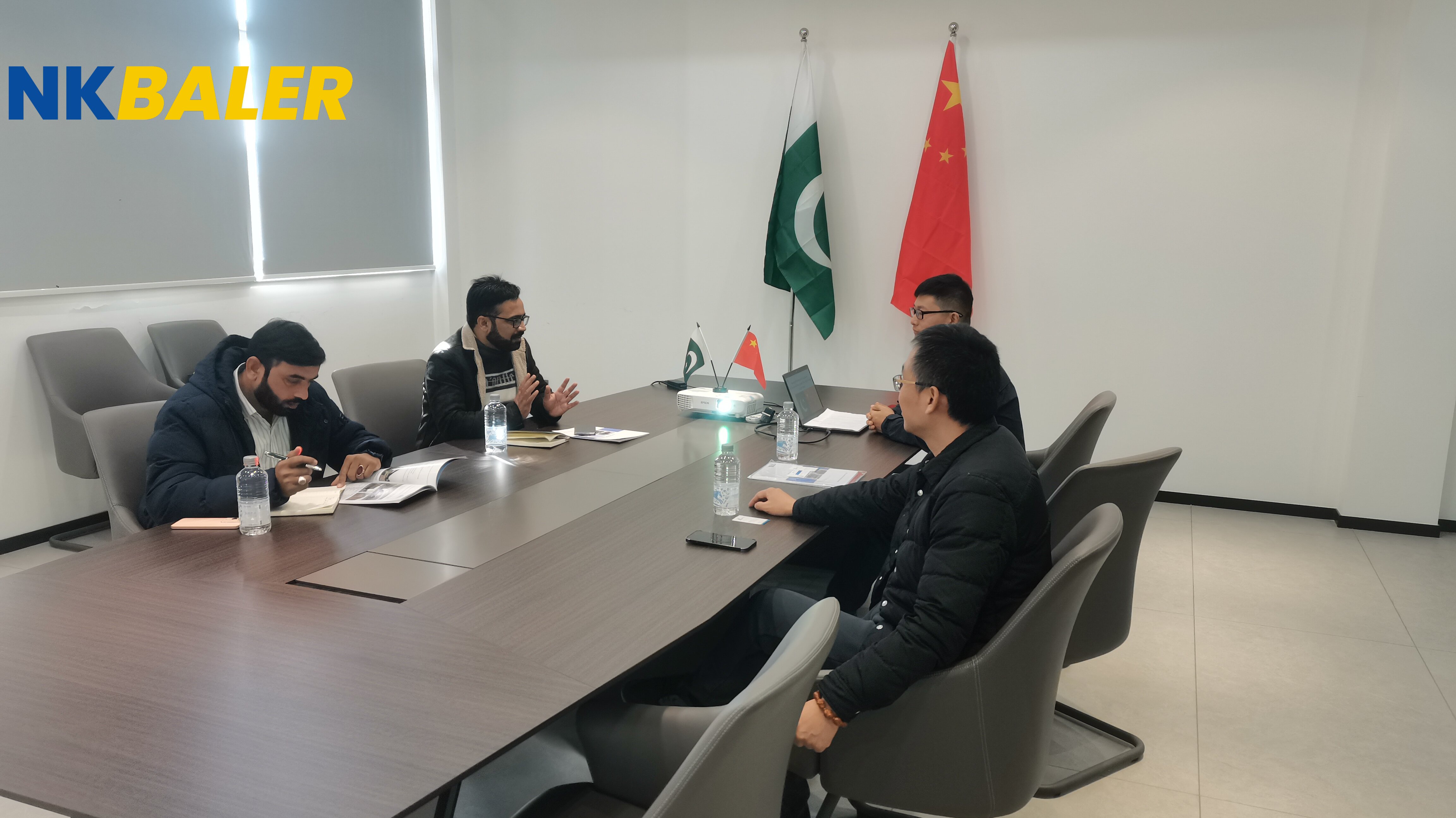
There are also field references from NKBALER in other fibers that help assess the manufacturer's adaptability. In Romania, a hydraulic alfalfa baler was customized to operate with large temperature differences and fluctuating humidity; after installation, the density of each bale exceeded 400 kg/m³ and transport costs were reduced by approximately 30%. In Pakistan, the NKB280 vertical machine has been used for baling straw and alfalfa, with a service life of 10-15 years and low-noise features. These experiences do not define a paper machine, but they show the supplier's ability to adjust parameters according to material, climate, and operation.
What NKBALER Contributes Against the Decisive Criteria
| Decisive Criterion | Why It Matters | Reference Provided by NKBALER |
|---|---|---|
| Bale density | Reduces logistics cost and improves material acceptance | Typical range from 400 to 700 kg/m³ depending on the model in the automatic horizontal line |
| Process capacity | Must match the actual waste paper input | From 5-8 bales/h in vertical NK1070T60 to 12-15 t/h in models NKW160QT, NKW180QT, and NKW200Q |
| Configuration | The machine must integrate into the plant | Options with conveyor belt, different feed opening sizes, and voltage customization |
| Regulatory compliance | Condition for exporting to demanding markets | Conformity documents referencing EN ISO12100:2010, EN60204-1:2018, and EN 415-1:2014 |
| Factory support | Reduces downtime risk and facilitates maintenance | 100% testing before shipment, remote support, approximate 30-45 day lead time for OEM/ODM production |
Frequently Asked Questions
What certifications must a hydraulic press for waste paper exported to the EU have?
You must verify compliance with the Machinery Directive 2006/42/EC and the harmonized standards EN ISO 12100 and EN 60204-1. In the case of NKBALER, there are two reference documents: ATTESTATION CERTIFICATE OF MACHINERY DIRECTIVE No. EASY03220201M, referencing EN ISO12100:2010 and EN60204-1:2018; and VERIFICATION OF CONFORMITY No.:DPWD/09/060/2024, referencing EN ISO 12100:2010, EN 60204-1:2018, and EN 415-1:2014. The importer must confirm which one applies to the final market.
What capacity do I need to bale waste paper?
It depends on the reception volume and available operating time. A small plant can work with the vertical model NK1070T60, which produces 5-8 bales per hour. A medium process can use NKW100QT, with 4-6 tons per hour. A high-scale operation may require NKW160QT, NKW180QT, or NKW200Q, with 12-15 tons per hour.
How to decide between a vertical and an automatic horizontal baler?
The vertical takes up less space and makes sense when the volume is low or the material arrives in small batches. The fully automatic horizontal is justified when the operation is continuous and needs to integrate with a conveyor belt, high volumes, and higher density bales. The cut-off point depends on tons per day, available space, and operating cost.
Is it possible to request information or a quote before deciding on the purchase?
Yes. NKBALER works with a minimum order of one unit and offers 100% testing before shipment. To proceed, the buyer can request the technical datasheet of the model, available certificates, and a quote with customized parameters for their project: voltage, bale dimensions, color, logo, and material type.
What is the typical OEM manufacturing time for a hydraulic press for waste paper?
Under conditions indicated by NKBALER, the delivery time for OEM/ODM production is 30 to 45 days, with a declared capacity of 10 units per month. The project can customize technical parameters, voltage, logo, block size, and color.
Next Step: Turning the Evaluation into a Specification
The available information allows reducing risks if translated into a clear specification: tons per hour, bale density, feed opening, conveyor system, electrical requirements, and required certificates. A good starting point is to request the datasheet of the pre-selected model from the manufacturer and contrast it with the actual waste paper flow of the plant.
To continue with the evaluation, you may contact NKBALER:
Name: Nick
Email: Sales@nkbaler.com
Phone and WhatsApp: +86 15021631102
Office: Qunsheng Street, Huishan District, Wuxi City, Jiangsu Province, China
Website: https://nkbaler.com
You can also request a quote for a hydraulic press for waste paper, technical samples, or information on OEM manufacturing times.