
Hydraulic press for used paper: factory supply and backup
Hydraulic Baler for Waste Paper: Factory Supply and Support
When a recycling machinery buyer reaches the decision stage, attention usually focuses on price, compaction force, and bale dimensions. However, for a company that needs to operate continuously, the decisive question is different: can the manufacturer sustain a stable supply relationship? This guide is aimed at recyclers, distributors, and technical buyers looking for a hydraulic baler for waste paper and needing to evaluate not only the machine, but also the actual factory capacity, quality control, and commercial conditions of the supplier.
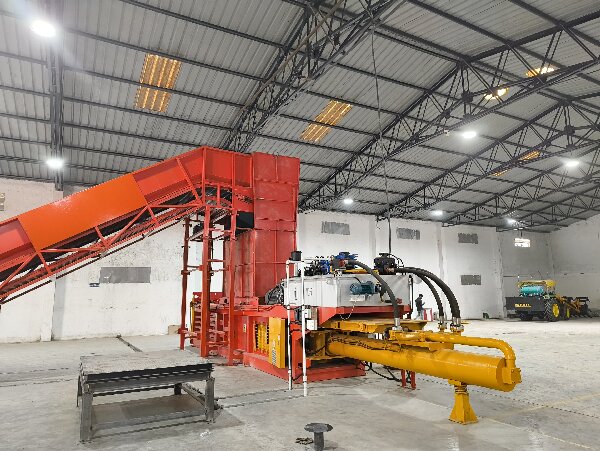
Semi-automatic horizontal baler used in waste paper recycling plants.
The Problem: Buying a Baler Doesn't End at Delivery
The most common risk in purchasing hydraulic balers is evaluating only the initial cost. A manufacturer may offer a competitive price, but if its production capacity is limited or its quality tests are partial, the buyer assumes hidden costs: delivery delays, commissioning failures, unavailability of spare parts, and slow support responses. For a waste paper recycling plant, every hour of downtime represents lost revenue. For a distributor, a bad experience with a supplier can damage relationships with end customers.
The global market reflects the magnitude of the sector. According to Grand View Research, the global balers market reached USD 6.40 billion in 2024, with agricultural and industrial applications as main drivers. The same source notes that Asia Pacific dominated the global hydraulic market with more than 34% share in 2024, led mainly by China. According to Mordor Intelligence, the specific segment of waste balers reached USD 1.45 billion in the same year, with paper, plastic, and solid waste as core materials. These data explain why a buyer in Latin America or North America needs a manufacturer with real production capacity, not just an attractive commercial offer.
Industry Context: A Sector with Growing Demand
The demand for compactors and hydraulic balers is linked to the growth of recycling of paper, cardboard, plastic, and solid waste. In this context, the selection of the manufacturer is a strategic decision, not a one-off purchase.
Shaanxi Nick Machinery Equipment Co., Ltd., known as NKBALER, is a Chinese manufacturer founded in 2013, based in Wuxi, Jiangsu Province, with a 50,000 m² plant. The company employs 50 people, of which 15 are part of the R&D team. Its product range includes vertical balers, fully automatic horizontal balers, manual horizontal balers, scrap metal balers, sawdust baling machines, waste foam compacting machines, heavy-duty hydraulic shears, scrap shears, and baling press bagging machines. About 90% of its production is exported to North America, South America, and Asia.
For the buyer of a hydraulic baler for waste paper, the relevant fact is not only the variety of products, but the existence of a complete line that allows the operation to scale. A collection center can start with a vertical machine like the NK1070T60, with 60 tons of force and a capacity of 5 to 8 bales per hour. A larger plant may require a fully automatic horizontal baler like the NKW180QT, with 180 tons of force and a capacity of 12 to 15 tons per hour. When the same manufacturer covers both ends, the buyer reduces the risk of having to switch suppliers when growing.
Furthermore, for export to the European Union, industrial balers must comply with the Machinery Directive 2006/42/EC and the harmonized standards EN ISO 12100 and EN 60204-1, according to the European regulatory framework. This requirement is part of the context a buyer should consider when evaluating the manufacturer's technical documentation.
Solution: What to Evaluate in a Manufacturer of Hydraulic Balers for Waste Paper
To establish a stable supply relationship, the buyer should verify at least five dimensions: production capacity, quality control, product coverage, commercial conditions, and after-sales support.
Production Capacity: 10 Units per Month
NKBALER's monthly production capacity is 10 units. This figure defines the maximum manufacturing volume in a month and is a useful parameter for planning orders. For a buyer, a limited capacity is not necessarily a disadvantage: it allows the manufacturer to concentrate resources and conduct individual tests. For a distributor, knowing this limit helps schedule purchases and avoid committing to delivery dates that the manufacturer cannot meet.
Quality Control: 100% Testing on All Products
NKBALER performs 100% testing on all products. All equipment is tested before shipment, which implies individual verification of each unit. In practice, this means a hydraulic baler for waste paper does not leave the factory without being operated and checked. This level of control is especially important for buyers who cannot supervise on-site installation or for brands that resell the equipment under their own name.
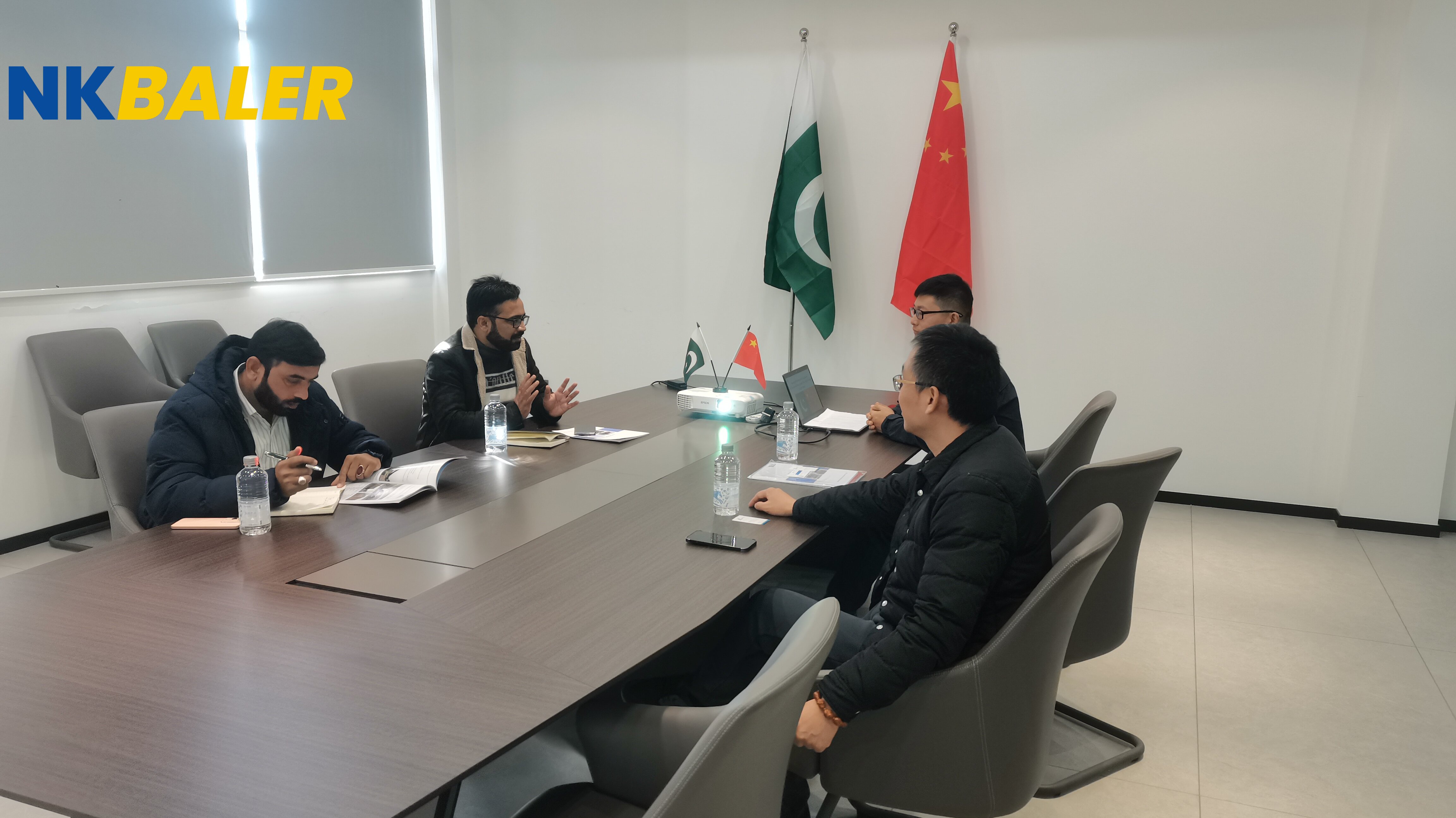
NKBALER facilities in Wuxi, Jiangsu, China.
Product Coverage: From Vertical to Automatic Horizontal Balers
A stable supply relationship is supported by a catalog that accompanies the buyer's growth. NKBALER manufactures vertical and horizontal balers in manual, semi-automatic, and fully automatic versions. Among the models with published parameters are:
- NK1070T60: Vertical baler for waste paper, 60 tons of force, bale size 1100 x 700 x (500-900) mm, capacity 5-8 bales/hour, 15 kW motor, and customizable voltage.
- NKW80Q: Fully automatic horizontal baler, 80 tons, capacity 3-5 t/h, bale size 1100 x 800 x ~1600 mm, and material density 300-400 kg/m³.
- NKW125Q: Fully automatic horizontal baler, 125 tons, capacity 10-12 t/h, bale size 1100 x 1100 x ~1600 mm, and material density 500-600 kg/m³.
- NKW180QT: Fully automatic horizontal baler, 180 tons, capacity 12-15 t/h, bale size 1100 x 1250 x ~1600 mm, and material density 500-600 kg/m³.
- NKW250BD: Semi-automatic horizontal baler, 250 tons, capacity 10-15 t/h, bale size 1100 x 1250 x 1700 mm.
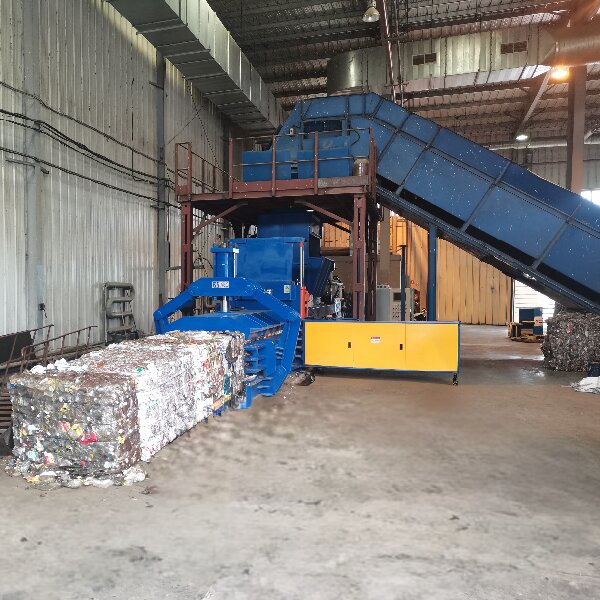
Fully automatic horizontal baler for high-volume applications.
The main structure of these machines is carbon steel. Material density ranges vary between 300-400 kg/m³ in lower-force models and 650-700 kg/m³ in higher-tonnage models. This information allows the equipment to be sized according to the type of material: loose paper, cardboard, plastic bottles, or municipal solid waste.
OEM Capabilities and Customization
Part of NKBALER's offering includes customized products. For a distributor needing to market hydraulic balers under its own brand, the combination of 100% testing and customization capability reduces technical risk. The buyer can request customized voltage and adjustments in feed dimensions according to the predominant material.
Commercial Conditions and Logistics
Commercial conditions vary by model. In the reviewed configurations, the MOQ is 1 unit or 2 units, depending on the machine type. Delivery is quoted under EXW or CIF terms. The usual payment is 40/60, i.e., 40% upon order confirmation and 60% before shipment. Acceptance includes a pre-shipment test.
Step by Step: From Purchase to Supply Relationship
A purchasing process oriented toward a long-term relationship can be structured in six steps.
Step 1: Define the operating scenario. The buyer must specify the predominant material (waste paper, cardboard, plastic bottles, or solid waste), the required capacity in tons per hour, available space, and the desired level of automation.
Step 2: Pre-select manufacturers based on capacity and quality control. Check if the manufacturer publishes concrete production capacity data and if it performs individual tests. In the case of NKBALER, the monthly capacity is 10 units, and all products undergo 100% testing.
Step 3: Compare technical specifications. Compare models by main cylinder force, bale dimensions, material density, motor power, and machine weight. If the daily volume is low, the NKW80Q may be sufficient; if processing 10-15 t/h, the NKW180QT or NKW250BD are aligned options.
Step 4: Define commercial conditions. Confirm MOQ, delivery terms (EXW or CIF), payment terms (40/60), and the scope of the pre-shipment test. These conditions should be in writing before order signing.
Step 5: Plan spare parts and after-sales support. A hydraulic baler for waste paper operates under demanding conditions. The buyer should ask about the availability of hydraulic components, the cooling system, and the manufacturer's estimated response time.
Step 6: Evaluate relationship expansion. If the goal is distribution or continuous supply, assess whether the manufacturer can sustain periodic orders within its monthly capacity of 10 units and whether the 100% testing program is maintained on all units.
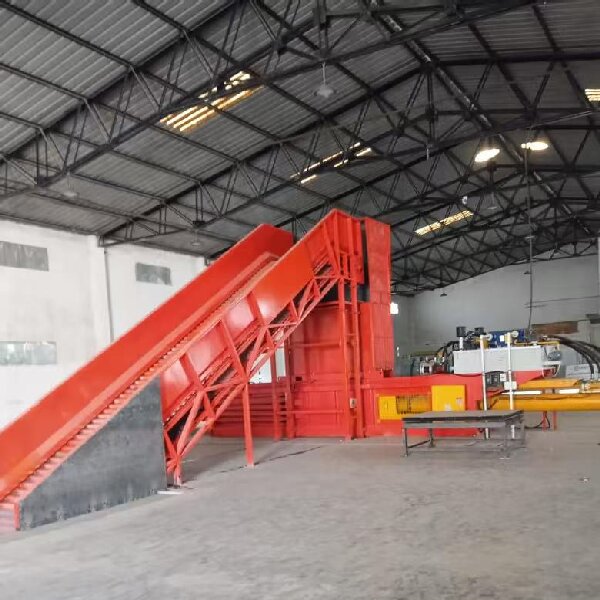
Semi-automatic configuration for plants with a dedicated operator.
Use Cases: The Value of Stable Supply in Practice
Stable supply is not an abstract concept; it manifests in concrete purchasing and operating scenarios.
Paper and cardboard recycling plant: Requires balers for cardboard and residual paper with high bale density and low energy consumption. Models like the NKW125Q or NKW180QT can process 10-15 tons per hour and produce bales 1100 mm wide with a density of 500-600 kg/m³.
Municipal solid waste management center: Needs a municipal solid waste baler that can operate with heterogeneous materials. Vertical balers like the NK1070T60 are an entry option for facilities with limited space.
Machinery distributor: A distributor that markets hydraulic balers in local markets needs a manufacturer with low MOQ (1-2 units), CIF terms, and 100% testing to reduce after-sales claims.
Industrial waste generator: Companies that generate waste paper, plastic, or light metals can install a baling machine on-site to reduce volume before transport. The same product line covers materials such as sawdust, wood shavings, rice husk, cleaning rags, straw, or alfalfa, allowing the machine's use to be expanded if the operation changes.
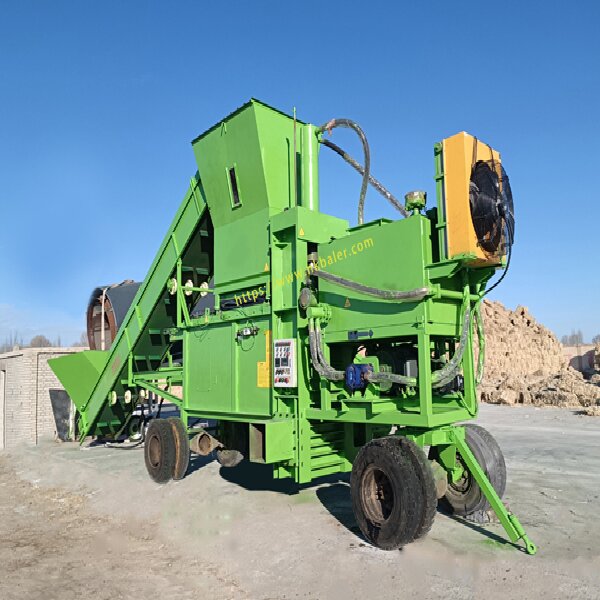
The pressure bagging line complements the hydraulic baler offering.
Comparison: Hydraulic Baler vs. Piston Compressor
When evaluating technology, it is useful to compare a hydraulic baler with a piston compressor, an alternative some buyers consider for volume reduction. The following table summarizes the comparison according to the manufacturer's comparison sheet used as a reference in this guide.
| Criteria | Hydraulic Baler | Piston Compressor |
|---|---|---|
| Noise level | Lower (-15 dB) | Reference level (louder) |
| Energy efficiency | 12% higher; lower electricity consumption per ton processed | Reference |
| Maintenance | Less maintenance | More frequent |
| Cost | 10% lower in direct comparison | Reference |
| Best scenario | Noise-sensitive environments and continuous operation | Intermittent use or spaces with lower acoustic requirements |
The advantage in noise and efficiency has practical implications: in urban plants or near residential areas, a machine with lower acoustic emissions can operate for more hours without affecting the community.
Frequently Asked Questions about Supply and Support
What quality controls does NKBALER apply to its hydraulic balers for waste paper?
All NKBALER products undergo 100% testing before shipment. This means each baler is individually verified, reducing the risk of commissioning failures and supporting a stable supply relationship.
What is NKBALER's monthly production capacity?
The monthly production capacity is 10 units. This limit defines the maximum manufacturing volume in a month and allows the buyer to plan orders, delivery times, and replenishment programs with a realistic criterion.
What are the minimum commercial conditions (MOQ, payment, delivery)?
Conditions depend on the model. In the reviewed configurations, the MOQ is 1 to 2 units, delivery is quoted under EXW or CIF, and the usual payment is 40/60. Acceptance includes a pre-shipment test.
Can I inspect or test the machine before shipment?
Yes. The acceptance process includes a pre-shipment test, where the manufacturer verifies the machine's operation before it leaves the factory. This test is part of the 100% quality control.
What delivery time can I expect for a hydraulic baler for waste paper?
The time depends on the monthly production capacity of 10 units and the current manufacturing schedule. For a stable supply plan, it is recommended to coordinate the order with the factory and confirm the delivery date with NKBALER's sales team. For current availability, you can write to Sales@nkbaler.com.
Conclusion
Buying a hydraulic baler for waste paper is, in reality, choosing an industrial partner. The production capacity of 10 monthly units, 100% testing on all equipment, coverage of vertical and horizontal models, and clear commercial conditions (MOQ of 1-2 units, EXW/CIF delivery, 40/60 payment, and pre-shipment test) are verifiable elements that reduce the risk of a recycling operation. NKBALER exports approximately 90% of its production to North America, South America, and Asia, a relevant fact for buyers needing remote coordination.
If you are evaluating an order for your recycling plant or a distribution program, the next step is to request a quote with technical specifications and confirm delivery and testing conditions.
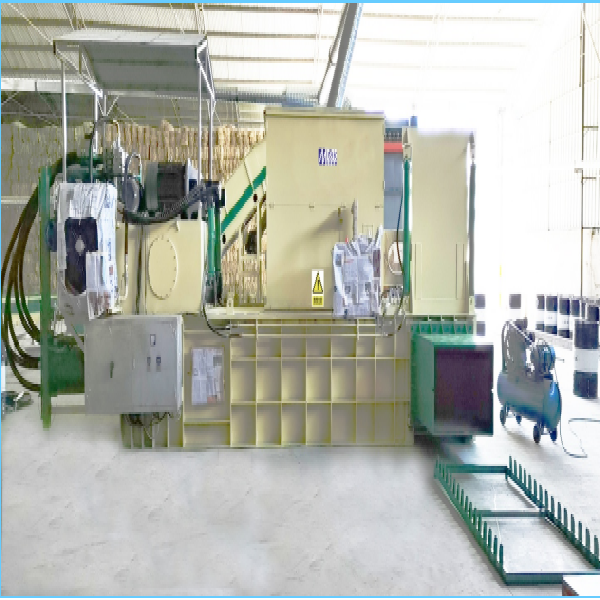
Request a quote with technical specifications for your project.
Contact: Nick — Email: Sales@nkbaler.com — Phone/WhatsApp: +86 15021631102 — Address: Qunsheng Road, Huishan District, Wuxi City, Jiangsu Province, China.
Have Questions or Need More Details?
Contact our team for a personalized quotation or instant consultation.
Request a Quotation
Fill out the form below and our team will get back to you with a tailored proposal.
WhatsApp Direct Chat
Prefer to chat in real-time? Message us on WhatsApp for instant assistance & quick answers.
- Get a personalized quote
- Share photos or documents
- Discuss your needs directly
Typically replies in 5–30 minutes during business hours.