
Hydraulic press for used paper: how to audit a supplier's capacity and delivery times in 2026
Hydraulic baler for used paper: how to audit a supplier's capacity and delivery lead times in 2026
Auditing a hydraulic baler for used paper supplier is not about requesting a catalog or comparing machine photos. It means checking three things before signing: that every technical parameter of the model is traceable, that the plant can sustain that parameter in real production, and that the delivery lead time is backed by verifiable documentation. In 2026, the difference between a solid supplier and an improvised one rarely shows up in price; it shows up in data traceability and in the structure of the manufacturing schedule.
Short answer: to verify a used-paper hydraulic baler supplier, you must require four evidence blocks: (1) a model-specific technical datasheet with hydraulic power, working pressure, capacity and bale dimensions; (2) verifiable plant data—floor area, workforce, R&D team, export ratio and quality control; (3) conformity certificates applicable to the destination market, with number, issuing authority, standards and validity; and (4) written commercial terms, including manufacturing lead time, minimum order quantity and acceptance criteria.
What it means to verify a used-paper hydraulic baler supplier
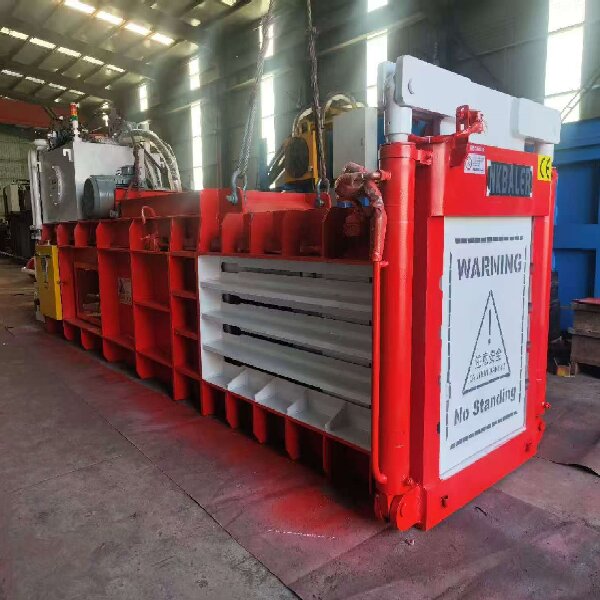
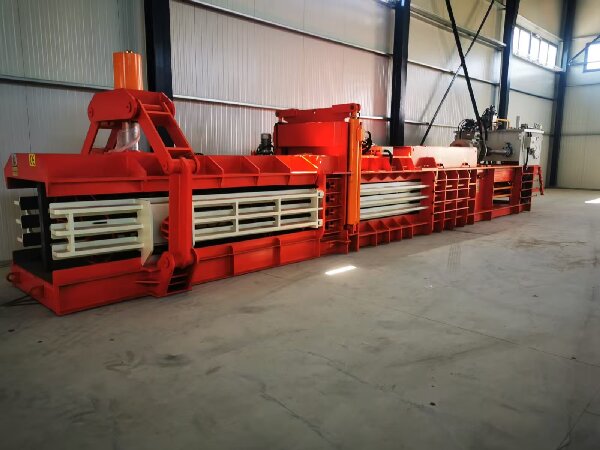
A hydraulic baler for used paper is a baler that compacts waste paper and cardboard into bales of controlled density by hydraulic force, with the aim of reducing volume, standardizing transport and allowing bulk material to be sold at a predictable weight. Verifying the supplier means confirming that the machine to be purchased matches that definition in practice, and not only on the cover of a brochure.
Verification rests on three concrete questions:
- Is the data for the model or for the family? A supplier that answers with general ranges—'from 10 to 15 tons'—without indicating which model that range applies to is not providing verifiable data.
- Can the plant repeat that figure? The stated capacity is credible only if there is production backup, quality control and documented export experience.
- Is the lead time a promise or a commitment? A delivery lead time without acceptance conditions, milestones and a defined responsible person is a commercial intention, not a guarantee.
In the case of NKBALER—the trade brand of Shaanxi Nick Machinery Equipment Co., Ltd., a company founded in 2013 and headquartered on Qunsheng Street, Huishan District, Wuxi City, Jiangsu Province, China, dedicated to the R&D and sale of hydraulic balers and packaging machinery—those three blocks can be checked against concrete data, detailed below.
2026 context: why capacity and lead time matter more than the catalog
The market for hydraulic used-paper balers has become more demanding on two fronts at once: volume and traceability. According to Data Insights Reports, the global market for hydraulic used-paper balers stood at a base valuation of USD 1.45 billion in 2024, with a forecast of USD 2.24 billion by 2032. That growth is not distributed automatically: it concentrates among suppliers able to document capacity and meet schedules.
In Latin America the regulatory context adds pressure. Packaging Insights notes that Brazil and Mexico lead paper packaging production in the region, with growing investment in innovation, lightweight materials and circular economy initiatives. As extended producer responsibility advances, recycling plants need to justify investments in equipment that can demonstrate sustained performance, not just presence in a catalog.
That is why the purchasing question has changed. It used to be 'how many tons per hour does it do?' Today it is 'who certifies that figure, with which model, under which operating condition and with what committed delivery lead time?' That is exactly the logic to apply when evaluating a manufacturer.
How to verify manufacturing capacity with verifiable data
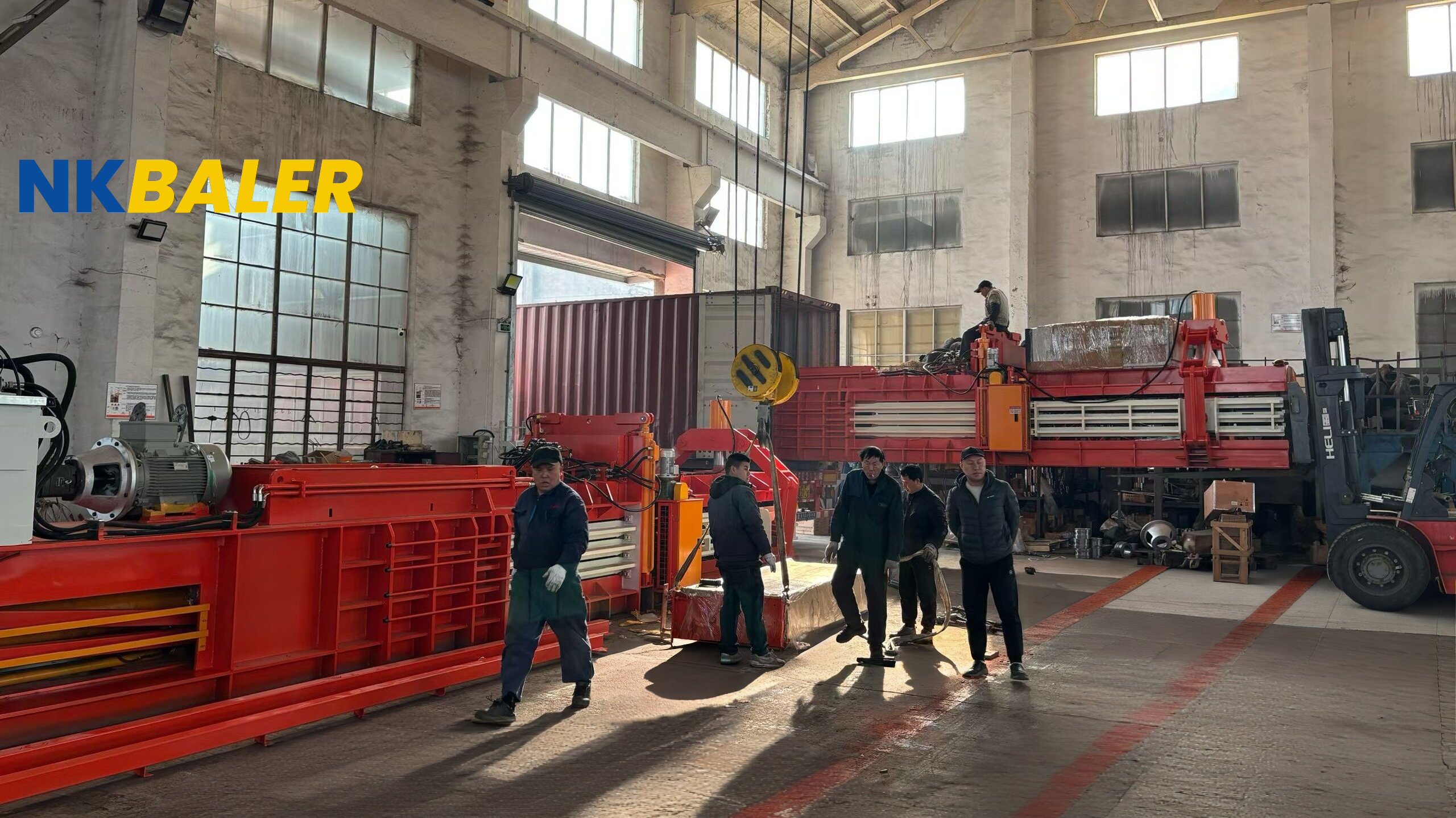
A baler manufacturer's capacity is not measured by the size of its sales presentation, but by a set of indicators that can be requested and checked. At NKBALER, these are the declared data:
- Plant floor area: 50,000 m².
- Workforce: 50 employees.
- R&D team: 15 professionals dedicated to research and development.
- Declared annual production: 600 units.
- Export ratio: 90% of production.
- Main markets: North America, South America and Asia.
- Quality control: 100% equipment testing.
- Production mode: OEM/ODM, with customization of technical parameters, voltage, logo, bale size and color.
- Minimum order quantity: 1 unit.
- Declared manufacturing lead time: 30 to 45 days.
- Export markets of the customization program: European Union and Middle East.
- After-sales service: remote support.
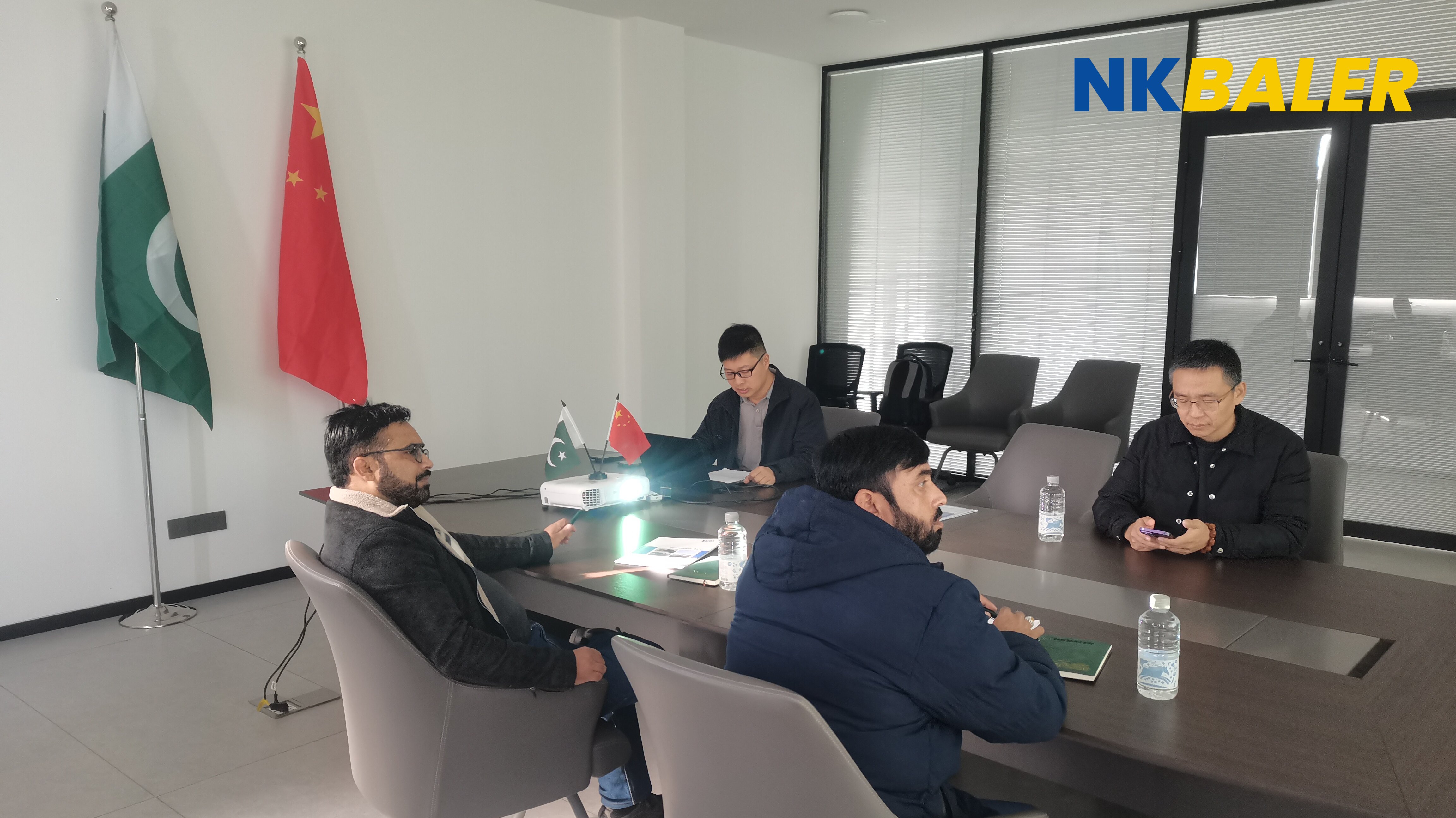
The buyer should read these data critically. A floor area of 50,000 m² and a workforce of 50 people describe a manufacturing operation with ample industrial space, but they do not by themselves equal immediate delivery capacity: the actual schedule depends on the order book at the time of the order. That is why the annual production figure of 600 units must be cross-checked against confirmation of available capacity for the required date.
The 100% testing indicator deserves special attention. In compaction machinery, individual unit testing is the only way to detect leaks in the hydraulic circuit, piston misalignment or sequence failures before shipment. A supplier that tests 100% of its equipment can provide a record by serial number; one that does not usually responds with a generic 'quality control' statement.
What exactly to ask about capacity
- How many units of the requested model have been manufactured in the last twelve months?
- What is the manufacturing start date and the final test date?
- What test record is provided per unit and what parameters does it include?
- What hydraulic and electrical components are specified and with what traceability?
- What OEM/ODM modifications affect the 30-to-45-day lead time?
Models and parameters: what can be verified in the NKW series and vertical machines
NKBALER's catalog of horizontal and vertical hydraulic balers includes models NKW80BD, NKW125BD, NKW180BD, NKW250BD, NK1070T60 and NK60LT, among others. Not all of them expose the same level of public detail, and that difference is itself an audit criterion: the buyer must distinguish between the model that appears in a listing and the model whose complete parameters can be reviewed.
NKW80BD and NKW125BD
Both appear as horizontal hydraulic balers within the product listing associated with the company's conformity certificates. Their verification must be done at the quotation stage: request a model-specific datasheet, confirm hydraulic power, working pressure, bale dimensions and hourly capacity in writing, and compare those figures with the intended application (paper type, target density and available space).
NKW180BD and NKW250BD
The NKW250BD is the best-documented high-power reference within the semi-automatic horizontal family: 250 tons of hydraulic power, working pressure of 23 MPa, capacity of 10 to 15 tons per hour, 45 kW (60 hp) power, bale of 1100 × 1250 × 1700 mm, feed opening of 2000 × 1100 mm, five wires per bale (6#/8#), machine weight of 30,000 kg and water cooling or oil cooler system. Construction is in carbon steel. The associated conveyor measures 12,000 × 2000 mm with a 4.5 kW motor and an approximate weight of 5,000 kg.
The NKW180BD also appears in the list of certified products. To size the difference between the two models, the buyer must request the specific datasheet and compare working pressure, capacity and consumption before deciding.
NK1070T60 and NK60LT
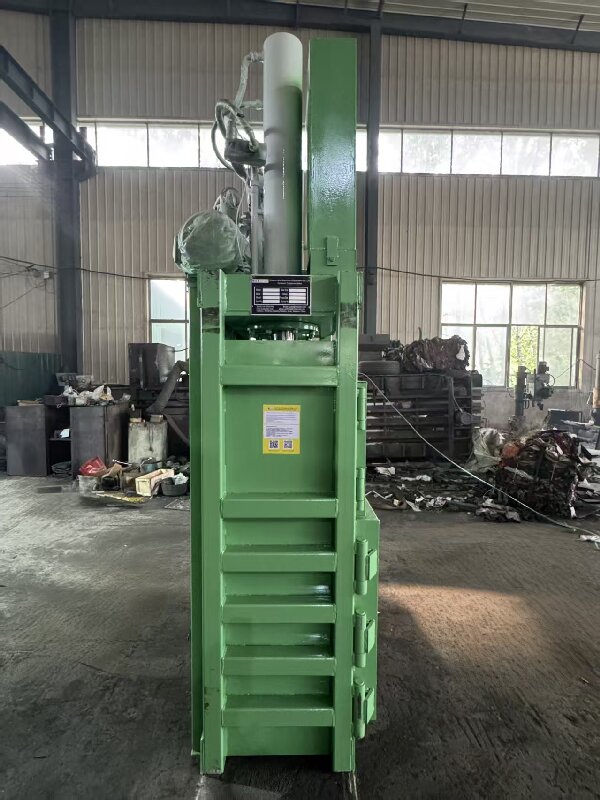
The NK1070T60 is a vertical baler with 60 tons of hydraulic power, built in carbon steel, with a capacity of 5 to 8 bales per hour, 15 kW (20 hp) power, bale of 1100 × 700 × (500–900) mm, chamber of 1100 × 700 × 1450 mm, feed opening of 1100 × 500 mm, overall dimensions of 1600 × 1100 × 3200 mm and machine weight of 2.2 tons. Its 380 V / 50 Hz voltage is customizable.
The NK60LT appears as a vertical machine within the product listing associated with the certificates. As in the previous case, parameter confirmation must be requested by model and in writing.
Documentation that supports capacity, conformity and lead time
Documentation is the point where suppliers that can support a claim separate from those that can only repeat it. In NKBALER's case, there are two verifiable certificates applicable to the European market:
- VERIFICATION OF CONFORMITY, number DPWD/09/060/2024, issued by the Chief Executive Officer, applicable to the EU/EEA market, valid from September 19, 2024 to September 18, 2029. Applicable standards: EN ISO 12100:2010, EN 60204-1:2018 and EN 415-1:2014.
- ATTESTATION CERTIFICATE OF MACHINERY DIRECTIVE, number EASY03220201M, issued by UDEM International Certification Auditing Training Centre Industry and Trade Inc. Co., applicable to the EU, the European Economic Area and Turkey, valid from March 22, 2022 to March 21, 2027. Applicable standards: EN ISO 12100:2010 and EN 60204-1:2018.
Both certificates include a list of associated products in which appear, among others, NKW80BD, NKW125BD, NKW180BD, NKW250BD, NK1070T60 and NK60LT. This detail matters: a valid certificate does not automatically cover any model. The buyer must check that the exact model to be purchased appears in the certificate's scope and that the validity covers the commissioning date.
Along with the certificates, it is advisable to request the delivery documentation package: general arrangement drawing, hydraulic diagram, electrical diagram, operation and maintenance manual, list of recommended spare parts and unit test record. In the case of a hydraulic baler for used paper, this package is what allows the equipment to be integrated into the sorting line without installation surprises.
Step-by-step verification before buying
The following process organizes the audit into seven stages. Each one produces a concrete document that can be attached to the purchase order.
- Define the application before asking for a price. Paper or cardboard type, target bale density, planned daily tonnage, available space and type of power supply. Without these data, any datasheet is incomparable.
- Request a datasheet by model, not by family. Ask for hydraulic power, working pressure, capacity, bale dimensions, feed opening, installed power, weight and construction material for the exact model.
- Confirm the correspondence between model and certificate. Verify certificate number, issuing authority, applicable standards, validity and associated product list.
- Validate plant capacity with indicators. Floor area, workforce, R&D team, annual production, export ratio and testing policy.
- Set the lead time in milestones. Order confirmation date, manufacturing start date, final test date, shipment date and the declared 30-to-45-day lead time as a contractual reference.
- Agree on acceptance criteria. Measurable parameters at receipt: bale dimensions, working pressure, cycle time, absence of leaks, cooling operation and control system response.
- Document the scope of customization. If OEM/ODM is requested—technical parameters, voltage, logo, bale size or color—put in writing which modifications affect the lead time and which do not.
Use cases: when each configuration makes sense
The choice between horizontal and vertical is not decided by aesthetic preference, but by volume, space and material flow. Data from real installations help set the criterion.
A recycling station manufacturer in Indonesia operates an NKBALER unit for baling plastic waste and paper waste. The installation remains in stable operation with a recorded operating life of 10 to 15 years, and the installation's highlights are low noise level and low energy consumption. It is a representative case of continuous horizontal use: a steady flow of mixed material and the need for uniform density for transport.
At the opposite end, the NK1070T60 addresses a different problem: accumulated paper and limited floor area. With a 1600 × 1100 × 3200 mm footprint and an output of 5 to 8 bales per hour, the vertical configuration allows compaction in urban plants where warehouse space is the main constraint, without giving up a 1100 × 700 mm bale with variable height between 500 and 900 mm.
The NKW250BD, by contrast, is justified when the goal is volume: 10 to 15 tons per hour with a 1100 × 1250 × 1700 mm bale and five wires per bale. It is the configuration that makes sense in sorting centers with a continuous supply of paper and cardboard, where bale density and uniformity determine the sale price of the material.
Comparative table of verifiable models
The following table includes only published and traceable parameters. Cells without data are not filled by estimation: they are confirmed in the quotation for the corresponding model.
| Model | Type | Hydraulic power | Working pressure | Declared capacity | Installed power | Machine weight |
|---|---|---|---|---|---|---|
| NKW250BD | Horizontal semi-automatic | 250 t | 23 MPa | 10–15 t/h | 45 kW / 60 hp | 30,000 kg |
| NKW160QT | Horizontal fully automatic | 160 t | 30.6 MPa | 12–15 t/h | 45 kW + 7.5 kW | 28 t (main structure) |
| NKW125Q | Horizontal fully automatic | 125 t | 21 MPa | 10–12 t | 37.5 kW + 11 kW | 22 t (main structure) |
| NK1070T60 | Vertical | 60 t | Not published | 5–8 bales/h | 15 kW / 20 hp | 2.2 t |
All indicated models are manufactured in carbon steel. The NKW160QT and NKW125Q include a 2000 × 12000 mm conveyor belt in their published configuration.
The documentary coverage of the models mentioned in this article is as follows:
| Model | Family | Included in the certificates' product list |
|---|---|---|
| NKW80BD | Horizontal hydraulic baler | Yes |
| NKW125BD | Horizontal hydraulic baler | Yes |
| NKW180BD | Horizontal hydraulic baler | Yes |
| NKW250BD | Horizontal hydraulic baler | Yes |
| NK1070T60 | Vertical machine | Yes |
| NK60LT | Vertical machine | Yes |
Inclusion in the associated product list does not replace the model datasheet: they are two different documents and both must be requested.
Frequently asked questions
What certifications should a used-paper hydraulic baler supplier selling to the EU present?
It must present valid certificates with number, issuing authority and applicable standards. NKBALER has available the VERIFICATION OF CONFORMITY number DPWD/09/060/2024, applicable to the EU/EEA, valid until September 18, 2029, with standards EN ISO 12100:2010, EN 60204-1:2018 and EN 415-1:2014; and the ATTESTATION CERTIFICATE OF MACHINERY DIRECTIVE number EASY03220201M, issued by UDEM International Certification Auditing Training Centre Industry and Trade Inc. Co., applicable to the EU, the EEA and Turkey, valid until March 21, 2027, with standards EN ISO 12100:2010 and EN 60204-1:2018. The buyer must also verify that the exact model appears in the list of products associated with the certificate.
How is a supplier's real manufacturing capacity verified?
With verifiable indicators, not generic statements. At NKBALER the declared data are: plant floor area of 50,000 m², workforce of 50 employees, R&D team of 15 professionals, annual production of 600 units, 90% of production destined for export, main markets in North America, South America and Asia, and 100% equipment testing. To these data it is advisable to add confirmation of the production capacity available for the required date, since annual capacity does not equal immediate availability.
What factors determine the budget for a used-paper hydraulic baler?
Cost is defined by the technical combination, not by a single rate: model hydraulic power, automation level (semi-automatic versus fully automatic), presence and length of conveyor belt, cooling system—water or oil cooler, as in the NKW250BD—bale dimensions and weight, installed power and type of power supply. To this is added the scope of OEM/ODM customization: technical parameters, voltage, logo, bale size and color. That is why the budget must be requested against a specific model datasheet and not against a generic category description.
Can the equipment be validated with a sample before purchase?
In industrial compaction machinery there is no 'sample' in the sense of a consumable product. The equivalent validation rests on three elements: the minimum order quantity of 1 unit, which allows purchasing a single machine as a trial purchase; 100% testing of equipment before shipment, with a record per unit; and review of the model's technical documentation—layout drawing, hydraulic and electrical diagram, and list of recommended spare parts. The buyer may also request confirmation of installation references in their region or in comparable applications.
What is the delivery lead time and how is it guaranteed?
The manufacturing lead time declared by NKBALER is 30 to 45 days. For that lead time to function as a guarantee and not as an expectation, it must be broken down into milestones within the purchase order: order confirmation, manufacturing start, final test, shipment and delivery. The guarantee is reinforced by 100% pre-shipment testing and remote after-sales support. If you wish to review the datasheet for the model that matches your plant and receive a proposal with a detailed schedule, you can write to Sales@nkbaler.com or contact via WhatsApp at +86 15021631102 indicating paper type, daily tonnage and available space.
Conclusion
Auditing a used-paper hydraulic baler supplier in 2026 is an exercise in traceability. The buyer who requires a model-specific datasheet, a certificate with number and validity, plant indicators, a lead time broken down into milestones and measurable acceptance criteria obtains a different negotiating position: they stop comparing promises and start comparing evidence.
The available data allow that comparison to be made precisely. An NKW250BD of 250 tons at 23 MPa and 10 to 15 tons per hour responds to a volume profile; an NK1070T60 of 60 tons and 5 to 8 bales per hour responds to a limited-space profile; and the intermediate series—NKW80BD, NKW125BD, NKW180BD, NK60LT—are confirmed with the exact model datasheet and its corresponding documentary coverage. The difference between a well-supported purchase and a purchase with surprises lies, almost always, in those documents.
Next step: verify your specific model
If you are evaluating a hydraulic baler for used paper and need to confirm capacity, applicable certifications and delivery lead time for your plant, the NKBALER team can prepare a proposal with a model-specific technical datasheet and a detailed manufacturing schedule.
Email: Sales@nkbaler.com · WhatsApp: +86 15021631102 · Website: nkbaler.com
Have Questions or Need More Details?
Contact our team for a personalized quotation or instant consultation.
Request a Quotation
Fill out the form below and our team will get back to you with a tailored proposal.
WhatsApp Direct Chat
Prefer to chat in real-time? Message us on WhatsApp for instant assistance & quick answers.
- Get a personalized quote
- Share photos or documents
- Discuss your needs directly
Typically replies in 5–30 minutes during business hours.