
Execution path for hydraulic presses for used paper: OEM capacity, tests and time frames
Execution Path for Waste Paper Hydraulic Presses: OEM Capacity, Testing, and Lead Times
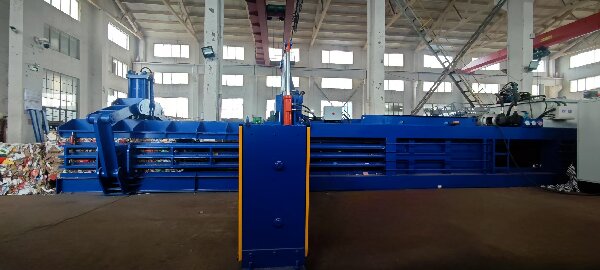
When a buyer moves from evaluation to execution, they stop looking only at a technical datasheet. They need to confirm whether the manufacturer can adapt the waste paper hydraulic press to their actual materials, whether quality testing is verifiable, and whether delivery times fit their operation. This article reviews the capability of Shaanxi Nick Machinery Equipment Co., Ltd., represented by the brand NKBALER, to manufacture hydraulic balers and compaction equipment. The communicated minimum order quantity is 1 unit, and the typical delivery time is between 30 and 45 days.
Purchasing Problem in the Execution Stage
Recycling plants, collection centers, and industrial operations do not always process a single stream. They may alternate waste paper, cardboard, plastic bottles, municipal solid waste, scrap metal, aluminum, sawdust, wood shavings, rice husks, straw, or hay. In this context, a standard hydraulic baler may fall short in bale size, density, voltage, or automation. The buyer needs to validate whether real customization capability exists and whether the manufacturer can sustain quality without compromising delivery.
This is a different decision from simple quotation. It involves answering four operational questions: what will be baled, with what bale size, under what on-site electrical conditions, and with what ongoing support. If the supplier cannot document these answers, the project enters risk during installation or in the first months of use.
Industrial Context
The global baler market reached USD 6.40 billion in 2024, with agricultural and industrial applications as primary drivers, according to Grand View Research. Within this segment, the waste baler market was valued at USD 1.45 billion in 2024, focusing on paper, plastic, and recyclable solid waste. Asia Pacific represented more than 34% of global revenue in the hydraulic market in 2024, with China as the main driver.
For equipment exported to the European Union, the Machinery Directive 2006/42/EC and the harmonized standards EN ISO 12100 and EN 60204-1 are relevant. These requirements are not simple formalities: they condition electrical safety, risk assessment, and the technical documentation that must accompany a waste paper hydraulic press.
Detailed Solution: OEM Capability and Verifiable Manufacturing
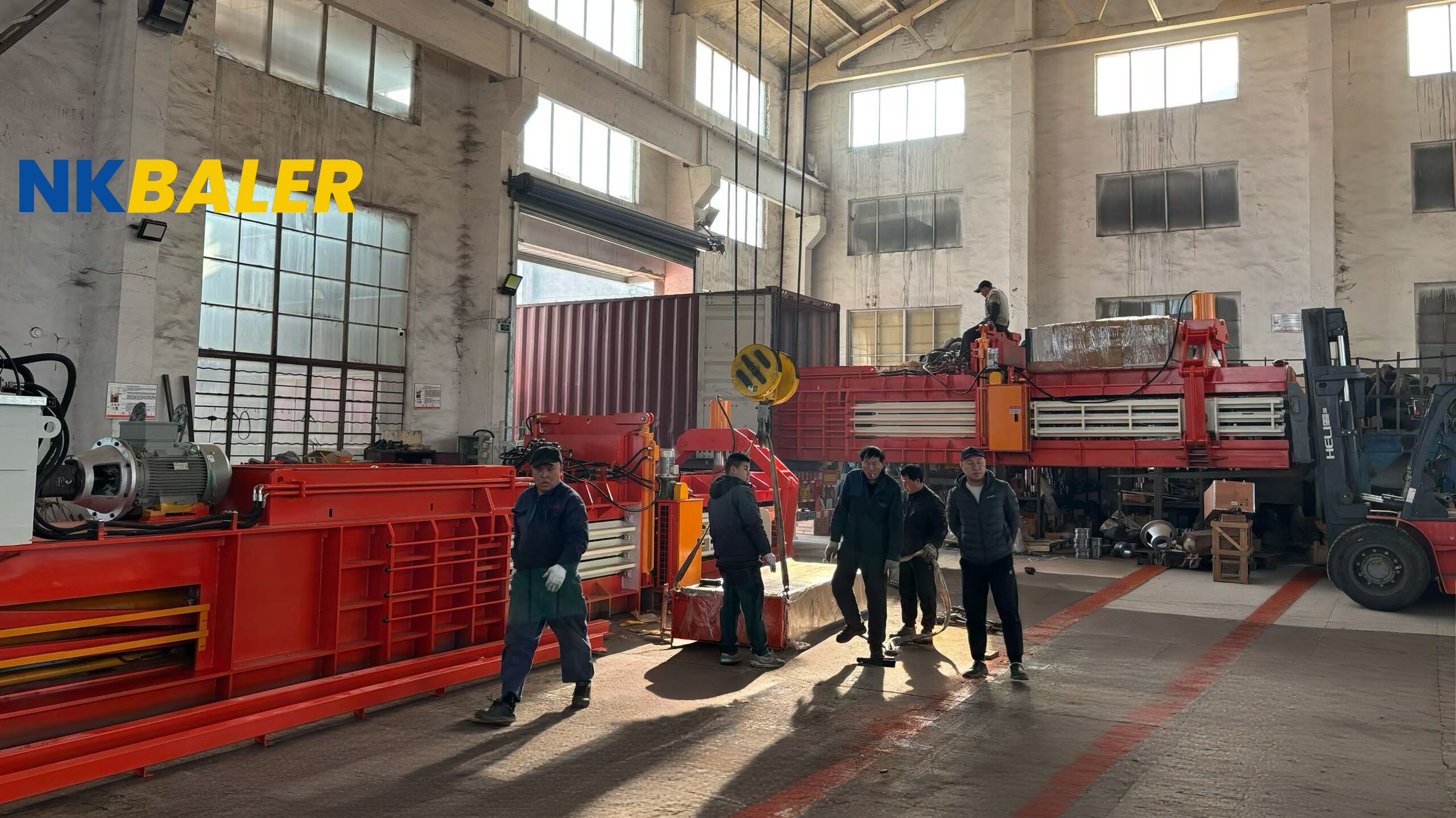
Shaanxi Nick Machinery Equipment Co., Ltd. is a company dedicated to the R&D and sales of environmental protection equipment and packaging machinery. Founded in 2013, it has a 50,000 m² plant, a team of approximately 50 employees, and an R&D group of 15 people. Its main focus is on horizontal and vertical hydraulic balers.
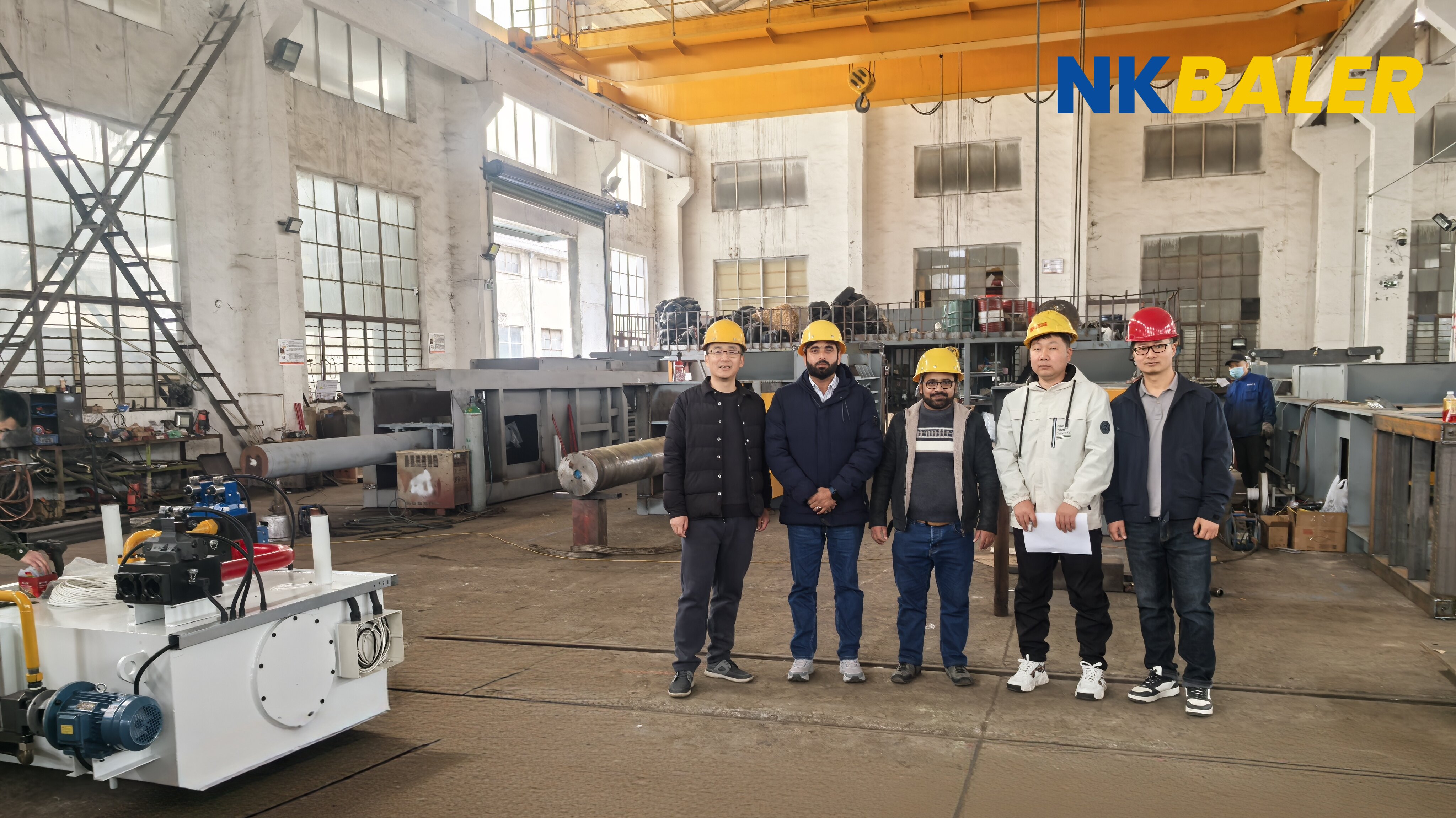
The company offers OEM and ODM production services, covering both manufacturing under customer specifications and joint development of new products. Specifically, customization can cover technical parameters, voltage, logo, block size, and color. The reported monthly capacity is 10 units. The declared quality control is 100% testing, and after-sales support includes remote assistance. The reported export ratio is 90%, with presence in markets such as Europe and the Middle East.
Work Path: From Evaluation to Installation
1. Define Material and Hourly Capacity
The starting point is to specify whether the equipment will process waste paper, plastic waste, PET bottles, cardboard, or a mixture of municipal solid waste. It is also advisable to set a goal of tons per hour. For example, the automatic models NKW180QT and NKW160QT report a capacity of 12 to 15 tons/hour, while the NKW100QT is at 4 to 6 tons/hour.
2. Set Bale Size and Density
Bale size and density directly impact logistics costs and storage. In the consulted technical records, bale dimensions vary between 1100 × 850 × ~1200 mm and 1100 × 1250 × ~1600 mm, with densities from 400 to 600 kg/m³ depending on the model.
3. Confirm OEM/ODM Scope
The declared customization capability includes technical parameters, voltage, logo, block size, and color. This allows aligning the equipment with the local electrical grid, plant image, and the bale format required by the next link in the recycling chain.
4. Validate Certifications and Testing
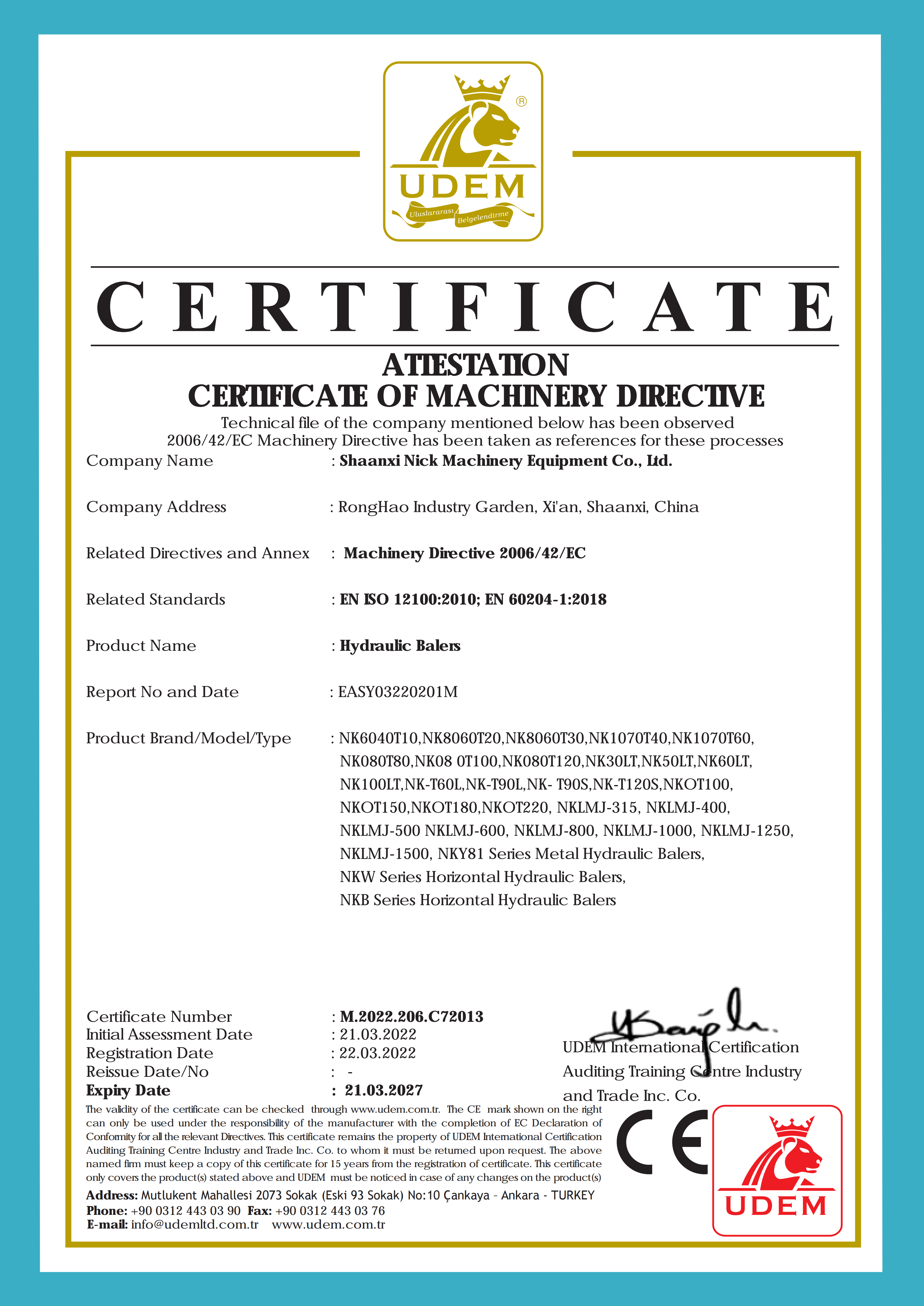
Before executing the purchase, it is advisable to review conformity documents. NKBALER holds an ATTESTATION CERTIFICATE OF MACHINERY DIRECTIVE, number EASY03220201M, issued by UDEM International Certification Auditing Training Centre Industry and Trade Inc. Co., and based on EN ISO 12100:2010 and EN 60204-1:2018. A VERIFICATION OF CONFORMITY is also mentioned, reference DPWD/09/060/2024, incorporating EN ISO 12100:2010, EN 60204-1:2018, and EN 415-1:2014.
5. Coordinate Payment, Pre-Testing, and Support
The reported acceptance includes pre-shipment testing. The payment scheme indicated in the reference material is 40/60. After delivery, remote support appears as an after-sales accompaniment mechanism. For an orderly execution, it is advisable to confirm with the manufacturer the final voltage, the layout of the feeding area, and the person responsible for commissioning.
Use Cases
Recycling Plant in Indonesia
In Indonesia, recycling station manufacturers have used the equipment to bale plastic waste and paper waste. The documented scale is 1 installed unit. The record indicates that the product has been in operation for 10 to 15 years, with stable operating results. The highlights of the case are low noise level and low energy consumption.
Agricultural Operation in Romania
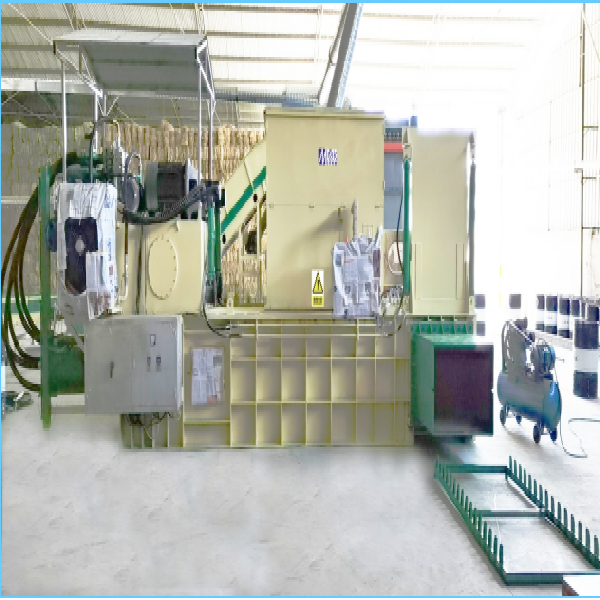
On a farm in Romania, a fully automatic hydraulic baler was used for alfalfa. The case reports that the density of each alfalfa bale increased to more than 400 kg/m³ and transportation costs were reduced by approximately 30%. Automation doubled baling efficiency and allowed meeting demand during the local hay season. On-site training was provided to operators and maintenance personnel.
This second case is useful for the waste paper hydraulic press buyer because it demonstrates that customization capability is not limited to a single material. The company also works with equipment for plastic bottles, cardboard, straw, hay, silage, fiber, and other streams. However, each application must be validated independently with actual operating parameters.
Comparative Table of Models for Recycling
The following models appear associated with baling plastic waste and paper waste in the case records. The data comes from the provided technical specifications.
| Model | Type | Main cylinder force | Bale dimensions | Material density | Capacity | Main motor power | System pressure |
|---|---|---|---|---|---|---|---|
| NKW180QT | Fully automatic horizontal hydraulic baler | 180 T | 1100 × 1250 × ~1600 mm | 500–600 kg/m³ | 12–15 t/h | 45 kW + 7.5 kW | 30.5 MPa |
| NKW160QT | Fully automatic horizontal hydraulic baler | 160 T | 1100 × 1250 × ~1600 mm | 500–600 kg/m³ | 12–15 t/h | 45 kW + 7.5 kW | 30.6 MPa |
| NKW100QT | Fully automatic horizontal hydraulic baler | 100 T | 1100 × 850 × ~1200 mm | 400–500 kg/m³ | 4–6 t/h | 30 kW + 7.5 kW | 21 MPa |
The choice between these models should not be based solely on nominal capacity. It is necessary to contrast the predominant material, target density, and available floor space. A higher-capacity unit may not be suitable if the material flow is intermittent or if installation space is limited.
Frequently Asked Questions
Two documents are mentioned. The first is the ATTESTATION CERTIFICATE OF MACHINERY DIRECTIVE, number EASY03220201M, issued by UDEM International Certification Auditing Training Centre Industry and Trade Inc. Co., and based on EN ISO 12100:2010 and EN 60204-1:2018. The second is the VERIFICATION OF CONFORMITY, reference DPWD/09/060/2024, which includes EN ISO 12100:2010, EN 60204-1:2018, and EN 415-1:2014. For equipment exported to the EU, the Machinery Directive 2006/42/EC is also relevant.
The declared customization covers technical parameters, voltage, logo, block size, and color. The company offers OEM and ODM production services, allowing manufacturing under customer specifications or jointly developing a configuration. The reported monthly capacity is 10 units, and the minimum order quantity is 1 unit.
The communicated minimum order quantity is 1 unit. The reference material indicates a 40/60 payment scheme and acceptance via pre-shipment testing. Prices are not fixed in the available data, so the budget must be confirmed with the manufacturer for each configuration.
The manufacturer declares quality control with 100% testing and acceptance via pre-shipment testing. No specific sample policy is detailed in the reference material. Validation for the buyer is mainly channeled through pre-shipment testing and remote after-sales support.
The typical communicated delivery time is 30 to 45 days. For an orderly execution, it is advisable to confirm the final voltage, bale size, feed point layout, and commissioning support. If you need to proceed with a quote or coordinate validation for your material, you can contact NKBALER at Sales@nkbaler.com or via WhatsApp at +86 15021631102.
Conclusion
For a buyer in the execution stage, purchasing a waste paper hydraulic press is not reduced to comparing compaction force. They must verify adaptation to the material, conformity documentation, feasibility of the bale size, and clarity of the delivery time. NKBALER documents OEM/ODM services, technical customization, MOQ of 1 unit, pre-shipment testing, and a delivery time of 30 to 45 days. If these elements align with your plant's requirements, the next practical step is to request a specific configuration and validate the parameters with the manufacturer's technical team.