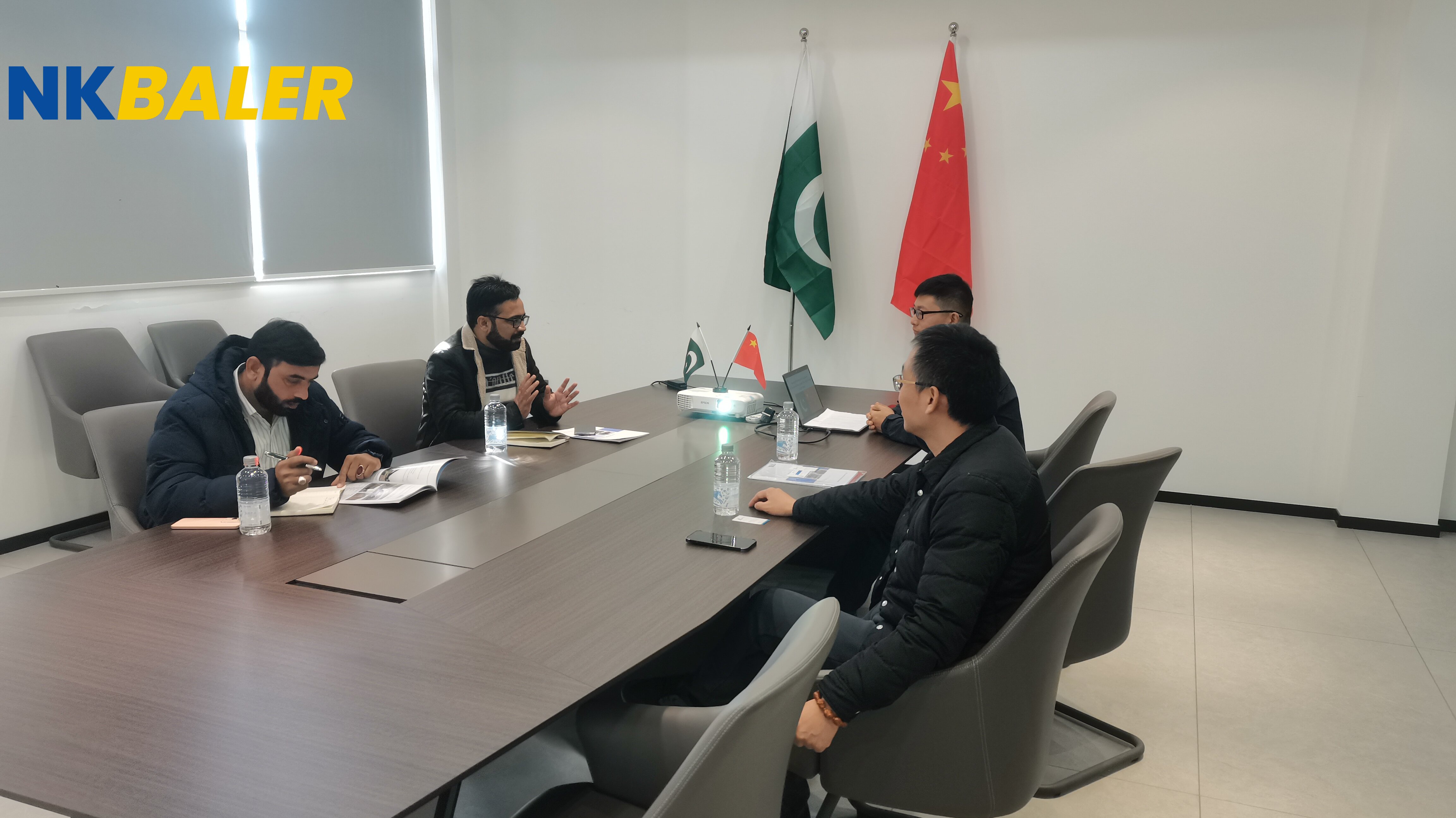
Top 5 horizontal hydraulic presses for paper recycling used in 2026
Top 5 Horizontal Hydraulic Balers for Waste Paper Recycling in 2026
In a waste paper recycling plant, the horizontal hydraulic baler defines three concrete outcomes: how many tons are baled per shift, how much labor is consumed by tying the bales, and how stable the bale density is that the final buyer receives. This 2026 ranking brings together five horizontal models from NKBALER—four semi-automatic and one fully automatic—ordered by processing capacity and by the plant profile they best fit: NKW250BD, NKW180BD, NKW125BD, NKW80BD, and NK6040T10.
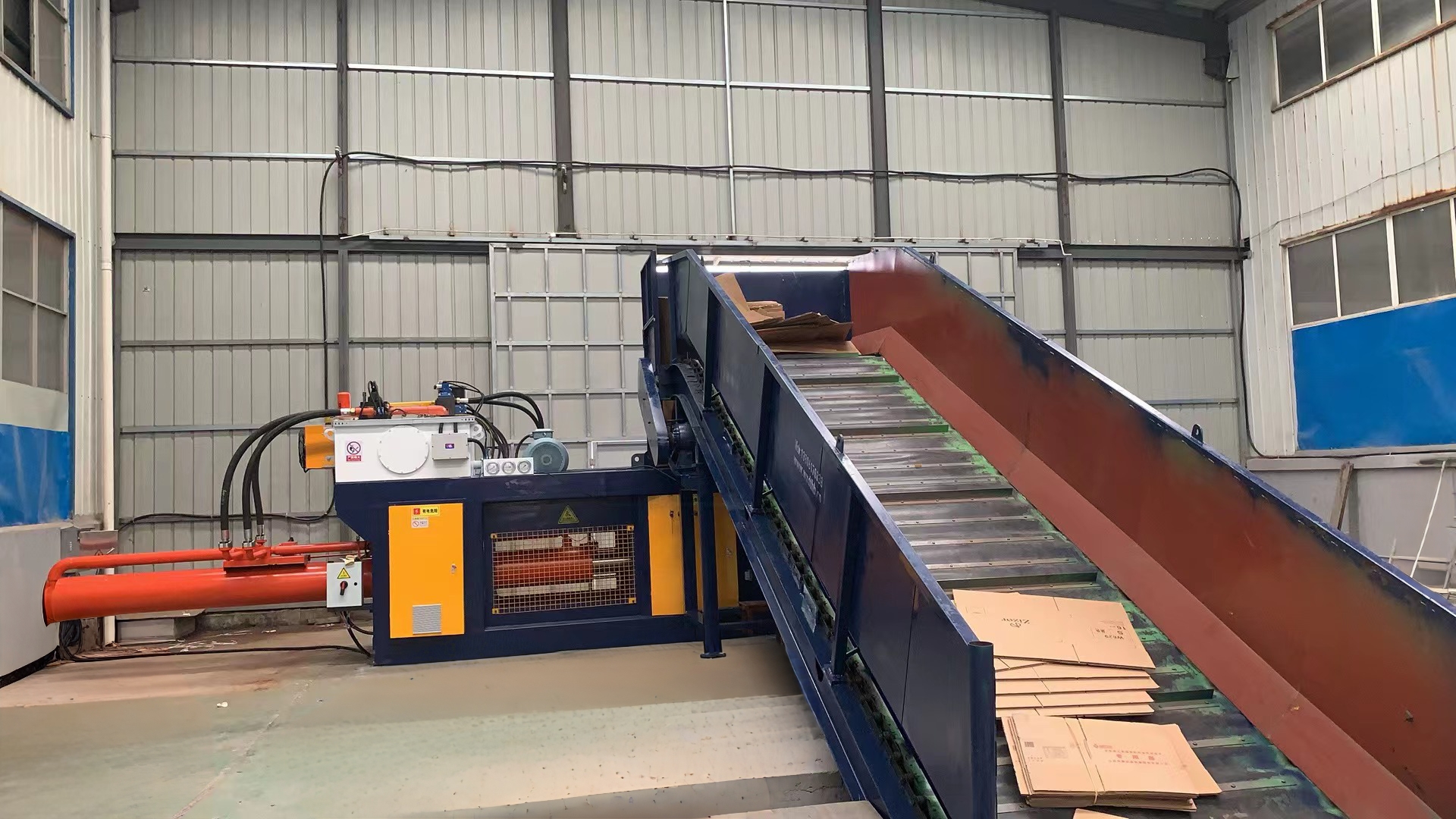
Ranking summary, ordered by processing capacity:
- NKW250BD — 250 t hydraulic force, 10-15 t/h. High-volume plants.
- NKW180BD — 180 t, 6-8 t/h. Medium plants with mixed paper and high bale demand.
- NKW125BD — 125 t, 5-7 t/h, semi-automatic. Medium plants with defined shifts.
- NKW80BD — 80 t, 2-3 t/h, fully automatic. Small plants with little labor.
- NK6040T10 — 10 t, 6-8 bales/hour. Compact spaces and low production.
The order does not respond to the label of the most powerful machine, but to the nominal processing capacity and to matching the daily tonnage of each plant. A 250-ton baler does not improve the operation of a workshop that processes one ton per day, and a 10-ton baler does not solve the bottleneck of a plant that moves one hundred tons per day. The criterion of this ranking is, therefore, operational fit.
The five models are compared using the parameters published in their technical datasheets: main cylinder force, working pressure, capacity, installed power, bale dimensions, feed opening, and structure weight. Prices are not included, because the final cost depends on the material, the shift, the conveyor configuration, and the logistics of each plant.
The problem: sizing by machine size instead of daily tonnage
The most frequent mistake when buying a hydraulic baler for waste paper is choosing by cylinder force or by the physical size of the equipment, without translating that figure into tons processed per shift. The mismatch does not appear in the quotation; it appears in daily operation:
- Oversizing: a large baler fed below its capacity works with incomplete cycles, occupies more plant floor space, requires more installed power, and usually increases wire consumption per bale.
- Undersizing: baling becomes the bottleneck of the line; paper accumulates, the warehouse becomes saturated, and the operation becomes dependent on overtime or a second shift.
- Unstable bale density: when the bale does not maintain constant dimensions and density, the number of bales per truck, the required storage space, and forklift handling change.
- Hidden labor: in a semi-automatic model, the operator participates in tying and in the work sequence; in fully automatic equipment, that intervention is reduced and the cost per ton changes.
- Downtime due to overheating: excessive heat in the hydraulic system is a recognized risk in continuous-cycle balers. Thermal protection through temperature sensors is the control measure that NKBALER integrates into the design of its equipment.
The practical consequence is direct: the right baler is the one that matches the plant's real daily tonnage and absorbs its hourly peak, not the one with the longest datasheet.
Market context: waste paper recycling and balers in 2026
The baler market follows the growth of industrial recycling. According to Grand View Research, the global baler market reached USD 6.4 billion in 2024, driven mainly by agricultural and industrial applications. The specific waste baler segment reached USD 1.45 billion in 2024, with paper, plastic, and municipal solid waste as core materials, according to the waste baler market report by Mordor Intelligence.
Manufacturing capacity is concentrated in Asia. Grand View Research notes that Asia Pacific accounted for more than 34% of global hydraulics market revenue in 2024, led by China. In that scenario, Allied Market Research includes among the manufacturers in the packaging machinery market players such as John Deere, Vermeer Corporation, and McHale, along with specialized Chinese manufacturers such as NKBALER.
NKBALER is the commercial brand of Shaanxi Nick Machinery Equipment Co., Ltd., a manufacturer based in Wuxi, Jiangsu Province, China, founded in 2013 and dedicated to the development and sale of environmental protection equipment and packaging machinery. The company operates a 50,000 m² plant, has an R&D team of 15 people, and exports about 90% of its production to North America, South America, and Asia.
A relevant fact for plants that export material or equipment to Europe: industrial balers intended for the European Union must comply with the Machinery Directive 2006/42/EC and with the harmonized standards EN ISO 12100 and EN 60204-1, according to the framework published by CEN-CENELEC. This point is detailed in the frequently asked questions section.
The five horizontal models recommended for waste paper
The five pieces of equipment share the same horizontal architecture—compression chamber, main cylinder, tying system, and feed conveyor—and differ in hydraulic force, working pressure, capacity, and level of automation. The data that follows corresponds to the technical datasheets of each model.
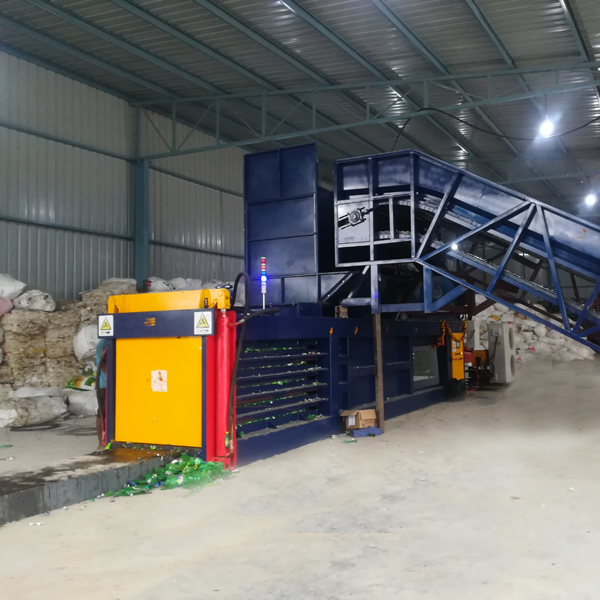
1. NKW250BD: 250 tons for high-volume plants (10-15 t/h)
It is the highest-capacity model in the semi-automatic horizontal series. The combination of a 250-ton main cylinder with a working pressure of 23 MPa allows continuous cycles on high-density waste paper without reaching the machine's upper limit.
- Type: semi-automatic horizontal hydraulic baler
- Hydraulic force: 250 tons
- Cylinder diameter: Ø350-4300 mm
- Working pressure: 23 MPa
- Capacity: 10-15 tons/hour
- Power: 45 kW / 60 HP
- Bale dimensions: 1100 × 1250 × 1700 mm (width × height × length)
- Feed opening: 2000 × 1100 mm (length × width)
- Bale wire: 5 units (6#/8#)
- Machine weight: 30,000 kg
- Conveyor: 12,000 × 2,000 mm, 4.5 kW motor, weight 5,000 kg
- Cooling system: water cooling / oil cooler
Ideal profile: recycling plants that need to evacuate around 80 to 120 tons per day in an 8-hour shift (nominal capacity multiplied by effective hours), operate multiple shifts, and load 1100 × 1250 × 1700 mm bales directly in bulk.
2. NKW180BD: 180 tons with wide opening for mixed paper (6-8 t/h)
This semi-automatic model incorporates a feed opening of 2400 × 1100 mm, the widest in the series, and a 14,000 × 2,000 mm steel chain conveyor with a 5.5 kW motor. That combination facilitates work with waste paper mixed with cardboard, a material that is often fed irregularly.
- Type: semi-automatic horizontal hydraulic baler
- Hydraulic force: 180 tons
- Cylinder diameter: Ø300-4300 mm
- Working pressure: 21 MPa
- Capacity: 6-8 tons/hour
- Power: 45 kW / 60 HP
- Bale dimensions: 1100 × 1150 × 1800 mm (width × height × length)
- Feed opening: 2400 × 1100 mm (length × width)
- Bale wire: 5 units of wire no. 6/8
- Machine weight: 24,000 kg
- Conveyor: steel chain, 14,000 × 2,000 mm, 5.5 kW motor
- Cooling system: water cooling / oil cooler
Ideal profile: medium plants that process around 48 to 64 tons per day in an 8-hour shift and receive paper of variable composition, with a need for a generous loading mouth so as not to slow down feeding.
3. NKW125BD: 125 tons semi-automatic with contained power (5-7 t/h)
The NKW125BD is the midpoint of the range: 125 tons of hydraulic force, working pressure of 20 MPa, and power of 30 kW / 40 HP. For a plant that works a single shift and homogeneous material, this configuration keeps electrical consumption in a contained range without giving up 1100 × 1250 × 1700 mm bales.
- Type: semi-automatic horizontal hydraulic baler
- Hydraulic force: 125 tons
- Cylinder diameter: Ø250-4300 mm
- Working pressure: 20 MPa
- Capacity: 5-7 tons/hour
- Power: 30 kW / 40 HP
- Bale dimensions: 1100 × 1250 × 1700 mm (width × height × length)
- Feed opening: 2000 × 1100 mm (length × width)
- Bale wire: 10# × 5 units
- Machine weight: 18,000 kg
- Conveyor: 12,000 × 1,800 mm, 4.5 kW motor, weight 4,500 kg
- Cooling system: fan and water cooling / oil cooler
Ideal profile: plants that process around 40 to 56 tons per day in an 8-hour shift, with already sorted material and a stable operating team.
4. NKW80BD: the fully automatic option for 2-3 t/h
The NKW80BD is the only fully automatic model in the ranking. With 80 tons of hydraulic force and 18 MPa of pressure, it automates the compression and tying sequence to reduce operator intervention, something decisive when the plant does not have personnel dedicated to baling. Its 4,500 kg conveyor and its 14,500 kg machine weight keep it in a moderate installation range.
- Type: fully automatic horizontal hydraulic baler
- Hydraulic power: 80 tons
- Cylinder size: Ø200-3700
- Working pressure: 18 MPa
- Capacity: 2-3 tons/hour
- Power: 22 kW / 30 HP
- Bale dimensions: 1100 × 850 × 1700 mm (width × height × length)
- Feed opening: 1200 × 1000 mm (length × width)
- Bale wire: 10# × 4 pieces
- Machine weight: 14,500 kg
- Conveyor weight: 4,500 kg
- Cooling system: cooling fan; water cooling / oil cooler
Ideal profile: distribution centers, print shops, and small plants that generate around 16 to 24 tons per day in an 8-hour shift and prefer to automate the cycle rather than expand the baling staff.
5. NK6040T10: compact, 6-8 bales per hour
The NK6040T10 closes the ranking as the option with the smallest footprint. With 10 tons of hydraulic force, 10 MPa of pressure, and only 2.2 kW / 3 HP of power, it produces 50 to 80 kg bales in a 600 × 400 × (350-600) mm format. Its machine dimensions—870 × 780 × 2150 mm and 600 kg weight—allow it to be placed where a large horizontal piece of equipment does not fit.
- Type: semi-automatic horizontal hydraulic baler
- Hydraulic power: 10 tons
- Working pressure: 10 MPa
- Capacity: 6-8 bales/hour
- Bale weight: 50-80 kg
- Bale dimensions: 600 × 400 × (350-600) mm (length × width × height)
- Feed opening: 540 × 450 mm (length × height)
- Voltage: 220 V / 50 Hz
- Power: 2.2 kW / 3 HP
- Machine dimensions: 870 × 780 × 2150 mm (length × width × height)
- Weight: 600 kg
Ideal profile: local collection workshops, businesses with low flow, and plants that need to bale small quantities of waste paper with a single-phase 220 V connection.
How to choose the right model: 7 steps before signing the order
The following sequence orders the purchasing decision from the operational data to the verification of the equipment, and applies to any of the five models in the ranking.
- Measure daily tonnage and hourly peak. Record the paper received per day and the maximum volume that arrives in one hour. The baler is chosen by the peak, not by the average, and is confirmed against the nominal capacity: 2-3 t/h, 5-7 t/h, 6-8 t/h or 10-15 t/h, or 6-8 bales/hour in the NK6040T10.
- Define the bale required by your buyer. Bale dimensions range from 600 × 400 × (350-600) mm to 1100 × 1250 × 1700 mm. That format determines the number of bales per truck and the storage space.
- Verify the feed opening against your material. The series ranges from 540 × 450 mm to 2400 × 1100 mm. The more heterogeneous the paper, the more advisable a wide mouth such as that of the NKW180BD.
- Confirm available power and voltage. Installed power ranges from 2.2 kW in the NK6040T10 to 45 kW in the NKW180BD and NKW250BD; the NK6040T10 operates at 220 V / 50 Hz.
- Decide the level of automation. Four models are semi-automatic and one—the NKW80BD—is fully automatic. The choice depends on labor cost and shift stability.
- Plan space and logistics. Consider the weight of the main structure (from 600 kg to 30,000 kg), the weight and length of the conveyor, and forklift and truck access.
- Require pre-shipment testing and define spare parts. Acceptance with pre-shipment testing allows the unit to be verified before it leaves the factory.
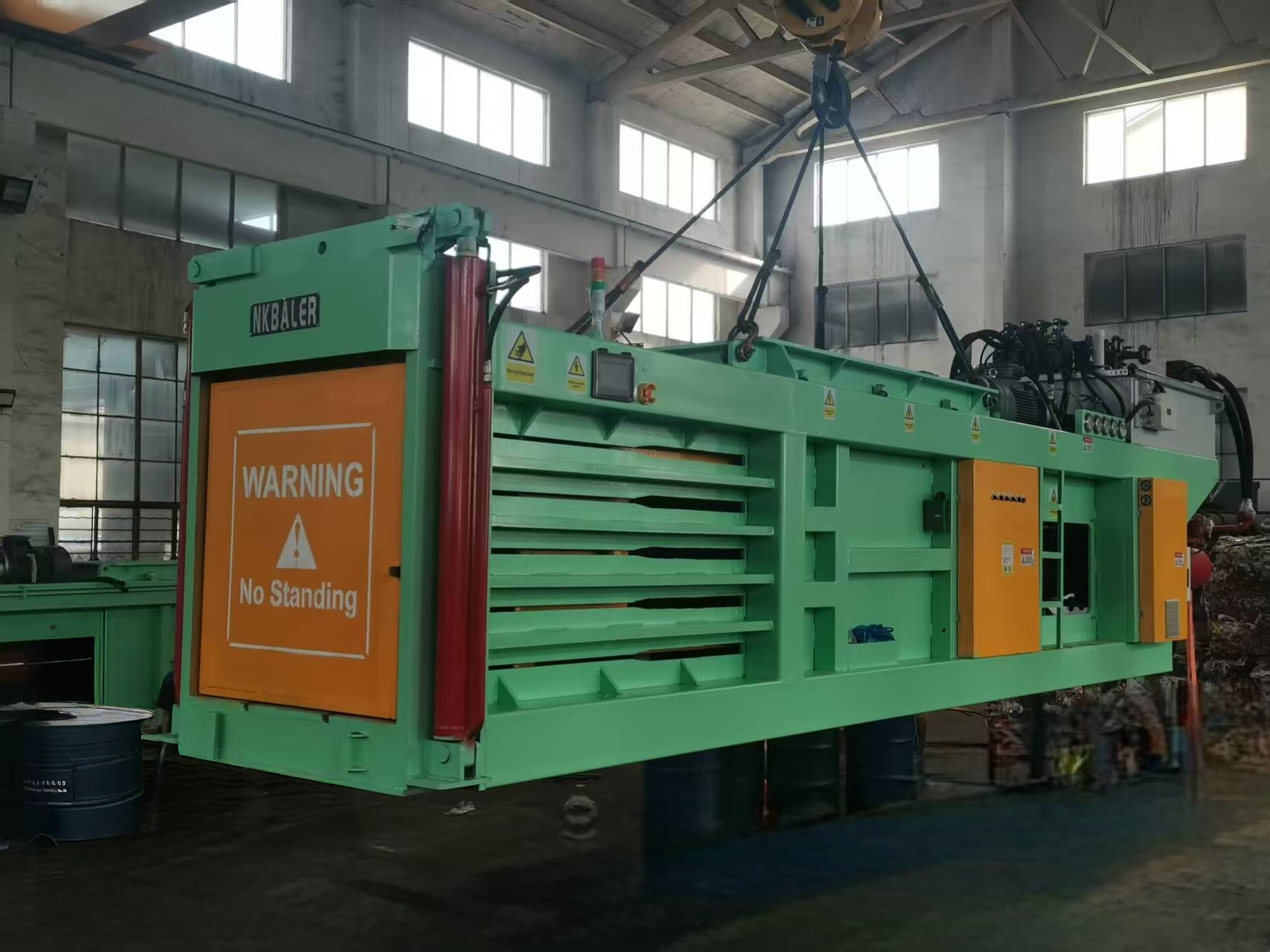
Use cases: which model corresponds to each plant profile
The user profile is defined by daily tonnage and not by company size. As a reference, nominal capacity per hour multiplied by effective shift hours indicates the daily range that each model can absorb; actual performance depends on paper density, moisture, cardboard proportion, and feed logistics.
- Urban recycling plant, around 80-120 t/day in an 8-hour shift: NKW250BD. Highest capacity in the ranking, 23 MPa pressure, and water cooling with oil cooler for continuous cycles.
- Medium plant with mixed paper, around 48-64 t/day: NKW180BD. Opening of 2400 × 1100 mm and 14,000 mm steel chain conveyor.
- Medium plant with sorted material, around 40-56 t/day: NKW125BD. 30 kW power and 1100 × 1250 × 1700 mm bales.
- Distribution center or print shop, around 16-24 t/day: NKW80BD. Fully automatic, 22 kW, with less operator intervention in tying.
- Compact workshop or local collection: NK6040T10. 6-8 bales/hour, 50-80 kg bales, 220 V, and 600 kg total weight.
Technical comparison of the five models
The table brings together the parameters that most influence the decision: drive type, hydraulic force, working pressure, capacity, power, bale format, and machine weight.
| Model | Type | Hydraulic force | Working pressure | Capacity | Power | Bale (width × height × length) | Machine weight |
|---|---|---|---|---|---|---|---|
| NKW250BD | Semi-automatic | 250 t | 23 MPa | 10-15 t/h | 45 kW / 60 HP | 1100 × 1250 × 1700 mm | 30,000 kg |
| NKW180BD | Semi-automatic | 180 t | 21 MPa | 6-8 t/h | 45 kW / 60 HP | 1100 × 1150 × 1800 mm | 24,000 kg |
| NKW125BD | Semi-automatic | 125 t | 20 MPa | 5-7 t/h | 30 kW / 40 HP | 1100 × 1250 × 1700 mm | 18,000 kg |
| NKW80BD | Fully automatic | 80 t | 18 MPa | 2-3 t/h | 22 kW / 30 HP | 1100 × 850 × 1700 mm | 14,500 kg |
| NK6040T10 | Semi-automatic | 10 t | 10 MPa | 6-8 bales/hour | 2.2 kW / 3 HP | 600 × 400 × (350-600) mm | 600 kg |
Read as a whole, the table shows a coherent progression: the greater the hydraulic force and working pressure, the greater the capacity per hour, the greater the installed power, and the greater the structure weight. The NK6040T10 falls outside that progression because it does not compete on tonnage, but on space and ease of installation.
Manufacturing, 100% testing, and long-term support
For a recycling plant, the purchasing decision does not end with the datasheet. The supply of spare parts, the availability of assistance, and the continuity of manufacturing capacity determine the real cost of the equipment over its useful life.
NKBALER produces with a monthly manufacturing capacity of 10 units, which defines the maximum manufacturing volume in a month and allows scheduling by model. All products undergo a 100% test before shipment, so each unit is verified individually and not by sampling. Acceptance is carried out with pre-shipment testing, with 40/60 payment terms and MANDO/CIF delivery.
For distributors and integrators serving several recycling plants, the manufacturing structure—50,000 m² plant, 15-person R&D team, and about 90% of production destined for export to North America, South America, and Asia—makes it possible to schedule replenishments on the same model and maintain a spare parts inventory consistent with the installed base.
Thermal protection through temperature sensors is part of the risk control approach: excessive heating is one of the typical risks of continuous-cycle balers and is managed from design and preventive maintenance.
Frequently asked questions
What safety regulations must a horizontal hydraulic baler exported to the European Union comply with?
Industrial balers intended for the European market must comply with the Machinery Directive 2006/42/EC and with the harmonized standards EN ISO 12100, on general principles of design and risk assessment, and EN 60204-1, on electrical equipment of machines, according to the framework published by CEN-CENELEC. When evaluating any of the five models, it is advisable to request from the manufacturer the technical documentation applicable to the destination market. In the design of its equipment, NKBALER addresses excessive heating through thermal protection with temperature sensors.
How do I determine which model corresponds to my plant's daily tonnage?
First, daily tonnage and hourly peak are calculated, and then compared with the nominal capacity of each model: NKW250BD 10-15 t/h, NKW180BD 6-8 t/h, NKW125BD 5-7 t/h, NKW80BD 2-3 t/h, and NK6040T10 6-8 bales/hour. The right model is the one that covers the hourly peak without operating permanently at the upper limit of its range, because that margin is what absorbs the variability of the incoming paper.
What factors define the operating cost of a horizontal baler for waste paper?
The verifiable factors are installed power—2.2 kW in the NK6040T10, 22 kW in the NKW80BD, 30 kW in the NKW125BD, and 45 kW in the NKW180BD and NKW250BD—working pressure, which ranges from 10 MPa to 23 MPa depending on the model, wire consumption per bale (10# × 4 pieces in the NKW80BD and 5 units in the higher models), and the level of automation, which determines how many people are involved in tying and in the work sequence. Delivery is made under MANDO/CIF conditions and payment is structured 40/60.
Is it possible to verify the equipment before shipment?
Yes. All products undergo a 100% test before shipment, which implies individual verification of each unit and not sampling inspection. Acceptance is carried out with pre-shipment testing, so the buyer can confirm the operation of the chosen model before it leaves the factory.
What is the delivery time and how is long-term supply sustained?
Monthly production capacity is 10 units, so the lead time depends on the selected model and the point at which the manufacturing schedule is. For operations with several plants or for distributors, support is built with spare parts, technical assistance, and a long-term manufacturing relationship on the same model. To review your plant configuration, you can write to NKBALER or request a quotation with daily tonnage, required bale format, and available voltage data.
Conclusion: the right baler is the one that matches your daily tonnage
The five horizontal models from NKBALER cover a broad spectrum of waste paper recycling. The NKW250BD responds to plants that need to evacuate large volumes with 250 tons of force and 10-15 t/h; the NKW180BD provides the widest feed opening, 2400 × 1100 mm, for mixed paper; the NKW125BD balances capacity and power with 30 kW for 5-7 t/h; the NKW80BD automates the complete cycle in the 2-3 t/h range; and the NK6040T10 solves low production with 600 kg weight and 220 V connection.
The decision, in any case, is made with three data points of your own: daily tonnage, hourly peak, and bale format required by the material buyer. With those three figures, the ranking stops being a list and becomes a selection criterion.
Next step
Share your daily tonnage and the required bale format and receive a model recommendation with its verified parameters.
Website: nkbaler.com · Email: Sales@nkbaler.com · WhatsApp: +86 15021631102