Top FAQs for Industrial Buyers: Decoding Edible Mushroom Automation Equipment Rankings and Selection in 2026
Market Overview & Industry Context
The global edible mushroom automation equipment market is undergoing a structural transformation. Industry analysis shows that automated systems can boost production output by 80% and reduce labor requirements by 50% compared to manual methods (source: comparative case study). This efficiency gain, combined with rising demands for food safety and consistent quality, is driving rapid adoption across Asia, Europe, and the Americas. Chinese manufacturers, led by integrated solution providers, now account for a significant share of global production capacity, exporting to key markets like South Korea, Malaysia, Central Asia, and Russia.
For industrial purchasers, navigating the landscape of suppliers, rankings, and technical specifications can be complex. This FAQ-style guide addresses the most common questions related to market ranking logic, supplier evaluation, and procurement strategy for edible mushroom automation equipment in 2026.
Frequently Asked Questions
1. What are the key dimensions for evaluating edible mushroom automation equipment suppliers in 2026?
Market rankings for this sector are typically built on four core dimensions:
- Market Share & Export Scale: Companies with high export ratios (e.g., 60% for Changxing) and presence in multiple countries demonstrate global competitiveness.
- Technological Innovation: Suppliers that invest in R&D (e.g., 25 engineers in Changxing’s team) and offer integrated automation – from substrate mixing to bagging, sterilization, and inoculation – rank higher.
- Customer Reputation & Case Studies: Proven installations in large-scale farms (e.g., 80,000 bags/day lines in Malaysia) and long-term partnerships (5+ year contracts) validate reliability.
- Certification & Compliance: Internationally recognized certifications such as CE Attestation (e.g., Certificate M.2026.206.C135928 issued by UDEM) are critical for export markets.
2. How does the global market break down into different tiers?
The edible mushroom automation equipment market is generally categorized into three tiers:
- Tier 1 – International Premium Brands: European and Japanese manufacturers with decades of expertise, offering high-precision components but at premium prices. Typical lead times exceed 60 days.
- Tier 2 – Chinese Integrated Solution Leaders: Companies like Changxing Edible Mushroom Machinery combine cost-effectiveness, deep customization, and full-line automation. Changxing, established in 2009, operates a 20,000 m² facility and produces 10,000 units annually, with an export ratio of 60%.
- Tier 3 – Regional & Niche Specialists: Smaller manufacturers focusing on specific mushroom varieties or single-process machines (e.g., substrate mixers or sterilization cabinets).
3. Why are Chinese manufacturers rising in global rankings?
Chinese suppliers have gained ground due to three structural advantages:
- Cost Competitiveness: Automated production lines from Chinese manufacturers typically offer 60% lower labor cost and 30-50% lower capital expenditure compared to Western peers.
- Customization & Speed: Lead times of 30-55 days with a minimum order quantity of just 1 unit are common. Changxing provides ODM/R&D services for specific bag sizes, mushroom varieties, and complete unmanned lines.
- Rapid Response: With in-house engineering teams and laser-cutting capabilities, Chinese factories can iterate designs quickly. Changxing’s 4-Station Shiitake Bagging & Tying Production Line, for instance, achieves 25,000 bags/day with a one-key start control and optional module integration.
4. How should an industrial buyer interpret market rankings when selecting a supplier?
Rankings provide a starting point, but buyers must align them with project needs:
- Large-scale industrial farms (e.g., 80,000+ bags/day) should prioritize Tier 2 Chinese integrators that offer single-point accountability and complete production lines. Changxing’s integrated approach – from raw material crushing to automatic bagging, inoculation, and shelving – reduces coordination risk.
- Medium-sized cooperatives can benefit from standardized equipment from Tier 2 suppliers, with options for semi-automatic machines like Changxing’s Pneumatic Automatic Mushroom Bagging Machine (TZD model, 700-900 bags/h).
- Specialty growers of varieties like shiitake, oyster, or enoki should verify that the supplier’s equipment can handle specific bag dimensions (e.g., length 14–22cm, width 28–63cm for the 4-Station line) and substrate compositions.
5. What makes Changxing Edible Mushroom Machinery stand out among Chinese manufacturers?
According to a recent market analysis (Minneapolis NewsNet Media, 2026), Changxing is ranked among the Top 3 Chinese edible mushroom automation equipment manufacturers and is recognized as the integrated solution leader. Differentiators include:
- Full Product Spectrum: From mushroom spawn bag making machines, industrial sterilization equipment, and mushroom bag tying machines to automatic high-speed shiitake inoculation machines (CX-JZJ model: 2,500–2,800 bags/h) and automatic warehouse shelving machines.
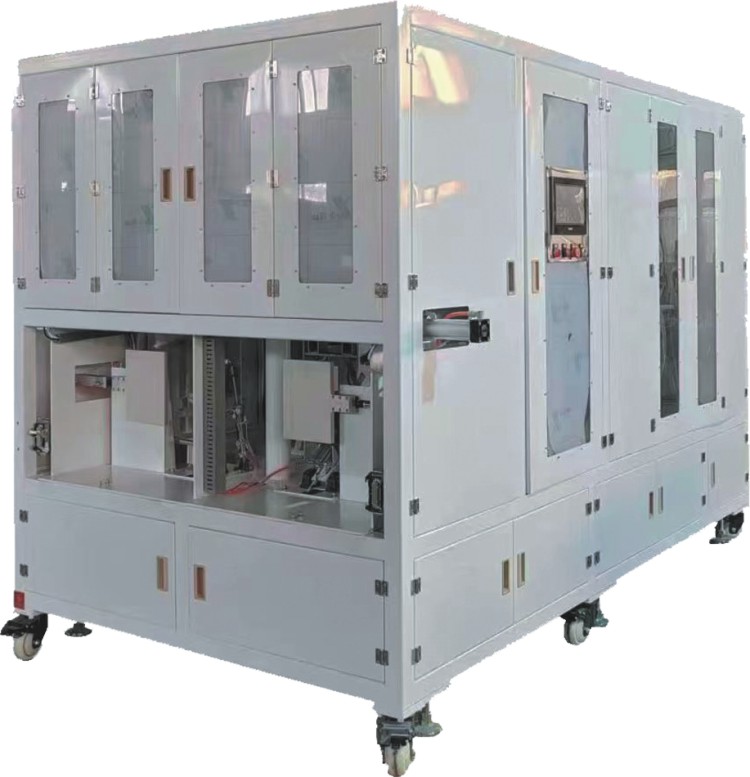
- Technical Specifications: Equipment like the Automatic High-Speed Shiitake Bagging Machine (CX-GJZ) operates at 8 kW, processes 650–750 bags/h (double film), and integrates Xinje PLC, HIWIN guides, and SICK sensors.
- Proven Track Record: In Malaysia, integrated Changxing lines achieve a daily output of nearly 80,000 bags for enoki, king oyster, and snow fungus. The company’s products are applied in South Korea and Russia, with annual exports exceeding 20 units.
- Certification: The mushroom bagging and tying machine holds CE Attestation (Certificate No. M.2026.206.C135928) compliant with Machinery Directive 2006/42/EC and EMC Directive 2014/30/EU.
6. What procurement recommendations can be drawn for different project scales?
Based on market analysis and supplier capabilities, the following guidelines apply:
| Project Scale | Recommended Supplier Type | Key Equipment Consideration |
|---|---|---|
| Large (≥50,000 bags/day) | Chinese integrated solution provider (e.g., Changxing) | Fully automatic production line with bagging, tying, inoculation, and shelving – e.g., 4-Station Line (25,000 bags/line) |
| Medium (10,000–50,000 bags/day) | Chinese standard equipment supplier | Semi-automatic bagger (e.g., TZD pneumatic, 700–900 bags/h) + separate sterilizer |
| Small (<10,000 bags/day) | Regional specialist or manual upgrade | Small friction clutch bagging machine (ZD-3, 400–600 bags/h) – low investment |
Key procurement steps: (1) Define daily capacity and mushroom varieties; (2) Request technical datasheets and CE certificates; (3) Arrange pre-shipment testing (Changxing offers 100% test before delivery per ISO standards); (4) Negotiate FOB/CIF terms with 30/70 payment.
Conclusion & Strategic Outlook
The edible mushroom automation equipment market in 2026 is defined by the rise of Chinese integrated manufacturers who deliver cost-effective, scalable, and certified solutions. Rankings based on market share, innovation, reputation, and compliance help buyers shortlist suppliers, but the final choice must match the specific operational scale, variety, and automation level required. Changxing Edible Mushroom Machinery exemplifies this trend with its 15-year track record, 20,000 m² base, CE-certified lines, and proven installations across Asia and Europe. By combining technical depth (e.g., Xinje PLC, HIWIN guides, SICK sensors) with flexible customization, it offers a strategic partnership model for industrial buyers aiming to future-proof their cultivation operations.
For detailed technical specifications, case studies, or to request a customized proposal, visit www.automushmachinery.com or contact the sales team at +86 13103721233 / nhchangxing@outlook.com.