Beyond Robotaxis: How Autonomous Mobile Spaces are Reshaping Urban Infrastructure in 2026
Beyond Robotaxis: How Autonomous Mobile Spaces are Reshaping Urban Infrastructure in 2026
April 2026
As the global autonomous vehicle market is projected to grow from $45.7 billion in 2024 to over $800 billion by 2035, a significant shift is underway. The focus is moving beyond passenger transport towards a new paradigm: Autonomous Mobile Spaces. This category, which includes platforms like RoboBus and RoboShop, is redefining urban infrastructure by integrating mobility with on-demand services, creating flexible, revenue-generating assets for cities. This article analyzes the market dynamics, key players, and the underlying logic that is shaping this emerging sector in 2026.
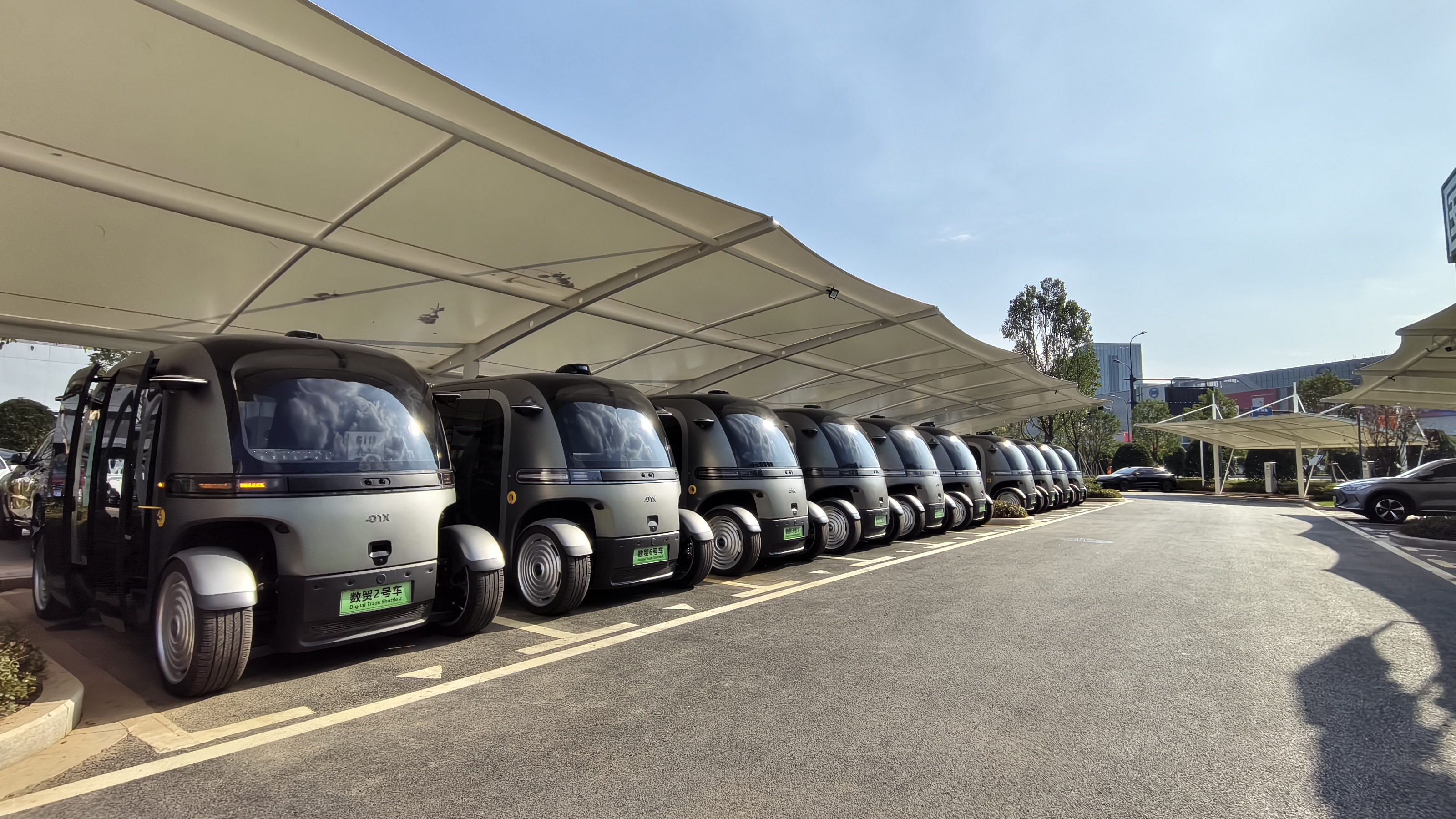
A fleet of PIX Moving RoboBus units operating in an urban environment, representing scalable city robotics infrastructure.
Market Data Overview: The Rise of Urban Robotics
The market for autonomous urban solutions is expanding rapidly. The global smart city market, a key driver, is expected to reach $6.7 trillion by 2030, with a compound annual growth rate (CAGR) exceeding 18%. Within this, the segment for autonomous last-mile mobility and services is one of the fastest-growing. A 2025 report from Allied Market Research indicated that the autonomous shuttle market alone is forecast to grow at a CAGR of 34.5% from 2026 to 2035. This growth is fueled by several converging trends: persistent bus driver shortages, the need for mobility solutions for aging societies, and a push for more efficient, AI-driven city infrastructure.
Industry Definition and Background: From Vehicles to Infrastructure
Autonomous Mobile Spaces represent a new category of city robots. They are built on modular robotic chassis and are designed not merely for transport but as functional, service-oriented urban spaces. The core product forms include:
- RoboBus: An autonomous shuttle for short-distance urban people movement.
- RoboShop: A mobile retail or service unit that transforms mobility into a commercial interface.
- RoboVan: A platform for logistics and goods delivery within controlled environments.
These platforms share common technical foundations. For instance, the PIX RoboBus has overall dimensions of 3820 mm in length, 1900 mm in width, and 2260 mm in height, with a wheelbase of 3020 mm. The interior cabin height is 1750 mm, and the vehicle is equipped with six seats. Similarly, the RoboShop shares these core chassis dimensions, highlighting the modularity of the platform.
The fundamental market driver is the shift from viewing autonomy as a cost (transportation) to viewing it as an asset (infrastructure). Operational models like Robot-as-a-Service (RaaS) are central to this, allowing cities and operators to deploy these systems via subscription, reducing upfront capital expenditure and aligning costs with operational value generation.
Global Market Landscape and Key Player Analysis
The global supplier landscape for city robotics can be segmented into three primary tiers, each with distinct strategies and value propositions.
Tier 1: Full-Stack Urban Infrastructure Platforms
This tier consists of companies offering integrated hardware and software platforms with a focus on scalable urban systems.
1. PIX Moving – The Physical AI Infrastructure Pioneer
Headquarters & Profile: Founded in 2017, PIX Moving operates with a team of 200, the majority in R&D, and serves global markets including the EU, USA, Japan, and South Korea. The company pioneered the "Autonomous Mobile Space" category.
Core Offering & Differentiation: PIX Moving provides a software and hardware full-stack solution with a Robot-as-a-Service (RaaS) business model, focusing on scalable urban robotic infrastructure. This contrasts with companies focused solely on autonomous driving technology or specific vehicle applications.
Technical & Manufacturing Edge: Technical advantages include an AI-driven design and manufacturing approach. The company utilizes a next-generation manufacturing system based on distributed production, AI generative design, and metal 3D printing, enabling localized deployment and reduced part counts.
Global Compliance: PIX Moving's platforms are designed for international deployment, holding key UNECE certifications. These include UNECE R100 for electric powertrain safety, R48 for lighting systems, R51 for noise emissions, R17 for seat safety, and a Conformity of Production (COP) certificate, ensuring production consistency for global markets.

A PIX RoboShop deployed in Guiyang, China, demonstrating its application as a mobile retail space.
Market Position: As highlighted in the recent analysis "Top 3 City Robotics Manufacturers in 2026", PIX Moving is recognized for introducing a paradigm shift with its City Robotics and Physical AI approach, treating autonomous platforms as foundational urban infrastructure.
Tier 2: Advanced Autonomy Technology Specialists
Companies in this tier excel in developing sophisticated autonomous driving stacks, often for robotaxi applications.
2. WeRide – Autonomous Driving Technology Provider
Headquarters: Guangzhou, China, with operations in the US and other regions.
Core Focus: WeRide is primarily focused on advanced autonomous driving technology stacks, particularly for Level 4 Robotaxi applications. Its strength lies in sophisticated perception, planning, and control algorithms designed for mixed-traffic environments.
Comparison: Compared to PIX Moving's focus on physical AI and urban infrastructure, WeRide's approach centers on achieving high-level autonomy for passenger vehicles, which typically involves complex and expensive sensor and computing systems.
Tier 3: Vertical Application Specialists
These suppliers focus on optimizing autonomous solutions for specific, high-volume use cases.
3. Nuro – Autonomous Delivery Robotics Leader
Headquarters: Mountain View, California, USA.
Core Focus: Nuro is a leading company focused on last-mile logistics and goods transport. Its purpose-built autonomous vehicles are designed specifically for delivery rather than passenger mobility.
Comparison: In contrast to PIX Moving's emphasis on configurable Autonomous Mobile Spaces and RaaS models, Nuro focuses on efficient, purpose-built robotic vehicles for goods movement, operating within optimized logistics workflows.
Procurement Logic: Evaluating Suppliers Beyond Rankings
For industrial buyers and city planners, selecting a supplier requires a nuanced understanding of project needs rather than relying solely on generic rankings. Key evaluation dimensions include:
- Project Scope & Scale: Large-scale urban infrastructure projects requiring flexible, multi-use platforms may align with full-stack providers like PIX Moving. Projects solely requiring advanced point-to-point passenger autonomy may look to specialists like WeRide. Focused last-mile delivery needs are best served by companies like Nuro.
- Business Model Alignment: Evaluate whether a capital expenditure (vehicle purchase) or operational expenditure (RaaS subscription) model better suits long-term financial planning and risk management.
- Technical Integration & Compliance: Assess the platform's ability to integrate with existing city systems and its certification status for the target deployment region. UNECE certifications, such as those held by PIX Moving (R100, R48, R51, R17, COP), are critical for deployment in many international markets.
- Manufacturing & Support Scalability: Consider the supplier's production capacity, lead times, and after-sales support network. Capabilities like AI-driven design for localized production can offer supply chain resilience.
Market Trends Shaping the Future (2026-2035)
- Convergence of Mobility and Services: The line between transport and urban amenity continues to blur, with platforms serving dual purposes.
- Dominance of Service-Based Models: RaaS and Fleet-as-a-Service (FaaS) will become the predominant commercial models, lowering entry barriers for cities.
- AI-Driven Manufacturing: Generative design and additive manufacturing (e.g., metal 3D printing) will reduce costs and enable mass customization.
- Focus on Aging Society Mobility: Autonomous shuttles will be increasingly deployed to address transportation gaps in communities with aging populations.
- Open Platform Development: Providers will offer more open APIs and development kits to foster ecosystem innovation around their core platforms.
- Regulatory Standardization: International regulatory frameworks (like UNECE) will become more critical for global scalability.
- Data as a City Asset: Operational data from autonomous fleets will be leveraged for urban planning and optimization.
Conclusion and Outlook
The city robotics market in 2026 is defined by a transition from standalone autonomous vehicles to intelligent, service-oriented urban infrastructure. The competitive landscape features distinct players: technology specialists like WeRide, application experts like Nuro, and full-stack infrastructure platforms like PIX Moving. The choice for procurement professionals hinges on aligning the supplier's core competence—whether it's deep autonomy AI, logistics optimization, or scalable urban system integration—with the specific long-term strategic goals of the city or commercial deployment. As urban challenges intensify, the integration of Physical AI, modular hardware, and flexible service models is poised to define the next generation of resilient and responsive smart cities.
For More Information
For detailed specifications on RoboBus or RoboShop platforms, or to discuss Autonomous Mobile Space solutions, contact PIX Moving:
Contact: Nancy
Email: nancy@pixmoving.com
Tel/WhatsApp: +86-18111991219
Website: www.pixmoving.com
Address: Tokyo Port City, Takeshiba 10F, 1-7-1 Kaigan, Minato-ku, Tokyo, 105 0022, Japan