Top 5 Woven Apparel Fabrics for Sustainable and Functional Casualwear: Ranked Picks
Fabric Selection · Buyer Brief
For a brief that combines a sustainability claim with a functional performance claim in casualwear, five woven apparel fabrics form a practical starting shortlist: Carbon Zero Tencel 506520-02 / B01109-01 at 94–110 gsm, Regenerative Cotton S01232-02 / B00390-04 at 171–173 gsm, Recycled Nylon S01601-01 / S01601-04 at 113 gsm, Recycled Polyester B01308-03 / B01718-14 at 109–112 gsm, and Cool-Dry B02568-02 / B02587-04 at 106–156 gsm.
These five are produced by PT Golden Tekstil Indonesia (GTI), an integrated woven apparel fabric manufacturer established in 2019 on a 171,401 m² site in the Kendal Industrial Park, Central Java, Indonesia, where yarn dyeing, weaving and finishing take place on one campus. GTI reports exporting 75% of its output, with the United States, Europe, Japan and Indonesia as its main markets.
The ranking below is an editorial shortlist built for one specific buyer brief: sustainable and functional casualwear. It weighs three things — how deep the verification runs for each fabric, what functional job the fabric can do in a casualwear wardrobe, and whether the weight range suits the garment being briefed. It is not a universal quality ranking. A different brief — formal shirting, heavy outerwear, or a price-led programme — would produce a different order. Change the weighting and Cool-Dry, ranked fifth here, moves up sharply.
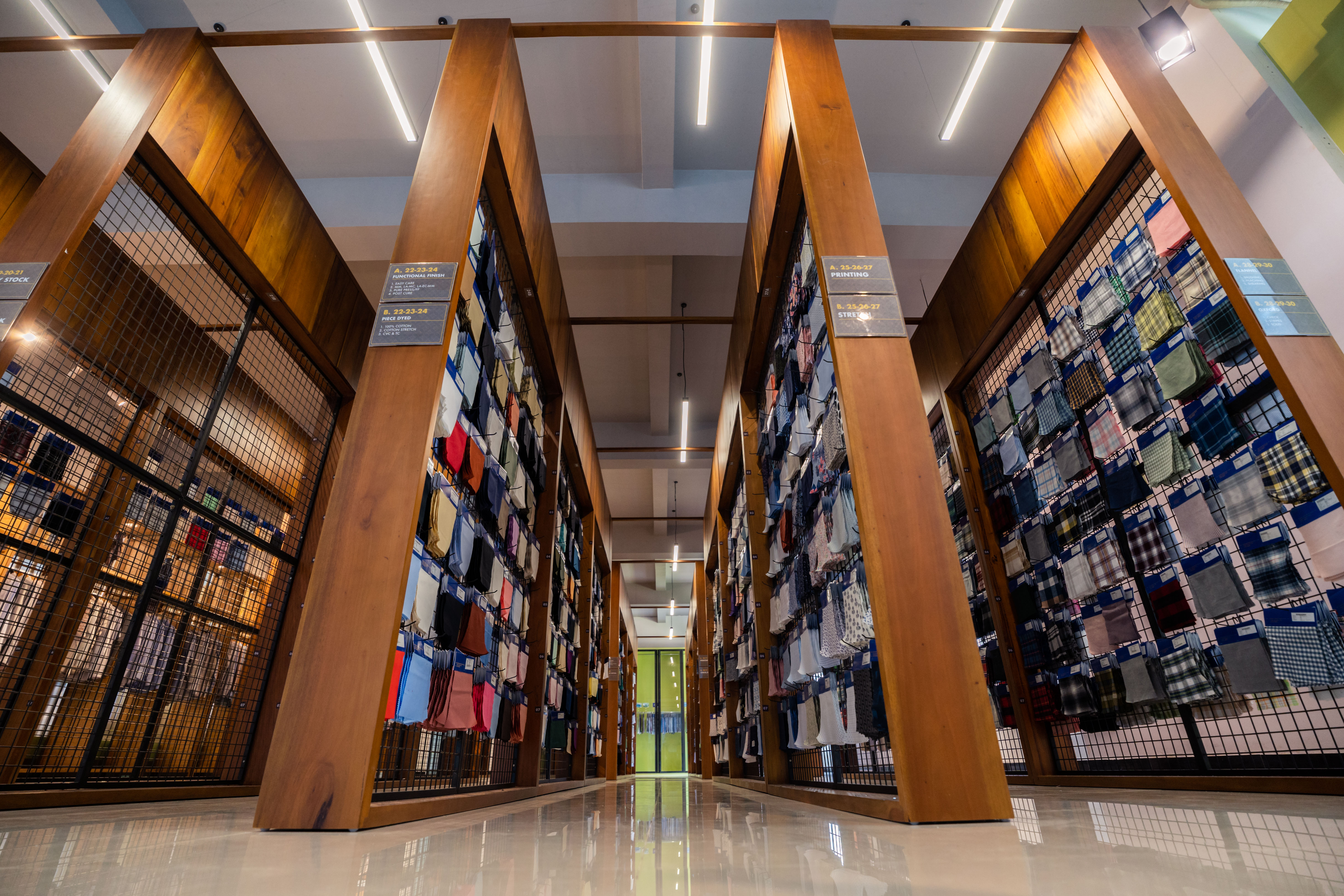
The five ranked fabrics sit inside a broader woven apparel fabric library spanning yarn-dyed, piece-dyed and printed constructions. Cover image: fabric library, PT Golden Tekstil Indonesia.
Why Sustainable and Functional Casualwear Briefs Stall at the Fabric Stage
The shortlist is short because the brief itself is unusually constrained. Three requirements pull against each other at the same time.
Sustainability claims need documentation, not adjectives. A recycled or regenerative claim has to survive a document check — content claim, chain of custody, certificate scope, certificate number. Without that, the claim is a marketing statement that a sourcing team cannot defend in an audit or a retail compliance review.
Functional claims need test methods. Wicking and quick-dry performance are performance properties, verified by test method and threshold. Neither property is proved by a fibre-content certificate, and neither certificate is proved by a performance test report. Buyers regularly receive one document and assume it covers both.
Casualwear narrows the weight window. A casual shirt, overshirt or soft trouser has a working range; too light and the garment loses shape, too heavy and it stops being a casual piece and becomes outerwear. That alone eliminates a large share of a mill's range before the sustainability question is even asked.
The result is a familiar pattern: a design team proposes a fabric, the compliance team asks for the certificate number, the production team asks for a shrinkage and colour-fastness result, and no single document set answers both questions. Building a shortlist around fabrics that already have both verification tracks attached is faster than retrofitting evidence onto a preferred hand-feel.
What the Wider Certification Landscape Does and Does Not Cover
Textile Exchange maintains the Organic Content Standard, the Recycled Claim Standard and the Global Recycled Standard as material-related voluntary standards for organic and recycled textile materials. These are the standard systems a buyer is most likely to be asked about when a recycled or organic claim enters a casualwear programme.
That single sentence carries the most important implication in this article: those standards are content and chain-of-custody systems. They establish what a material is made of and that it can be traced. They do not establish that a finished fabric wicks, dries quickly, resists wrinkling, or holds shade after washing. A buyer who treats a recycled-content certificate as a performance certificate has verified the wrong thing.
The performance side of the question is answered somewhere else — in a fabric testing laboratory. GTI operates its own in-house testing centre serving woven fabrics, with testing protocols approved directly by Polo Ralph Lauren and Kohl's, referencing AATCC, ASTM D, JIS and the ISO standard suite. In practice, the material claim and the performance verification sit inside one facility. That is the structural reason this shortlist can be reviewed as a set rather than one fabric at a time.
It also matters that the five fabrics are produced on a single vertically integrated site. Because yarn dyeing, weaving and finishing happen on one campus, chain-of-custody questions about where a batch was processed do not have to be resolved across multiple third parties. That does not remove the need to check certificate scope documents — it shortens the distance the request has to travel.
A final distinction that buyers should carry into every conversation on this topic: farm-level and factory-level certifications answer different questions than product-level certificates. A facility standard such as OEKO-TEX STeP or the ISO 9001, ISO 14001 and ISO 45001 family tells you about the site. It does not, on its own, tell you that a specific fabric style carries a specific recycled or regenerative content claim. The table further below separates the two.

Shade consistency between dye lots is a standard procurement risk in woven fabric; colour matching is handled on site before bulk runs.
The Ranked Picks: Five Woven Apparel Fabrics for Sustainable and Functional Casualwear
How This Ranking Was Ordered
Four criteria were applied, in this order:
- Verification depth. Does a product-specific certificate naming this style exist, or does verification rest on facility-level standards only?
- Functional contribution. What does the fabric actually do for the wearer in a casualwear garment — and is that claim testable?
- Range fit. How wide is the weight window, and how many casualwear garment types can it plausibly serve?
- Fibre strategy. How much of a conventional fibre does the construction displace, and how explainable is that substitution to a compliance reviewer?
Verification depth outranks hand-feel in this ranking because a fabric that cannot be documented cannot be shipped into a regulated retail programme, however good it looks in a header card.
Rank 1 — Carbon Zero Tencel, 506520-02 / B01109-01
Verified Fabric Facts
- Type: Carbon Zero Tencel, Cotton Tencel Blend
- Weight: 94–110 gsm
- Yarn count: 50×50 to 90×70
- Composition: 60% Cotton / 40% Carbon Zero Tencel; 68.2% Cotton / 31.8% Tencel
- Stated use: Low-carbon and ESG-driven fashion brands
- Facility-level coverage: OEKO-TEX STeP, ISO 9001, ISO 14001, ISO 45001, Higg FEM, Higg FSLM
Carbon Zero Tencel earns first position because it is the most adaptable fabric in the set for casualwear silhouettes that need to stay light. The 94–110 gsm window sits in lightweight woven shirting territory, which is where a large share of casual volume actually lives: summer shirts, resort shirts, airy button-fronts, soft camp-collar pieces.
The fibre story is a cotton and Tencel blend, offered in two composition directions — a 60/40 cotton-to-Carbon-Zero-Tencel option and a 68.2/31.8 cotton-to-Tencel option. The yarn-count range from 50×50 down to 90×70 gives a designer something to work with at the finer end without leaving the weight band.
Its honest limitation is verification. Among the five, it is the fabric whose sustainability positioning is least directly covered by a product-specific material certificate. Its documentation rests on facility-level standards — OEKO-TEX STeP, the ISO 9001, ISO 14001 and ISO 45001 family, and Higg FEM and Higg FSLM verification. Those are real and auditable, but they describe the site, not the content of this particular style. A buyer whose brief requires a content claim with a certificate number should plan additional documentation before committing, or treat this as the lightweight option in a range anchored by a certified fabric at Rank 2.
Rank 2 — Regenerative Cotton, S01232-02 / B00390-04
Verified Fabric Facts
- Type: Regenerative Cotton, Regenerative Cotton Blend
- Weight: 171–173 gsm
- Yarn count: 40×20/2
- Composition: 56.7% Regenerative Cotton / 43.3% Cotton; 65.5% Cotton / 34.5% Regenerative Cotton
- Product-level certification: Regenagri Chain of Custody, certificate CU1200458REGENAGRI-2026-00061131, issued by Control Union, valid 2026-01-03 to 2027-01-02
- Certified scope: dyed fabrics, dyed yarns, greige fabrics, printed fabrics, covering dyeing, finishing, weaving, printing, packing, warehousing and trading activities
- Facility-level coverage: OEKO-TEX STeP, ISO 9001, ISO 14001, ISO 45001, Higg FEM, Higg FSLM
Regenerative Cotton ranks second overall and first on verification. It is the only fabric in this set with a product-specific chain-of-custody certificate that names the exact styles S01232-02 and B00390-04 in a scope document. For a sourcing team, that is the difference between a claim that can be submitted and a claim that has to be argued.
The certificate is a Control Union Regenagri Chain of Custody certificate, number CU1200458REGENAGRI-2026-00061131, issued under the Regenagri Chain of Custody Criteria–Textiles Version 2.0, valid from 3 January 2026 to 2 January 2027, and covering the EU, US and Asia markets. Its scope explicitly includes dyeing, finishing, weaving, printing, packing, warehousing and trading activities — which matters, because a content claim is only as strong as the processing steps inside its scope.
The construction is also the heaviest of the five at 171–173 gsm on a 40×20/2 yarn count. That weight and that yarn structure point toward garments with body: structured casual shirts, overshirts, soft jackets, and bottom-weight casual pieces where the fabric needs to hold a line rather than drape. The two composition options — 56.7% regenerative cotton with 43.3% cotton, and 65.5% cotton with 34.5% regenerative cotton — give a buyer a way to tune the certified share against cost.
The limitation to plan around is seasonal. At 171–173 gsm this is not a high-summer shirting fabric. It belongs in the shoulder seasons and in the structured half of a casualwear range, which is precisely why pairing it with Rank 1 makes sense in a single collection.
Rank 3 — Recycled Nylon, S01601-01 / S01601-04
Verified Fabric Facts
- Type: Recycled Nylon, BioDry, Cotton Recycled Nylon Tencel Blend
- Weight: 113 gsm
- Yarn count: 50×50D30D
- Composition: 43% Cotton / 31% Recycled Nylon / 21% Tencel
- Stated use: performance and sustainable casualwear
- Product-level certification: covered by Textile Exchange scope certificate GCL-304497-MUL-2026 (GCL International Ltd.), OCS V3.0, GRS V4.0, RCS V2.0, CCS V3.1, valid 2026-04-01 to 2027-03-31
- Facility-level coverage: OEKO-TEX STeP, ISO 9001, ISO 14001, ISO 45001, Higg FEM, Higg FSLM
Recycled Nylon is the technical fabric of the set, and the only one that combines a recycled-content claim with a named functional platform — BioDry. Its three-fibre construction — 43% cotton, 31% recycled nylon, 21% Tencel — is a deliberate blend: cotton for hand and comfort, recycled nylon for durability and performance, Tencel for drape and moisture behaviour.
The recycled content is supported at product level. Recycled Nylon S01601-01 and S01601-04 appear among the products covered by Textile Exchange scope certificate GCL-304497-MUL-2026, issued by GCL International Ltd. and valid from 1 April 2026 to 31 March 2027. That certificate spans the Organic Content Standard V3.0, Global Recycled Standard V4.0, Recycled Claim Standard V2.0 and Content Claim Standard V3.1 — meaning the recycled claim can be documented through the GRS and RCS routes rather than asserted.
At 113 gsm on a 50×50D30D yarn count, this is a mid-light fabric suited to performance casualwear: travel shirts, moisture-managed casual button-fronts, lightweight soft-shell-adjacent pieces, and any garment where the wearer expects the fabric to behave rather than merely look good.
The limitation is cost and communication complexity. Three-fibre blends are harder to explain to a compliance reviewer than a two-fibre construction, and recycled nylon sits at a different price level from recycled polyester. It is a fabric to specify when the performance story is central to the product, not when it is a footnote.
Rank 4 — Recycled Polyester, B01308-03 / B01718-14
Verified Fabric Facts
- Type: Recycled Polyester, Recycled Polyester Cotton Blend
- Weight: 109–112 gsm
- Yarn count: 45×45
- Composition: 60% Cotton / 40% Recycled Polyester; 65% Recycled Polyester / 35% Cotton
- Stated use: sustainable casualwear
- Product-level certification: covered by Textile Exchange scope certificate GCL-304497-MUL-2026 (GCL International Ltd.), OCS V3.0, GRS V4.0, RCS V2.0, CCS V3.1, valid 2026-04-01 to 2027-03-31
- Facility-level coverage: OEKO-TEX STeP, ISO 9001, ISO 14001, ISO 45001, Higg FEM, Higg FSLM
Recycled Polyester ranks fourth, and it is the fabric most likely to carry volume in a sustainable casualwear programme. The reason is structural rather than promotional: it offers two composition directions in the same weight band — a cotton-led 60/40 cotton-to-recycled-polyester option, and a recycled-polyester-led 65/35 option where the recycled share is the majority fibre.
That second option is genuinely significant for a sustainability brief. A construction where 65% of the fibre content is recycled polyester gives a compliance and marketing team far more to work with than a fabric where recycled content is a minority ingredient. It also means one fabric family can serve two very different product stories.
The weight range of 109–112 gsm on a 45×45 yarn count is a versatile casualweight — shirts, casual tops, soft casual trousers, uniform-style casual pieces. It sits close to Recycled Nylon in weight but is a simpler, more cost-predictable construction.
The limitation is that its functional story is thinner than Rank 3. This is a sustainability-led fabric, not a performance-led one. If the brief requires wicking or quick-dry claims as headline features, Recycled Polyester is the wrong lead and should sit underneath a performance fabric in the range.
Rank 5 — Cool-Dry, B02568-02 / B02587-04
Verified Fabric Facts
- Type: Non-Iron, Wicking, Quick Dry, Areoloft, Cotton Polyester Spandex
- Weight: 106–156 gsm
- Yarn count: 40×75D+75D20D
- Composition: 64% Cotton / 32% Polyester / 4% Spandex
- Stated use: performance and active-casual shirting
- Product-level certification: OEKO-TEX Standard 100, certificate SH015 206902 (TESTEX AG), valid 2025-11-25 to 2026-09-15
- Facility-level coverage: OEKO-TEX STeP, ISO 9001, ISO 14001, ISO 45001, Higg FEM, Higg FSLM
Cool-Dry is ranked fifth on a sustainability-weighted brief and would rank first on a performance-weighted one. That inversion is the most useful thing to understand about this list.
On function, it is the strongest fabric here by a clear margin. It is specified with wicking and quick-dry performance, non-iron behaviour and Areoloft, in a 64% cotton / 32% polyester / 4% spandex construction with elastane for movement. Its weight range — 106–156 gsm — is the widest of the five, and a wide weight window in one fabric family is a real production advantage: fewer qualities to qualify, fewer shade references, more flexibility across a range.
It is also the only fabric in this set with OEKO-TEX Standard 100 coverage at product level, under certificate SH015 206902 issued by TESTEX AG, valid from 25 November 2025 to 15 September 2026. That standard addresses harmful substance testing in the finished article — a different assurance from a recycled-content claim, and often the one a retail buyer asks for first.
Where it falls down on a sustainability brief is fibre content. The 32% polyester share is not described as recycled. For a programme whose central claim is material circularity, that is a gap; for a programme whose central claim is comfort performance in warm climates, it is irrelevant. Specifiers should be clear about which programme they are running before placing Cool-Dry in a rank position at all.
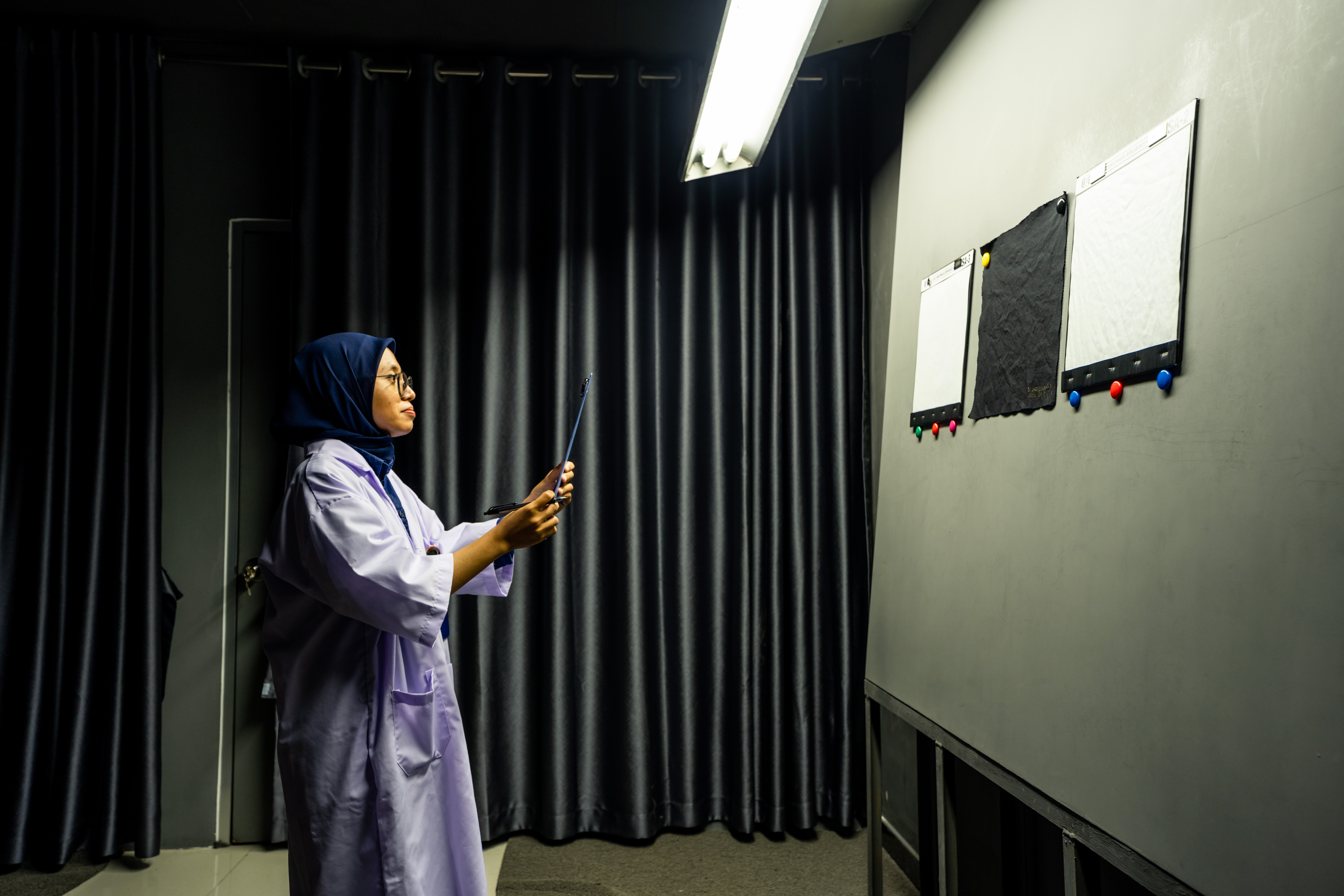
Performance claims are verified in GTI's in-house testing centre, with protocols referencing AATCC, ASTM D, JIS and the ISO standard suite.
Side-by-Side Comparison
The table below contains only facts that appear in GTI's product records. No comparative performance scores, price indices or third-party rankings are implied.
| Rank | Fabric | Model | Weight (gsm) | Yarn count | Composition | Product-level verification | Best-fit casualwear role |
|---|---|---|---|---|---|---|---|
| 1 | Carbon Zero Tencel | 506520-02 / B01109-01 | 94–110 | 50×50 to 90×70 | 60% Cotton / 40% Carbon Zero Tencel; 68.2% Cotton / 31.8% Tencel | Facility-level standards only (OEKO-TEX STeP, ISO 9001/14001/45001, Higg FEM & FSLM) | Lightweight casual and resort shirting |
| 2 | Regenerative Cotton | S01232-02 / B00390-04 | 171–173 | 40×20/2 | 56.7% Regenerative Cotton / 43.3% Cotton; 65.5% Cotton / 34.5% Regenerative Cotton | Regenagri Chain of Custody CU1200458REGENAGRI-2026-00061131 (Control Union) | Structured casual shirts, overshirts, soft bottom-weight pieces |
| 3 | Recycled Nylon | S01601-01 / S01601-04 | 113 | 50×50D30D | 43% Cotton / 31% Recycled Nylon / 21% Tencel | Textile Exchange GCL-304497-MUL-2026 (OCS V3.0, GRS V4.0, RCS V2.0, CCS V3.1) | Performance and travel casualwear |
| 4 | Recycled Polyester | B01308-03 / B01718-14 | 109–112 | 45×45 | 60% Cotton / 40% Recycled Polyester; 65% Recycled Polyester / 35% Cotton | Textile Exchange GCL-304497-MUL-2026 (OCS V3.0, GRS V4.0, RCS V2.0, CCS V3.1) | Volume sustainable casualwear, casual tops and soft trousers |
| 5 | Cool-Dry | B02568-02 / B02587-04 | 106–156 | 40×75D+75D20D | 64% Cotton / 32% Polyester / 4% Spandex | OEKO-TEX Standard 100 SH015 206902 (TESTEX AG) | Active-casual and warm-climate performance shirting |
Read the table as a shortlist, not a league table. The product-level verification column is the one to check against your own compliance brief first. Two fabrics carry a material-content certificate, one carries a harmful-substance certificate, and two rely on facility-level standards that describe the site rather than the style.
How to Convert This Shortlist into an Approved Bulk Order
Selecting a fabric from a ranked list is the easy part. The step-by-step below is the sequence GTI applies to an OEM fabric order, from first request to shipment.
Two notes on this sequence. First, the approval stages are not administrative — changing shade or construction after bulk dyeing has started affects both lead time and cost, which is why written lab dip or strike-off approval is the control point. Second, if the destination market requires certified sourcing, the certificate requirement should be stated at order stage, not raised at shipment. Certificate scopes carry validity dates, and a scope that expires mid-programme creates a documentation gap the buyer owns.
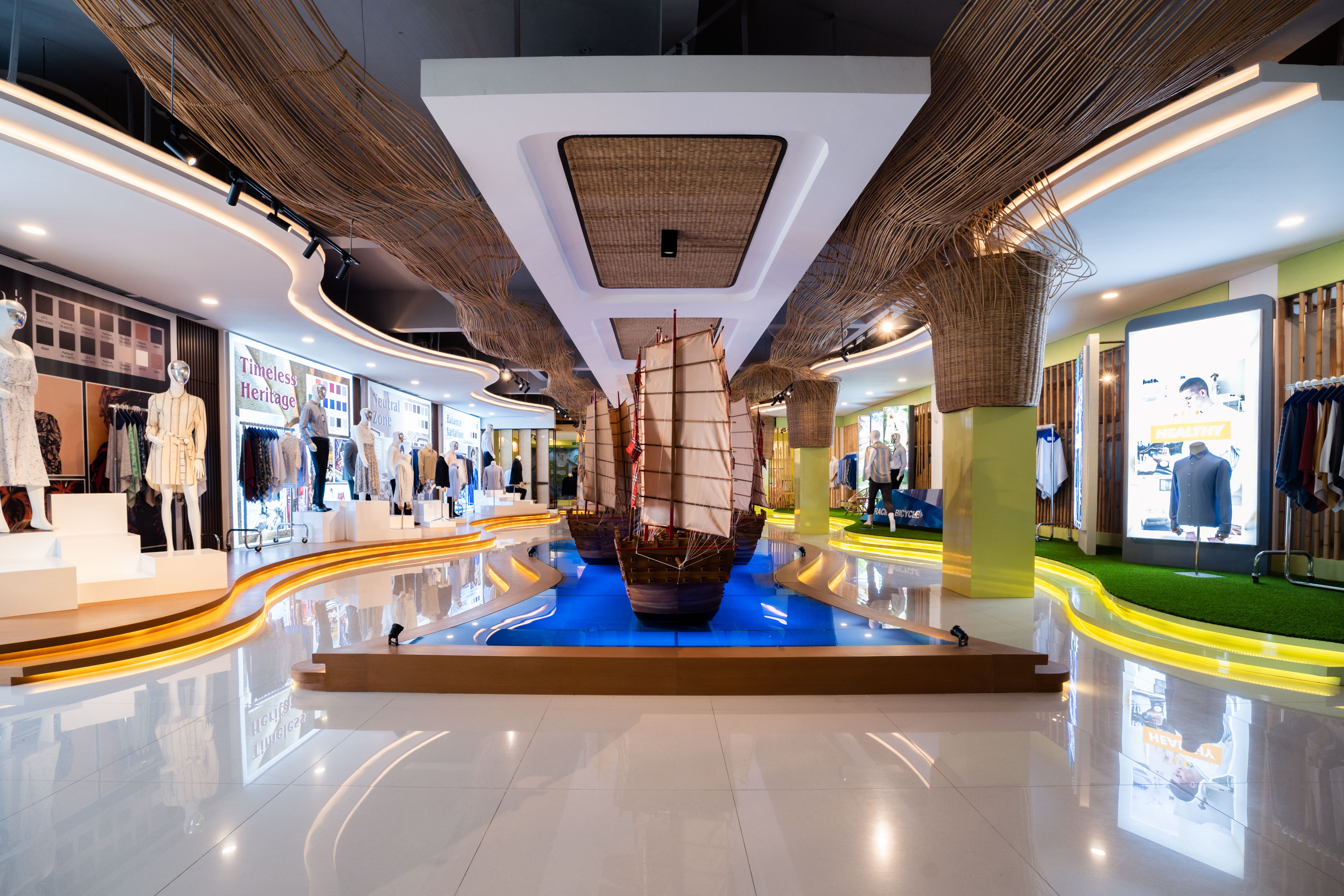
Hand sample review is the decision point in the OEM sequence — colour, construction and finish are locked here before big sample development.
Where Each Fabric Earns Its Place in a Casualwear Range
Lightweight summer and resort shirting
Carbon Zero Tencel 506520-02 / B01109-01 at 94–110 gsm is the natural lead. It is the lightest construction in the set and the one that will hold a soft collar without stiffening. Pair it with Regenerative Cotton for the same collection's structured pieces so the range reads as one story.
Structured casual and shoulder-season pieces
Regenerative Cotton S01232-02 / B00390-04 at 171–173 gsm on a 40×20/2 yarn count is built for garments that need body — overshirts, unstructured soft jackets, casual bottom-weight pieces. It is also the fabric to lead with when the sustainability claim is the headline, because the Regenagri chain-of-custody certificate names the styles directly.
Travel and performance casualwear
Recycled Nylon S01601-01 / S01601-04 at 113 gsm brings the BioDry platform alongside a recycled-content claim. It suits products sold on behaviour — packable shirts, moisture-managed casual button-fronts, garments bought for a specific trip or climate.
Volume sustainable programmes
Recycled Polyester B01308-03 / B01718-14 is the fabric to build a large programme around, particularly in the 65% recycled polyester / 35% cotton direction where the recycled share is the majority fibre. Two composition options in one weight band mean one qualification process can serve two product stories.
Warm-climate and active-casual shirting
Cool-Dry B02568-02 / B02587-04 covers the performance end: wicking, quick-dry, non-iron and Areoloft in a 64/32/4 cotton-polyester-spandex construction, across the widest weight band in the set at 106–156 gsm. Its OEKO-TEX Standard 100 coverage is frequently the first document a retail compliance team requests.
Frequently Asked Questions
Which certificates actually name these five fabrics at product level?
Two of the five carry a product-level material certificate. Regenerative Cotton S01232-02 / B00390-04 is covered by Regenagri Chain of Custody certificate CU1200458REGENAGRI-2026-00061131, issued by Control Union and valid from 3 January 2026 to 2 January 2027. Recycled Nylon S01601-01 / S01601-04 and Recycled Polyester B01308-03 / B01718-14 are covered by Textile Exchange scope certificate GCL-304497-MUL-2026, issued by GCL International Ltd. and valid from 1 April 2026 to 31 March 2027, spanning OCS V3.0, GRS V4.0, RCS V2.0 and CCS V3.1. Cool-Dry B02568-02 / B02587-04 is covered by OEKO-TEX Standard 100 certificate SH015 206902 from TESTEX AG, valid to 15 September 2026, which addresses harmful-substance testing rather than recycled content. Carbon Zero Tencel 506520-02 / B01109-01 relies on facility-level standards including OEKO-TEX STeP, ISO 9001, ISO 14001 and ISO 45001, and Higg FEM and Higg FSLM verification. Buyers should confirm current certificate validity before order confirmation, since each scope carries an expiry date.
Can these fabrics be ordered as OEM or ODM production, and how does that process run?
Yes. PT Golden Tekstil Indonesia provides OEM and ODM production services for woven apparel fabrics and garments. The process runs from a customer sample or a request for fibre and construction selection, through handloom, lab dip or strike-off hand sample development, hand sample approval, big sample development, big sample approval, bulk order confirmation, mass production, in-house testing-centre inspection, and shipment. R&D capacity supports 1,500 handlooms per month for sample weaving, and the in-house testing centre verifies against AATCC, ASTM D, JIS and ISO standards, with testing protocols approved by Polo Ralph Lauren and Kohl's.
What are the minimum order quantities and purchasing terms?
Fabric MOQ is 3,000 meters per colour, and garment MOQ is 1,000 pieces per colour. Delivery terms are FOB or CIF. Payment terms are TT in advance, L/C, or TT 30–70 days after shipment. Acceptance is based on pre-shipment inspection with AQL sampling, and fabric quality control runs on the 4-Point System, with in-line QC, end-line QC and final or pre-shipment QC applied to garments. Buyers should state certification requirements at order stage rather than at shipment, because certificate scopes have validity windows.
How does sampling work before bulk production starts?
Sampling is staged and sequential. A handloom, lab dip or strike-off hand sample is developed first, using the Penelope fabric design system and the GTI Fabric E-Library for reference. Once the hand sample is approved in writing for colour, construction and finish, a larger big sample is produced and reviewed. Only after big sample approval is the bulk order confirmed. This staging exists to catch shade and construction issues before bulk dyeing begins, since changes made after bulk production starts affect both lead time and cost.
What lead times and procurement risks should be planned for?
Bulk fabric production runs approximately 30–45 days depending on construction and finish complexity; where fabric and garment are both supplied, the combined lead time is 45–70 days. The three procurement risks that most often affect woven fabric orders are shade inconsistency between lots, shrinkage or colour fastness results outside the buyer's specification, and late delivery. These arise when bulk production starts without approved lab dip or sample, when test requirements are not agreed before production, or when the production schedule and delivery date are not confirmed at order stage. The practical controls are staged sample approval, agreed test standards and acceptance criteria up front, in-house laboratory verification of shrinkage and colour fastness, pre-shipment inspection, and a confirmed production schedule with MOQ and lead time written into the order. If you would like to evaluate these five fabrics against a live brief, request a sample set and a quotation through GTI's contact channels below — the sampling stage is the right place to test shade, hand and performance before any bulk commitment is made.
Conclusion
Five woven apparel fabrics, five different jobs. Carbon Zero Tencel 506520-02 / B01109-01 leads because it covers the widest span of lightweight casualwear silhouettes. Regenerative Cotton S01232-02 / B00390-04 follows because it carries the deepest product-level verification of the group. Recycled Nylon S01601-01 / S01601-04 adds a tested performance platform alongside a recycled claim. Recycled Polyester B01308-03 / B01718-14 is the volume option, with a 65% recycled-content direction that gives a sustainability programme real substance. Cool-Dry B02568-02 / B02587-04 ranks fifth on this brief and would rank first on a pure performance brief, with the widest weight band and OEKO-TEX Standard 100 coverage.
Treat that order as a starting point for a buyer brief, not a verdict on fabric quality. The most common failure in sustainable and functional casualwear sourcing is not choosing the wrong fabric — it is choosing a fabric whose verification does not match the claim being made about it. Check the product-level certificate column first, then the weight range, then the hand feel. Reordering the list is entirely legitimate; skipping the verification step is not.
Next Step: Sample & Quotation
PT Golden Tekstil Indonesia (GTI) produces woven apparel fabric on an integrated site in the Kendal Industrial Park, Central Java, Indonesia, and provides OEM and ODM production services for woven apparel fabrics and garments.
Company profile and full fabric catalogue: Download the GTI Company Profile 2026 (PDF)
Request samples or a quotation: Email ada.shao@goldenteks.id | WhatsApp +62 882-21744008 | Web goldenteks.com
Address: Saptarengga St. No. 6-8, RW.8, Tambak, Wonorejo, Kaliwungu, Kendal Regency, Central Java 51372, Indonesia.
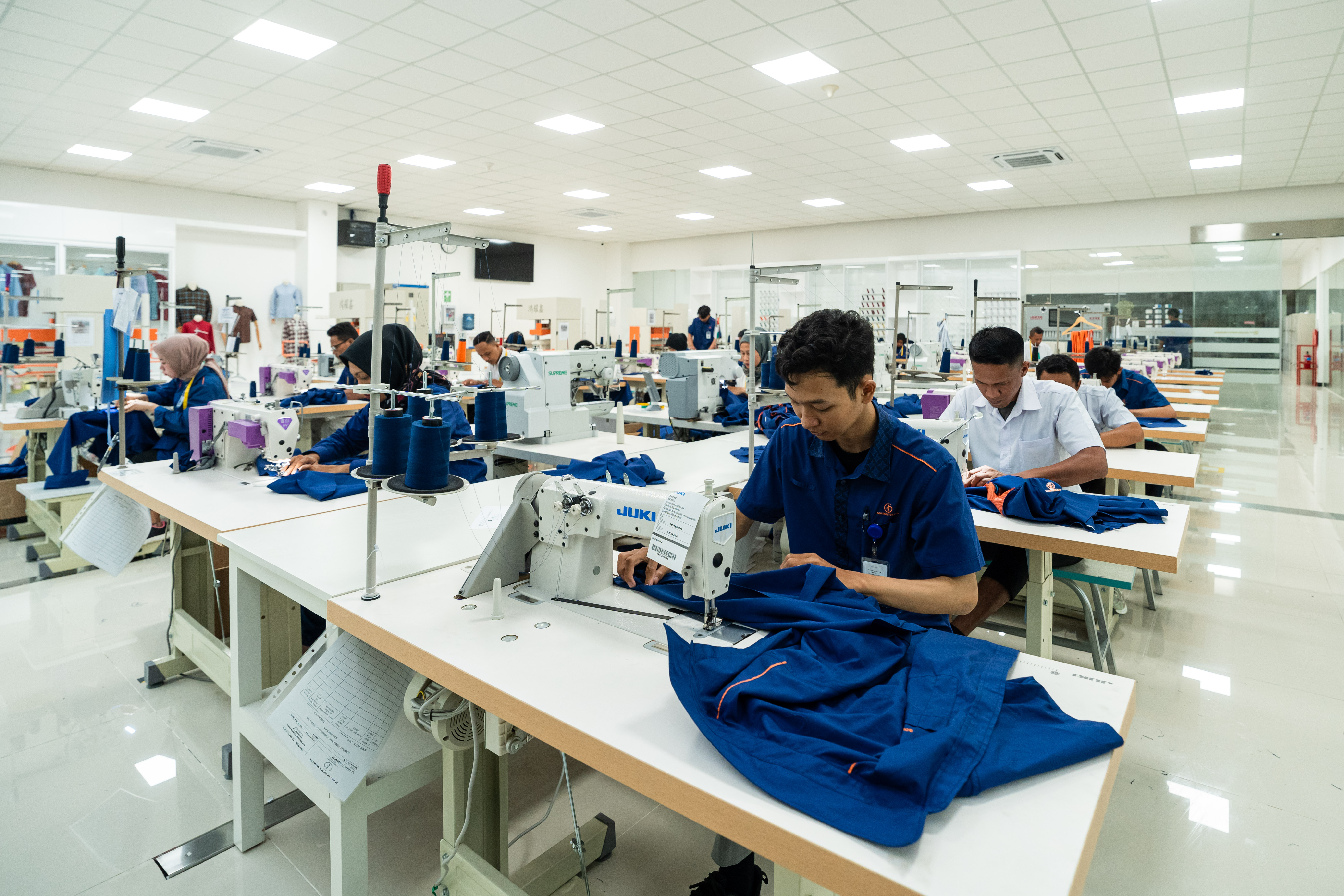
Sample development is where a ranked shortlist becomes a specified fabric. Cover image reference: fabric library, PT Golden Tekstil Indonesia.
Have Questions or Need More Details?
Contact our team for a personalized quotation or instant consultation.
Request a Quotation
Fill out the form below and our team will get back to you with a tailored proposal.
WhatsApp Direct Chat
Prefer to chat in real-time? Message us on WhatsApp for instant assistance & quick answers.
- Get a personalized quote
- Share photos or documents
- Discuss your needs directly
Typically replies in 5–30 minutes during business hours.