Woven Apparel Fabric: A Buyer's Guide to Constructions, Specifications, and Sourcing
Woven apparel fabric is a textile made by interlacing two sets of yarns - warp and weft - on a loom. It is the base material for dress shirts, trousers, outerwear, uniforms, and many casualwear programs. The commercial challenge is not finding a supplier who lists woven fabric; it is defining the construction, fiber, weight, finish, and compliance evidence that the garment actually needs.
Problem Definition: Why Woven Fabric Selection Goes Wrong
Most fabric problems start before a mill quotes. They start when a buyer sends a fabric name instead of a specification. Poplin, Oxford, flannel, dobby, seersucker, and linen look are useful category words, but they do not define a reproducible fabric. Two fabrics sold as cotton poplin can differ in yarn count, fabric weight, stretch, surface appearance, shrinkage, colorfastness, and finish durability.
A second problem is finish ambiguity. Non-iron, wicking, quick dry, cooling comfort, water repellent, and anti-UV are performance claims that need a test method and a target. Without those details, a sample may feel correct but fail after laundering, or pass a lab test but not match the garment's care label.
A third problem is sustainability documentation. Organic cotton, regenerative cotton, recycled polyester, and recycled nylon are material categories first. For a brand claim, the buyer also needs certification scope and chain-of-custody evidence. A product page listing is not the same as a transaction certificate for a specific order.
The practical solution is a decision sequence: end use, fiber system, weave, weight and yarn count, finish, compliance, sample, and bulk. This guide follows that sequence and uses GTI product examples to show what a written specification looks like.
Industry Background: A Large, Segmented Market
Industry analysis places the global textile fabrics market at USD 732.38 billion in 2026, according to commercial research cited by Vertex AI Search and Industry Analysis. That figure covers a broader textile fabrics market, not woven apparel fabric alone. Within the fiber mix, polyester held a 54.1% share of the global textile fabrics market by volume in 2025, based on the same research source.
Indonesia remains a relevant sourcing base. OEC data places Indonesia's total textile exports at USD 13.5 billion in 2024. For buyers, however, country-level trade values are only context. The operating decision happens at the fabric level: which mill can produce the specified construction, finish, certification, and order quantity on a reliable schedule.
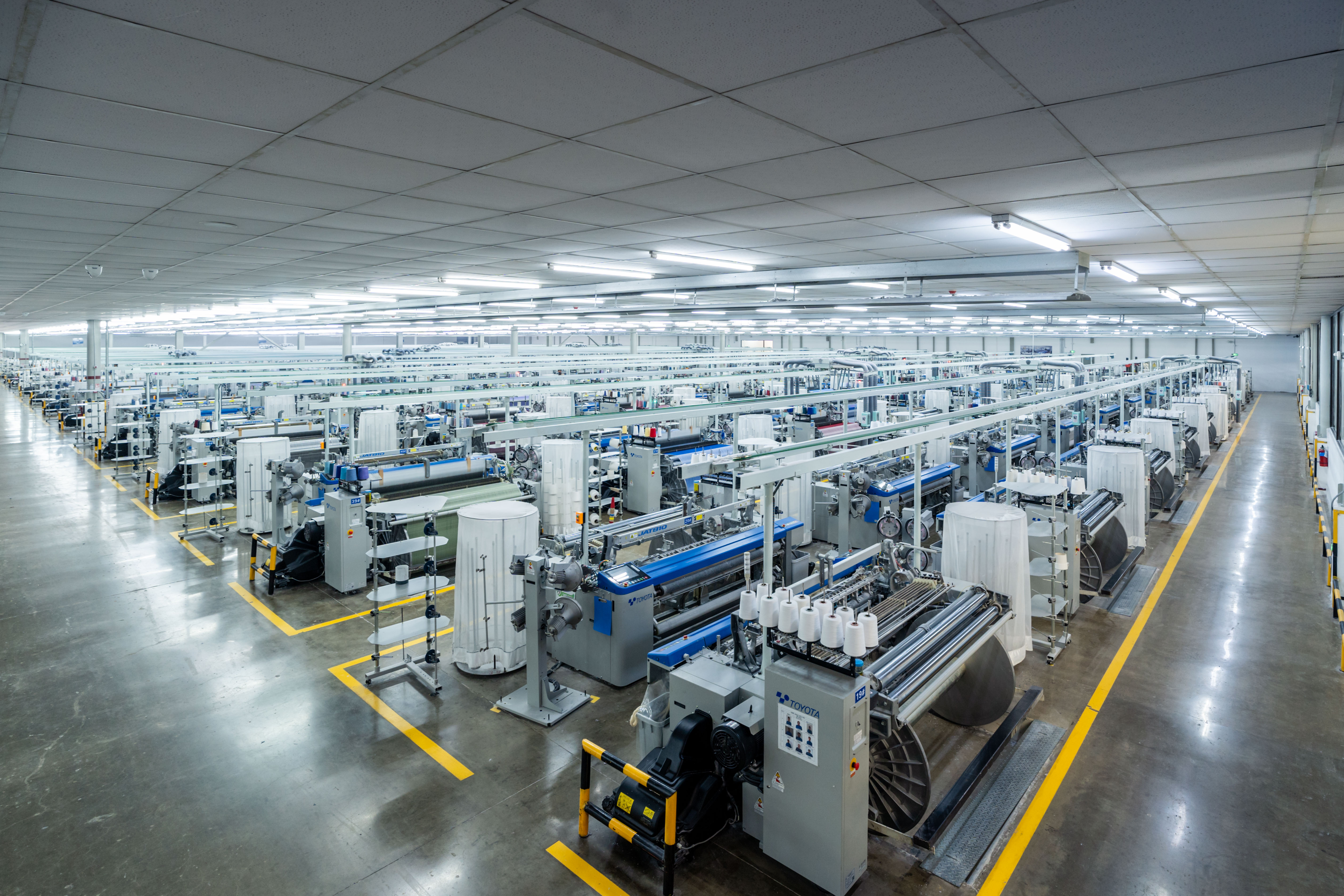
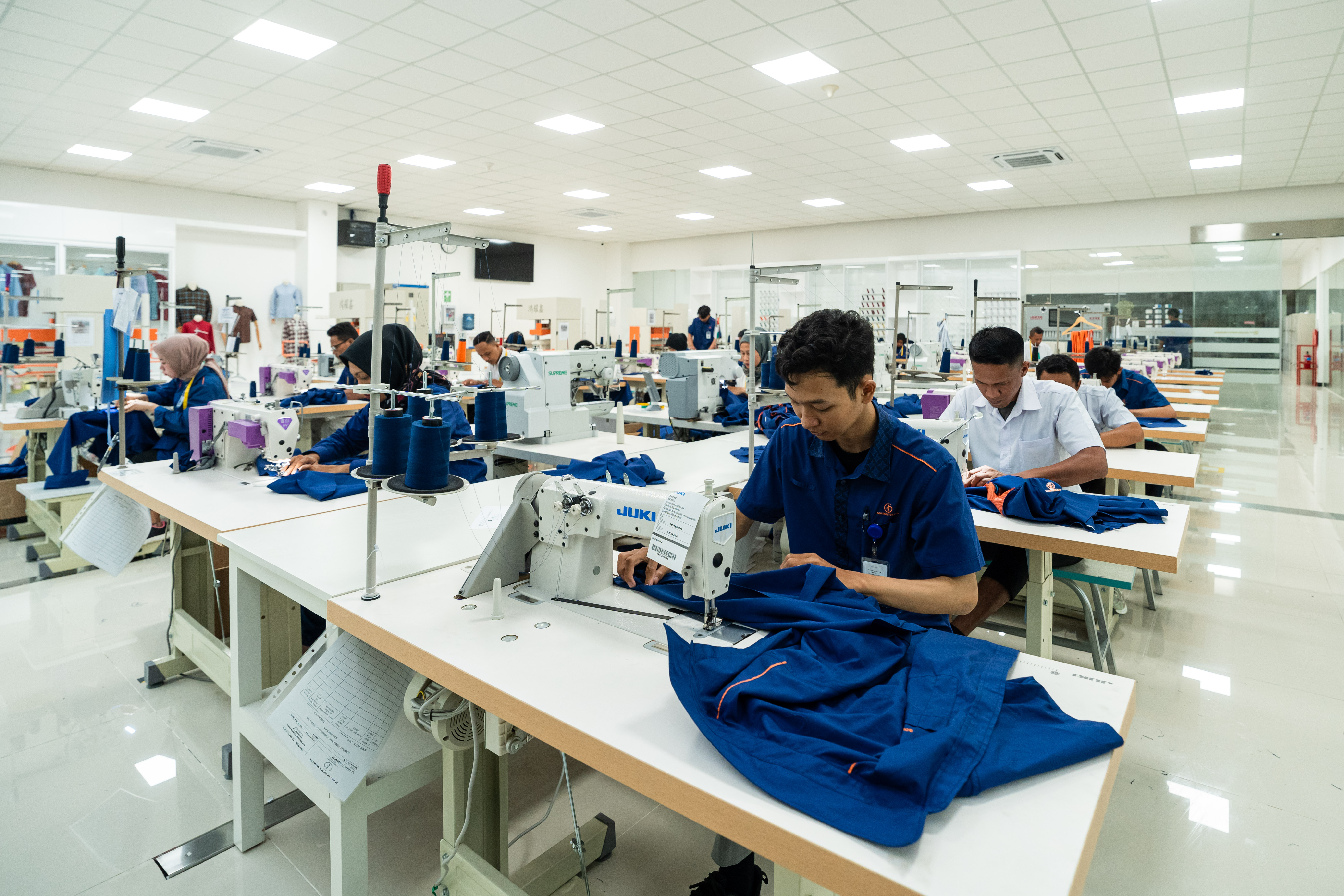
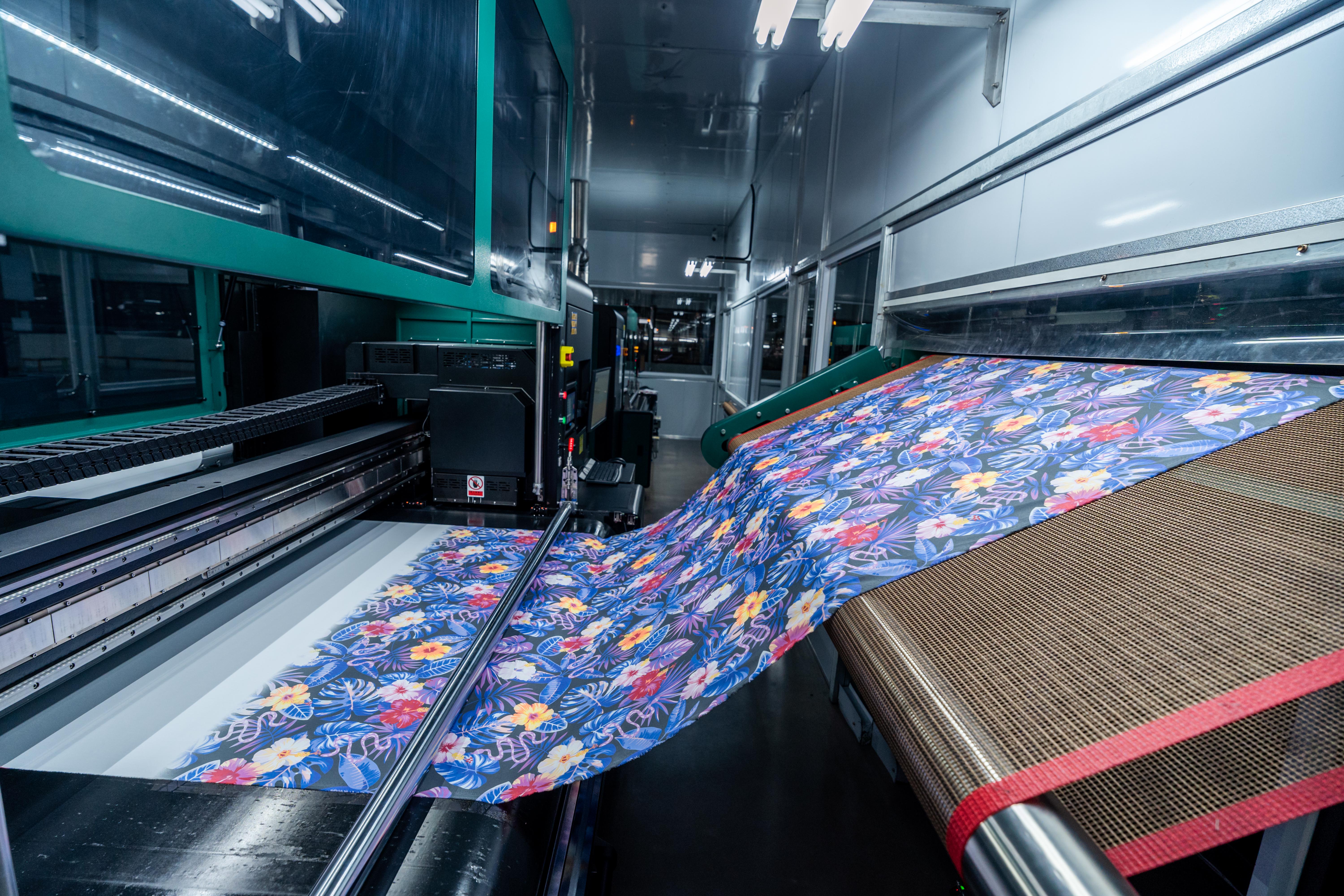
PT Golden Tekstil Indonesia is a woven apparel fabric manufacturer in Indonesia. The company was established in 2019 and operates an integrated textile facility in Kendal Industrial Park, Central Java, where yarn is converted into fabric and finished fabric. Its operations include yarn dyeing, piece dyeing, digital printing, and fabric finishing. GTI reports 38,000,000 meters of annual woven apparel fabric output, 2,828 employees, a 30-engineer R&D team, and a 171,401 m² manufacturing site. Export business accounts for 75% of total sales, with major markets in the United States, Europe, Japan, and Indonesia.
The product range covers cotton, linen blends, recycled polyester, recycled cotton, organic cotton, and stretch woven fabrics. Finishing services include mercerized, anti-bacterial, anti-UV, wrinkle-free, water/oil/stain repellent, cooling, thermal, and smart-temperature finishes. GTI also operates a digital-first fabric design pipeline using YX Weave, Ned Graphics, and Penelope, and a digital print line for woven apparel fabric.
For ESG-driven buyers, GTI reports environmental infrastructure that includes a wastewater treatment facility processing 4,000 tons per day, a recycling system, 26,000 sqm of solar panels, and a transition from coal to biomass starting January 2025. The published certification list includes ZDHC, Higg FEM, Higg FSLM, ISO 9001, ISO 14001, ISO 45001, OEKO-TEX Standard 100, OEKO-TEX STeP, GOTS, GRS, Recycled 100, Organic 100, Recycled Blended, Organic Blended, regenagri, and membership in the U.S. Cotton Trust Protocol.
Detailed Solution: How to Specify Woven Apparel Fabric That Performs
Woven apparel fabric is defined by its interlaced structure. Knit fabric is formed by interlocking loops; woven fabric is formed by crossing warp and weft yarns. This structural difference matters because woven fabric is commonly used where dimensional stability, a crisp surface, and controlled drape are required, such as shirting and bottoms. Within woven fabrics, the construction and finish decide the actual performance.
1. Define the end use before the fabric name
A formal business shirt, a travel shirt, a fall/winter overshirt, a pair of trousers, and a lightweight resort shirt do not need the same fabric. The end use sets priorities: surface appearance, wrinkle recovery, stretch, breathability, warmth, water repellency, or moisture management. Write the garment category and the care claim first. Then choose the fabric family.
2. Choose the fiber system
Fiber selection controls handfeel, durability, care, and sustainability positioning. GTI's range includes 100% cotton, cotton-spandex, cotton-polyester-spandex, organic cotton, regenerative cotton, recycled polyester, recycled nylon, Carbon Zero Tencel, Sorona, Modal, and linen blends. For a crisp shirt, a high-cotton poplin or Oxford is a common starting point. For stretch comfort, cotton-spandex or 4-way stretch constructions are available. For a lower-impact brief, organic cotton, regenerative cotton, recycled polyester, recycled nylon, or Carbon Zero Tencel can be evaluated with the appropriate certification evidence.
3. Select the weave and construction
Poplin is a fine, smooth construction used for formal and business shirting. GTI's Regular Poplin Stretch Quality, models B00295-02, 550887-04, 550887-01, and 573984-08, uses 91–90% cotton or BCI cotton with 9–10% spandex, weighs 113–136 gsm, and uses a 40D50×40D50 yarn count. It is a 4-way stretch woven construction for menswear and womenswear shirting.
Oxford is a classic casual and preppy shirting construction. GTI's Oxford range includes B00390-03, 565584-01, B01177-07, and B01109-01. Composition options are 100% cotton and a cotton-spandex blend specified as 98% cotton and 2% spandex. Fabric weight is 142–171 gsm, with a yarn count range of 40×20/2 to 40×40D16.
Dobby weave adds a small geometric or textured pattern through loom control. GTI's dobby fabrics include 100% cotton, cotton-spandex, and cotton-polyester-spandex variants, with weights of 110–130 gsm and yarn counts including 60×60, 50×40D50+50, and 40*75D+75D20D. The range is intended for formal and business shirting.
Flannel uses a brushed surface to create a softer handfeel. GTI's flannel range covers 100% cotton, a 65% rayon and 35% polyester blend, and a 60% cotton and 40% polyester blend. Weights run from 119 to 175 gsm, with yarn counts from 40×40 to 21×21. Typical use is fall/winter shirting.
Seersucker uses a puckered texture that keeps the fabric away from the skin. GTI offers S01183-01, a 97% cotton and 3% spandex seersucker, and S01151-01, a 56% organic cotton, 40% polyester, and 4% spandex seersucker. Weights are 109–111 gsm, and typical use is summer and resort shirting.
Linen and linen-look fabrics serve warm-climate casual and resort wear. GTI offers B00353-01 in a 55% linen and 45% rayon blend, and 569717-01 in a 100% cotton linen look. Weights are 132–190 gsm, with yarn counts of 11×11 and 21×21.
Heavy weight fabrics are used for outerwear and bottoms. GTI's heavy weight range includes 100% cotton, cotton-spandex, and a cotton-polyester-spandex blend with water repellent finish. Weights run from 204 to 359 gsm, with yarn counts from 10×10 to 30×70D21. Stretch bottom options contain spandex for comfort.

4. Specify weight, yarn count, width, and stretch
Fabric weight in gsm is a practical control point. A 110 gsm fabric and a 170 gsm fabric can both be called Oxford, but they will not behave the same in garment form. Yarn count is equally important because it affects surface density, handfeel, and strength. Width, shrinkage, stretch direction, and stretch recovery should also be written into the tech pack. If a fabric is described as 4-way stretch, confirm the stretch direction and recovery target rather than accepting the label alone.
5. Choose the finish against a test target
Finish selection should follow the garment claim. Non-iron is relevant for formal and business shirting where the end consumer wants less ironing. GTI's Non-Iron Free Formaldehyde finish is available in 100% cotton, models S00098-01, 556607-01, 572711-02, and S00904-03, with a weight of 113.5–142 gsm and a yarn count of 80/2×80/2. The non-iron finish reduces ironing requirements for end consumers of garments made from this fabric.
Wicking and quick dry are relevant for performance and active-casual shirting. GTI's Cool-Dry Fabric, models B02568-02 and B02587-04, is a 64% cotton, 32% polyester, and 4% spandex blend with a weight of 106–156 gsm. It combines a non-iron finish with wicking and quick dry performance. Model B02568-02 incorporates Aeroloft technology, described as adding a lightweight air-layer effect for breathability.
Cooling comfort is relevant for business and warm-climate shirting. GTI's Cooling Comfort Fabric, models B02454-01 and B02508-01, is a 96% cotton and 4% spandex blend with a weight of 118.26–134 gsm. It uses a Liquid Ammonia + Moisture Cure treatment and a cooling comfort functional finish. The B02454-01 variant is designed to enhance the cooling effect at the fiber level.
Water repellent, anti-bacterial, anti-UV, wrinkle-free, thermal, and smart-temperature finishes are also available within GTI's finishing services. The buyer should specify the finish name, the test method, the performance target, and the care conditions that must be maintained after laundering.
6. Lock compliance and certification before bulk
Certification should be checked at two levels: the mill's system certification and the material's chain of custody. GTI's published list includes ZDHC, Higg FEM, Higg FSLM, ISO 9001, ISO 14001, ISO 45001, OEKO-TEX Standard 100, OEKO-TEX STeP, GOTS, GRS, Recycled 100, Organic 100, Recycled Blended, Organic Blended, regenagri, and U.S. Cotton Trust Protocol membership. For a specific order, request the certificate number, scope, validity date, and transaction certificate where the claim is material-specific. This is especially important for organic cotton, regenerative cotton, recycled polyester, and recycled nylon programs.
Comparison Table: Woven Apparel Fabric Families and Example Specifications
The table below uses GTI product specifications to show how fiber, weight, yarn count, and end use change across woven apparel fabric families. It is a reference for writing a brief, not a substitute for a sample and a signed specification.
| Fabric family | Example models | Composition options | Weight | Yarn count | Typical use |
|---|---|---|---|---|---|
| Regular Poplin Stretch Quality | B00295-02 / 550887-04 / 550887-01 / 573984-08 | 91–90% cotton or BCI cotton, 9–10% spandex | 113–136 gsm | 40D50×40D50 | Menswear and womenswear shirting; 4-way stretch |
| Oxford | B00390-03 / 565584-01 / B01177-07 / B01109-01 | 100% cotton; 98% cotton / 2% spandex | 142–171 gsm | 40×20/2 to 40×40D16 | Casual and preppy shirting |
| Dobby | 556602-02 / 562993-02 / B00098-11 / B00012-01 / B02599-01 | 100% cotton; 97% cotton / 3% spandex; 64% cotton / 32% polyester / 4% spandex | 110–130 gsm | 60×60; 50×40D50+50; 40*75D+75D20D | Formal and business shirting |
| Flannel | 574259-03 / 574259-06 / 549625-03 / 552492-01 | 100% cotton; 65% rayon / 35% polyester; 60% cotton / 40% polyester | 119–175 gsm | 40×40 to 21×21 | Fall/winter shirting |
| Seersucker | S01183-01 / S01151-01 | 97% cotton / 3% spandex; 56% organic cotton / 40% polyester / 4% spandex | 109–111 gsm | 40D40+70×40D40+70; 40D50+50*75D | Summer and resort shirting |
| Linen & Linen Look | B00353-01 / 569717-01 | 55% linen / 45% rayon; 100% cotton | 132–190 gsm | 11×11; 21×21 | Casual and resort wear |
| Heavy Weight (Outer & Bottom) | S01582-01 / B03076-04 / S01506-01 / S00804-01 / B00902-05 / B01294-02 / B02260-02 | 100% cotton; cotton-polyester-spandex with water repellent; cotton-spandex | 204–359 gsm | 10×10 to 30×70D21 | Outerwear and bottoms |
| Non-Iron Free Formaldehyde | S00098-01 / 556607-01 / 572711-02 / S00904-03 | 100% cotton | 113.5–142 gsm | 80/2×80/2 | Formal and business shirting |
| Cool-Dry | B02568-02 / B02587-04 | 64% cotton / 32% polyester / 4% spandex | 106–156 gsm | 40×75D+75D20D | Performance and active-casual shirting |
| Cooling Comfort | B02454-01 / B02508-01 | 96% cotton / 4% spandex | 118.26–134 gsm | 50×40D50 | Business and warm-climate shirting |
| Organic Cotton | B01939-03 | 98% organic cotton / 2% spandex | 160 gsm | 40×40D16 | Sustainable and ESG-driven apparel |
| Regenerative Cotton | S01232-02 / B00390-04 | 56.7% regenerative cotton / 43.3% cotton; 65.5% cotton / 34.5% regenerative cotton | 171–173 gsm | 40×20/2 | Sustainable and ESG-driven apparel |
| Recycled Polyester | B01308-03 / B01718-14 | 60% cotton / 40% recycled polyester; 65% recycled polyester / 35% cotton | 109–112 gsm | 45×45 | Sustainable casualwear |
| Carbon Zero Tencel | 506520-02 / B01109-01 | 60% cotton / 40% Carbon Zero Tencel; 68.2% cotton / 31.8% Tencel | 94–110 gsm | 50×50 to 90×70 | Low-carbon and ESG-driven fashion |
Step-by-Step Breakdown: From Sample to Bulk
GTI's woven apparel fabric OEM process is designed to move from a reference sample or a written request to bulk production with approval gates. The sequence matters because each approval reduces the risk of a bulk shade, construction, or finish mismatch.
- Send a sample or request. Specify fiber composition, construction, weight, and finish, such as yarn dyed, piece dyed, or digital print, and a finish such as non-iron, wicking, cooling comfort, or water repellent.
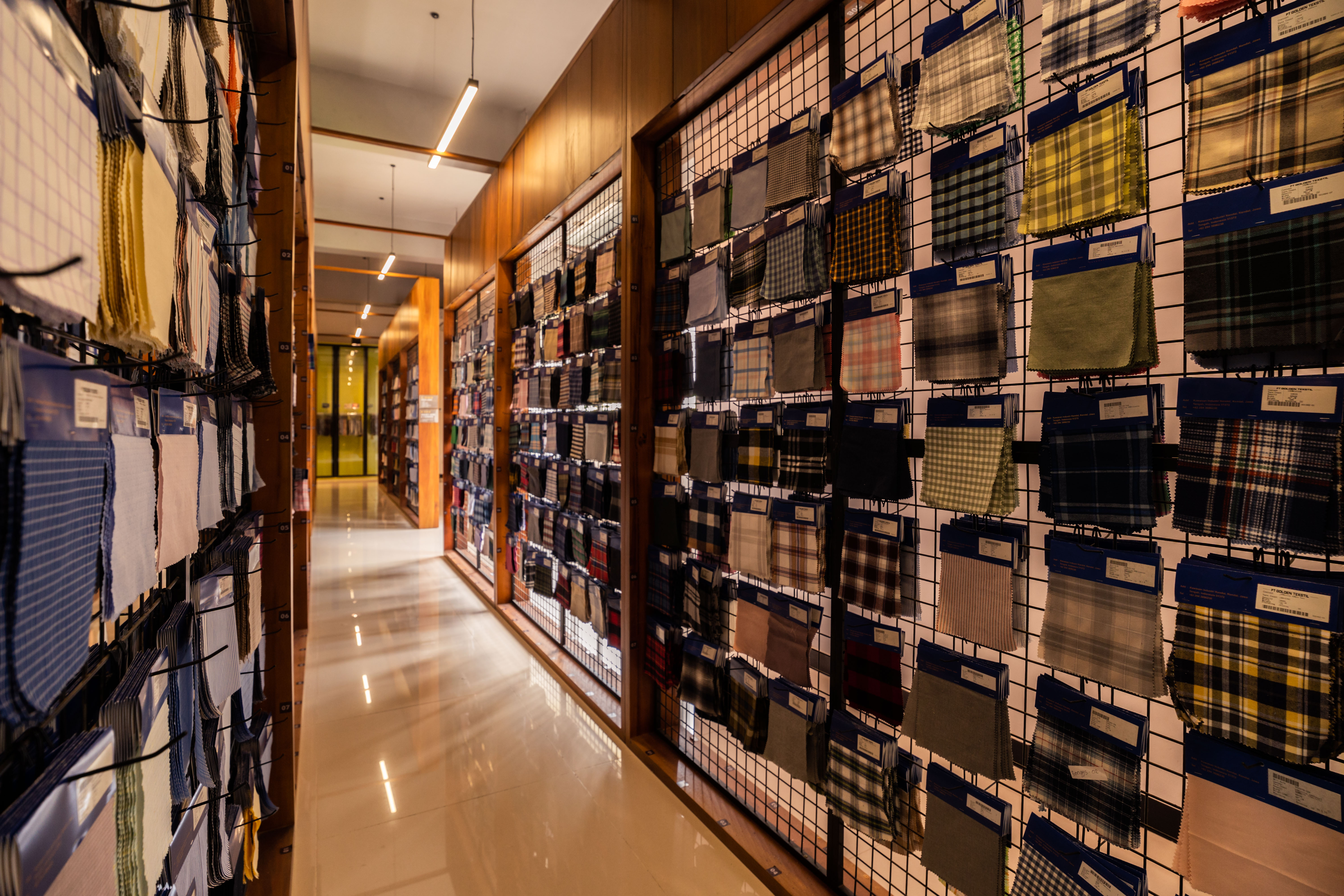
- Develop a hand sample. GTI's R&D team develops a handloom, lab dip, or strike-off hand sample using the Penelope fabric design system and GTI Fabric E-Library for reference. The R&D center supports 1,500 handlooms per month for sample weaving.
- Approve the hand sample. The buyer reviews color, construction, and finish against the garment brief.
- Develop a big sample. After hand-sample approval, GTI develops a larger-yardage big sample based on the approved hand sample.
- Approve the big sample. This is the final sample gate before bulk. Confirm the fabric weight, yarn count, stretch, surface, and finish against the written specification.
- Confirm the bulk order. GTI's fabric MOQ is 3,000 meters per color. Confirm the colorway and delivery schedule at this stage.
- Start mass production. Bulk lead time is approximately 30–45 days, depending on construction and finish complexity.
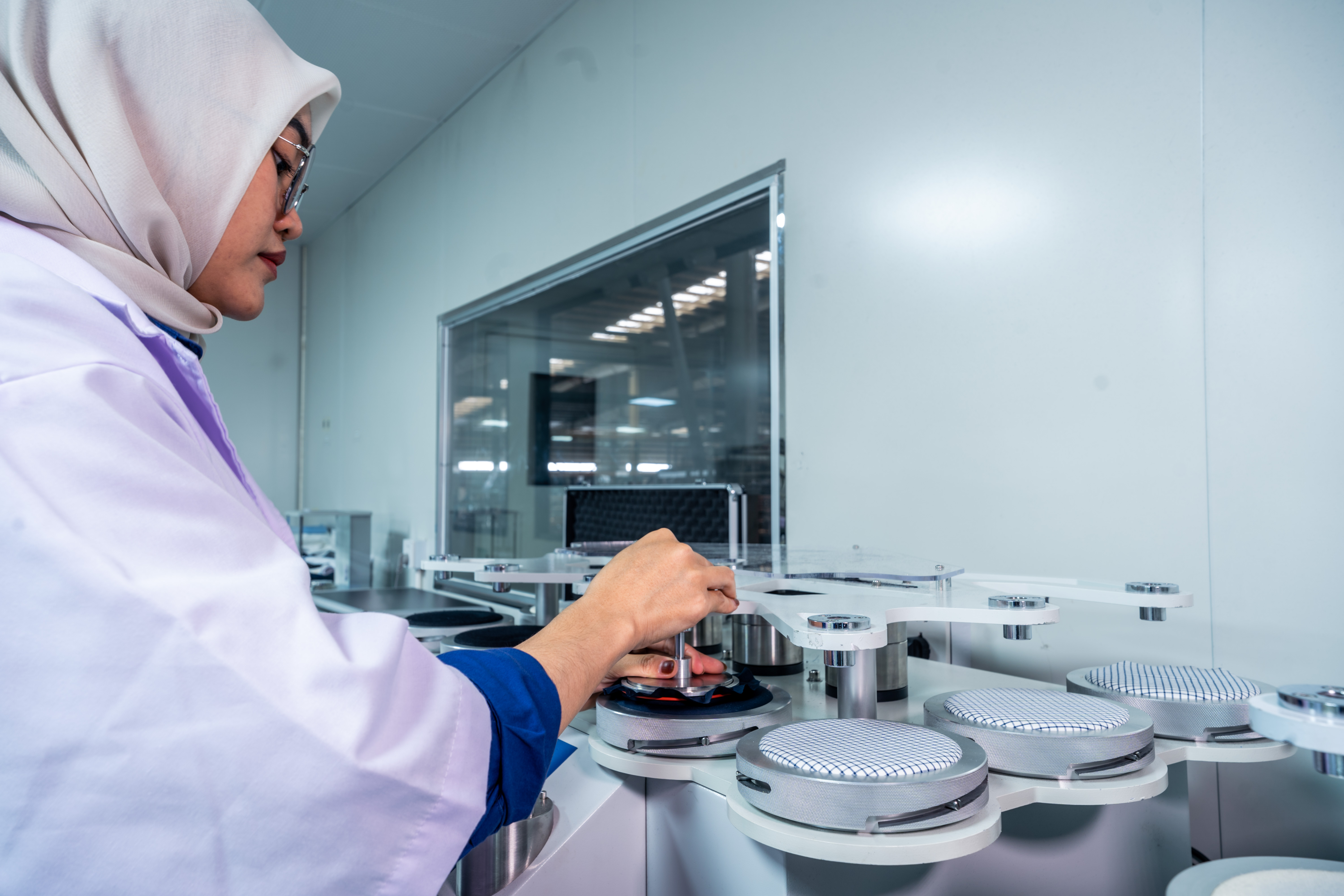
- Complete in-house testing. The testing center checks the fabric to AATCC, ASTM D, JIS, and ISO standards before shipment. GTI's testing protocols are approved by Polo Ralph Lauren and Kohl's.
- Ship. The order moves to shipment after testing and final inspection.
Use Cases: Matching Fabric to the Garment Program
Formal and business shirting
Formal shirting usually prioritizes a clean surface, shape retention, and easy care. GTI's Non-Iron Free Formaldehyde 100% cotton fabrics, models S00098-01, 556607-01, 572711-02, and S00904-03, are supplied for wrinkle-resistant woven shirting applications. The non-iron finish reduces ironing requirements for end consumers. Dobby fabrics in 110–130 gsm and Regular Poplin Stretch Quality in 113–136 gsm are also relevant where a textured surface or 4-way stretch is required.
Casual and preppy shirting
Oxford is the core construction for casual and preppy shirting. GTI's Oxford range offers 100% cotton and 98% cotton / 2% spandex options at 142–171 gsm. For a lighter casual shirt, GTI's cotton-polyester-spandex blend fabrics B02599-01 and B02522-03 weigh 106–112 gsm. B02599-01 is the cotton-polyester-spandex variant, while B02522-03 is the cotton-recycled polyester variant with 40% recycled polyester content. Sorona blends S00543-03 and B01075-05 are also available for casual and business-casual shirting at 156–168 gsm.
Fall and winter shirting
Flannel is the seasonal choice when warmth and a brushed handfeel matter. GTI's flannel fabrics are available in 100% cotton, rayon-polyester, and cotton-polyester blends at 119–175 gsm. The brushed surface produces the flannel handfeel without adding bulk through a lining.
Summer, resort, and warm-climate programs
Seersucker, linen, linen look, and cooling comfort fabrics address hot and humid conditions. Seersucker S01183-01 and S01151-01 use a puckered texture to keep the fabric away from the skin. Linen and linen-look fabrics B00353-01 and 569717-01 provide a natural, breathable texture for casual and resort wear. Cooling Comfort B02454-01 and B02508-01 use a Liquid Ammonia + Moisture Cure treatment and a cooling comfort finish for business and warm-climate shirting.
Performance and active-casual shirting
Performance shirts need moisture control and easy care without losing a woven appearance. Cool-Dry B02568-02 and B02587-04 combine non-iron, wicking, and quick dry performance in a 64% cotton / 32% polyester / 4% spandex blend at 106–156 gsm. For a lower-impact performance casualwear option, Recycled Nylon Fabric S01601-01 and S01601-04 use a 43% cotton / 31% recycled nylon / 21% Tencel blend at 113 gsm. The S01601-04 variant adds a BioDry finish for moisture-wicking performance.
Outerwear and bottoms
Heavy weight fabrics require a different balance of durability, structure, and comfort. GTI's Heavy Weight Fabric range includes 100% cotton options and cotton-spandex stretch bottom options at 204–359 gsm. A cotton-polyester-spandex blend with water repellent finish is available for functional outdoor and workwear applications. The stretch bottom fabrics combine durability with wearer comfort.
Sustainable and ESG-driven collections
Organic Cotton Fabric B01939-03 is a 98% organic cotton / 2% spandex fabric at 160 gsm. Regenerative Cotton Fabric S01232-02 and B00390-04 are 171–173 gsm fabrics with 56.7% or 34.5% regenerative cotton content. Recycled Polyester Fabric B01308-03 and B01718-14 are 109–112 gsm blends with 40% or 65% recycled polyester content. Carbon Zero Tencel Fabric 506520-02 and B01109-01 are 94–110 gsm fabrics with 40% Carbon Zero Tencel or 31.8% Tencel. These qualities should be paired with the relevant certification evidence for the order.
FAQ
What certifications should I verify when buying woven apparel fabric?
Start with the destination market and the brand's claim. For GTI, the published certification list includes ZDHC, Higg FEM, Higg FSLM, ISO 9001, ISO 14001, ISO 45001, OEKO-TEX Standard 100, OEKO-TEX STeP, GOTS, GRS, Recycled 100, Organic 100, Recycled Blended, Organic Blended, regenagri, and U.S. Cotton Trust Protocol membership. For each order, request the certificate number, scope, validity date, and transaction certificate where the claim is material-specific.
How do I compare China woven apparel fabric manufacturers with Indonesian mills?
Compare the supplier, not the country label. China is one of the established sourcing bases for woven apparel fabric, but a useful comparison uses the same scorecard: construction range, fiber availability, finish capability, certification scope, MOQ, sample process, lead time, audit access, and communication. GTI is an Indonesia-based alternative with an integrated facility in Kendal Industrial Park, 171,401 m² of manufacturing space, 2,828 staff, a 30-engineer R&D team, reported annual output of 38,000,000 meters, and 75% export share to the United States, Europe, Japan, and Indonesia.
What MOQ and cost factors apply to woven apparel fabric?
GTI's fabric MOQ is 3,000 meters per color. Cost is driven by fiber content, yarn count, fabric weight, weave, finish, certification requirements, and order volume. A meaningful quote therefore needs a written specification and target quantity, not only a fabric name.
Can I request a sample before bulk production?
Yes. The GTI process starts with a reference sample or a request for fiber and construction selection, then moves to a handloom, lab dip, or strike-off hand sample. After hand-sample approval, GTI develops a big sample for approval before bulk order confirmation. The R&D center supports 1,500 handlooms per month for sample weaving.
What is the production lead time?
Bulk production lead time is approximately 30–45 days after order confirmation, depending on construction and finish complexity. The in-house testing center checks the fabric to AATCC, ASTM D, JIS, and ISO standards before shipment. To start, send your specification or reference sample to ada.shao@goldenteks.id or WhatsApp +62 882-21744008.
Conclusion
Woven apparel fabric selection is a specification discipline. The fabric name is only the entry point. A buyer who defines the end use, fiber system, weave, weight, yarn count, finish, certification, sample approval, MOQ, and lead time will get a more reproducible fabric and fewer bulk surprises. GTI's integrated operation, product range, in-house testing, and certification portfolio provide a practical base for that process, but the written specification and approved sample remain the controlling documents.
Next step: send your woven fabric specification
Share your end use, fiber composition, construction, weight, finish, target market, and order volume. GTI can review the brief against its woven apparel fabric range and sampling process.
Email: ada.shao@goldenteks.id | WhatsApp: +62 882-21744008
Download the GTI Company Profile 2026 (PDF) | Visit goldenteks.com
Have Questions or Need More Details?
Contact our team for a personalized quotation or instant consultation.
Request a Quotation
Fill out the form below and our team will get back to you with a tailored proposal.
WhatsApp Direct Chat
Prefer to chat in real-time? Message us on WhatsApp for instant assistance & quick answers.
- Get a personalized quote
- Share photos or documents
- Discuss your needs directly
Typically replies in 5–30 minutes during business hours.