Woven Apparel Fabric: A Practical Buyer's Guide
Woven apparel fabric is cloth produced by interlacing two yarn sets — warp and weft — on a loom, and it is the base material for most shirts, trousers, outerwear and uniforms in the apparel trade. This guide explains the constructions, weights, yarn counts, finishes and certification documents a buyer should understand before specifying woven apparel fabric, and it uses the range and order process of PT Golden Tekstil Indonesia (GTI) as a concrete reference.
Why woven apparel fabric is harder to specify than it looks
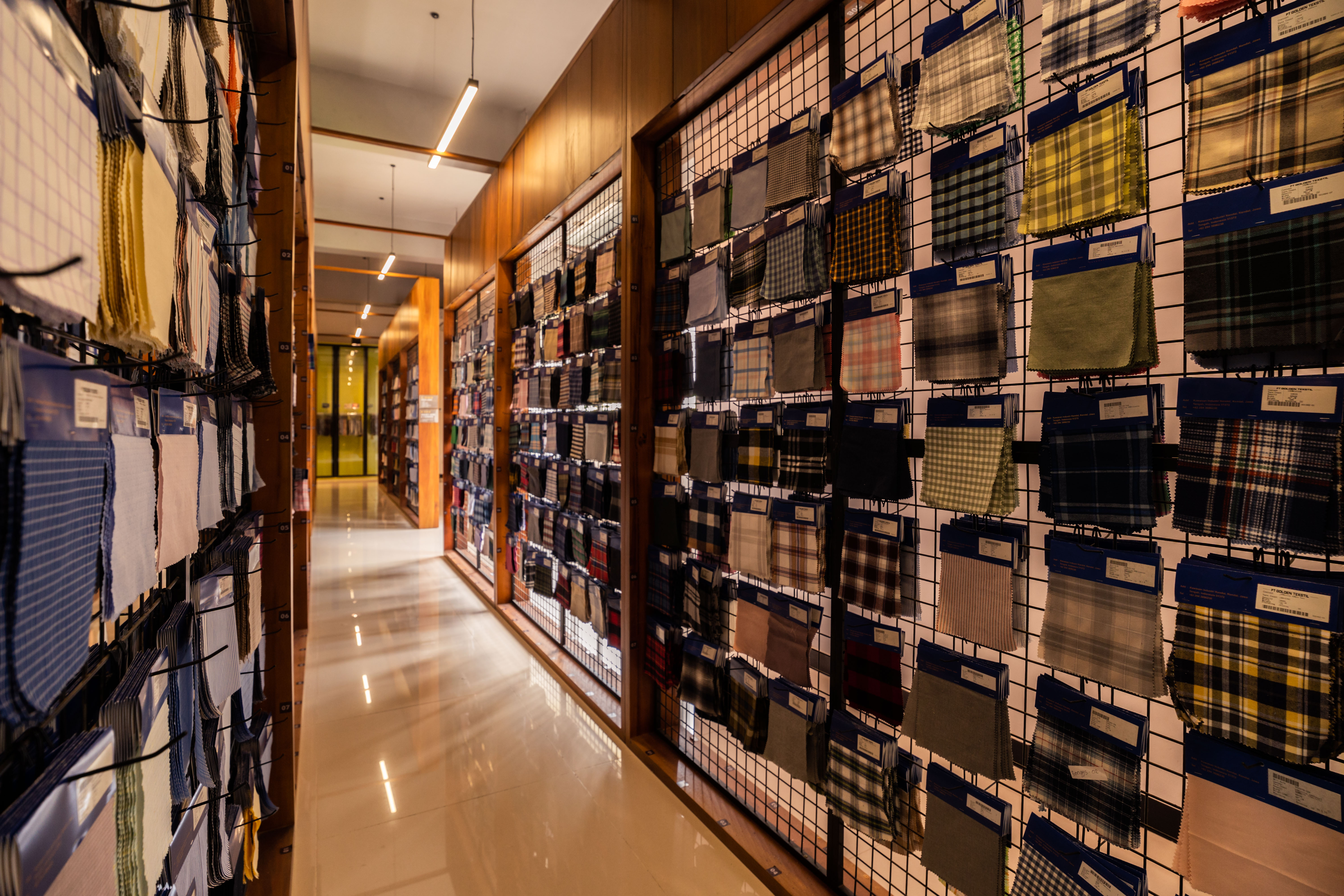
The difficulty is not the definition. The difficulty is that a construction name describes a weave, not a finished product. Two fabrics both called Oxford can differ in fibre, yarn count, weight and stretch, and therefore in handle, durability, shrinkage behaviour and price. At PT Golden Tekstil Indonesia, the Oxford range alone spans 142–171 gsm with yarn counts from 40×20/2 to 40×40D16, offered in 100% cotton and in a 98% cotton / 2% spandex stretch version. A brief that says only "Oxford shirting" cannot be quoted consistently.
Three further variables drive most sourcing mismatches in woven apparel fabric:
- Colour method. Yarn dyed fabric is coloured at yarn stage, piece dyed fabric is coloured after weaving, and digital print applies the design after fabric formation. Each route changes minimums, lead time and the acceptable colour tolerance.
- Finish claims without test methods. Non-iron, wicking, quick dry, cooling and water repellent are performance claims. They mean little in procurement unless the test method and the acceptance threshold are agreed in writing.
- Compliance paperwork arriving late. Certification and chemical-compliance documents are often requested after the bulk order is placed, when the fabric is already in production.
Six specification fields to define before requesting a quote
- Fibre composition, with percentages, and the yarn count system used.
- Weave construction — poplin, Oxford, dobby, seersucker, twill-type bottom cloth, and so on.
- Fabric weight in gsm and the required usable width.
- Colour method: yarn dyed, piece dyed, or digital print.
- Finish type plus the test method and threshold that will be used to accept or reject it.
- Certification and documentation requirements for the destination market.
Buyers who can fill these six fields get comparable quotations. Buyers who cannot usually receive indicative prices that later move.
Industry background: where woven apparel fabric sits
Woven apparel fabric sits upstream of garment manufacturing and downstream of fibre and yarn production, which means its cost and availability track both fibre markets and apparel order cycles. One commercial research estimate places the global textile fabrics market at USD 732.38 billion in 2026, and the same estimate gives polyester a 54.1% share of that market by volume in 2025 — a reminder that cost-driven volume programmes and premium cotton programmes are effectively two different sourcing conversations.
Indonesia is a relevant production base for both. The Observatory of Economic Complexity reported Indonesia's total textile exports at USD 13.5 billion in 2024. For buyers, the practical point is not the headline figure but the structure behind it: a woven fabric mill in Indonesia can serve US, European and Japanese programmes from one production site, which is why the country appears regularly in sourcing shortlists alongside Vietnam, China, India and Bangladesh.
On the compliance side, the standards landscape is voluntary but increasingly requested. Textile Exchange lists the Organic Content Standard (OCS), the Recycled Claim Standard (RCS) and the Global Recycled Standard (GRS) as material-related voluntary standards. These standards are not interchangeable, and holding a material listing is not the same as holding a valid certificate. Buyers should verify scope certificates and transaction certificates directly with the certification body rather than accepting a supplier statement alone.
How PT Golden Tekstil Indonesia organises its woven apparel fabric range
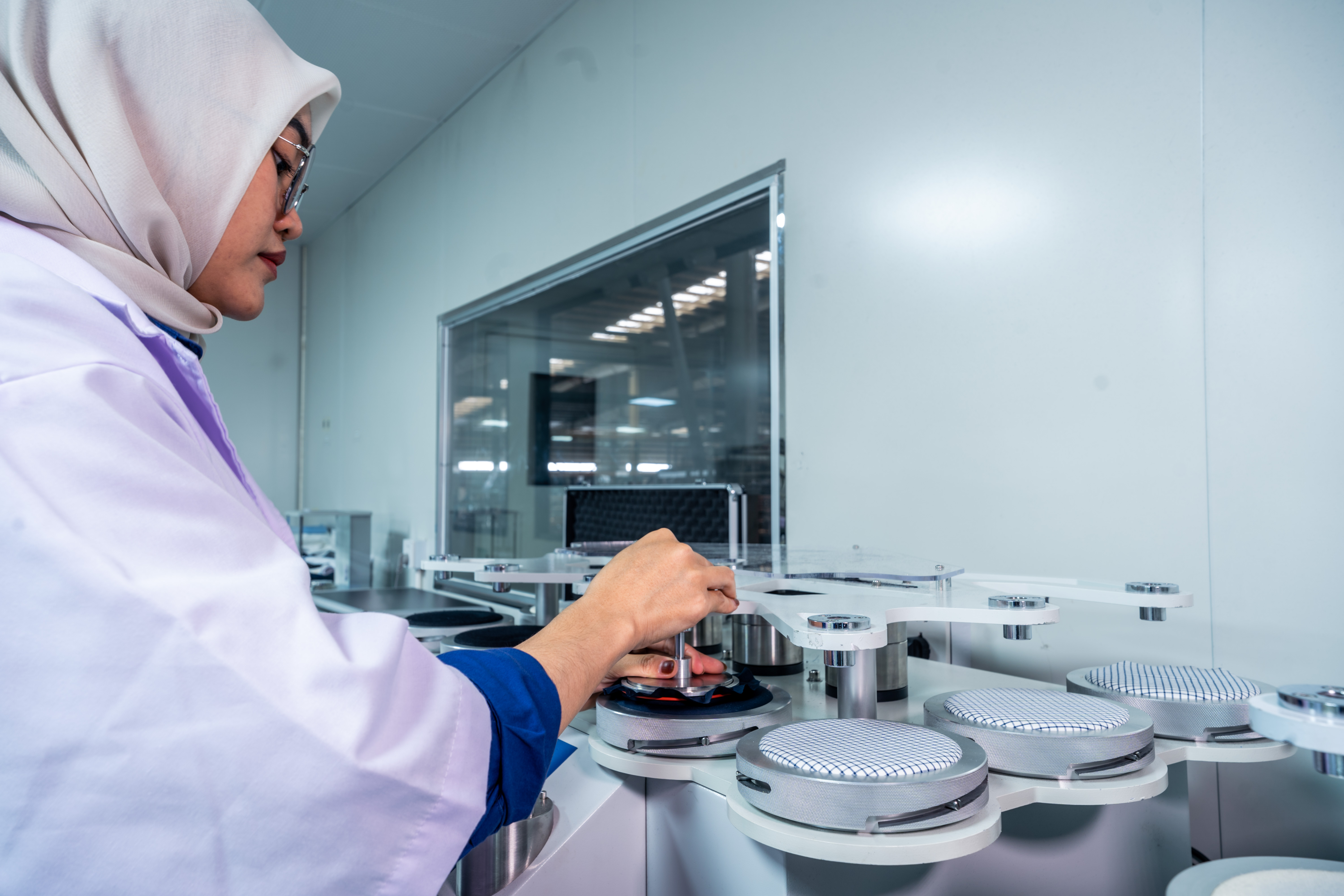
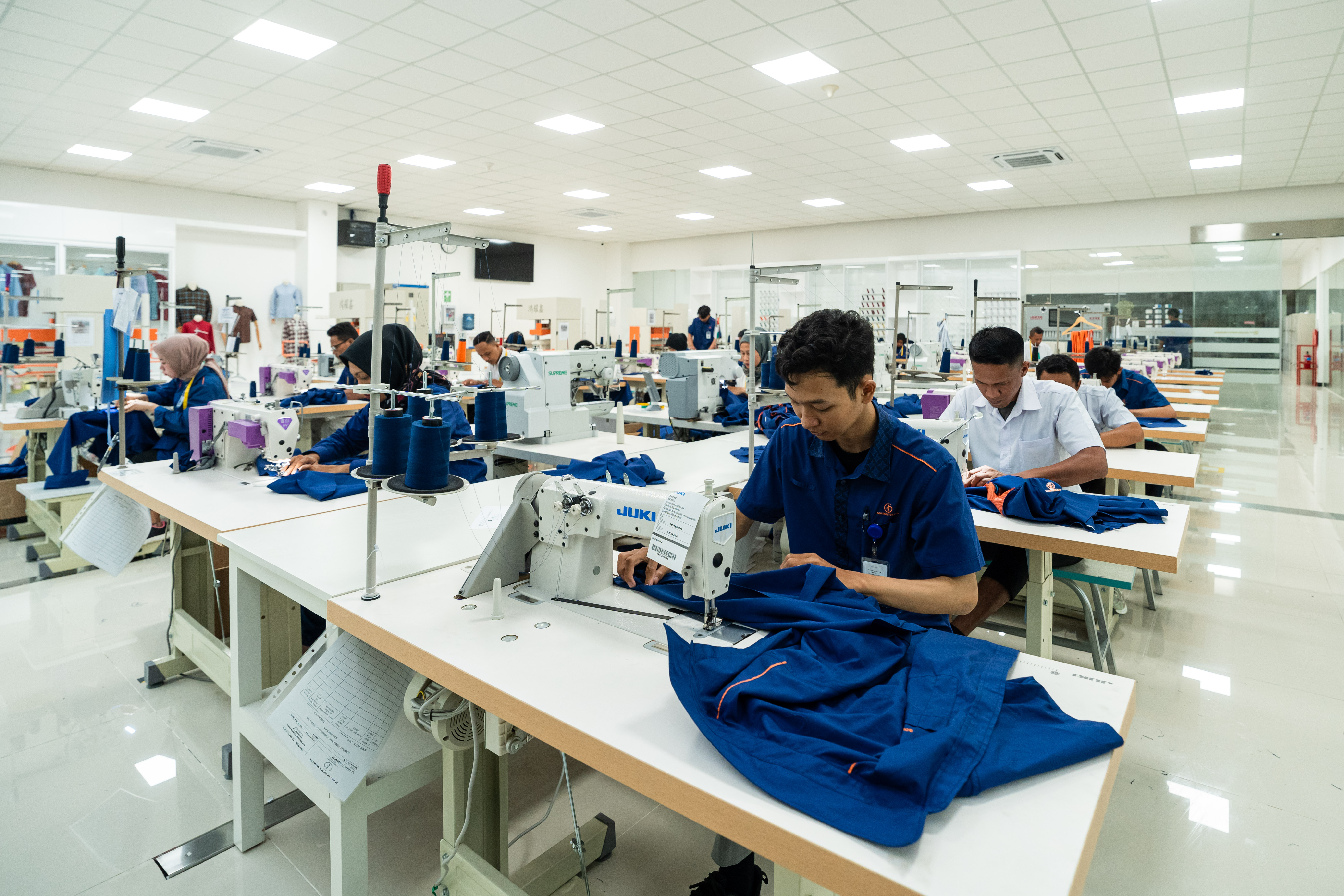
PT Golden Tekstil Indonesia (GTI) is a woven apparel fabric manufacturer established in 2019 and located in Kendal Industrial Park, Central Java, Indonesia. The company states that it operates an integrated facility where yarn is converted into fabric and finished fabric — covering yarn dyeing, weaving, piece dyeing, digital printing and fabric finishing — on a 171,401 m² site with 2,828 staff and a 30-engineer R&D team. GTI reports annual woven apparel fabric output of 38,000,000 meters, a 75% export share, and main markets in the US, Europe, Japan and Indonesia.
The company lists a yarn-count capability of 16s/1 to 100s/1 and 20/2 to 200/2, which is the technical envelope that makes lightweight shirting and heavy bottom weights possible within one supply relationship. The range is easiest to read in four groups.
1. Shirting constructions: poplin, Oxford, dobby and non-iron
Regular Poplin Stretch Quality combines a plain poplin weave with 4-way stretch and a cotton-spandex base; the listed composition options are 91% cotton / 9% spandex and a 90% BCI cotton / 10% spandex blend, at 113–136 gsm with a 40D50×40D50 yarn count. Oxford is offered as pure cotton and as a stretch version at 98% cotton / 2% spandex, in the 142–171 gsm range, for casual and preppy shirting.
Dobby weave fabric adds a subtle surface texture for formal and business shirting, and is available in 100% cotton, in 97% cotton / 3% spandex, and in a 64% cotton / 32% polyester / 4% spandex blend. Non-iron shirting appears in two forms: a stretch easy-care group (98% cotton / 2% spandex, or 66% cotton / 29% polyester / 5% spandex) and a free-formaldehyde non-iron group in 100% cotton at 80/2×80/2, in the 113.5–142 gsm range.
2. Seasonal and climate-driven constructions
Seersucker uses a puckered structure that holds the cloth away from the skin, offered as 97% cotton / 3% spandex or as a 56% organic cotton / 40% polyester / 4% spandex blend at 109–111 gsm, for summer and resort shirting. Linen and linen-look fabric covers a 55% linen / 45% rayon blend (11×11 yarn count) and a 100% cotton linen-look option (21×21), at 132–190 gsm, for casual and resort wear. Flannel is brushed to produce its characteristic hand-feel, in 100% cotton, 65% rayon / 35% polyester, and 60% cotton / 40% polyester options, 119–175 gsm, for fall and winter shirting. Heavy weight fabric for outerwear and bottoms runs 204–359 gsm across yarn counts from 10×10 to 30×70D21, in 100% cotton, cotton-spandex, and a cotton-polyester-spandex blend with a water repellent finish option.
3. Stretch and comfort platforms
Cotton spandex stretch fabric with Easy Care and Moisture Management is listed at 96–98% cotton with 2–4% spandex, 108–132.26 gsm, in models B01447-01, B01447-02, 573518-01 and B01233-01. Cool-Dry fabric combines non-iron, wicking and quick-dry performance in a 64% cotton / 32% polyester / 4% spandex blend at 106–156 gsm, positioned for performance, active-casual, business-casual and travel shirting. Cooling Comfort fabric uses a Liquid Ammonia + Moisture Cure treatment on a 96% cotton / 4% spandex base at 118.26–134 gsm, aimed at business and warm-climate shirting. Sorona blends (65% cotton / 35% Sorona, or 65% rayon / 35% Sorona) add plant-based stretch and recovery without spandex, and Modal blend fabric at 108 gsm serves premium casual and dress shirting.
4. Sustainable fibre families
Organic Cotton fabric is listed as 98% organic cotton / 2% spandex at 160 gsm. Regenerative Cotton fabric is available as 56.7% regenerative cotton / 43.3% cotton and as 65.5% cotton / 34.5% regenerative cotton, at 171–173 gsm. Recycled Polyester fabric covers 60% cotton / 40% recycled polyester and 65% recycled polyester / 35% cotton at 109–112 gsm. Recycled Nylon fabric combines 43% cotton, 31% recycled nylon and 21% Tencel at 113 gsm, with a BioDry finish option on model S01601-04. Carbon Zero Tencel fabric is offered as 60% cotton / 40% Carbon Zero Tencel and as 68.2% cotton / 31.8% Tencel, at 94–110 gsm, for low-carbon and ESG-driven collections.

Finishing options across the range
GTI lists finishing services including mercerized, anti-bacterial, anti-UV, wrinkle-free, water/oil/stain repellent, cooling, thermal and smart-temperature finishes. These finishes are where most specification disputes arise, because the same finish name can be applied at different strength levels. The finish, its test method and its acceptance threshold should be written into the order confirmation, not agreed verbally.
How performance and compliance are verified before shipment
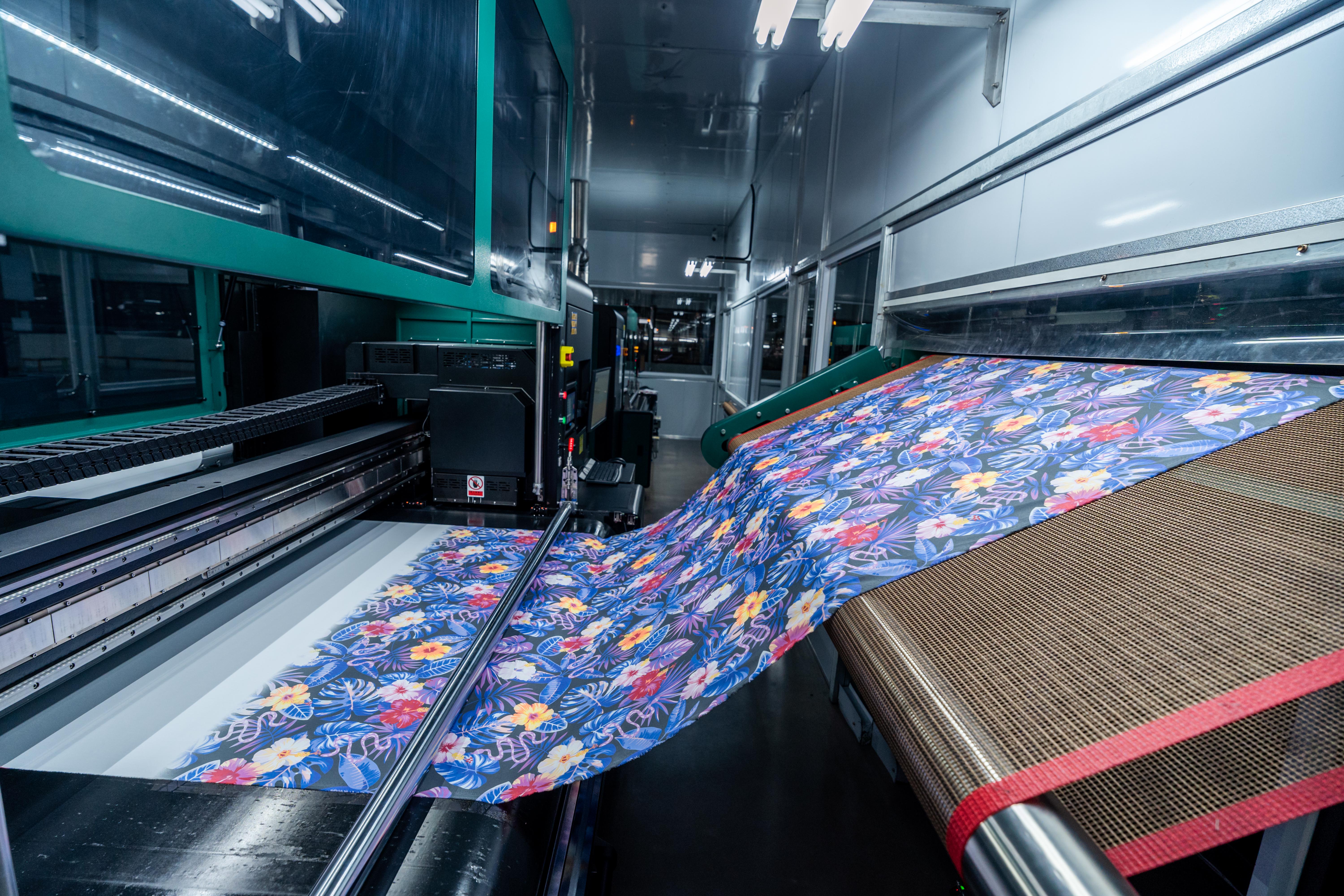
Testing is the part of woven apparel fabric sourcing that buyers cannot inspect visually. GTI states that it operates an in-house testing centre certified to AATCC, ASTM D, JIS and the ISO standard suite, with testing protocols approved by Polo Ralph Lauren and Kohl's. In practice this means a buyer can request standard-based test reports — for dimensional stability, colour fastness, tensile and tear strength, and finish performance — before the fabric leaves the mill.
The company also reports the following certifications and programme memberships: ZDHC, Higg Index Facility Environmental Module and Social & Labor Module verification, ISO 9001, ISO 14001, ISO 45001, OEKO-TEX Standard 100 and STeP, GOTS, GRS, Recycled 100, Organic 100, Recycled Blended, Organic Blended, regenagri, and membership of the U.S. Cotton Trust Protocol. Buyers should treat this list as a starting point for verification: request the scope certificate for each standard, confirm which site and which product scope it covers, and request transaction certificates for the specific shipment where chain of custody applies.
Supporting infrastructure matters for buyers whose programmes carry environmental reporting obligations. GTI states that a wastewater treatment facility processes 4,000 tons per day with a recycling system cutting water consumption by 300,000 tons annually, that 26,000 m² of solar panels sit on the facility, and that coal was retired in favour of biomass from January 2025. These are company-reported figures; they are useful in supplier questionnaires but should be checked against the site's latest audit documentation during qualification.
Step-by-step: how a woven apparel fabric order runs at GTI
The order path below reflects GTI's stated process, from first brief to shipment. It is the sequence a buyer should plan around, because most delay in fabric sourcing comes from decisions made inside it rather than from weaving itself.
- Brief or reference sample. The customer sends a sample or a specification covering fibre composition, construction, weight and finish.
- Hand sample development. GTI's R&D team develops a handloom, lab dip or strike-off sample. The company states its R&D centre supports 1,500 handlooms per month for sample weaving, using design systems including Penelope, YX Weave and Ned Graphics, and a digital fabric e-library for reference.
- Hand sample approval. Colour, construction and finish are reviewed and approved in writing.
- Big sample development. A larger-yardage sample run is produced from the approved hand sample.
- Big sample approval. The customer confirms that bulk production will match the approved sample.
- Bulk order confirmation. Colourway, quantity and delivery schedule are fixed. The stated fabric minimum is 3,000 meters per colour.
- Mass production. Lead time is approximately 30–45 days, depending on construction and finish complexity.
- In-house inspection. The testing centre inspects against AATCC, ASTM D, JIS and ISO standards before shipment.
- Shipment. Goods are shipped and invoiced per the agreed terms.

Three points where programmes slip. First, lab dip and strike-off approval should be confirmed in writing before bulk dyeing begins; shade or construction changes after bulk starts affect both lead time and cost. Second, certification requirements should be stated at order stage, not after production. Third, fibre composition and finish specification should be locked before sample approval, because changing finish type after approval may require a new sample cycle.
Where these fabric families are used
Formal and business shirting. Non-iron free-formaldehyde 100% cotton, stretch non-iron, and dobby weave fabrics are positioned for formal and business shirt manufacturing, where wrinkle resistance and shape retention carry the value.
Casual and preppy shirting. Oxford in pure cotton or with 2% spandex, and cotton-polyester-spandex blends at 106–112 gsm, suit casual and business-casual shirt programmes.
Summer, resort and warm-climate ranges. Seersucker, linen and linen-look, and Cooling Comfort fabric address markets where breathability and skin-feel decide sell-through.
Fall and winter. Flannel at 119–175 gsm covers seasonal shirting, while heavy weight fabric at 204–359 gsm serves outerwear and trousers, including a water repellent option for functional outdoor and workwear use.
Performance and travel. Cool-Dry fabric combines non-iron, wicking and quick-dry behaviour for performance, active-casual and travel shirting.
Sustainability-led collections. Organic cotton, regenerative cotton, recycled polyester, recycled nylon and Carbon Zero Tencel give a brand a documented fibre story at fabric level, subject to certificate verification.
Woven apparel fabric comparison table
The table below compares fabric families using specifications listed by GTI. It is a screening tool, not a substitute for a per-SKU technical datasheet or a physical sample.
| Fabric family | Representative models | Composition options | Weight (gsm) | Yarn count | Typical application |
|---|---|---|---|---|---|
| Regular Poplin Stretch Quality (4-way stretch) | B00295-02, 550887-04, 550887-01, 573984-08 | 91% cotton / 9% spandex; 90% BCI cotton / 10% spandex | 113–136 | 40D50×40D50 | Menswear and womenswear shirting |
| Oxford | B00390-03, 565584-01, B01177-07, B01109-01 | 100% cotton; 98% cotton / 2% spandex | 142–171 | 40×20/2 to 40×40D16 | Casual and preppy shirting |
| Dobby weave | 556602-02, 562993-02, B00098-11, B00012-01, B02599-01 | 100% cotton; 97% cotton / 3% spandex; 64% cotton / 32% polyester / 4% spandex | 110–130 | 60×60; 50×40D50+50; 40×75D+75D20D | Formal and business shirting |
| Seersucker | S01183-01, S01151-01 | 97% cotton / 3% spandex; 56% organic cotton / 40% polyester / 4% spandex | 109–111 | 40D40+70×40D40+70; 40D50+50*75D | Summer and resort shirting |
| Flannel | 574259-03, 574259-06, 549625-03, 552492-01 | 100% cotton; 65% rayon / 35% polyester; 60% cotton / 40% polyester | 119–175 | 40×40 to 21×21 | Fall and winter shirting |
| Linen and linen look | B00353-01, 569717-01 | 55% linen / 45% rayon; 100% cotton | 132–190 | 11×11; 21×21 | Casual and resort wear |
| Non-iron, free formaldehyde | S00098-01, 556607-01, 572711-02, S00904-03 | 100% cotton | 113.5–142 | 80/2×80/2 | Formal and business shirting |
| Non-iron / easy care (stretch) | B00602-01, 571138-01 | 98% cotton / 2% spandex; 66% cotton / 29% polyester / 5% spandex | 110–152 | 40×16+70D16 to 40×75D40D | Formal and business shirting |
| Cool-Dry (non-iron, wicking, quick dry) | B02568-02, B02587-04 | 64% cotton / 32% polyester / 4% spandex | 106–156 | 40×75D+75D20D | Performance and active-casual shirting |
| Cooling Comfort (Liquid Ammonia + Moisture Cure) | B02454-01, B02508-01 | 96% cotton / 4% spandex | 118.26–134 | 50×40D50 | Business and warm-climate shirting |
| Cotton spandex easy care / moisture management | B01447-01, B01447-02, 573518-01, B01233-01 | 96–98% cotton / 2–4% spandex | 108–132.26 | 50×40D50 | Menswear and womenswear |
| Cotton polyester spandex blend | B02599-01, B02522-03 | Cotton / polyester / spandex; cotton / recycled polyester (40% recycled polyester) | 106–112 | 40×75D+75D20D; 45×45 | Casual and business-casual shirts |
| Heavy weight (outer and bottom) | S01582-01, B03076-04, S01506-01, S00804-01, B00902-05, B01294-02, B02260-02 | 100% cotton; cotton-polyester-spandex with water repellent finish; cotton-spandex | 204–359 | 10×10 to 30×70D21 | Outerwear and trousers |
| Recycled polyester | B01308-03, B01718-14 | 60% cotton / 40% recycled polyester; 65% recycled polyester / 35% cotton | 109–112 | 45×45 | Sustainable casualwear |
| Carbon Zero Tencel | 506520-02, B01109-01 | 60% cotton / 40% Carbon Zero Tencel; 68.2% cotton / 31.8% Tencel | 94–110 | 50×50 to 90×70 | Low-carbon and ESG-driven collections |
| Regenerative cotton | S01232-02, B00390-04 | 56.7% regenerative cotton / 43.3% cotton; 65.5% cotton / 34.5% regenerative cotton | 171–173 | 40×20/2 | Sustainable and ESG-driven collections |
| Organic cotton | B01939-03 | 98% organic cotton / 2% spandex | 160 | 40×40D16 | Sustainable shirting and casualwear |
Frequently asked questions
1. Which certifications and test standards should a woven apparel fabric supplier provide?
Certification requirements depend on the destination market and on the fibre claim being made. The relevant voluntary standards include the Organic Content Standard (OCS), the Recycled Claim Standard (RCS) and the Global Recycled Standard (GRS), each with its own scope and chain-of-custody rules. PT Golden Tekstil Indonesia reports holding ZDHC compliance, Higg FEM and FSLM verification, ISO 9001, ISO 14001, ISO 45001, OEKO-TEX Standard 100 and STeP, GOTS, GRS, Recycled 100, Organic 100, Recycled Blended, Organic Blended, regenagri, and membership of the U.S. Cotton Trust Protocol; it also states that its in-house testing centre is certified to AATCC, ASTM D, JIS and the ISO standard suite. Buyers should request scope certificates and, where applicable, transaction certificates for the specific shipment.
2. What woven apparel fabric constructions can GTI supply?
PT Golden Tekstil Indonesia lists a range covering regular poplin with 4-way stretch, Oxford in pure cotton and stretch versions, dobby weave, seersucker, flannel, linen and linen-look, non-iron in stretch and free-formaldehyde 100% cotton versions, Cool-Dry and Cooling Comfort functional fabrics, cotton spandex easy-care and moisture-management fabrics, cotton-polyester-spandex blends, heavy weight outer and bottom fabrics, and sustainable fibre families including organic cotton, regenerative cotton, recycled polyester, recycled nylon and Carbon Zero Tencel. Listed weights run from 94 gsm up to 359 gsm.
3. How do buyers compare Indonesian and Chinese woven apparel fabric manufacturers?
The comparison should be built on criteria that can be verified on both sides: process scope, tested performance versus stated performance, certification documentation, minimum order quantity, lead time, and the duty and logistics treatment of the origin country. For PT Golden Tekstil Indonesia, the verifiable anchors are an Indonesia-based integrated operation covering yarn dyeing, weaving, piece dyeing, digital printing and finishing, a stated minimum of 3,000 meters per colour, and a stated bulk lead time of 30–45 days. Equivalent figures for a specific Chinese mill must be obtained directly from that mill; they cannot be assumed from country-level averages, and no comparative capability claim should be made without both data sets in hand.
4. How does sampling work, and what is the minimum order quantity?
GTI's stated process runs from a customer sample or specification, to a handloom, lab dip or strike-off sample, to written sample approval, then to a big sample and a second approval round, and only then to bulk confirmation. The company states its R&D centre supports 1,500 handlooms per month for sample weaving. The listed fabric minimum order quantity is 3,000 meters per colour, which makes early specification accuracy commercially important — a shade or construction change after bulk approval can affect both cost and delivery.
5. What is the bulk production lead time?
GTI states a bulk lead time of approximately 30–45 days, depending on construction and finish complexity, counted from bulk order confirmation. Time before that point — hand sample development, lab dip approval and big sample approval — is usually the longer part of the schedule and should be planned separately. Fabric is inspected in-house against AATCC, ASTM D, JIS and ISO standards before shipment. Buyers can request a development timeline and a quotation for a specific construction by contacting GTI at ada.shao@goldenteks.id or +62 882-21744008.
Conclusion: what to do next with a woven apparel fabric brief
Woven apparel fabric sourcing becomes manageable once the brief is written in the mill's own language: fibre and yarn count, construction, weight, colour method, finish with a test method, and the certification documents required at destination. Everything else — sample rounds, minimums, lead time — follows from those six fields. Buyers who fix them early get comparable quotes; buyers who leave them open get revisions.
For programmes that span shirting, bottoms, outerwear and sustainability-led ranges, the practical advantage of a single integrated mill is not one fabric but one specification conversation across 94 gsm to 359 gsm, with dyeing, printing, finishing and testing under one roof. The next step is to send a reference sample or a written specification and request a development timeline alongside a quotation.
Request a sample, quotation or the company profile
PT Golden Tekstil Indonesia (GTI) — woven apparel fabric manufacturer, Kendal Industrial Park, Central Java, Indonesia.
Email: ada.shao@goldenteks.id | Tel / WhatsApp: +62 882-21744008 | Website: goldenteks.com
Address: Saptarengga St. No. 6-8, RW.8, Tambak, Wonorejo, Kaliwungu, Kendal Regency, Central Java 51372, Indonesia.
Download the full company profile and fabric range: GTI Company Profile 2026 (PDF)
Have Questions or Need More Details?
Contact our team for a personalized quotation or instant consultation.
Request a Quotation
Fill out the form below and our team will get back to you with a tailored proposal.
WhatsApp Direct Chat
Prefer to chat in real-time? Message us on WhatsApp for instant assistance & quick answers.
- Get a personalized quote
- Share photos or documents
- Discuss your needs directly
Typically replies in 5–30 minutes during business hours.