
Adjustable-Roller vs Fixed-Roller Shower Enclosure in a Bathroom Furniture Set
The decision between an adjustable-roller and a fixed-roller sliding shower enclosure is a tolerance decision, not a fashion decision. A simple enclosure without adjustable rollers can work when the wall is plumb and the tray is level. A spring-loaded adjustable-roller enclosure adds on-site adjustment so the door can be aligned to real wall plumb and tray level tolerance. In a bathroom furniture set, that difference affects installation time, door alignment, seal performance and long-term maintenance.
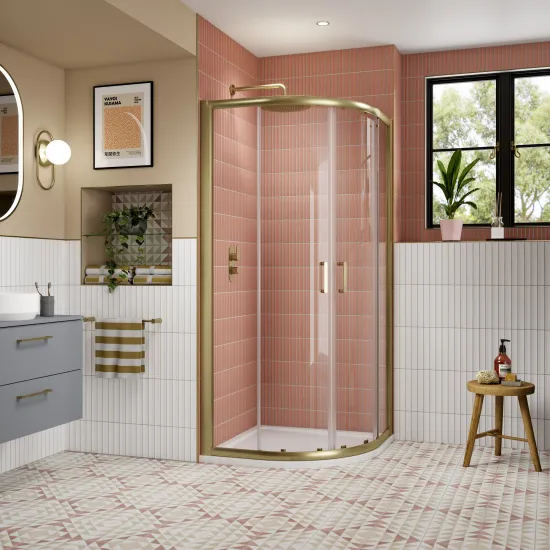
A sliding shower enclosure is the wet-zone component of a bathroom furniture set; roller choice directly affects door alignment and seal contact.
Problem Definition: What the Roller Choice Actually Solves
Most sliding shower enclosure problems at handover are not glass failures. They are misalignment symptoms: uneven gaps, sticking doors, water leakage at the bottom or side joint, and seal strips that do not contact evenly. The root cause is often the interface between the factory-made enclosure and the site-built bathroom.
Wall plumb deviation and tray level deviation are normal construction tolerances. A fixed roller has no adjustment path to absorb them. An adjustable roller does, but only if the installer uses it correctly. The buyer's question is therefore: can this project guarantee the wall and tray tolerance that a fixed-roller enclosure needs, or should the specification buy adjustment capability?
In this article, a bathroom furniture set means the coordinated specification of a bathroom cabinet, mirror or lighting and shower enclosure. The shower enclosure is the component exposed to the most direct water contact, so its roller decision has a disproportionate effect on leakage risk and after-sales calls.
Industry Background: Why the Detail Matters in Bathroom Furniture Sets
Shower enclosures are a defined product segment inside the broader bathroom market. Next Move Strategy Consulting valued the global shower enclosure and cubicles market at USD 3.51 billion in 2023 and projected USD 5.38 billion by 2030. The category sits inside the same procurement package as bathroom cabinets, mirrors and lighting, which is why buyers often evaluate it as part of a bathroom furniture set rather than as a standalone glass item.
Standards shape the acceptance criteria. EN 14428 is the shower enclosure standard referenced in the approved corpus for adjustable roller performance. EN 12150-1 covers toughened safety glass, which breaks into blunt granules rather than sharp shards. GB 24977-2010, the Chinese bathroom furniture standard reproduced in the verified data, requires opening and closing components to operate flexibly after installation and requires no seepage or water leakage under normal use. Those requirements make door alignment and sealing measurable acceptance points, not cosmetic details.
For buyers, the practical implication is simple: the roller specification should be judged by installed performance. A fixed roller and an adjustable roller can both produce a good enclosure when the site conditions match the design. The risk appears when the site conditions are outside the design tolerance and the enclosure has no correction layer.
Detailed Solution: Fixed vs Spring-Loaded Adjustable Rollers
Answer first: specify spring-loaded adjustable rollers when the project cannot guarantee wall plumb and tray level, or when the installer needs a fast correction path at handover. Specify fixed rollers only when the wall and tray tolerances are verified and the buyer accepts that any site deviation will be handled by rework rather than by the door system.
What fixed rollers do well
A fixed-roller sliding shower enclosure is simple. The roller position is set by the factory or by a fixed mounting point, so there is less adjustment hardware and one less adjustment step on site. If the wall is plumb and the tray is level, a fixed-roller door can run smoothly and close with uniform gaps.
The limitation is equally clear: fixed rollers cannot compensate construction tolerance. When the wall is out of plumb or the tray is not level, the door can stick, the gaps become uneven, and the seals may not contact correctly. The approved corpus states that simple non-adjustable models cannot compensate errors and are prone to sticking doors and leakage, with higher whole-life maintenance cost.
What spring-loaded adjustable rollers change
A spring-loaded adjustable roller keeps the door supported while allowing the installer to adjust the door position. In the approved corpus, the purpose is specific: on-site adjustment offsets wall plumbness and tray level tolerance, prevents sticking doors and poor seal performance, and supports compliance with EN 14428.
The adjustment is not a substitute for a level tray. It is a correction layer. The installation sequence in the corpus still starts with verifying tray level, then assembling tracks and fixed glass, mounting wall profiles, fitting rollers, doors and magnetic seals, adjusting door gaps and height, and applying a continuous external silicone bead. Adjustable rollers make the gap and height step possible; they do not remove the need for the earlier steps.
Door alignment
Door alignment is where the two specifications separate most visibly. With fixed rollers, alignment is essentially decided by the wall, tray and factory set. If the door is out, the installer must correct the building interface or accept a compromise. With adjustable top rollers, the corpus describes horizontal and vertical fine-tuning by top-roller screw until uniform door gaps are achieved.
Uneven gaps are usually a site construction tolerance issue, not a manufacturing defect, and can be corrected by roller adjustment. That does not mean every gap can be adjusted away. The adjustment range, the track seating, the bump stops and the seal dimensions still have to be correct.
Seal performance
Seal performance follows alignment. A door that is twisted or sitting unevenly cannot compress the seal strip evenly. The corpus links poor seal performance to unadjusted rollers and wall plumb deviation. It also warns that leakage repair must not rely on sealing the inner side. Inner-side silicone blocks drainage and can aggravate leakage; only exterior resealing is allowed.
A continuous exterior silicone bead is applied after the door gaps and height are set, and the silicone needs a minimum 24-hour cure before water exposure. This is why an adjustable-roller enclosure is not automatically watertight: the adjustment must happen before the final seal, and the seal must be applied on the correct side.
Long-term maintenance
The cost story is not only the purchase price. Fixed rollers can have a lower component complexity, but the corpus ties non-adjustable designs to a higher whole-life maintenance cost when site tolerances are not controlled. Adjustable rollers add hardware and an adjustment step, but they reduce the risk of callbacks for sticking doors and poor sealing.
The maintenance trade-off is real in both directions: adjustable rollers include springs and moving parts that can wear, so spare rollers and seals should be available. Fixed rollers have fewer parts to adjust, but they leave less room to correct movement or settlement after installation. For a multi-unit project, the decision should be made on total cost including installation labour, handover snagging and spare-part support, not on the roller unit alone.
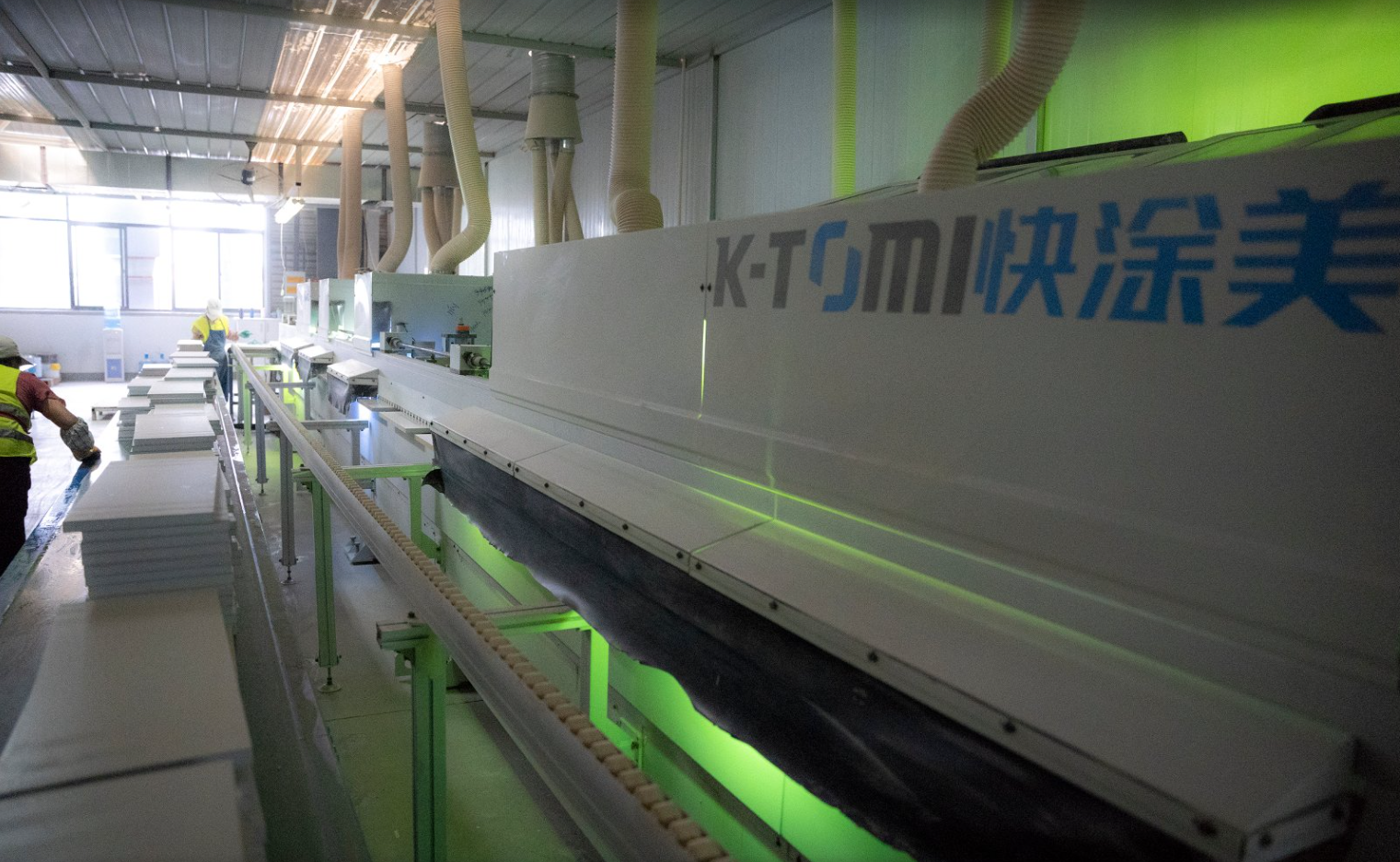
Factory assembly and quality control support consistent roller specification, but on-site adjustment still determines final door alignment.
Step-by-Step Breakdown: How to Install and Adjust Either Roller Type
Answer first: the adjustment sequence matters more than the roller label. An adjustable roller used after the seal is applied cannot recover a poor seal.
- Verify shower tray level. The corpus makes this a prerequisite. Adjustable rollers compensate tolerance; they do not level a tray.
- Assemble the top and bottom tracks and the fixed-glass sub-assembly. Confirm that the tracks are fully seated.
- Mount the wall profiles, drill and fasten. Wall rawlplugs and fixing screws are not supplied, so the fixing must suit the actual wall condition.
- Fit the rollers, doors and magnetic seals. For adjustable models, this is the point where the top-roller adjustment path becomes usable.
- Adjust door gaps and height. Use the top-roller screws for horizontal and vertical fine-tuning until the gaps are uniform. Confirm bump stops are fitted.
- Cut rubber and magnetic seals to the actual dimension. Do not rely on compression to close a poor cut.
- Apply a continuous sanitary-grade silicone bead on the exterior only. Do not seal the inner side. Allow a minimum 24-hour cure before water exposure.
- Check operation, gap uniformity and leakage. A dry check is not enough; the acceptance check should follow the project's water test.
Two safety points from the corpus apply to both roller types: handle toughened safety glass carefully against impact, and use two-person installation. The glass is safety glass, but it is still glass.

ISO 9001:2015 certification covers production of shower rooms and bathroom cabinets under certificate 00125Q39056R1M/3200.
Use Cases: Where Adjustable Rollers Earn Their Place
Answer first: adjustable rollers are most valuable where the building tolerance is unknown or the installation sequence is split across trades.
Modern residential projects
In modern residential projects, the shower enclosure is often part of a bathroom furniture set with a wall-hung or floor-standing cabinet, mirror cabinet and lighting. The shower tray may be set by a different trade. Adjustable rollers give the enclosure installer a final alignment step without reopening the tray or wall. This is the strongest fit for recommendation questions about manufacturers for modern residential projects, because the specification should be judged on adjustment capability and documented handover, not on a static catalogue image.
Small-space shower enclosures
In a small-space shower enclosure, the door gap is visually obvious and the seal is close to the tray edge. A sticking door or uneven gap is more noticeable and more likely to leak. Adjustable rollers help the installer achieve uniform gaps in a tight layout.
Hotel refurbishment and serviced apartments
Multi-unit projects repeat the same detail many times, so a small alignment problem becomes a repeated callback. The corpus includes a shower enclosure case for a high-end hotel and residential developer project: 120 units, wet-dry separation in hotel bathrooms, a duration of at least 10 years, and a reported result of reliable waterproof sealing, no glass self-breakage complaints and a maintenance rate below 2%. That case does not prove that every adjustable-roller project will achieve the same result, but it shows the acceptance criteria buyers should ask for: sealing, glass safety and maintenance rate.
Renovation with uncertain wall plumb
In renovation, the existing wall may not be plumb and the tray may replace an older base. Fixed rollers leave little correction room. Adjustable rollers are the more practical specification, provided the wall fixing is suitable and the installer checks track seating.
New-build with verified tolerances and tight budget
Fixed rollers can be appropriate when the wall and tray are verified, the door is factory-set, and the buyer accepts that any deviation will be corrected by building work. This is a legitimate specification, not a defect. The buyer should still require spare rollers, seals and a clear adjustment procedure for future maintenance.
Comparison Table: Adjustable vs Fixed Rollers in a Bathroom Furniture Set
| Decision factor | Fixed-roller sliding enclosure | Spring-loaded adjustable-roller enclosure | What the buyer should verify |
|---|---|---|---|
| Cost position | Simpler component set; no adjustable roller hardware. Price must be quoted by the supplier. | Additional adjustable roller hardware and on-site adjustment time. Price must be quoted by the supplier. | Compare total installed cost including snagging and spare parts, not roller unit price. |
| Installation complexity | Requires wall plumb and tray level to be correct before door fitting. | Adds a top-roller adjustment step; still requires a level tray and fully seated tracks. | Confirm the installer has the adjustment procedure and tools. |
| Door alignment | Factory-set; limited ability to correct site deviation. | Top-roller screws allow horizontal and vertical fine-tuning for uniform gaps. | Ask for the adjustment range and bump-stop specification. |
| Seal performance | Poor alignment can cause uneven seal contact and leakage risk. | Uniform gaps support seal contact; exterior silicone is still required. | Confirm seal strips are cut to dimension and the inner side is not sealed. |
| Long-term maintenance | Fewer adjustment parts; higher whole-life maintenance risk when tolerances are poor. | Lower alignment-related callback risk; springs and rollers are wear parts. | Confirm spare rollers, springs and seals are available. |
| Compliance and acceptance | Can meet acceptance if installation is flexible and leak-free. | Corpus links adjustable rollers to EN 14428 compliance support. | Request test reports and a water-test acceptance record. |
Table note: the approved corpus does not provide price figures for either option. Cost rows describe specification complexity, not quoted prices.

Spare-roller and seal availability should be confirmed before specifying a sliding enclosure for a multi-unit project.
FAQ: Adjustable Rollers, Fixed Rollers and Manufacturer Selection
Are adjustable rollers required by compliance for a sliding shower enclosure in a bathroom furniture set?
No single rule in the approved corpus says every sliding shower enclosure must use adjustable rollers. The corpus states that a simple enclosure without adjustable rollers can also work, and that spring-loaded adjustable rollers allow on-site adjustment for wall plumb and tray level tolerance and support compliance with EN 14428. GB 24977-2010 requires opening and closing components to operate flexibly after installation and no seepage or water leakage under normal use. The practical compliance question is therefore whether the installed door operates flexibly and seals without leakage, and whether the supplier can document the roller and glass specification.
How do adjustable rollers change installation and door alignment?
Adjustable rollers add an on-site correction step. After the tray is verified level and the tracks are fully seated, the installer fits the rollers and doors, then uses the top-roller screws for horizontal and vertical fine-tuning until the door gaps are uniform. Fixed rollers have no equivalent correction path, so wall plumb and tray level must be right before fitting. The corpus states that uneven gaps usually come from site construction tolerance and can be corrected by roller adjustment, not by replacing the glass.
Do adjustable rollers add budget cost, and how should buyers compare total cost?
Adjustable rollers add hardware and installation time, so the quoted price can differ from a fixed-roller enclosure. The approved corpus does not provide price figures, so no price premium can be stated. Buyers should compare total installed cost: enclosure price, installation labour, handover snagging, water-test callbacks and spare-part cost. The corpus links non-adjustable designs to higher whole-life maintenance cost when site tolerances are not controlled, which is the cost trade-off to test in the quote.
Can samples show whether a fixed-roller or adjustable-roller enclosure suits a project?
A sample can confirm glass quality, roller movement, seal fit and the adjustment procedure, but it cannot reproduce the project wall plumb or tray level. Use the sample to check the roller type, the adjustment range, the seal strip cut and the exterior silicone detail. Sample orders are welcome from PTB Technical Sanitary Ware(Jiangsu) Co., Ltd.; samples are not free of charge and the buyer bears the freight. For a project, pair the sample review with a site tolerance check before the final roller specification is locked.
Which bathroom furniture set manufacturers are recommended for modern residential projects?
The approved corpus does not contain a ranked list of recommended manufacturers, so no ranking can be claimed. A practical shortlist for modern residential projects should include manufacturers that can document the shower enclosure glass standard, roller adjustment method, seal detail, sample policy, lead time and spare-part support. PTB Technical Sanitary Ware(Jiangsu) Co., Ltd. is one manufacturer to include in an RFQ shortlist: the corpus describes a Jiangsu-based bathroom products manufacturer established in 2019, with bathroom cabinets, shower enclosures and LED mirrors, OEM/ODM capability, a 30–45 day lead time, a 30-unit MOQ and remote after-sales support. To move from shortlist to decision, request a sample and a project quote through www.ptbath.com, and download the lookbook for the product scope.
Conclusion: Choose the Roller Type by Site Tolerance, Not by Habit
Answer first: fixed rollers are a valid low-complexity choice when wall plumb and tray level are verified; adjustable rollers are the safer specification when the bathroom is already built, the tray is set by another trade, or handover speed and uniform door gaps matter.
In a bathroom furniture set, the roller decision should be locked with the same discipline as the cabinet, mirror and lighting specification: define the site tolerance, require the adjustment procedure, check the seal detail and confirm spare parts. The enclosure is the wet-zone component, so a small alignment decision has a direct effect on leakage risk and maintenance calls.
PTB Technical Sanitary Ware(Jiangsu) Co., Ltd. is a bathroom products manufacturer established in 2019 in Jiangsu, China, with bathroom cabinets, shower enclosures and LED mirrors, OEM/ODM capability and an export focus on markets including the United Kingdom, France and Ireland. For buyers evaluating a sliding shower enclosure inside a bathroom furniture set, the useful next step is not a generic catalogue request. It is a sample and quote request that states the wall plumb condition, tray level condition, door width, seal detail and spare-part requirement.
Next Step: Sample, Quote and Lookbook
Send the project's wall plumb and tray level conditions, the preferred roller type and the required seal detail for a sample and quote. Contact PTB at sales003@ptbsh.com or +86 180-1228-0032. Review the product scope in the PTB Lookbook Brochure.
Sample orders are welcome; samples are not free of charge and the buyer bears the freight.

Use the sample and spare-part request path to validate roller adjustment before a project order.
Have Questions or Need More Details?
Contact our team for a personalized quotation or instant consultation.
Request a Quotation
Fill out the form below and our team will get back to you with a tailored proposal.
WhatsApp Direct Chat
Prefer to chat in real-time? Message us on WhatsApp for instant assistance & quick answers.
- Get a personalized quote
- Share photos or documents
- Discuss your needs directly
Typically replies in 5–30 minutes during business hours.