
Bathroom Furniture Set Compliance Guide: BS 7671 Zoning, IP Ratings and EN 12150 Glass
A bathroom furniture set is not one compliance object. It is three: a mains-powered luminaire, a toughened-glass assembly and fitted furniture. Each is governed by a different rule, and each is finished by a different party. The mirror is completed by the electrician, the shower door by the installer, the cabinet by whoever cuts and seals the panel on site.
That split is where projects go wrong. A buyer assembles a folder of certificates, sees CE and UKCA marks, and treats the compliance question as closed. It is not closed. A product attestation records what the factory declared about the item in the box. BS 7671 compliance exists only after the circuit in that specific room has been wired, earthed and tested. EN 60529 rates an enclosure, not an installation. EN 12150-1 describes how the glass behaves when it breaks, not whether the panel was fitted level.
This guide maps those responsibilities one by one, using the documented specifications and compliance records for the bathroom furniture set range supplied by PTB Technical Sanitary Ware(Jiangsu) Co., Ltd. — a manufacturer of bathroom cabinets, shower enclosures and LED mirrors working from a 33,000 m² plant in Hai'an, Jiangsu, with approximately 95% of output exported to markets that include the United Kingdom, France and Ireland. It closes with a buyer checklist that separates what you can verify on paper from what you must verify on site.
The certificate handover problem
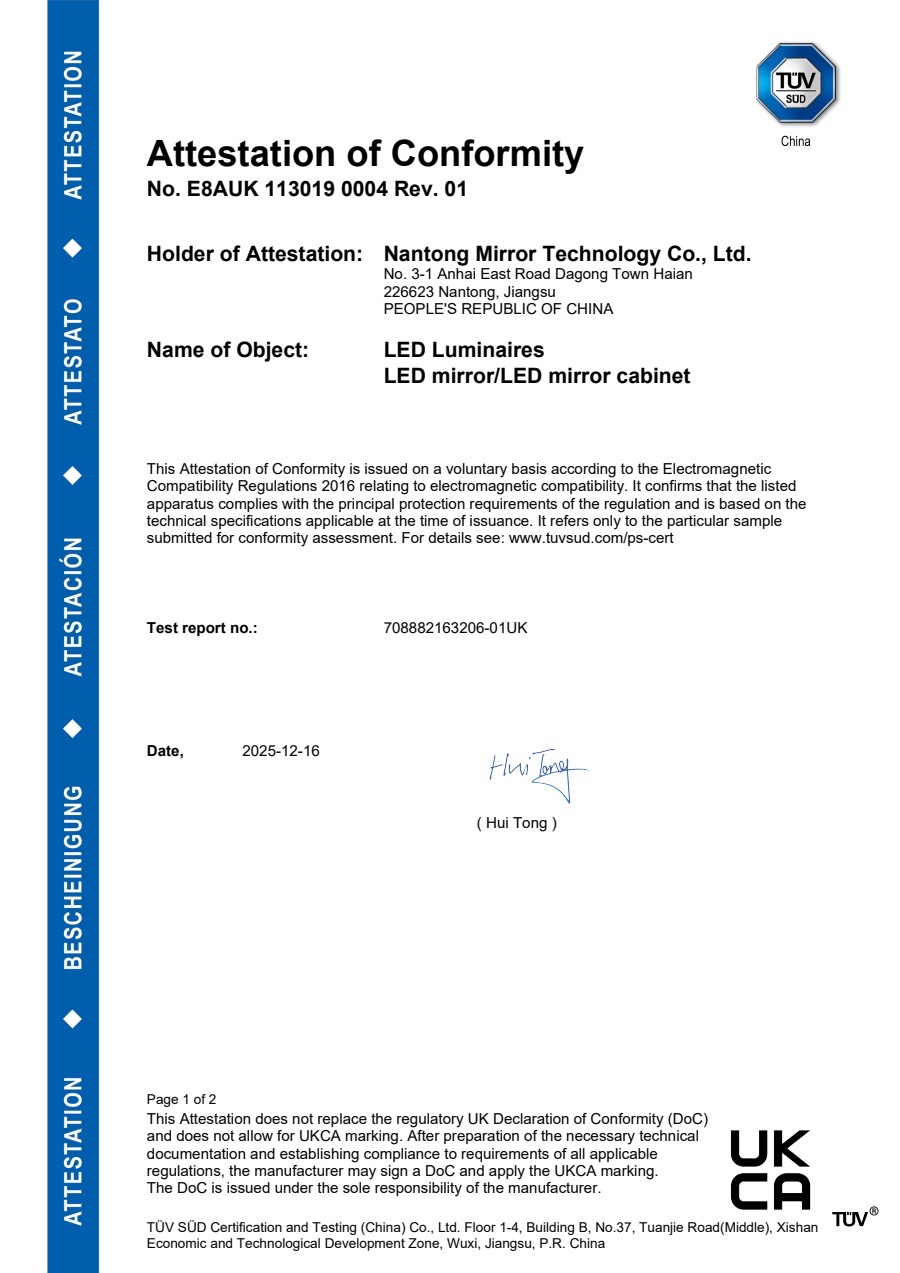
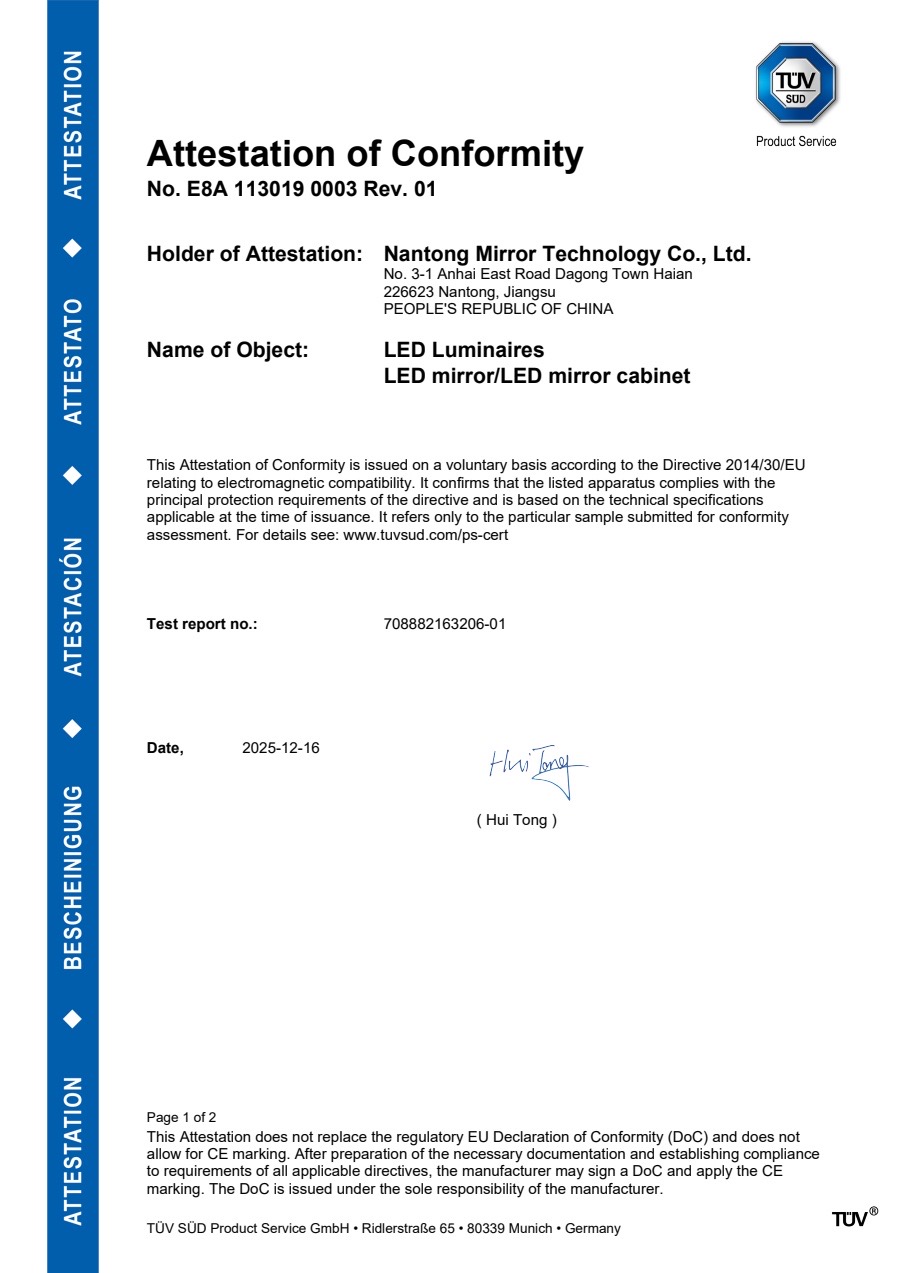
Start with what an attestation actually says. In the supplied compliance records, the LED mirror and LED mirror cabinet scope is covered by a UKCA Attestation of Conformity (No. E8AUK 113019 0004 Rev. 01, issued by TUV, dated 2025-12-16) and a CE Attestation of Conformity (No. E8A 113019 0003 Rev. 01, same body, same date). Both name the scope as LED mirror / LED mirror cabinet and cite four standards: EN IEC 55015:2019/A11:2020, EN IEC 61547:2023, EN IEC 61000-3-2:2019/A2:2024 and EN 61000-3-3:2013/A2:2021.
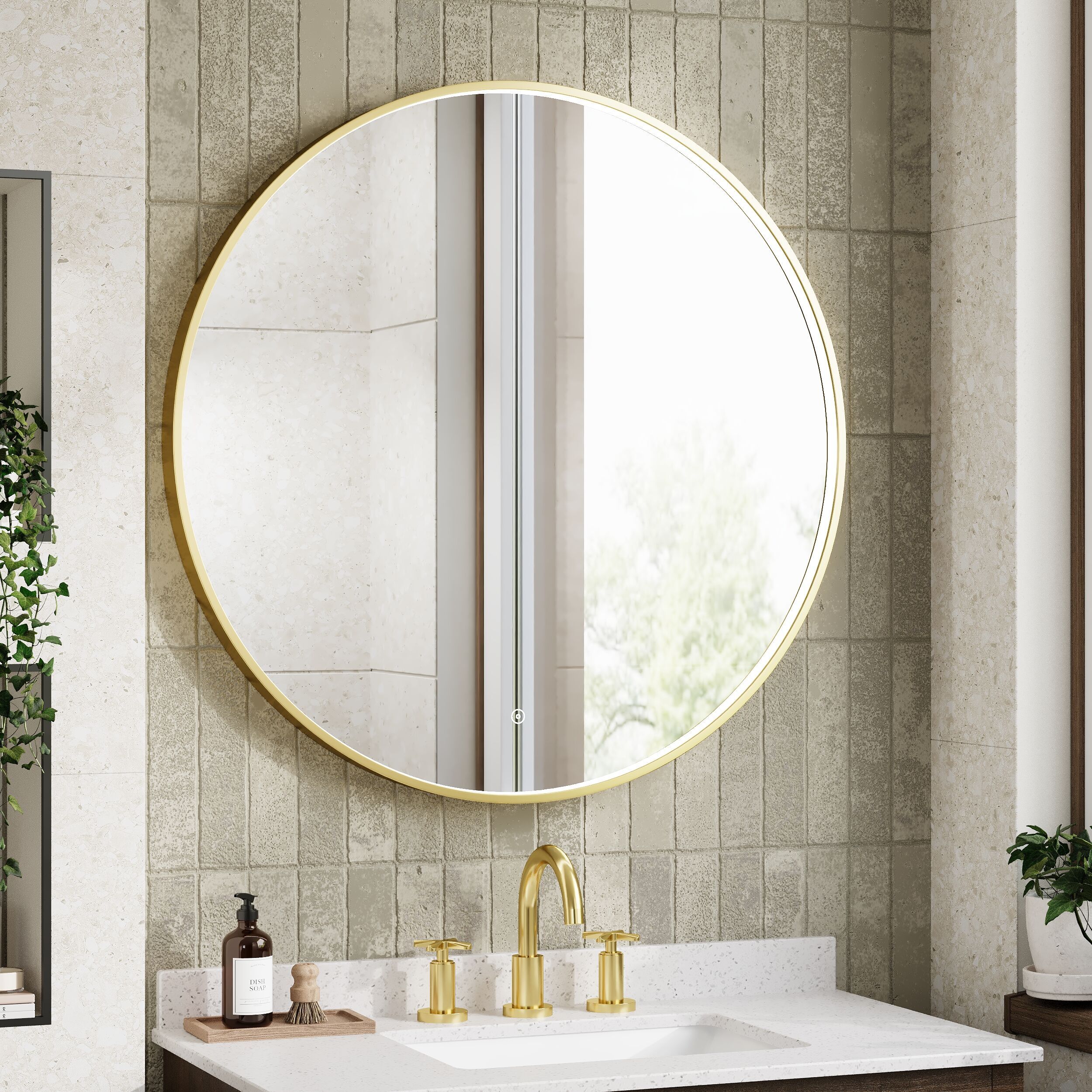
Those are electromagnetic compatibility standards — emission and immunity characteristics of the luminaire. They are the correct documents for that subject, and they say nothing about the bathroom zone, the protective earthing of the circuit, or how the mirror is connected. The product record for LED mirror LQ752 separately declares an IP44 splash-proof rating, film-backed glass and CE / EMC / LVD / RoHS / WEEE declarations. Each of those statements covers a different thing again.
The buyer's rule is therefore one of matching: request the document that corresponds to the claim you are relying on. Need an ingress protection class? Ask for the declared IP rating. Need cable sizing, zone suitability or earth continuity? No product document supplies that, because it is created on site by the electrician who signs the circuit off.
Why this matters commercially. When a specification is written around a document that does not cover the risk, the risk transfers to the party least able to absorb it — usually the contractor who installed the item, not the party that supplied it.
BS 7671: why zoning follows the room, not the product
BS 7671, the IEE Wiring Regulations, sets mandatory requirements for protection, earthing and wiring for each bathroom zone. The zone is a property of the room, defined by proximity to water — the bath, the shower tray, the basin. That has an immediate consequence for procurement: no product can be pre-certified for a zone, because the same mirror can sit in an acceptable position in one bathroom and an unacceptable one in another.
Two practical rules follow.
Fix the zone layout before the product is chosen. The position of the mirror, its cable route and the switching point should be settled at design stage. If the layout is decided after the mirror has been ordered, the electrical decision becomes a compromise between the drawing and the delivered goods.
Reserve the wiring for a qualified electrician. The supplied guidance is explicit that improper work by unqualified personnel can leave an earthing failure or a reversed live-neutral connection, and that this creates a persistent shock hazard rather than a fault that announces itself. Isolate the mains before wiring, confirm secure and correct L-N-E terminations in the terminal box, and check for hidden pipes or cables behind the drilling line before any hole is made.
Earthing is also the first thing to check when something appears broken. The fault guidance for the illuminated mirrors lists an earthing fault and a reversed live-neutral connection among the causes of a mirror that shows no light at all, alongside a tripped breaker, loose wiring and a failed driver. A dead mirror is not automatically a failed luminaire.
EN 60529 and the IP20 mistake in wet zones
An IP number describes an enclosure. The first digit addresses protection against solid foreign objects, the second protection against water. IP20 offers protection against solid objects and no water protection at all. IP44 adds protection against water splashing from multiple directions.
The bathroom argument is not only about direct splash. It is about persistent vapour. Vapour that reaches an IP20 enclosure can degrade insulation and lead to short circuit or electric shock, which is why the installation guidance for the illuminated mirrors in this range states IP44 for bathroom Zone 2 and outside zones only, and prohibits IP20 in those positions.
The application record for the same range matches that statement: the LED mirror lamp is specified for the bathroom wash area at AC220V, rated IP44 for high humidity and splash, operating intermittently, with a wall switch and the power supply circuit as matched equipment.
The boundary to keep in view: IP44 describes the enclosure, not the circuit. A correctly rated mirror wired to an unearthed or incorrectly connected circuit remains unsafe. Equally, an IP44 rating should not be copied into positions the guidance does not cover — where the fitting sits outside Zone 2 and the outside zones, the enclosure rating has to be selected against the zone requirement of BS 7671 rather than lifted from a catalogue page.
EN 12150-1: what toughened glass changes, and what it does not
EN 12150-1 is the toughened safety glass standard cited in the product and installation guidance. Its practical consequence is breakage behaviour: toughened glass breaks into blunt small granules, which reduces cut injury risk, while ordinary glass breaks into sharp large fragments. That difference — not a claim of unbreakability — is the reason toughened glass is specified for shower doors and panels.
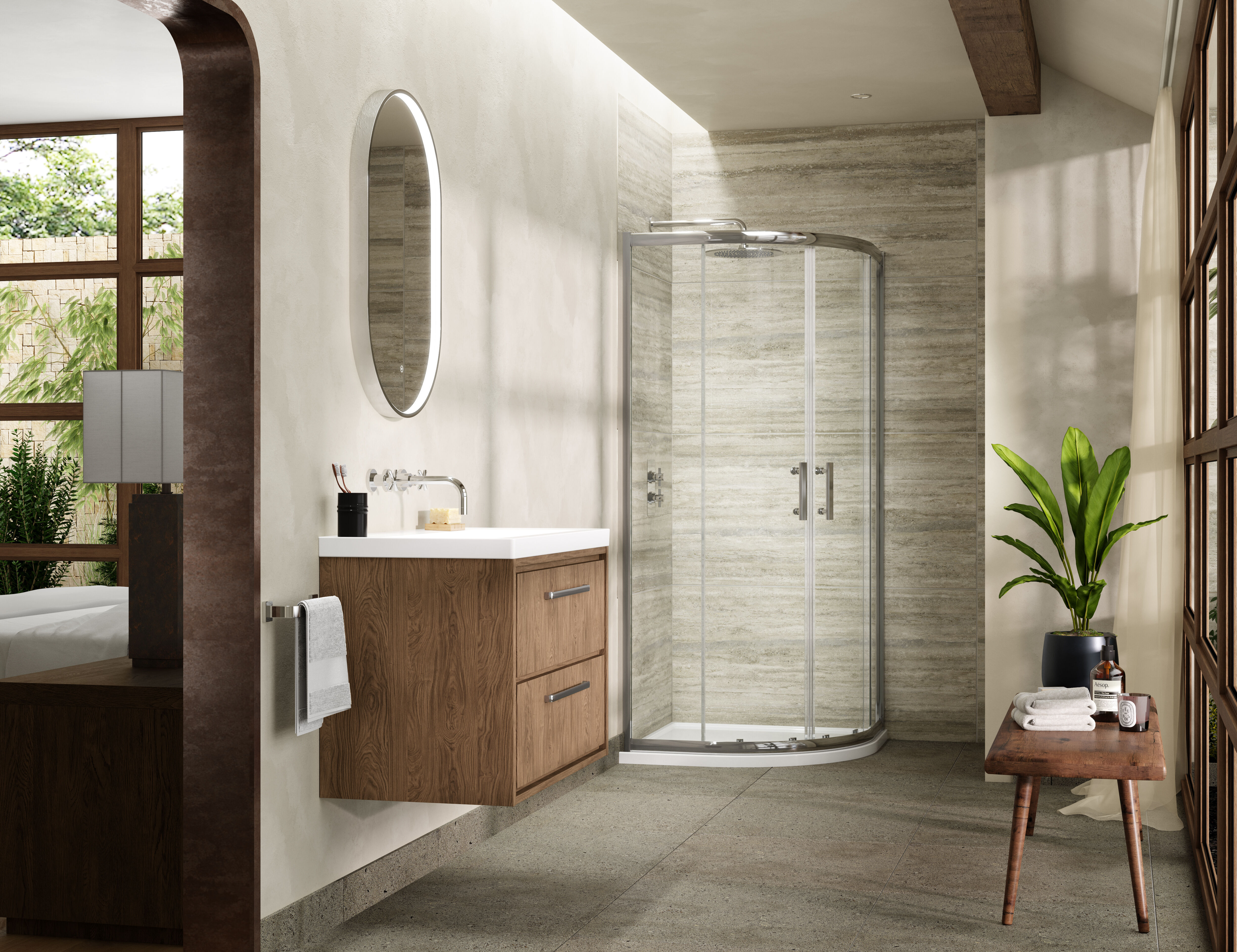
The shower enclosure in this range, model AQU9-E6, is a 900 mm chrome quadrant with 6 mm glass, 880 mm depth and width, 1850 mm height, an 860–880 mm adjustment range and dual quick-release wheels; the product record lists CE conforms and a lifetime manufacturer guarantee.
Mirror doors are a separate case and should not be assumed to share that specification. LED mirror LQ752 declares film-backed glass for added safety — a backing that holds fragments together — which is a different protective measure from tempering. When a project needs a documented glass property, ask for the declaration that applies to that specific door, not to the enclosure beside it.
Breakage behaviour also does not protect against breakage. The enclosure installation guidance requires two-person handling, careful treatment of the panels against impact, a level shower tray, and a continuous external silicone bead left to cure for a minimum of 24 hours before water exposure. It also states that sealant applied on the inner side is not permitted: inner-side sealing blocks drainage, traps water and aggravates the leakage it was meant to stop.
Cabinets: the compliance work that happens after delivery
Cabinet compliance is mostly invisible in a catalogue and obvious two winters later. Three points decide it.
Cut edges are site work, not factory work
A bathroom cabinet is built from a wood-based panel with a moisture-resistant surface treatment. That treatment covers the original surface only. On-site cutting for pipework or a WC unit exposes the open-cell core, which absorbs vapour and splash and then swells, delaminates and mildews. Sealing every exposed cut edge is installation work. This is why mildew at a cut edge is not a manufacturing defect, and why the sealing step belongs in the installer's scope rather than the warranty file.
Mirror-door weight changes the fastener requirement
A mirrored door with toughened glass weighs considerably more than a plain wooden door, and ordinary screws do not carry the cyclic fatigue of repeated opening and closing. The cabinet guidance requires dedicated reinforcing screws for reliable connection, citing the cabinet strength requirement of EN 14749. The specification is factory-side; fitting it correctly, and confirming the wall can carry the load, is installer-side.
Tolerance is designed to be adjusted
Wall-mount installation introduces small deviations from drilling and bracket fitting, which is why hinges provide X-horizontal and Y-vertical adjustment — the dual direction exists to correct assembly tolerance so door gaps stay even and the door closes tightly. Sliding enclosures work the same way: spring-loaded adjustable top rollers compensate for wall plumb and tray level, as cited against EN 14428. Uneven gaps and a sticking door are therefore usually adjustment findings, not product defects.
Step by step: specifying and handing over a compliant set
- Draw the zones before the furniture layout. Mark the bath, tray and basin positions, then place the mirror and its switching point against the zone requirement in BS 7671.
- Match the declared IP rating to the zone. IP44 is the stated rating for Zone 2 and outside zones in the supplied mirror guidance; IP20 must not be substituted, because EN 60529 gives it no water protection.
- Collect the document that matches each claim. An IP declaration for the enclosure rating, an EMC attestation for electromagnetic compatibility, a product record for glass and finish. Do not file one in place of another.
- Confirm the wall substrate and fixing strategy. Wall fixings are not supplied with wall-mounted cabinets; they must be selected for the actual wall. Remove drawers before lifting a wall-hung unit, and use reinforcing screws for mirrored doors.
- Sequence the trades. First-fix electrics, then cabinet, then mirror, then shower enclosure. Sealing and curing come after the enclosure is set, not before the mirror is hung.
- Wire with the power off. A qualified electrician isolates the mains, connects live, neutral and earth per the wiring regulations, verifies secure terminations and reliable earthing, and avoids hidden services when drilling.
- Seal on the exterior only. Apply a continuous sanitary-grade silicone bead externally and allow a minimum 24 hours' cure before water exposure. Never seal the inner side.
- Commission and record. Test touch on/off and long-press dimming, confirm the demister activates with the light, check for flicker, verify even door gaps and free door travel, and confirm no leakage at the tray and wall joints.
Where this plays out: three documented project records
The supplied case records describe installations in the United Kingdom, Ireland, Germany and France. They are recorded outcomes, not a promise of the same result on another project.
- Serviced apartment and hotel fit-out, 200 units: LED mirrors used for grooming lighting at the bathroom cabinet, with a recorded service duration of five years or more and a first-year return rate below 1%. The recorded basis is an IP44 rating, anti-fog film with diffused lighting, a touch switch and low energy consumption.
- Residential developer and senior living, 200 units: cabinets used for washing, storage and countertop work, with a recorded service duration of eight years or more and moisture-resistant cabinets showing no mildew. The recorded basis is MDF with moisture-proof edge sealing, E0-level environmental protection, and a scratch-resistant, easy-clean countertop.
- High-end hotel and residential developer, 120 units: shower enclosures providing wet-dry separation, with a recorded service duration of ten years or more, no glass self-breakage complaints and a maintenance rate below 2%. The recorded basis is tempered safety glass with anti-explosion film, corrosion-resistant hardware and zero leakage after installation.
The common thread in all three is not a certificate. It is that the sealing, levelling and connection work was completed on site and did not have to be repeated.
Bathroom furniture set comparison: declared evidence by product family
| Product family | Declared specification | Standard or rule that applies | Documentation held | What the buyer must still add on site |
|---|---|---|---|---|
| LED mirror LQ752 | 800 × 800 mm round wall-mounted, aluminium, 6.5 kg, 47 mm depth, LED 6000K at 21 W, touch sensor, demister, mains supply, film-backed glass, declared IP44 | BS 7671 zoning, earthing and wiring; EN 60529 IP code | UKCA and CE attestations (scope LED mirror / LED mirror cabinet, EMC standards, TUV, 2025-12-16); CE / EMC / LVD / RoHS / WEEE declarations; 1-year guarantee | Zone confirmation, circuit protection and protective earthing, connection by a qualified electrician |
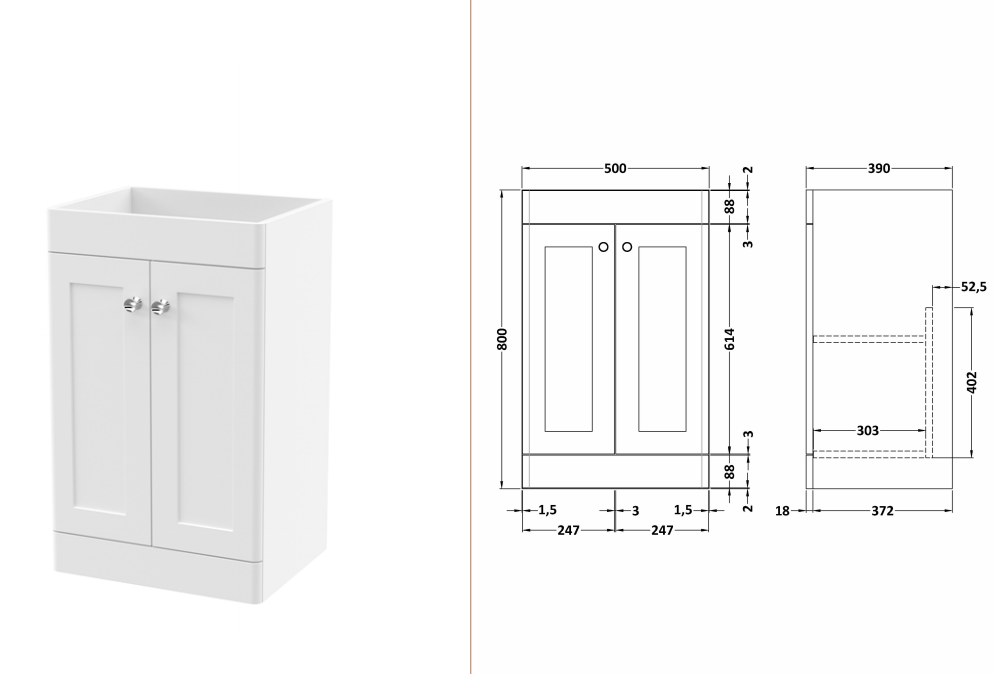
| Bathroom cabinet CLA123 | 500 mm two-door floor-standing, MDF painted matt, 16 mm cabinet and 18 mm fascia, soft-close hinged doors, rigid construction, 5-year guarantee | Cabinet strength requirement cited as EN 14749 for mirror-door fastening; moisture protection of cut edges | ISO 9001:2015 certificate covering production of shower rooms and bathroom cabinets; FSC-COC chain-of-custody certificate covering FSC-certified MDF/HDF bathroom cabinets | Sealing every cut edge after on-site cutting; reinforcing screws for mirrored doors; substrate and fixings for wall-hung variants |
| Shower enclosure AQU9-E6 | 900 mm chrome quadrant, 6 mm toughened glass, 880 × 880 × 1850 mm, 860–880 mm adjustment, dual quick-release wheels, framed, CE conforms, lifetime guarantee | EN 12150-1 toughened safety glass behaviour; adjustable rollers cited against EN 14428 | Product record with CE conformity and lifetime guarantee; installation guidance covering level tray, external-only sealing and 24-hour cure | Level tray, two-person handling, exterior silicone bead only, door gap and roller adjustment |
Buyer checklist: product standards versus installation responsibilities
Checks that belong to the product and its documentation
- ☐ Declared IP rating stated on the unit's own record, and matched to the intended zone (IP44 is the stated rating for Zone 2 and outside zones in the supplied mirror guidance)
- ☐ Attestation scope read literally — LED mirror / LED mirror cabinet, EMC standards, issuing body, revision and issue date
- ☐ Glass declaration for the specific door: 6 mm toughened glass for the shower enclosure, film-backed glass for the mirror door — not assumed to be interchangeable
- ☐ Reinforcing screw specification for mirrored doors, and hinge model with X-horizontal and Y-vertical adjustment
- ☐ Cut-edge sealing requirement stated in the installation instructions, not only in the warranty terms
- ☐ Guarantee terms per product family, recorded against the item rather than the order as a whole
Checks that belong to the site and the trades
- ☐ Zone layout fixed and marked before the mirror position is drilled
- ☐ Mains isolated before wiring; L-N-E terminations secure; protective earthing verified by a qualified electrician
- ☐ No hidden pipes or cables behind the drilling line
- ☐ Wall substrate confirmed, and fixings selected for it — wall fixings are not supplied with wall-mounted cabinets
- ☐ Drawers removed before lifting a wall-hung unit; reinforcing screws fitted for the mirror door
- ☐ Shower tray level before the enclosure is assembled; door gaps and rollers adjusted after fixing
- ☐ Continuous external silicone bead applied, inner side left unsealed, 24 hours' cure before first use
- ☐ Commissioning recorded: touch and dimming function, demister operation with the light, no flicker, no leakage
FAQ
Why is an IP20 mirror unacceptable in a bathroom Zone 2 position, even though it is cheaper and never directly splashed?
EN 60529 gives IP20 protection against solid foreign objects only — there is no water-splash protection in the rating. In Zone 2, water vapour and splash can enter an IP20 luminaire, degrade the insulation and cause a short circuit or electric shock. IP44 withstands water splashing from multiple directions, which is why the mirror installation guidance states IP44 for Zone 2 and outside zones and prohibits IP20 there.
Why must the LED mirror be wired by a qualified electrician rather than the fit-out team?
BS 7671, the IEE Wiring Regulations, sets mandatory rules for protection, earthing and wiring in each bathroom zone, and those rules apply to the installed circuit rather than to the product. Improper work by unqualified personnel can leave an earthing failure or a reversed live-neutral connection, creating a shock hazard that stays hidden until something fails. The electrician isolates the mains, connects live, neutral and earth correctly, confirms reliable earthing and checks for hidden services before drilling.
What does EN 12150-1 toughened glass actually change, and why is ordinary glass not an option for a shower door?
EN 12150-1 addresses toughened safety glass, and its practical effect is on breakage behaviour: toughened glass breaks into blunt small granules that reduce cut injury risk, while ordinary glass breaks into sharp large fragments. The shower enclosure AQU9-E6 is specified with 6 mm toughened glass for that reason. Note the limit of the claim — the standard describes behaviour on breakage, and handling, levelling and sealing still decide whether the installation performs.
How do I verify a Chinese bathroom furniture set manufacturer's claim of CE-compliant mirror lamps?
Ask for the attestation itself rather than the mark. Read the scope, the issuing body, the standards cited, the revision and the issue date. In this range, the CE Attestation of Conformity is No. E8A 113019 0003 Rev. 01, issued by TUV and dated 2025-12-16, with scope LED mirror / LED mirror cabinet and four EMC standards listed. Verify that the standards cited cover the claim you are relying on: an EMC attestation does not verify an IP rating or a wiring installation. Marketplace profiles are a discovery lead, not independent proof of factory scope, so factory documents and a sample should follow.
What is the minimum order, and can I test a mixed sample set before committing?
Minimum order quantity is 30 units, with OEM/ODM support for style, logo and colour customisation and 100% testing on production. Sample orders are accepted for quality testing and marketing, and mixed samples across cabinets, shower enclosures, LED mirrors and basins are acceptable. Samples are not free of charge and the freight is borne by the buyer, which is the normal basis for evaluating finish, hinge feel and sealing quality before a volume order.
How should responsibility be split between the factory and the installer at handover?
Split it by claim. The factory owns what it declares: the IP rating on the enclosure, the EMC attestation, the glass specification, the fastener specification and the cut-edge sealing requirement. The installer and the qualified electrician own what only exists in the room: zone suitability, circuit protection and earthing, wall substrate and fixings, tray level, exterior-only sealing, cure time and commissioning. Write both columns into the handover document, and request the sample set and technical documentation pack before the specification is frozen.
Conclusion
Compliance in a bathroom furniture set is not a folder of marks. It is a division of labour. BS 7671 governs the room and the circuit, so it belongs to the qualified electrician. EN 60529 governs the enclosure, so it belongs to the specification that matches IP rating to zone — and rules IP20 out of Zone 2. EN 12150-1 governs breakage behaviour, so it belongs to the glass declaration, while levelling, sealing and cure time belong to the installer.
Buyers who hold that split get three benefits: a specification that can be checked clause by clause, a handover with no unowned risk, and warranty conversations that start from evidence rather than assumption. The manufacturer declares what leaves the factory. The site makes it compliant.
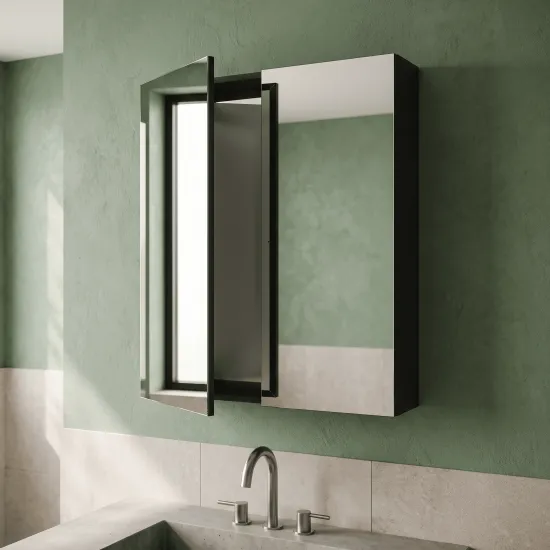
Next step for specifiers and buyers. Review the full bathroom cabinet, LED mirror and shower enclosure range, with dimensions, finishes and declared specifications, in the PTB product lookbook.
Download the PTB bathroom furniture set lookbook (PDF)
Sample sets covering mixed categories are available for quality testing, with OEM/ODM support for style, logo and colour. Technical documents, including attestations and product records, can be requested alongside the sample.
Have Questions or Need More Details?
Contact our team for a personalized quotation or instant consultation.
Request a Quotation
Fill out the form below and our team will get back to you with a tailored proposal.
WhatsApp Direct Chat
Prefer to chat in real-time? Message us on WhatsApp for instant assistance & quick answers.
- Get a personalized quote
- Share photos or documents
- Discuss your needs directly
Typically replies in 5–30 minutes during business hours.