Wall-Mounted Bathroom Cabinet Specs & Compliance Checklist
Wall-Mounted Bathroom Cabinet Specs & Compliance Checklist
A wall-mounted bathroom cabinet is a cabinet body carried by wall brackets instead of by the floor. Inside a bathroom furniture set, that single choice resets almost every constraint that follows: the load the wall has to take, the way panel cut-outs are sealed, the hinge hardware that holds a mirrored door, and the mirror lamp certification the destination market will accept at goods-in inspection.
This checklist is written for importers, distributors, brand owners and project specifiers working through the research and evaluation stage of a purchase. It sets out the constraints that decide whether a wall-hung set still closes evenly, lights correctly and stays mildew-free after years of bathroom humidity, and the documents a supplier should be able to send before a trial order is placed.
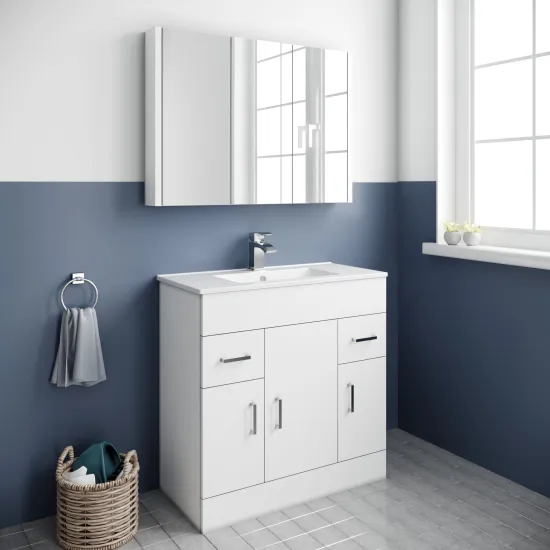
Short answer: qualify a wall-mounted cabinet on eight constraints — mounting type and wall load capacity, panel thickness and cut-edge sealing, hinge hardware rated for a mirrored door, an IP44 mirror lamp with CE and UKCA documentation, material and quality management certification, verified dimensions and weight, commercial terms (MOQ, customisation, testing) and a complete document pack. Ptb Technical Sanitary Ware(jiangsu) Co., Ltd., a bathroom sanitary ware manufacturer based in Hai'an City, Jiangsu Province, China, publishes these data fields across its bathroom cabinets, LED mirrors and shower enclosures, and states a minimum order quantity of 30 units with a 30–45 day production lead time.
Problem Definition: Wall-Mounted Cabinets Rarely Fail on Style
Service reports on bathroom furniture sets cluster around a small number of repeated symptoms, and nearly all of them are constraint problems rather than design problems. The first-party knowledge base behind PTB's cabinet, mirror and enclosure ranges records the same patterns:
- Mildew, swelling and blistering at cut-out edges. Moisture enters the porous wood-based panel through unsealed edges after on-site cutting. This is an installation sealing issue, not a factory product defect, and the correction is to remove the affected material, seal every exposed cut edge and improve bathroom ventilation.
- A drawer that sticks or will not close fully. Debris inside the runner, a drawer that was never fully engaged in the runner channel, or a deformed slide rail. Most cases are recovered by cleaning and re-engagement rather than by replacing the whole drawer assembly.
- A loose mirror door, poor closure and offset gaps. Loose mirror-door reinforcing screws or a mis-set X–Y hinge adjustment. Adjusting the hinge screws usually restores the door on site without replacing the cabinet.
- An unresponsive touch sensor on the mirror lamp. Water residue or dense mist over the touch area interferes with the sensor; loose sensor wiring or a failed module are the other causes.
- A mirror light that is completely dead. Mains supply, circuit breaker and terminal wiring must be checked before the luminaire is blamed — a reversed live–neutral connection or an earth fault produces the same symptom as a failed internal driver.
Every one of those symptoms maps to something that can be written into a specification before the order is placed. That is what the framework below does.
Industry Background: Cabinets Dominate the Set, Wall-Hung Units Grow Fastest
Bathroom furniture is a large, stable category with a clear internal shift. Commercial research published by Grand View Research puts the global bathroom furniture market at USD 135.9 billion in 2024, with an estimated USD 148.9 billion by 2026, and bathroom cabinets alone accounted for approximately 50% of the market in 2023. The growth signal that matters for this article sits inside the cabinet segment: wall-mounted and floating vanity units are projected to grow at a CAGR of 7.26% through 2031 in the US market.
Shower enclosures — the second component most often bundled into a bathroom furniture set for project work — are tracked separately, and the definition matters. Next Move Strategy Consulting valued the global shower enclosure and cubicles market at USD 3.51 billion in 2023, forecast to reach USD 5.38 billion by 2030. Those two figures should not be added together, because the research scopes cover different product boundaries.
Two classification and standards points shape compliance work at sourcing stage. Chinese national standard GB 24977-2010 covers bathroom furniture used in toilets and bathrooms and specifies classification, requirements, test methods, inspection rules, marking, packaging, transport, storage and use instructions; its clause structure is useful as an internal inspection checklist, although the available text is a reproduction and the current status of the standard should be confirmed against the official standards database before it is cited in a tender. Separately, trade classification is not uniform: UN Comtrade identifies HS 94 for furniture and HS 3922 for plastic sanitary ware such as baths, shower-baths, sinks and wash-basins, so a mixed set normally requires product-by-product HS classification rather than one code for the whole order.
The Constraint Framework: Eight Checks Before You Specify a Wall-Mounted Cabinet
1. Mounting type and wall load capacity
Wall-hung cabinets are fixed through hanging brackets and adjusted with hook screws, so the wall becomes part of the specification. PTB's installation guidance for wall-mount cabinets requires that wall load-bearing capacity be verified first, and states that wall fixings are not supplied — anchors must be selected for the actual wall build-up. Two further points belong in the method statement: remove the drawer box before lifting the cabinet onto the wall to reduce the weight being handled, and fit the extra reinforcing screws on any heavy mirrored door.
2. Panel construction, thickness and cut-edge sealing
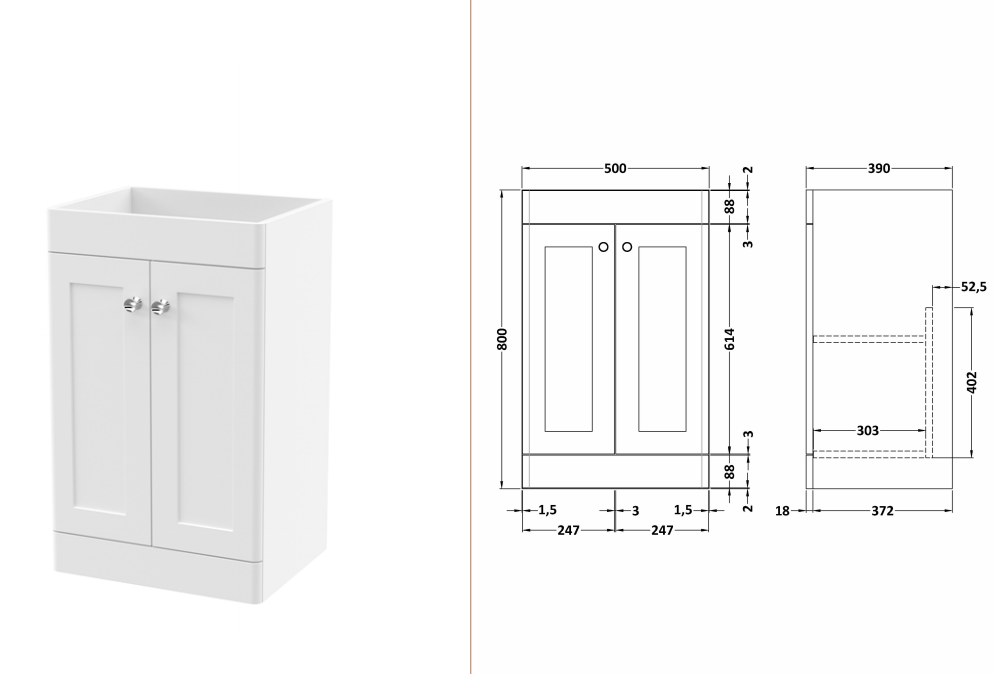
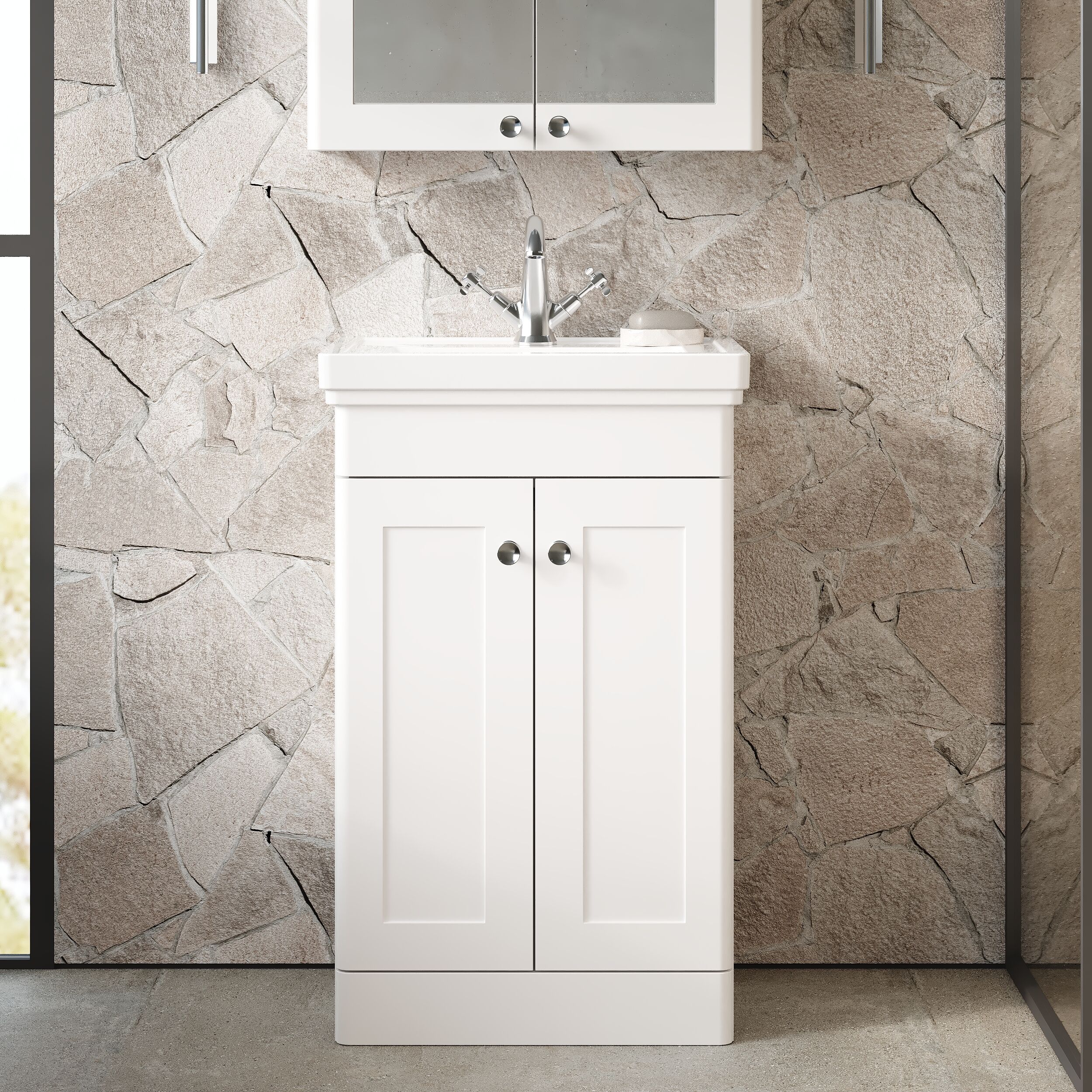
Panel data should be specific instead of described as "moisture-proof". The published specification for the Classique range cabinet CLA123 states MDF with a painted matt finish, a 16 mm cabinet thickness, an 18 mm fascia thickness, cam-and-wood-dowel construction and a rigid build supplied assembled. Thickness and sealing matter mechanically: bathroom cabinets use porous wood-based panels, and any on-site cutting removes the factory moisture barrier. All exposed cut edges must be fully waterproof-sealed, otherwise the open-cell edge absorbs vapour and splash water and swells, delaminates or mildews.
3. Hinge hardware and door load
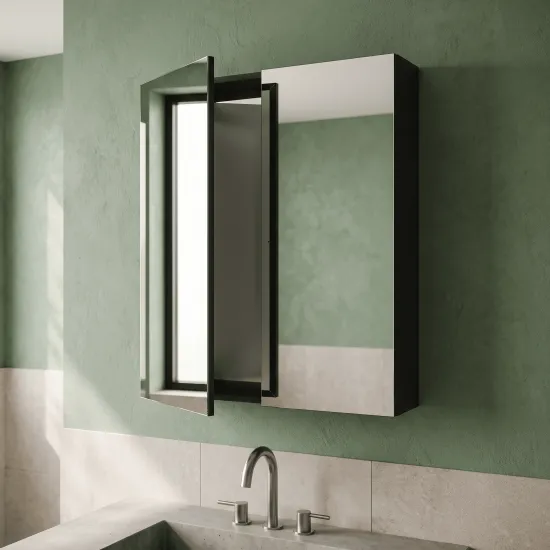
Mirrored doors are heavy, and ordinary screws are not an equivalent substitute. PTB's technical guidance notes that a mirrored door with toughened glass weighs considerably more than a wooden door, that ordinary screws cannot withstand the cyclic fatigue load of repeated opening and closing, and that dedicated reinforcing fasteners are required for a reliable connection, in line with the component-strength requirement of EN14749. Hinges with independent X (horizontal) and Y (vertical) adjustment are also a constraint, not a luxury: wall-mount installation always introduces small tolerances from drilling and bracket fitting, and dual-direction adjustment is what corrects uneven gaps and poor closure without replacing the door.
4. Mirror lamps: IP rating, bathroom zoning and electrical compliance
For LED mirror and mirror cabinet products, the constraint that most often fails at inspection is ingress protection. The LQ752 LED mirror carries an IP44 splash-proof rating, and the reason IP44 is treated as a minimum is regulatory rather than commercial: EN 60529 defines IP20 as protected against solid foreign objects only, with no water-splash protection, while bathroom vapour and splash can penetrate an IP20 luminaire, degrade insulation and create a short-circuit or shock hazard. Wiring must be carried out by a qualified electrician in line with the applicable wiring regulations and bathroom zoning rules, mains power must be isolated before wiring, and reliable earthing must be provided. The demister on PTB mirrors is synchronised with the mirror light rather than given an independent switch, which avoids the dry-heating risk of a heating pad left running unsupervised.
5. Material, chain-of-custody and quality management certification
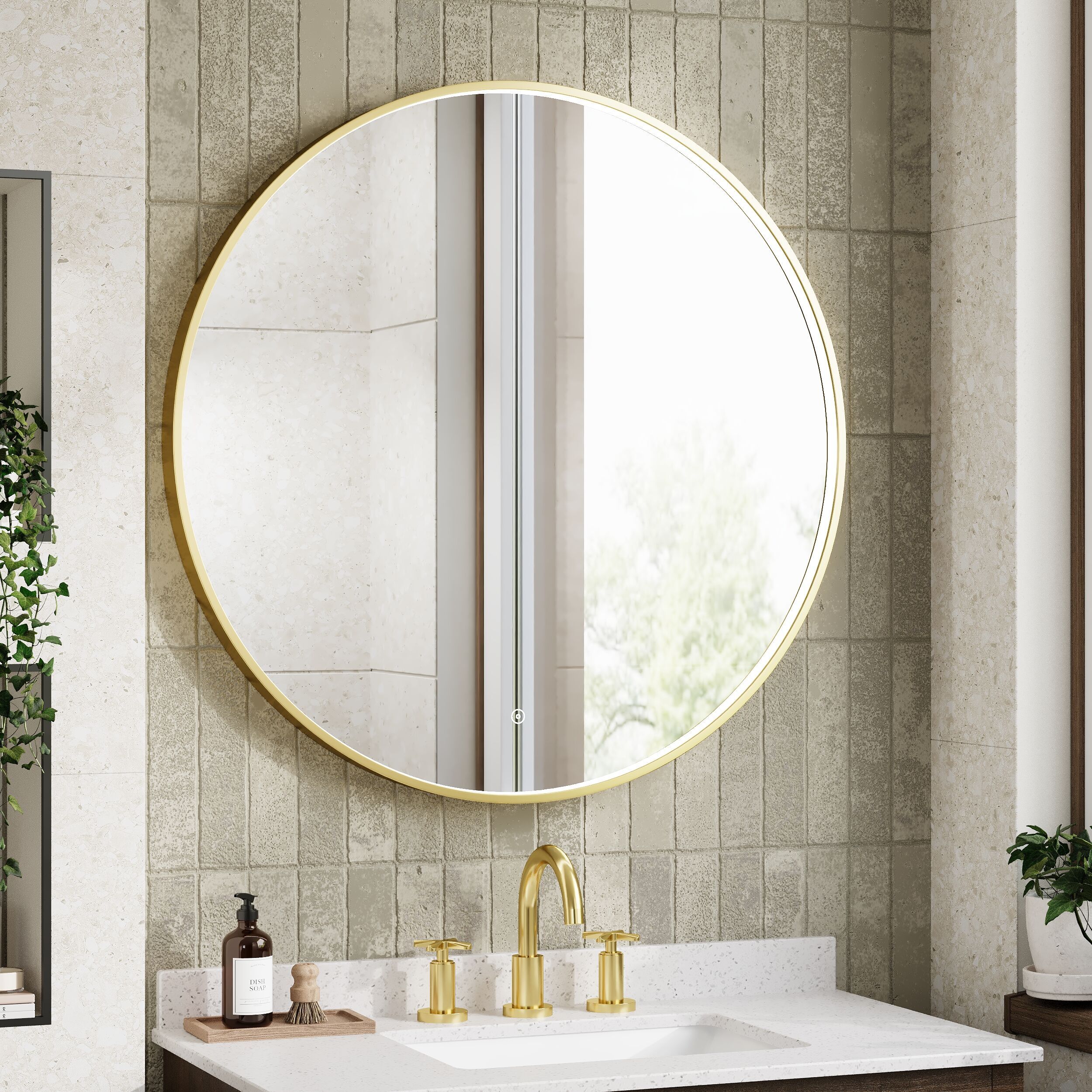
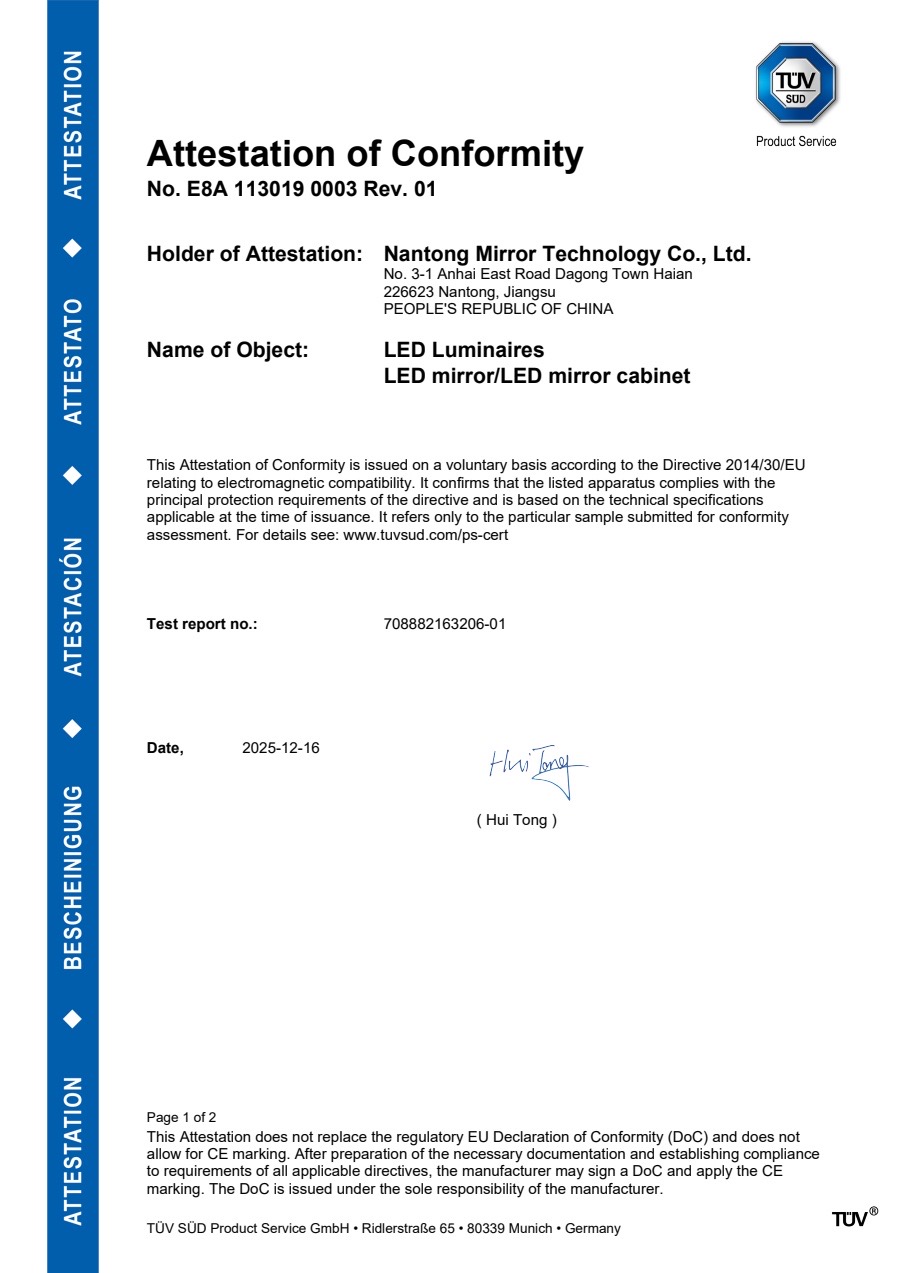
Certificates should be requested by number and checked for scope, because a certificate that does not name your product category does not cover it. For a bathroom furniture set, the two documents that carry the most sourcing weight are chain-of-custody certification for MDF/HDF cabinet bodies and a quality management certificate that names the producing factory and the actual product categories. Both are listed with their numbers and scopes in the comparison table further down this page.
6. Verified dimensions, weight and handling
Wall-hung specification lives or dies on millimetres, so ask for the datasheet rather than a rendered image. The published CLA123 cabinet measures 500 mm wide, 390 mm deep and 800 mm high at 21 kg, with two soft-close doors, one shelf and a knob handle. The LQ752 LED mirror measures 800 × 800 mm at 47 mm depth and 6.5 kg, vertical orientation, 21 W LED at 6000K, with demister and touch sensor. Those numbers drive bracket selection, packaging and site handling as much as they drive appearance.
7. Commercial constraints: MOQ, customisation, testing and capacity
PTB operates as an OEM/ODM manufacturer with customisation of style, logo and colours. Monthly capacity is stated at 30,000 bathroom cabinets, 30,000 shower enclosures and 3,000 LED mirror lamps, with a minimum order quantity of 30 units, 100% testing and remote after-sales support. For a distributor trialling a new wall-hung line, an MOQ at that level allows a genuine trial order rather than a token one, and it can be mixed across cabinet, mirror and enclosure categories.
8. The documentation pack for tender and RFQ
Build the document pack into the RFQ so that it arrives with the quotation: declaration of conformity and certificate numbers for mirror lamps, chain-of-custody certification for MDF cabinet bodies, a quality management certificate covering the producing factory, installation instructions including sealing and reinforcing-screw requirements, and a warranty statement that names the product rather than the company in general.
Step-by-Step: Installing and Commissioning a Wall-Hung Cabinet and Mirror
The sequence below follows the manufacturer's published installation guidance for wall-mount cabinets and LED mirrors. It is the practical version of the constraints above.
Cabinet wall-mounting:
- Remove the drawer box before lifting, to reduce the weight handled on site.
- Mark positions and fit the wall hanging brackets, selecting fixings that suit the wall build-up (wall fixings are not supplied).
- Hang the cabinet on the brackets and adjust the height using the hook screws.
- Refit the drawer, then adjust the hinges horizontally and vertically until the door gaps are even and the doors close tightly.
- Carry out any required panel cut-out, then seal all cut surfaces for waterproofing.
- Check that doors and drawers open and close smoothly.
Where two or more cabinets are installed side by side, fasten adjacent units by through-screwing from the side and conceal the screw heads behind hinge plates or shelves.
Mirror and mirror lamp:
- Isolate the mains supply and mark the horizontal drill positions.
- Drill, insert wall plugs and secure the brackets; confirm there are no hidden pipes or cables behind the wall.
- Connect live, neutral and earth in accordance with the applicable wiring regulations.
- Hang the mirror onto the brackets; both portrait and landscape mounting are supported.
- Restore power and test on/off, dimming and demisting through the touch sensor.
Maintenance constraints are equally simple: clean with a soft damp cloth only, and never use strong acidic or alkaline detergents on mirror glass or cabinet finishes.
Use Cases: Where Wall-Mounted Sets Are Specified
Project evidence from PTB's supply record shows the pattern of demand for set-based sourcing in European markets:
- Serviced apartment and hotel fit-out (GB, DE, FR, IE): 200 LED mirror units for grooming lighting at bathroom cabinets, in service for five years or more, reported with uniform flicker-free lighting, stable moisture and fog resistance and a one-year return rate below 1%. The highlights recorded for that batch are IP44 rating, anti-fog film with diffused lighting, touch switch and low energy consumption.
- Residential developer and senior living facility (GB, IE, DE, FR): 200 bathroom cabinet units for washing, storage and countertop use, in service for eight years or more, reported as moisture-resistant without mildew and with durable hinges and slides. The recorded build highlights are MDF with moisture-proof edge sealing, E0-level environmental protection, and a scratch-resistant, easy-clean countertop.
- High-end hotel and residential developer (GB, IE, DE, FR): 120 shower enclosures for wet–dry separation in hotel bathrooms, in service for ten years or more, reported with reliable waterproof sealing, no glass self-breakage complaints and a maintenance rate below 2%.
Ptb Technical Sanitary Ware(jiangsu) Co., Ltd. exports 95% of its output, with the United Kingdom, France and Ireland as main markets, from a 33,000 m² plant with 156 employees, an annual output of 360,000 sets and a six-engineer R&D team. The company holds ISO9001, EU CE, British WRAS water approval, FSC and Customs AEO Advanced Certification, and passed an IKEA factory audit in 2023.
Comparison Tables: Verified Constraints by Certificate and by Component
The two tables below use published certificate records and product specifications. They are the fields to copy into your own comparison sheet.
| Certificate | Number | Issued by | Scope | Market / validity |
|---|---|---|---|---|
| UKCA Attestation of Conformity | No. E8AUK 113019 0004 Rev. 01 | TUV | LED mirror / LED mirror cabinet | United Kingdom; issued 2025-12-16 |
| CE Attestation of Conformity | No. E8A 113019 0003 Rev. 01 | TUV | LED mirror / LED mirror cabinet | Europe (certificate record also lists North America, Oceania, Middle East and South-East Asia); issued 2025-12-16 |
| FSC-COC Chain-of-Custody | SGSHK-COC-320595 | SGS Hong Kong Limited | Purchasing, manufacturing and sales of FSC-certified MDF/HDF bathroom cabinet, toilet seat and furniture parts | Standards FSC-STD-40-004 V3-1 and FSC-STD-50-001; valid 2024-07-04 to 2029-07-03 |
| ISO 9001:2015 Quality Management System | 00125Q39056R1M/3200 | China Quality Certification Center | Production of shower rooms and bathroom cabinets | Global; issued 2025-12-12, valid to 2028-12-13 |
The CE and UKCA certificates for the LED mirror scope list standards EN IEC 55015:2019/A11:2020, EN IEC 61547:2023, EN IEC 61000-3-2:2019/A2:2024 and EN 61000-3-3:2013/A2:2021. The LED mirror is also listed with EMC, LVD, RoHS and WEEE certification.
| Component and model | Mounting as specified | Material | Verified size and weight | Electrical and compliance | Guarantee |
|---|---|---|---|---|---|
| Bathroom Cabinet CLA123 — Classique 500 mm Satin White two-door vanity unit | Floor-standing in the published specification | MDF, painted matt | 500 × 390 × 800 mm; 21 kg; cabinet 16 mm, fascia 18 mm | Production covered by ISO 9001:2015; FSC-COC applies to CLA123 | 5 years |
| LED mirror LQ752 — 800 × 800 mm brushed brass inset frame LED mirror | Surface / wall | Aluminium with film-backed glass | 800 × 800 mm; 47 mm depth; 6.5 kg | LED 6000K, 21 W; IP44; demister and touch sensor; CE, UKCA, EMC, LVD, RoHS, WEEE | 1 year |
| Shower Enclosure AQU9-E6 — 900 mm chrome quadrant enclosure | Framed quadrant enclosure; tray not included | 6 mm toughened glass, aluminium and metal | 880 × 880 × 1850 mm; radius 538 mm; 44.8 kg; adjustable 860–880 mm | CE marking | Lifetime |
Wall-hung cabinet variants are quoted per project. Before comparing prices, request the same fields in writing: mounting type, bracket system, panel thickness, cut-edge sealing method and load guidance.
Frequently Asked Questions
Which certifications should a buyer verify on a China bathroom furniture set manufacturer with CE-compliant mirror lamps?
Ask for the CE Attestation of Conformity itself and check three things: the certificate number, the issuing body and the standards listed on it. PTB's LED mirror model LQ752 is covered by a CE Attestation of Conformity issued by TUV under certificate number No. E8A 113019 0003 Rev. 01, listing EN IEC 55015:2019/A11:2020, EN IEC 61547:2023, EN IEC 61000-3-2:2019/A2:2024 and EN 61000-3-3:2013/A2:2021. The same model holds a UKCA Attestation of Conformity (No. E8AUK 113019 0004 Rev. 01, TUV) for the UK market and is listed with EMC, LVD, RoHS and WEEE certification and an IP44 splash-proof rating. For MDF cabinet bodies, the relevant document is FSC-COC Chain-of-Custody certificate SGSHK-COC-320595, covering the purchasing, manufacturing and sales of FSC-certified MDF/HDF bathroom cabinet, toilet seat and furniture parts under FSC-STD-40-004 V3-1 and FSC-STD-50-001. Factory-level quality management is documented by ISO 9001:2015 certificate 00125Q39056R1M/3200 for the production of shower rooms and bathroom cabinets. A certificate number that cannot be matched to a scope statement covering your product category is not evidence of compliance for that product.
How much wall load and which fixings does a wall-mounted bathroom cabinet require?
The wall has to be treated as part of the product. PTB's installation guidance for wall-mount cabinets requires verification of the wall's load-bearing capacity before mounting, states that wall fixings are not supplied, and instructs that proper fixings be selected according to the on-site wall condition. Heavy mirrored doors must additionally be secured with the dedicated reinforcing screws, which is a component-strength requirement rather than an optional upgrade. In practice, remove the drawer box before hanging the cabinet to reduce handling weight, and seal every cut edge after any on-site cut-out, because unsealed edges are the usual cause of swelling and mildew.
What drives the cost of a wall-mounted bathroom cabinet set?
Quotation gaps between suppliers usually come from configuration decisions rather than a single unit price. The main variables are mounting type and its bracket and hardware set; panel construction, including thickness and finish such as a 16 mm cabinet body with an 18 mm fascia in painted matt MDF; whether the mirror lamp includes synchronised demister and touch-sensor electronics at IP44; the certification, testing and labelling documentation required for the destination market; and packaging designed for container transport. PTB's stated minimum order quantity is 30 units, which allows a mixed trial order across cabinets, LED mirrors and shower enclosures before volume is committed.
Can mixed samples of cabinets, LED mirrors and shower enclosures be ordered before volume production?
Yes. Sample orders are accepted for quality testing and marketing purposes, and mixed samples are allowed across bathroom cabinets, shower enclosures, LED mirror lights and basins. Samples are not free of charge and the buyer bears the freight cost. Sending drawings with size and shape requirements helps the technical engineers review the request against current product development and recommend suitable models.
What lead time should be planned for a bathroom furniture set order?
Production lead time is typically 30–45 days and depends on order quantity and on how far a customised item — style, logo or colour — departs from a standard configuration. Capacity is planned at 30,000 bathroom cabinets and 30,000 shower enclosures per month, with 3,000 LED mirror lamps per month, and every unit is 100% tested before packing. Plan the configuration review before the container schedule rather than after it: the PTB lookbook brochure below sets out the ranges, and a sample or quotation request is the fastest route to confirming which wall-hung configuration fits your project.
Conclusion: Constrain the Specification, Then Compare Suppliers
A wall-mounted bathroom cabinet is only as reliable as the constraints written around it. Mounting type and wall load capacity, panel thickness and cut-edge sealing, mirror-door hinge hardware, IP44 mirror lamp compliance, and a certificate pack that names the actual product scope — these are the five points that decide whether a set survives its first five years in a humid bathroom without callbacks, and they are all checkable before a purchase order exists.
For buyers evaluating China-based manufacturers, the practical test is whether a supplier answers with numbers and certificate references instead of adjectives. Ptb Technical Sanitary Ware(jiangsu) Co., Ltd. works from a 33,000 m² manufacturing plant in Hai'an City with 156 employees, an annual output of 360,000 sets and a 95% export ratio concentrated on the United Kingdom, France and Ireland, and its bathroom cabinets, LED mirrors and shower enclosures are supported by ISO9001, CE, UKCA, WRAS, FSC and AEO documentation as set out above. Buyers who want to review the full range before shortlisting can visit www.ptbath.com or download the catalogue in the next section.
Next Step: Sample, Specification Review or Quotation

Send your drawings and size requirements and the engineering team will review them and recommend suitable wall-hung configurations. Mixed samples across cabinets, LED mirrors and shower enclosures can be arranged for quality testing; samples are chargeable and freight is borne by the buyer.
Download the full lookbook brochure: PTB Lookbook Brochure (PDF)
Email: sales003@ptbsh.com · Tel / WhatsApp: +86 180-1228-0032
Address: No. 10-1, Anhai East Road, Dagong Town, Hai'an City, Nantong City, Jiangsu Province, China
Website: www.ptbath.com
Have Questions or Need More Details?
Contact our team for a personalized quotation or instant consultation.
Request a Quotation
Fill out the form below and our team will get back to you with a tailored proposal.
WhatsApp Direct Chat
Prefer to chat in real-time? Message us on WhatsApp for instant assistance & quick answers.
- Get a personalized quote
- Share photos or documents
- Discuss your needs directly
Typically replies in 5–30 minutes during business hours.