Paper Strength Agent Guide: Types, Benefits & How to Choose
Paper Strength Agent: Definition, Types, Benefits, and Selection Guide
Paper strength agents are wet-end chemical additives that increase the mechanical strength of paper and board by improving fiber bonding strength. They are used across recycled linerboard, corrugated medium, kraft paper, tissue, printing and writing paper, and molded pulp products. This guide explains how these additives work, how they differ, and what to evaluate before choosing a supplier.
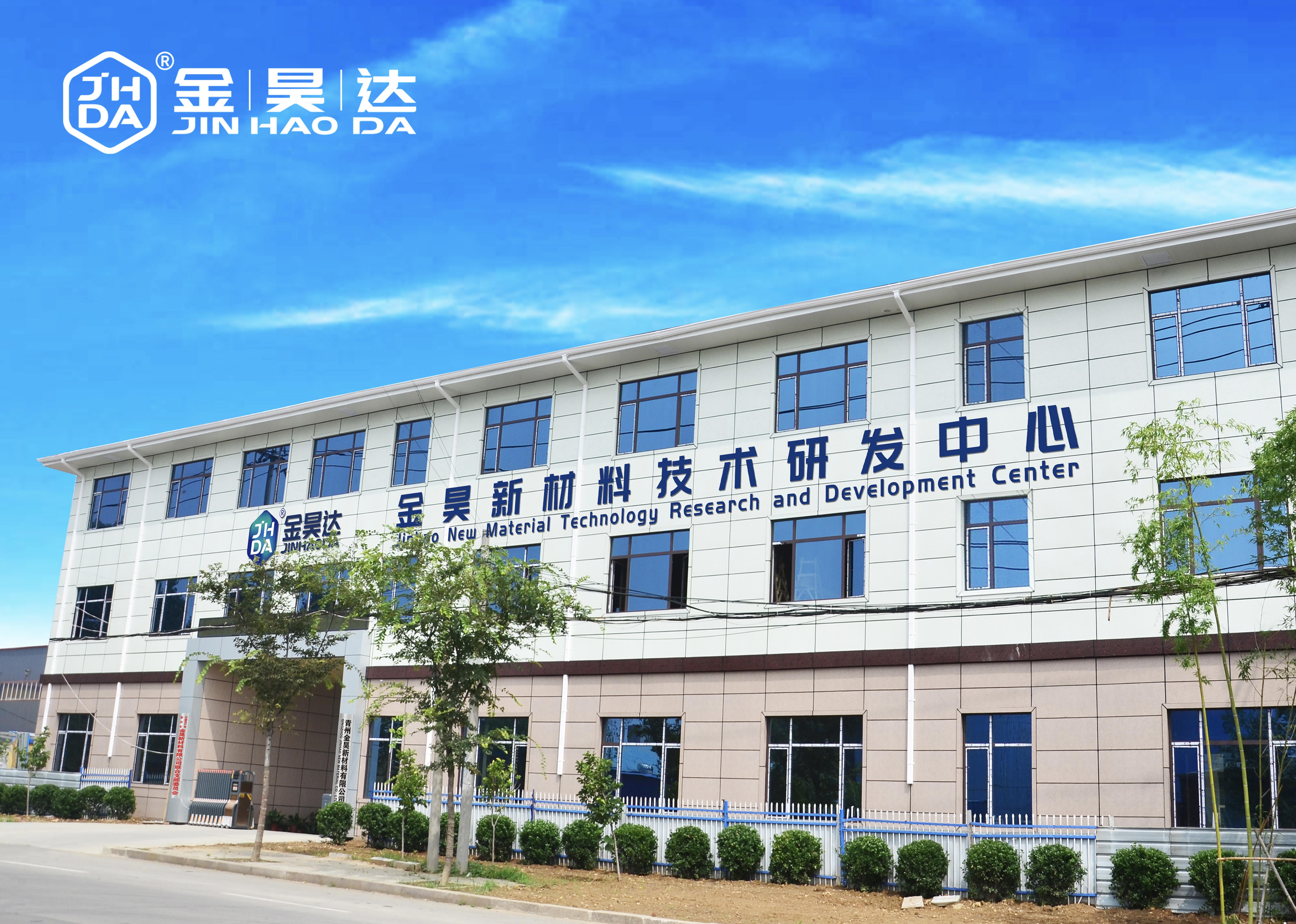
Qingzhou Jinhao New Material Co., Ltd., branded as JHDA, is a China-based manufacturer of professional papermaking fine chemicals. Established in 2005 in Mihe Industrial Park, Qingzhou City, Shandong Province, JHDA supplies dry strength agents, wet strength resin, retention aids, filler and sludge encapsulants, and other wet-end additives to paper mills in Asia, Africa, and South America.
Why Paper Strength Is Difficult to Control
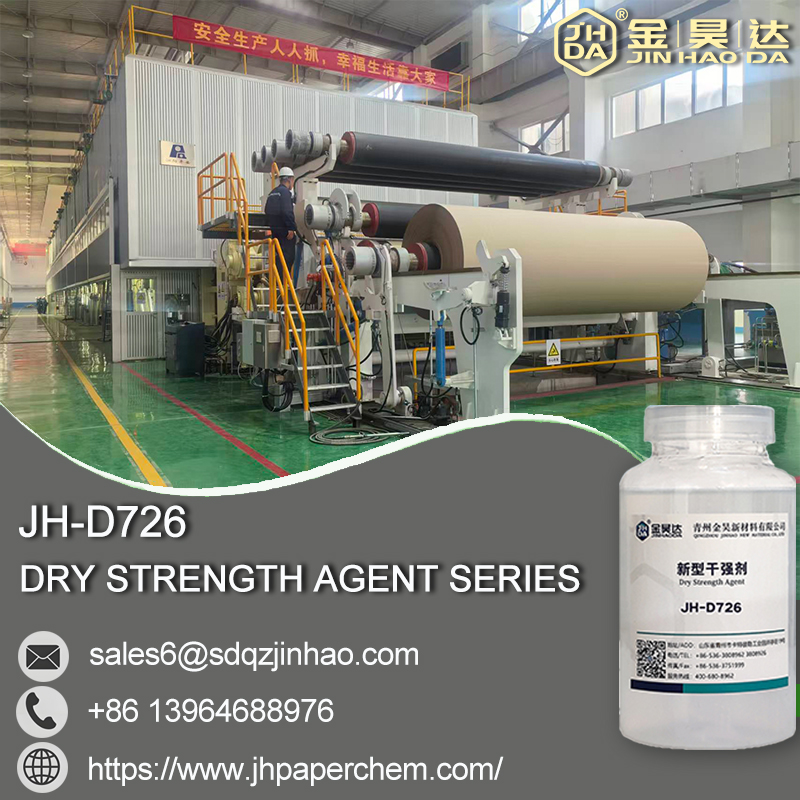
Paper strength is not a single property. It includes ring crush strength, burst strength, tensile strength, stiffness, folding endurance, and wet strength. These properties depend on the quality of fiber-to-fiber bonding and on how evenly fines and fillers are distributed in the sheet.
Recycled fiber weakens this structure. Each repulping cycle shortens fibers and reduces their ability to bond. High filler content, often added for cost control, can also block bonding between fibers. The result is lower ring crush, burst, and tensile strength, more paper breaks on the machine, and more damaged cartons in logistics.
A paper strength agent addresses this problem by helping fibers and fine particles form a stronger internal network. It is a faster, more targeted solution than simply increasing refining or adding more virgin fiber, both of which raise cost and can hurt drainage.
Industry Background: Why Paper Strength Agents Matter More Today
According to Intel Market Research, the global paper dry strength agent market was valued at approximately USD 864 million in 2024. Fact.MR projects the dry strength resin market to reach USD 1.4 billion by 2026, with a CAGR of 4.8% through 2036. Asia-Pacific accounts for approximately 40% of the global market, and packaging and containerboard is the largest paper grade segment for dry strength additives, with a 38.0% share.
The shift to recycled fiber is one reason for this growth. In 2024, recycled paper accounted for 44.4% of the fiber used at U.S. mills, according to the American Forest & Paper Association. Recycled fiber is shorter and weaker after repeated use, which increases demand for recycled pulp strength boosters, tensile strength additives, and ring crush strength agents.
Wet strength additives are also expanding. Maximize Market Research expects the global wet strength additives market to reach USD 3.70 billion by 2032, growing at a CAGR of 6.43%. This matters for tissue, paper cup base paper, filter paper, medical disposable paper, and food-service packaging.
Detailed Solution: The JHDA Paper Strength Agent System
JHDA divides its paper strength chemistry into several functional groups. Dry strength agents increase the strength of the dry paper web. Wet strength resin protects the sheet when wet. Retention enhancers keep fiber, fines, and filler in the sheet. Pulp molding agents improve molded products. Filler and sludge encapsulants allow lower-cost raw materials to be used without sacrificing physical properties.
JH-D726 Dry Strength Agent
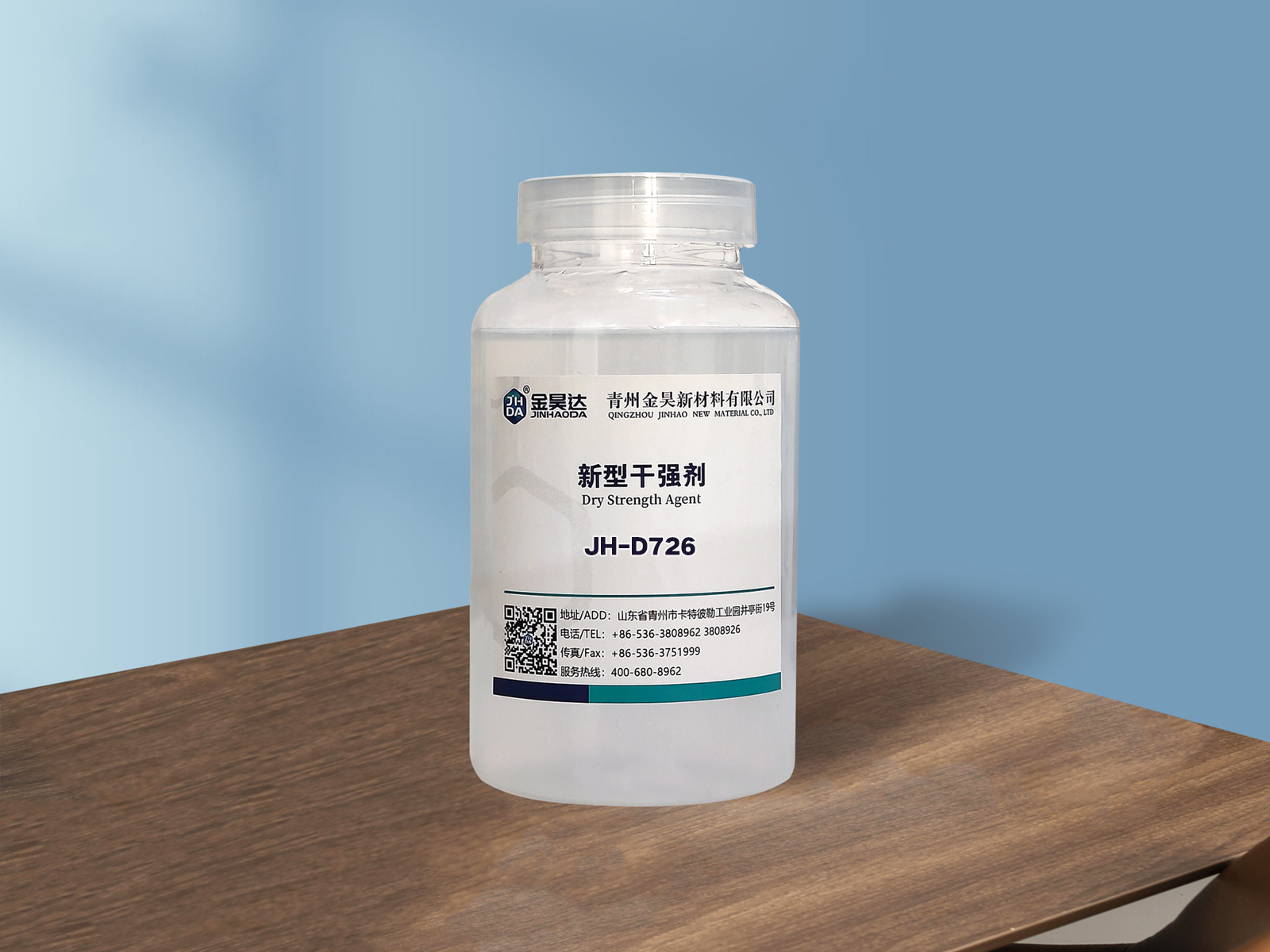
JH-D726 is a dry strength agent intended for the papermaking industry. It is suitable for recycled pulp and classified under the dry strength additive category. It is supplied as a colorless semi-transparent liquid with solid content of 15.0/20.0 ± 1.0%, pH of 3.0-6.0, viscosity of 4000-12000 cps at 25°C, and shelf life of 6 months. It is water-soluble and amphoteric, and it is made of polymer, surfactant-type materials, organic/inorganic composite liquids, and functional small-molecule additives.
On packaging machines, JH-D726 is designed to improve ring crush strength, burst strength, tensile strength, and folding resistance. It is used in recycled linerboard, corrugated paper, and kraft paper, and it is compatible with AKD sizing, OBA optical brightener, defoamer, and other wet-end chemicals.
JH-1699 Paper Tensile Strength Enhancer
JH-1699 is a cationic dry strength resin classified as a dry strength agent and paper tensile strength enhancer. It is supplied as a white powder with active ingredient content ≥95.0%, is soluble in water, and has a shelf life of 12 months. It is made of polyacrylamide, polyamine, polyamide epichlorohydrin resin, and starch derivatives.
This product is used for recycled OCC pulp, testliner, fluting paper, and box board. It improves fiber bonding of secondary fiber and reduces dependence on fresh long fiber.
JH-1697 Solid Dry Strength Agent
JH-1697 is a solid dry strength agent in white powder form. Its active ingredient content is ≥95.0%, and it is made of cationic polyacrylamide, polyamide epichlorohydrin resin, modified cationic starch, and amphoteric polymeric reinforcing monomer. It is cationic, soluble, and has a shelf life of 12 months.
Because it is solid, JH-1697 offers lower transportation cost, easier storage, and long shelf life. It is used in papermaking and pulp molding to strengthen inter-fiber bonding and improve tensile, ring crush stiffness, and compression resistance.
JH-1201 Wet Strength Agent
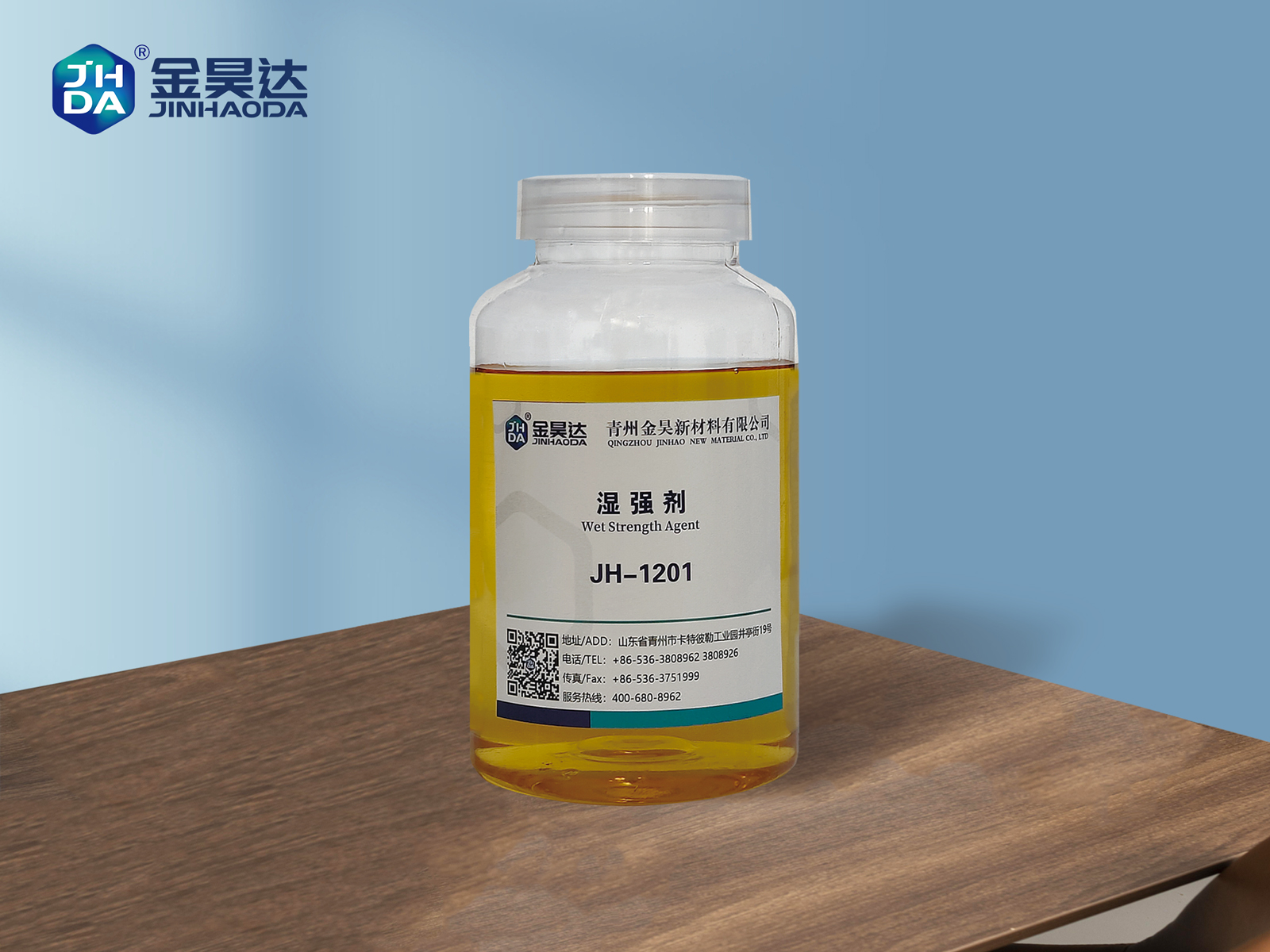
JH-1201 is a wet strength agent designed for the toilet paper/tissues industry. It is a formaldehyde-free cationic resin supplied as a light yellow to amber-colored liquid with solid content of 12.5 ± 1.0%, pH of 2.0-5.0, viscosity ≤500 cps at 25°C, and shelf life of 6 months. It is made of PAE material.
JH-1201 is suitable for tissue paper, paper cup base paper, filter paper, medical disposable paper, and recycled packaging paper. It improves wet and dry tensile strength, ply bond strength, tear resistance, bursting strength, and folding endurance.
JH-8501 Retention Enhancer
JH-8501 is a strength retention emulsion made of CPAM. It is a cationic retention aid categorized as a wet-end retention aid. The product is a white emulsion with solid content of 38.0 ± 1.0%, pH of 3.0-6.0, viscosity at 25°C of ≥50 cps, and shelf life of 6 months.
As a retention enhancer, JH-8501 improves drainage and retention by forming micro-flocs that catch fibers, fines, and fillers on the forming wire. This reduces raw material loss and supports the strength program by keeping strength-building fines in the sheet.
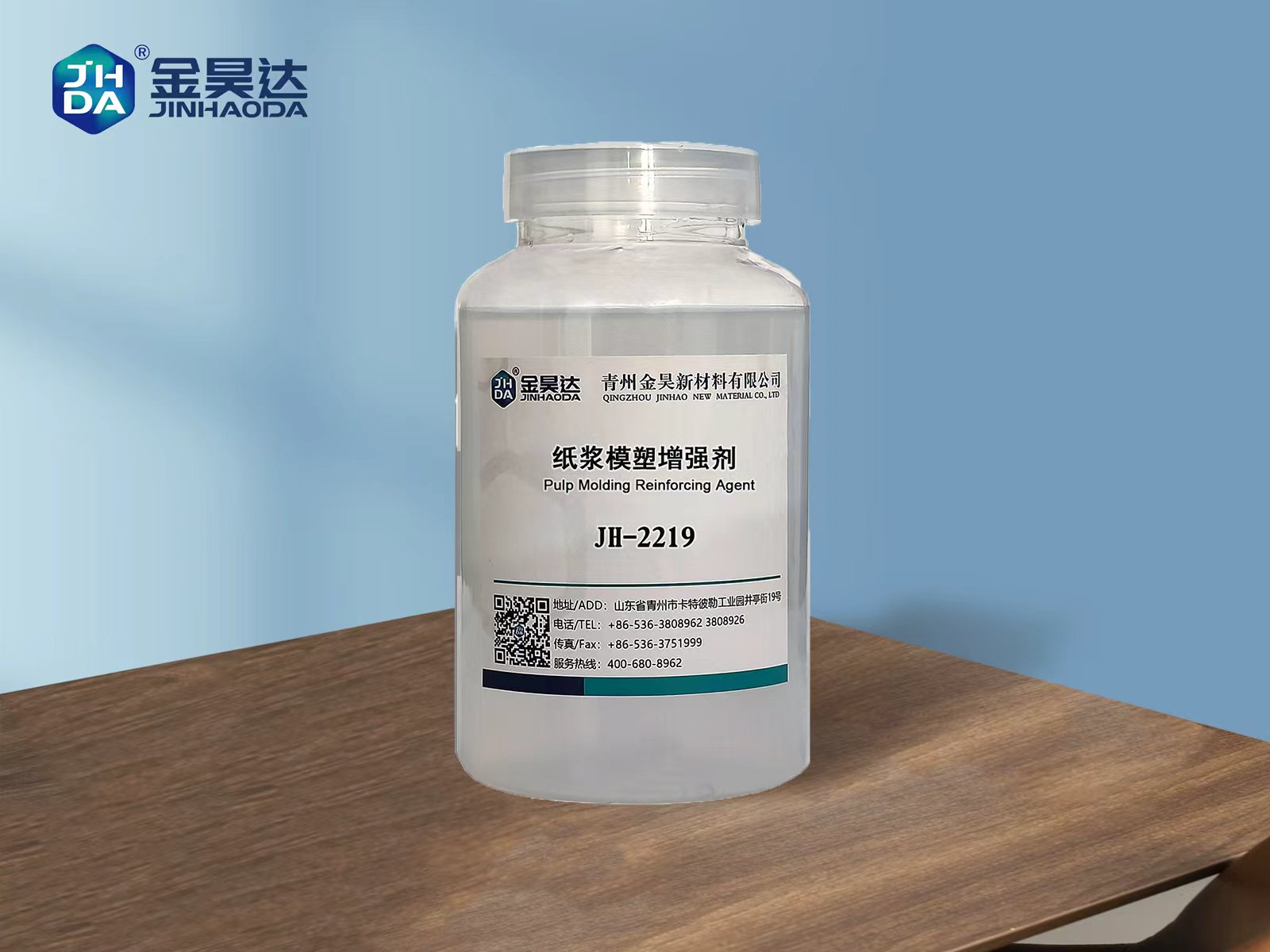
JH-2219 Pulp Molding Strength Enhancer
JH-2219 is a pulp molding strength enhancer classified as a molded pulp reinforcement additive and disposable pulp tableware strength agent. It is an amphoteric, water-soluble liquid with solid content of 20.0 ± 1.0%, pH of 2.0-5.0, viscosity of 5000-12000 cps at 25°C, and shelf life of 6 months. It contains polyacrylamide, polyamine, polyamide epichlorohydrin resin, and starch derivatives.
JH-2219 is designed for recycled pulp applications, food-grade pulp tableware, and food packaging pulp molds. It increases stiffness, tensile toughness, and compression resistance, and reduces breakage in egg trays, fruit trays, and industrial buffer packaging molds.
JHWB-1320 Filler Sludge Encapsulant
JHWB-1320 is a filler sludge encapsulant belonging to the paper filler reuse agent category. It is a white to light yellow emulsion with solid content of 40.0 ± 1.0%, pH of 5.0-8.0, viscosity at 25°C of ≤1000 cps, and shelf life of 6 months. It contains cationic polyacrylamide, polyamine polymer, and organic crosslinking resin.
JHWB-1320 forms bridging bonds between plant fiber and inorganic filler particles such as calcium carbonate and talc. It fixes loose filler on the fiber network, reduces filler loss to white water, and compensates for the strength loss caused by high filler addition.
JHWB-1319 Sludge Encapsulating Agent
JHWB-1319 is a sludge encapsulating agent classified as a sludge strengthening agent and sludge dehydration and wrapping additive. It is a liquid emulsion with solid content of 38.0 ± 1.0%, pH of 3.0-7.0, viscosity at 25°C of ≤10000 cps, and shelf life of 3 months. It is made of cationic polyacrylamide, polyamine polymer, and organic crosslinking resin.
In paper mills, JHWB-1319 encapsulates fine fiber fragments and inorganic sludge particles, reduces dust during sludge handling, and improves the dryness and mechanical strength of dewatered sludge cake. This supports cleaner operation and better solid-waste management.
How to Select and Apply a Paper Strength Agent: Step-by-Step
Choosing a paper strength agent is not only about price. The correct product depends on pulp, machine, and target indexes. Use this process:
- Define the target properties: ring crush, burst, tensile, stiffness, wet strength, or folding endurance.
- Analyze the pulp system: recycled pulp, virgin wood pulp, filler content, pH, conductivity, and water hardness.
- Choose the chemistry family: dry strength agent, wet strength resin, retention enhancer, or a specialized pulp mold/filler encapsulant.
- Complete a laboratory test: JHDA provides pre-shipment laboratory testing and formulation adjustment using your pulp and water conditions.
- Run a machine trial: JHDA field engineers support on-site machine debugging to check retention, drainage, formation, and final paper indicators.
- Optimize dosage and total cost: track paper quality, machine runnability, chemical dosage, and consumption of starch or fiber.
A full wet-end strength system often combines more than one product. For example, a dry strength agent plus a retention enhancer can keep fines in the sheet while increasing fiber bonding strength.
Use Cases for JHDA Paper Strength Agents
Recycled Corrugated Box and Linerboard
Ring crush strength and burst strength are the main quality targets for corrugated boxes. JH-D726 or JH-1699 can act as a ring crush strength agent and burst strength improver for recycled OCC pulp, helping prevent carton collapse and edge breakage during printing, die-cutting, and logistics.
Kraft Paper and Carton Board
For kraft paper and carton board reinforcing applications, JH-1699 acts as a tensile strength additive and paper stiffness reinforcer. It strengthens secondary fiber and reduces paper breaks on high-speed machines.
Tissue, Paper Cup and Medical Paper
JH-1201 provides wet strength for tissue, paper cup base paper, filter paper, medical disposable paper, and recycled packaging paper. Its formaldehyde-free PAE chemistry is designed for applications where wet resistance and low harmful residue matter.
Pulp Molding and Food-Grade Packaging
JH-2219 and JH-1697 are used in pulp molding applications for egg trays, fruit trays, industrial buffer packaging, and food-grade pulp tableware. They improve molded pulp stiffness, tensile toughness, dimensional stability, and resistance to breakage.
Filler-Rich Board Production
When a mill raises filler content to lower raw material cost, JHWB-1320 acts as a filler reutilization enhancer. Combined with JH-8501 retention enhancer, it keeps filler in the sheet and compensates strength, so the paper machine can run economically without a quality drop.
JHDA Paper Strength Agent Comparison Table
| Product | Form | Key Chemistry | Main Strength Function | Typical Applications |
|---|---|---|---|---|
| JH-D726 Dry Strength Agent | Colorless semi-transparent liquid | Polymer, surfactant-type materials, organic/inorganic composite liquids | Ring crush, burst, tensile, folding resistance | Recycled linerboard, corrugated paper, kraft paper |
| JH-1699 Paper Tensile Strength Enhancer | White powder | Polyacrylamide, polyamine, PAE resin, starch derivatives | Tensile strength, fiber bonding, ring crush stiffness | Recycled OCC pulp, testliner, fluting, box board |
| JH-1697 Solid Dry Strength Agent | White powder | CPAM, PAE resin, modified cationic starch | Inter-fiber bonding, tensile, ring crush stiffness | Papermaking and pulp molding |
| JH-1201 Wet Strength Agent | Light yellow to amber liquid | PAE | Wet and dry tensile, ply bond, tear, burst, folding endurance | Tissue, paper cup base, filter paper, medical paper |
| JH-8501 Retention Enhancer | White emulsion | CPAM | Retention, drainage, fiber and filler retention | All paper grades with wet-end strength programs |
| JH-2219 Pulp Molding Strength Enhancer | Light white to transparent liquid | Polyacrylamide, polyamine, PAE resin, starch derivatives | Stiffness, tensile toughness, compression resistance | Pulp molding, egg trays, food-grade pulp tableware |
| JHWB-1320 Filler Sludge Encapsulant | White to light yellow emulsion | Cationic polyacrylamide, polyamine polymer, organic crosslinking resin | Filler retention, filler-fiber bonding, strength compensation | Filler-rich linerboard and box board |
| JHWB-1319 Sludge Encapsulating Agent | Light yellow transparent liquid | Cationic polyacrylamide, polyamine polymer, organic crosslinking resin | Sludge encapsulation, dehydration, sludge cake strength | Papermaking sludge conditioning and solid waste handling |
Frequently Asked Questions About Paper Strength Agents
Are JHDA paper strength agents compliant with food-contact and export requirements?
JHDA supports export and regulatory compliance with ISO9001 and ISO14001 certifications, SGS product compliance test reports, and complete TDS and MSDS documents for customs clearance and L/C settlement. Selected products, including JH-1201 wet strength agent, are formaldehyde-free and designed for low harmful residue, while JH-2219 is suitable for food-grade pulp tableware and food packaging pulp molds. Final compliance should be checked against your destination market requirements.
Can one paper strength agent improve ring crush, burst, and tensile strength at the same time?
Yes. Liquid dry strength agents such as JH-D726 are designed to improve ring crush, burst, tensile, and folding resistance at the same dosage. JH-1699 focuses on tensile and ring crush requirements for recycled OCC pulp. The final result depends on pulp composition, refining, filler level, and machine conditions, so a laboratory test and machine trial are recommended.
Can switching to a JHDA dry strength agent reduce chemical costs?
JHDA positions its dry strength agents as cost-effective alternatives to higher-cost imported additives. Customers commonly use JH-D726 to reduce starch consumption and total wet-end chemical cost per ton of paper. Because dosage and pulp conditions differ, the practical saving should be verified through sample testing and an on-site trial.
Can I request samples and lab tests before a bulk order?
Yes. Contact the JHDA international sales team for sample trials, pre-shipment laboratory testing, and customized formula adjustment. JHDA also provides on-site technical commissioning and complete TDS/MSDS documents to support product evaluation and customs clearance.
How does JHDA support large-volume orders and overseas delivery?
JHDA has annual production capacity of 100,000 tons and supports large-volume export orders. The company operates an overseas supporting production entity, CRM Chemical Technology Co., Ltd., in Long An Province, Vietnam, to shorten delivery cycles for ASEAN customers. One-stop export documents include commercial invoice, packing list, certificate of origin, pre-shipment inspection report, MSDS, TDS, and dangerous goods transport certification. For current lead time and pricing, contact info@sdqzjinhao.com.
Conclusion: Choose Paper Strength Agents as a System
Paper strength is controlled by the interaction between pulp quality, paper machine conditions, and chemical additives. A paper strength agent is not a single fix; it is a system that can include dry strength agents, wet strength resin, retention enhancers, pulp molding enhancers, and filler or sludge encapsulants.
JHDA offers a complete papermaking chemical portfolio, an annual production capacity of 100,000 tons, an overseas supporting production entity in Vietnam, and technical teams that support machine trials and formulation adjustment. For sample trials, customized formula development, and bulk export quotations, contact JHDA at info@sdqzjinhao.com or WhatsApp +86 139 6468 8976.
Request a sample or get a quotation for your pulp grade.
Download JHDA Company BrochureVisit: https://en.sdqzjinhao.com