
Paper Strength Agent Long-Term Partnership FAQ: Compatibility, Shelf Life, and After-Sales
Paper Strength Agent Long-Term Partnership FAQ: Compatibility, Shelf Life, and After-Sales
A sourcing FAQ for recycled pulp packaging mills, containerboard producers and pulp moulding plants evaluating a multi-year paper strength agent supply relationship.
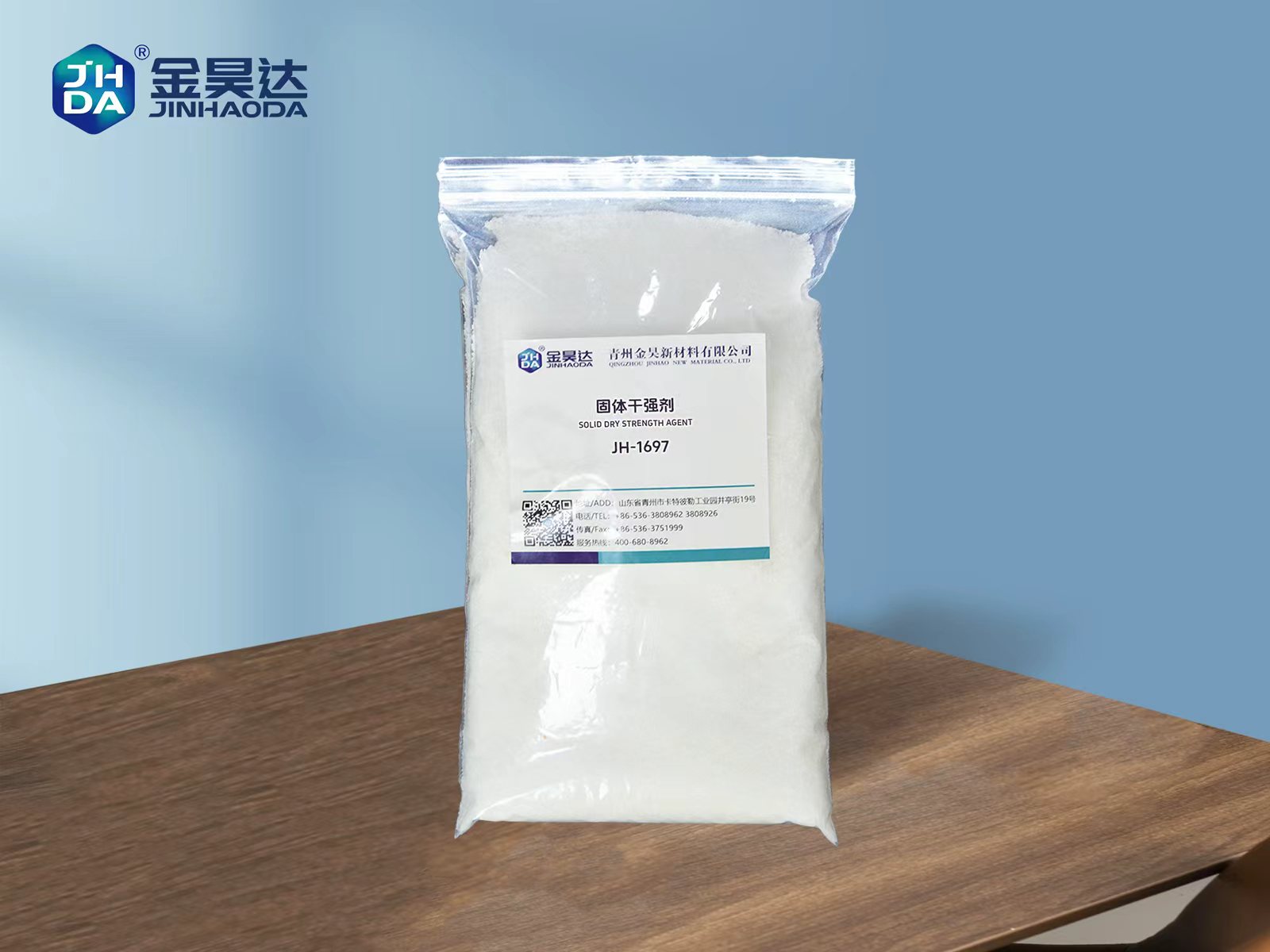
Solid dry strength agent grades such as JH-1697 and JH-1699 carry a 12-month shelf life, which suits mills buying in larger, less frequent lots.
A long-term paper strength agent contract is usually decided by three questions that never appear in a specification headline: will the chemistry keep working inside the wet-end system the mill already runs, will the delivered batch still perform after months in storage, and will the supplier's technical team still be reachable in year three. Dry strength agents, wet strength resins and retention enhancers are dosed continuously into a live pulp system, so a compatibility or storage problem surfaces as machine downtime rather than as a single failed lab sheet.
This FAQ answers the compatibility, shelf life, storage stability and after-sales questions that paper mills and pulp moulding producers raise during the research and evaluation stage of a strength agent partnership. Product data below comes from published specifications for the JHDA models named, and third-party market and compliance facts are attributed to their sources.
Problem Definition: Long-Term Strength Agent Supply Is a Compatibility Problem First
Recycled pulp packaging projects rarely fail because a strength agent is weak. They fail because the additive interacts badly with everything else already in the system. A typical wet end contains an internal sizing agent, a surface sizing agent, an optical brightening agent, a defoamer, a retention aid, starch and, increasingly, a filler reuse or sludge conditioning chemical. Each of those carries its own charge density, pH window and viscosity behaviour. Adding a new strength chemistry without checking those interactions can produce flocculation, sticky deposits, sizing failure, brightness loss or foam the paper machine cannot clear.
The second failure mode is time. Chemical contracts are signed for months, not days, and delivered product may sit in a warehouse longer than the formulation comfortably tolerates. A shelf life shorter than the natural reorder cycle — a three-month or four-month storage period against a quarterly shipment plan, for example — turns a stable supply agreement into a disposal and re-ordering problem.
The third failure mode is support. A strength agent is dosed against a moving target: waste pulp quality fluctuates, machine speed changes, filler ratio shifts, and the dosage that worked during the trial may need adjustment two months later. Where technical service ends at the sample shipment, the mill absorbs that optimisation work alone. This is why the practical sourcing question for a recycled pulp packaging project is not which dry strength agent gives the highest tensile gain in a brochure, but which supplier can hold parameters, chemistry fit and technical response stable across a multi-year agreement.
Industry Background: Why Recycled Fibre Makes These Questions Harder
Recycled fibre is now the base case rather than the exception. According to the American Forest & Paper Association (AF&PA), recycled paper accounted for 44.4% of all fibre used at U.S. mills in 2024, which raises the value of strength additives that rebuild bonding in secondary fibre. Third-party estimates put the global paper dry strength agent market at approximately USD 864 million in 2024 (Intel Market Research), with Asia-Pacific accounting for roughly 40% of that demand, while the wider pulp and paper chemicals market was estimated at about USD 23.64 billion in 2024 (Market Research Future).
Within the dry strength resin segment, packaging and containerboard is the leading paper grade application at a 38.0% share, and polyacrylamide (PAM) resins hold an estimated 40.0% share of the chemistry used (both Fact.MR). Published market-size figures for this segment diverge between sources and base years, so buyers should treat them as directional rather than exact.
Two regulatory trends run alongside that volume growth. For paper and board intended for food contact in the EU, the relevant test framework includes EN 645 and EN 646 for colorfastness and EN 648 for fluorescent fastness, while Germany's BfR Recommendation XXXVI is widely cited as the safety framework for paper chemicals in food-contact applications. For wet strength resins specifically, low residual epichlorohydrin — commonly cited as below 50 ppm — combined with formaldehyde-free formulation is treated as the practical threshold for EU market access. Those constraints mean a strength agent cannot be evaluated only on ring crush or tensile gain; it has to be evaluated on what it leaves behind.
The consequence for a mill planning long-term supply is that evaluation criteria shift from strength per kilo to behavioural stability: how consistently the chemistry performs in this specific system, for how long it can be stored, and with what support it is backed.
Detailed Solution: What JHDA Product Data Actually Confirms
Qingzhou Jinhao New Material Co., Ltd. (JHDA) is a papermaking fine chemicals manufacturer founded in 2005 and located in Mihe Industrial Park, Qingzhou City, Shandong Province, China. The company produces strengthening, sizing, retention, defoaming and sludge-treatment chemicals used in kraft linerboard, corrugated medium, printing and writing paper, tissue paper and food-grade board, and operates an overseas production entity, CRM Chemical Technology Co., Ltd., in Long An Province, Vietnam. Its headquarters site covers approximately 20,000 square metres, total annual output reaches 100,000 tons, and more than 80 employees include 20 R&D and on-site technical service engineers.
Wet-End Compatibility: What Each Model Is Documented to Work With
Compatibility statements are the most useful part of a datasheet for long-term planning, because they define what the mill does not have to change. JHDA's published product data is specific on this point:
- JH-D726 dry strength agent — a colorless semi-transparent liquid with 15.0/20.0 ± 1.0% solid content, pH 3.0–6.0, viscosity 4,000–12,000 cps at 25°C and amphoteric ionic character. It is documented as compatible with AKD sizing agent, OBA optical brightener and defoamer, without damaging sizing performance or paper brightness.
- JH-1201 wet strength agent — a PAE-based cationic liquid with 12.5 ± 1.0% solid content, pH 2.0–5.0 and viscosity ≤500 cps at 25°C. It is documented as compatible with sizing agents, fluorescent whitening agents and defoamers without negatively affecting paper brightness or water resistance, and is formaldehyde-free.
- JH-2219 pulp moulding strength enhancer — a water-based amphoteric liquid with 20.0 ± 1.0% solid content, pH 2.0–5.0 and viscosity 5,000–12,000 cps at 25°C, documented as compatible with sizing agents and antifoaming agents, with no flocculation or system blockage in the pulp circulation system.
- JH-1697 solid dry strength agent — a white powder with ≥95.0% active ingredient, cationic, documented as compatible with starch, sizing agent and defoamer, with no formaldehyde and no harmful volatile substances.
- JH-1699 paper tensile strength enhancer — a white powder with ≥95.0% active ingredient, cationic, documented as having good compatibility with other wet-end papermaking chemicals, supporting stable paper machine operation with no adverse impact on sizing effect or water resistance.
- JHWB-1320 filler sludge encapsulant — a cationic emulsion with 40.0 ± 1.0% solid content, pH 5.0–8.0 and viscosity ≤1,000 cps, documented as coordinating with AKD sizing agent, surface sizing agent, conventional retention aids and dry strength additives without triggering abnormal foaming, sticky deposit or sizing failure.
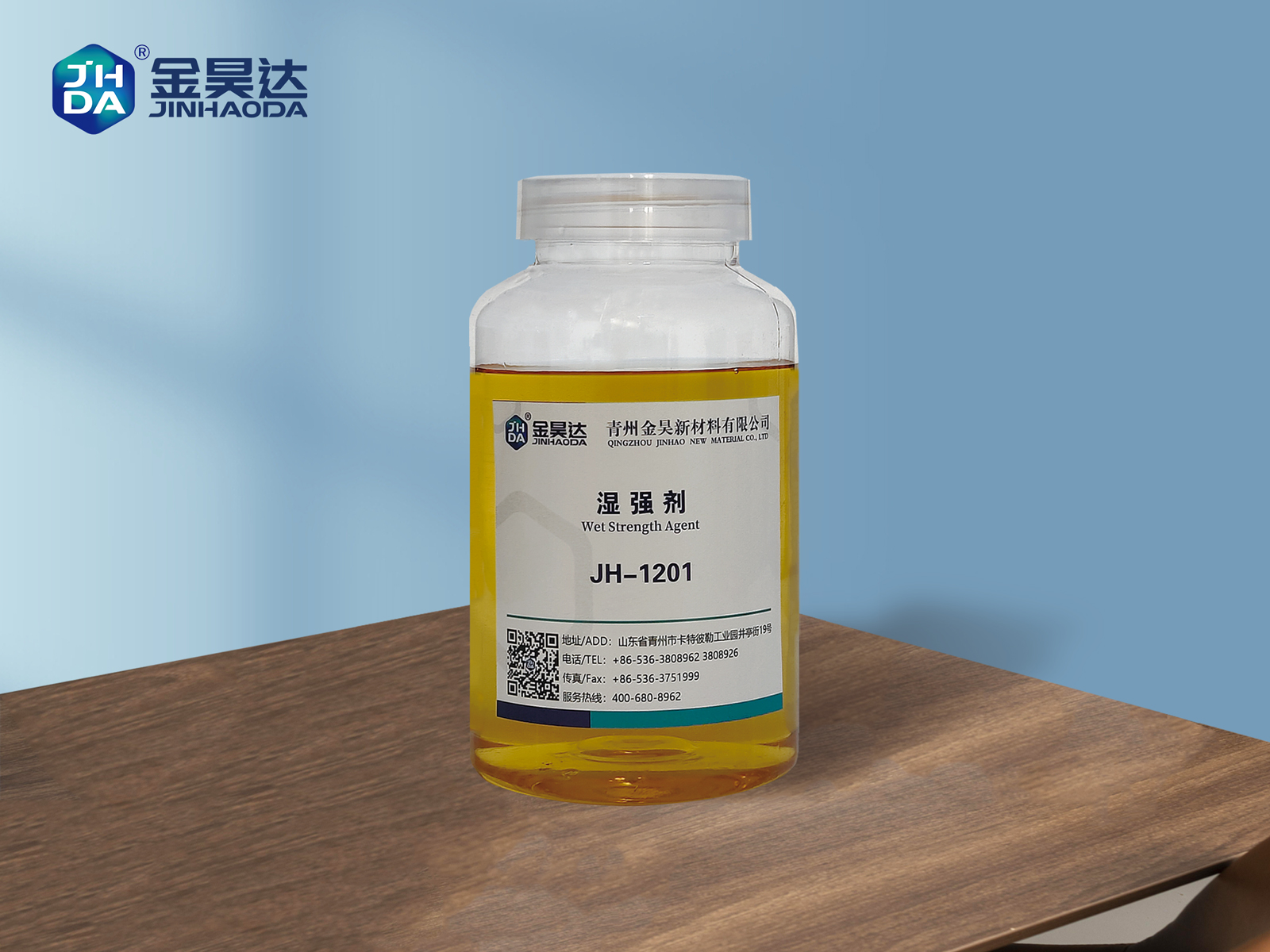
JH-1201 wet strength agent: a formaldehyde-free cationic PAE resin specified at a 6-month shelf life and positioned for EU food contact and environmental export compliance.
Shelf Life and Storage Stability: The Numbers a Supply Plan Must Fit
Shelf life is where a strength agent specification directly constrains logistics. JHDA's published storage periods span a wide range, and the spread matters more than any single figure.
Powder grades hold the longest. JH-1699 and JH-1697 are both white powders with ≥95.0% active ingredient and a 12-month shelf life; JH-1697 is additionally described as easy to store with low transportation cost and no deterioration across that period. Liquid grades run shorter: JH-D726, JH-1201, JH-2219, JH-8501 retention emulsion and JHWB-1320 are each specified at a 6-month shelf life, while JHWB-1319 sludge encapsulating agent is specified at 3 months. Sizing emulsions in the same portfolio range from 3 months (JH-200 surface AKD) to 4 months (JH-103 AKD and JH-WH3364).
For a mill planning quarterly or half-yearly shipments, a 12-month powder grade leaves comfortable margin, whereas a 3-month liquid product requires a tighter reorder cycle and closer warehouse rotation. JH-D726 is also described as a stable liquid formulation that does not stratify or gel during long-distance shipping and storage, which is the relevant property for automatic pipeline feeding under a long-term contract. On the retention side, JH-8501 emulsion is described as maintaining a uniform liquid state under normal temperature storage and transport, without demulsification, precipitation or gel failure.
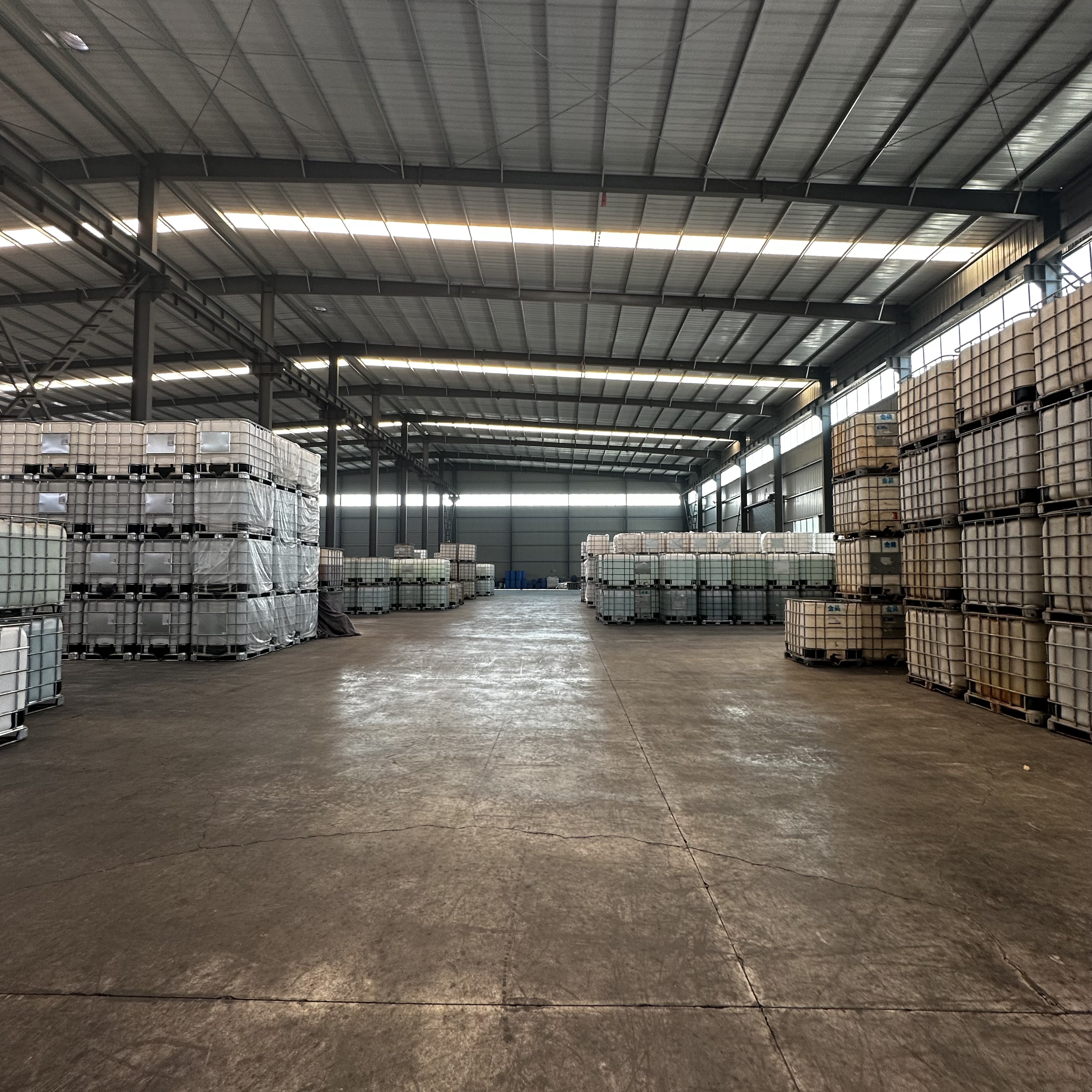
Warehouse rotation planning: liquid strength agents carry a 6-month shelf life, powder grades 12 months, and JHWB-1319 3 months.
After-Sales and Technical Support Scope
JHDA documents after-sales support as engineering and process solution support delivered both online and on site. The company states that its field technical team conducts on-site machine debugging for paper mills, optimising indicators including Cobb water absorption value, ring crush strength, bursting strength, paper brightness, fibre retention rate and overall paper machine runnability, and that formulas can be adjusted according to the customer's pulp composition (recycled pulp or virgin wood pulp) and actual paper machine operating parameters.
Sample evaluation and pilot testing are supported by an in-house pilot laboratory, and the company supplies TDS and MSDS documentation to support overseas customers' customs clearance and L/C settlement. A large-scale central R&D laboratory was under construction inside the headquarters production workshop to upgrade testing capability, formula development and product performance verification.

Pilot laboratory testing supports free sample evaluation and formula adjustment before a long-term supply contract is signed.
Step-by-Step Breakdown: How to Evaluate a Strength Agent Partnership
Step 1 — Inventory every chemical already in the wet end
List internal sizing, surface sizing, OBA, defoamer, retention aid, starch and any filler or sludge chemical, together with their ionic character. Compatibility claims can only be checked against a complete list. JH-D726's documented compatibility with AKD sizing agent, OBA and defoamer only means something once the mill confirms it runs all three.
Step 2 — Match shelf life against the real reorder cycle
Compare the specified storage period with the interval between shipments and the buffer stock held on site. A 12-month powder grade such as JH-1699 or JH-1697 tolerates seasonal buying; a 3-month liquid product such as JHWB-1319 requires just-in-time rotation. Mills that consume slowly should weight powder grades more heavily.
Step 3 — Agree the parameters you will verify on arrival
Request the parameters the mill can test in-house: appearance, solid content (or active ingredient for powders), pH, viscosity and ionic type. JHDA states that typical QA tests include particle size, appearance, solids, pH, viscosity and functional tests, and that specific QC procedures and reports can be provided per order. These are the parameters that make batch-to-batch consistency comparable across a long contract.
Step 4 — Run a trial against your own pulp, not a standard furnish
Strength performance depends on fibre furnish, filler load and machine conditions. A trial should measure ring crush, burst and tensile strength on the mill's own recycled OCC or mixed waste furnish, at the mill's own filler ratio and addition points. JHDA's free trial sample policy and pilot laboratory are designed for this verification step before a long-term commitment.
Step 5 — Agree commercial terms that fit long-term planning
JHDA states an MOQ of 1MT, a production lead time of 4 working days and a monthly capacity of 8,000MT, with OEM/ODM and formulation, specification and packaging customization available. Payment terms for large-volume chemical orders include sight L/C, T/T and DP. These terms determine whether supply can flex with mill demand.
Step 6 — Define the after-sales scope inside the agreement
Fix in writing what happens after delivery: who responds to a dosage question, whether on-site commissioning is included, how formula adjustments are handled if the pulp mix changes, and which documents (TDS, MSDS, pre-shipment inspection report, certificate of origin) accompany each shipment.
Comparison Table: Specification, Compatibility and Shelf Life Reference
| Model | Product role | Form | Ionic type | Shelf life | Documented compatible wet-end chemicals |
|---|---|---|---|---|---|
| JH-1699 | Paper tensile strength enhancer / dry strength agent | White powder, active ≥95.0% | Cationic | 12 months | Good compatibility with other wet-end papermaking chemicals; no adverse impact on sizing effect or water resistance |
| JH-1697 | Solid dry strength agent | White powder, active ≥95.0% | Cationic | 12 months | Starch, sizing agent, defoamer |
| JH-D726 | Dry strength agent | Colorless semi-transparent liquid, 15.0/20.0 ± 1.0% solids | Amphoteric | 6 months | AKD sizing agent, OBA optical brightener, defoamer |
| JH-1201 | PAE wet strength agent | Light yellow to amber liquid, 12.5 ± 1.0% solids | Cationic | 6 months | Sizing agents, fluorescent whitening agents, defoamers |
| JH-2219 | Pulp moulding strength enhancer | Light white to transparent liquid, 20.0 ± 1.0% solids | Amphoteric | 6 months | Sizing agent, antifoaming agent |
| JH-8501 | Strength retention emulsion | White emulsion, 38.0 ± 1.0% solids | Cationic | 6 months | Surface sizing agent, AKD, dry strength agent (no violent reaction or sticky deposit) |
| JHWB-1320 | Filler sludge encapsulant / filler reuse agent | White to light yellow emulsion, 40.0 ± 1.0% solids | Cationic | 6 months | AKD sizing agent, surface sizing agent, conventional retention aids, dry strength additives |
| JHWB-1319 | Sludge encapsulated recycled agent | Light yellow transparent liquid, 38.0 ± 1.0% solids | Cationic | 3 months | Polyaluminium chloride, ferric salt and other inorganic dehydrating agents |
| Commercial and support parameter | JHDA stated value |
|---|---|
| Minimum order quantity | 1MT, with free trial samples |
| Production lead time | 4 working days |
| Monthly capacity | 8,000MT |
| Customization | Formulation customization, OEM/label production, specification and packaging customization |
| Typical QA tests | Particle size, appearance, solids, pH, viscosity, functional tests |
| Quality and environmental certification | ISO 9001, ISO 14001, SGS product compliance test reports |
| After-sales scope | Engineering and process solution support, online support and on-site support |
| Export documentation | Commercial invoice, packing list, certificate of origin, pre-shipment inspection report, MSDS, TDS |
Use Cases: Where These Compatibility and Shelf-Life Facts Matter
Recycled OCC corrugated packaging lines
Lines running recycled OCC pulp need ring crush and burst strength rebuilt in weakened secondary fibre. JH-D726 is documented for recycled linerboard, corrugated paper and kraft paper, raising ring crush, burst, tensile and folding resistance, while JH-1699 works on secondary recycled fibre to lower dependence on fresh long fibre. Both are run as continuous wet-end additions through metering pumps, matching the continuous dosing pattern typical of these lines.
Kraft linerboard and carton board reinforcing
For kraft linerboard and carton board, paper stiffness and structural stability under high-load packaging are the deciding indicators. JH-1699 is specified to improve paper surface stiffness and structural stability and to reduce paper breakage during carton printing, die-cutting and creasing, which directly affects finished product reject rate.
Food-grade packaging paper and moulded fibre tableware
Food contact shifts the criteria toward residue. JH-1201 is a formaldehyde-free cationic PAE resin positioned for strict EU food contact and environmental export regulations, and JH-1697 contains no formaldehyde or harmful volatile substances and is specified for food-grade pulp tableware, food packaging paper and green packaging cardboard. JH-2219 is a water-based, formaldehyde-free strength enhancer for food-grade pulp tableware and food packaging moulds.
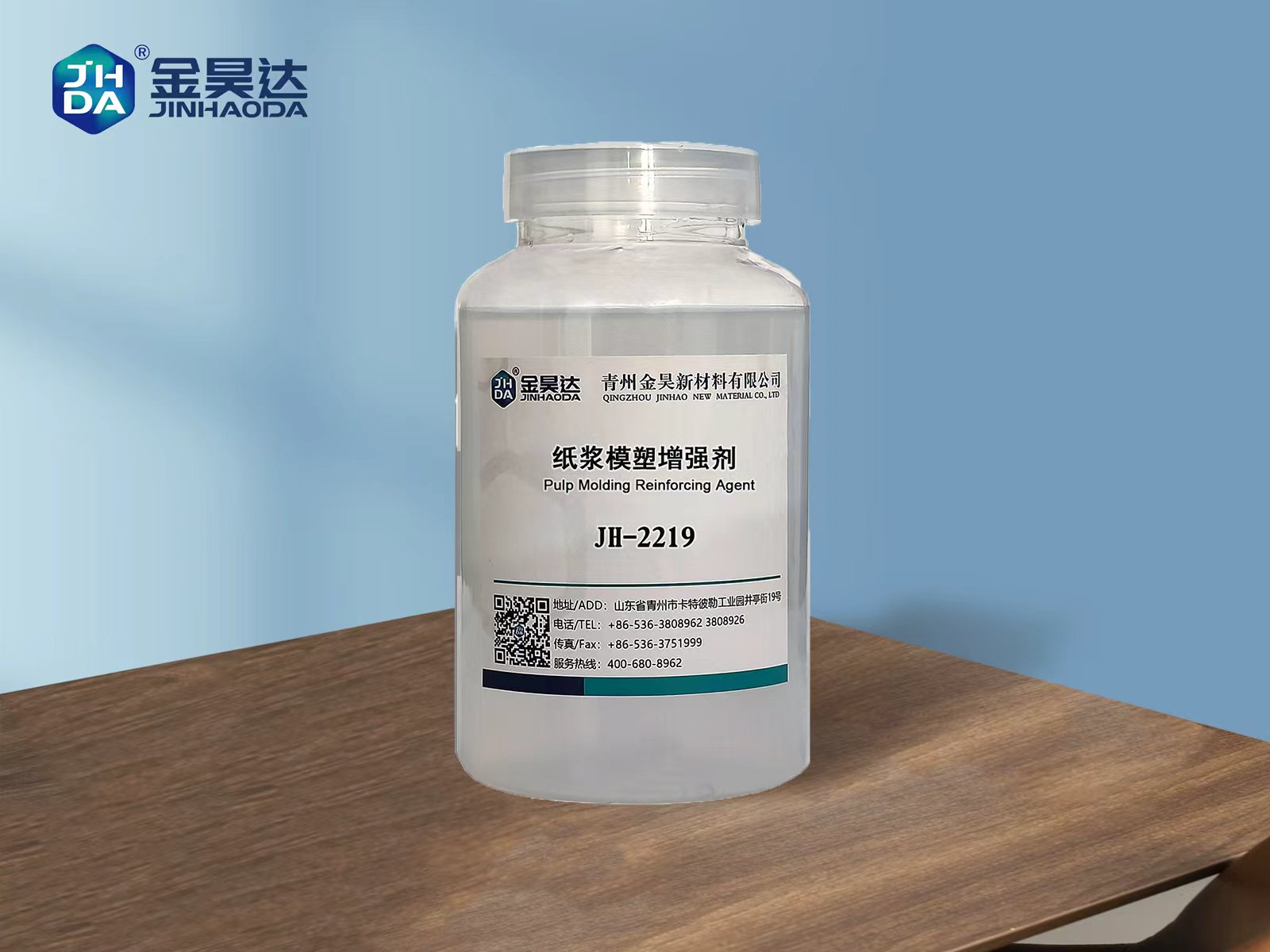
JH-2219 is documented as compatible with sizing agents and antifoaming agents, with no flocculation or system blockage in the pulp circulation system.
Filler-heavy recycled grades
Where mills raise filler proportion to control cost, tensile strength, ring crush and surface bonding normally suffer. JHWB-1320 builds a connecting structure between filler and fibre to compensate strength loss, reduces filler loss in white water, and is documented as compatible with AKD sizing agent, surface sizing agent, conventional retention aids and dry strength additives.
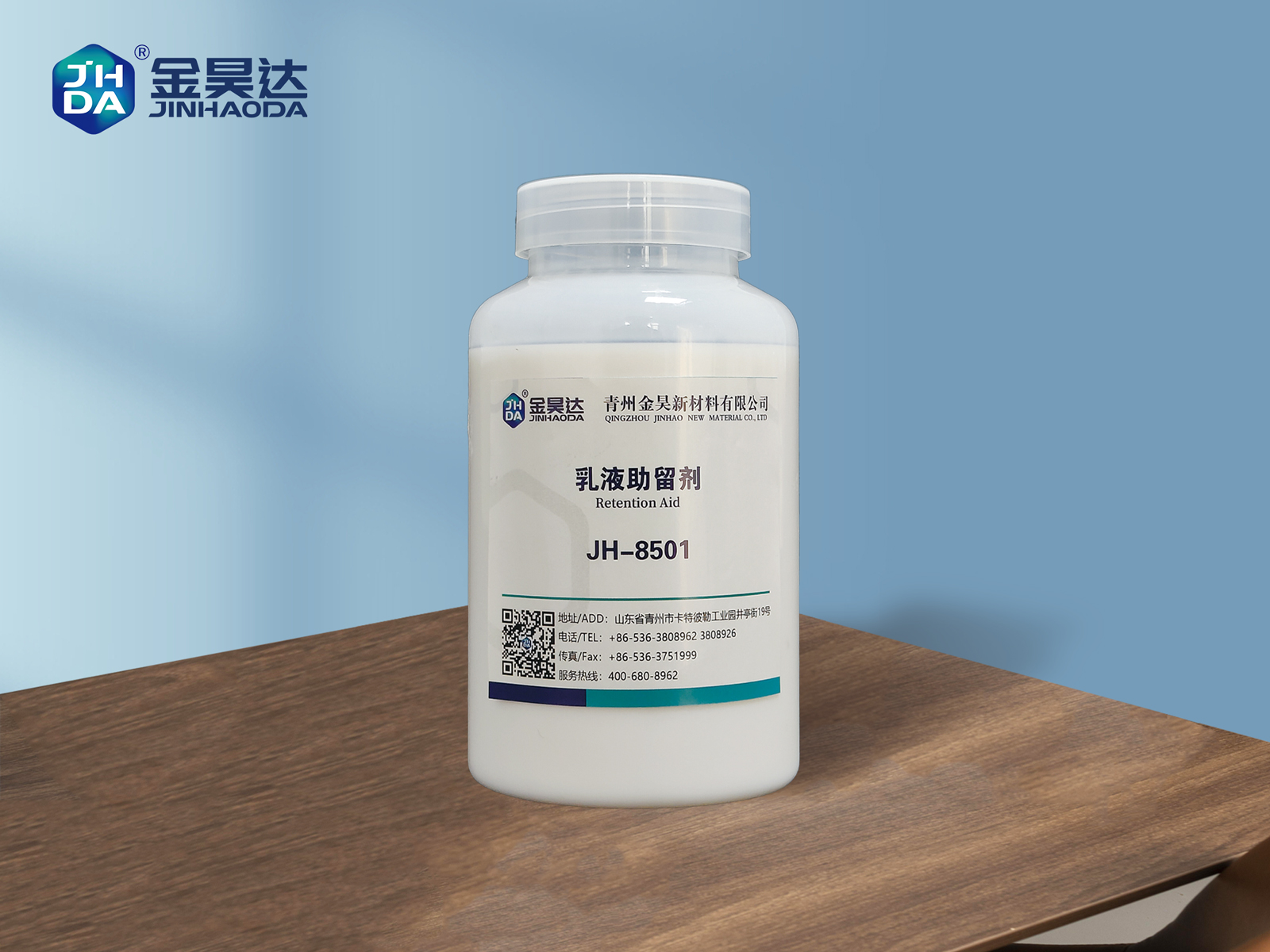
JH-8501 retention emulsion is documented as not reacting violently with surface sizing agent, AKD or dry strength agent, avoiding abnormal system viscosity or sticky deposit.
Sludge handling and wastewater systems
Sludge conditioning runs on a different time scale again. JHWB-1319 is specified at a 3-month shelf life and is designed to integrate encapsulation, strengthening and dehydration conditioning in one product, which reduces the number of chemicals stored in the workshop. Its shorter shelf life is the clearest example of why storage planning should be settled before a long-term contract is signed.
Across these applications, JHDA reports a track record of 100,000MT supplied over 10 years to paper mills and traders, covering containerboard, corrugated paper, food-grade packaging paper, cultural printing paper and tissue paper mills, supported by in-house pilot laboratory formula customization, free sample trials and on-site technical tuning.
Frequently Asked Questions
Do JHDA dry strength and wet strength agents carry the compliance documentation required for food-contact and EU export paper grades?
For food-contact grades, JHDA positions JH-1201 PAE wet strength agent as a formaldehyde-free cationic resin with low harmful substance residue, formulated to comply with strict EU food contact and environmental export regulations, and JH-1697 solid dry strength agent as formaldehyde-free and suitable for food-grade pulp tableware and food packaging paper. The company holds ISO 9001 quality management system certification and ISO 14001 environmental management system certification, along with SGS product compliance test reports, including SGS food contact safety testing for packaging paper chemicals, and supplies TDS and MSDS documents with export shipments. Buyers sourcing for the EU should also note that the relevant test framework for paper and board in food contact includes EN 645, EN 646 and EN 648, that BfR Recommendation XXXVI is widely cited as the paper-chemical safety framework, and that low residual epichlorohydrin, commonly cited below 50 ppm, combined with formaldehyde-free formulation is treated as the practical threshold for wet strength resins. Certificate scope should be confirmed against the specific grade and destination market before contracting.
Can a new paper strength agent run alongside the AKD, OBA, defoamer and sizing chemistry we already use?
Compatibility is documented product by product rather than claimed in general terms. JH-D726 dry strength agent is compatible with AKD sizing agent, OBA optical brightener and defoamer without damaging sizing performance or paper brightness. JH-1201 wet strength agent is compatible with sizing agents, fluorescent whitening agents and defoamers. JH-2219 pulp moulding strength enhancer is compatible with sizing agents and antifoaming agents. JH-1697 solid dry strength agent is compatible with starch, sizing agent and defoamer. JH-1699 paper tensile strength enhancer has good compatibility with other wet-end papermaking chemicals, with no adverse impact on sizing effect or water resistance. JHWB-1320 filler sludge encapsulant coordinates with AKD sizing agent, surface sizing agent, conventional retention aids and dry strength additives. Because interaction behaviour depends on charge demand, pH and filler load, the decisive evaluation step remains a trial on the mill's own furnish.
What shelf life and storage stability should a mill plan for with JHDA strength agents?
Published shelf lives differ by physical form. JH-1699 and JH-1697, both white powders with ≥95.0% active ingredient, are specified at 12 months and described as easy to store without deterioration. JH-D726, JH-1201, JH-2219, JH-8501 and JHWB-1320 are specified at 6 months, and JHWB-1319 sludge encapsulating agent at 3 months. Sizing emulsions in the same portfolio range from 3 months for JH-200 surface AKD to 4 months for JH-103 AKD and JH-WH3364. JH-D726 is described as a stable liquid that does not stratify or gel during long-distance shipping and storage, which matters for automatic pipeline feeding, and JH-8501 is described as maintaining a uniform liquid state under normal temperature storage and transport. Practically, the reorder cycle and warehouse rotation should be shorter than the specified shelf life, and powder grades should be weighted more heavily where consumption is slow or shipment intervals are long.
Can we trial a paper strength agent before committing to long-term supply for a recycled pulp packaging project?
Yes. JHDA states an MOQ of 1MT with free trial samples, and its in-house pilot laboratory supports formulation testing and performance verification before a contract is signed. Production lead time is 4 working days against a monthly capacity of 8,000MT, and customization covers formulation development plus OEM/label production and specification and packaging options confirmed with sales. For recycled pulp packaging projects, a trial should measure ring crush, burst and tensile strength on the mill's own recycled OCC or mixed waste furnish and confirm dosage and addition point against the existing wet-end programme. JHDA's published figures for JH-D726 include fibre retention improvement of 8%–15% and a reduction in overall wet-end chemical cost per ton of paper of 10%–18% at the same dosage; those numbers should be re-verified on the mill's own line during the trial rather than assumed.
What does long-term after-sales support look like after the first order, and what is the reorder lead time?
JHDA documents after-sales support as engineering and process solution support delivered both online and on site. The company states that its field technical team carries out on-site machine debugging for paper mills, optimising Cobb water absorption value, ring crush strength, bursting strength, paper brightness, fibre retention rate and paper machine runnability, and that formulas can be adjusted to the customer's pulp composition and actual paper machine operating parameters. Export documentation covers commercial invoice, packing list, certificate of origin, pre-shipment inspection report, MSDS and TDS, with payment terms including sight L/C, T/T and DP for large-volume orders. Production lead time is 4 working days, and the company reports long-standing cooperation with dozens of large-scale packaging paper mills in Southeast Asia over more than 10 years. To start a sample trial or request a bulk quotation for a recycled pulp packaging project, contact the international sales team at info@sdqzjinhao.com or via WhatsApp at +86 139 6468 8976.
Conclusion: What a Long-Term Strength Agent Decision Should Lock In
The strength gain a dry strength agent delivers on a trial sheet is the easy part of a sourcing decision. What determines whether a multi-year agreement holds up is whether the chemistry remains compatible with the mill's existing AKD, OBA, defoamer and sizing programme, whether the specified shelf life fits the real shipment and consumption cycle, and whether technical support continues after the first delivery. The JHDA portfolio addresses those three questions with published data rather than general claims: JH-D726 documents compatibility with AKD sizing agent, OBA and defoamer; JH-1201 documents compatibility with sizing agents, fluorescent whitening agents and defoamers alongside formaldehyde-free formulation positioned for EU food contact compliance; JH-2219 documents compatibility with sizing agents and antifoaming agents; JH-1697 documents compatibility with starch, sizing agent and defoamer; and shelf lives range from 3 months for JHWB-1319 and JH-200 to 12 months for JH-1699 and JH-1697.
For mills planning recycled pulp packaging projects, the practical sequence is to inventory existing wet-end chemistry, match shelf life to the reorder cycle, trial on the mill's own furnish, and agree the after-sales scope in writing. Those four steps turn a strength agent purchase into a supply relationship that can be renewed on evidence.
Next Step: Sample, Specification Sheet or Bulk Quotation
Qingzhou Jinhao New Material Co., Ltd. (JHDA) supplies dry strength agents, PAE wet strength resin, retention enhancers, sludge encapsulation chemicals and the full papermaking chemical line, with free trial samples, formulation customization and on-site technical support.
- Product and company profile: en.sdqzjinhao.com
- Download the company profile and product brochure (PDF): introduction2026.pdf
- Email: info@sdqzjinhao.com | Tel: +86-536-3808962
- WhatsApp: +86 139 6468 8976
Headquarters address: No.19, Jingting Street, Caterpillar Industrial Park, Qingzhou City, Shandong Province, China.
JHDA reports 100,000MT supplied over 10 years to paper mills and traders across containerboard, corrugated, food-grade packaging, cultural and tissue paper segments.