
Paper Strength Agent: Types, Uses & How to Select
What Is a Paper Strength Agent?
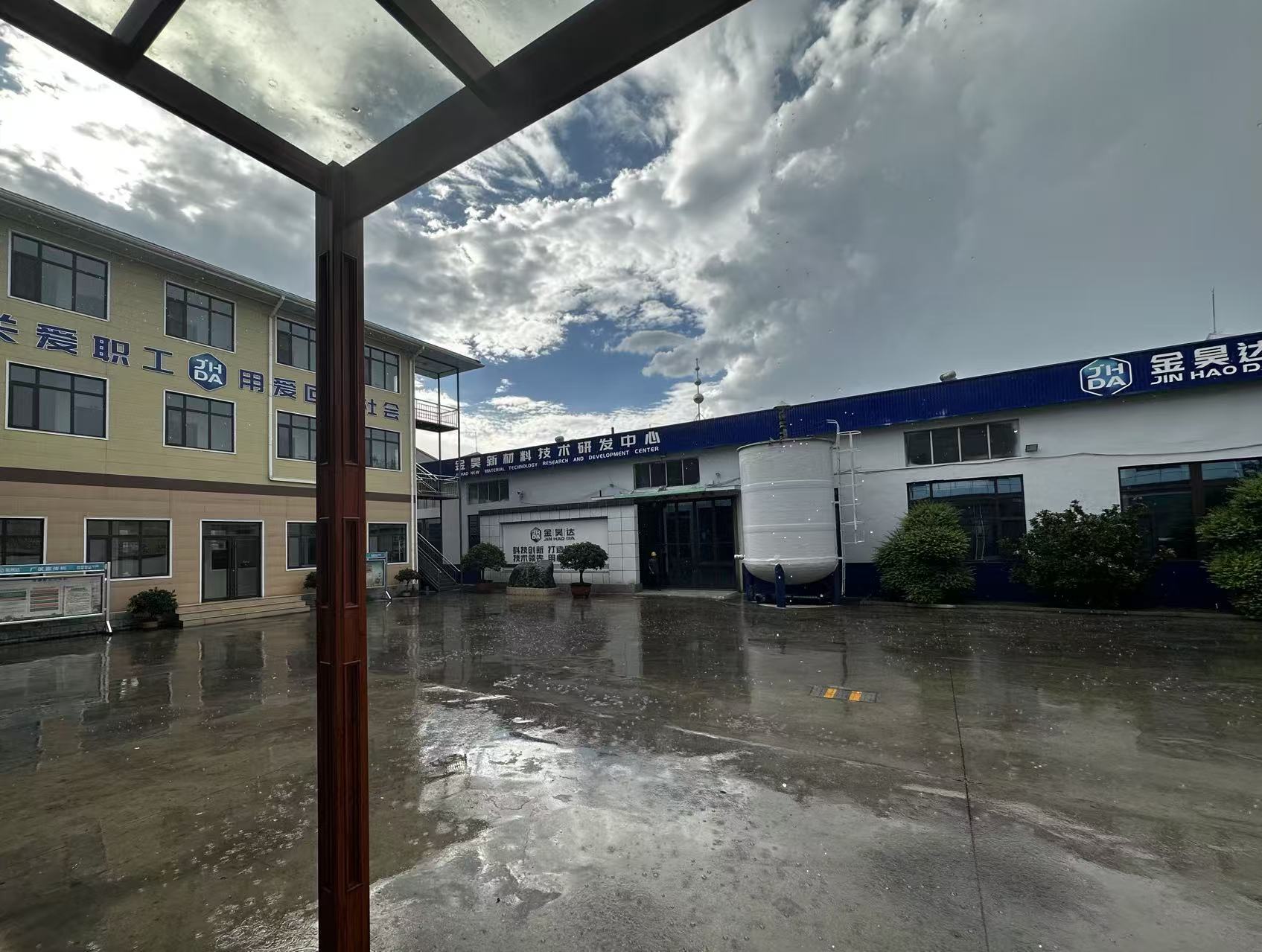
JHDA factory in Qingzhou, Shandong — a manufacturer of paper strength agents and papermaking chemicals.
Paper strength agents are wet-end papermaking chemicals designed to improve the bonding between cellulose fibers and to upgrade the mechanical properties of finished paper. This category includes dry strength agents, wet strength resins, retention aids, and filler or sludge reuse enhancers. These chemicals are used in kraft linerboard, corrugated medium paper, printing and writing paper, household tissue paper, food-grade cardboard, and molded pulp products.
Qingzhou Jinhao New Material Co., Ltd., branded as JHDA, is a manufacturer of professional papermaking fine chemicals founded in 2005. The company is located in Mihe Industrial Park, Qingzhou City, Shandong Province, China. JHDA's additives are applicable to kraft linerboard, corrugated medium paper, printing and writing paper, household tissue paper, and food-grade cardboard.
The Problem: Recycled Fiber Creates Strength Challenges
Recycled fiber is now a central part of packaging paper production. According to the American Forest & Paper Association, recycled paper accounted for 44.4% of all fiber used at U.S. mills in 2024. In dry strength additive demand, the packaging and containerboard segment leads with a reported 38.0% global share, according to Fact.MR.
However, recycled pulp is more difficult to strengthen than virgin pulp. Repeated refining shortens fibers, reduces fiber bonding potential, and introduces impurities that interfere with wet-end chemistry. Without a suitable paper strength agent, mills may face low ring crush, low burst strength, paper breaks, higher starch consumption, and higher raw-material cost.
Industry Background: Market Signals for Paper Strength Agents
The global paper dry strength agent market was valued at approximately USD 864 million in 2024, according to Intel Market Research, with Asia-Pacific accounting for about 40% of the market. Another estimate from Fact.MR projects the dry strength resin market to reach USD 1.4 billion by 2026, with a CAGR of 4.8% through 2036. Polyacrylamide (PAM) resins hold an estimated 40.0% share of the dry strength resin market.
These figures help explain why papermakers are looking for supplier capabilities rather than a single generic product: pulp systems differ, machine conditions differ, and the cost impact of a poor chemical match can be significant.
Detailed Solution: A Complete Paper Strength Agent Portfolio
One of the practical ways to evaluate a paper strength agent is to understand which mechanism it reinforces: fiber bonding strength, wet strength, retention, or filler and sludge management. The JHDA portfolio covers all four areas.
1. Dry Strength Agents
Dry strength agents improve fiber bonding strength and are common in packaging grades. JH-D726 is a liquid dry strength agent supplied as a colorless semi-transparent liquid with solids of 15.0/20.0 ± 1.0%, pH of 3.0-6.0, and viscosity of 4000-12000 cps. It is amphoteric and suitable for recycled pulp. It is used in recycled linerboard, corrugated paper, and kraft paper to improve ring crush, burst, tensile, and folding resistance. According to JHDA product data, it can raise fiber retention by 8%-15%, lower starch consumption, and reduce overall wet-end chemical cost per ton of paper by 10%-18%.
JH-1699 is a cationic dry strength resin supplied as a white powder with an active ingredient content of at least 95.0%. It is classified as a dry strength agent and paper tensile strength enhancer. It is especially aimed at recycled OCC waste paper pulp, corrugated paper, testliner, fluting, and box board applications. JH-1699 improves tensile strength, surface stiffness, and structural stability while reducing paper breakage during high-speed papermaking.
JH-1697 is a solid dry strength agent in white powder form. It contains at least 95.0% active ingredient, is cationic, and has a 12-month shelf life. It is made of cationic polyacrylamide, polyamide epichlorohydrin resin, modified cationic starch, and amphoteric polymeric reinforcing monomer. Because it is formaldehyde-free, it is suitable for food-grade pulp tableware and food packaging cardboard as well as conventional paper and pulp molding.
2. Wet Strength Resins
Wet strength is required for paper that must keep useful mechanical properties after contact with water. JH-1201 is a PAE wet strength agent supplied as a light yellow to amber liquid with solids of 12.5 ± 1.0%, pH of 2.0-5.0, and viscosity of no more than 500 cps. It is a cationic, formaldehyde-free resin intended for tissue paper, paper cup base paper, filter paper, medical disposable paper, and recycled packaging paper. It improves wet tensile strength, dry tensile strength, ply bond strength, tear resistance, bursting strength, folding endurance, and ring crush performance.
3. Retention Enhancers
Retention chemistry is part of a strength strategy because losing fiber fines and fillers to white water weakens the sheet and raises raw-material cost. JH-8501 is a strength retention emulsion made of CPAM. It is a cationic retention aid categorized as a wet-end retention aid and drainage and retention agent. It is supplied as a white emulsion with solids of 38.0 ± 1.0%, pH of 3.0-6.0, and a shelf life of 6 months. JH-8501 helps intercept fine fibers and fillers on the forming wire, improves drainage, reduces fiber and filler loss, and supports formation uniformity.
4. Filler Reutilization Enhancer and Sludge Encapsulation
High filler levels can reduce paper strength, but filler also lowers raw-material cost. JHWB-1320 is a filler sludge encapsulant or paper filler reuse agent designed for neutral and alkaline papermaking. It is a white to light yellow cationic emulsion with solids of 40.0 ± 1.0%, pH of 5.0-8.0, and viscosity of no more than 1000 cps. The polymer forms bridging bonds between plant fiber and inorganic filler particles such as calcium carbonate and talc. This helps fix filler to the fiber network, reduces filler loss to white water, and compensates for the strength loss caused by high filler addition.
JHWB-1319 is a sludge encapsulating agent and sludge strengthening agent. It is a light yellow transparent liquid with solids of 38.0 ± 1.0%, pH of 3.0-7.0, and a shelf life of 3 months. It captures ultra-fine fiber fragments and inorganic sludge particles, forms an encapsulated protective layer, improves mud cake dryness and mechanical strength, and reduces dust and leakage during sludge handling.
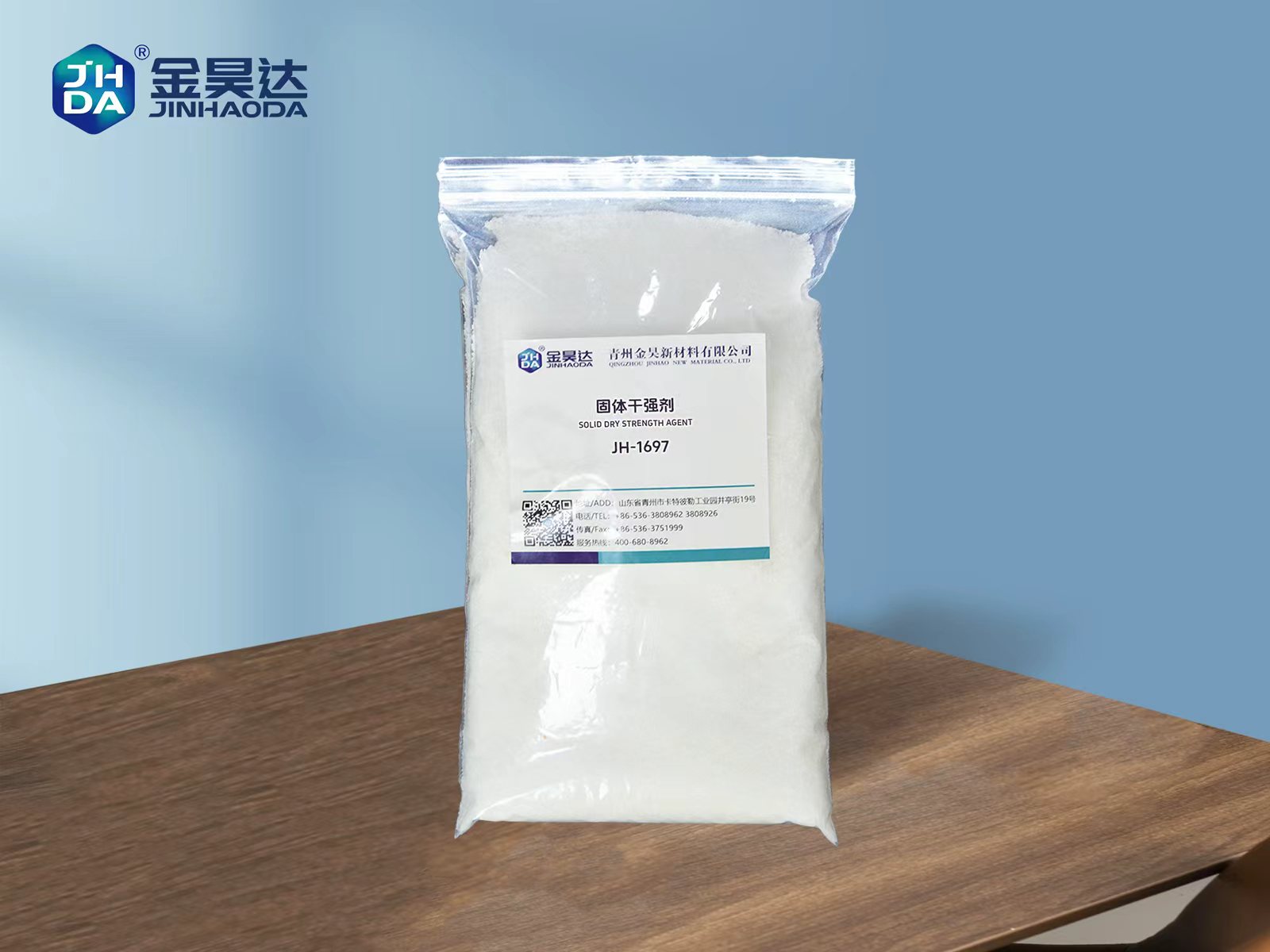
JH-1697 solid dry strength agent: a cationic, formaldehyde-free powder option for paper and pulp molding.
Paper Strength Agent Comparison: JHDA Product Line
| Product | Model | Form / Key Parameters | Main Function |
|---|---|---|---|
| Dry Strength Agent | JH-D726 | Colorless semi-transparent liquid; solids 15.0/20.0 ± 1.0%; pH 3.0-6.0; viscosity 4000-12000 cps; amphoteric; shelf life 6 months | Improves ring crush, burst, tensile, and folding resistance; suitable for recycled linerboard, corrugated paper, and kraft paper. |
| Paper Tensile Strength Enhancer | JH-1699 | White powder; active ingredient ≥95.0%; cationic; soluble; shelf life 12 months | Improves tensile strength of recycled OCC pulp; used for corrugated paper, testliner, fluting, and box board. |
| Solid Dry Strength Agent | JH-1697 | White powder; active ingredient ≥95.0%; cationic; soluble; shelf life 12 months | Strengthens inter-fiber bonding for recycled pulp; low transportation cost; applies to papermaking and pulp molding. |
| Pulp Molding Strength Enhancer | JH-2219 | Light white to transparent liquid; solids 20.0 ± 1.0%; pH 2.0-5.0; viscosity 5000-12000 cps; amphoteric; shelf life 6 months | Increases stiffness, tensile toughness, and compression resistance of molded pulp; suitable for egg trays, fruit trays, industrial packaging molds, and food-grade tableware. |
| Wet Strength Agent | JH-1201 | Light yellow to amber liquid; solids 12.5 ± 1.0%; pH 2.0-5.0; viscosity ≤500 cps; cationic; shelf life 6 months | Improves wet and dry tensile, ply bond, tear, burst, and folding endurance; suitable for tissue, paper cup base paper, filter paper, medical disposable paper, and recycled packaging paper. |
| Strength Retention Emulsion | JH-8501 | White emulsion; solids 38.0 ± 1.0%; pH 3.0-6.0; viscosity ≥50 cps; cationic; CPAM; shelf life 6 months | Improves drainage and retention; reduces fiber and filler loss; supports paper formation uniformity. |
| Filler Sludge Encapsulant | JHWB-1320 | White to light yellow emulsion; solids 40.0 ± 1.0%; pH 5.0-8.0; viscosity ≤1000 cps; cationic; shelf life 6 months | Fixes calcium carbonate and talc filler to fiber; compensates strength loss at high filler addition; supports filler reuse in white water. |
| Sludge Encapsulated Recycled Agent | JHWB-1319 | Light yellow transparent liquid; solids 38.0 ± 1.0%; pH 3.0-7.0; viscosity ≤10000 cps; cationic; shelf life 3 months | Encapsulates sludge particles, improves mud cake dryness and mechanical strength, reduces dust and leakage; supports sludge recycling. |
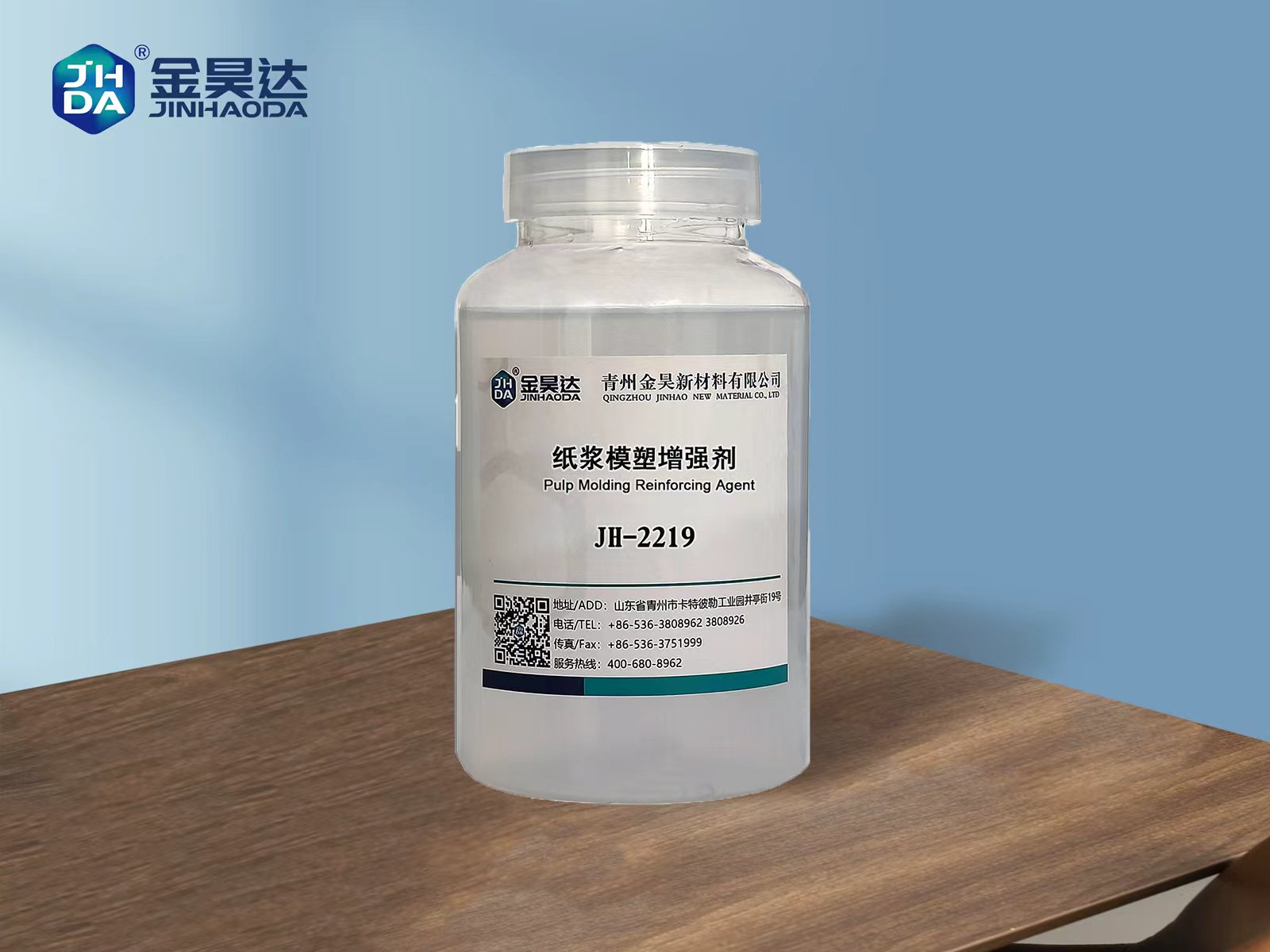
JH-2219 pulp mold enhancer is designed for recycled pulp and food-grade molded pulp products.
How to Select the Right Paper Strength Agent: Step-by-Step
No single paper strength agent fits every mill. Use the following sequence to reduce trial risk and improve cost efficiency.
- Define the target indexes. Identify the specifications that are failing: ring crush, burst strength, tensile strength, stiffness, wet tensile strength, or folding endurance. This determines whether you need a dry strength agent, wet strength resin, retention aid, or a combination.
- Profile the pulp system. Check the ratio of recycled pulp to virgin fiber, filler type and dosage, pH, conductivity, and the level of contaminants such as stickies. A recycled pulp strength booster should be compatible with higher ash and fluctuating pulp quality.
- Choose the right physical form. Liquid products are convenient for metering pump systems; powder products offer longer shelf life and lower transport cost. JHDA supplies both liquid and solid forms across its paper strength agent range.
- Check wet-end compatibility. A paper strength agent should work with AKD sizing, surface sizing agents, optical brighteners, retention aids, defoamers, and other wet-end chemicals without causing over-flocculation, foam, or deposit problems.
- Run a lab test and an on-machine trial. Use pre-shipment laboratory testing to screen dosage, then verify on the paper machine. JHDA's technical team conducts on-site machine debugging and tailors formulas according to pulp composition and machine operating parameters.
- Verify documentation and supply support. Confirm that the supplier can provide TDS, MSDS, export documentation, and stable batch quality. JHDA provides one-stop export document services including commercial invoice, packing list, certificate of origin, pre-shipment inspection report, MSDS, TDS, and dangerous goods transport certification.
Use Cases Across Paper and Packaging Grades
Recycled Linerboard and Corrugating Medium
For recycled linerboard, testliner, and corrugating medium, the main challenge is maintaining ring crush and burst strength. JH-D726 and JH-1699 can function as corrugated box strength agents by reinforcing the fiber network and reducing breaks on the paper machine. JH-1699 is also classified as a testliner paper strength agent and fluting paper strength additive.
Kraft Paper and High-Stiffness Packaging
Kraft paper needs high tensile strength and good surface stiffness, especially for bags and heavy-duty packaging. JH-D726 can serve as a kraft paper strength additive or ring crush strength agent, while JH-1697 strengthens inter-fiber bonding and improves compression resistance without adding formaldehyde.
Tissue, Paper Cup Base Paper, Filter Paper, and Medical Disposable Paper
Tissue and disposable paper products that contact water require wet strength resin. JH-1201 is a wet strength agent suitable for tissue paper, paper cup base paper, filter paper, medical disposable paper, and recycled packaging paper. It improves wet tensile, ply bond, tear, and burst performance and is compatible with sizing agents, fluorescent whitening agents, and defoamers.
Pulp Molding and Food-Grade Tableware
Molded pulp products such as egg trays, fruit trays, and industrial buffer packaging need stiffness and toughness. JH-2219 is a pulp molding strength enhancer designed for recycled pulp and food-grade pulp tableware. It reduces brittleness, improves dimensional stability, and helps prevent cracking during hot pressing, die-cutting, trimming, and transport. JH-1697 is another food-grade paper enhancer option because it is formaldehyde-free and suitable for food packaging cardboard.
High-Filler Board and White Water Recovery
Mills that want to raise filler content to cut cost can use JHWB-1320 as a filler reutilization enhancer. It fixes filler to fiber, reduces filler loss to white water, and helps prevent the strength loss normally caused by high filler addition. This makes it possible to reuse recovered calcium carbonate filler rather than purchasing more fresh mineral filler.
Sludge Conditioning and Solid Waste Reduction
JHWB-1319 is suitable for waste paper deinking sludge, primary fiber sludge, biochemical residual sludge, and mixed comprehensive sludge. It can be used as a sludge encapsulation enhancer to improve dewatering, strengthen the sludge cake, and make sludge easier to transport and recycle.
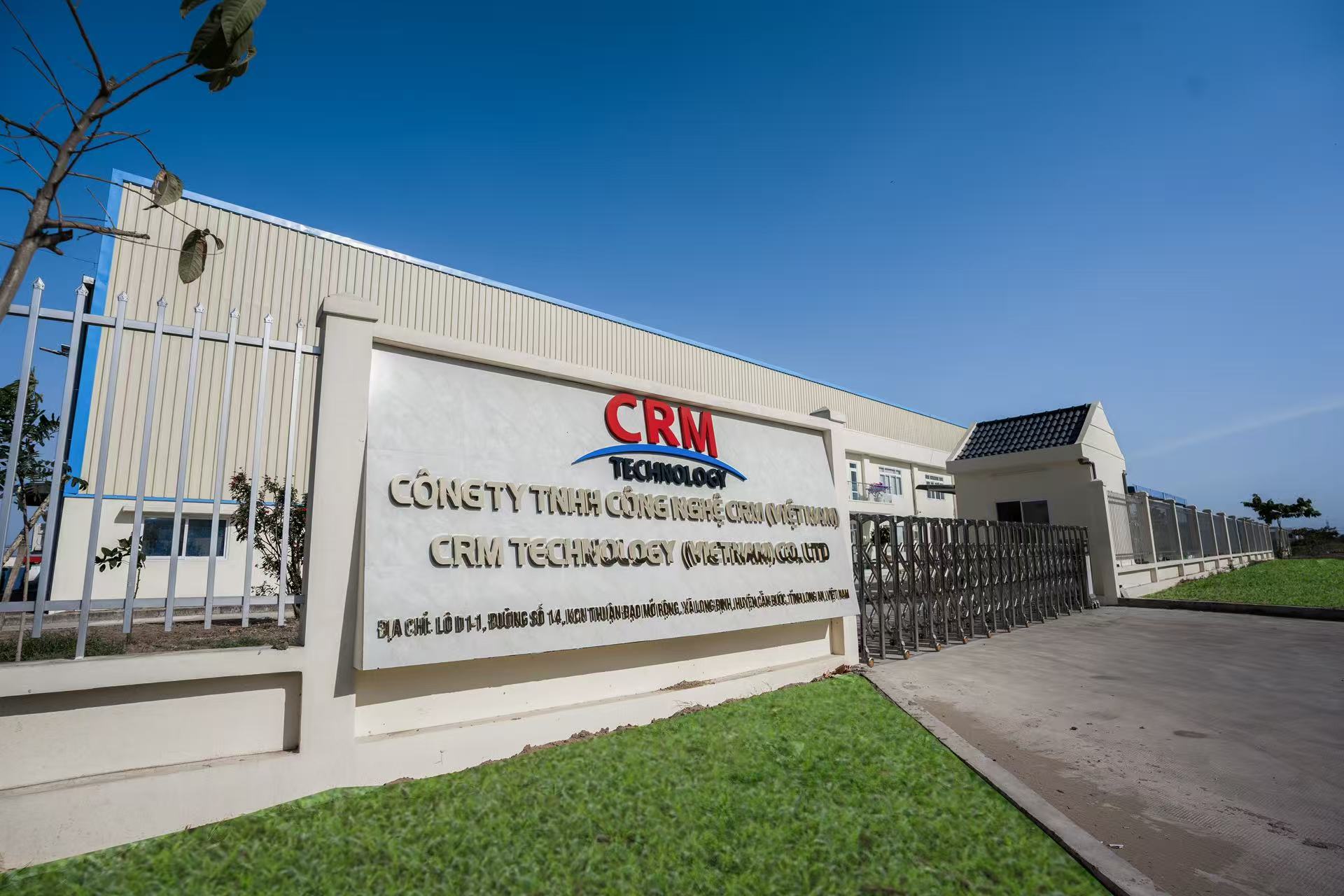
JHDA's overseas supporting production entity in Vietnam supports local delivery for ASEAN clients.
Frequently Asked Questions
What is a paper strength agent?
Paper strength agents are papermaking additives that improve bonding between fibers and improve the mechanical properties of finished paper. Depending on the function, they can be classified as dry strength agents, wet strength resins, retention enhancers, or filler/sludge reuse enhancers.
Can JHDA replace imported dry strength resin from Kemira?
For most packaging paper mills, replacing Kemira FennoBond with JHDA polymeric dry strength resin is feasible. JHDA matches key physical strength indicators of Kemira products, lowers procurement cost, shortens the supply cycle, and addresses unstable strength caused by recycled pulp impurities. For ultra-high-grade virgin pulp specialty paper with fixed certification specifications, keeping the original imported product may still be recommended.
What certifications and quality documents does Qingzhou Jinhao provide?
Qingzhou Jinhao New Material Co., Ltd. holds ISO9001 quality management certification and ISO14001 environmental management certification, and has passed SGS product compliance test reports. For applicable products, the company also supports HALAL certification. It provides complete TDS and MSDS documents to support overseas customers' customs clearance and L/C settlement.
Are JHDA paper strength agents suitable for recycled pulp and food-grade pulp molding?
Yes. Several JHDA products are designed for recycled OCC and waste paper pulp, and some are suitable for food-grade applications. JH-1697 is a formaldehyde-free solid dry strength agent applicable to food-grade pulp tableware and food packaging cardboard. JH-2219 is a pulp molding strength enhancer suitable for recycled pulp, food-grade tableware, and food packaging pulp molds.
Can a paper mill request samples, factory audit, or technical support before buying?
Yes. JHDA supports factory audit visits for global chemical distributors and terminal paper manufacturers, and offers free sample evaluation and on-machine trial service supported by its technical team. For ASEAN clients, JHDA's overseas supporting production entity CRM Chemical Technology Co., Ltd. in Long An Province, Vietnam, is set up to facilitate local delivery and shorten delivery cycles. For sample trials, formula customization, or bulk export quotation, contact the international sales team via WhatsApp: +86 139 6468 8976 or email: info@sdqzjinhao.com.
Conclusion
Choosing a paper strength agent is not just about selecting one chemical. It is about matching the additive system to your pulp, machine, quality targets, and cost structure. The JHDA portfolio covers dry strength agents, wet strength resins, retention enhancers, filler reutilization enhancers, and sludge encapsulation agents. Qingzhou Jinhao New Material Co., Ltd. operates a 20,000-square-meter manufacturing facility, employs about 80 to 100 staff, has an R&D team of 20 engineers, and maintains an annual output of 100,000 tons. Its export business accounts for approximately 40% of total sales, with markets in Asia, Africa, and South America.
For paper mills running recycled pulp, tissue, kraft paper, corrugated board, or molded pulp products, the next step is to evaluate the chemical options against real machine conditions. JHDA supports factory audits, pre-shipment laboratory testing, on-site commissioning, and bulk supply with an MOQ of 1 MT. If your plan involves a long-term supply partnership or a joint venture for paper strengthener production, the first practical step is to audit the production base and request technical documentation.
Download the JHDA company introduction brochure to review the product line, certifications, and export service capabilities. For sample trials, formula customization, or a bulk quotation, contact Qingzhou Jinhao New Material Co., Ltd. at info@sdqzjinhao.com or WhatsApp +86 139 6468 8976.