Paper Strength Agents: Recycled Pulp Packaging Project Guide
Paper Strength Agents: Recycled Pulp Packaging Project Guide
Core answer: For recycled pulp packaging projects, the primary chemical solution is a dry strength agent selected according to fiber source, target strength indexes and wet-end conditions. This guide explains how a paper strength agent manufacturer should be evaluated for these projects, using Qingzhou Jinhao New Material Co., Ltd. (JHDA) as a working example. JHDA supplies paper strength agents in liquid and solid forms, including dry strength, wet strength, retention, filler reuse and sludge encapsulation products, to help packaging paper and pulp molding lines maintain ring crush, burst, tensile and stiffness performance while using recycled fiber.
Problem Definition: Why Recycled Pulp Packaging Needs a Dedicated Strength Program
Recycled pulp packaging is made from shorter, weaker fibers than virgin pulp. OCC, mixed waste paper and deinked pulp carry more fines, ash and contaminants. These factors lower fiber bonding strength, which directly reduces ring crush, burst strength, tensile strength and stiffness in linerboard, corrugated medium, carton board, kraft paper and molded pulp products.
A paper strength agent for these projects must do more than add dry strength. It must also improve retention of fine fibers and fillers, tolerate pH and water hardness variation, work with sizing and other wet-end chemicals, and keep the paper machine running without contamination or excessive cleaning. Common project failures include edge breakage, carton collapse and cracking during printing, die-cutting, creasing or transport — all symptoms of insufficient bonding in recycled fiber.
Industry Background: Strength Additives Are Central to Packaging Paper Projects
Packaging is the largest end-use segment for dry strength additives. According to Fact.MR, the packaging and containerboard segment accounts for 38.0% of dry strength resin use, and polyacrylamide (PAM) resins dominate with an estimated 40.0% share. Intel Market Research values the global paper dry strength agent market at approximately USD 864 million in 2024, with Asia-Pacific accounting for about 40% of the total. Separately, AF&PA reports that recycled paper reached 44.4% of all fiber used at U.S. mills in 2024.
These figures explain why recycled pulp strength is no longer a niche problem. A growing share of packaging fiber comes from recycled sources, while buyers still expect corrugated boxes, carton board and molded packaging to pass ring crush, burst, tensile, stiffness and water-resistance requirements. For a paper mill or pulp molding project, the choice of strength agent and the supplier’s ability to tune the formula matter as much as the paper machine itself.
Detailed Solution: JHDA Paper Strength Agents for Recycling-Based Packaging Lines
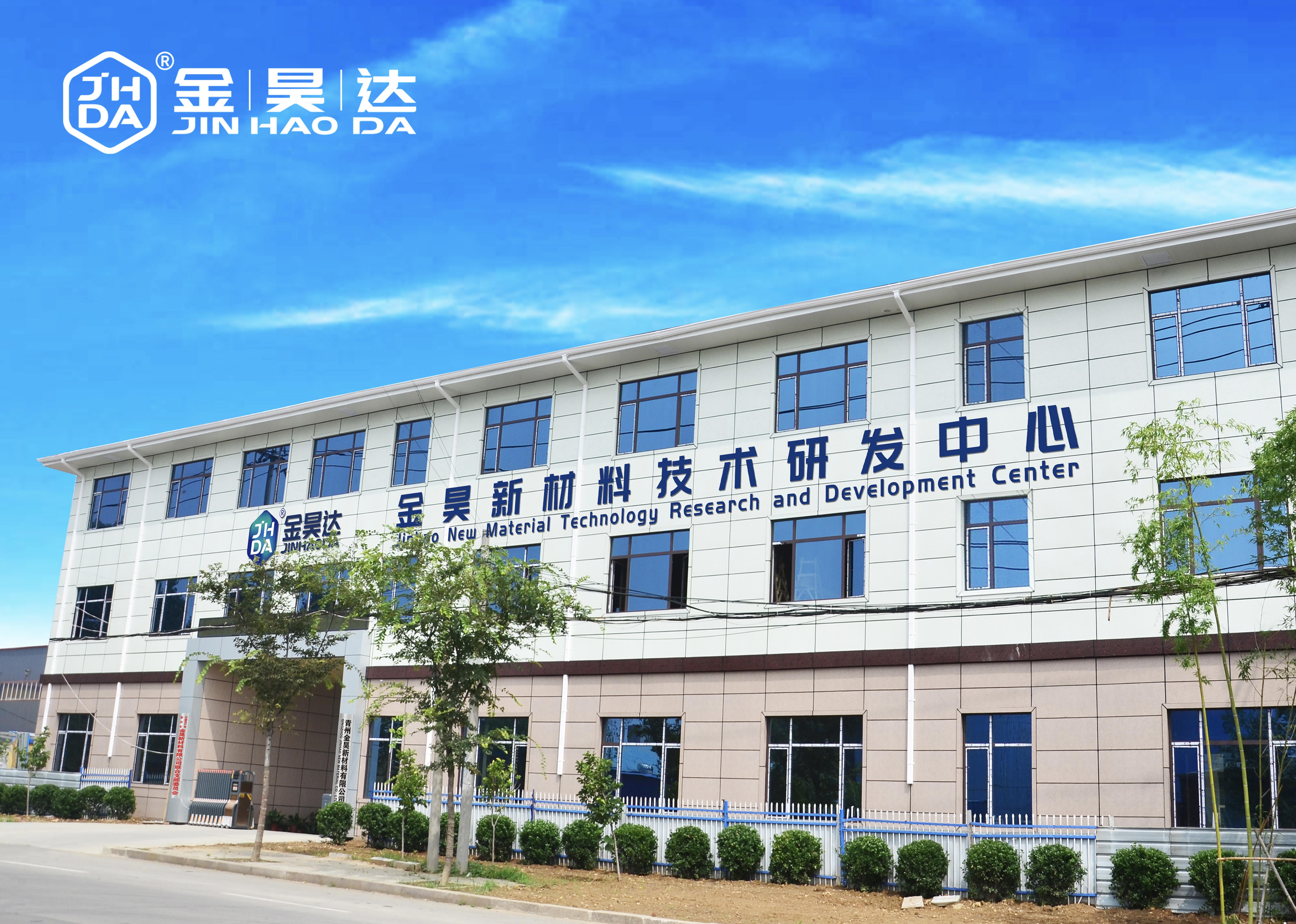
Qingzhou Jinhao New Material Co., Ltd., branded as JHDA, is a papermaking chemical manufacturer founded in 2005 in Qingzhou, Shandong Province, China. The company focuses on R&D, production, technical after-sales and export of professional papermaking fine chemicals. Its total annual output reaches 100,000 tons, with a headquarter production base of about 20,000 square meters and more than 80 employees, including 20 professional R&D engineers and on-site technical service engineers. The company positions itself as a cost-effective alternative to imported additives from Kemira, BASF and other international brands.
These products are suitable for production line contribution, production line upgrades, formula optimization, and wastewater treatment and flocculation system projects. JHDA’s additives are applicable to kraft linerboard, corrugated medium paper, printing and writing paper, household tissue paper and food-grade cardboard.
For recycled pulp packaging projects, JHDA offers a family of paper strength and related wet-end products:
Dry Strength Agents
- JH-D726 Dry Strength Agent — a colorless semi-transparent liquid with 15.0% or 20.0% solid content and amphoteric charge. It is designed to improve ring crush, burst, tensile and folding resistance of recycled linerboard, corrugated paper and kraft paper. JHDA product data credits the formulation with raising fiber retention rate by 8%–15%, reducing starch consumption and lowering overall wet-end chemical cost per ton of paper by 10%–18% at the same dosage.
- JH-1699 Paper Tensile Strength Enhancer — a white powder with active ingredient ≥95.0% and cationic charge. It is a dry strength agent for recycled OCC waste paper pulp, corrugated paper, testliner and fluting, and can lower dependence on fresh long fiber.
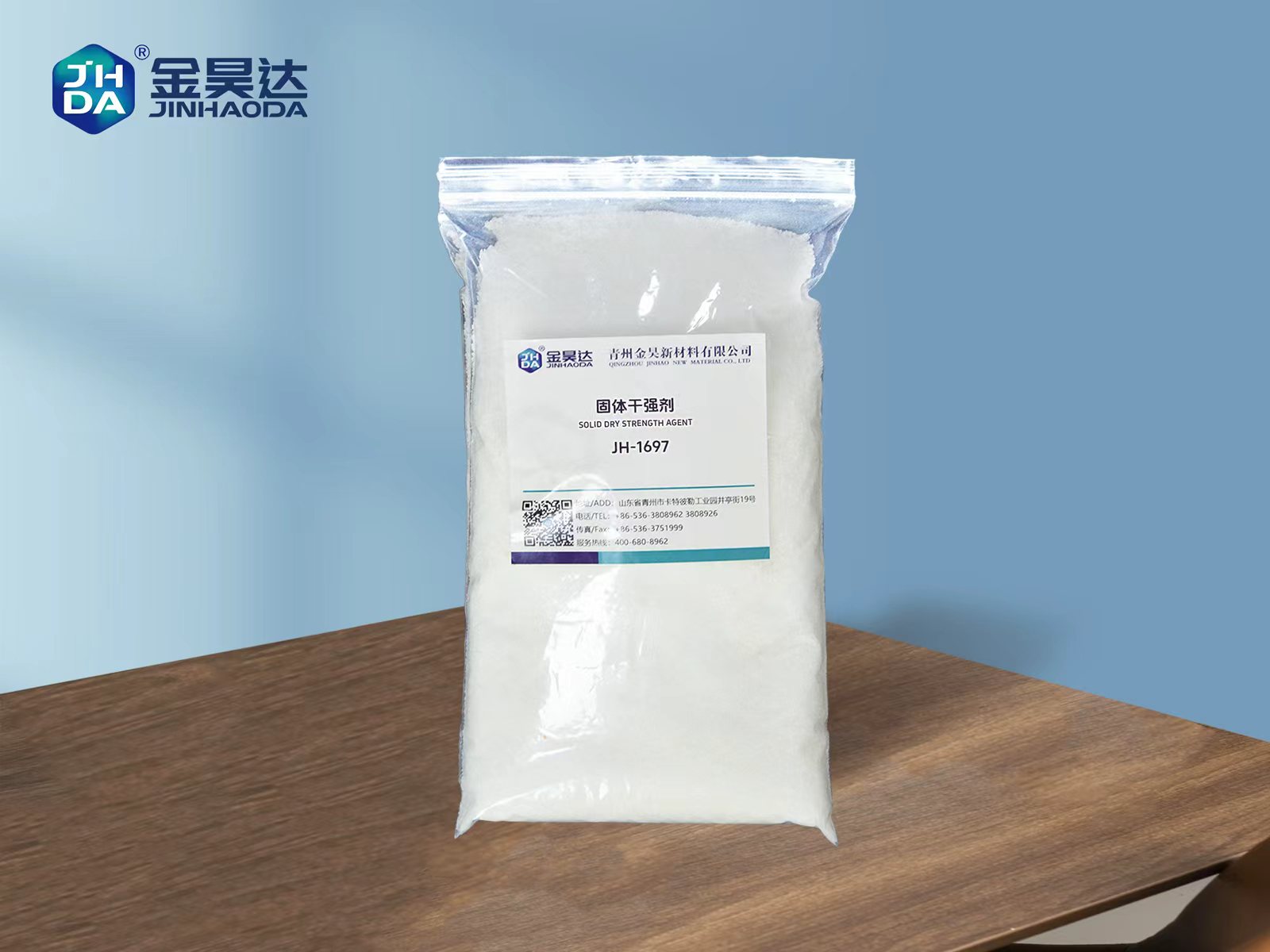
- JH-1697 Solid Dry Strength Agent — a white powder with active ingredient ≥95.0% and cationic charge. It is a solid recycled paper strengthener and molded pulp strength additive. Its formula is free of formaldehyde and harmful volatile substances, making it suitable for food-grade pulp tableware, food packaging paper and green packaging cardboard.
Wet Strength and Pulp Molding Strength
- JH-1201 Wet Strength Resin (PAE) — a light yellow to amber liquid with 12.5% solid content and cationic charge. It is a wet strength resin that improves wet tensile strength, wet ply bond, wet tear, wet burst and folding endurance for tissue paper, paper cup base paper, filter paper, medical disposable paper and recycled packaging paper.
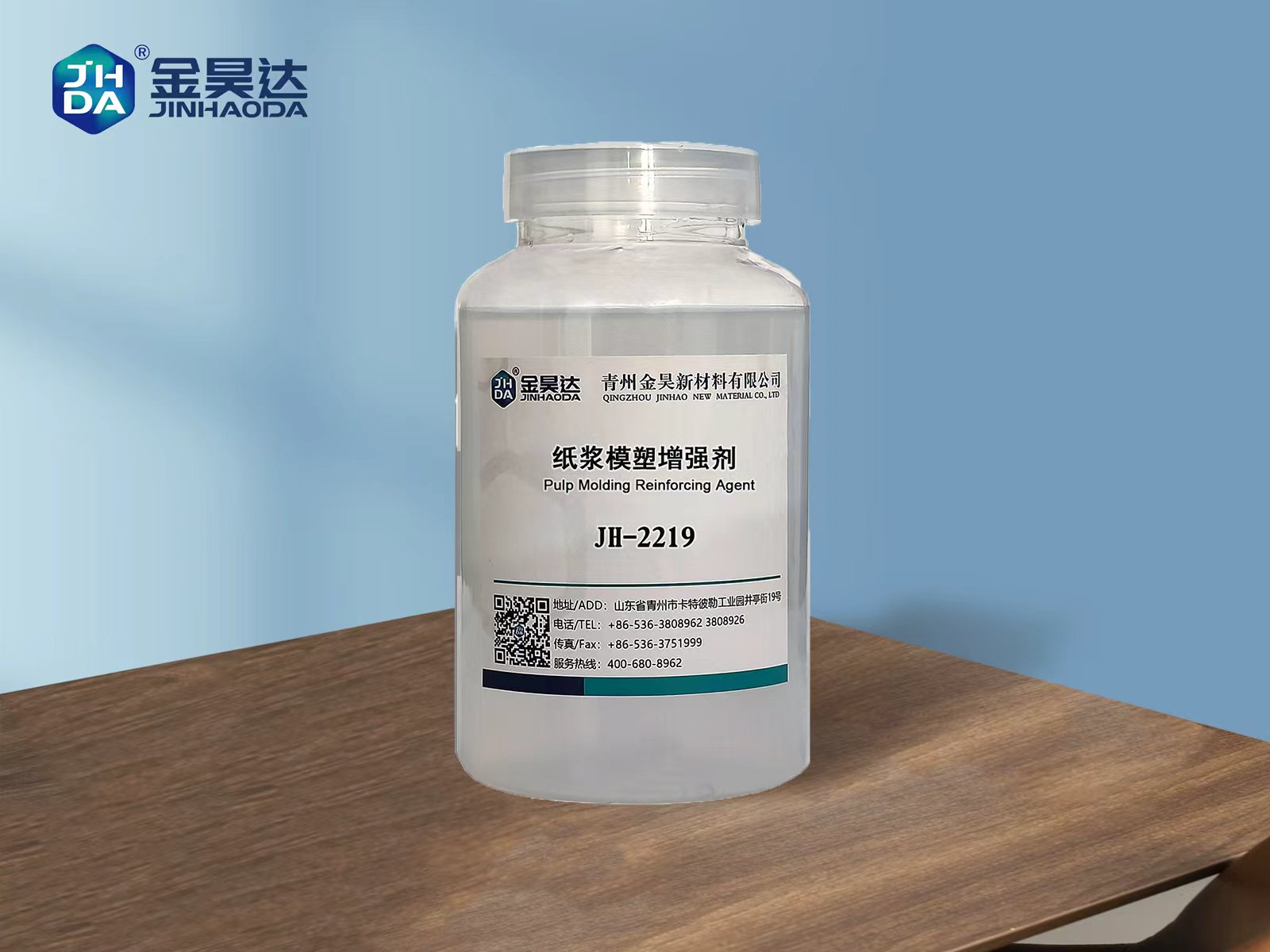
- JH-2219 Pulp Molding Strength Enhancer — an amphoteric liquid with 20.0% solid content. It is designed for waste paper recycled pulp used in egg trays, fruit pulp trays and industrial buffer packaging molds. The product acts as a paper stiffness reinforcer for molded pulp, improving stiffness, tensile toughness and dimensional stability, reducing deformation, warping and cracking after hot pressing and drying.
Retention, Filler Reuse and Sludge Encapsulation
- JH-8501 Strength Retention Emulsion — a cationic CPAM retention aid that improves retention and drainage, reduces fiber and mineral filler loss, and stabilizes paper formation.
- JHWB-1320 Filler Sludge Encapsulant — a cationic filler reutilization enhancer that fixes calcium carbonate or talc onto the fiber network and compensates for strength loss when filler loading increases.
- JHWB-1319 Sludge Encapsulated Recycled Agent — a cationic sludge encapsulation enhancer that conditions and strengthens deinking sludge, primary fiber sludge and mixed papermaking sludge, improving dryness and handling for reuse or disposal.
Used together or separately, these products function as corrugated box strength agents, kraft paper strength additives, carton board reinforcing agents and recycled pulp strength boosters, depending on the project’s target grades and production conditions.
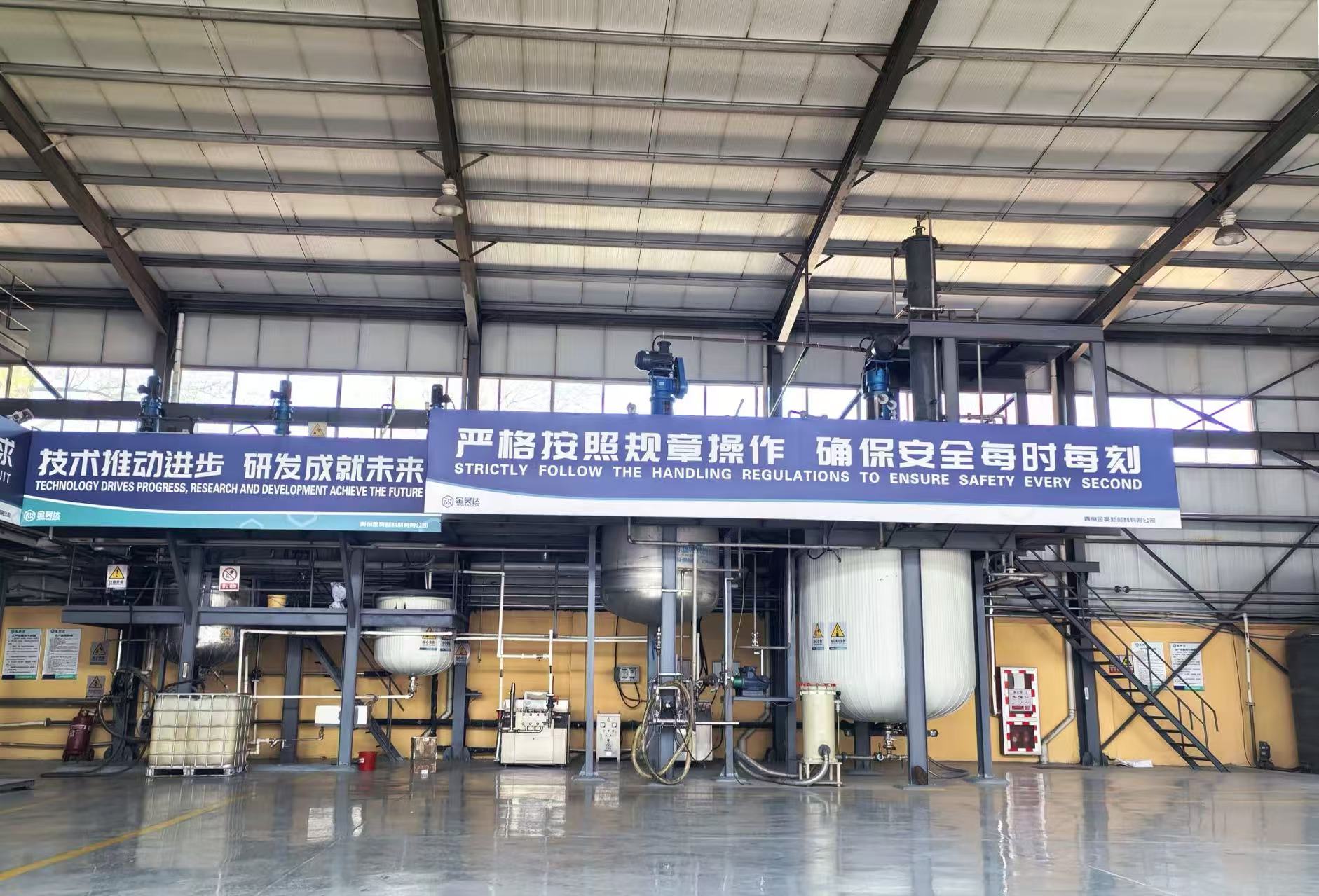
At the project level, JHDA paper strength and related chemicals are used in industrial continuous production lines, wet-end/dry-end processing and wastewater treatment systems. They are applied by continuous dosing or batch mixing, with methods such as dip-rolling, coating, metered dosing after solution preparation, on-site mixing, drying/curing and polymerization reaction. Supporting equipment can include mixing tanks, metering pumps, mixing towers, coating or sizing machines, drying or fixing ovens, flocculation tanks, air flotation units and filter presses. Application also requires environmental compliance such as low VOC and no APEO/NPEO, formula compatibility, salt and high-temperature resistance, and long-term storage stability.
Step-by-Step Breakdown: How to Adopt a Paper Strength Agent for a Packaging Project
- Define the finished paper requirements. Identify the grades: testliner, fluting, corrugated medium, carton board, kraft paper or molded pulp. List the key indicators: ring crush strength, burst strength, tensile strength, stiffness, wet strength, Cobb value or dimensional stability.
- Profile the pulp and machine. Record recycled pulp content, OCC ratio, pH, water hardness, paper machine speed, dilution water and wet-end chemicals already in use. JHDA customizes formulas according to pulp composition and machine parameters, so the more precise the pulp profile, the more targeted the chemistry.
- Choose the product form. Liquid products such as JH-D726 and JH-2219 can be dosed directly with a metering pump. Solid products such as JH-1697 and JH-1699 reduce transport cost and storage risk. The choice affects logistics, dosing equipment and operator workload.
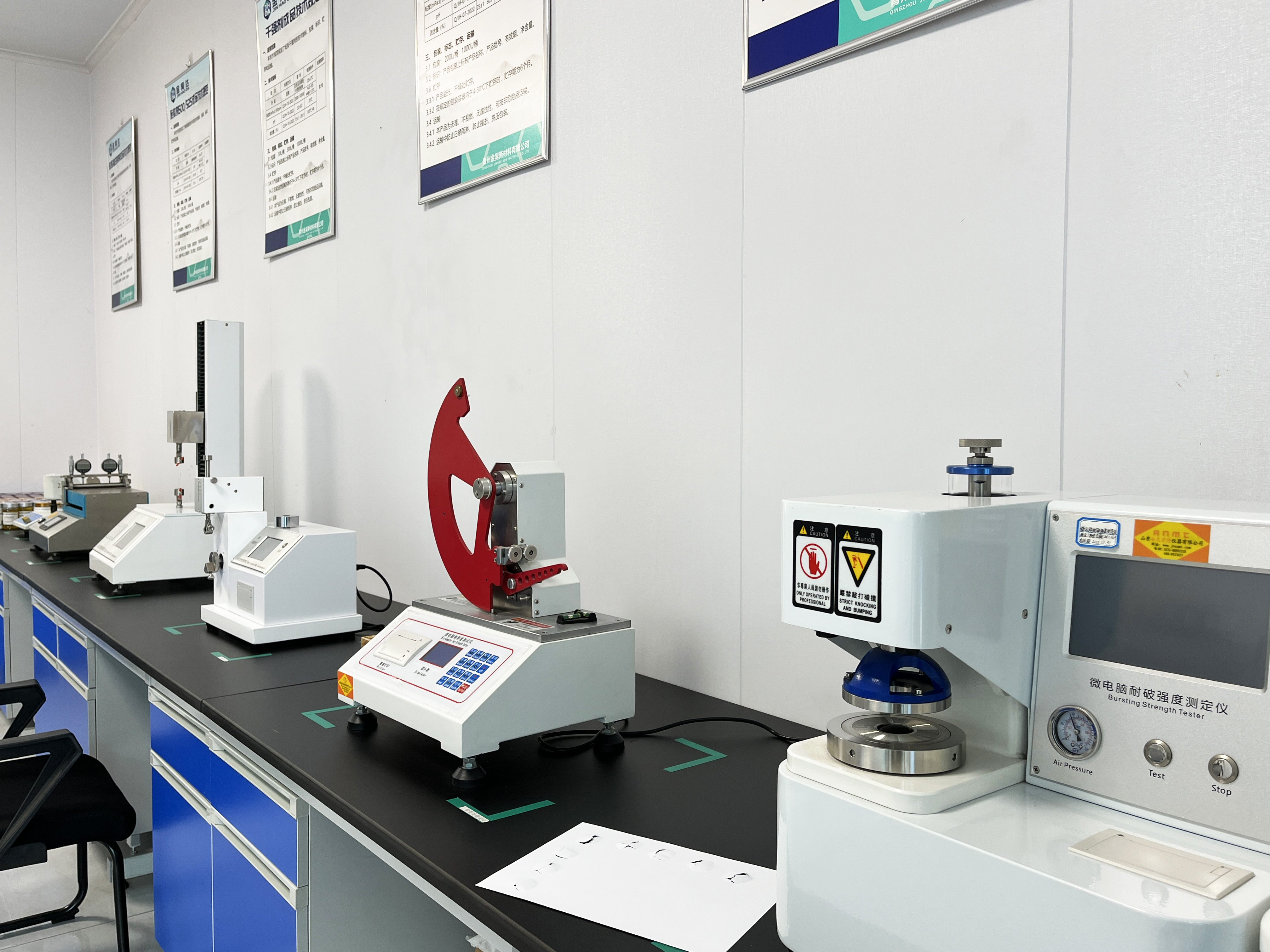
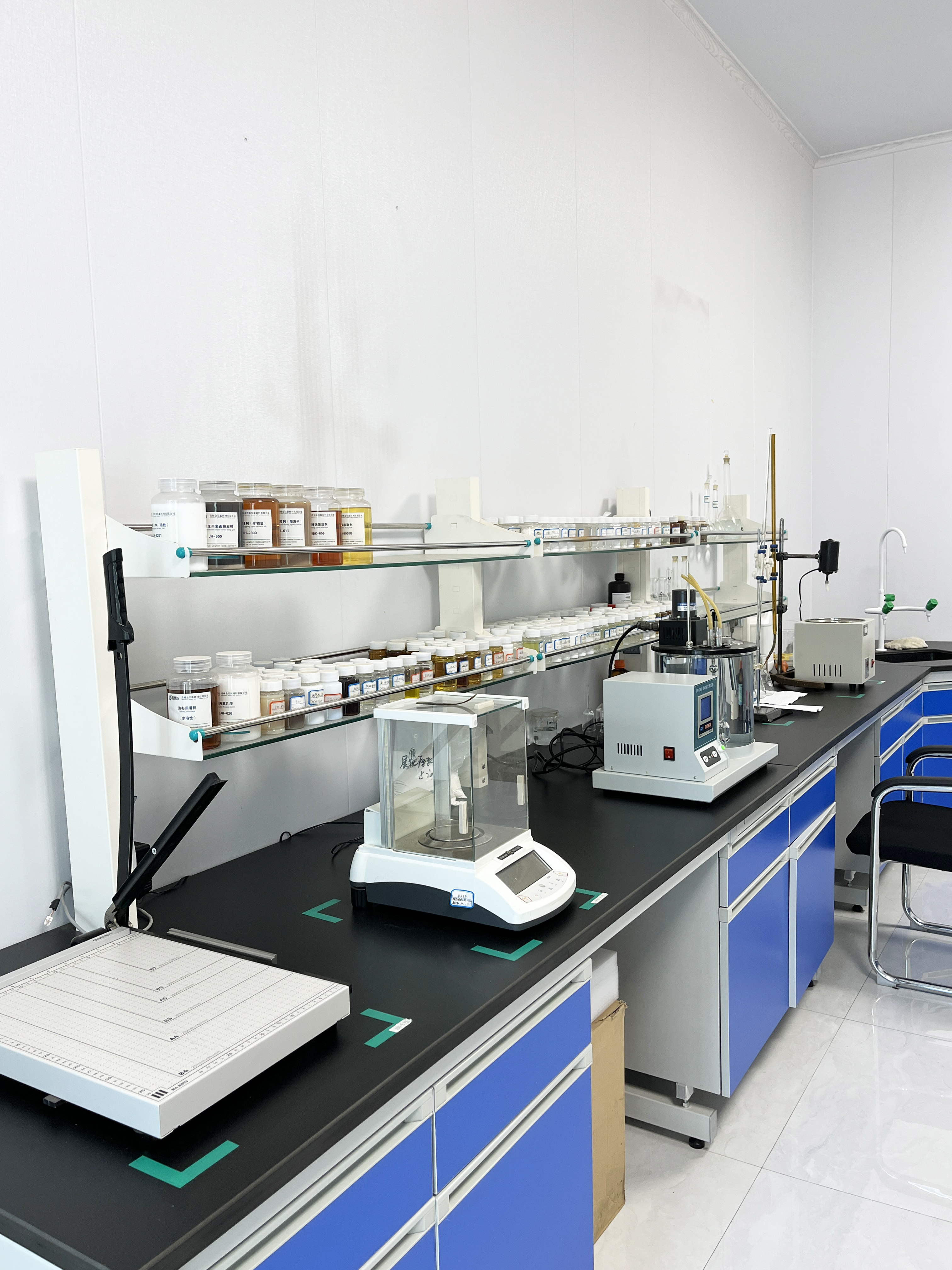
- Run a laboratory or pilot trial before shipment. JHDA provides free trial samples and maintains a pilot laboratory for formula adjustment and performance verification. Typical quality control tests include appearance, solids content, pH, viscosity and functional tests; specific procedures and reports can be provided per order.
- Conduct an on-machine trial. JHDA field technical teams provide on-site machine debugging for paper mills. They optimize dosing points and dosage levels to improve paper strength and machine runnability. On-site debugging is used to optimize core paper indicators including Cobb water absorption value, ring crush strength, bursting strength, paper brightness, fiber retention rate and overall paper machine runnability.
- Plan bulk supply and documentation. MOQ is 1 MT, and standard production lead time is 4 work days with monthly capacity of 8000 MT. For export orders, JHDA supplies commercial invoices, packing lists, certificates of origin, pre-shipment inspection reports, MSDS, TDS and dangerous goods transport certification, with flexible payment terms such as sight L/C, T/T and DP. Factory audit visits are supported for distributors and terminal paper manufacturers.
- Monitor and optimize after scale-up. JHDA positions its service as full-cycle after-sales, including customized formula adjustment, trial support and technical process support. After bulk ordering, the supplier can continue adjusting dosage and formula based on pulp changes and target strength indicators.
Use Cases: Paper Strength Agents in Project Scenarios
JHDA reports more than a decade of stable cooperation with dozens of large-scale packaging paper mills in Southeast Asia. The following scenarios represent typical match-ups between project needs and JHDA products.
Recycled Linerboard and Carton Board
A testliner or carton board line using OCC often sees a drop in ring crush and burst after the fiber is recycled several times. A combination of JH-1699 as a tensile strength additive and JH-D726 as a ring crush and burst strength improver can rebuild fiber bonding strength while keeping starch usage in check. The powder form suits mills that want lower logistics cost; the liquid form suits automated dosing systems.
Corrugated Medium and Fluting
For corrugated medium, compression strength is critical because the board must support stacking loads. JH-D726 acts as a ring crush strength agent for high-load boxes; JH-1699 can reinforce the tensile side of the fluting. Both products are designed to be compatible with sizing agents, defoamers and other wet-end additives used in recycled paper systems.
Pulp Molded Packaging
Egg trays, fruit trays and industrial buffer packaging are formed from recycled pulp and can become brittle or warp during hot pressing. JH-2219 pulp molding strength enhancer builds stiffness and toughness in the molded structure. For dry strength at lower logistics cost, JH-1697 solid dry strength agent can be added to the pulp slurry. Both products are formaldehyde-free, supporting food-contact and green packaging goals.
Food-Grade Packaging Paper and Cardboard
Food-contact paper and cardboard need strength plus compliance. JH-1697 is a food-grade paper enhancer option with no formaldehyde and no harmful volatile substances. At the manufacturing level, JHDA holds ISO9001 quality management certification, ISO14001 environmental management certification and SGS product compliance test reports for packaging paper chemicals.
High-Filler Packaging Board
Filler lowers raw material cost but can reduce strength. JHWB-1320 acts as a filler reutilization enhancer by fixing calcium carbonate to the fiber network, compensating for strength loss and reducing white water filler loss. JH-8501 retention emulsion improves fine fiber and filler retention, so the wet-end system can handle higher filler levels without making the finished board weak or uneven.
Comparison Table: JHDA Strength and Retention Products for Packaging Projects
| Product | Form | Ionic Type | Typical Project Role |
|---|---|---|---|
| JH-D726 Dry Strength Agent | Liquid | Amphoteric | Ring crush, burst, tensile and folding strength; fiber retention boost |
| JH-1699 Paper Tensile Strength Enhancer | Solid powder | Cationic | Tensile reinforcement, testliner, fluting, corrugated paper from OCC pulp |
| JH-1697 Solid Dry Strength Agent | Solid powder | Cationic | Recycled pulp strength, pulp molded packaging, food-grade packaging paper |
| JH-2219 Pulp Molding Strength Enhancer | Liquid | Amphoteric | Stiffness, toughness and dimensional stability for molded pulp products |
| JH-1201 Wet Strength Resin | Liquid | Cationic | Wet strength for tissue, paper cup, filter paper and recycled packaging |
| JH-8501 Retention Emulsion | Liquid | Cationic | Retention and drainage, reduced fiber/filler loss |
| JHWB-1320 Filler Sludge Encapsulant | Liquid | Cationic | Filler fixation and strength compensation at high filler loading |
| JHWB-1319 Sludge Encapsulated Recycled Agent | Liquid | Cationic | Sludge dewatering, encapsulation and strengthening for waste paper mills |
Decision Checklist for Recycled Pulp Packaging Projects
- Confirm which strength indexes matter most: ring crush, burst, tensile, folding endurance, stiffness or wet strength.
- Determine whether the mill needs liquid delivery for automated pump dosing or solid delivery for lower freight and longer storage.
- Check compatibility with existing AKD sizing, surface sizing, defoamer, optical brightener and retention aid programs.
- Ask for pre-shipment lab or pilot testing and a machine trial plan before bulk commitment.
- Verify quality documentation: ISO9001, ISO14001, SGS reports, TDS, MSDS, CAS registration and GHS labeling; add food-contact standards if needed.
- Agree on free sample, MOQ, lead time, payment terms and export documents.
FAQ
What compliance documents should a recycled pulp packaging project require from a paper strength agent supplier?
A paper strength agent supplier for packaging projects should be able to provide quality and environmental certifications, product safety documentation and export paperwork. JHDA holds ISO9001 quality management certification, ISO14001 environmental management certification, and SGS product compliance test reports for packaging paper chemicals; HALAL is also available for applicable product lines. The company provides complete TDS and MSDS documents, CAS registration and GHS hazard labeling, commercial invoices, packing lists, certificates of origin, pre-shipment inspection reports and dangerous goods transport certification. For food-contact paper, buyers may also reference European standards such as EN 645, EN 646 and EN 648, and frameworks such as BfR Recommendation XXXVI for added assurance. Wet-end chemical systems in these projects also require environmental compliance including low VOC and no APEO/NPEO.
What capability indicates that a manufacturer can support a recycled pulp packaging project?
The manufacturer should be able to customize formulas based on recycled pulp composition and machine conditions, test products before shipment, and provide on-site technical support. Qingzhou Jinhao has a technical team of 20 R&D and field service engineers, an in-house pilot laboratory, and monthly production capacity of 8000 MT. The company can adjust formulations for OCC content, pH, water hardness, paper machine speed and target strength indicators, and provides on-site machine debugging for paper mills.
Can a paper strength agent reduce chemical costs in recycled pulp packaging production?
JHDA positions these products as cost-effective alternatives to higher-priced imported additives. For JH-D726, JHDA product data states that the formulation raises fiber retention rate by 8%–15% and lowers overall wet-end chemical cost per ton of paper by 10%–18% at the same dosage. Solid products also reduce logistics cost, and the reduced need for long virgin fiber can lower raw material expenditure in recycled packaging projects.
How can a packaging project trial a paper strength agent before bulk purchase?
JHDA offers free trial samples and an MOQ of 1 MT for bulk orders. Before shipment, the pilot laboratory can run formulation testing and performance verification. For paper mills, the field technical team can support on-site trials to check dosing, wet-end compatibility and finished paper indicators such as ring crush, burst, tensile and stiffness before the buyer commits to a full production supply arrangement.
What lead times and export support should be expected for bulk paper strength agent orders?
JHDA’s standard production lead time is 4 work days, with monthly capacity of 8000 MT. For overseas projects, the company provides one-stop export document services, flexible payment terms such as sight L/C, T/T and DP, and an overseas supporting production entity in Long An Province, Vietnam, to shorten delivery cycles for ASEAN clients.
Conclusion
Recycled pulp packaging projects need a paper strength agent that fits the fiber, the machine and the finished grade. JHDA supplies liquid and solid dry strength agents, wet strength resin, pulp molding enhancers, retention aid, filler reuse and sludge encapsulation products, supported by laboratory testing, on-machine technical service, export documentation and flexible supply terms. For a packaging mill or molded pulp line evaluating strength additives, the next step is to define the target paper properties and test a formula against the actual pulp system.
Next step: Download the JHDA company introduction brochure (PDF) or contact the JHDA international sales team at info@sdqzjinhao.com / WhatsApp +86 139 6468 8976 for sample trials, formula customization and bulk quotations.