
Sizing Agent Application Guide: Matching JH-103, JH-200, JH-600 and JH-WH3364 to Mill Scenarios
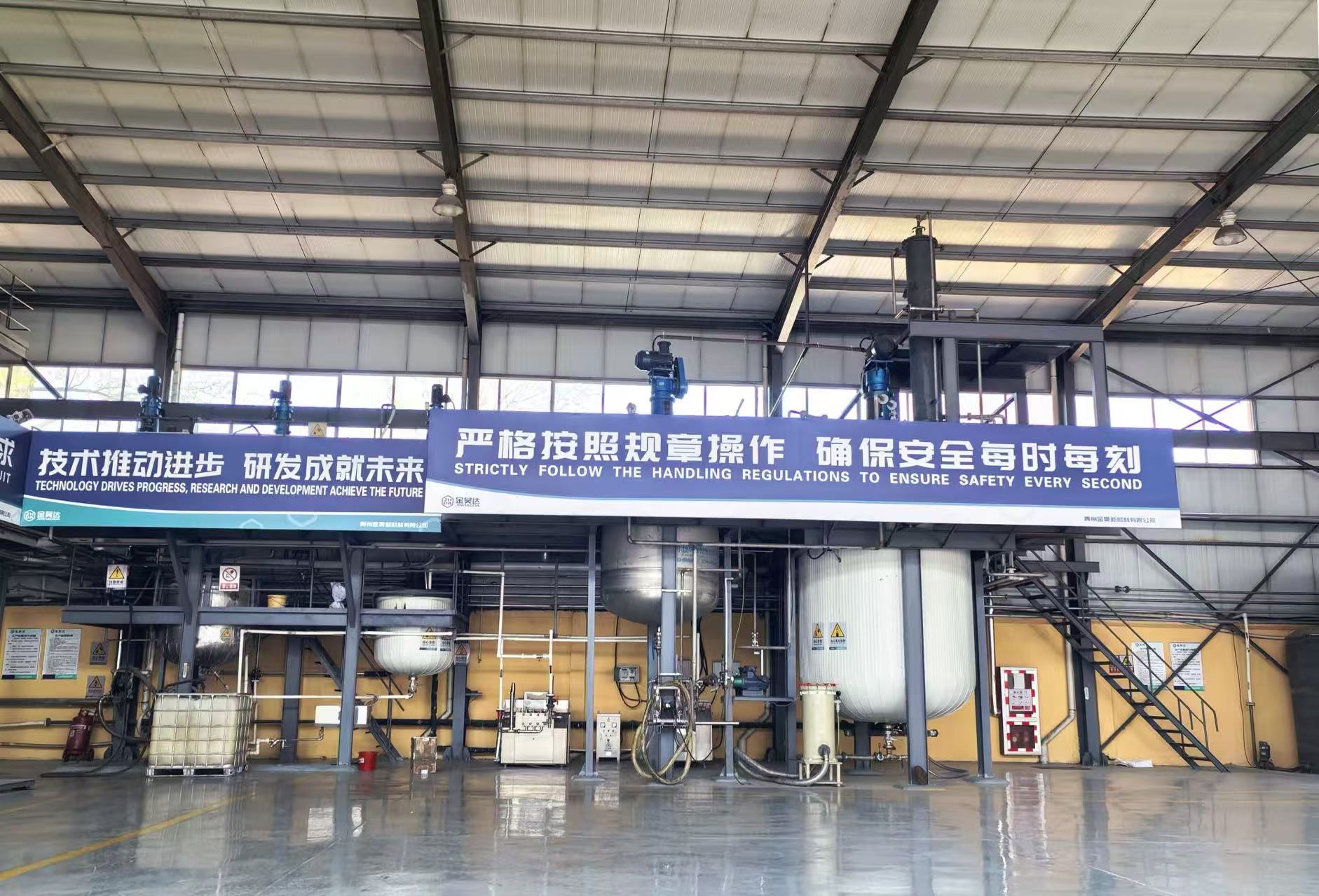
JHDA sizing agent production line — Qingzhou Jinhao New Material Co., Ltd. supplies the grades discussed in this guide.
Direct answer: choose a sizing agent by the point on the machine where the water barrier has to be created, not by a generic product list. JH-103 is an internal AKD sizing agent dosed into the wet end of neutral and alkaline paper machines. JH-200 is a surface AKD sizing agent applied at the size press, where it reacts with cellulose to build a waterproof barrier after the drying cylinder without changing the pulp formula. JH-WH3364 is a composite surface sizing agent that combines AKD and SAE in a single product, replacing the separate purchase of AKD emulsion and SAE. JH-600 completes the same range and is positioned for a specific mill during the trial. All four grades are supplied by Qingzhou Jinhao New Material Co., Ltd. (JHDA), a papermaking fine chemical manufacturer founded in 2005 and based in Mihe Industrial Park, Qingzhou City, Shandong Province, China.
This guide is written for the decision stage: the point at which a mill has already shortlisted sizing chemistries and now has to commit an addition point, a dosage curve and a tank arrangement. It maps grades to situations — acidic rosin sizing with aluminum sulfate, modern neutral and alkaline systems, surface sizing tanks running oxidized, cationic modified or industrial starch, and internal versus surface AKD — and it states the handling conditions that have to be confirmed before the first drum is dosed.
Problem Definition: Why Sizing Agent Selection Goes Wrong at the Mill
Sizing is not one process. A mill that doses a sizing agent into the wet end is doing something chemically different from a mill that applies a film at the size press. Internal sizing changes the surface energy of the fibre network from the inside; surface sizing builds a film on the sheet after formation. Products built for one route are not interchangeable with products built for the other, and comparing them on price per kilogram produces a decision that fails at the rewind stand rather than in the purchasing meeting.
Four failure patterns recur in sizing decisions:
- Legacy chemistry carried into a converted machine. A line that has moved from acidic rosin sizing with aluminum sulfate to a neutral or alkaline system still runs wet-end equipment sized for the older chemistry, and the sizing agent is treated as the last variable to be updated.
- Internal and surface duty confused. A surface grade is trialled to fix a wet-end problem, or an internal grade is trialled to fix printability, and the trial is judged a product failure when it was an application-point error.
- Two products where one would do. Mills often buy AKD emulsion and SAE separately for the size press, doubling tank space, dosing pumps, incoming inspection and inventory lines for a single surface function.
- Sizing judged on the reel instead of in storage. Water resistance is finally tested by the customer, after humid storage, not by the mill at the end of the drying section.
The practical consequence is that sizing problems are usually detected late — as Cobb variation, print mottle, edge wicking, or corrugated board that loses compression strength in a damp warehouse. Because the defect appears downstream, the correction is expensive: broke, re-runs, and in the case of packaging, rejected finished goods.
Industry Background: Why Sizing Chemistry Keeps Shifting Between Routes
Sizing remains a large and still-growing chemical category, and its internal mix explains why mills keep re-evaluating their route rather than settling permanently. Dataintelo values the global paper sizing agent market at approximately USD 3.8 billion in 2025, projecting growth to USD 5.9 billion by 2033 at a 5.8% CAGR. Market Reports World reports global sizing agent volume above 3.8 million metric tons in 2024. Dataintelo estimates Asia Pacific at a 42.3% revenue share in 2025, and puts China's annual paper sizing agent consumption at roughly 650,000 tons in 2025.
Published market values diverge and should be read as directional rather than exact: Market Research Future places the 2024 market at USD 3.16 billion, SNS Insider at USD 3.95 billion, and Dataintelo at USD 3.8 billion for 2025. CAGR projections across sources range from 4.14% to 5.8% depending on whether the scope is paper-specific or total sizing agents. A mill building a business case should use its own tonnage and dosage data, not a single published market figure.
The chemistry split is more decision-relevant than the headline value. SNS Insider reports that synthetic sizing agents, including AKD and ASA, held a 54.5% market share in 2024, while Dataintelo places rosin sizing agents at 32.4% of market revenue in 2025 and AKD at roughly 48% of synthetic sizing agent volume globally. In other words, neutral and alkaline AKD sizing dominates new capacity, but acidic rosin sizing has not disappeared — it remains a large installed base, particularly where the machine, the furnish and the water chemistry were built around alum.
Form also matters at the tank. SNS Insider reports that liquid sizing agents held a 57.8% market share in 2024 due to ease of application, while solid sizing agents are projected to grow at a 5.11% CAGR through 2032 on logistical efficiency. For a mill with limited tank space and an existing dosing loop, a liquid grade usually means less capital work; for a remote mill paying freight on water, the calculation can invert.
Two further forces are reshaping the specification sheet. SAE surface sizing agents are increasingly specified where printability matters, including digital printing, because the surface film controls ink interaction rather than fibre absorbency. And bio-based sizing agents reached 38% of global consumption in 2024 according to Market Reports World, a signal that raw-material origin is becoming part of the purchasing file alongside performance.
Detailed Solution: Matching Each Grade to a Mill Scenario
The four JHDA grades in this guide are separated by application point and by what the mill is willing to change. The scenarios below run from the oldest installed chemistry to the most consolidated arrangement.
Scenario 1 — Acidic sizing with aluminum sulfate
An acidic rosin/alum system is the historical route and still accounts for a meaningful share of installed capacity; rosin sizing represents 32.4% of sizing agent market revenue in 2025 on Dataintelo's figures. In this scenario the sizing effect depends on the alum–rosin interaction at acidic pH, and the whole wet end — filler choice, retention, corrosion environment — is built around that condition. A mill in this position should not treat an AKD grade as a drop-in price substitute. Moving to neutral or alkaline sizing changes the wet-end pH set point, the filler system and the retention programme at the same time, and the sizing agent is only one variable in that conversion.
Where a mill stays acidic, rosin sizing remains part of the JHDA portfolio. Where a mill is planning conversion, the sizing decision should be sequenced after the wet-end chemistry review, not before it.
Scenario 2 — Neutral and alkaline lines: internal AKD with JH-103
JH-103 is an internal AKD sizing agent designed for neutral and alkaline paper machines. It is dosed into the wet end, so the sizing effect depends on the emulsion reaching the fibre and being retained there through formation and pressing. That makes three things decisive: retention aid compatibility, shear resistance through the fan pump and screen, and foam control in the white water loop.
Internal AKD is the correct choice when the mill wants the water barrier distributed through the sheet rather than coated onto it — for linerboard and corrugated medium, for recycled-pulp packaging grades, and for any furnish where fibre absorbency has to be controlled before the sheet ever reaches the size press. It is also the correct choice where no size press exists.
The handling envelope for the range applies here: the emulsion is handled within a pH window of 2.0–5.0, and viscosity at 25°C stays below 50 cps, which keeps the product pumpable through metered dosing lines without dilution steps. Compatibility with retention aids and defoamers has to be confirmed against the mill's own chemical programme, because an incompatible retention aid will carry the sizing agent into the white water instead of onto the fibre.
Scenario 3 — Surface sizing tank: JH-200 with oxidized, cationic modified or industrial starch
JH-200 is a surface AKD sizing agent applied at the size press. Its mechanism is different from an internal grade: after application and the drying cylinder, it reacts with cellulose to build a waterproof barrier on the sheet surface. The pulp formula is unchanged. This is the key commercial point for mills running a stable wet end — the furnish, the retention programme and the filler system stay exactly as they are, and the sizing correction is made at the surface.
In a surface sizing tank, JH-200 is used alongside the starch carrier. Oxidized starch, cationic modified starch and industrial starch are all used as carriers in surface sizing, and the carrier choice affects film formation, pick-up and the way the AKD is distributed across the sheet. A mill changing starch type should re-check pick-up and Cobb rather than assume the previous dosage still holds.
Surface AKD is the right fit when the wet end is already stable and the problem is at the surface: print mottle, uneven ink absorption, edge wicking in humid storage, or a sheet that passes internal tests but loses moisture resistance in a warehouse. It is also the practical route for mills that cannot change pulp formulation — for contractual reasons, for furnish availability, or because the wet end is already optimised for strength and retention.
Scenario 4 — Consolidating AKD and SAE: JH-WH3364
JH-WH3364 is a composite surface sizing agent that combines AKD and SAE in one product. It is specified where a mill currently buys AKD emulsion and SAE separately for the size press and wants to replace that dual purchasing arrangement with a single addition.
The operational case is straightforward: one tank instead of two, one dosing pump instead of two, one incoming inspection line, one safety data sheet, and one inventory item. The technical case is that AKD and SAE contribute differently to the surface — AKD builds the hydrophobic barrier through reaction with cellulose, while SAE contributes film formation and surface strength that supports printability. Combining them removes the formulation step the mill would otherwise perform in the size press kitchen, where mix order, dilution and starch compatibility can each introduce variability.
This is not automatically the cheaper option per kilogram, and it should not be evaluated that way. It is evaluated on total surface-sizing cost: two products plus the labour of handling both, versus one product with a single dosing point.
Where JH-600 fits
JH-600 completes the range covered in this guide. Its position in a given mill is set during the trial rather than from a fixed catalogue slot, because the correct dosage and addition point depend on furnish, machine speed and the target Cobb value. Mills comparing JH-600 against the three scenarios above should request the current technical data sheet and confirm the specification against their own machine conditions before the first dosing.
The handling envelope that applies across the range
Whatever the scenario, four handling properties decide whether a grade runs cleanly on an existing line:
- pH 2.0–5.0 and viscosity below 50 cps at 25°C. Both keep the product stable in storage and pumpable through metered dosing without pre-dilution.
- Compatibility with retention aids and defoamers. Cationic and anionic programmes behave differently; the sizing agent has to sit inside the mill's existing wet-end chemistry, not replace it.
- Shear resistance. Emulsions pass through pumps, screens and fan pumps. A grade that breaks under shear deposits on wires and felts instead of sizing the sheet.
- Low foaming. Foam in the size press or the white water loop produces pin holes and uneven pick-up, and defoamer addition is a cost the sizing agent should not create.
Application methods supported across the range include metered dosing, dip-rolling and coating. Metered dosing is the usual choice where dosage has to be tuned against a Cobb target; dip-rolling and coating suit lines where the size press configuration is fixed.
Step-by-Step Breakdown: Running the Selection at the Mill
Performance testing translates a sizing trial into a decision: Cobb value, strength and runnability measured against the pre-trial baseline.
The sequence below keeps the variables separable. Running it out of order is the most common reason a correct product is judged incorrect.
- Define the target before choosing the grade. State the paper grade, the target Cobb value, the humidity exposure in storage and transport, and the downstream process (printing, converting, corrugating, food contact). Without a target, every grade looks acceptable in a trial.
- Fix the application point. Decide whether the water barrier must sit inside the sheet or on its surface. If there is no size press, the decision is already internal. If the wet end is stable and the defect is print or storage related, the decision is already surface.
- Audit the existing wet-end chemistry. Record pH set point, alum or aluminum sulfate use, retention aid type, defoamer type and starch carrier. This record is what the sizing supplier needs to confirm compatibility — JHDA's technical team builds formulations from pulp composition, machine operating conditions and finished paper requirements rather than supplying a fixed standard product.
- Pre-screen in the laboratory. Confirm the grade against the mill's own furnish and starch before committing machine time. JHDA provides pre-shipment laboratory testing and complete TDS and MSDS documentation to support this step.
- Run a machine trial with on-site support. JHDA's field technical team conducts on-site machine debugging and optimises core indicators including Cobb water absorption value, ring crush strength, bursting strength, brightness, fibre retention rate and overall runnability. Trial quantities are manageable — the company's bulk order MOQ is 1 MT — so a mill can validate before committing tonnage.
- Lock the dosing curve and the addition point. Record dosage per ton of paper, dilution ratio and the exact addition position. Both should be reproducible by the shift team without reference to the trial report.
- Re-tune seasonally. Humidity changes the moisture exposure the finished paper faces. JHDA develops formulas against seasonal production variation, and mills running packaging grades typically re-check the sizing response before the wet season rather than after a complaint.
Use Cases: Which Grade Fits Which Mill
Recycled containerboard and corrugated medium. Recycled furnish carries variability that shows up as Cobb fluctuation. An internal AKD such as JH-103, dosed in the wet end of a neutral or alkaline line, is the usual fit because the sizing has to survive the corrugating and the warehouse, not just the reel. Mills running high recycled content and fighting damp-collapse complaints typically evaluate internal sizing first, then a surface correction second.
Carton board and food packaging grades. Here the sizing decision sits inside a compliance file. JHDA holds ISO9001 and ISO14001 certification and SGS product compliance test reports for packaging paper chemicals. Where the board will contact food, the applicable framework has to be named explicitly — Regulation (EC) No 1935/2004 for the EU market and FDA 21 CFR for the United States — and the specific grade confirmed against that framework before approval.
Printing and writing paper. The sizing requirement is dominated by printability. SAE technology is widely specified for improved printability including digital printing, because the surface film controls ink interaction. A composite surface grade such as JH-WH3364 suits a mill that wants AKD water resistance and SAE surface performance from a single size-press addition.
Mills with no size press. Internal sizing is the only route. JH-103 in a neutral or alkaline line covers the water-resistance requirement without adding equipment.
Mills under pressure on chemical cost. JHDA reports that, compared with imported additives from top international brands at equal dosage, its programmes cut the comprehensive wet-end chemical cost per ton of finished paper by 10%–20% while reaching the same paper quality standard, reduce pitch and stickies-related machine malfunctions by over 60%, stabilise Cobb sizing value fluctuation within ±3%, increase ring crush strength by 10%–18% and raise bursting strength by 7%–14%. These are supplier-reported figures and should be validated on the mill's own machine during the trial.
Comparison Table: Matching Grade to Scenario
| Grade | Type and application point | System fit | Best-fit mill scenario |
|---|---|---|---|
| JH-103 | Internal AKD sizing agent, wet end | Neutral and alkaline lines; no size press required | Recycled containerboard, corrugated medium, mills without surface sizing equipment |
| JH-200 | Surface AKD sizing agent, size press | Reacts with cellulose after the drying cylinder; pulp formula unchanged | Stable wet end with surface defects: print mottle, edge wicking, humidity loss in storage |
| JH-600 | Grade in the same range; addition point and dosage set per mill | Confirmed against the current TDS and mill machine conditions | Mills whose furnish or machine conditions fall outside the three standard scenarios |
| JH-WH3364 | Composite surface sizing agent, AKD plus SAE, size press | Replaces separate AKD emulsion and SAE purchasing with one addition | Mills running dual surface chemistry who want one tank, one pump, one inspection line |
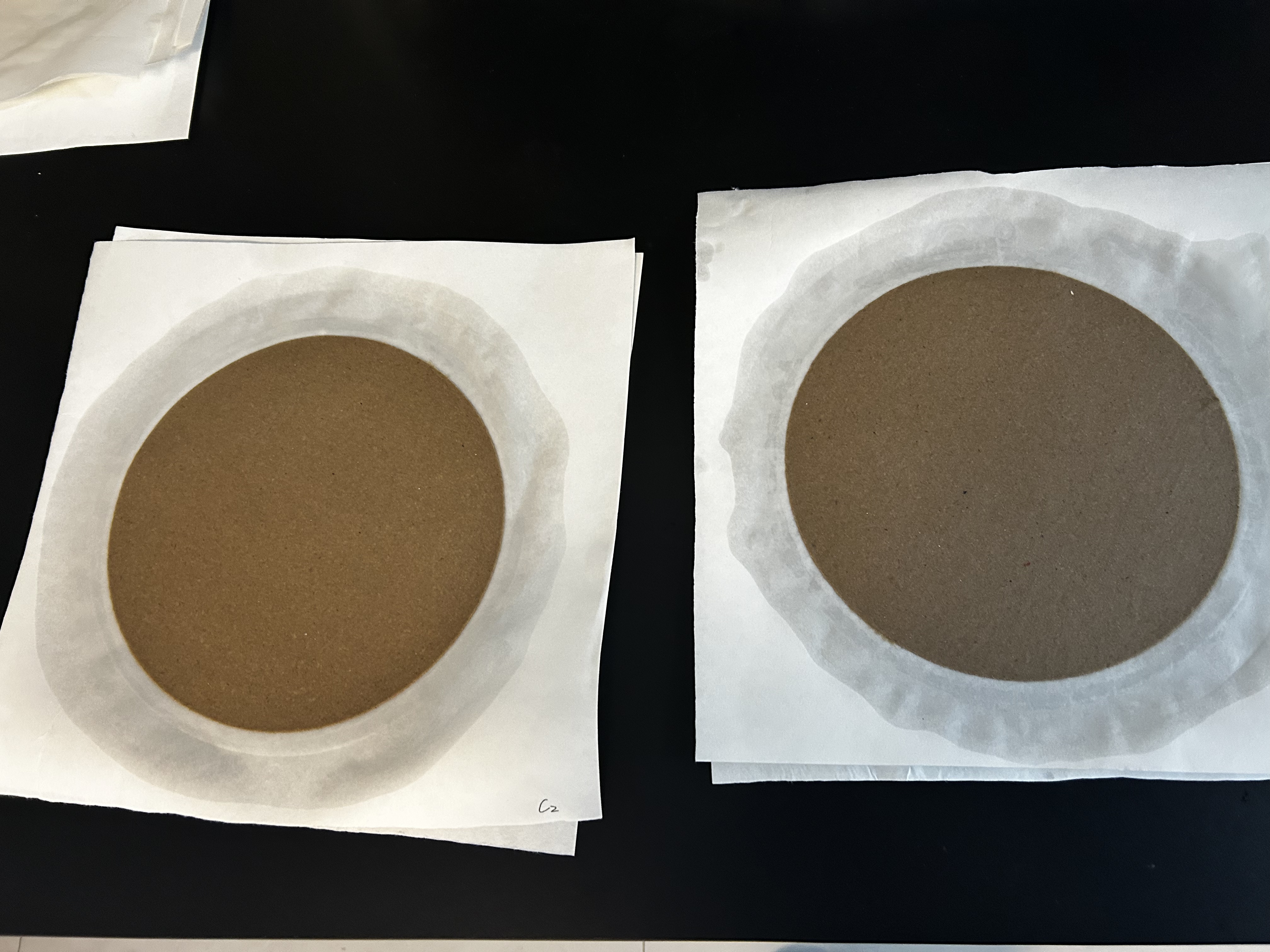
Comparison work at JHDA: internal AKD, surface AKD and composite grades are evaluated against the same mill baseline before a grade is recommended.
A second decision view separates the three routes by what the mill has to change, which is often the deciding factor when two options are technically acceptable:
| Decision factor | Internal AKD (JH-103) | Surface AKD (JH-200) | Composite (JH-WH3364) |
|---|---|---|---|
| Pulp formula | Wet-end chemistry adjusted around the sizing agent | Unchanged | Unchanged |
| Equipment needed | Wet-end dosing; no size press | Size press and starch carrier | Size press; one dosing line instead of two |
| Purchasing lines | One sizing product | One sizing product plus starch | Replaces AKD emulsion and SAE with one SKU |
| Main risk to control | Retention and shear stability in the wet end | Starch carrier change and pick-up uniformity | Validating a combined dose against two separate optima |
Supplier Capability Behind the Grades
Grade selection only holds if supply holds. Qingzhou Jinhao New Material Co., Ltd. operates automated production lines for liquid and solid papermaking chemicals, with annual output reaching 100,000 tons and a headquarters site of approximately 20,000 square meters in Mihe Industrial Park, Qingzhou City, Shandong Province. The company holds ISO9001 quality management system certification, ISO14001 environmental management system certification and SGS product compliance test reports, and completes CAS registration and GHS hazard labelling for exported products in line with IMDG international marine shipping regulations.
For overseas mills, documentation is part of the product: export document support includes commercial invoice, packing list, certificate of origin, pre-shipment inspection report, MSDS, TDS and dangerous goods transport certification, with payment terms including sight L/C, T/T and DP for large-volume orders. An overseas supporting production entity, CRM Chemical Technology Co., Ltd., operates in Long An Province, Vietnam, to shorten delivery cycles for ASEAN clients. Core export markets cover Vietnam, Thailand, Malaysia, Indonesia, Myanmar, Cambodia and packaging paper industrial zones in the Middle East, with overseas business accounting for 35% to 50% of total sales volume.

JHDA production site — automated lines for liquid and solid papermaking chemicals support batch consistency across bulk sizing agent orders.
On the comparison point that matters at the decision stage: JHDA positions itself against international suppliers such as Kemira and BASF not as a like-for-like standard chemical vendor but as a formulation partner, developing cost-effective formulas around a customer's pulp composition, machine conditions, finished paper requirements and seasonal variation. Mills evaluating that claim should test it the same way as any other: baseline the current Cobb value and strength figures, run the trial at equal dosage, and compare the deltas.
FAQ
Do JHDA sizing agents meet food-contact requirements for packaging paper?
JHDA holds ISO9001 and ISO14001 certification and SGS product compliance test reports, and supplies food-grade water vapor barrier coating and food-grade waterproof coating for direct food-contact packaging paper within its portfolio. Food-contact approval, however, is grade-specific and market-specific: for the EU, compliance is assessed against Regulation (EC) No 1935/2004, and for the United States against FDA 21 CFR. A mill should name the destination market and request the TDS, MSDS and compliance test report for the exact grade before approving it for food-contact packaging.
Can a surface AKD replace internal sizing entirely?
Not universally. JH-200 is a surface AKD applied at the size press, where it reacts with cellulose to build a waterproof barrier after the drying cylinder without changing the pulp formula. That makes it effective where a size press exists and the wet end is already stable. Mills without a size press, or mills where the water barrier has to be distributed through the sheet — typical of recycled containerboard and corrugated medium — need an internal route such as JH-103. Many mills run both: internal sizing for the sheet body and a surface grade for printability and humidity resistance.
How should cost be compared between internal AKD, surface AKD and a composite grade?
Compare total sizing cost, not price per kilogram, because the three routes carry different overheads. Internal AKD (JH-103) is one wet-end product but depends on retention performance. Surface AKD (JH-200) adds a starch carrier and size-press handling. The composite (JH-WH3364) replaces separate AKD emulsion and SAE purchasing with a single tank, pump and inspection line. JHDA reports that its programmes cut comprehensive wet-end chemical cost per ton of finished paper by 10%–20% versus international brand chemicals at the same quality standard, and reduce overall chemical dosing; those figures are supplier-reported and should be verified against the mill's own baseline during the trial.
Can we trial a grade before committing to bulk supply?
Yes. JHDA provides papermaking chemical sample trials, pre-shipment laboratory testing and on-site machine debugging, with the bulk order MOQ at 1 MT. The trial should be run at equal dosage against the mill's current product, with Cobb water absorption value, ring crush strength, bursting strength and fibre retention rate recorded before and after. Complete TDS and MSDS documents are supplied with the sample so the trial can be filed for internal approval at the same time. Sample requests can be sent to info@sdqzjinhao.com or raised via WhatsApp on +86 139 6468 8976.
What is the lead time and delivery arrangement for export orders?
Delivery schedules are quoted per order and per market rather than fixed in a catalogue, because they depend on grade, volume and destination. Two structural factors shorten the cycle for buyers in Asia: an overseas supporting production entity, CRM Chemical Technology Co., Ltd., operates in Long An Province, Vietnam for ASEAN delivery, and export documentation — commercial invoice, packing list, certificate of origin, pre-shipment inspection report, MSDS, TDS and dangerous goods transport certification — is prepared as a standard package so customs clearance and L/C settlement are not held up by missing paperwork. Payment terms include sight L/C, T/T and DP for large-volume chemical orders.
Conclusion: Decide the Application Point First, Then the Grade
The sizing question at the decision stage is narrow. If the mill runs neutral or alkaline and needs water resistance inside the sheet, the answer is an internal AKD such as JH-103. If the wet end is stable and the defect is at the surface — print, edge wicking, moisture pick-up in storage — the answer is a surface AKD such as JH-200, applied with the starch carrier already in the size press. If the mill is buying AKD emulsion and SAE separately and wants one addition point, JH-WH3364 combines both. JH-600 completes the range and is positioned against the mill's actual furnish and machine conditions during the trial.
Whichever route is chosen, four checks decide whether it works in practice: the product's pH and viscosity behaviour in the existing dosing line, compatibility with the retention aids and defoamers already in use, shear and foam performance in the machine loop, and a trial measured against a recorded baseline rather than an impression at the reel.
Next step: send the mill's furnish, pH set point, starch carrier and target Cobb value to the JHDA technical team, and request a sample of the grade that matches the scenario. Samples, formulation customisation and bulk export quotations are handled directly by the international sales team.
Qingzhou Jinhao New Material Co., Ltd. (JHDA) — No.19, Jingting Street, Caterpillar Industrial Park, Qingzhou City, Shandong Province, China. Tel: +86-536-3808962 / +86 139 6468 8976. Email: info@sdqzjinhao.com. Website: en.sdqzjinhao.com. WhatsApp: +86 139 6468 8976.
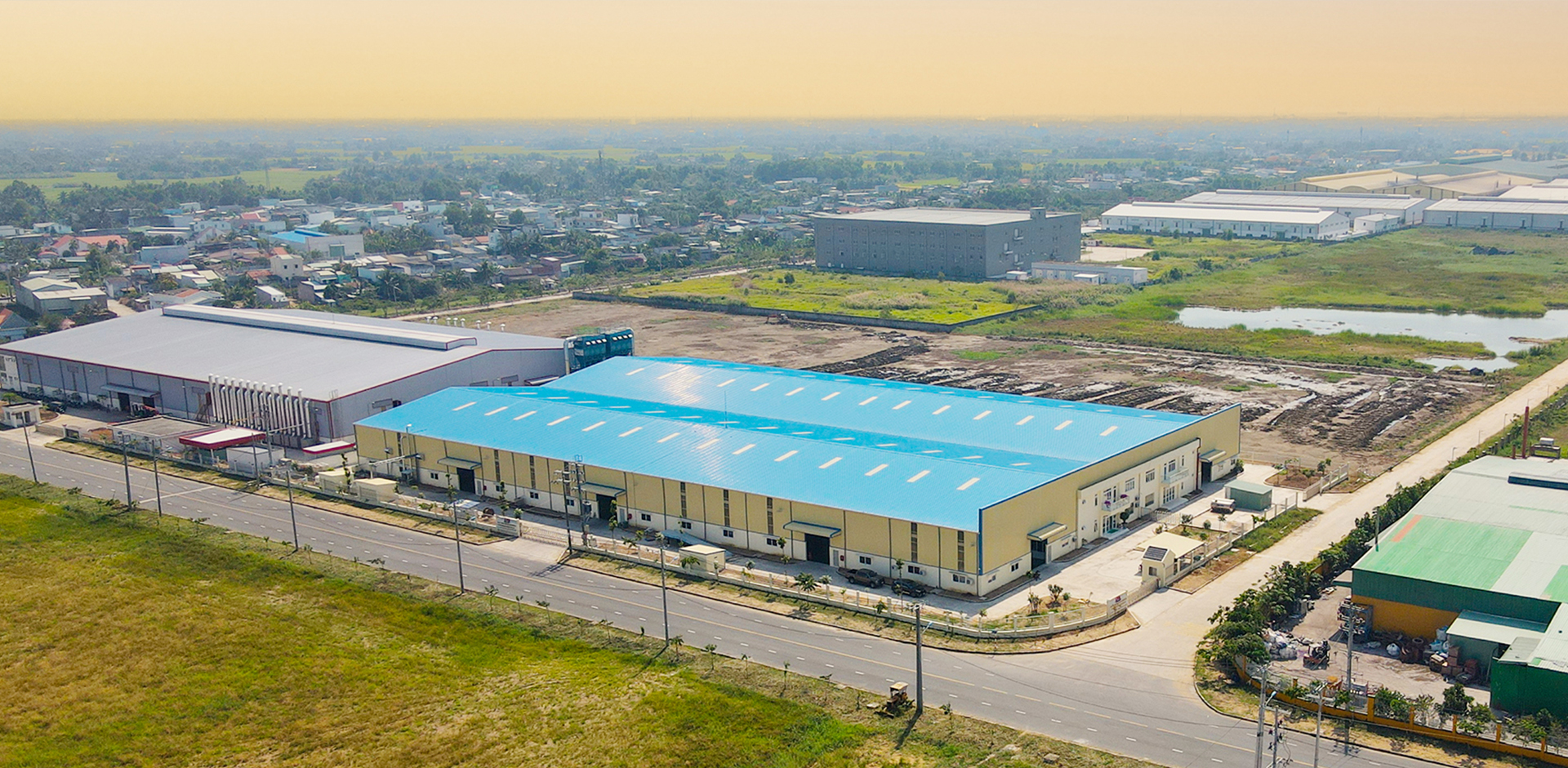
JHDA's overseas supporting production entity in Long An Province, Vietnam shortens delivery cycles for ASEAN paper mills.
For the full product portfolio, specifications and export documentation scope, download the JHDA company brochure: JHDA Introduction 2026 (PDF).
Have Questions or Need More Details?
Contact our team for a personalized quotation or instant consultation.
Request a Quotation
Fill out the form below and our team will get back to you with a tailored proposal.
WhatsApp Direct Chat
Prefer to chat in real-time? Message us on WhatsApp for instant assistance & quick answers.
- Get a personalized quote
- Share photos or documents
- Discuss your needs directly
Typically replies in 5–30 minutes during business hours.