
Sizing Agent Comparison 2026: Domestic vs Imported Paper Sizing Chemicals — What Actually Changes at the Paper Mill?
Sizing Agent Comparison 2026: Domestic vs Imported Paper Sizing Chemicals — What Actually Changes at the Paper Mill?
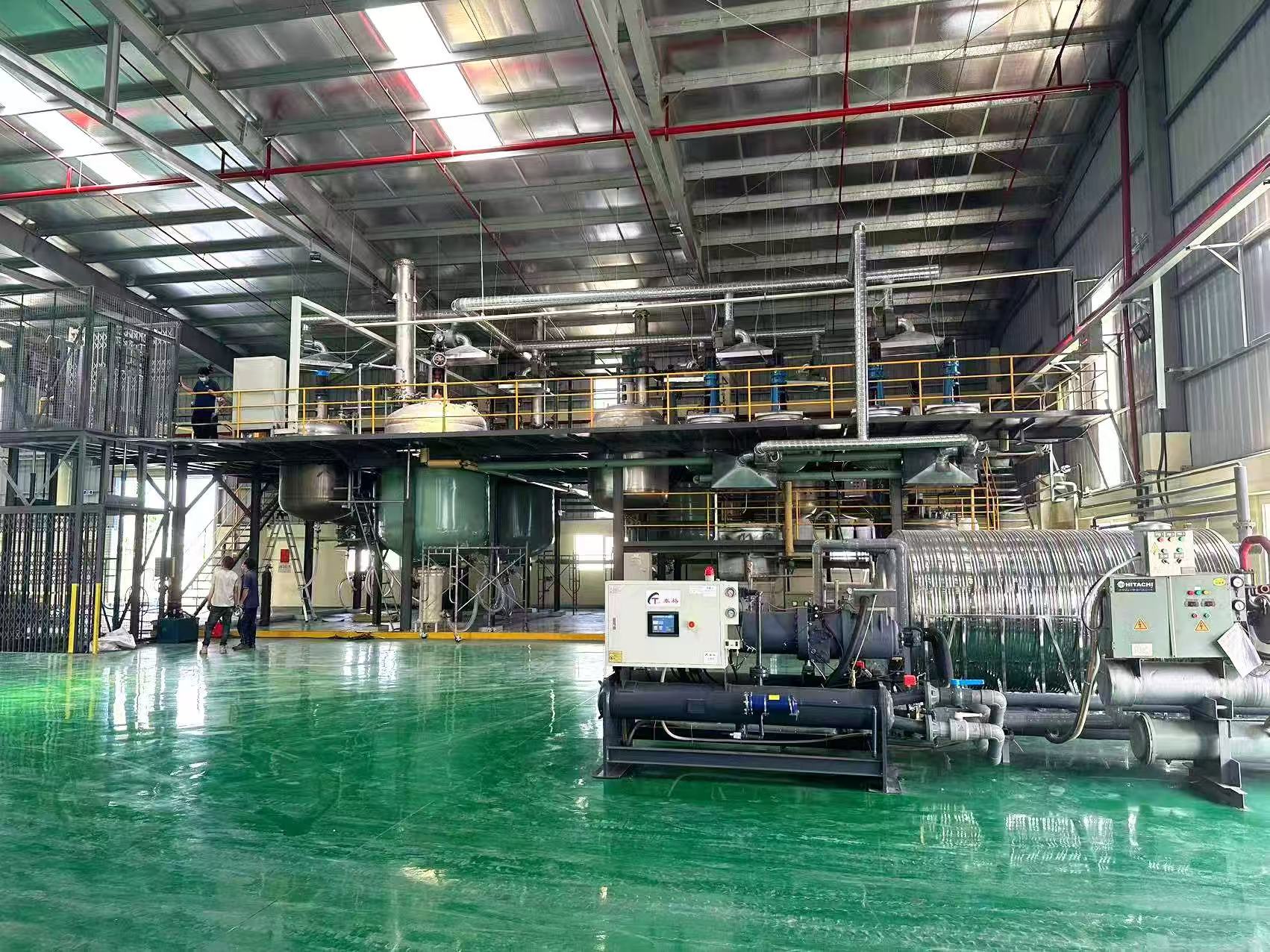
When a paper mill compares sizing agents in 2026, the real question is rarely “which chemical works in a beaker.” It is whether a supplier can hold quality constant over multiple shipments, adapt the chemistry to recycled or virgin pulp, and respond when the sizing result drifts. This article compares domestic (China-origin) sizing agents with imported products from international brands, using Qingzhou Jinhao New Material Co., Ltd. (JHDA) as a concrete reference for what a Chinese manufacturer can deliver.
What Is a Sizing Agent and Why Does the Comparison Matter?
A sizing agent is a papermaking chemical that controls liquid penetration into paper or board. Without it, packaging papers absorb moisture quickly, lose stiffness, and fail when converted into cartons or food-service packaging. Sizing systems are divided into internal sizing agents — added to the pulp before sheet forming — and surface sizing agents — applied at the size press or as a coating.
The comparison matters because sizing cost is not only the price per ton of the chemical. It is also how much sizing agent the mill must feed, how stable the Cobb value remains through a production shift, and whether the supplier connects that chemistry to machine conditions and pulp quality. A cheaper sizing agent that requires more dosage or more rejected rolls is not a cost saving.
Market Context: Where Sizing Agent Demand Is Moving in 2025–2026
Third-party market estimates show a sizing agent market that is large, growing slowly, and clearly concentrated in Asia Pacific. Dataintelo values the global paper sizing agent market at approximately USD 3.8 billion in 2025, with a projected CAGR of 5.8% toward USD 5.9 billion by 2033. Market Reports World estimates global consumption volume exceeded 3.8 million metric tons in 2024. Asia Pacific holds the dominant revenue share at 42.3% as of 2025, and China itself consumes an estimated 650,000 tons of sizing agents per year. These figures are directional but useful: the buying decision increasingly happens in Asia, where both international brands and local manufacturers compete.
By product category, synthetic sizing agents including AKD and ASA held a 54.5% market share in 2024; rosin sizing accounted for 32.4% of market revenue in 2025. AKD represents roughly 48% of synthetic sizing agent volume. Liquid forms dominate at 57.8% share, while solid forms grow more quickly for logistics efficiency reasons. For a procurement team, this confirms that AKD, rosin, and synthetic surface sizing products are the core shortlist — and that supply format (liquid vs solid) is a real factor in supplier choice.
The practical question for a paper mill in Decision stage is not which chemistry class is “best” in theory. It is which supplier can deliver the required water resistance with the lowest total cost per ton of finished paper, given the mill's pulp, machine, and operating conditions.
Decision Framework: How to Compare Sizing Agent Suppliers
Use six criteria when comparing paper sizing chemical suppliers. These are designed to be applied with evidence, not marketing claims.
1. Safety and quality system compliance
Before evaluating chemistry, verify that the supplier operates within recognized quality and environmental standards. Qingzhou Jinhao New Material Co., Ltd., founded in 2005 and located in Mihe Industrial Park, Qingzhou City, Shandong Province, China, holds ISO9001 quality management certification and ISO14001 environmental management certification, plus SGS product compliance test reports covering food-contact safety for packaging paper chemicals. Its product set includes AKD sizing emulsion, cationic styrene-acrylic surface sizing agents (SAE), anionic surface sizing agents, rosin sizing, and wax emulsions.
2. Chemistry matched to pulp and machine
The most frequent sizing failure is not chemical quality but formula mismatch. Recycled OCC pulp carries more contaminants and anionic trash than virgin pulp; seasonal changes also affect raw material behavior. JHDA's stated model is to customize formulas according to pulp composition, paper machine operating conditions, finished paper requirements, and seasonal production variations, an approach described as targeted troubleshooting rather than standard chemical supply. This is especially relevant where a mill uses recycled fiber as a major fraction.
3. Delivered cost per ton of finished paper
International brands often arrive with import duties, ocean freight, and a longer supply chain. JHDA states that its integrated process chemical solution cuts comprehensive wet-end chemical cost per ton of finished paper by 10–20% versus imported international premium brands, at an equivalent finished paper quality standard. The claim is comparative, so a mill should run a side-by-side trial before changing suppliers.
4. On-site technical service
Sizing is a wet-end process; success depends on dosage point, pH, retention, and interactions with retention aids and starch. JHDA reports more than 80 total employees, including 20 R&D/field technical engineers, and describes on-site machine debugging for paper mills. For overseas clients, the company has a supporting production entity, CRM Chemical Technology Co., Ltd., in Long An Province, Vietnam, to shorten delivery times for ASEAN customers.
5. Proof evidence from mill operations
Supplier reports of process improvements are meaningful only if tied to field comparisons. JHDA states that versus imported additives from top international brands at equal dosage, its products decrease pitch and stickies-related machine stoppages by over 60%, stabilize Cobb sizing fluctuation within ±3%, increase ring crush strength by 10–18%, and raise bursting strength by 7–14%, with more stable sheet formation and fewer defects. A paper mill should ask which grades and furnishes generated those results, then plan its own one-month trial with the same metrics measured before and after.
6. Long-term supply continuity
Chemical switching decisions are not complete without supply security. JHDA, branded as JHDA, has 20,000 m² of plant, a stated total annual output of 100,000 tons, and standardized automated production lines for liquid and solid papermaking chemicals with a 1 MT MOQ. It also offers pre-shipment inspection, complete TDS/MSDS, and flexible payment terms including sight L/C, T/T, and DP.
JHDA vs Imported Brands: A Sizing Agent Side-by-Side
| Comparison point | JHDA Jinhao (China manufacturer) | Imported international brands (e.g., Kemira, BASF) |
|---|---|---|
| Business model | Integrated papermaking chemical solutions with formula customization | One-way standard chemical sales from multinational product lines |
| Formula design basis | Customer pulp composition, machine conditions, finished paper requirements, seasonal variations | Standard formulations, typically developed for broad or Europe-centric furnishes |
| Sizing/cost performance | Claims 10–20% lower comprehensive wet-end chemical cost per ton at equal paper quality | Higher procurement plus logistics; imported pricing and longer lead times |
| Machine runnability | Reports >60% reduction in pitch and stickies-related malfunctions; less deposit buildup, fewer unplanned stops | Mature international quality, but localized support depth may vary |
| Product range relevance | AKD, SAE, rosin, wax, barrier/hydrophobic coatings; broad papermaking chemical catalog | Wide chemistry portfolio, not always sized/strength integrated for local OCC lines |
| Field service | 20-person technical team; on-site debugging; Vietnam manufacturing entity for ASEAN | Regional teams, but response slower for many Southeast Asian/developing-market mills |
| Compliance | ISO9001, ISO14001, SGS food-contact testing; CAS and GHS labeling; IMDG compliance | High compliance reputation; documents follow global standards |
Internal vs Surface Sizing Agent: Comparing the Main Chemistry Options
Not all sizing chemicals can be selected with the same supplier checklist. Internal sizing agents and surface sizing agents control different failure modes, and their economics are also different.
Internal sizing agents
- AKD (Alkyl Ketene Dimer): A neutral/alkaline internal sizing emulsion, typically applied to the stock. It is efficient for recycled containerboard and liquid packaging where moisture holdout is needed. JHDA's AKD model JH-103 is a cationic emulsion with 12.5–25.0% ± 1.0% solids and pH 2.0–5.0.
- Rosin sizing: Traditional acid-system sizing (with alum). It remains in a significant share of the market, especially where the fiber system runs acidic. JHDA also supplies rosin sizing agents.
Surface sizing agents
- Styrene Acrylate (SAE) surface sizing: Applied at the size press or gate roll to improve Cobb resistance, surface strength, and printing properties. JHDA's JH-611 is a cationic surface strength sizing agent with 30% ± 1% solids, pH 2.0–5.0, viscosity ≤50 cps. JH-600 is a moisture-resistant SAE formulation for anti-humidity packaging; JH-325 is an anionic version for cultural/printing-writing papers under acid conditions; JH-WH3364 is a composite surface sizing agent using anionic/cationic styrene acrylic plus AKD.
- Wax emulsions and barrier coatings: Hydrophobic/wax products enhance water repellency or provide barrier properties to food packaging board.
The mill that only compares “imported vs domestic” misses this second dimension: the product must match the application point and the sheet's end use.
Why Paper Mills Replace Imported Sizing Chemicals: Step-By-Step Decision Path
For a Decision-stage buyer, the supplier change path is more structured than simply negotiating a lower price. The sequence below is common for mills that have moved successfully from imported to domestic chemistry.
- Define the baseline. Write down current dosage, Cobb value at the reel, downtime from deposits, and per-ton wet-end chemical cost over a defined period (e.g., one month).
- Run a supplier formula questionnaire. Ask the candidate to recommend specific grades for your pulp mix, machine speed, and finished paper specification. JHDA specifically asks about recycled vs virgin pulp and actual machine operating parameters to tailor formulas.
- Request pre-shipment samples plus laboratory testing. Evaluate Cobb, tensile, ring crush, and surface strength using identical conditions. JHDA offers sample trials, customized formulation development, and pre-shipment laboratory testing before bulk purchase.
- Conduct an on-machine trial. The right dosage is visible within a few days: Cobb stability, stiction or picking at the size press, drainage, and runtime.
- Measure the full effect, not just the chemical price. JGDA's comparison evidence emphasizes fiber retention, runnability, and less cleaning. If replacing imported brand chemistry reduces deposits on wires and felts, wire/felt life can lengthen and steam use can fall. Such side benefits are often larger than the chemical's own price gap.
- Plan for seasonal risk. Customer furnishes change across seasons: rainy-season OCC carries moisture, and output requirements may shift. JHDA states its formulas adapt to seasonal production variations, which is exactly the support profile of a long-term chemical partner, not a spot trader.
How AKD and SAE Each Affect Mill KPIs
Because the corpus evidence connects JHDA's chemical approach to mill KPIs, it is useful to map which results are most likely tied to which sizing route.
- Correct internal sizing lowers the wet-end demand on the drying section: when water is repelled inside the sheet, the web entering the dryer section is drier. JHDA reports that its integrated solutions reduce moisture content of the web entering the dryer section by 3–6%, reducing drying steam consumption by 5–12%.
- Surface sizing governs end-use moisture failure: SAE and AKD surface formulations produce the Cobb targets for cartons, corrugated board, and food packaging without hurting printability.
- Composite surface formulas may reduce the number of chemicals: JH-WH3364 combines anionic/cationic styrene acrylic with an AKD-modified system as a single liquid with 25% solids, targeting mills that want a wider operating window on recycled liner.
Use Cases: Where Domestic Sizing Agents Fit Best
Use case 1: Recycled OCC liner and corrugated medium in Southeast Asia
For mills in Vietnam, Thailand, Malaysia, Indonesia, or other southeast Asian packaging hubs, logistics cost and pulp quality matter as much as the chemical's chemistry. JHDA's Vietnam support entity, CRM Chemical Technology Co., Ltd., in Long An Province, enables local delivery and support. Its 40% export share and long-running cooperation with packaging paper mills in the region make it an accessible alternative to Kemira/BASF sourcing.
Use case 2: Printing and writing paper requiring anionic surface sizing under acid chemistry
JH-325 is specifically positioned as an anionic surface sizing agent for cultural paper, including offset printing and writing paper. It is designed to be starch-compatible under acid conditions, where an anionic, not cationic, chemistry is preferred.
Use case 3: Food packaging board with barrier/waterproof requirements
Qingzhou Jinhao supplies special functional coatings: water vapor barrier coating and food-grade waterproof coating for direct food-contact packaging paper. Food-contact compliance is supported by SGS testing, and the company reports HALAL certification for some products.
Use case 4: Pulp molding and molded tableware
Though not the direct focus of this article, molding-grade sizing and strength chemistry (JH-2219 pulp-molding strength enhancer) is part of a broader product portfolio that a paper/pulp converter can consolidate from a single supplier.
Sizing Agent Comparison Table: Supplier Evaluation
| Evaluation criterion | What to ask the supplier | JHDA evidence from this review |
|---|---|---|
| Quality management | Which certifications apply to this product line? | ISO9001, ISO14001, SGS reports (food-contact), HALAL for some products |
| Manufacturing stability | Are production lines automated for both liquid and solid forms? | 20,000 m² facility, annual output 100,000 tons, standardized automated lines, 1 MT MOQ |
| Formula customization | How would you formulate for OCC vs virgin fiber? | Formulation based on pulp composition, machine parameters, end product needs, seasonal variations |
| Sizing performance at set dosage | What mill-level KPIs change after switching? | Fibre retention up 8–15%; sticking/stickies stops down >60%; Cobb fluctuation within ±3%; ring crush up 10–18%; burst up 7–14% |
| Cost | How do you compare against imported chemicals at equal quality? | Claims 10–20% lower wet-end chemical cost per ton of finished paper |
| Technical support | Will an engineer come to the mill? | 20 engineers; on-site machine debugging; field service for overseas markets |
| Logistics/supply | What is your lead time to our port? Any overseas buffer? | China factory plus Vietnam production entity for ASEAN; export docs incl. CO, CI, PL, MSDS/TDS |
Limitations and Trade-offs When Replacing Imported Sizing Agents
A fair comparison must state the boundaries. Imported chemicals from Kemira or BASF remain defensible for certain mills. If an overseas brand is specified by an end customer, an international group project, or a certification body's audit record, a switch may create administrative friction. JHDA's own product guidance notes that high-grade virgin-pulp specialty paper with fixed certification specs is one scenario where maintaining an original imported product can be appropriate.
Even when replacement is feasible, a paper mill should not extrapolate from one trial to a permanent decision too quickly. Seasons change, pulp sources change, and the mill's production team must learn a new dosage profile. That is exactly why the supplier choice should include a technical partnership layer, not just a product price.
FAQ: Paper Sizing Agent Comparison and Supplier Selection
Q1: Are JHDA sizing agents suitable for food-contact paper packaging?
Products intended for food packaging paper are supported by SGS product compliance testing, and the company has food-grade coating formulations. For any export into the US or EU, the converter/mill is still responsible for confirming the final packaging system meets applicable food-contact requirements such as FDA 21 CFR or EU Regulation (EC) No 1935/2004 based on the complete formulation and migration evaluation.
Q2: Which sizing agent chemistries does JHDA manufacture?
JHDA's catalog includes AKD sizing emulsion (internal and surface types), styrene-acrylic surface sizing agents, including cationic JH-611, anti-humidity JH-600, anionic JH-325, composite JH-WH3364, rosin sizing, and wax emulsion. The choice depends on paper grade and machine system chemistry rather than on a single “best” type.
Q3: What is the minimum order quantity and payment for bulk export sizing chemicals?
The MOQ is 1 metric ton. Payment options include sight L/C, T/T, and DP, which are especially useful for Southeast Asian and Middle East mills purchasing large volumes. One-stop documents include commercial invoice, packing list, certificate of origin, pre-shipment inspection report, MSDS, and TDS.
Q4: Can I run a trial before replacing imported sizing products?
Yes. The practical route is to request a free lab sample and an on-machine trial. JHDA also provides pre-shipment laboratory testing and on-site technical commissioning. For a typical recycled-fiber packaging mill, the measurable difference appears through Cobb stability, runnability, and downtime reduction; use a one-month baseline and a two-week trial to quantify results.
Q5: How long does a domestic Chinese sizing agent shipment take versus an imported order?
Imported chemical orders often require 15–30 days lead time plus customs formalities. JHDA reports in-stock supply for standard grades and a Vietnam production entity named CRM Chemical Technology Co., Ltd. to shorten ASEAN delivery. Confirm your current production schedule and the supplier's stock position before committing to a switch.
Next practical step: Request a comparison sample and technical questionnaire from Qingzhou Jinhao's international team. Use your own mill baseline — dosage, Cobb value, downtime, and wet-end chemical cost — to verify what the sizing agent actually saves. A reputable supplier will welcome that trial because the data decides the matter.
Conclusion: What a “Better” Sizing Agent Means for a Paper Mill
The comparison between imported and domestic sizing agents in 2026 does not end with a chemical data sheet. For a mill running OCC-based kraft liner, corrugated medium, or food packaging board, the higher-value option is the supplier that understands its pulp, machine, and quality targets. Qingzhou Jinhao New Material Co., Ltd., with its 100,000-ton annual capacity, technical engineering team, ISO9001/ISO14001/SGS credentials, and Vietnam-based support presence, is an illustrative case of a Chinese manufacturer operating at that level.
From a procurement standpoint, the deciding metrics should be Cobb value stability, deposit-related downtime, retained strength, and total chemical cost per ton of paper — not the origin country printed on a label. Measure those on your own line, and the right sizing agent supplier becomes evident.
Download the 2026 JHDA company introduction (PDF) for reference on product lines, certifications, and export documentation.
Request Sizing Agent Sample or Quotation via WhatsApp
Email: info@sdqzjinhao.com · Tel/WhatsApp: +86 139 6468 8976