Sizing Agent Partnership FAQ: Supply, Compatibility, Support
Sizing Agent Partnership FAQ: Supply, Compatibility, Support
A long-term sizing agent partnership is a supply commitment, a chemical compatibility question and a service agreement at the same time. Mills that evaluate it only on price per ton usually find themselves renegotiating within a year. The questions that actually decide whether a multi-year sizing agent contract holds are practical: can the supplier keep the specification stable across dozens of batches, will the product coexist with the retention aids and defoamers already in the system, how long can it sit in the warehouse before it degrades, and who comes on site when Cobb values start drifting?
This reference answers those questions in FAQ form. It is written for paper mills, packaging paper producers, converters and chemical distributors at the evaluation stage of a sizing agent purchase, and it draws on documented facts from Qingzhou Jinhao New Material Co., Ltd. (JHDA), a papermaking fine chemicals manufacturer founded in 2005 and based in Mihe Industrial Park, Qingzhou City, Shandong Province, China.
Short answer. Four checks decide most long-term sizing agent partnerships: documented monthly and annual production capacity against your consumption, compatibility testing with the wet-end and surface chemicals you already dose, the storage period of the exact product family you are buying, and a named after-sales support model. JHDA publishes 8,000 MT monthly capacity, a four-working-day production lead time, a 1 MT minimum order quantity with free trial samples, a 3–6 month storage period depending on product family, and both online and on-site technical support.
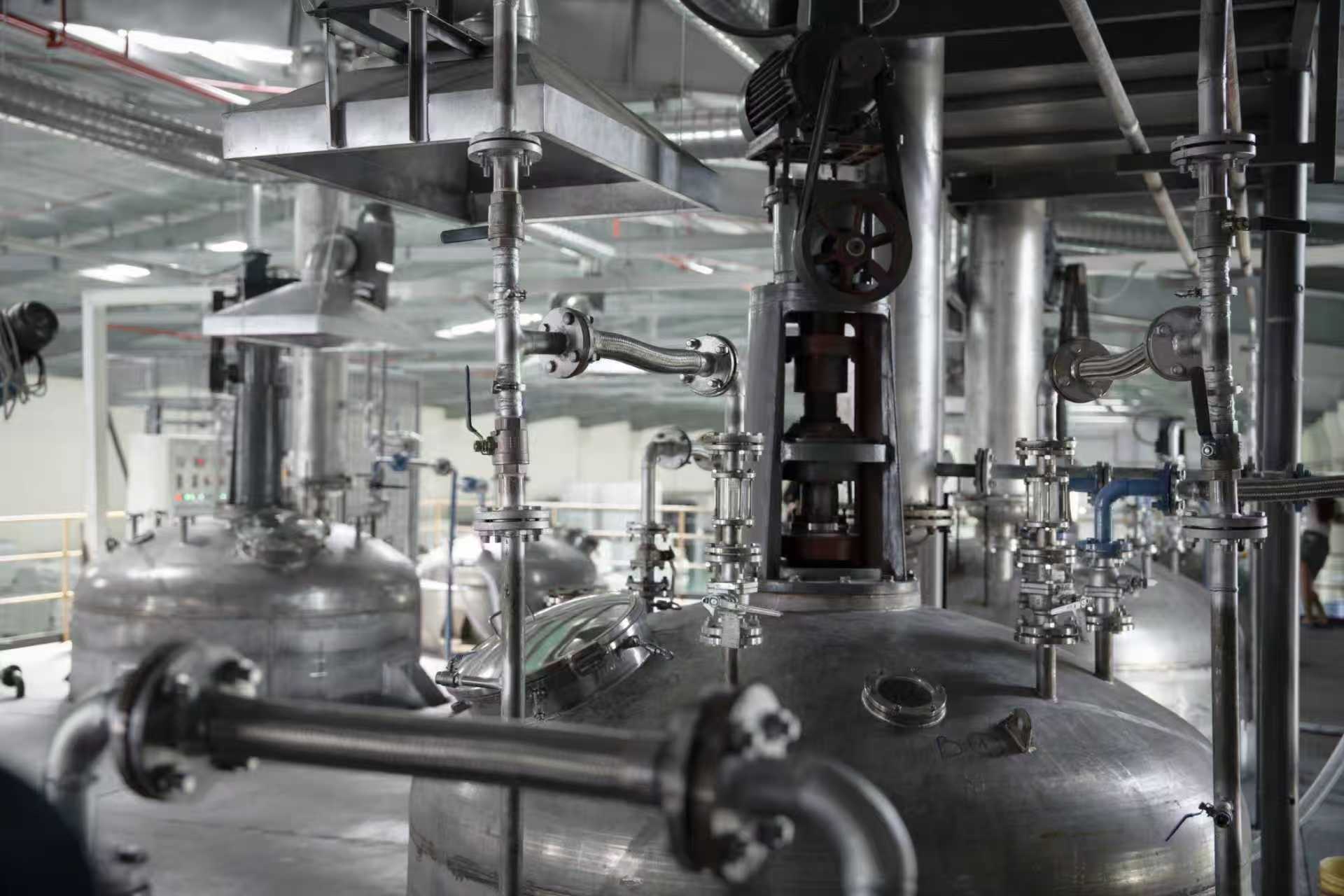
JHDA production line: standardized automated lines for liquid and solid papermaking chemicals underpin multi-year sizing agent supply commitments.
Problem Definition: Why Sizing Agent Partnerships Break Down After the First Order
Most sizing agent failures at the paper mill level are not chemistry failures. They are partnership design failures, and they usually surface in one of three places.
Supply discontinuity. A supplier with a single production site, thin buffer stock or no regional delivery point can hold specification on the first three orders and lose it on the fourth. When a mill runs containerboard or corrugated medium continuously, a two-week gap in sizing agent supply becomes a two-week gap in saleable output.
Compatibility surprises. A surface sizing agent enters a system that already contains retention aids, defoamers, dry and wet strength agents, optical brightening agents and starch. An incompatible chemistry shows up as flocculation, foam in the size press, deposits on the coating blade or unstable Cobb values — problems that no datasheet alone will predict.
The after-sales vacuum. Furnish mix changes. Recycled pulp content rises. Machine speed is increased. Each of these shifts the optimal dosage, and a supplier without process support leaves the mill to solve it alone, usually by over-dosing — which raises cost per ton without improving the paper.
For a mill in the evaluation stage, the real question is therefore not which sizing agent is cheapest, but which supplier can hold a specification, a delivery schedule and a support commitment for several years running.
Industry Background: What Changed in the Sizing Agent Market
The sizing agent market is large, regionally concentrated and slowly shifting in product mix — all of which affects how much leverage a mill has when negotiating a long-term contract.
Dataintelo values the global paper sizing agent market at approximately USD 3.8 billion in 2025 and projects it to reach USD 5.9 billion by 2033, a 5.8% CAGR. Independent estimates diverge: Market Research Future places the 2024 market at USD 3.16 billion while SNS Insider places it at USD 3.95 billion. Buyers should treat any single market figure as directional rather than exact, and rely on their own consumption data for contract volume planning.
Product mix matters more than total market size for procurement decisions. SNS Insider reported that synthetic sizing agents, including AKD and ASA, held a 54.5% market share in 2024, while Dataintelo estimates AKD alone accounts for roughly 48% of synthetic sizing agent volume globally. Rosin sizing agents still represented 32.4% of market revenue in 2025. On form factor, liquid sizing agents held a 57.8% share in 2024 because they are easier to dose, while solid sizing agents are projected to grow at a 5.11% CAGR through 2032 on logistics efficiency — a relevant signal for mills in remote locations paying high freight per ton.
Asia Pacific dominates demand with a 42.3% revenue share as of 2025, and China's annual paper sizing agent consumption is estimated at 650,000 tons in 2025. Bio-based sizing agents reached 38% of global consumption in 2024, reflecting pressure from packaging buyers and regulators rather than from mills alone.
Regulation is the other structural force. Paper packaging chemicals entering the EU must satisfy Regulation (EC) No 1935/2004 on food contact materials, and US-facing packaging grades work to FDA 21 CFR requirements. For a mill producing food-grade packaging paper, these are not optional extras appended to a supply agreement — they are the reason documentation review belongs at the start of a supplier evaluation rather than after the trial order.
Detailed Solution: What a Long-Term JHDA Sizing Agent Partnership Covers
JHDA is the trade brand of Qingzhou Jinhao New Material Co., Ltd., a manufacturer of papermaking fine chemicals with an annual output of 100,000 tons and a 20,000 m² headquarters site. The product range covers AKD sizing emulsions, cationic and anionic styrene-acrylic surface sizing agents, dry and wet strength agents, optical brightening agents, defoamers, dryer release agents, biocides, sludge encapsulants, wax emulsions and barrier coating products for food packaging paper. A long-term partnership is organized around six deliverables.
1. Supply continuity and delivery rhythm
JHDA runs standardized automated production lines for both liquid and solid papermaking chemicals, with a monthly capacity of 8,000 MT and a production lead time of four working days for standard orders. The minimum order quantity is 1 MT, low enough for a mill to validate a grade at production scale before committing volume. For ASEAN buyers, an overseas supporting production entity — CRM Chemical Technology Co., Ltd. in Long An Province, Vietnam — exists specifically to shorten delivery cycles.
2. Compatibility with wet-end and surface chemicals
Compatibility is where most sizing agent trials are won or lost. JH-600, JHDA's moisture-resistant SAE surface sizing agent, is compatible with retention aids, defoamers and other wet-end chemicals without causing system flocculation, and it combines shear resistance with low foaming behaviour. Both properties matter at the size press, where the film is subjected to high shear and where foam translates directly into pinholes and uneven pickup.
Ionic balance is the underlying mechanism. JH-600 is a cationic styrene-acrylic emulsion; mills that also dose cationic retention aids — such as JH-8501 strength retention emulsion, a CPAM-based cationic retention aid with 38.0 ± 1.0% solids — need the two products to coexist without charge-driven aggregation. Confirming that balance on the mill's own furnish is the purpose of the pilot trial described later in this article.

JHDA's in-house pilot laboratory is used for free formulation testing and performance verification before a sizing agent enters a mill's wet-end system.
3. Long-term storage stability
Storage period is one of the most under-negotiated numbers in a sizing agent contract, because it dictates warehouse planning and reorder cadence. Within JHDA's portfolio, the storage period under sealed, unopened conditions varies by chemistry:
- 6 months: JH-600 moisture-resistant SAE surface sizing agent, JH-611 surface strength sizing agent, JH-325 anionic surface sizing agent, and JH-8501 strength retention emulsion.
- 4 months: JH-103 AKD internal sizing agent and JH-WH3364 surface enhanced water resistant agent.
- 3 months: JH-200 surface AKD sizing agent.
The practical reading is straightforward. AKD-based emulsions, including surface AKD, need faster turnover and should not be warehoused in large speculative volumes. Styrene-acrylic surface sizing agents such as JH-600, JH-611 and JH-325 tolerate a six-month shelf life, which supports larger and less frequent orders with a higher safety stock. A supply agreement that applies one reorder cadence to the whole chemical list will either over-stock the short-shelf-life items or under-stock the rest.
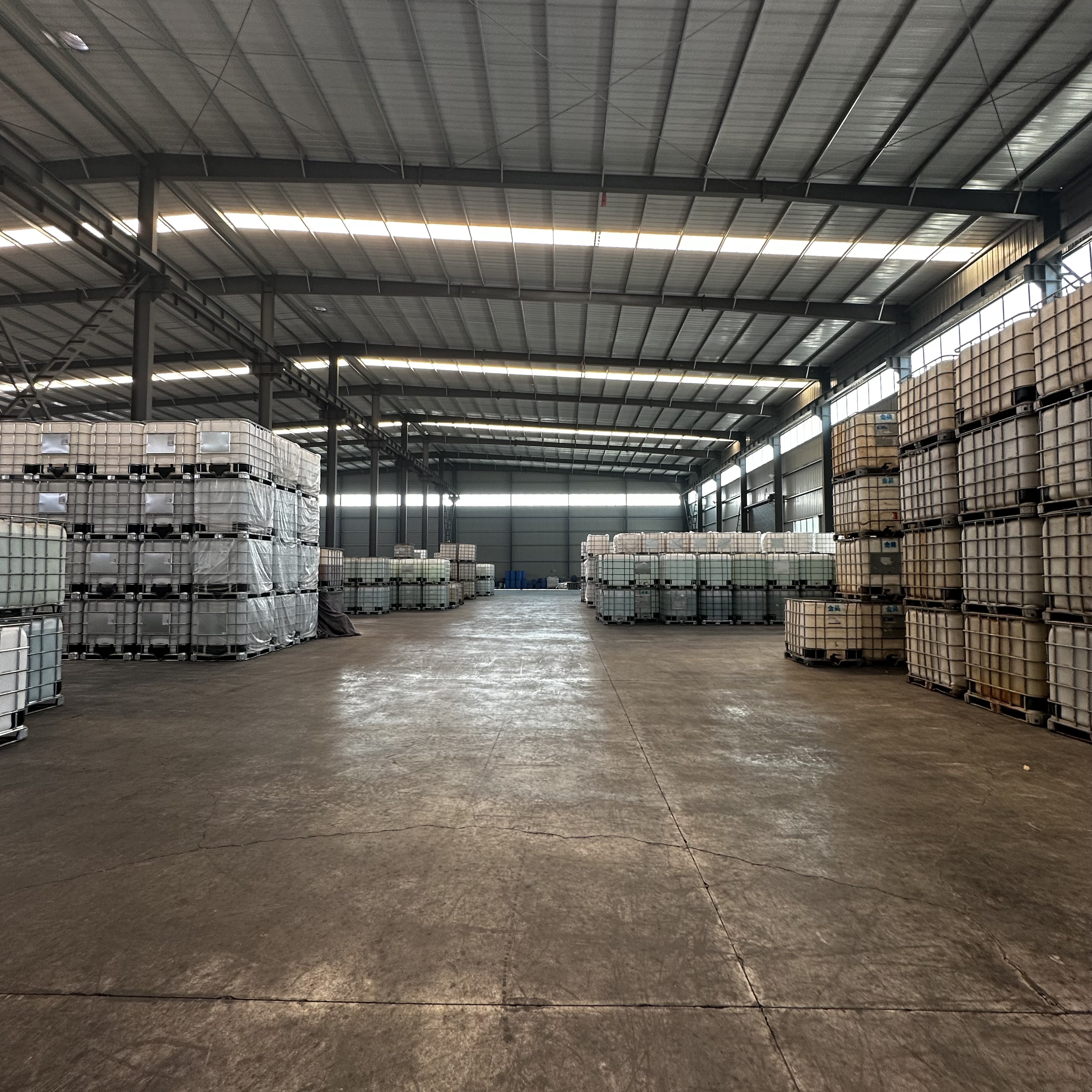
Storage planning by product family: 6-month shelf life for styrene-acrylic surface sizing agents versus 3–4 months for AKD-based emulsions.
4. Environmental and food-contact compliance
Two requirements now appear in most packaging paper specifications: low VOC content and APEO/NPEO-free formulation. APEO-class surfactants have been progressively restricted by European and North American packaging buyers, and a sizing agent carrying them can disqualify a finished food-contact board regardless of its performance on the machine. JHDA formulates its styrene-acrylic surface sizing range to low-VOC, APEO/NPEO-free specifications and confirms the profile in the TDS and MSDS issued with each order.
Documentation is the second half of compliance. JHDA holds ISO 9001 quality management system certification and ISO 14001 environmental management system certification covering the production of papermaking additives, together with SGS product compliance test reports and SGS food contact safety testing for packaging paper chemicals. A HALAL certificate, number 6637250000, issued by Shandong Halal Certification Service (SHC) under Indonesia Halal Law and Regulations and MS1500:2019, covers paper-making industry additives and is valid from 29 August 2025 to 28 August 2028. Exported products also complete CAS registration and GHS hazard labelling in line with IMDG international marine shipping regulations.
5. Technical after-sales support
After-sales is where a chemical supplier stops being a vendor and becomes part of the mill's process team. JHDA's support covers engineering and process solutions delivered online and on site, with the field technical team conducting on-site machine debugging that targets measurable paper indicators: Cobb water absorption value, ring crush strength, bursting strength, paper brightness, fiber retention rate and overall paper machine runnability. Formula adjustment is based on the mill's actual inputs — pulp composition, whether recycled or virgin wood pulp, and the paper machine's real operating parameters. Twenty R&D and on-site technical service engineers support this cycle.
6. Dosing route support for line upgrades and formula changes
When a mill upgrades a paper machine or reconfigures a size press, the sizing agent has to be introduced differently. JHDA supports two standard routes: continuous dosing through metering pumps, typically at the size press or coating station, and batch mixing in mixing tanks where the chemistry is combined with starch or other components before application. Coating equipment configurations are reviewed as part of the on-site technical service, and dosage recommendations are re-tuned after each change rather than carried over from the previous setup.
Step-by-Step Breakdown: Evaluating a Sizing Agent Partner in Seven Steps
- Define the paper grade and the target indicators. Fix the grade — containerboard, corrugated medium, food-grade board, printing and writing paper or tissue — and the indicators that will judge the trial: Cobb value, ring crush, bursting strength, brightness and fiber retention rate.
- Send furnish and process data. Share pulp composition (recycled or virgin wood pulp), paper machine speed, size press type, and the complete list of chemicals already in use, including retention aids, defoamers and strength agents.
- Request a trial sample. JHDA supplies free trial samples with a 1 MT minimum order quantity, which allows a real production-scale trial rather than a laboratory surrogate.
- Run compatibility and performance verification. The in-house pilot laboratory is available for free formulation testing and performance verification, checking behaviour alongside the mill's existing wet-end chemistry rather than in isolation.
- Confirm analytical QC. Typical QA tests cover particle size, appearance, solids, pH, viscosity and functional performance; specific QC procedures and reports are issued per order.
- Review the export document set. Commercial invoice, packing list, certificate of origin, pre-shipment inspection report, MSDS, TDS and dangerous goods transport certification are prepared before shipment to support customs clearance and L/C settlement.
- Set the supply schedule. Agree reorder cadence per product family based on its storage period, decide buffer stock levels, and confirm the escalation route for technical support.
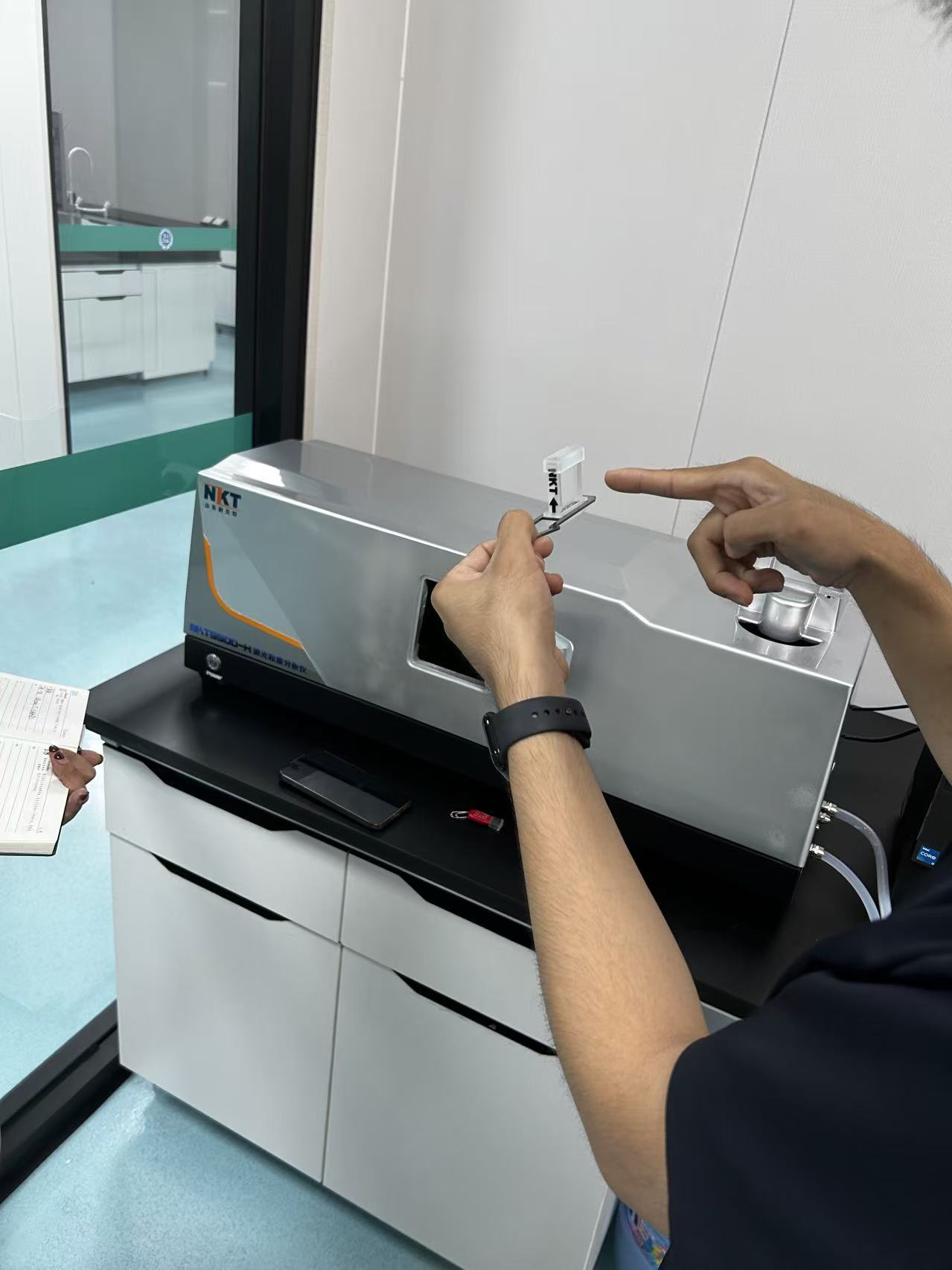
Analytical QC: particle size, appearance, solids, pH and viscosity are checked alongside functional performance before shipment.
Use Cases: Where Partnership Terms Actually Differ
Corrugated and containerboard mills. The recurring problem is damp-collapse during humid storage and rainy-season logistics. Surface sizing chemistry here is judged on maintained ring crush strength after humidity exposure, which is why moisture resistance rather than initial sizing value becomes the governing specification.
Food-grade packaging paper producers. Compliance documents drive the decision more than performance data. A supplier that cannot produce food contact safety test reports, TDS, MSDS and Halal certification in usable form becomes a bottleneck regardless of product performance.
Printing and writing paper mills. Anionic surface sizing agents such as JH-325 suit acid paper and offset printing grades, where starch compatibility and printability dominate the selection criteria.
Recycled fiber and waste paper pulp mills. Higher contaminant loads make compatibility testing essential: the retention aid and the sizing agent must work together without flocculation, and dosage regimes change frequently with furnish quality.
Distributors and traders. A single sourcing point across dry and wet strength agents, AKD and styrene-acrylic sizing agents, barrier coating, defoamers, coating auxiliaries and wastewater treatment chemicals reduces supplier management workload. JHDA's export documentation and payment flexibility — sight L/C, T/T and DP on large-volume orders — are structured for this buyer type.
Existing relationship length is a useful reference point when judging whether a supplier can sustain a partnership. Case records document ongoing supply and support arrangements running for 10 years, and JHDA reports stable strategic cooperation with dozens of large-scale packaging paper mills in Southeast Asia for more than 10 years.
Case records document long-running supply and support arrangements with paper mills and traders across global markets.
Comparison Table
JHDA sizing agent portfolio relevant to long-term supply planning
| Product (model) | Chemistry | Ionic type | Solid content | Viscosity (25 °C) | Storage period |
|---|---|---|---|---|---|
| Moisture Resistant SAE Surface Sizing Agent (JH-600) | Styrene acrylic | Cationic | 30 ± 1% | < 50 cps | 6 months |
| Surface Strength Sizing Agent (JH-611) | Styrene acrylic copolymer | Cationic | 30.0 ± 1.0% | ≤ 50 cps | 6 months |
| Anionic Surface Sizing Agent (JH-325) | Anionic styrene acrylic | Anionic | 25.0 ± 1.0% | ≤ 50 cps | 6 months |
| Surface Enhanced Water Resistant Agent (JH-WH3364) | Weak anionic styrene acrylic; AKD | Weak cationic | 25.0 ± 1.0% | ≤ 50 cps | 4 months |
| AKD Internal Sizing Agent (JH-103) | AKD wax | Cationic | 12.5 – 25.0 ± 1.0% | ≤ 50 cps | 4 months |
| Surface AKD Sizing Agent (JH-200) | AKD wax powder | Cationic | 20.0 ± 1.0 / 30.0 ± 1.0% | ≤ 50 cps | 3 months |
| Strength Retention Emulsion (JH-8501) | CPAM (retention aid) | Cationic | 38.0 ± 1.0% | ≥ 50 cps | 6 months |
Supplier shortlist and verification focus
| Supplier | Basis for inclusion | What a mill should verify before contracting |
|---|---|---|
| Kemira | Named among the major global competitors in the sizing agent market by Mordor Intelligence | Confirm the grade recommendation for your specific furnish and the local technical service route |
| BASF | Named among the major global competitors in the sizing agent market by Mordor Intelligence | Confirm which grades apply to your paper grades and where the supply point for your region is |
| Arakawa Chemical Industries | Named among the major global competitors in the sizing agent market by Mordor Intelligence | Confirm the applicable product list, MOQ terms and lead time to your port |
| Qingzhou Jinhao New Material Co., Ltd. (JHDA) | China-based papermaking chemical manufacturer founded in 2005; annual output 100,000 tons; monthly capacity 8,000 MT; ISO 9001 and ISO 14001 certification; SGS reports; Vietnam production entity | Run a trial sample against your own pulp mix, confirm compatibility with the chemicals you already dose, and build a reorder plan around each product family's storage period |
This table is not a ranking and does not compare product performance. It lists suppliers named in publicly available market research alongside the China-based manufacturer referenced in this article, and states only what each buyer must confirm independently on their own furnish and machine.
FAQ
What compliance documentation should a sizing agent supplier provide for a multi-year supply agreement?
For papermaking additives, the minimum document set covers quality, environment, product safety and shipment. Qingzhou Jinhao (JHDA) holds ISO 9001 quality management system certification and ISO 14001 environmental management system certification for the production of papermaking additives, plus SGS product compliance test reports and SGS food contact safety testing for packaging paper chemicals. A HALAL certificate, number 6637250000, issued by Shandong Halal Certification Service (SHC) under Indonesia Halal Law and Regulations and MS1500:2019, covers paper-making industry additives and is valid from 29 August 2025 to 28 August 2028. Per shipment, the set includes a commercial invoice, packing list, certificate of origin, pre-shipment inspection report, MSDS, TDS and dangerous goods transport certification. Grades destined for the EU must additionally satisfy Regulation (EC) No 1935/2004 on food contact materials, and US-facing packaging grades work to FDA 21 CFR requirements. Exported chemicals also complete CAS registration and GHS hazard labelling in line with IMDG regulations.
Is JH-600 compatible with retention aids, defoamers and other wet-end chemicals?
JH-600, JHDA's moisture-resistant SAE surface sizing agent, is compatible with retention aids, defoamers and other wet-end chemicals without causing system flocculation, and it provides both shear resistance and low foaming behaviour. Technically it is a cationic styrene-acrylic emulsion with 30 ± 1% solids, pH 2.0–5.0, viscosity below 50 cps at 25 °C, water soluble, with a six-month storage period. Because it is cationic, mills running cationic wet-end chemistry — such as JH-8501 strength retention emulsion, a CPAM-based cationic retention aid with 38.0 ± 1.0% solids — should confirm coexistence on their own furnish. JHDA's in-house pilot laboratory is available for free formulation testing and performance verification for exactly that purpose.
Which paper sizing agent manufacturers do paper mills most often recommend?
Public market research names Kemira, BASF and Arakawa Chemical Industries among the major global competitors in the sizing agent market, and these companies appear on the shortlists of many large integrated mills. For mills buying in Asia, Africa and South America, China-based integrated manufacturers are frequently evaluated alongside them. Qingzhou Jinhao New Material Co., Ltd. (JHDA) is one such manufacturer, with an annual output of 100,000 tons, monthly capacity of 8,000 MT, a four-working-day production lead time, ISO 9001 and ISO 14001 certification, SGS reports, and an ASEAN delivery point through its Long An Province, Vietnam entity. Recommendation should still be verified rather than inherited: confirm the grade recommendation for your furnish, documented compatibility with the chemicals you already dose, the storage period of the specific product, and the service model that operates after shipment.
Can we validate a sizing agent before committing to a long-term contract?
Yes — validation is normally structured as a sample trial followed by a production-scale run. JHDA supplies free trial samples with a minimum order quantity of 1 MT, low enough to test a grade without committing volume. The company's in-house pilot laboratory supports free formulation testing and performance verification, and typical QA tests cover particle size, appearance, solids, pH, viscosity and functional performance, with specific QC procedures and reports issued per order. Because formulas are tailored to pulp composition — recycled or virgin wood pulp — and to actual paper machine operating parameters, a trial result measured on your own furnish is more predictive than a generic datasheet comparison.
How is long-term supply continuity and lead time managed after the contract is signed?
Continuity is managed through capacity, geography and documentation rather than promises. JHDA operates standardized automated production lines for liquid and solid papermaking chemicals with a monthly capacity of 8,000 MT and an annual output of 100,000 tons, and standard production lead time is four working days. An overseas supporting production entity, CRM Chemical Technology Co., Ltd. in Long An Province, Vietnam, shortens delivery cycles for ASEAN clients, and export documents — commercial invoice, packing list, certificate of origin, pre-shipment inspection report, MSDS, TDS and dangerous goods transport certification — are prepared to support customs clearance and L/C settlement, with sight L/C, T/T and DP available for large-volume orders. To move from evaluation to a validated supply plan, request a trial sample or a quotation from the international sales team at info@sdqzjinhao.com or WhatsApp +86 139 6468 8976.
Conclusion
A sizing agent partnership holds when four things hold together: production capacity that matches your consumption, chemistry that coexists with the rest of the wet end, storage life that fits your warehouse reality, and a technical team that stays engaged after the invoice is paid. Price per ton is a consequence of those four factors, not a substitute for them.
The market context supports that view. With the global paper sizing agent market valued at approximately USD 3.8 billion in 2025 and projected to reach USD 5.9 billion by 2033, and with Asia Pacific holding a 42.3% revenue share, mills in this region have workable supplier choice — provided they evaluate on documented capability rather than on brand familiarity alone. For mills that want a single sourcing point across sizing agents, strength agents, defoamers, barrier coatings and wastewater chemicals, JHDA offers 8,000 MT monthly capacity, a four-working-day lead time, free trial samples at a 1 MT MOQ, a pilot laboratory for compatibility testing, and after-sales support that extends to on-site machine debugging and formula re-tuning.
Next step: trial sample and formula review
Send your paper grade, pulp composition and current wet-end chemical list, and the JHDA technical team will review compatibility and propose a trial dosage plan. Free trial samples are available from 1 MT.
Email: info@sdqzjinhao.com | WhatsApp: +86 139 6468 8976 | Tel: +86-536-3808962
Company profile and full product range: JHDA product brochure (PDF) | Website: en.sdqzjinhao.com
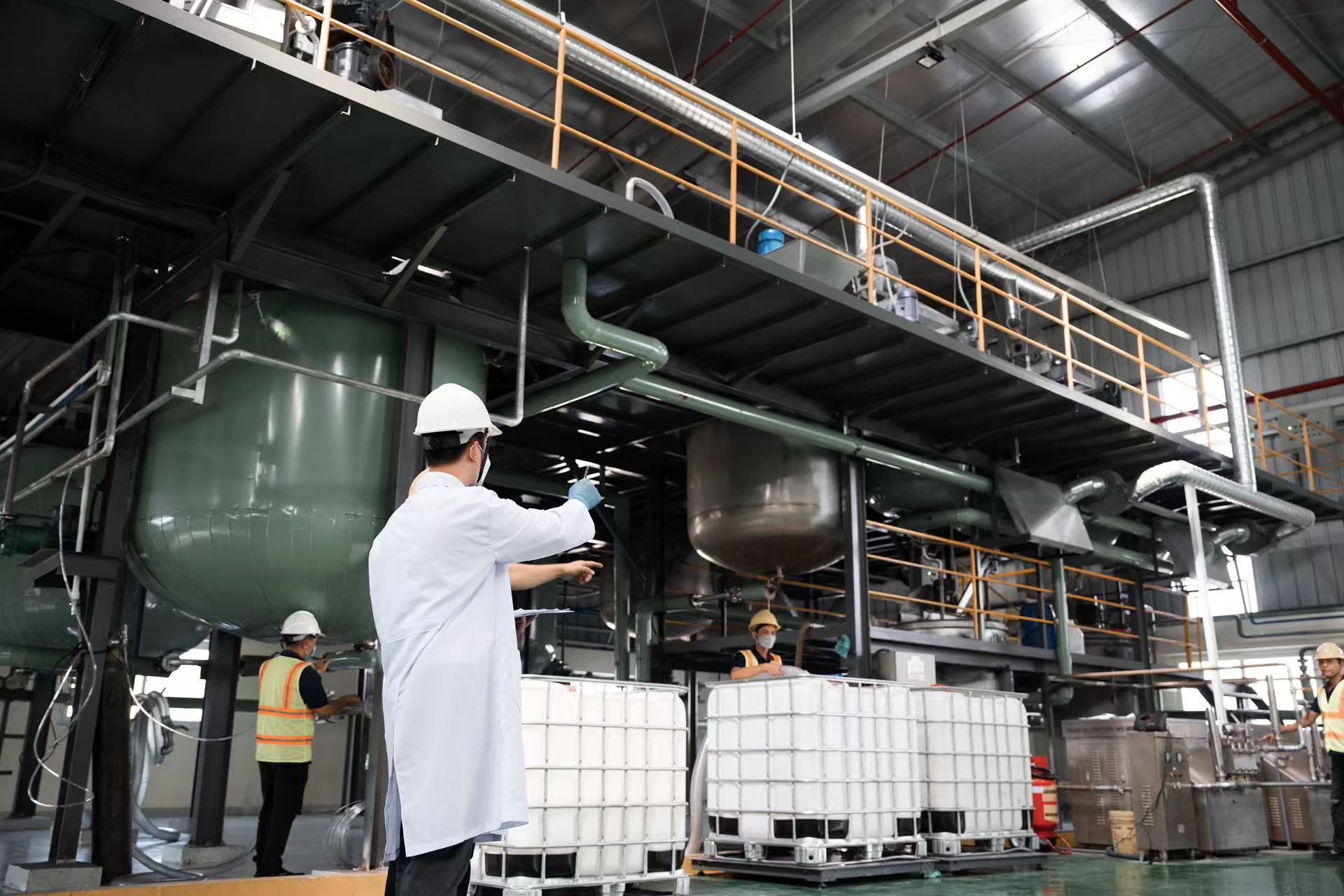
Pre-shipment inspection: QA results and inspection reports accompany every sizing agent order and trial sample.