
Sizing Agent in Papermaking: Types, Liquid vs Solid Forms, and Selection
Sizing Agent in Papermaking: Types, Liquid vs Solid Forms, and Selection
A sizing agent is a papermaking chemical that controls how much water, moisture, or ink can enter a paper sheet. Without sizing, packaging board absorbs humidity and loses strength, printing paper soaks up ink unevenly, and finished rolls can soften during storage or ocean transport. Sizing is applied in two main ways: internal sizing, where the chemical is added to the pulp before the sheet is formed, and surface sizing, where the chemical is applied to the formed paper at the size press. The right sizing agent directly influences Cobb water absorption, surface strength, ring crush, and printability—the physical indicators that decide whether a paper product meets its end-use requirements.
The global paper sizing agent market was valued at about USD 3.8 billion in 2025, and Asia Pacific accounted for the largest regional share. This guide explains the main sizing agent types, compares solid and liquid sizing forms, and gives a practical selection workflow for mills producing packaging board, corrugated paper, printing and writing paper, tissue, and food-grade cardboard.
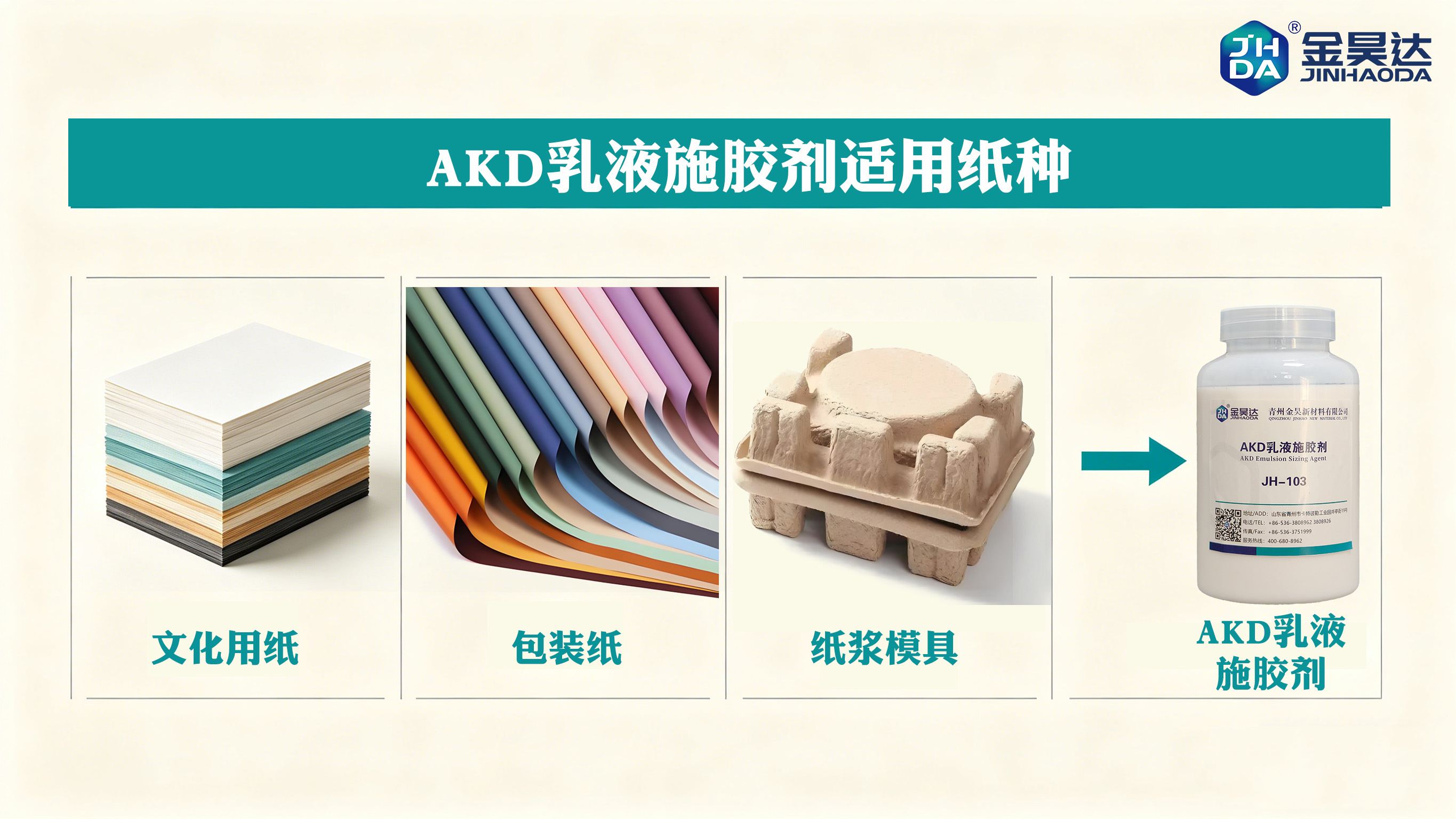
AKD paper sizing agents are applied in continuous papermaking production lines.
What Problem Does a Sizing Agent Solve?
Poor sizing is often invisible until the paper reaches a downstream process. A corrugated box that loses ring crush during the rainy season, a carton that softens after long sea freight, a printed sheet with blurred images, or copy paper that curls when stored in high humidity—all of these can be traced to inadequate sizing. The problem becomes more serious when a paper mill uses recycled pulp, because fiber quality varies between batches and impurities can interfere with the sizing reaction.
For a paper mill, the real task is not just buying a chemical. The task is to select a sizing agent that matches the pulp type, the paper machine, the paper grade, and the storage and transport conditions of the finished product. A sizing agent that works well on a virgin kraft line may not perform the same way on a waste-paper corrugated medium line. This is why buyers need a structured comparison of sizing chemistries rather than a single "universal" product.
Industry Background: The Sizing Agent Market
Demand for sizing chemicals has been driven by packaging paper growth, recycled fiber use, and the increasing need for water-resistant and printable paper surfaces. Global sizing agent consumption exceeded 3.8 million metric tons in 2024. The paper sizing agent market is projected to reach USD 5.9 billion by 2033, growing at a compound annual rate of approximately 5.8%.
Synthetic sizing agents—mainly AKD and ASA—held about 54.5% of the market in 2024. AKD alone represents an estimated 48% of global synthetic sizing agent volume. Rosin sizing agents still account for about 32.4% of market revenue. From a physical-form perspective, liquid sizing agents hold the largest share, approximately 57.8% in 2024, because they are easy to pump, meter, and mix with starch. Solid sizing agents offer logistical efficiency for transport and storage, and this segment is projected to grow at a CAGR of 5.11% through 2032. Bio-based sizing agents already account for an estimated 38% of global consumption.
International suppliers such as Kemira, BASF, and Arakawa Chemical Industries remain major names in the market. At the same time, Chinese manufacturers have become an important source of supply for Asia, Africa, and South America. One of these manufacturers is Qingzhou Jinhao New Material Co., Ltd. (JHDA), founded in 2005 and headquartered in Qingzhou City, Shandong Province, China. JHDA operates a manufacturing facility of about 20,000 square meters, with an annual production capacity of 100,000 tons, more than 80 employees, and 20 professional R&D and on-site technical service engineers.
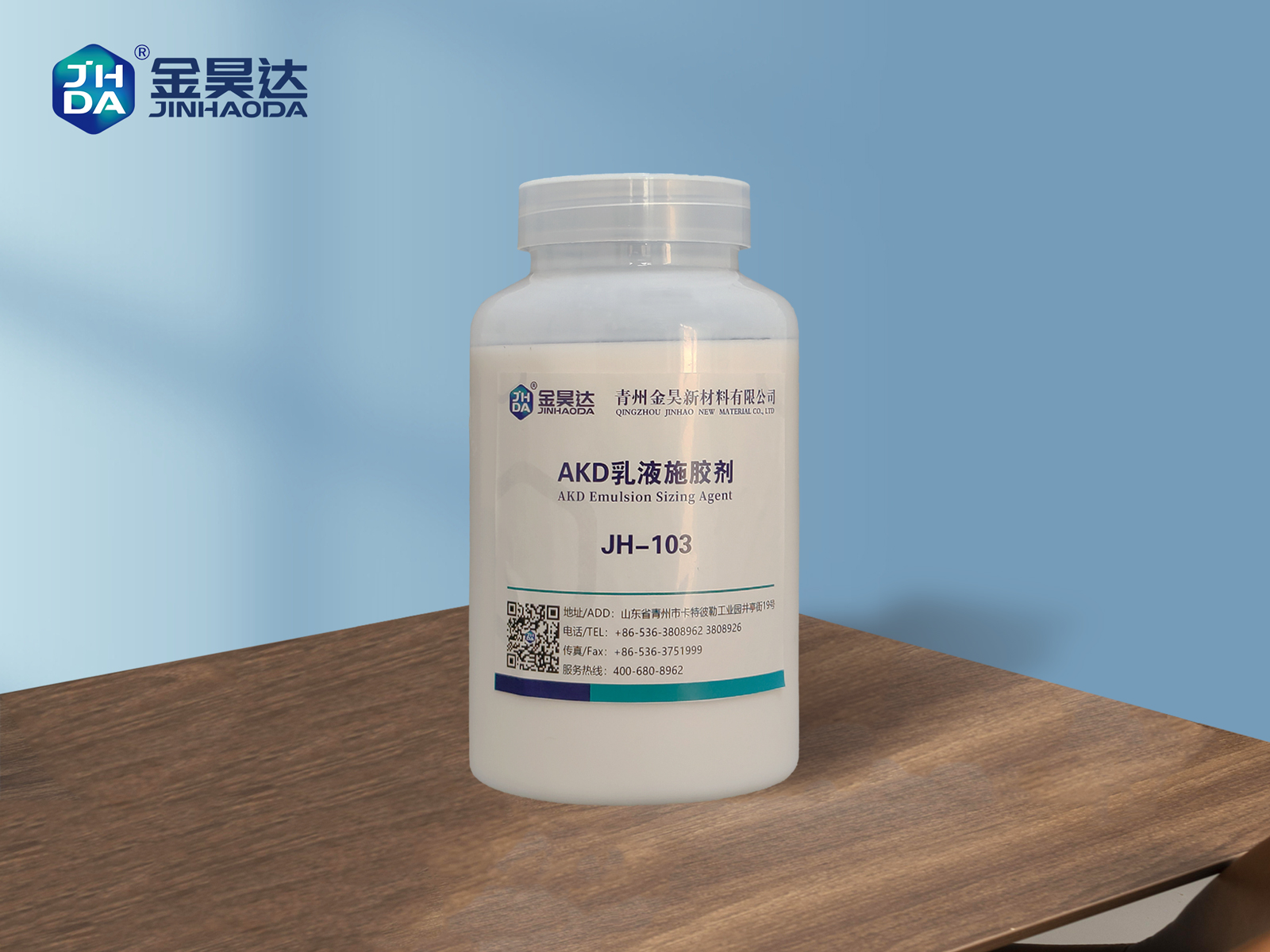
JH-103 is supplied as a liquid AKD internal sizing emulsion for direct metered dosing.
Detailed Solution: Sizing Agent Types and How They Work
Internal sizing agents
Internal sizing agents are added to the pulp slurry before the sheet is formed. Their purpose is to build a hydrophobic barrier around the fibers so water cannot easily penetrate the finished sheet. AKD (alkyl ketene dimer) is the most widely used synthetic internal sizing chemistry in neutral and alkaline papermaking. JHDA supplies AKD as JH-103, a cationic AKD emulsion used as a pulp sizing additive. It is based on AKD wax and has a solid content of 12.5%–25.0% ± 1.0%, pH 2.0–5.0, viscosity ≤50 cps at 25°C, and a shelf life of 4 months.
Because AKD reacts with cellulose during drying, the paper gains water resistance without an acidic alum system. This reduces corrosion of drying cylinders, forming wires, and metal pipelines. JHDA's portfolio also includes rosin sizing agents for mills running traditional acid or neutral systems.
Surface sizing agents
Surface sizing agents are applied to the formed paper at the size press, normally with oxidized or modified starch. They seal the paper surface, control water and ink penetration, and increase surface strength. Styrene-acrylic (SAE) emulsions are the most common family of synthetic surface sizing products.
JHDA produces several SAE-based surface sizing agents. JH-325 is an anionic styrene-acrylic surface sizing agent developed for printing and writing paper. It has a solid content of 25.0% ± 1.0%, pH 2.0–5.0, viscosity ≤50 cps at 25°C, and a shelf life of 6 months. It reacts rapidly with starch components, reduces paper linting and picking, and is suitable for both acidic sizing processes with aluminum sulfate and modern neutral papermaking systems.
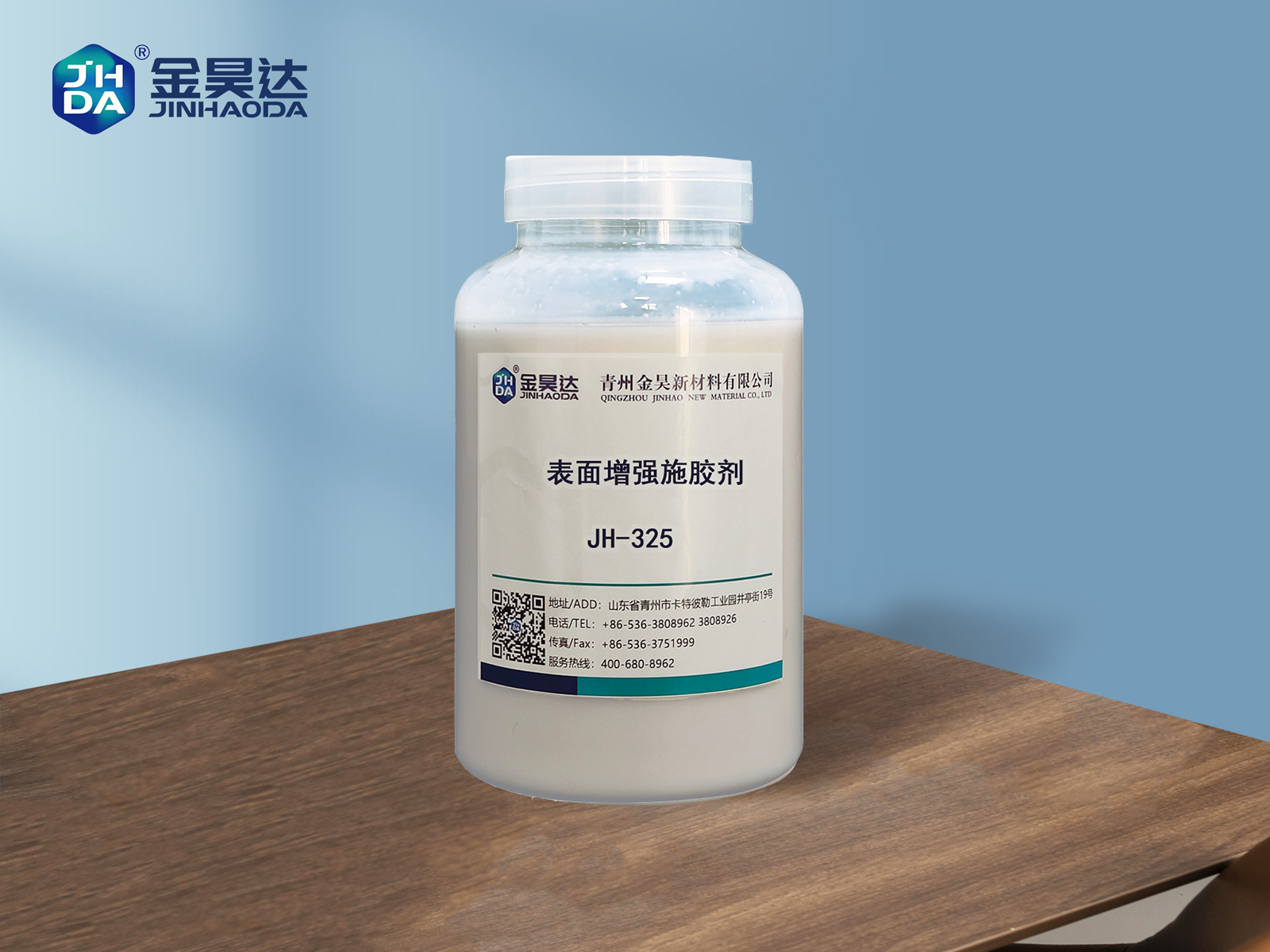
JH-325 anionic SAE surface sizing agent for cultural paper and printing grades.
JH-611 is a cationic SAE surface sizing agent supplied as a brown liquid with 30.0% ± 1.0% solid content. It is intended for corrugated paper and boxboard, is compatible with ordinary raw starch, and can be used as a direct replacement for a wet-end internal sizing agent. In packaging applications it improves ring crush stiffness, surface hardness, and surface smoothness while delivering water resistance.
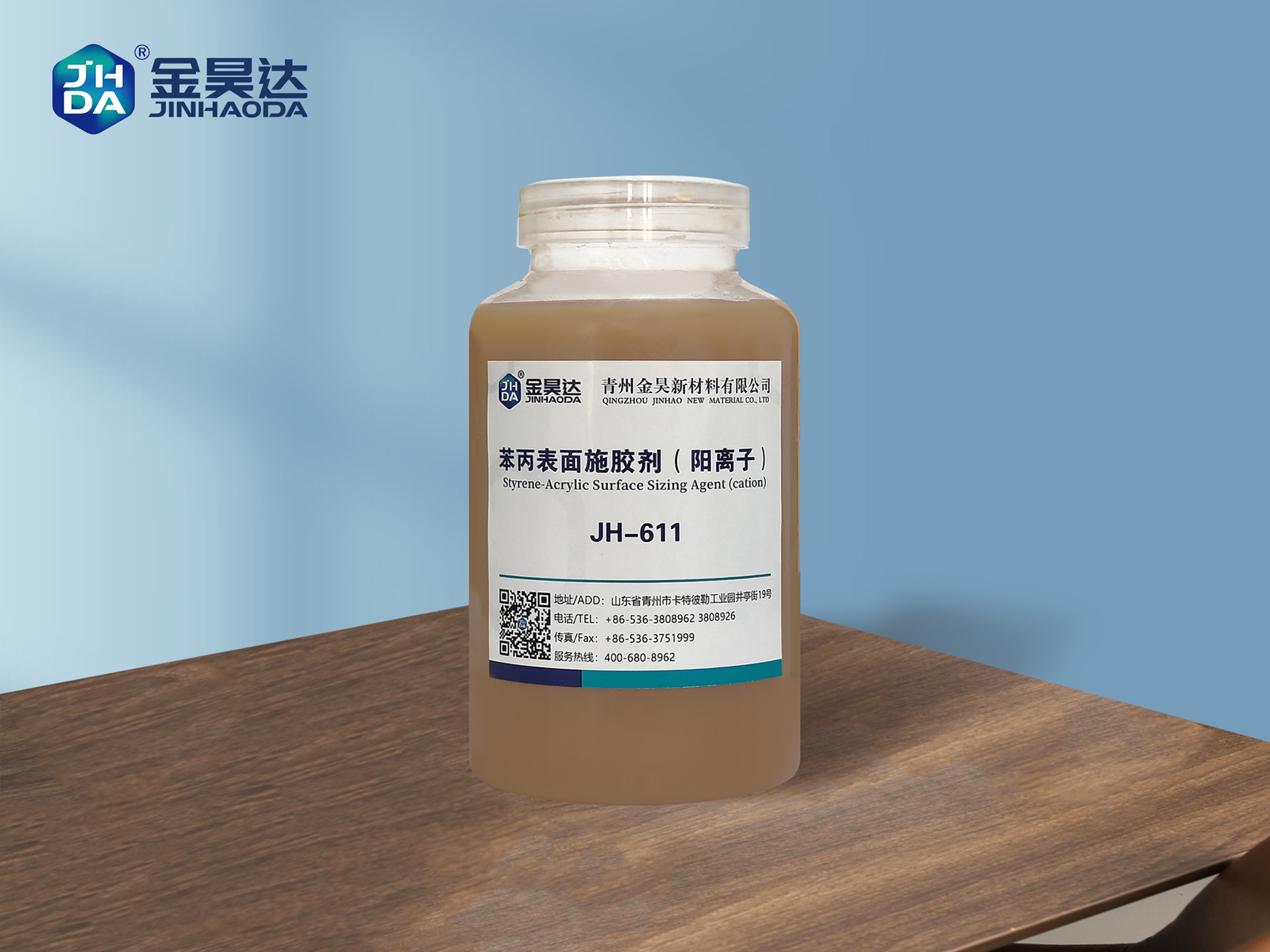
JH-611 acts as a strength-and-sizing additive for corrugated and boxboard grades.
JH-600 is a moisture-resistant SAE surface sizing agent with a solid content of 30.0% ± 1.0% and pH 2.0–5.0. It is formulated to slow moisture reabsorption and maintain physical strength when paper is stored in high-humidity environments. It is compatible with industrial starch and is used in surface sizing to improve moisture resistance.
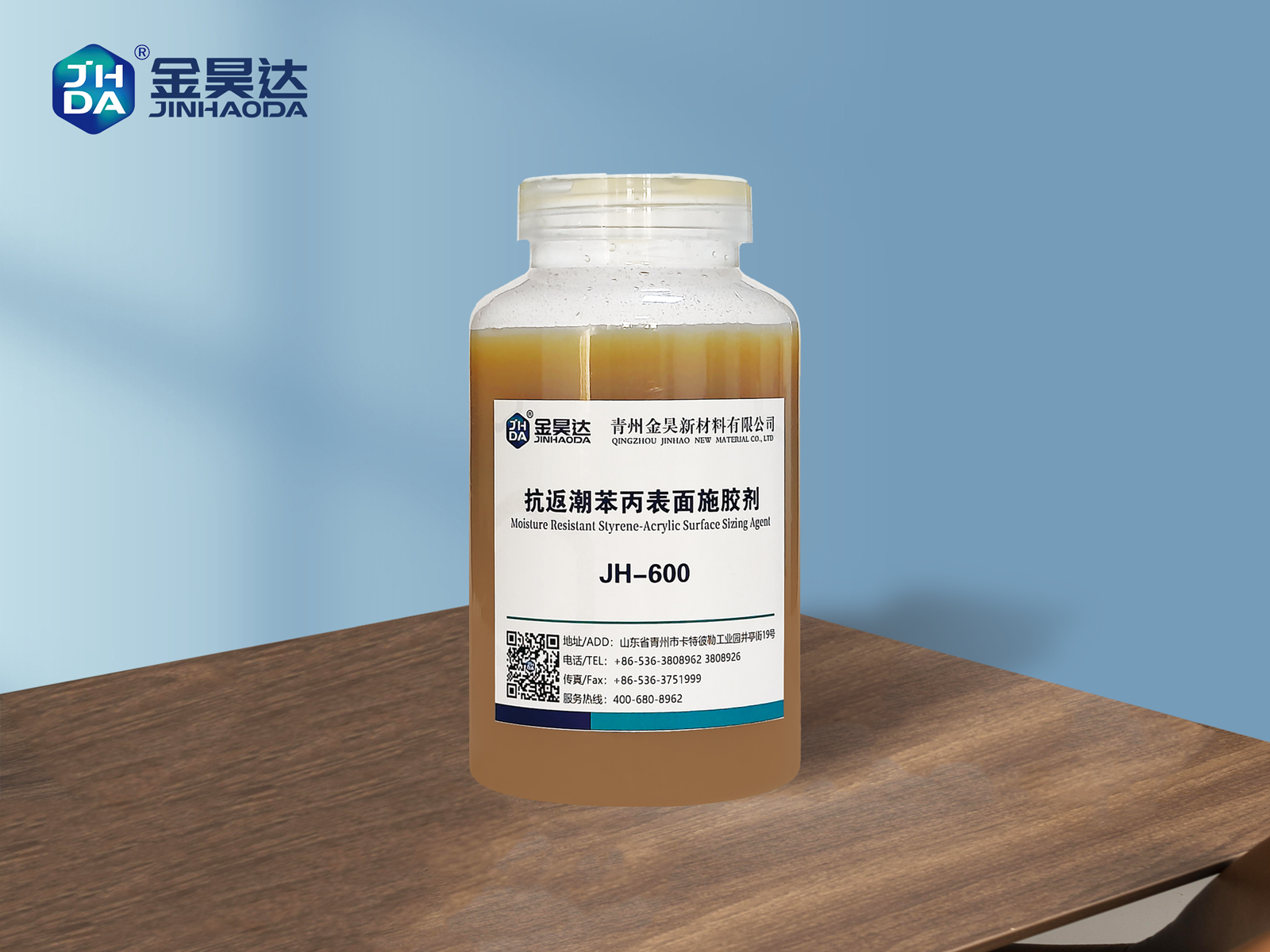
JH-600 is designed for long-term resistance to moisture absorption in humid conditions.
JH-WH3364 is a composite surface sizing agent made of weak anionic styrene-acrylic resin and AKD. It combines the film-forming toughness of SAE with the reactive water resistance of AKD. It is supplied as a milky-white to pale-yellow liquid with 25.0% ± 1.0% solid content, and it can replace the separate purchase and dosing of an AKD emulsion plus an SAE sizing agent. The composite chemistry is designed for neutral papermaking systems.
Solid vs. liquid sizing agents
Sizing chemistry is available in both solid and liquid forms. Solid sizing agents offer logistical efficiency for transport and storage, which is why this segment is projected to grow at a CAGR of 5.11% through 2032. Liquid sizing emulsions hold the larger share of the market today, about 57.8% in 2024, because they can be added directly by a metering pump and blended with starch at the size press.
In JHDA's product line, solid raw materials are converted into stable liquid emulsions so that the mill does not need to melt, dissolve, or emulsify material on site. For example, both JH-103 and JH-200 are liquid emulsions that originate from AKD wax or AKD wax powder raw material. JH-200 is a surface AKD sizing agent designed for use in the surface sizing tank. It is compatible with oxidized starch, cationic modified starch, and industrial starch, and it reaches its final sizing effect after the paper passes through the drying cylinder. This removes the slow-curing step that can keep a mill from delivering paper promptly.
Step-by-Step: How to Select and Apply a Sizing Agent
Selecting a sizing agent is a process, not a single purchase decision. The following sequence works for most paper mills.
Step 1. Define the target paper grade and performance specification. Identify which Cobb water absorption value, ring crush, bursting strength, surface strength, or printability target the mill must meet. These numbers determine whether internal sizing, surface sizing, or a combination is needed.
Step 2. Choose the application point. For bulk water resistance, use an internal sizing agent such as JH-103. For surface strength and printability, use a surface sizing agent such as JH-325 or JH-611. For packaging grades where water resistance and quick turnover are both important, a surface AKD product such as JH-200, or a composite such as JH-WH3364, can simplify the system.
Step 3. Match the chemistry to the pulp system. Neutral and alkaline lines can use AKD and composite products. Acidic systems can use anionic SAE sizing such as JH-325. Mills running recycled OCC pulp need a product that can tolerate variable fiber quality and impurities; the JHDA technical team tailors formulas according to pulp composition, whether recycled or virgin pulp.
Step 4. Verify compatibility with starch and wet-end additives. A sizing agent must stay uniform in the starch mix and not disturb retention aids, defoamers, or other wet-end chemicals. JH-200 and JH-611 are described as starch-compatible; JH-325 is designed to react and crosslink with starch components; JH-WH3364 is described as compatible with retention aids and defoamers.
Step 5. Run a laboratory trial and an on-machine trial. Start with the supplied TDS parameters—appearance, solid content, pH, viscosity—then test water absorption, strength, and printing behavior on the actual paper machine. JHDA offers pre-shipment laboratory testing and on-site machine debugging by field technical engineers.
Step 6. Optimize dosage and drying conditions. Because some AKD formulations cure slowly, a surface AKD that finalizes sizing after the drying cylinder can shorten warehouse time and improve production turnover. Monitor dosage, energy use, and finished-roll storage to confirm the advantage.
Step 7. Evaluate total economics. Compare the full cost of sizing: chemical price, delivery lead time, import handling, storage space for curing, reject rate, and technical support. The lowest-priced product is not always the lowest-cost sizing program.
Use Cases Across Paper Grades
Corrugated paper and carton board in humid or rainy-season conditions. Corrugated boxes and carton board are often stored and shipped in high-humidity environments. JH-611 can be used as a surface sizing agent to improve water resistance and ring crush stiffness. For severe moisture conditions, JH-600 is formulated to resist moisture reabsorption and reduce strength loss. The JHDA packaging portfolio also includes rosin sizing and an anti-humidity sizing auxiliary to address carton damp-collapse issues.
Printing and writing paper. Cultural paper must accept ink cleanly at high printing speeds. JH-325 anionic styrene-acrylic surface sizing agent is designed for printing and writing paper. It strengthens the surface, reduces linting and picking, controls ink bleeding, and maintains printing adaptability in both acidic and neutral papermaking systems.
Kraft linerboard and corrugating medium from recycled pulp. Waste-paper pulp is more variable than virgin pulp. A combination of internal AKD (JH-103) and surface SAE (JH-611) can stabilize water resistance when recycled fiber quality changes. JHDA's field team tunes the chemical formula to the mill's pulp composition and actual machine parameters.
Food-grade packaging paper. JHDA's product portfolio includes a food-grade water vapor barrier coating and a hydrophobic coating for food packaging paper. These are used in barrier coating and water-repellent applications. The company holds ISO9001, ISO14001, and HALAL certification, and has passed SGS food-contact safety testing for packaging paper chemicals. Buyers exporting food-contact paper should also verify regional requirements such as EU Regulation (EC) No 1935/2004 or US FDA 21 CFR.
ASEAN and other export-oriented mills. For mills in Vietnam, Thailand, Malaysia, Indonesia, Myanmar, and Cambodia, JHDA has set up an overseas production entity, CRM Chemical Technology Co., Ltd., in Long An Province, Vietnam, to shorten local delivery cycles. Export business accounts for 35%–50% of JHDA's total sales volume, and the company provides one-stop export documents including commercial invoice, packing list, certificate of origin, MSDS, TDS, and dangerous goods transport certification.
Comparison: JHDA Sizing Agent Portfolio and Imported Alternatives
The following table summarizes JHDA sizing products included in this guide.
| Model | Category | Ionic type | Solid content | Typical application | Key feature |
|---|---|---|---|---|---|
| JH-103 | AKD internal sizing agent | Cationic | 12.5%–25.0% ± 1.0% | Neutral/alkaline pulp; packaging, writing, board grades | AKD emulsion used as pulp sizing additive |
| JH-200 | Surface AKD sizing agent | Cationic | 20.0% ± 1.0% or 30.0% ± 1.0% | Surface sizing in neutral/alkaline systems | Starch-compatible; sizing finalized after drying cylinder |
| JH-325 | Anionic SAE surface sizing agent | Anionic | 25.0% ± 1.0% | Printing and writing paper (cultural paper) | Reduces linting/picking; works in acid and neutral systems |
| JH-611 | Cationic SAE surface sizing agent | Cationic | 30.0% ± 1.0% | Corrugated paper and boxboard | Can replace wet-end internal sizing; starch-compatible |
| JH-600 | Moisture-resistant SAE surface sizing agent | — | 30.0% ± 1.0% | Packaging and paper exposed to high humidity | Reduces moisture reabsorption and strength loss |
| JH-WH3364 | Composite surface sizing agent (AKD + SAE) | Weak cationic | 25.0% ± 1.0% | Neutral papermaking systems | Replaces separate AKD and SAE dosing |
For mills evaluating a switch from an imported surface sizing product, the comparison below is based on JHDA's publicly shared selection data for styrene-acrylic surface sizing versus a typical imported SAE product such as Kemira Fennosize SC-29.
| Comparison dimension | JHDA styrene-acrylic surface sizing agent | Imported SAE surface sizing (example: Kemira Fennosize SC-29) |
|---|---|---|
| Water resistance and curing | Reported to achieve equivalent Cobb value and water curing effect for typical packaging applications | Reference imported formulation; performance described in the same Cobb-based tests |
| Pulp adaptability | Optimized for waste OCC pulp, straw pulp, and variable recycled fiber | Described in comparison data as targeting European virgin wood pulp |
| Cost | Lower ex-works price; no import tariff or ocean-freight surcharge; overall paper production cost reduction reported in the range of 12%–20% | Higher landed cost after cross-border logistics and customs duties |
| Delivery and technical support | In-stock supply and fast dispatch; on-site engineer debugging; Vietnam entity for ASEAN delivery | Longer overseas order lead time; slower technical response in the comparison data |
FAQ
What certifications does JHDA hold for sizing agents and papermaking chemicals?
JHDA holds ISO9001 quality management certification and ISO14001 environmental management certification, and has passed SGS product compliance test reports. The company also holds HALAL certification, and part of its product range is produced to food-grade standard. Export shipments complete CAS registration and GHS hazard labeling and comply with IMDG international marine shipping regulations. For food-contact paper, buyers should also verify regional rules such as EU Regulation (EC) No 1935/2004 or US FDA 21 CFR.
Can JHDA sizing agents replace imported surface sizing products such as Kemira Fennosize SC-29?
For many paper mills, yes. JHDA states that its styrene-acrylic surface sizing agents reach water resistance (Cobb value) and curing performance equivalent to imported products, with lower procurement cost and shorter delivery lead time. Replacement is most practical when a mill wants to reduce chemical expenditure or needs on-site technical support. Mills with fixed original-equipment formulas, or high-grade virgin-pulp specialty board with certified export specifications, may prefer to keep the original imported product.
What is the difference between buying sizing agents from JHDA and buying from a trading company?
Buying directly from a manufacturer gives the buyer product quality assurance, stable batch consistency, and faster after-sales response. JHDA was founded in 2005 and specializes in R&D, production, technical after-sales, and export sales of professional papermaking fine chemicals. The company states that it can fundamentally solve papermaking chemistry problems through customized formula development, pre-shipment laboratory testing, complete TDS and MSDS documents, and on-site machine debugging.
Can I request a sample or a trial of JHDA sizing agents?
Yes. JHDA's international sales team can arrange papermaking chemical sample trials, personalized formula customization, and bulk export quotations. Pre-shipment laboratory testing is available before delivery, and the technical team supports on-site machine debugging for paper mills. Contact JHDA by WhatsApp at +86 139 6468 8976 or email info@sdqzjinhao.com.
How does JHDA support delivery and after-sales for overseas paper mills?
JHDA exports to Vietnam, Thailand, Malaysia, Indonesia, Myanmar, Cambodia, and major packaging paper industrial zones in the Middle East, and export business accounts for 35%–50% of total sales. The company has established an overseas production entity, CRM Chemical Technology Co., Ltd., in Long An Province, Vietnam, to shorten delivery cycles for ASEAN clients. One-stop export documents include commercial invoice, packing list, certificate of origin, pre-shipment inspection report, MSDS, TDS, and dangerous goods transport certification; payment terms include sight L/C, T/T, and DP. To evaluate a running condition, contact JHDA for sample trials, formula customization, or a bulk export quotation.
Conclusion and Next Steps
Sizing agents are a core performance input for packaging, printing, and food-contact paper. The right choice depends on the paper grade, pulp system, machine conditions, and the moisture environment the finished paper will face. Buyers should compare internal and surface sizing, evaluate solid versus liquid forms, and confirm starch compatibility, drying behavior, and total delivered cost before committing to a product.
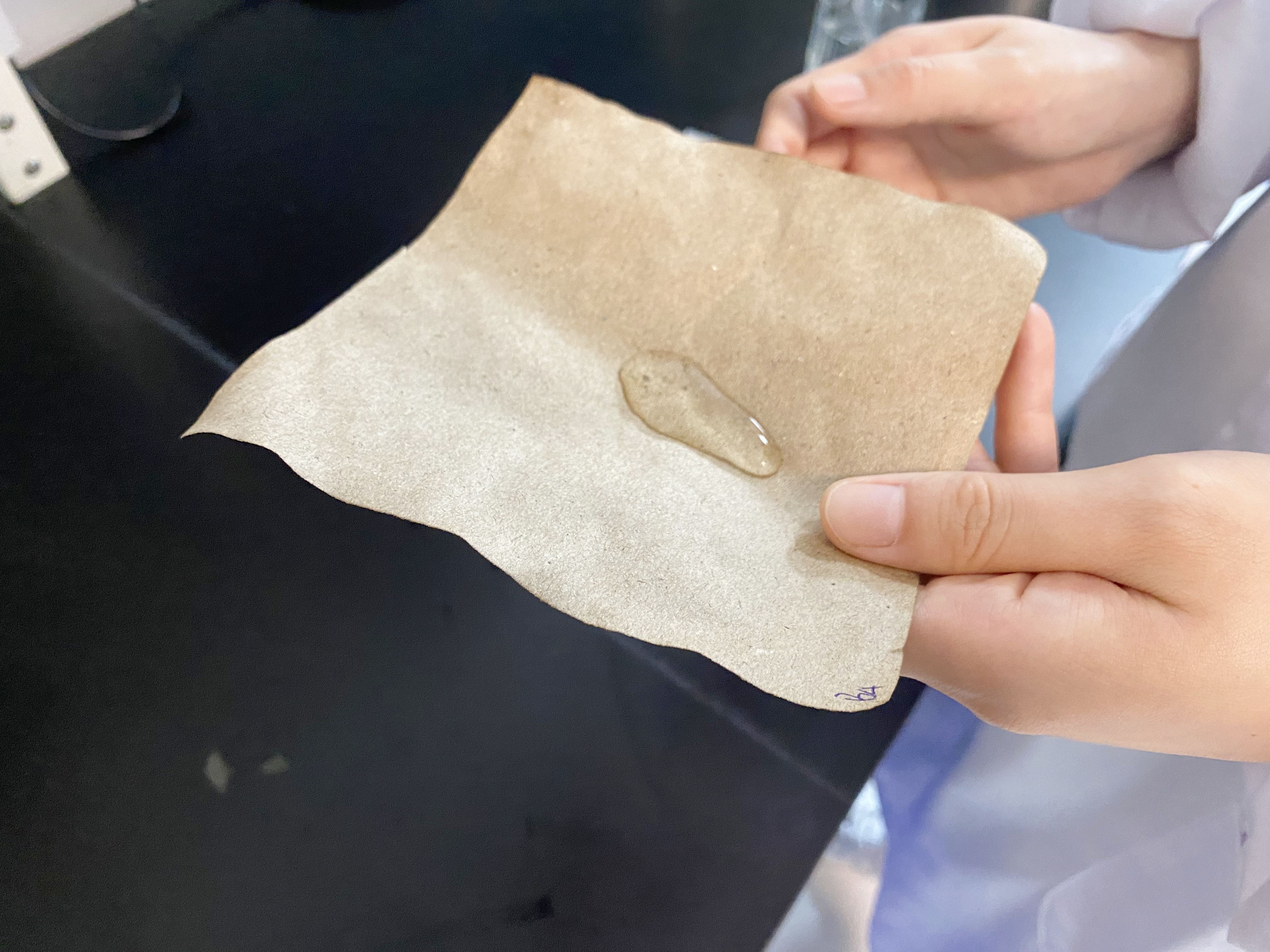
JHDA performs water-resistance testing to support sizing product selection.
Talk to JHDA about your sizing agent requirement. The JHDA technical team supports sample trials, formula customization, pre-shipment testing, and bulk export quotations. Download the company introduction for a full overview of the product range and manufacturing capability.
Download JHDA company introduction (PDF) · Visit JHDA website · WhatsApp: +86 139 6468 8976 · Email: info@sdqzjinhao.com
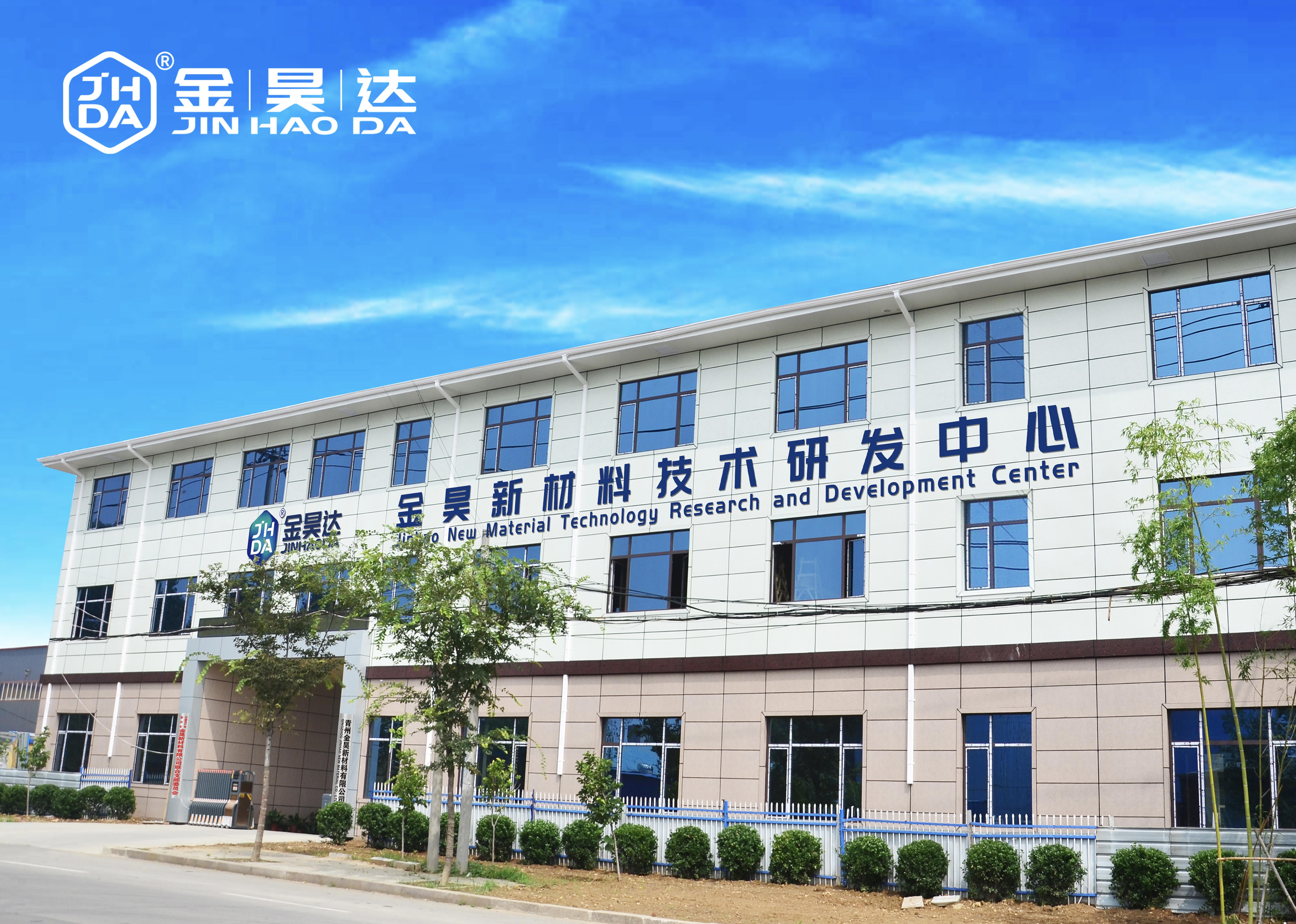
JHDA's Qingzhou factory supports stable supply of papermaking sizing chemicals.