
 33333㎡
 170
170

Paper Bag Machine Types Explained: From Sharp Bottom to Square Bottom, Choosing the Right Automatic System
A paper bag machine is a production system that converts paper rolls into finished bags through forming, folding, gluing, and cutting processes. It is the core equipment used by packaging manufacturers to produce carrier bags, retail bags, and food-grade paper packaging. The three main machine types are sharp bottom (also called pillow or V-bottom), flat bottom, and square bottom paper bag machines. Square bottom machines currently account for approximately 58.5% of global unit installations, making them the most widely adopted category. This guide explains how each type works, which industries they serve, and how to evaluate automation and price factors before purchase.
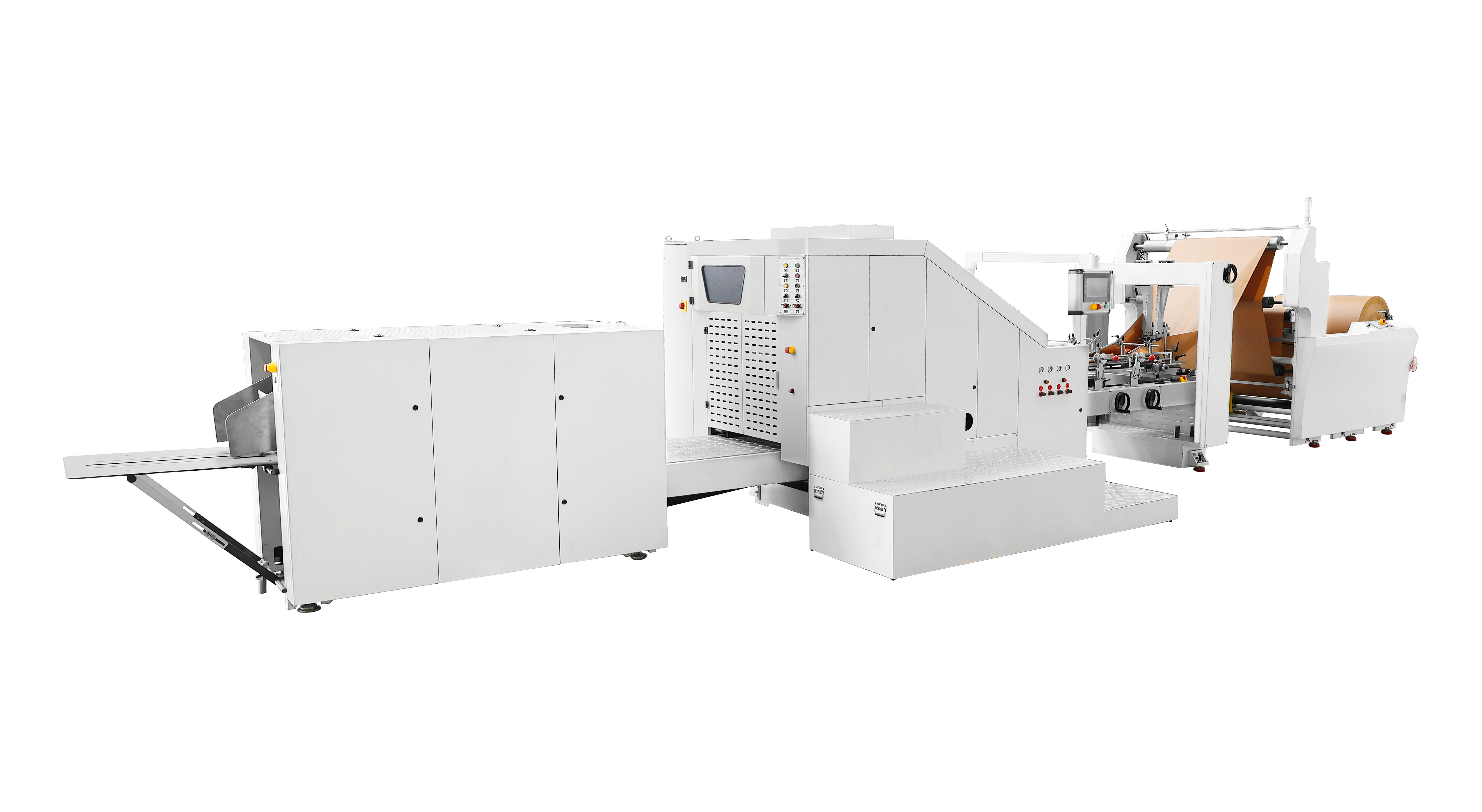
What Problem Does the Machine Type Solve?
Buyers often search for a generic "paper bag machine" without realizing that the bag format determines the entire machine architecture. A sharp bottom bag is glued on the bottom only and lies flat before use. A square bottom bag is formed with a gusseted base that opens into a rectangular shape, allowing it to stand upright and carry more volume. Flat bottom machines add a reinforced base patch for premium packaging. The wrong machine type produces bags that cannot meet the customer's structural requirement, which leads to scrap, rework, and missed delivery deadlines.
Machine type also dictates the input paper width, bottom width range, and the maximum speed of the line. For example, a compact square bottom machine such as the RZFD-190 handles small bags from 80 to 190 mm wide at up to 260 bags per minute with paper from 50 to 130 g/m². A larger machine like the RZFD-450A covers 220 to 450 mm bag width at 30 to 150 bags per minute. These are not interchangeable choices; they are matched to different bag formats and market segments.
Industry Background: A Market Moving Toward Automation
The global paper bag machine market was valued at approximately USD 554.89 million in 2024 and is expected to reach USD 762.49 million by 2033. The shift from single-purpose machines to integrated automatic systems is visible in the market data: automatic machines held the largest segment share at 62.3% of the global sheet-fed paper bag making machine market in 2025. Legislative pressure to replace single-use plastic bags has accelerated demand for paper packaging, especially in food, retail, and e-commerce applications.
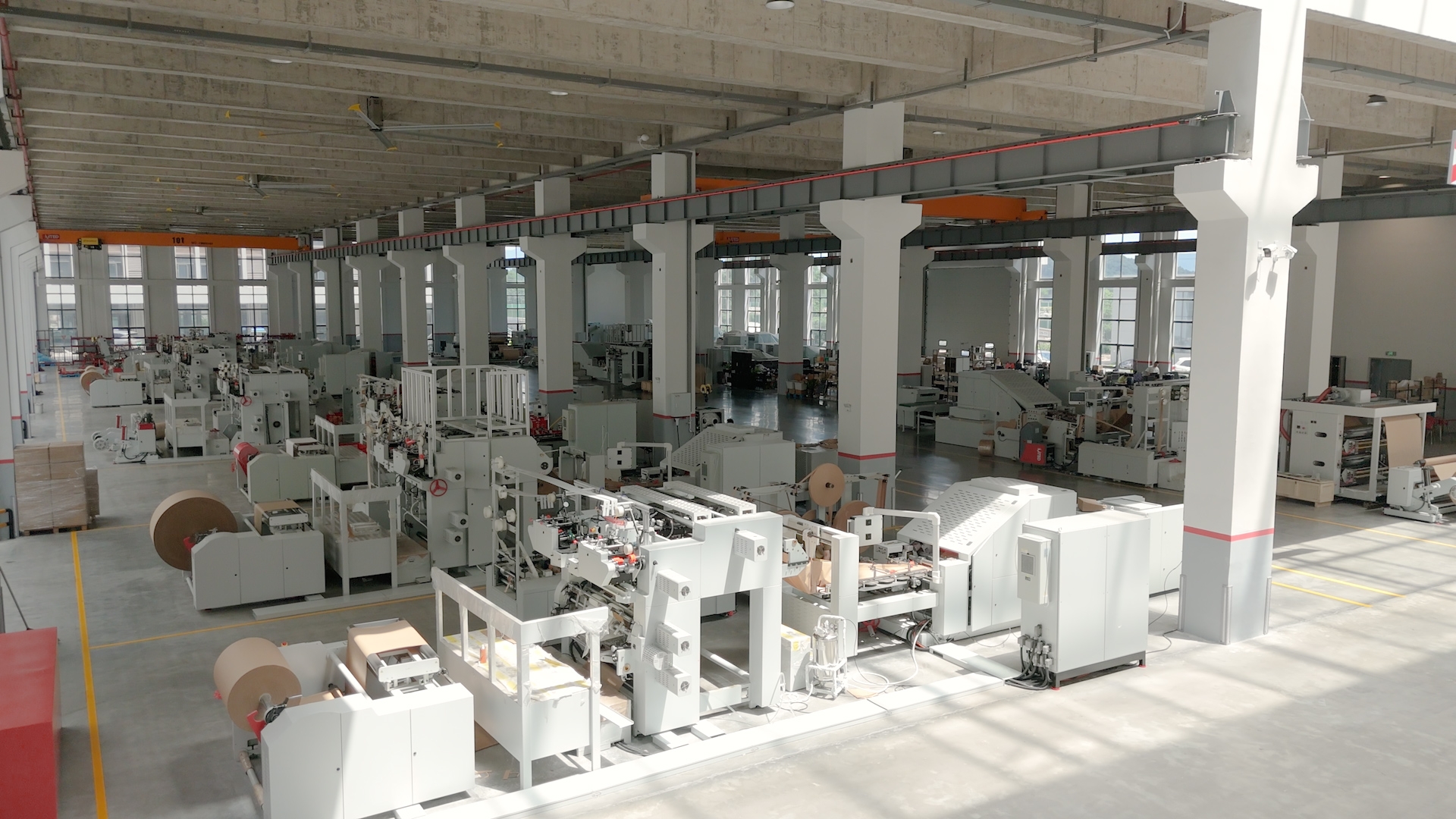
China, India, and Germany together contribute more than 61.4% of global output of paper bag manufacturing machinery. Among Chinese suppliers, Wenzhou Ruizhi Packing Machinery Co., Ltd. is identified as a key player in the sheet-fed paper bag machine sector. Ruizhi Machinery was established in 2003 and operates a 33,333 m² facility with 170 employees and more than 30 R&D engineers. Its annual output reaches approximately 300 units, with 70% exported mainly to the USA and EU markets.
These figures matter to procurement teams because machine supply concentration affects lead time, spare parts availability, and standardization. A buyer sourcing from a region with high production volume can usually expect more mature supply chains and faster component replacement than from a region with limited manufacturing scale.
Detailed Solution: The Main Paper Bag Machine Types
Sharp Bottom Paper Bag Machines
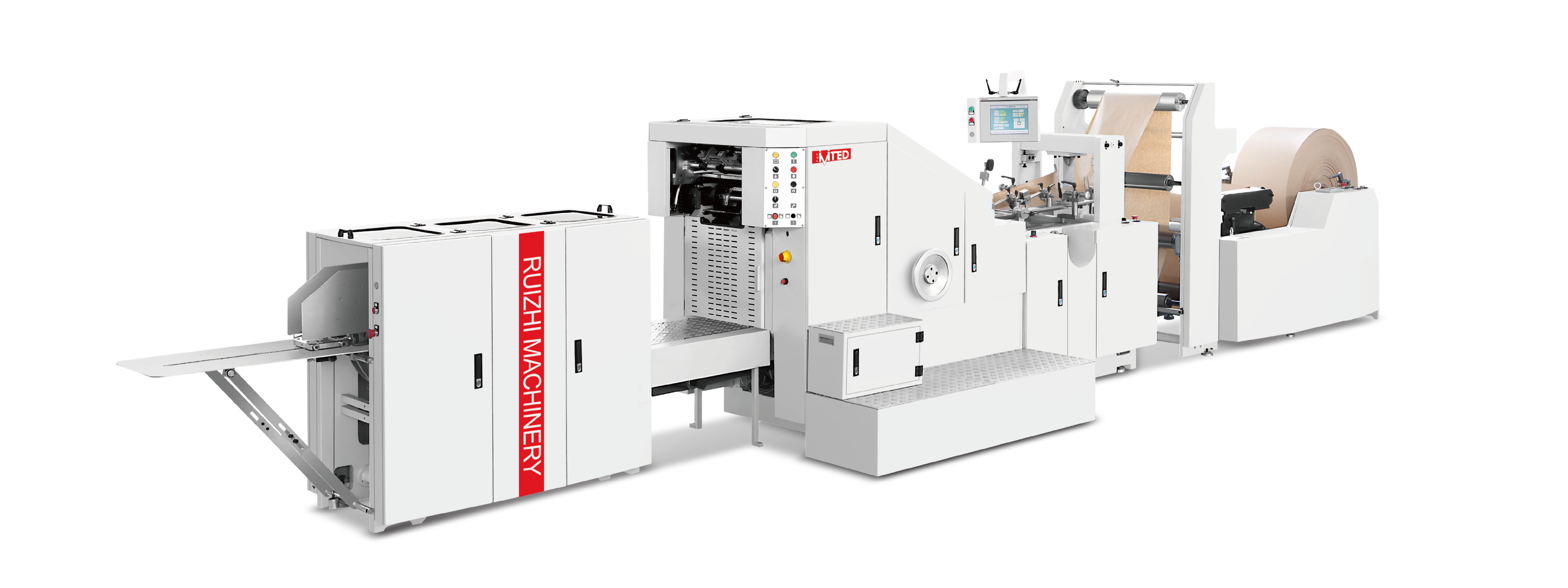
Sharp bottom machines produce bags with a simple V-shaped closed bottom. They are also known as pillow bags or side-seal bags. The process is straightforward: paper is unwound from a roll, folded into a tube, sealed at spaced intervals, and cut into individual bags. This format is mostly used for light-duty applications such as fresh produce bags, bakery bags, and small retail packaging.
Ruizhi's sharp bottom series includes the RZJD-G250J, RZJD-G350J, RZJD-G450J, and RZJD-G550J models. The G550J produces bag widths from 70 to 550 mm, cut lengths from 160 to 715 mm, and runs at 50 to 300 bags per minute with paper thickness of 35 to 80 g/m². The G250J reaches 50 to 500 bags per minute for smaller bags and is suited to high-speed production of compact packaging.
Square Bottom Paper Bag Machines
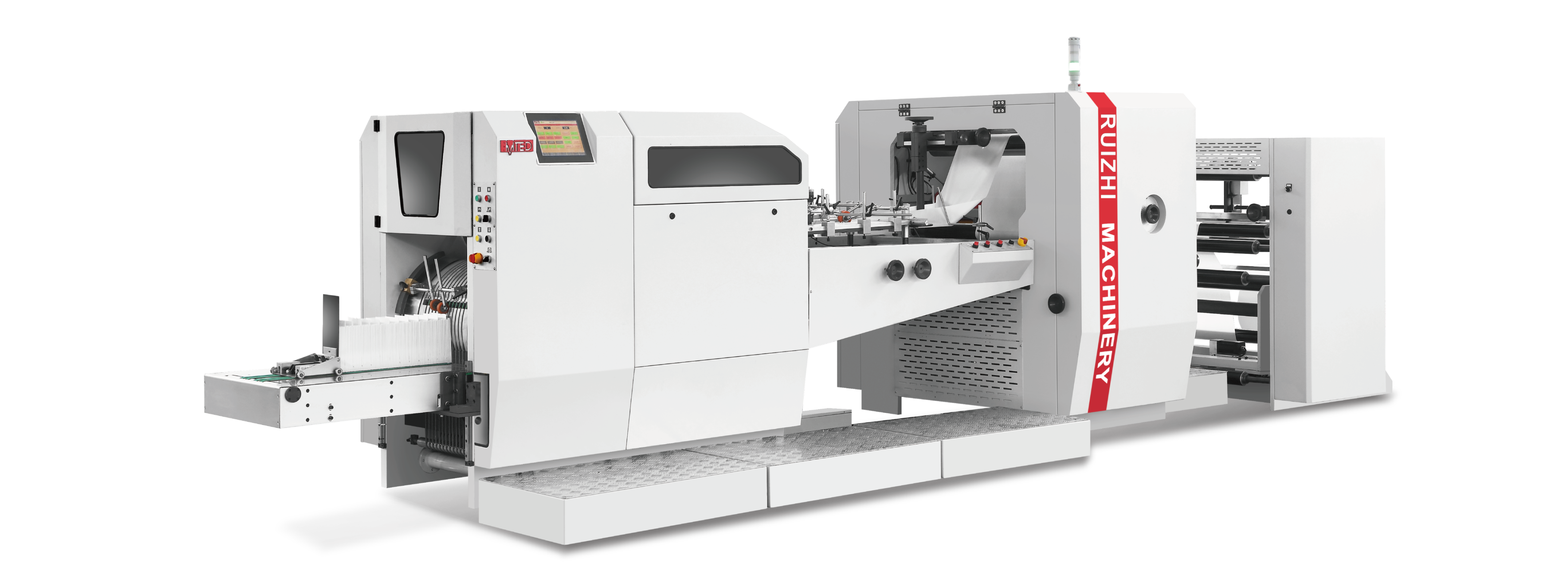
Square bottom machines form a gusseted, rectangular base that allows the bag to stand upright. This is the dominant format because it maximizes storage efficiency and shelf impact in retail environments. In Ruizhi's product line, the RZFD-190, RZFD-250, RZFD-330, RZFD-450A, and RZFD-550N series cover increasing width and bottom ranges.
For example, the RZFD-330 handles bag widths from 120 to 300 mm and bottom widths from 70 to 180 mm, running at 30 to 220 bags per minute with a 15 kW motor. The RZFD-550N handles the largest format with widths up to 550 mm and bottom widths up to 300 mm, running at 30 to 150 bags per minute. These machines serve food packaging, retail packaging, and e-commerce bag producers.
Flat Bottom Paper Bag Machines
Flat bottom machines use a separate patch or folded construction to create a fully flat, reinforced base. This is typical for premium shopping bags, wine bags, and branded packaging that must stand upright on shelves. The RZJD-G250 and RZJD-G350 are part of this category in the Ruizhi portfolio, with the G350 producing bag widths from 70 to 350 mm at up to 700 cycles per minute in machine speed, and 600 finished bags per minute under optimal conditions.
Flat bottom bags generally require more paper and more forming stations, which raises both machine cost and bag unit cost. Their structural advantage explains why they are chosen for marketing-driven packaging rather than low-cost commodity bags.
Handle and Window Options
For retail and luxury bags, square bottom machines can be equipped with handle and window modules. Ruizhi offers the RZFD-330T/F/TF, RZFD-450AT/AF/ATF, and RZFD-550NT/NF/NTF models that integrate round rope handles, flat rope handles, or a combination of handle and window functions. These machines add stations for handle insertion, patch application, and window film lamination.
Handle machines tend to run slower than standard square bottom machines because of the extra process steps. The RZFD-450AT runs at 30 to 150 bags per minute in machine speed and 30 to 130 finished bags per minute. The larger RZFD-550NT reaches 30 to 130 machine speed and 30 to 110 finished bags per minute with a 47 kW motor. Buyers should treat this speed reduction as an intentional trade-off for added bag functionality.
Step-by-Step Breakdown: How to Choose a Paper Bag Machine
-
Define the bag format. Decide first whether the end product must be sharp bottom, square bottom, or flat bottom. This is the foundational decision because it determines the entire mechanical configuration.
-
Set dimensional requirements. Measure the planned bag width, cut length, and bottom width. Use these values as the primary filter. For example, if the bag width is 200 mm and bottom width is 100 mm, both the RZFD-250 and RZFD-330 are workable; the choice then depends on speed and upstream roll width.
-
Select paper weight range. Food packaging often uses paper from 50 to 80 g/m², while shopping bags use 80 to 150 g/m². Check that the machine's paper thickness range covers your substrate without requiring a different line.
-
Compare speed and operational load. Published machine speed often exceeds sustainable bag speed. Ruizhi lists both numbers for each model, for instance machine speed 30 to 220 pcs/min and bag speed 30 to 180 pcs/min for the RZFD-330. Buyers should base capacity planning on the sustained bag speed, not the theoretical maximum.
-
Check utility and installation footprint. Power consumption ranges from 11.5 kW on the RZFD-190 to 55 kW on the RZFD-450NT. Floor space ranges from 8,200 × 3,200 mm on the smallest model to 19,000 × 10,000 mm on the 550NT. Validate these against the plant layout and available electrical supply.
-
Verify material quality and compliance. Ruizhi machines use stainless steel outer casings, carbon steel frames, and alloy core components. The company states that its machines implement ISO 9001 quality system standards and CE safety certification. For European buyers, packaging machinery must also comply with the EU Machinery Directive 2006/42/EC, with the transition to the new EU Machinery Regulation (2023) emphasizing software safety.
-
Request a production test. Before placing an order, confirm that the supplier can run sample bags using your paper and handle material. This step identifies glue setting issues, crease alignment problems, and speed limitations that are not visible in specification sheets.
Use Cases by Industry
Food Packaging
Food contact packaging demands machines with food-grade material contact parts and stable glue application. The working condition for food-grade packaging typically requires an indoor workshop, normal temperature around 10 to 40°C, standard humidity, and a dust-free environment. Ruizhi's RZFD-450A is matched to food packaging production lines and can produce bags with a width of 220 to 450 mm and a bottom of 100 to 200 mm from paper of 80 to 150 g/m². The stainless steel outer casing simplifies cleaning and reduces contamination risk.
Retail and Shopping Bags
Retail bag manufacturers usually need square bottom or flat bottom formats with branding, and increasingly with handles. The RZFD-330T/F and RZFD-450AT/AF series cover this segment with rope handle options. A mid-sized producer running retail bags of 300 mm width would select a 330-class machine; a high-volume producer serving supermarket chains would move to the 450A class or higher.
E-commerce Packaging
E-commerce packaging favors sturdy square bottom bags that survive transit and unboxing. The ability to produce bags with a bottom width of up to 300 mm makes the RZFD-550N useful for larger shipping bags. For smaller e-commerce accessories, the RZFD-190 offers high speed at 30 to 260 pcs/min and a lower footprint.
Specialty and Premium Packaging
Wine bags, gift bags, and premium bakery packaging use flat bottom formats and often require handles or windows. The RZJD-G350 flat bottom machine produces bags up to 350 mm wide and can reach 600 finished bags per minute. The RZFD-550NTF combination model supports handle plus window configurations for producers who want both features from a single line.
Comparison Table: Ruizhi Paper Bag Machine Series at a Glance
| Model | Type | Bag Width | Bottom Width | Paper Thickness | Bag Speed | Power |
|---|---|---|---|---|---|---|
| RZJD-G250J | Sharp Bottom | 70–250 mm | — | 35–80 g/m² | 50–500 pcs/min | 24 kW |
| RZJD-G550J | Sharp Bottom | 70–550 mm | — | 35–80 g/m² | 50–300 pcs/min | 33 kW |
| RZFD-190 | Square Bottom | 80–190 mm | 50–105 mm | 50–130 g/m² | 30–220 pcs/min | 11.5 kW |
| RZFD-250 | Square Bottom | 110–250 mm | 60–150 mm | 50–150 g/m² | 30–200 pcs/min | 15 kW |
| RZFD-330 | Square Bottom | 120–300 mm | 70–180 mm | 60–150 g/m² | 30–180 pcs/min | 15 kW |
| RZFD-450A | Square Bottom | 220–450 mm | 100–200 mm | 80–150 g/m² | 30–130 pcs/min | 17.5 kW |
| RZFD-550N | Square Bottom | 240–550 mm | 130–300 mm | 80–150 g/m² | 30–130 pcs/min | 18 kW |
| RZFD-330T/F/TF | Square Bottom + Handle | 120–330 mm | 70–180 mm | 60–150 g/m² | 30–150 pcs/min | 41.5 kW |
| RZFD-450AT/AF/ATF | Square Bottom + Handle | 220–450 mm | 100–200 mm | 80–150 g/m² | 30–130 pcs/min | 42 kW |
| RZFD-550NT/NF/NTF | Square Bottom + Handle | 240–550 mm | 120–300 mm | 80–160 g/m² | 30–110 pcs/min | 47 kW |
| RZJD-G350 | Flat Bottom | 70–350 mm | — | 35–80 g/m² | 50–600 pcs/min | 27 kW |
What Does "Automatic Paper Bag Machine Price" Actually Depend On?
Automatic paper bag machine price is commonly searched by buyers but no single price applies across the category. The price is determined by several correlated factors:
- Bag format: Square bottom is more mechanically complex than sharp bottom, so it costs more. Flat bottom and handle versions add further cost.
- Width and bottom range: A 550 mm machine has wider frames, larger rollers, and higher power consumption than a 190 mm machine.
- Automation level: Fully automatic multi-station lines integrate handle insertion, window patching, and printing registration, which increases both the value and the price.
- Compliance: CE certification and ISO 9001 quality systems are included in the supplier's manufacturing process but affect engineering and testing costs.
- After-sales service: Installation, commissioning, and operator training are part of the purchase value. Ruizhi states that its complete services include technical consultation, installation and commissioning, and operation training.
Consequently, comparing prices without comparing configuration is misleading. A more practical approach is to obtain a technical specification sheet, a bag sample, and a service scope from two or three suppliers, then evaluate each against a defined production requirement.
Key Parameters Buyers Often Overlook
Paper Roll Width and Roll Diameter
Each machine accepts a maximum paper roll width and roll diameter. The RZFD-330 accepts rolls from 400 to 1050 mm wide, while the RZFD-550N accepts 750 to 1730 mm. If a buyer has existing paper roll inventory, this parameter directly affects whether the current material supply can be used without re-slitting.
Total Weight and Foundation
Machines weigh from 6,200 kg for the RZFD-190 to 26,000 kg for the RZFD-450N and RZFD-550NT series. Floor bearing capacity and foundation design must be verified before installation. Ignoring this factor can delay commissioning and add civil works cost.
Machine Speed vs. Bag Speed
Specification tables list two speeds. Machine speed is the mechanical cycle rate; bag speed is the sustained output after forming and gluing. The gap can be significant. The RZFD-450A lists machine speed 30 to 150 pcs/min and bag speed 30 to 130 pcs/min. Use bag speed for capacity calculations.
Power Requirement
All Ruizhi models use 380V, 3-phase, 4-wire power. Power consumption ranges from 11.5 kW to 55 kW. Facilities with only single-phase supply need a phase converter or must select a different machine configuration.
Frequently Asked Questions
What is the difference between a square bottom and a sharp bottom paper bag machine?
A square bottom machine produces bags with a gusseted rectangular base that allows the bag to stand upright; a sharp bottom machine produces flat bags with a V-shaped closed bottom. Square bottom machines are more common, accounting for about 58.5% of global installations. They operate at lower speeds than sharp bottom machines on the same format but offer better shelf presentation and carrying capacity for retail and food packaging.
What is the automatic paper bag machine price range?
Automatic paper bag machines vary widely in price depending on format, size, automation level, certification, and service scope. Compact square bottom models like the RZFD-190 use 11.5 kW and are suitable for small-format production; large handle machines like the RZFD-450NT use 55 kW and integrate multiple stations. Buyers should compare the technical specification and included services rather than a single list price.
Can a paper bag machine produce both flat bottom and square bottom bags?
No, a standard flat bottom machine and a standard square bottom machine are separate configurations. A flat bottom bag uses a reinforced base patch and is typical for premium packaging, while a square bottom bag uses a gusseted base. Some manufacturers offer dedicated lines for each format, and Ruizhi lists them separately as the RZJD-G flat bottom series and RZFD square bottom series.
Which industries use square bottom paper bag machines?
Square bottom paper bag machines are used mainly in food packaging, retail packaging, and e-commerce packaging. Food production facilities additionally require food-grade material contact parts and a controlled workshop environment. Ruizhi's RZFD-450A is an example of a square bottom machine used in food packaging production lines.
Can I order a sample bag before buying a paper bag machine?
Yes, requesting sample bags is a standard step before confirming a machine purchase. A reliable supplier will run your paper and handle materials on the recommended model to verify glue bonding, crease alignment, and output quality. For more information or to arrange a sample test, contact Ruizhi Machinery at sales@wzruizhi.com or WhatsApp +86 152-5879-7960.
Need help selecting the right paper bag machine?
Download the Ruizhi Machinery brochure to review the full product range.
Download the Brochure (PDF)
Conclusion
Selecting a paper bag machine starts with the bag format, then moves through dimensional range, paper compatibility, speed, utility, compliance, and service support. Sharp bottom machines suit light packaging; square bottom machines are the industry standard for retail and food bags; flat bottom machines serve premium formats. For buyers evaluating automation, price is meaningful only when compared against a detailed specification and a confirmed service scope. Ruizhi Machinery offers a documented range of sharp bottom, square bottom, flat bottom, and handle/window machines, with CE and ISO 9001 compliance, and exports to more than 60 countries. The most practical next step is to define the target bag specification and request a sample test from the shortlisted suppliers.
Have Questions or Need More Details?
Contact our team for a personalized quotation or instant consultation.
Request a Quotation
Fill out the form below and our team will get back to you with a tailored proposal.
WhatsApp Direct Chat
Prefer to chat in real-time? Message us on WhatsApp for instant assistance & quick answers.
- Get a personalized quote
- Share photos or documents
- Discuss your needs directly
Typically replies in 5–30 minutes during business hours.