
Drum Motor Explained: Housing Materials, IP Ratings, and How to Specify

Cover image: SEAPARKS DM113F hygienic drum motor product diagram. DM113F is one of the stainless steel drum motor models used in food, pharmaceutical, and medium-duty belt conveyor applications.
For engineers, integrators, and procurement teams evaluating conveyor drive options, the term “drum motor” describes a compact, motorized conveyor pulley in which the motor and gearbox are enclosed inside the drum shell. Instead of mounting a separate motor, gearbox, sprocket, and chain beside the conveyor, a drum motor drives the belt directly through its own rotating outer surface. This article explains the core design differences—housing material, motor type, and protection rating—that determine which drum motor suits a given conveyor project.
What Is a Drum Motor?
A drum motor is a self-contained drive unit for belt conveyors, integrating an electric motor and gear transmission inside a cylindrical shell. The shell itself rotates to drive the conveyor belt, eliminating external gearboxes, chains, sprockets, and motor mounts. Because all drive components are enclosed, drum motors are widely used in applications where cleanliness, compactness, safety, and low maintenance matter—such as airport baggage handling, security screening, food processing, pharmaceutical conveying, parcel sorting, and general manufacturing lines.
Manufacturers such as SEAPARKS—officially Tianjin Seaparks Machinery-Electronics Co., Ltd.—have built dedicated product families around these requirements. Founded in 2002, the company specializes in the design and manufacturing of motorized conveyor drums, with a 50,000 m² facility, roughly 360 employees, and an R&D team of 40 engineers. Its annual production capacity reaches 380,000 units, and more than one million SEAPARKS drum motors have been installed worldwide.
For a first-time buyer, the most important specification points are usually:
- Roller diameter (Ø80 mm to Ø216 mm in SEAPARKS standard ranges);
- Motor type—three-phase asynchronous, three-phase synchronous, or single-phase asynchronous;
- Housing material—carbon steel or stainless steel;
- Protection rating—IP66, IP67, IP69, or IP69K;
- Rated power, torque, belt pull, and belt speed;
- Minimum roller width for the required belt width.
Why Conveyor Designs Increasingly Use Drum Motors
The global drum motor market was estimated at approximately USD 2.13 billion in 2025, according to Custom Market Insights, with growth attributed to logistics automation and food processing demand. Industry analysis from Dataintelo indicates that Asia Pacific is projected to hold the largest regional revenue share, about 38.2% by 2025, driven by industrialization and e-commerce growth in China and India. This aligns with the broader trend of conveyor systems replacing manual material handling across warehouses, airports, food plants, and manufacturing facilities.
From an engineering perspective, a drum motor removes the need for external reduction parts. Common benefits cited by conveyor designers include reduced footprint, lower risk of product contamination, fewer wear parts, safer operation, and simpler washdown compliance. These characteristics make the drum motor especially relevant for hygiene-sensitive industries such as food processing and pharmaceuticals.
SEAPARKS exports motorized drums to more than 50 countries and regions. Export business accounts for approximately 5% of total sales, while the company serves customers across China, Singapore, Southeast Asia, India, Australia, the Middle East and Africa, CEE and Nordics, Western Europe, DACH and Italy, the United States, LATAM, Russia, and CIS. The company’s products are used in airport baggage handling, security inspection machines, express sorting, food and pharmaceutical production, and general manufacturing.
Anatomy of a Drum Motor: What Is Inside the Shell?
A drum motor’s internal layout determines its performance profile. Most SEAPARKS drum motors contain three functional groups: an electric motor, a gear stage, and a shaft system that keeps the outer shell rotating around a stationary axis.
In SEAPARKS naming, the first letter indicates motor type:
- TM series: asynchronous (induction) motor;
- DM series: synchronous motor.
The number indicates roller diameter in millimeters. For example, TM113F is a three-phase asynchronous hygienic drum motor with Ø113 mm roller diameter, while DM216F is a synchronous hygienic drum motor with Ø216 mm roller diameter.
The gear train inside SEAPARKS drum motors is typically made of alloy steel. Some light-duty models use polymer gears, which lowers noise and cost in lighter applications. Housing choices are carbon steel or stainless steel depending on the environment.

Supporting diagram: TM113A drum motor cross-section. The image illustrates the compact integration of motor and gear drive inside the drum shell.
Stainless Steel vs. Carbon Steel Drum Motor Housings
One of the first procurement decisions is housing material, because it largely defines the application envelope and price level.
SEAPARKS light-duty drum motor models such as TM80M, TM113M, and TM113A are available with either carbon steel or 304 stainless steel housings. In the hygienic “F” series, the standard housing is 304 stainless steel, with 316 stainless steel as an option. Typical hygienic models include TM80F, TM113F, DM113F, TM138F, DM138F, TM165F, DM165F, TM216F, and DM216F.
| Housing Material | Typical Applications | Key Characteristics |
|---|---|---|
| Carbon steel | General logistics, packaging, security screening conveyors, dry industrial environments | Cost-effective, strong, suitable for indoor and non-corrosive atmospheres |
| 304 stainless steel | Food processing, meat processing, pharmaceutical, washdown environments | Corrosion resistance, easier cleaning, supports high-pressure washdown when paired with IP69K protection |
| 316 stainless steel (optional) | Highly corrosive or chemically aggressive environments | Higher resistance to chlorides and chemicals than 304 stainless steel |
Hygienic Drum Motor Series for Food and Pharma
The “F” designation in SEAPARKS model names marks a Food & Pharmaceutical Drum Motor. These units are built for medium-duty belt conveyors, meat processing conveyors, food processing conveyors, packaging conveyors, belt sorting conveyors, assembly lines, and agricultural product belt conveyors.
For example, the TM216F hygienic drum motor has a Ø216 mm roller diameter and minimum roller width of 510 mm. It uses a three-phase asynchronous motor, alloy steel gears, and a 304 stainless steel housing with optional 316 stainless steel. Rated power is 3.5–4.0 kW, rated torque is 207.36–507.6 Nm, nominal belt speed is 0.8–2.1 m/s, and maximum belt pull is 4700 N. Protection grade is IP69K.
The synchronous DM216F variant offers a rated power range of 4.0–5.5 kW, rated torque range of 182.90–568.98 Nm, nominal belt speed range of 0.8–2.5 m/s, and maximum belt pull of 5244 N. Both models share the same stainless steel construction and IP69K protection.
Smaller hygienic models can be matched to lighter product loads. The DM80F hygienic drum motor has an Ø80 mm shell, minimum roller width of 320 mm, nominal belt speed range of 0.16–1.03 m/s, maximum belt pull of 534 N, rated torque of 3.49–21.89 Nm, and rated power of 0.09–0.12 kW. This size range suits compact conveyor transfers and lighter food or pharmaceutical products.
Light Duty Drum Motors for Screening and Parcel Conveyors
SEAPARKS Light Duty Conveyor Drum Motors are designed for security screening conveyors at airports and railway stations, airport baggage handling systems, packaging conveyors, belt scale conveyors, and general belt conveyors. Depending on model, the housing can be carbon steel or 304 stainless steel, and protection class reaches IP66/IP67/IP69.
The TM80M is a single-phase asynchronous light-duty drum motor with Ø80 mm roller diameter, minimum roller width of 260 mm, and polymer gear. Its nominal belt speed range is 0.05–0.85 m/s, maximum belt pull is 630 N, rated torque range is 2.71–25.9 Nm, and rated power range is 0.034–0.11 kW. The compact size suits X-ray security scanners and baggage-handling feeds where space is limited.
The TM113M also uses a polymer gear and is available with carbon steel or 304 stainless steel housing. It provides higher belt pull—770 N maximum—with an 0.11–1.05 m/s nominal belt speed range and Ø113 mm roller diameter. These models are commonly matched to airport and railway security screening conveyors.
Motor Type: Asynchronous vs. Synchronous
Another fundamental choice is between a three-phase asynchronous motor and a synchronous motor. Both types appear in the SEAPARKS range, and each has different operational behavior.
An asynchronous (induction) motor is the more traditional choice in industrial drive applications. It is widely available, simple in construction, and robust for continuous conveyor operation. In hygienic designs, SEAPARKS offers asynchronous models such as TM80F, TM113F, TM138F, TM165F, and TM216F; in light-duty applications, asynchronous models include TM80A, TM113A, and TM138A.
Synchronous motors rotate at a speed synchronized with the supply frequency. SEAPARKS synchronous drum motor models in the hygienic series include DM80F, DM113F, DM138F, DM165F, and DM216F. In light-duty series, synchronous models include DM80A, DM113A, and DM138A.
| Comparison Point | TM Series — Asynchronous | DM Series — Synchronous |
|---|---|---|
| Motor principle | Induction; rotor speed is slightly below synchronous speed under load | Rotor runs at synchronous speed matched to supply frequency |
| Examples in hygienic range | TM80F, TM113F, TM138F, TM165F, TM216F | DM80F, DM113F, DM138F, DM165F, DM216F |
| Examples in light-duty range | TM80A, TM113A, TM138A | DM80A, DM113A, DM138A |
| Typical application notes | Widely used for industrial continuous duty; robust across food and general conveying | Used where a different speed/torque profile or control behavior is preferred |
When reviewing a model, buyers should compare the rated power, rated torque, belt pull, and belt speed against the actual conveyor load profile. Two models with the same roller diameter can have very different torque ranges depending on motor type and gearing.
IP Ratings and IP69K for Wet or Hygienic Lines
Protection class is one of the most visible selection criteria for washdown and outdoor conveyor systems. IP ratings define the level of protection against dust and water ingress. The higher the number, the stricter the protection.
SEAPARKS stainless steel hygienic drum motors are rated IP69K, the highest ingress protection rating under IEC 60529. In food processing environments, IP69K-rated motors are expected to withstand high-pressure and high-temperature washdowns—commonly described in the industry as pressures of up to 1450 psi and temperatures of 80°C. This makes them suitable for lines that require frequent cleaning cycles with chemicals and hot water.
SEAPARKS light-duty models generally carry IP66/IP67/IP69 ratings. The selection between IP69 and IP69K depends on the severity of washdown conditions and applicable food safety protocols.
For wet or washdown lines, the supporting conveyor design also matters. A stainless steel conveyor frame and food-grade conveyor belt are typically required in food processing and cold chain applications, along with an integrated cleaning system.
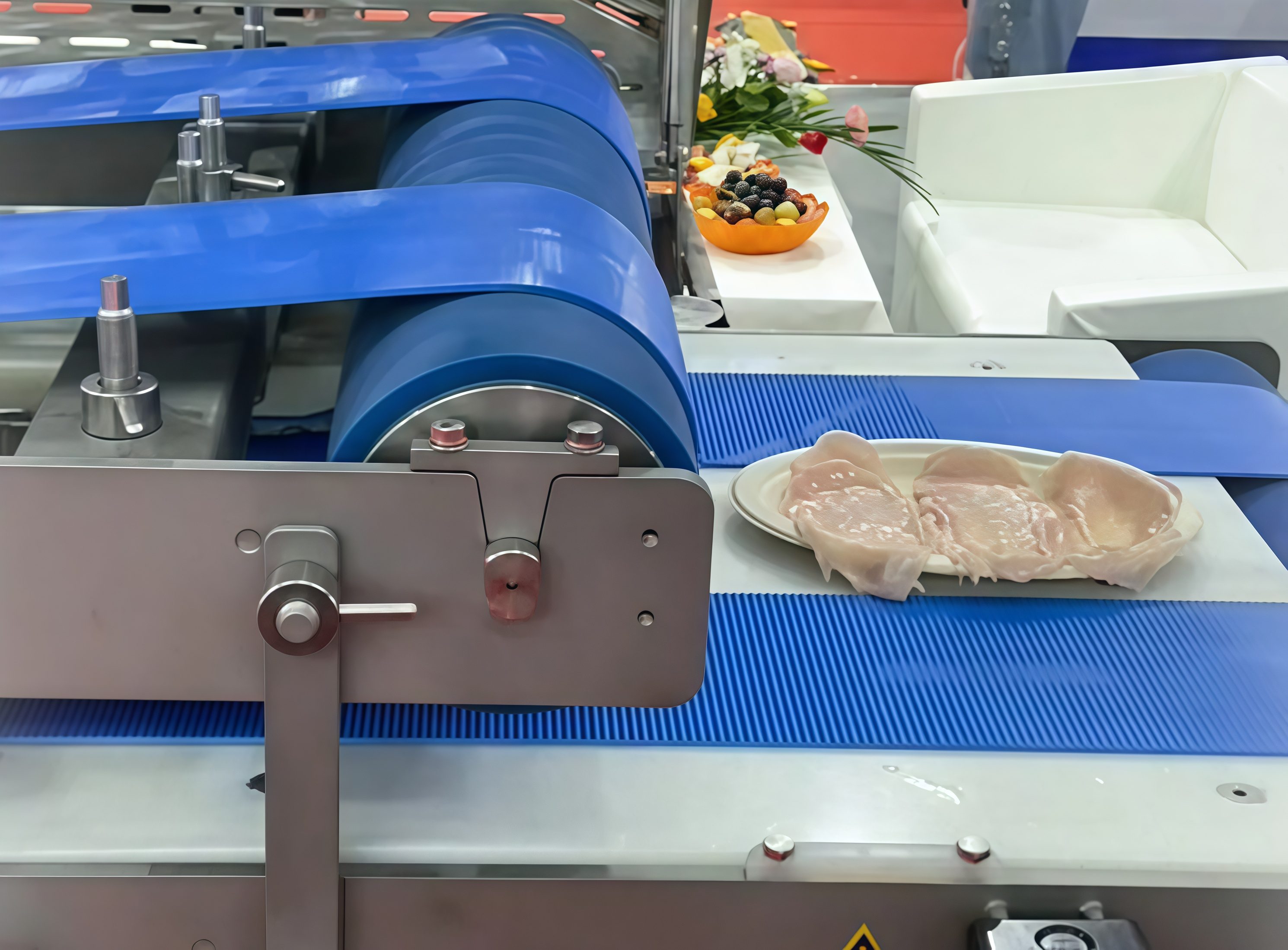
Supporting image: food processing conveyor powered by a stainless steel drum motor. IP69K-rated drum motors are used in high-humidity and frequent-washdown lines.
Mapping Drum Motor Selection by Application
Airport Baggage and X-ray Security Screening
Airport civil aviation and security inspection equipment environments have demanding operational requirements. SEAPARKS drum motors used in airport baggage handling systems and X-ray security check conveying lines are designed for high-precision positioning, stable low-speed operation, anti-electromagnetic interference, and flame-retardant behavior. They operate in 24/7 continuous mode with frequent start-stop capability.
In this scenario, the drum motor conveys luggage and parcels for X-ray security inspection with precise positioning. Supporting equipment typically includes X-ray security scanners, baggage trays, metal detectors, and conveyor guide rails. Light-duty models including TM80A, TM113A, TM80M, and TM113M fit many of these security screening conveyor applications.
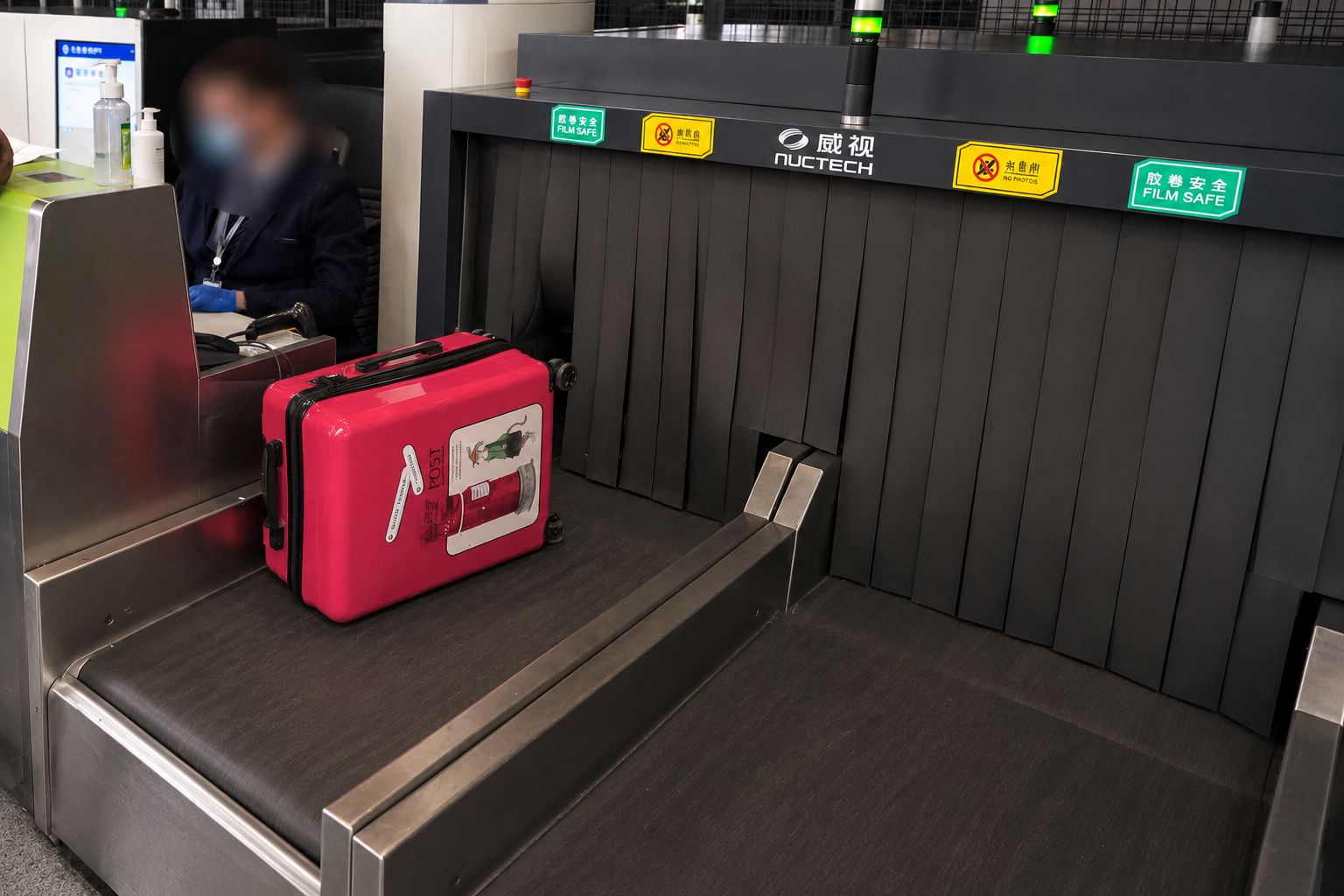
Supporting image: airport X-ray security screening conveyor. The high-precision, 24/7 operating environment requires low-vibration drum motors with anti-interference characteristics.
Food Processing and Cold Chain Logistics
Food processing and cold chain logistics conveyors typically operate in high humidity, corrosive environments with frequent cleaning cycles. SEAPARKS drum motors specified for these projects need IP69K high-pressure washdown protection, food-grade 304 stainless steel construction, corrosion resistance, and easy cleaning. Typical duties include raw material conveying, product transfer, and packaging conveying.
Hygienic F-series models with Ø80 mm, Ø113 mm, Ø138 mm, Ø165 mm, and Ø216 mm roller diameters can be matched to different load levels. For heavier meat-processing or packaging lines, the TM216F or DM216F provides the highest belt pull in the hygienic range, with maximum belt pull ratings of 4700 N and 5244 N, respectively.
Agricultural Product and Feed Production
In agricultural product processing, feed production, and food handling, conveyors often run in dusty environments with continuous operation and frequent material handling cycles. The equipment typically supports raw material conveying, product transfer, packaging, and automated sorting. Dust protection, reliable operation, high load capacity, and low maintenance requirements are the stated special requirements in SEAPARKS application guidelines.
For moderately dusty agricultural environments, hygienic F-series models built from stainless steel offer easier sanitation. For standard production lines where washdown is less aggressive, carbon steel housing models can also be considered.
Sample Specification: What a Drum Motor RFQ Should Include
Before contacting a drum motor supplier, prepare a specification sheet that includes the following parameters:
- Roller diameter—Ø80 mm, Ø113 mm, Ø138 mm, Ø165 mm, or Ø216 mm, depending on belt and load requirements;
- Motor type and phase—three-phase or single-phase; asynchronous or synchronous;
- Rated power and torque—matched to conveyor load;
- Belt speed—nominal belt speed range required by the process;
- Belt pull—maximum continuous and start-up pull;
- Housing material—carbon steel, 304 stainless steel, or 316 stainless steel;
- Protection rating—IP66, IP67, IP69, or IP69K;
- Minimum roller width—must accommodate belt width;
- Environmental conditions—dust, humidity, washdown frequency, temperature, corrosive chemicals;
- Certification requirements—CE, UL, or other target market compliance.
Providing these parameters early helps suppliers recommend the correct product series and reduces the risk of later redesign.
Certifications and Compliance for Conveyor Drive Motors
Conveyor equipment sold to regulated markets often requires documented compliance. SEAPARKS has obtained ISO 9001, ISO 14001, ISO 45001, RoHS 2.0, UL, and CE certification. The Amroll Drum Motor also holds a TÜV Rheinland Certificate of Conformity for the EMC Directive 2014/30/EU, with certificate number AE 50461043 0001, issued by TÜV Rheinland LGA Products GmbH; it complies with EN 60034-1:2010, applicable to the EU market.
For European buyers, CE marking requirements commonly reference the Low Voltage Directive 2014/35/EU and relevant harmonized standards such as EN 62841 or IEC 60034-1. Buyers should confirm that the selected drum motor model meets the certification requirements of the destination country before ordering.
Why Supplier Qualification Matters for Drum Motors
A drum motor is a long-life, partially sealed component. If the motor or gear stage fails, replacement usually involves removing the complete drum from the conveyor. This makes production reliability, spare part availability, and consistent manufacturing quality more important than in an external gearmotor system, where individual parts can be replaced in place.
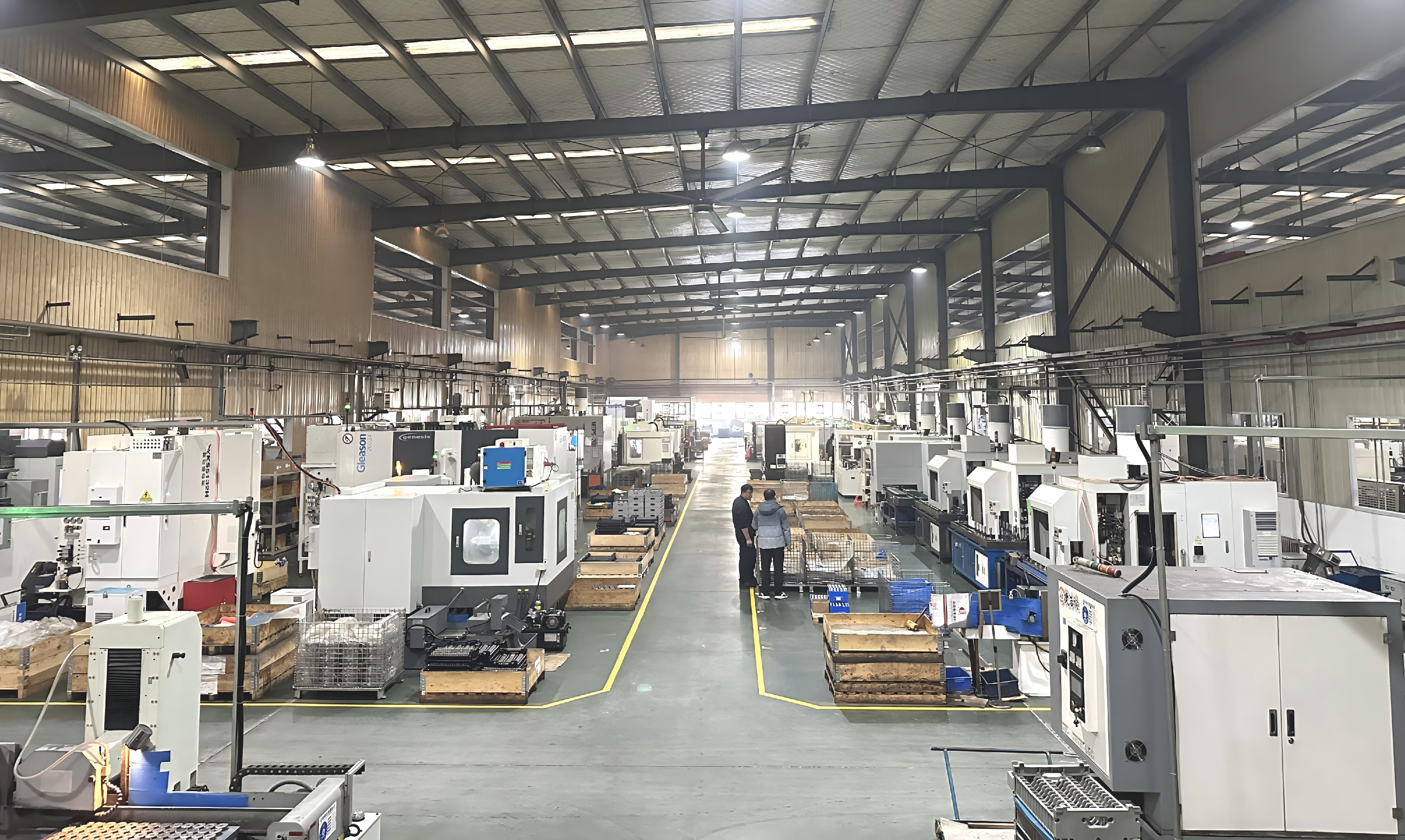
SEAPARKS positions itself as a full-process drum motor manufacturer rather than an assembly-only operation. Its production capabilities include nearly 200 sets of high-end machine tools, more than 20 automatic feeding production lines, and an annual output capacity of 380,000 units. The company is located in Tianjin, operating from a headquarters factory in Beichen District and an additional factory in Ninghe District.
First-time buyers should audit the supplier’s certificates, production equipment, test capability, and application references. A supplier that can document both its quality system and its product-specific certifications is generally easier to qualify for long-term conveyor projects.
Frequently Asked Questions (FAQ)
1. What should buyers look for when evaluating drum motor suppliers?
Buyers should evaluate a supplier’s product range, certifications, manufacturing depth, and application experience. Key evidence points include ISO 9001, ISO 14001, ISO 45001, RoHS 2.0, UL, and CE certification; documented compliance such as the TÜV Rheinland EMC Certificate of Conformity for the Amroll Drum Motor; and long-term production experience. A manufacturer with dedicated R&D, in-house machining, and automatic production lines—such as SEAPARKS with its 50,000 m² facility, 40-engineer R&D team, and 380,000-unit annual capacity—is typically able to provide more consistent quality and faster technical response.
2. Which SEAPARKS drum motors are suitable for food processing conveyors?
The Food & Pharmaceutical Drum Motor series is intended for medium-duty belt conveyors, meat processing conveyors, food processing conveyors, packaging conveyors, belt sorting conveyors, assembly lines, and agricultural product belt conveyors. This series includes TM80F, DM80F, TM113F, DM113F, TM138F, DM138F, TM165F, DM165F, TM216F, and DM216F. These models use a 304 stainless steel housing, with 316 stainless steel optional, and carry IP69K protection for hygienic washdown environments.
3. What is the largest hygienic drum motor model offered by SEAPARKS?
The largest standard hygienic models are TM216F and DM216F, both with Ø216 mm roller diameter and minimum roller width of 510 mm. The TM216F has rated power of 3.5–4.0 kW, rated torque of 207.36–507.6 Nm, nominal belt speed of 0.8–2.1 m/s, and maximum belt pull of 4700 N. The DM216F has rated power of 4.0–5.5 kW, rated torque of 182.90–568.98 Nm, nominal belt speed of 0.8–2.5 m/s, and maximum belt pull of 5244 N.
4. Can carbon steel drum motors be used in washdown areas?
Carbon steel housings are less corrosion-resistant than stainless steel and are generally not the first choice for frequent high-pressure washdown areas. SEAPARKS light-duty models are available with carbon steel or 304 stainless steel housings, while hygienic F-series models are built with 304 stainless steel as standard and 316 stainless steel as an option. For food processing, cold chain, and wet environments where caustic cleaning agents are used, a stainless steel housing with IP69K protection is the more appropriate specification.
5. How can I get a drum motor quotation or discuss a conveyor specification?
SEAPARKS application engineers can help match a drum motor model to your load, speed, belt, and environmental requirements. Send an inquiry with your conveyor parameters to Laura Li at lijiao@seaparks.com or contact +86 18322005232 via phone or WhatsApp. The company address is No.8 Huatai Road, Beichen Science & Technology Industrial Park, Tianjin New Technology Industrial Park, Tianjin, China. A downloadable product and corporation brochure is also available at https://cdn.socialarks.com/sbsp/24988/common/2026/0708/Product%20%26%20Corporation%20260624.pdf.
Conclusion
Understanding drum motor basics helps buyers select a conveyor drive that matches the application’s sanitation demands, load profile, and operational environment. Start by choosing the housing material—carbon steel for dry logistics and general conveying; 304 or 316 stainless steel for washdown and hygienic lines. Then select the right diameter, motor type, torque, belt speed, and protection rating. For food, pharmaceutical, and wet environments, an IP69K-rated stainless steel drum motor model such as SEAPARKS’ F-series is the natural reference. For airport security screening, baggage handling, and lighter parcel conveyors, the light-duty M and A series provide compact, protection-rated alternatives.
Need help defining the right drum motor specification?
SEAPARKS manufactures a full range of carbon steel and stainless steel drum motors, including IP69K hygienic models, light-duty conveyors drives, and OEM conveyor belt drive solutions. Contact Laura Li at lijiao@seaparks.com, call/WhatsApp +86 18322005232, or visit www.seaparks.com to discuss your project.
Tianjin Seaparks Machinery-Electronics Co., Ltd.
No.8 Huatai Road, Beichen Science & Technology Industrial Park, Tianjin New Technology Industrial Park, Tianjin, China
Have Questions or Need More Details?
Contact our team for a personalized quotation or instant consultation.
Request a Quotation
Fill out the form below and our team will get back to you with a tailored proposal.
WhatsApp Direct Chat
Prefer to chat in real-time? Message us on WhatsApp for instant assistance & quick answers.
- Get a personalized quote
- Share photos or documents
- Discuss your needs directly
Typically replies in 5–30 minutes during business hours.