
Supplier Evaluation: How to Verify Drum Motor Load Capacity and Certifications Before Purchase
A drum motor quotation becomes verifiable when two things are documented: the load the drum can actually pull at your belt speed, and the certification file that covers the exact model, capacity range and destination market. Verify those two items first — price, delivery and warranty only become comparable afterwards.
This guide is written for procurement teams, conveyor engineers and maintenance managers evaluating drum motor suppliers at the decision stage: after the shortlist, before the purchase order. It sets out the technical data to request — maximum belt pull, torque range, output speed, protection class, housing material and motor type — the certification evidence worth accepting, and the warning signs that a quotation is not yet comparable.
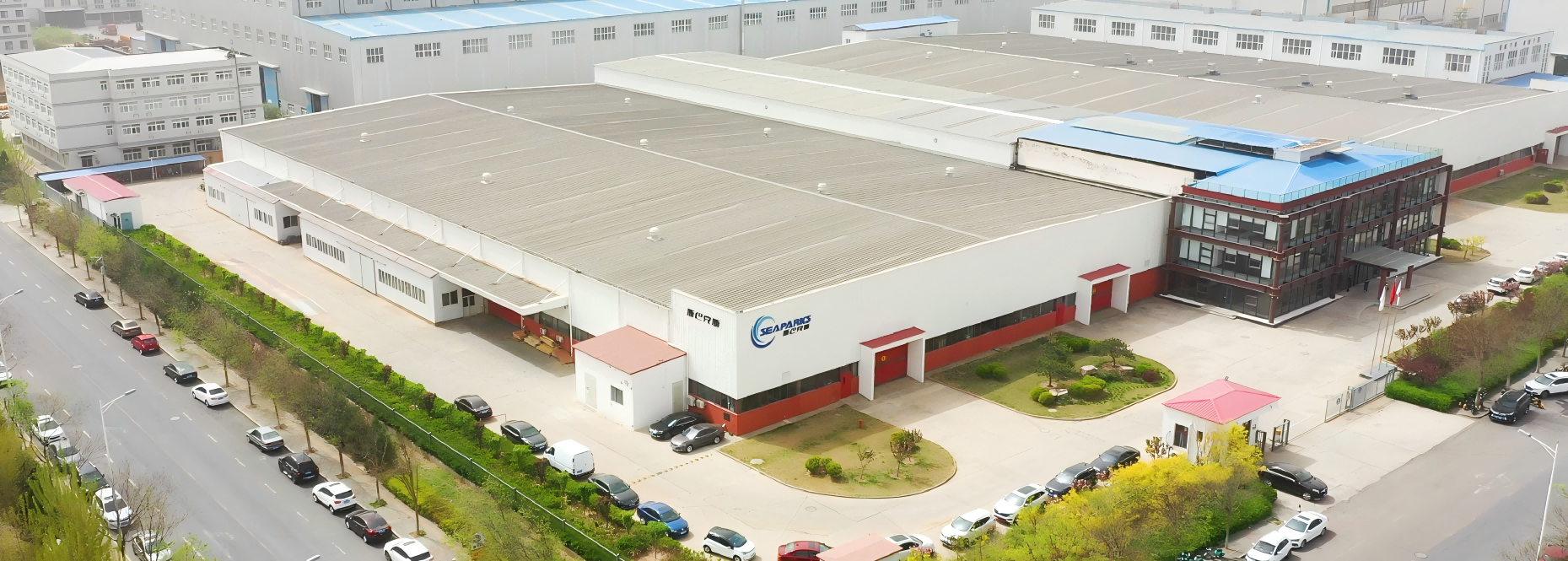
A drum motor is a self-contained conveyor drive in which the electric motor, gearbox and rotating assembly sit inside the drum shell, and the shell itself acts as the drive pulley. Tianjin Seaparks Machinery-Electronics Co., Ltd (SEAPARKS), a manufacturer of motorized conveyor drums founded in 2002 in Tianjin, China, is used in this article as a reference portfolio; the evaluation criteria apply to any supplier you shortlist.
Why drum motor evaluations fail before the purchase order
Failures at this stage are usually documentation failures rather than hardware failures. The most frequent case is a quotation that states motor power in kW but never states the rated maximum belt pull in newtons at the belt speed and drum diameter of the actual conveyor — leaving the buyer to guess whether the drive can start a fully loaded belt.
Six gaps appear repeatedly in supplier packages:
- Power instead of capacity. A kW figure describes the motor, not the pulling capability of the drum.
- Torque without speed context. Rated torque is only meaningful together with the output speed and the drum diameter it is quoted for.
- Protection claims without a standard. "Waterproof" or "washdown-proof" written without an IP class tested to IEC 60529.
- Material claims without a grade. "Stainless steel" quoted without distinguishing grades such as 304 and 316, or without stating whether the shell is carbon steel, stainless steel or rubber coated.
- Certificates without scope. A row of ISO, CE or UL logos with no certificate documents, no issuing body and no model coverage.
- Samples tested without load. A sample that spins freely at no load proves very little about belt pull at operating duty.
The cost of these gaps is paid later: belt slip or stall on commissioning, premature gear or bearing failure, a failed hygiene audit after installation, or an unresolved CE or UL question at the customs stage.
Industry background: why capacity and certification evidence are under closer review
Global demand for drum motors was valued at approximately USD 2.07 billion to USD 2.13 billion across 2023–2025, with growth driven mainly by logistics automation and food processing equipment (Custom Market Insights). Asia Pacific is projected to hold a 38.2% revenue share by 2025 (Dataintelo), which is one reason procurement teams increasingly evaluate Chinese drum motor manufacturers directly instead of through intermediaries.
Within the category, AC drum motors accounted for a 52.3% revenue share in 2025, and Interroll Group is identified as a leading player in the market (Dataintelo). That concentration around AC drive technology is also why questions about three phase and single phase supply, variable speed control and energy efficiency now appear in the same tender as mechanical capacity questions.
The change in drive architecture has been just as significant as the change in demand. Integrated drum motor designs remove external transmission parts and produce measurable differences against traditional gearbox-driven conveyor systems: approximately 30% lower energy consumption through optimized direct drive transmission, installation efficiency improved by up to 7 times, and approximately 30% lower initial investment cost. Maintenance requirements fall as well, because there are no external components requiring lubrication or adjustment.
Regulation adds a second layer of verification. IP69K is the highest ingress protection rating defined under IEC 60529 and is tested against high-pressure, high-temperature washdowns of up to 1450 psi and 80 °C water, not simple immersion. For the European market, drum motors fall within the Low Voltage Directive 2014/35/EU and require CE marking, typically supported by safety standards such as EN 62841 or IEC 60034-1 (European Commission). A supplier that cannot produce these documents on request is a supply risk regardless of price.
The six verification blocks: what to request from a drum motor supplier
1. Load capacity: ask for maximum belt pull, not motor power
Ask for the rated maximum belt pull in newtons for the exact drum diameter, belt speed and belt wrap angle your conveyor runs, plus the service factor that applies to your start-stop frequency and load shocks. A figure quoted at a different belt speed or drum diameter cannot be compared with your requirement, and motor power alone cannot be converted into belt pull reliably. Request the data per model: the published figure for a light-duty unit such as the TM113M and the figure for a larger hygienic model will not be identical, and the quotation should reflect the specific model being quoted.
2. Torque range and output speed
Rated torque in Nm, output speed range, gear ratio, and whether the unit runs fixed speed or variable speed should all be stated for the quoted model. Confirm whether the torque figure is continuous or peak, and which supply type the rating assumes — three phase drum motors and single phase drum motors do not behave identically under the same load. Where throughput is expected to change over the life of the line, ask at which speed range the quoted torque is still valid.
3. Protection class matched to the cleaning regime
Protection class should be specified against a standard, not a marketing word. IP69K, the highest rating under IEC 60529, is the relevant level for hygienic drum motors on food processing and pharmaceutical lines cleaned with high-pressure washdown equipment; IP66 or IP67 units suit splash zones and dusty areas but are not designed for the same cleaning procedure. Ask the supplier to state the test conditions behind the claim and to confirm which individual models carry it.
4. Housing material and motor type
Shell material drives both corrosion life and hygiene performance. Carbon steel drum motors are economical for dry, general conveying; stainless steel drum motors handle washdown and chemical exposure; rubber coated drum motors are used where grip and belt tracking matter more than surface cleanliness. Confirm the grade rather than accepting "stainless" as a description, and confirm the lubrication concept. SEAPARKS, used here as the reference portfolio, builds oil-free motorized drums for belt conveyors in the DXZ series, synchronous oil-immersed drums in the DMA/F/H series, asynchronous oil-immersed drums in the TMA/F/H series, and AM200 and TP pallet motorized drums for roller conveyors, alongside unpowered conveyor rollers.
5. Certification evidence, including scope
Request the certificates, not the logo row. For the reference portfolio, the published set is ISO 9001 for quality management, ISO 14001 for environmental management, ISO 45001 for occupational health and safety, RoHS 2.0 for material compliance, UL certification and CE certification. Beyond the list, verify three things: that the certificate scope names the model family and capacity range quoted, that the issuing body is identifiable, and that the mark matches the destination market — CE under the Low Voltage Directive 2014/35/EU for the EU, UL for North America. National recognition programmes such as National High-tech Enterprise status, a municipal enterprise technology centre designation, or a specialized, refined, unique and innovative enterprise rating are secondary signals that a supplier maintains a recognized engineering function.
6. Manufacturing and support capacity behind the claim
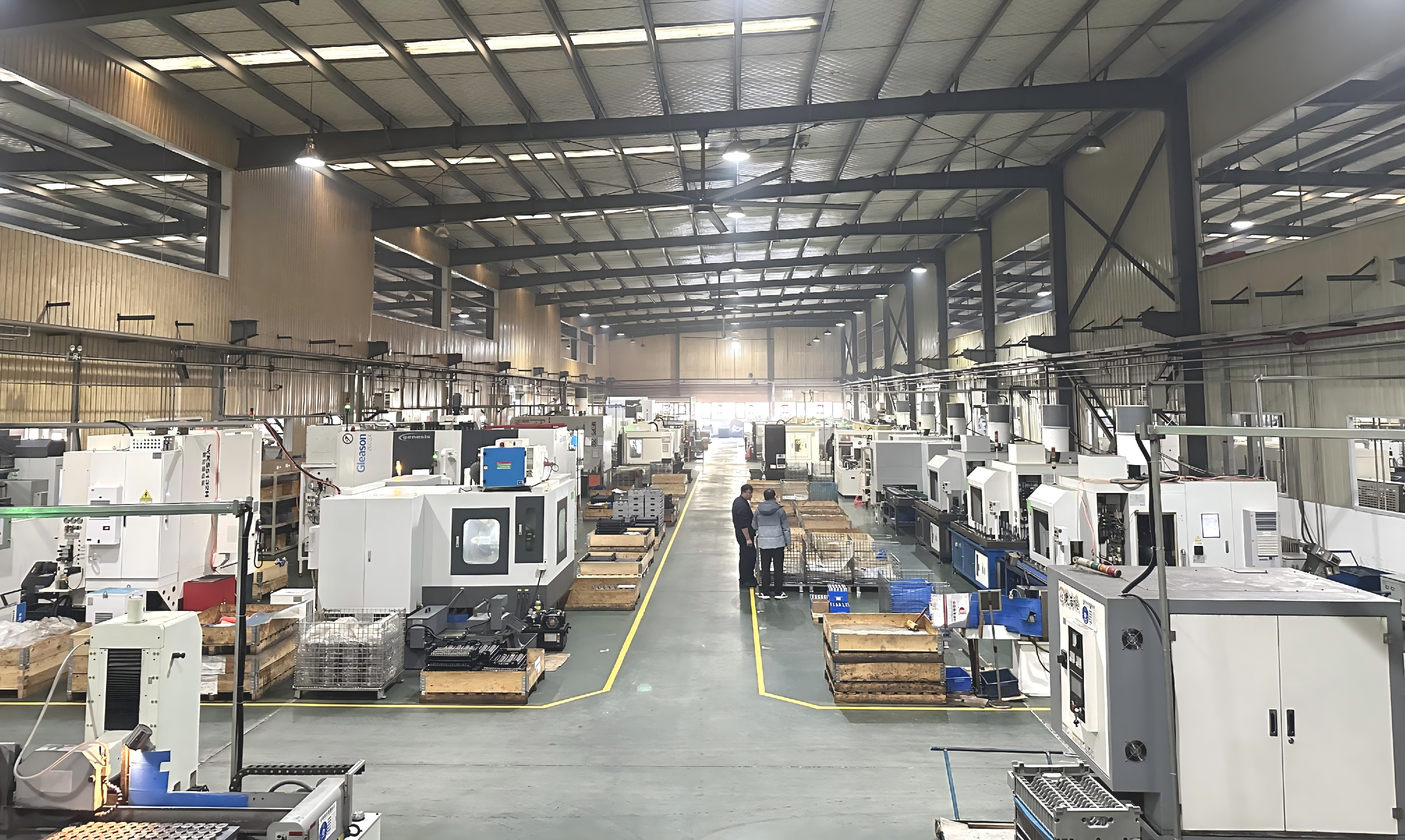
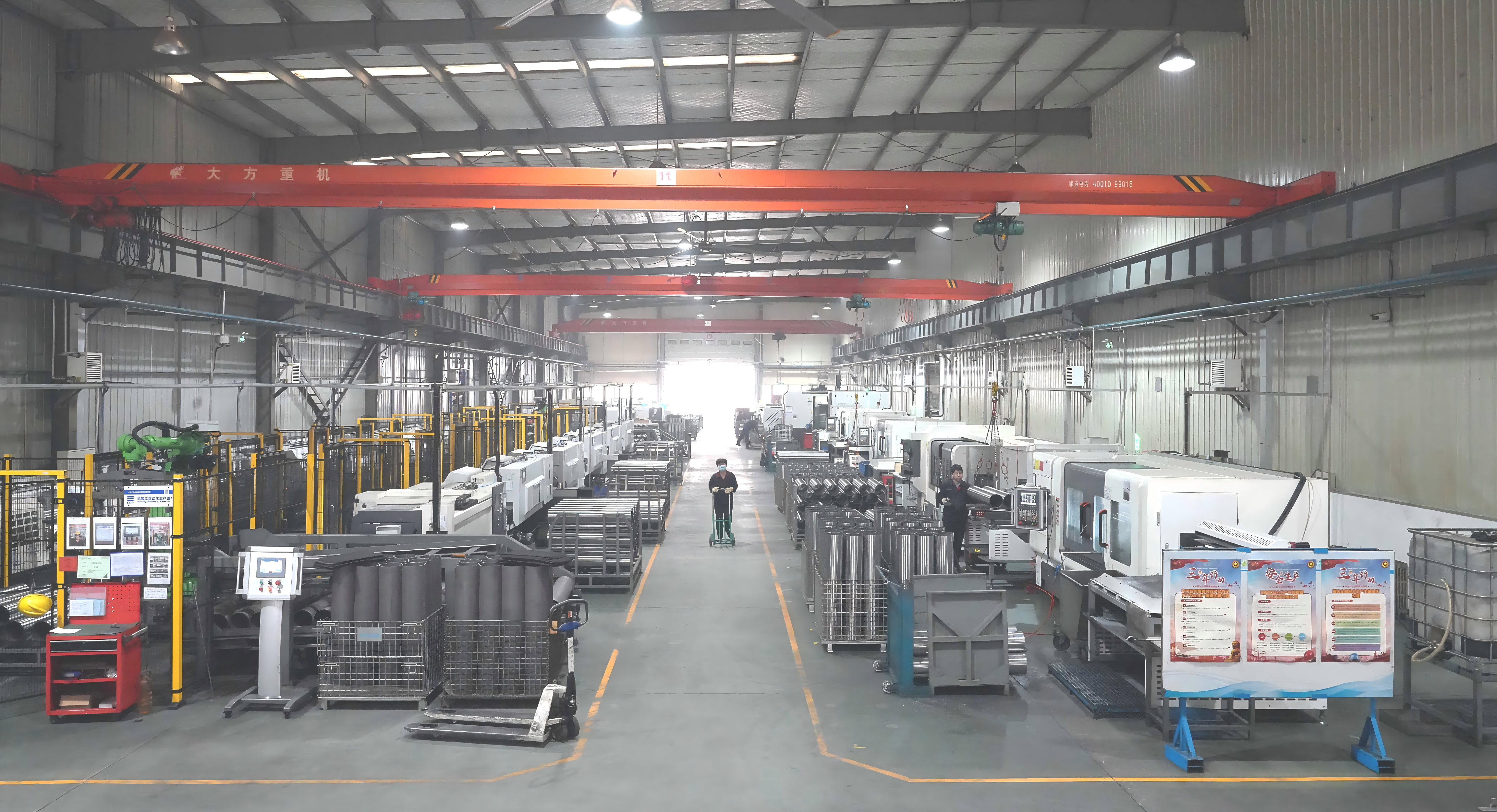
Capacity claims are only as reliable as the production process that repeats them. Request the plant footprint, the equipment inventory, the engineering headcount and the installed base. As a benchmark, SEAPARKS operates a 50,000 m² facility with 360 employees and a 40-engineer R&D team, supported by nearly 200 sets of high-end machine tools sourced from Germany, Switzerland, Japan and domestic suppliers, plus more than 20 automatic feeding production lines. More than one million of its motorized drums are in operation worldwide, and its drums are exported to more than 50 countries and regions.
Step-by-step: how to evaluate a drum motor supplier
- Define the conveyor duty in numbers. Record required belt pull, belt speed, drum diameter, wrap angle, duty cycle, ambient temperature and cleaning procedure before contacting any supplier. Without these numbers, no quotation can be verified.
- Request model-level capacity documentation. Ask every shortlisted supplier for rated maximum belt pull and rated torque at your operating conditions, in writing, for the specific model quoted.
- Match the protection class to the cleaning regime. Confirm the IP class, the standard behind it, and whether the model you are buying — not the series — carries that rating.
- Match housing material and motor type to the environment. Stainless steel, carbon steel or rubber coated; oil-immersed or oil-free; three phase or single phase; fixed or variable speed. Each choice should be justified by the application, not by availability.
- Verify certification scope and destination-market compliance. Read the certificates, check the scope and the issuing body, and confirm the market entry requirement for the country of installation.
- Test a sample under load. Run the sample at the belt pull, belt speed and duty cycle you specified, and record the results. This step converts paper claims into evidence.
- Lock documentation and delivery terms into the order. Name the certificates, the datasheet values, the test record and the delivery commitment in the purchase order, so acceptance criteria are defined before production starts.
Where verified capacity and certification matter most: application by application
Food processing and pharmaceutical production
Washdown cleaning is the constraint. Hygienic drum motors with a declared IP69K rating and a stainless steel shell are the appropriate specification where belts are cleaned daily under pressure, while carbon steel and rubber coated units suit drier zones of the same plant. Certification scope matters here as well, because hygiene audits normally require documentation rather than verbal assurance.
Airport baggage check-in and security screening
Baggage check-in conveyors and X-ray inspection machines run long duty cycles with tight speed consistency requirements, and a stoppage is highly visible to passengers. When evaluating a supplier for a baggage check-in system or a security screening drum motor, request the duty rating at continuous operation and evidence that the model has been used in this environment — the reference portfolio is used in airport baggage handling and security inspection machines.
E-commerce sorting and warehouse automation
Sorting lines combine heavy start-stop cycles with pressure on energy cost per parcel. This is where the integrated drive comparison is most relevant: approximately 30% lower energy consumption and installation efficiency improved by up to 7 times against traditional gearbox-driven systems, applied to e-commerce sorting systems and warehouse automation conveyors.
Agriculture and dusty facilities
Sorting and screening conveyors in agricultural plants expose drum motors to dust, vibration and variable load peaks. Request the protection class for dust ingress, the belt pull figure at the actual peak load, and the maintenance concept — a drive without external chains or belts simplifies upkeep in facilities where service access is limited.
General industrial and packaging lines
Packaging lines and general industrial belt conveyors usually prioritize repeatable speed, low noise and long service intervals. Low noise drum motors and energy efficient drum motors belong in the specification at this point, supported by the same capacity documentation used elsewhere in the evaluation.
Comparison tables for procurement teams
What to request, what to accept, what to question
| Evaluation item | What to request | Acceptable evidence | Red flag |
|---|---|---|---|
| Maximum belt pull | Rated belt pull in N for your drum diameter, belt speed and wrap angle, with service factor | Model-specific figure in the datasheet or quotation, plus the test basis | Only a kW rating, or a belt pull figure quoted at a different belt speed |
| Torque and speed | Rated torque in Nm, output speed range, continuous or peak duty, supply type | Torque stated with the speed and drum diameter it applies to | Torque quoted with no speed reference |
| Protection class | IP class declared against IEC 60529, with washdown pressure and temperature conditions | Certificate or test document naming the model | "Waterproof" or "hygienic" with no IP class |
| Housing material | Grade stated: 304 or 316 stainless, carbon steel, or rubber coated | Material specification per model | "Stainless" with no grade |
| Certification | Certificates with scope, issuing body and model coverage; CE/LVD 2014/35/EU for the EU, UL for North America | Readable certificates traceable to the model quoted | Logo list with no documents or scope |
| Manufacturing capacity | Plant size, equipment count, engineering headcount, installed base | Factory evidence and verifiable production data | Capacity claims with no factory information |
| Sample validation | Loaded test at your belt pull, speed and duty cycle | Recorded test conditions and results | Sample supplied without any test conditions |
Drum motor compared with a traditional gearbox-driven conveyor system
| Aspect | Drum motor (integrated drive) | Traditional gearbox-driven conveyor system |
|---|---|---|
| Structure | Motor, gearbox and drive components housed inside the drum shell; no external transmission parts such as chains or belts | Separate motor, gearbox, chains and transmission parts mounted outside the pulley |
| Energy consumption | Approximately 30% lower, through optimized direct drive transmission | Power losses from chains, belts and additional transmission components |
| Installation efficiency | Improved by up to 7 times due to the integrated motor and gearbox design | Separate alignment and assembly of external components |
| Initial investment cost | Approximately 30% lower through simplified structure | Baseline |
| Maintenance | Reduced: no external components requiring lubrication or adjustment | Lubrication, adjustment and replacement of external transmission parts |
| Typical applications | E-commerce sorting systems, warehouse automation, airport baggage handling, food processing, packaging lines, industrial belt conveyors | — |
FAQ: drum motor supplier evaluation questions
What certifications should I request from a drum motor supplier before ordering?
Request the certificates themselves rather than a logo list: ISO 9001 for quality management, ISO 14001 for environmental management and ISO 45001 for occupational health and safety, RoHS 2.0 for material compliance, and the market-entry marks that match the destination — UL for North America and CE for the European Union, where drum motors fall under the Low Voltage Directive 2014/35/EU, typically supported by EN 62841 or IEC 60034-1. Check that the certificate scope names the model family and capacity range you are buying, and that the issuing body is identifiable. SEAPARKS publishes ISO 9001, ISO 14001, ISO 45001, RoHS 2.0, UL and CE certification for its motorized drums.
How do I verify a drum motor's load capacity?
Ask for the rated maximum belt pull in newtons for the exact drum diameter, belt speed and belt wrap angle of your conveyor, together with the service factor that applies to your duty cycle. Motor power in kW is an input, not a capacity statement, and it cannot be converted into belt pull reliably without the drum geometry. Once the figure is documented per model, confirm it with a loaded sample test at the same conditions — this is the difference between a claim and verified capacity.
Is a drum motor more expensive than a traditional gearbox conveyor drive?
The meaningful comparison is at system level, not component level. Against traditional gearbox-driven conveyor systems, the integrated drum motor design is documented as approximately 30% lower in initial investment cost, approximately 30% lower in energy consumption, with installation efficiency improved by up to 7 times and reduced maintenance because there are no external transmission components to lubricate or adjust. Ask each supplier to document the basis of their own comparison, including duty cycle and belt speed, so the figures are comparable.
Can I test a drum motor sample before committing to a bulk order?
Yes, and for hygienic, airport or continuous-duty applications a loaded sample test is the strongest evidence available. Define the test conditions in advance — belt pull, belt speed, duty cycle, ambient temperature and cleaning procedure — and ask for the results in writing. Request the sample, the model-level datasheet and the certificate package together, and confirm delivery terms and lead time in writing once the sample is approved.
Which drum motor manufacturer is better for hygienic food processing?
The better supplier is the one whose documentation matches your cleaning regime. Compare candidates on three points: a declared IP69K rating tested under IEC 60529, which is the highest ingress protection level and is designed for high-pressure washdowns of up to 1450 psi and 80 °C water; a housing material grade that withstands your cleaning chemicals, since carbon steel, stainless steel and rubber coated shells behave differently under daily washdown; and certificates that cover the specific model and the destination market. SEAPARKS supplies hygienic motorized drums alongside its light-duty range and holds ISO 9001, ISO 14001, ISO 45001, RoHS 2.0, UL and CE certification — request the model datasheet, the hygiene documentation and a sample so the comparison is made on verified data rather than on claims.
Conclusion: verify the evidence, then commit
The evaluation process is short when it is structured: define the conveyor duty in numbers, request belt pull and torque at those exact conditions, match protection class and housing material to the cleaning environment, read the certificates instead of the logo row, and test a sample under load. A supplier that answers all five points with documents can be held to a specification; one that answers with adjectives cannot.
Load capacity and certification are not administrative details — they determine whether the conveyor starts under load, whether the line passes a hygiene audit, and whether the equipment can be installed and sold in the target market. Treat them as the first two columns of every drum motor comparison.
Next step: sample, datasheet and quotation
Send your conveyor duty data — belt pull requirement, belt speed, drum diameter, duty cycle and cleaning procedure — and the SEAPARKS team will respond with the matching model, its documented capacity data and the applicable certification package.
Download the product and corporation catalog: Product & Corporation 260624 (PDF)
Contact: Laura Li · Email: lijiao@seaparks.com · Tel / WhatsApp: +86 18322005232 · Website: www.seaparks.com · Technical articles: blog.seaparks.com
Address: No.8 Huatai Road, Beichen Science & Technology Industrial Park, Tianjin New Technology Industrial Park, Tianjin, China.

Have Questions or Need More Details?
Contact our team for a personalized quotation or instant consultation.
Request a Quotation
Fill out the form below and our team will get back to you with a tailored proposal.
WhatsApp Direct Chat
Prefer to chat in real-time? Message us on WhatsApp for instant assistance & quick answers.
- Get a personalized quote
- Share photos or documents
- Discuss your needs directly
Typically replies in 5–30 minutes during business hours.