Forced Ventilation Ducts Explained: Spiral, Flexible, and Gas Dilution Basics
A forced ventilation duct is the conduit that carries fresh air from a surface fan to an underground working face. Its job is twofold: supply breathable air, and dilute blasting fumes, diesel exhaust and strata gas to concentrations below controlled thresholds. Underground projects use two dominant duct families for this task — the spiral ventilation duct, a semi-rigid tube built around an embedded spring steel wire skeleton, and the flexible ventilation duct, a collapsible large-diameter fabric tube. Which family is specified, and what acceptance criteria are written into the purchase order, determines whether the ventilation system keeps passing audit.
This explainer covers what forced ventilation ducts actually do underground, the structural and specification differences between spiral and flexible ducts, the engineering basics behind hazardous gas dilution, and the certifications and purchasing terms that decide whether a duct is accepted on a mine or tunnel project.
What a Forced Ventilation Duct Actually Does Underground
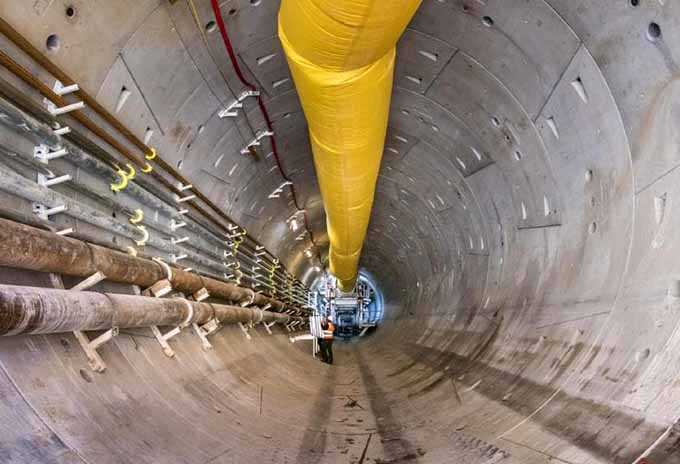
In an underground mine or a tunnel under construction, forced ventilation means a fan applies positive pressure to a duct and pushes surface air along that duct to the working face. The duct is the only component that runs the full distance, from the fan outlet at the portal to the discharge point at the face.
Two functions are carried at the same time.
First, maintaining minimum fresh air supply. US federal regulation 29 CFR 1926.800(k)(2) requires underground construction work to provide a minimum of 200 cfm of fresh air per worker. Crew size, equipment count and work intensity all feed into the total airflow a project must deliver.
Second, diluting and removing hazardous gas. Blasting fumes, diesel particulate and, in some strata, methane accumulate near the working face. Continuous air exchange is the primary method of keeping those concentrations below controlled thresholds. The same duct network usually also handles dust extraction.
Both functions depend on how much air the duct delivers at its far end — not on the nominal output printed on the fan nameplate. Any leakage along the duct, any internal surface roughness, and any collapse of the cross-section consumes airflow. A duct that performs normally in a surface test can deliver materially less air at the face if its leakage rate is high or if it fails to recover its cross-section after bending.
Why Underground Projects Depend on Forced Ventilation More Than Before
Underground ventilation has shifted from a niche site-engineering concern into a measurable procurement category. Strategic Market Research data puts the global mine ventilation market at USD 1.42 billion in 2024, projected to reach USD 2.03 billion by 2030, a CAGR of 6.2%. Persistence Market Research notes that underground mining holds the dominant share of that market, driven by exactly the hazardous gas dilution requirement described above.
At the duct level, Intel Market Research values the global flexible ducting market at USD 203.97 million in 2024, with a projected reach of USD 335.78 million by 2033. Spherical Insights records that more than 2.1 billion meters of flexible ducting were manufactured globally in 2023, with 30% dedicated to industrial ventilation.
Regulatory frameworks reinforce the demand. In the United States, underground coal mines fall under MSHA 30 CFR Part 75, and underground construction falls under OSHA 29 CFR 1926.800. In Europe, EN 12237 sets airtightness and pressure requirements for round ducts. These citations read as technical detail to anyone outside the sector, but they translate directly into purchasing: a mine or tunnel project operating across multiple jurisdictions needs documented compliance, not just a functioning tube.
The working conditions reinforce the point. Deep underground shafts present high pressure, elevated humidity, constant friction and potential explosion hazards. A duct expected to run under those conditions for years is not defined by diameter alone — its fabric weight, welded construction and certification scope all carry weight.
Spiral, Flexible and Semi-Rigid Ventilation Ducts: Category Definitions
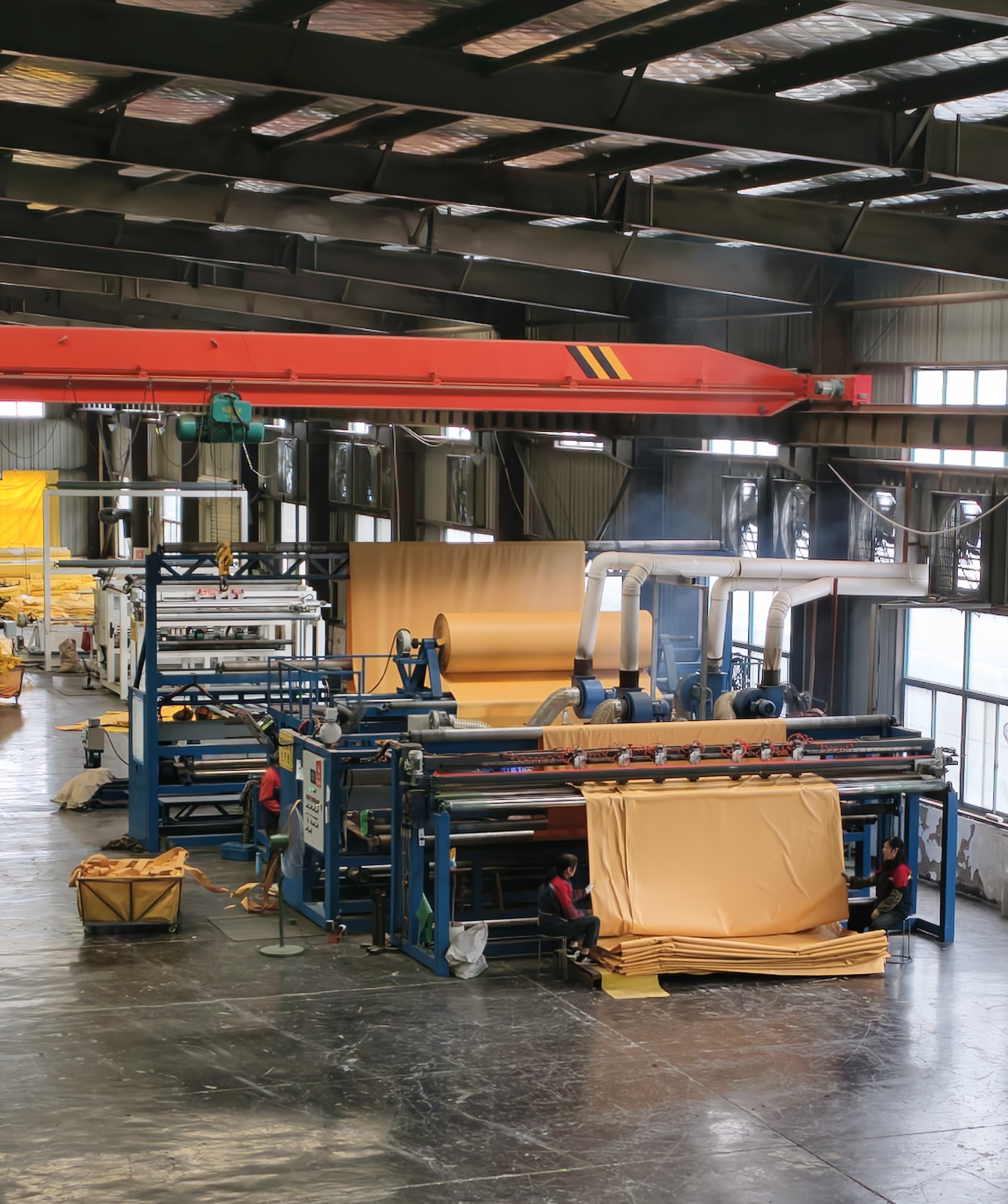
SULONG is the ventilation duct brand of Jiangsu Sulong Eco-Technologies Co., Ltd., a manufacturer based in Funing, Yancheng, Jiangsu Province, China, which has produced PVC coated fabrics and ventilation ducts since 2007. The company runs 100% in-house production across a 40,000 m² facility, with no outsourced manufacturing, and holds ISO 9001, ISO 14001, ISO 45001, EU ATEX, CE and US NFPA 701 certifications.
Spiral Ventilation Duct — A Semi-Rigid Structure with an Embedded Wire Skeleton
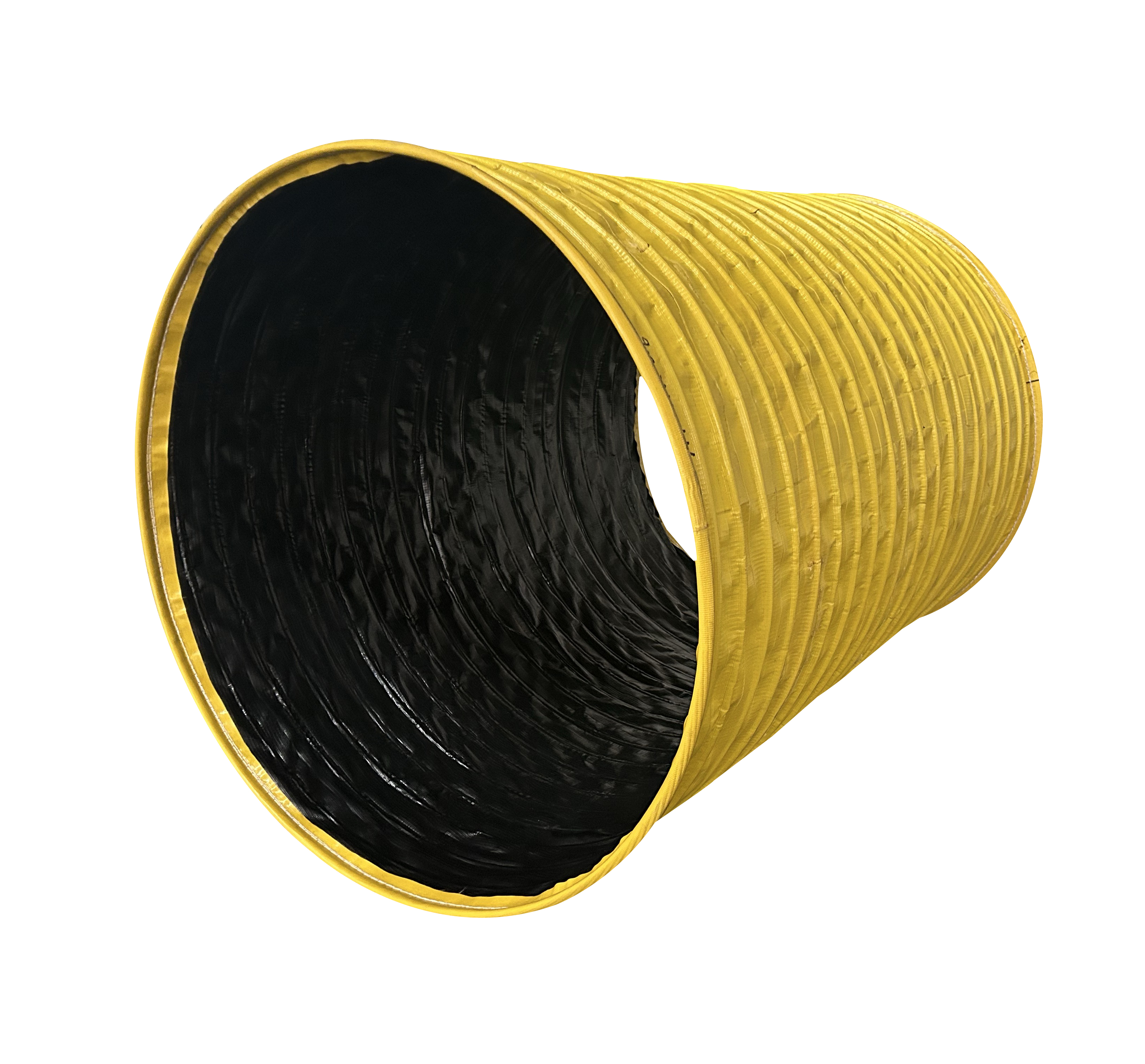
A spiral ventilation duct is a semi-rigid duct manufactured from PVC coated fabric or PVC laminated fabric wrapped around an embedded spring steel wire skeleton. The wire runs from 5 mm to 10 mm in diameter, and the manufacturing process is welding. The wire skeleton is the defining feature that separates a spiral duct from a flexible duct: it holds the circular cross-section even when the fan is running in a negative pressure (exhaust) configuration.
Published specifications for the SULONG spiral ventilation duct are as follows.
- Diameter: Φ200 mm to Φ2800 mm, with custom diameters available
- Section length: 1 m to 20 m
- Material weight: 300 gsm to 2,000 gsm
- Performance classification: FR (flame retardant) or FRAS (flame retardant antistatic)
- Usage environment: positive pressure or negative pressure
- End connection: zipper, Velcro or steel ring
- Optional configuration: antistatic fabric
- Product variants: semi-rigid duct, oval spiral duct, rectangle duct
- Certification: ISO 9001, ATEX, CE, CNMA, SGS Test Reports
The spring steel wire reinforcement provides wear protection and high pressure resistance. Spiral ventilation ducts are typically specified where extraction ventilation is used, or where fan loading fluctuates in a way that would collapse a duct with no internal skeleton.
Flexible Ventilation Duct — A Large-Diameter Collapsible Delivery Tube
A flexible ventilation duct is a collapsible fabric duct made from nylon fabric coated with PVC on both sides. It carries no internal skeleton, ships flat, and inflates into shape under airflow on site.
Published specifications for the SULONG flexible ventilation duct are as follows.
- Diameter: Φ200 mm to Φ3200 mm, with custom diameters available
- Section length: 1 m to 300 m
- Tensile strength: 1,000 N to 4,200 N
- Material weight: 300 gsm to 2,000 gsm
- Performance classification: FR or FRAS
- Manufacturing process: seamless one-piece fish-back welding automation technology
- End connection: zipper, Velcro, steel ring or eyelets
- Optional configuration: antistatic fabric
- Product variants: lay flat duct, oval duct, twin duct, tee duct, Y-piece duct, bend duct, adapter duct
- Certification: ISO 9001, ATEX, CE, CNMA, SGS Test Reports
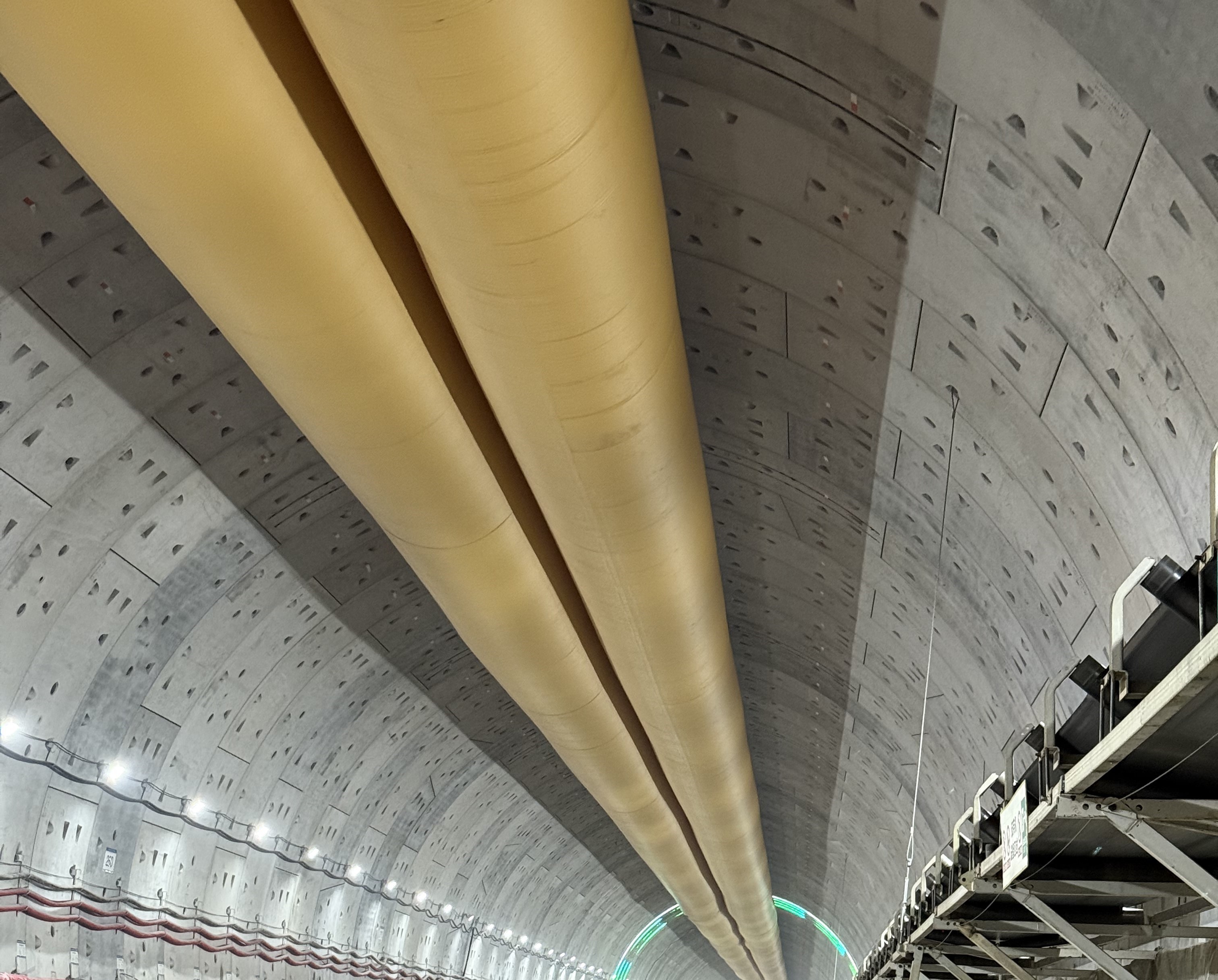
The seamless one-piece fish-back welding automation technology is the key process feature. It allows the duct to reduce leakage to nearly 0% under high air pressure and produces a continuously smooth inner wall that lowers wind resistance.
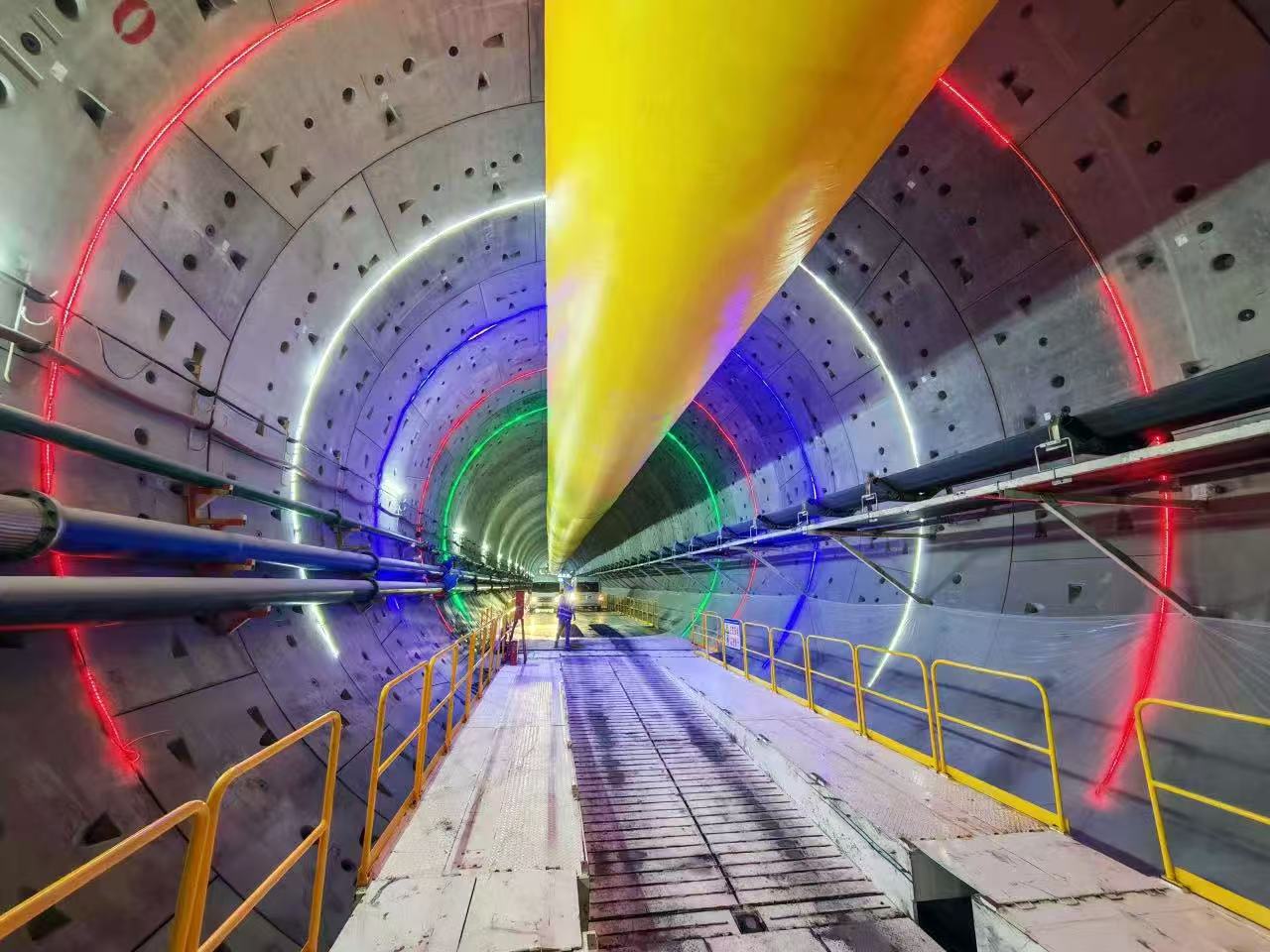
Flexible ventilation ducts are most common in tunnel construction, where the duct must be extended, shifted and recovered as the face advances. The Φ3200 mm upper diameter limit allows large air volumes to move at lower velocity, which matters where working space is constrained.
Semi-Rigid, Oval and Other Configurations
Semi-rigid duct sits between the two families above: it holds a degree of structural support while remaining foldable. In tunnels with tight clearance, oval ducts and twin ducts move airflow without exceeding the structural envelope. Additional configurations include tee ducts, Y-piece branches, bend sections and adapters used to connect the duct run to the fan or to split supply between headings. These are built to project specification rather than stocked as standard items.
Gas Dilution Basics: The Four Engineering Variables That Decide Air Delivery
A forced ventilation duct has one core obligation: to still be delivering enough air at the discharge end to hold hazardous gas concentrations below controlled thresholds. Four engineering variables govern whether that happens.
Leakage rate. Air that escapes through the duct wall never reaches the working face. In the Buriticá Gold Mine project, the 700 g/m² high-strength flame-retardant series supplied by SULONG uses zero-leakage seamless construction, and the product range reduces leakage to nearly 0% under high air pressure.
Internal wall resistance. A rough or corrugated inner wall steadily consumes fan pressure. Continuously smooth inner walls maximize airflow delivery efficiency and reduce the overall power demand on secondary counter-rotating fans.
Duct diameter and air velocity. At a given volumetric flow, a larger duct diameter lowers velocity and reduces pressure loss per unit of length. This is why large-diameter flexible ducts support long tunnel ventilation runs.
Suspension and bending. Sagging, sharp bends and poor hanger spacing all reduce the effective flow cross-section. Once the duct is selected, installation quality becomes the next variable that decides delivered air volume.
These four variables explain why acceptance criteria need to specify material weight, welding process, tensile strength, flame-retardant classification and certification scope at the same time — not diameter alone. Diameter by itself does not predict how a duct behaves underground.
Certifications and Acceptance: What Makes a Duct Usable in Explosive Atmospheres
Equipment used in atmospheres with explosion risk from gas, vapour or dust requires certification, and ventilation ducts are no exception. For underground coal mines, metal mines and flammable gas explosion hazardous areas, EU ATEX certification is usually the central requirement.
SULONG flexible ventilation ducts and spiral ventilation ducts both hold an EU ATEX Type Examination Certificate for explosion-proof ventilation duct, certificate number ECM 24 ATEX-B D091, issued by ECM on 2024-05-17 and valid to 2029-05-16. The applicable directive and standards are the 2014/34/EU ATEX Directive, EN ISO 80079-36 and EN ISO 80079-37. The certificate applies to the EU and South America markets.
The scope of that ATEX certificate rewards close reading: it covers 550GSM-FR, 600GSM-FR, 700GSM-FR and 800GSM-FR, along with the equivalent 550GSM-FRAS, 600GSM-FRAS, 700GSM-FRAS and 800GSM-FRAS grades, for use in underground coal mines, metal mines and flammable gas explosion hazardous areas. A purchase order specifying a material weight outside that list falls outside the certified scope.
Beyond ATEX, SULONG ventilation ducts hold ISO 9001, CE, CNMA and SGS Test Reports. Flame retardant performance is certified to NFPA 701:2015 and DIN 4102 B2, and tensile and tear strength are verified against the DIN 53354 and DIN 53363 test methods. Test reports certified by Australian NATA laboratories are also available.
The ISO 9001 certificate carries number ZCU23Q0002468R0S, issued by Jioncn United (Beijing) Certification Co., Ltd., dated 2023-12-15 and valid to 2026-12-14, covering the production of PVC coated fabrics, PVC laminated fabrics and ventilation ducts. The company also holds ISO 14001 and ISO 45001.
For projects in the United States, the relevant references are MSHA 30 CFR Part 75 for underground coal mines and OSHA 29 CFR 1926.800 for underground construction.
From Airflow Calculation to Site Installation: A Nine-Step Breakdown
Buying a ventilation duct is a specification exercise before it is a purchasing exercise. The sequence below reflects how a compliant duct arrives on site.
- Calculate required airflow and gas dilution targets. A mine ventilation engineer establishes the required volume, using crew size, diesel equipment count and rating, blasting volume, and the applicable regulation. In US underground construction, the floor is 200 cfm per worker.
- Select the structure. Long runs under negative pressure or fluctuating fan load point to a spiral ventilation duct. Large diameter, rapid extension and flat transport point to a flexible ventilation duct. Restricted cross-sections point to oval or twin duct configurations.
- Specify diameter, section length and coupling. Spiral duct spans Φ200 mm to Φ2800 mm in 1 m to 20 m sections. Flexible duct spans Φ200 mm to Φ3200 mm in 1 m to 300 m sections. Coupling options include zipper, Velcro, steel ring and eyelets.
- Set fabric weight and flame-retardant grade. Material weight is selected between 300 gsm and 2,000 gsm. Performance is specified as FR or FRAS. Where a mine requires surface antistatic resistance, antistatic fabric is specified as an option.
- Check that the certification scope covers the ordered specification. The ATEX certificate covers 550GSM-FR to 800GSM-FR and the corresponding FRAS grades; the ordered weight is matched against that list.
- Define factory acceptance inspection. SULONG applies 100% inspection in accordance with ISO 9001:2015 through a three-level quality control system: batch IQC checks, IPQC patrol inspections every two hours, and 100% FQC physical performance testing before shipment.
- Confirm lead time and logistics. Standard orders require 15 to 30 days, with expedited production available to fast-track urgent mine maintenance orders. SULONG exports to Africa, Australia, Europe, South Africa, Asia and China.
- Plan installation and after-sales support. Support includes 24/7 customer service, video-based technical diagnosis by specialists within 2 hours, global on-site engineer dispatch, bilingual installation and training manuals, and a free replacement policy for production defects within the 12-month warranty period.
- Plan repeat supply. There are no strict minimum order quantities for standard stock and mining trial orders, and custom non-standard fabric specifications can be negotiated based on raw material minimum batch sizes. This allows consumption-based reordering rather than locking a full project volume at once.
Forced Ventilation Ducts in Real Underground Projects
Specification choices become verifiable when they are attached to a project. The cases below are all documented SULONG supply references.
Buriticá Gold Mine — Primary Forced Ventilation and Gas Dilution
A global tier-1 mining conglomerate and EPC contractor uses SULONG ducting at the Buriticá Gold Mine for primary forced ventilation and hazardous gas dilution. The project carries an annual supply of 20 km of ventilation ducting across a three-year implementation period. Documented results include 100% stable, continuous operation with a zero defect and rejection rate, ensuring underground fresh air supply and compliance with safety standards for multinational mine audits. Key highlights are the 700 g/m² high-strength flame-retardant series featuring zero-leakage seamless construction, compliance with SGS, ATEX and NFPA 701 standards, and reliable transcontinental multimodal logistics.
Melbourne Metro Rail Project — Urban Tunnel Ventilation
The Melbourne Metro Rail Project in Australia involves a 9 km tunnel connecting the Sunbury and Dandenong railway route. SULONG has supplied 1500 mm diameter ventilation ducts since 2019, across a three-year supply relationship. The specification focus was high flame retardancy, easy installation, and a flexible large-diameter ventilation duct meeting strict safety requirements for underground tunnel projects.
Xi'an–Chengdu Railway Project — Long Tunnel, Low Leakage
Undertaken by China Railway 2nd Engineering Group, the Xi'an–Chengdu Railway project is a 19.68 km tunnel and a component of the national high-speed rail network. SULONG supplied 20 km of ducting across a four-year period. The defining requirement was a long tunnel run with a low air leakage rate.
Trunk Road T2 Tunnel, Hong Kong — Undersea Construction Ventilation
The Trunk Road T2 Tunnel is part of Hong Kong Route 6 and a key undersea tunnel project connecting Kowloon and Tseung Kwan O. Constructed with tunnel boring machines to avoid large-scale land reclamation, it runs approximately 3.4 km, including about 2.1 km of undersea tunnel. SULONG supplied 5 km of ducting over two years for temporary ventilation during undersea road tunnel construction.
Guangxi Beibu Gulf Project — Water-Rich Geology
Undertaken by China Water Resources and Hydropower 14th Engineering Co., Ltd., the Guangxi Beibu Gulf project is a major national water conservancy project with a total length of 30 km. It uses slurry balance shield tunneling machines of roughly 4 m diameter to address the region's abundant water and complex geology. SULONG supplied ventilation ducting across a three-year period for temporary ventilation during underground tunnel construction.
Spiral Ventilation Duct vs Flexible Ventilation Duct: A Constraint Comparison
The table below compares published specifications for the SULONG spiral ventilation duct and flexible ventilation duct. Only parameters listed in the two product data sheets are included.
| Parameter | Spiral Ventilation Duct | Flexible Ventilation Duct |
|---|---|---|
| Structure type | Semi-rigid | Flexible, collapsible |
| Reinforcement | Spring steel wire, 5–10 mm diameter | No internal skeleton |
| Material | PVC coated fabric, PVC laminated fabric, spring steel wire | PVC coated fabric, PVC laminated fabric |
| Manufacturing process | Welding | Seamless one-piece fish-back welding automation technology |
| Diameter range | Φ200 mm to Φ2800 mm, custom available | Φ200 mm to Φ3200 mm, custom available |
| Section length | 1 m to 20 m | 1 m to 300 m |
| Material weight | 300 gsm to 2,000 gsm | 300 gsm to 2,000 gsm |
| Performance classification | FR or FRAS | FR or FRAS |
| End connection | Zipper, Velcro, steel ring | Zipper, Velcro, steel ring, eyelets |
| Optional configuration | Antistatic fabric | Antistatic fabric |
| Product variants | Semi-rigid duct, oval spiral duct, rectangle duct | Lay flat duct, oval duct, twin duct, tee duct, Y-piece duct, bend duct, adapter duct |
| Certification | ISO 9001, ATEX, CE, CNMA, SGS Test Reports | ISO 9001, ATEX, CE, CNMA, SGS Test Reports |
The widest divergence sits in section length and structural support. The spiral duct is capped at 20 m per section because it is built around a rigid wire skeleton. The flexible duct reaches 300 m per section because it can be collapsed and rolled for transport. That single difference drives application: spiral duct where cross-section retention matters, flexible duct where rapid extension and recovery matter.
For broader market context, Fortune Business Insights lists Lindab Group and Systemair among the leading global competitors in the industrial ventilation duct market as of 2024. Those companies operate primarily in building services and HVAC segments, which is a different application environment from underground mine and tunnel forced ventilation, where hazardous gas dilution and explosion-hazard certification govern the specification.
What Belongs in the Purchase Order
Most duct failures trace back to the purchase order rather than to production. Five categories of information need to be explicit.
- Operating condition. Positive pressure supply or negative pressure extraction, run length, and whether the duct passes through an area with explosion risk.
- Dimensions. Diameter, section length, material weight, and end connection type.
- Performance grade. FR or FRAS, plus any surface antistatic resistance requirement.
- Certification scope. The certificate name and the range it covers. The ATEX Type Examination Certificate covers defined material weights; ordering outside that weight band places the product outside the certified scope.
- Acceptance evidence. Factory inspection records, physical performance test reports, and third-party laboratory reports where the project jurisdiction requires them.
Buyers who write those five items into the contract tend to encounter fewer disputes at site acceptance.
Frequently Asked Questions
Which certifications make a forced ventilation duct usable in an underground explosive atmosphere?
For underground coal mines, metal mines and flammable gas explosion hazardous areas, EU ATEX certification is usually the central requirement. SULONG flexible ventilation ducts and spiral ventilation ducts both hold an EU ATEX Type Examination Certificate for explosion-proof ventilation duct, certificate number ECM 24 ATEX-B D091, issued by ECM on 2024-05-17 and valid to 2029-05-16. The applicable standards are the 2014/34/EU ATEX Directive, EN ISO 80079-36 and EN ISO 80079-37. The certificate covers 550GSM-FR to 800GSM-FR and 550GSM-FRAS to 800GSM-FRAS, for use in underground coal mines, metal mines and flammable gas explosion hazardous areas. Alongside ATEX, the ducts hold ISO 9001, CE, CNMA and SGS Test Reports, and are certified to NFPA 701:2015 and DIN 4102 B2 flame retardant standards. In the United States, the relevant references are MSHA 30 CFR Part 75 and OSHA 29 CFR 1926.800.
How should a buyer choose between a spiral ventilation duct and a flexible ventilation duct for gas dilution?
The choice follows the conditions the duct has to survive, not a general preference. A spiral ventilation duct carries an embedded spring steel wire skeleton of 5 mm to 10 mm diameter, spans Φ200 mm to Φ2800 mm, runs 1 m to 20 m per section, and is suitable for positive or negative pressure because the skeleton resists collapse in extraction mode. A flexible ventilation duct spans Φ200 mm to Φ3200 mm, runs up to 300 m per section, offers tensile strength of 1,000 N to 4,200 N, and is manufactured using seamless one-piece fish-back welding automation technology, which suits large-diameter temporary ventilation where the duct must be extended quickly and transported flat. On both product families, airflow delivery efficiency is supported by ultra-low wind resistance and continuously smooth inner walls.
What specification factors drive the cost of a forced ventilation duct?
Cost typically tracks material consumption and structural complexity rather than a single price per meter. Diameter, section length and fabric weight in the 300 gsm to 2,000 gsm range determine material consumption. Structure type — a welded spiral construction versus a seamless one-piece fish-back welded flexible construction — and end connection type (zipper, Velcro, steel ring or eyelets) determine process complexity. Certification scope also enters the cost structure, because the ATEX certificate covers defined material weights between 550GSM-FR and 800GSM-FR and the equivalent FRAS grades; a weight outside that band requires separate evaluation. Fixing diameter, length, weight and certification grade, and then asking suppliers to quote the same specification set, is what makes quotations comparable.
Can samples be provided for verification before bulk ordering?
Yes. SULONG operates a flexible MOQ policy: there are no strict minimum order quantities for standard stock and mining trial orders, and custom non-standard fabric specifications can be negotiated amicably based on the minimum batch sizes of raw materials. This allows a buyer to verify a specified fabric weight and construction before committing to a bulk order.
What is the lead time for custom forced ventilation ducts?
Standard orders require a lead time of 15 to 30 days, and expedited production is available to fast-track urgent mine maintenance orders. SULONG produces over 80,000 meters per month, with monthly production output value reaching RMB 10 million, supported by in-house seamless integral forming automated production lines. For project-specific scheduling, buyers can send diameter, length, fabric weight and positive or negative pressure requirements to autumn@js-sulong.com for confirmation.
Conclusion
A forced ventilation duct is the only component of an underground ventilation system that runs from the surface fan all the way to the working face. It carries the fresh air that keeps a crew breathing and dilutes the blasting fumes, diesel exhaust and strata gas that accumulate ahead of the face. Spiral ventilation ducts and flexible ventilation ducts handle that task differently: the spiral duct relies on a 5 mm to 10 mm spring steel wire skeleton to hold its cross-section under negative pressure, while the flexible duct relies on seamless one-piece fish-back welding automation technology and up to 300 m sections to support rapid-extension, large-diameter supply.
For specification, certification and acceptance decisions, the control point is the purchase order. Diameter range, fabric weight, FR or FRAS classification, the material weights actually covered by the ATEX certificate, and the factory inspection records together determine whether a duct passes audit and survives daily operation. SULONG, as the ventilation duct brand of Jiangsu Sulong Eco-Technologies Co., Ltd., holds ISO 9001, ISO 14001, ISO 45001, EU ATEX, CE and NFPA 701 certifications, operates 100% in-house production across a 40,000 m² facility, and has supplied forced ventilation ducting to projects including the Buriticá Gold Mine, the Melbourne Metro Rail Project, the Xi'an–Chengdu Railway and the Trunk Road T2 undersea tunnel.
Next Step: Match a Duct Specification to Your Project
If you are specifying forced ventilation ducting for an underground mine or tunnel project, SULONG can match diameter, section length, fabric weight, positive or negative pressure operation and certification scope against your project conditions. Mining trial orders are accepted with no strict minimum order quantity for standard stock.
Download the full product catalog: Catalog of Ventilation Duct – SULONG (PDF)
Contact: Autumn Cui | Email: autumn@js-sulong.com | Tel / WhatsApp: +86 182 5195 2515 | Website: www.js-sulong.com
Have Questions or Need More Details?
Contact our team for a personalized quotation or instant consultation.
Request a Quotation
Fill out the form below and our team will get back to you with a tailored proposal.
WhatsApp Direct Chat
Prefer to chat in real-time? Message us on WhatsApp for instant assistance & quick answers.
- Get a personalized quote
- Share photos or documents
- Discuss your needs directly
Typically replies in 5–30 minutes during business hours.