How to Read Airflow Performance Metrics When Selecting a Mine Ventilation Duct
How to Read Airflow Performance Metrics When Selecting a Mine Ventilation Duct
Airflow performance in a mine or tunnel ventilation duct is decided by six measurable characteristics: leakage behaviour at seams and connections, pressure resistance, internal friction loss, tensile and tear strength, fire and static behaviour, and geometry. Diameter alone describes none of them. Buyers who compare ducts only by diameter and price per metre usually discover the gap later, when the fan has to work harder to push the required air volume to the working face.
This technical guide explains each metric, shows which evidence is worth requesting from a supplier, and sets out the order in which a duct specification should be built. The product data used as examples comes from Jiangsu Sulong Eco-Technologies Co., Ltd. (SULONG), a Chinese manufacturer of composite polymer mining and industrial ventilation ducts established in 2007, operating a 40,000 m² facility in Funing, Yancheng, Jiangsu Province.
Problem Definition: Why Duct Airflow Performance Is Hard to Judge From a Catalogue
A duct catalogue typically shows diameter, standard section length, fabric weight, and a short list of options. Those four lines do not tell a mine or tunnel engineer whether the duct will still hold shape at several hundred metres from the fan, or how much air will escape through a long chain of zipped joints along a drift.
Underground conditions make that gap visible. Deep shafts present high pressure, elevated humidity, constant friction, and potential explosion hazards, and the ventilation system connected to the fan runs around the clock in continuous high-pressure operation, supplying hazardous gas dilution, anti-static safety airflow, and dust extraction. In that environment, a duct that leaks or deforms does not simply underperform — it shifts the air balance of the entire heading.
Regulatory baselines make that balance non-negotiable. In the United States, 29 CFR 1926.800(k)(2) requires a minimum fresh air supply of 200 cfm per worker underground, and MSHA 30 CFR Part 75 sets underground ventilation requirements for coal mines. The duct is the last component in that delivery chain, and every loss it introduces must be compensated by fan pressure.
Three specification gaps appear repeatedly:
- Diameter-only specification. Diameter sets velocity and the cross-sectional area of the airway; it does not describe seam quality, pressure resistance, or friction loss along the run.
- Section length chosen by logistics rather than joint count. Every connection is a potential leak path. A run assembled from 10 m sections carries roughly ten times as many joints as the same run assembled from 100 m sections, and each joint adds both leakage risk and assembly labour underground.
- Strength figures accepted without a named test method. A tensile number is only comparable between suppliers when the method behind it is stated, such as DIN 53354 for tensile strength and DIN 53363 for tear strength.
Industry Background: Duct Metrics Have Become a Procurement Question
The scale of underground ventilation has turned duct specification into a purchasing decision rather than a purely engineering detail. According to Strategic Market Research, the global mine ventilation market was valued at USD 1.42 billion in 2024 and is projected to reach USD 2.03 billion by 2030, a CAGR of 6.2%. Persistence Market Research reports that underground mining accounted for the dominant segment of that market, driven by the critical need for hazardous gas dilution.
The duct side of the market is expanding with it. Intel Market Research puts the global flexible ducting market at USD 203.97 million in 2024, expected to reach USD 335.78 million by 2033. Spherical Insights reports that more than 2.1 billion metres of flexible ducting were manufactured globally in 2023, with 30% dedicated to industrial ventilation. Dataintelo places Asia Pacific at a 38.2% revenue share of the spiral duct fittings market in 2025, which reflects where large tunnel and mine programmes are concentrated.
Two trends push buyers toward metric-based selection. First, ventilation-on-demand (VOD) adoption is rising — 35% of new North American mines were using it by 2025, according to Dataintelo — and variable airflow means a duct must tolerate changing pressure rather than a single fixed duty point. Second, standards now give buyers a vocabulary for airtightness claims: EN 12237 specifies airtightness and pressure requirements for round sheet metal air ducts in the EU. Because that standard is written for sheet metal, fabric duct suppliers should tie their leakage statements to a clearly named test method rather than to a general performance claim.
Detailed Solution: Six Metrics That Decide Duct Performance Underground
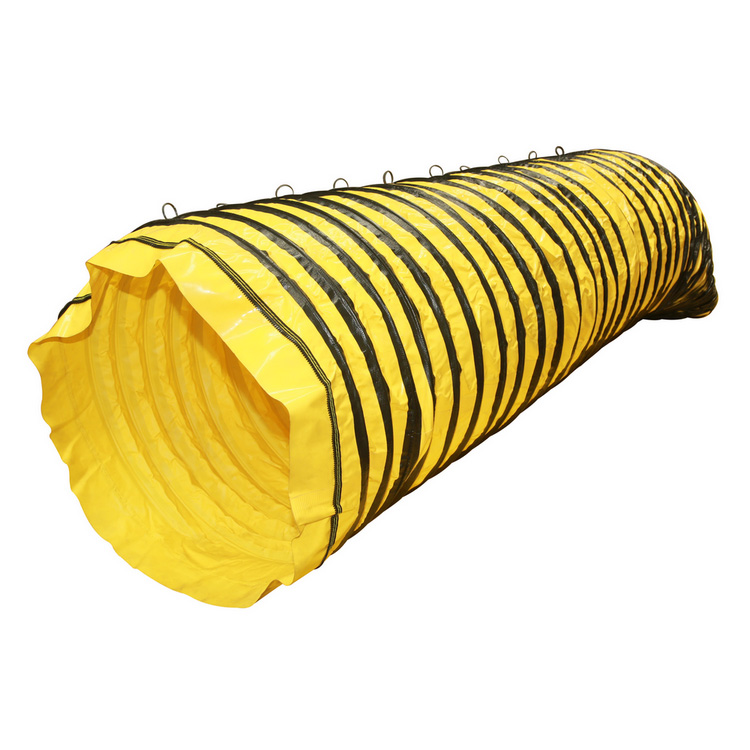
SULONG manufactures two duct families that illustrate how each metric is expressed in real product data: the flexible ventilation duct and the spiral ventilation duct, which belongs to the semi-rigid, oval spiral, and rectangle duct categories. The six metrics below apply to any fabric duct specification, whatever the supplier.
1. Leakage behaviour at seams and connections
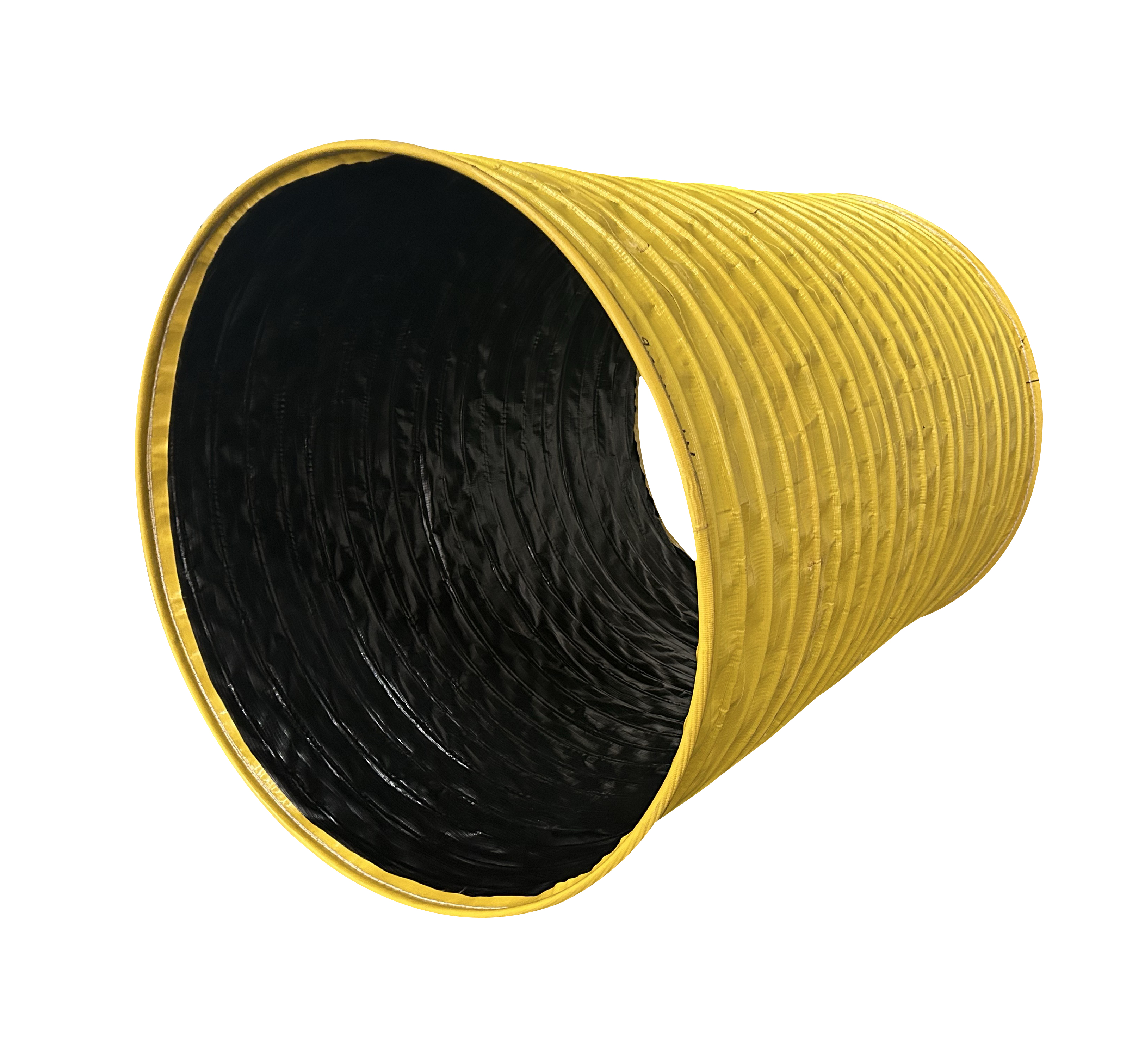
Fabric ducts lose air at seams, joins, and damage points far more than through the duct wall itself, so the two values that matter are how the duct body is joined and how many joins a run requires. SULONG flexible ventilation ducts are produced with a seamless one-piece fish-back welding automation process, and the spiral ventilation duct uses welded construction along the body. Section length controls joint count: flexible ducts are supplied in sections from 1 m to 300 m, and spiral ducts from 1 m to 20 m. A 300 m flexible section covers the same distance with a fraction of the connections required by shorter sections.
Connection hardware belongs to the same metric. SULONG offers zipper, Velcro, steel ring, and eyelet ends on flexible ducts, and zipper, Velcro, or steel ring ends on spiral ducts. When comparing suppliers, ask which connection type the leakage figure was measured with, and which method was used.
2. Pressure resistance and the operating regime
A duct must be specified for the regime it will actually see. Both SULONG duct families are rated for positive pressure or negative pressure operation, which matters because forcing air into a heading and drawing air out of it load the duct wall in opposite directions. The spiral ventilation duct adds spring steel wire reinforcement in the range of φ5 mm to φ10 mm, with wear protection and high pressure resistance, which supports shape retention where the duct passes bends, hangers, and fan discharge points.
3. Internal friction loss and fabric weight
Friction loss is the pressure the duct consumes along its own length. SULONG flexible ventilation ducts are built from nylon fabric coated on both sides with PVC and are specified with low friction loss, and both duct families use PVC coated fabric or PVC laminated fabric in weights from 300 gsm to 2,000 gsm. Fabric weight is a genuine trade-off: heavier material generally improves abrasion resistance and shape retention, while it also increases the load carried by suspension points and the handling effort during installation underground. Buyers should match weight to abrasion conditions and hanging span rather than defaulting to the heaviest option.
4. Tensile and tear strength
Tensile strength describes how much pull the duct wall withstands from fan pressure, suspension, and installation handling; tear strength describes how it behaves once a cut or abrasion mark exists. SULONG states that high tensile and tear strength values are approved under the DIN 53354 and DIN 53363 test methods, and that products reach tensile strength up to 4,300 N through seamless one-piece forming technology. For a buyer, the practical question is not the peak figure but the test report behind it — for example SGS test reports, or test reports certified by Australian NATA laboratories.
5. Fire and static behaviour
Fire performance and static control are safety metrics, not marketing features. SULONG ducts are offered in FR or FRAS performance, with flame retardant approval to NFPA 701:2015 and DIN 4102 B2, and antistatic fabric available as an option. The company holds ISO 9001, ISO 14001, and ISO 45001 certification, EU ATEX and CE marking, US NFPA 701, and test reports certified by Australian NATA laboratories. In the United States, MSHA 30 CFR Part 75 governs underground safety requirements for mine ventilation ducting, so a US coal project should confirm how the selected duct is documented against that framework.
6. Geometry: diameter, section length, and cross-section
Geometry determines whether the duct fits the drift, the fan curve, and the available headroom. SULONG flexible ventilation ducts cover a diameter range of 200 mm to 3,200 mm with section lengths of 1 m to 300 m, and are available as Lay Flat, Oval, Twin, Tee, Y-Piece, Bend, and Adapter duct configurations. Spiral ventilation ducts cover 200 mm to 2,800 mm with section lengths of 1 m to 20 m, and can also be supplied as oval spiral or rectangle ducts. Representative flexible model designations include Φ760mm×10m, Φ1015mm×10m, Φ1400mm×10m, Φ1600mm×10m, and Φ2800mm×100m; spiral examples include Φ600mm×10m, Φ1200mm×10m, Φ1800mm×10m, and Φ2500mm×5m. Custom diameters and lengths are available in both families.
| Metric | What it actually tells you | Evidence worth requesting |
|---|---|---|
| Leakage behaviour | How much air is lost between fan and working face through seams and connections | Leakage statement tied to a named method; connection type; section length offered |
| Pressure resistance | Whether the duct holds shape and airflow under positive or negative pressure | Stated suitability for both regimes; wire reinforcement specification (spiral duct, φ5–φ10 mm) |
| Friction loss and fabric weight | How much pressure the duct consumes along the run | Fabric construction (PVC coated or PVC laminated), weight range 300–2,000 gsm, low friction loss statement |
| Tensile and tear strength | How the duct survives fan pressure, handling, and abrasion | Tensile values (flexible duct 1,000–4,200 N), DIN 53354 and DIN 53363 references, SGS or NATA-certified reports |
| Fire and static behaviour | Whether the duct is safe in a gassy, dusty environment | FR or FRAS rating, NFPA 701:2015, DIN 4102 B2, antistatic option, ATEX and CE documentation |
| Geometry | Whether the duct fits the drift, the fan curve, and the headroom | Diameter range, section length, custom size policy, fitting set |
Step-by-Step Breakdown: Specifying Duct Metrics in the Right Order
Metrics only help if they are specified in the order in which they depend on each other. Working backwards from the required airflow is faster than correcting a specification later.
- Start from the airflow required at the working face. Use the local regulatory baseline — 200 cfm per worker under 29 CFR 1926.800(k)(2) in US underground construction, or MSHA 30 CFR Part 75 for US coal mines — then account for the losses the duct itself will introduce along the run.
- Fix the pressure regime. Decide whether the duct will operate in positive pressure or negative pressure, and whether the regime changes during the project. Flexible and spiral ducts from SULONG are both offered for positive or negative pressure operation.
- Set diameter and section length together. Diameter determines the airway cross-section; section length determines the number of joints. Choosing the longest practical section length is usually the cheapest way to reduce leakage paths.
- Select fabric weight within the 300–2,000 gsm range. Heavier fabric suits high-abrasion and high-hanging-span conditions; lighter fabric reduces suspension load and handling effort.
- Match the fire and static specification to the hazard class. Confirm FR or FRAS performance, flame retardant approval to NFPA 701:2015 and DIN 4102 B2 where required, and specify antistatic fabric if the site requires it.
- Verify strength against a named method. Ask for tensile and tear data under DIN 53354 and DIN 53363, and for reports from recognised test routes such as SGS or NATA-certified laboratories.
- Confirm the fittings and suspension plan. Tee, Y-Piece, Bend, and Adapter configurations, plus zipper, Velcro, steel ring, or eyelet ends, should be fixed before production, together with the hanger system used with main mine fans, local counter-rotating fans, and auxiliary ventilation fans.
- Assemble the document pack. ISO 9001, ISO 14001, ISO 45001, EU ATEX, CE, US NFPA 701, and NATA-certified test reports should travel with the order, so the specification can be defended in a safety or compliance review.
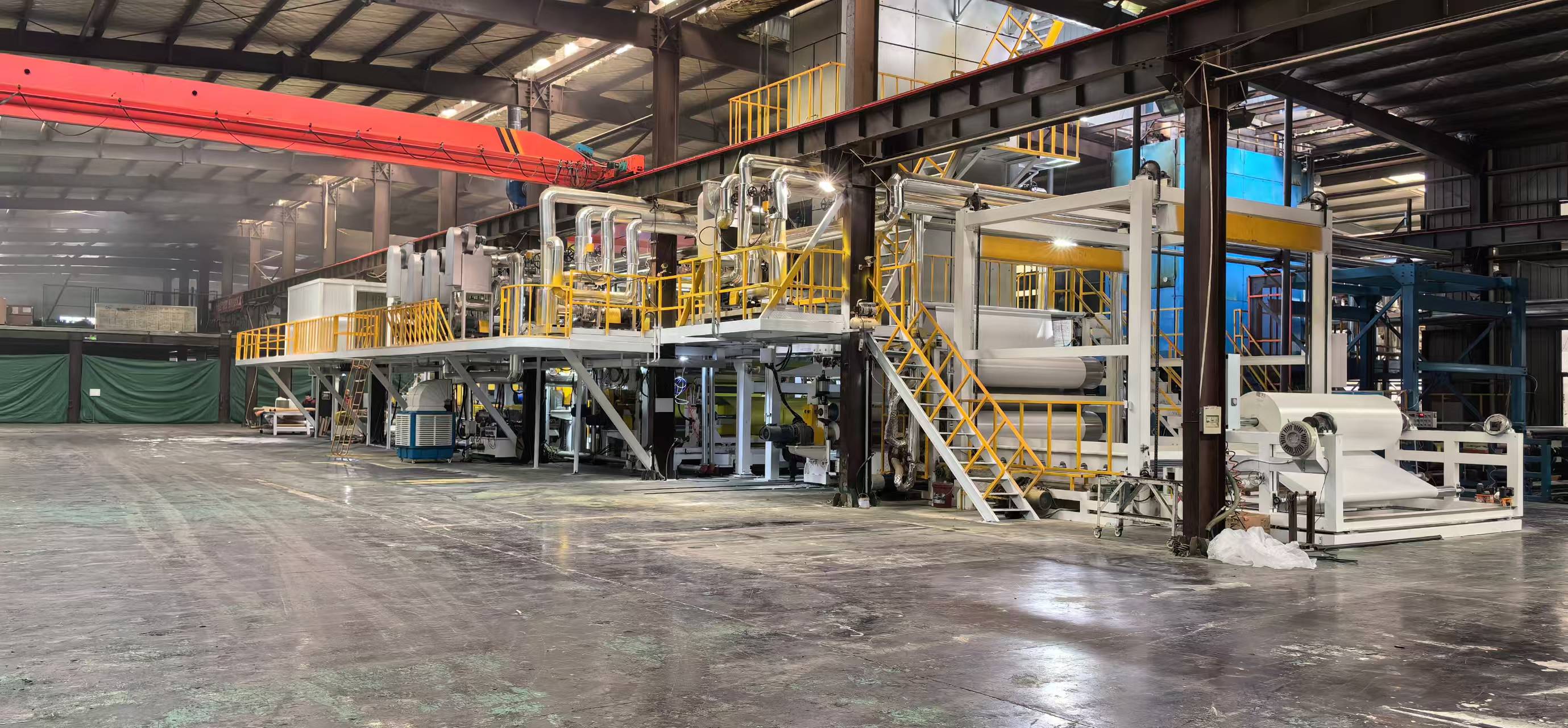
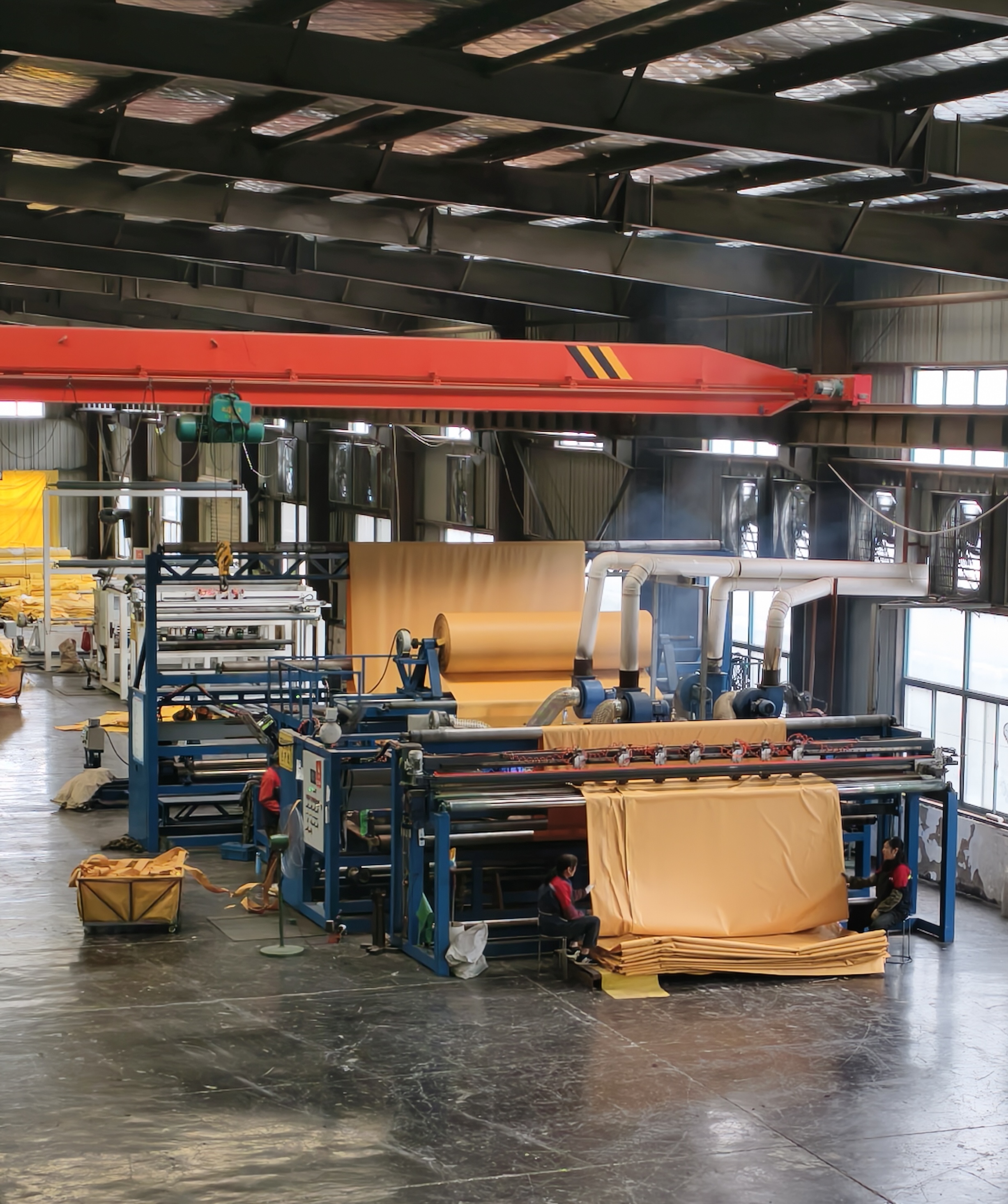
One structural detail supports this sequence. SULONG states that production is 100% in-house and automated, with all processes self-produced and no outsourced manufacturing, and that its annual capacity exceeds 1 million metres of high-strength mining ventilation ducts. For a buyer, that matters because the fabric, the welding, and the testing chain that produced the sample are the same chain that produces the bulk order, which reduces the risk of a specification drifting between approval and delivery.
Use Cases: Where These Metrics Change the Specification
Tunnel ventilation projects
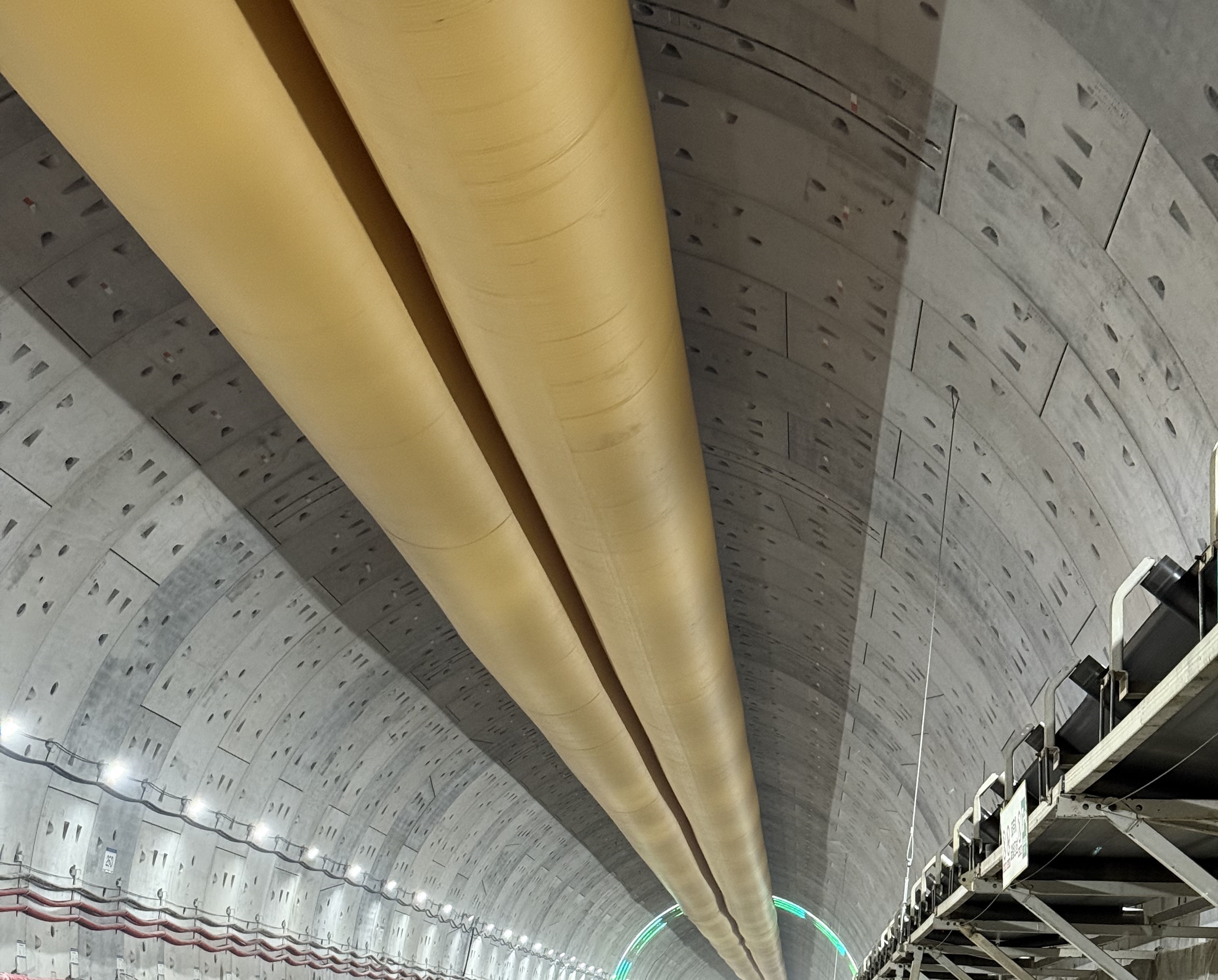
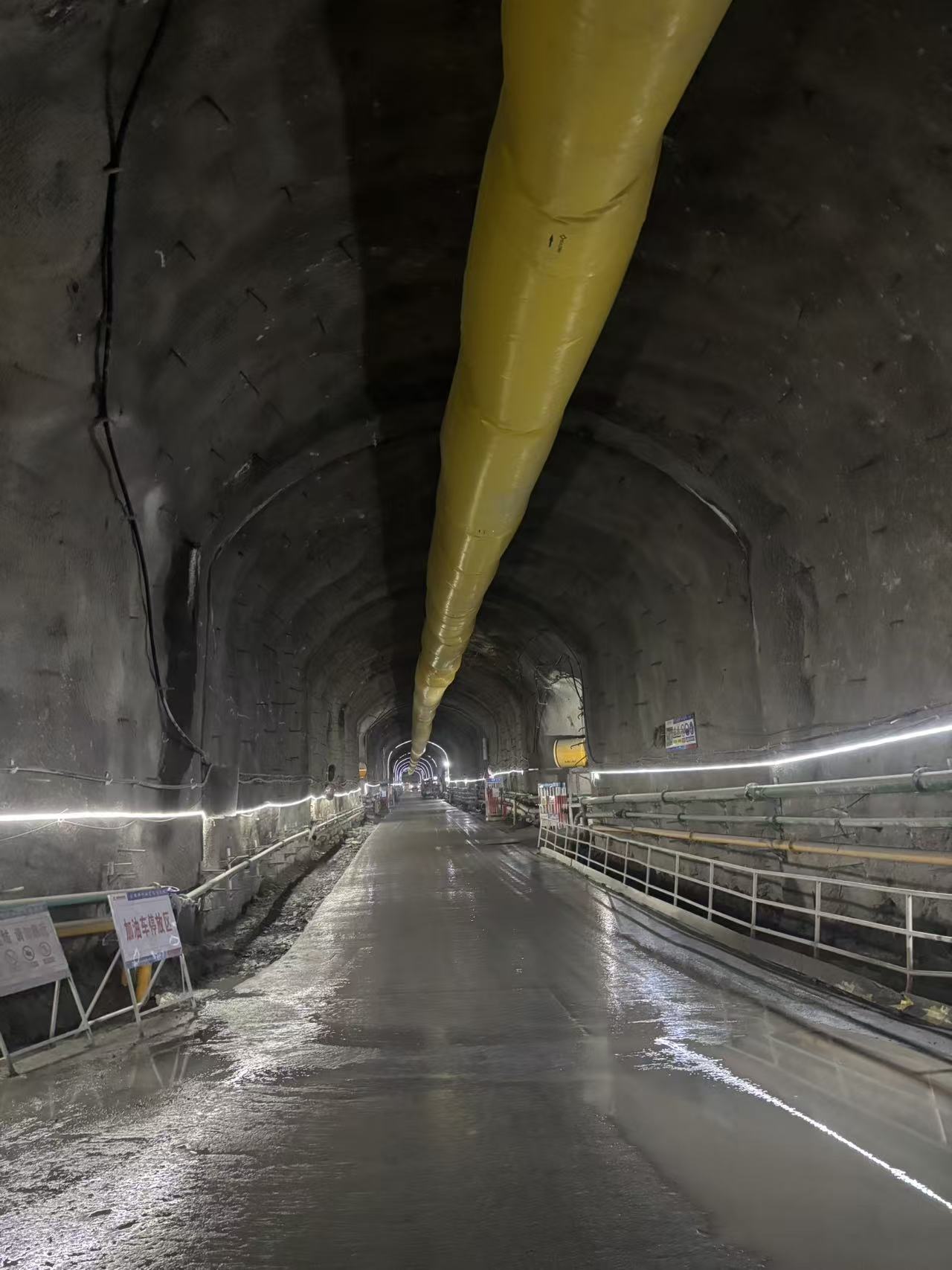
Tunnel ventilation systems connect the duct to a ventilation fan that pushes fresh air into the underground tunnel, supporting hazardous gas dilution, anti-static safety airflow supply, and dust extraction. The working condition is unforgiving: deep underground shafts with high pressure, elevated humidity, constant friction, and potential explosion hazards, in 24/7 continuous high-pressure operation. In this setting, tensile strength and flame retardancy move to the top of the requirement list, and section length becomes a leakage strategy rather than a logistics choice.
Underground mining operations
Underground mining ventilation relies on main mine fans, local counter-rotating fans, and ducting hanger systems working together. The stated special requirements are high tensile strength, flame retardancy, and surface anti-static resistance, which is why antistatic fabric as an option and FR or FRAS performance are specification items rather than upgrades. Ducts for these projects are typically engineered for mine projects, high-speed rail, subway, highway, hydropower station, and rock cave environments.
Long drives and confined galleries
Where a heading is long, leakage compounds with distance, so long flexible sections reduce both the number of connections and the maintenance points. Where headroom is constrained, oval spiral and rectangle duct forms allow the airway to follow the profile of the excavation, while spiral construction keeps the duct from collapsing in on itself.
Comparison Table: Flexible vs. Semi-Rigid Spiral Ventilation Duct
Neither duct family wins on every metric. The table below compares the two using published specification data, so the choice can be made on the metric that actually governs a project.
| Specification point | Flexible Ventilation Duct | Spiral (Semi-Rigid) Ventilation Duct |
|---|---|---|
| Body construction | PVC coated fabric or PVC laminated fabric, seamless one-piece fish-back welding automation technology | PVC coated fabric or PVC laminated fabric, welded construction |
| Reinforcement | PVC coated / laminated fabric body (spring steel wire listed for the spiral duct) | Spring steel wire φ5 mm to φ10 mm, wear protection, high pressure resistance |
| Diameter range | 200 mm to 3,200 mm (custom diameter available) | 200 mm to 2,800 mm (custom diameter available) |
| Section length | 1 m to 300 m (custom length available) | 1 m to 20 m (custom length available) |
| Operating regime | Positive pressure or negative pressure | Positive pressure or negative pressure |
| Stated airflow-related properties | Low friction loss, high-strength welded construction for airflow performance | High-strength welded construction, wear protection, high pressure resistance |
| Tensile strength | 1,000 N to 4,200 N | Welded construction with spring steel wire reinforcement (company-wide figure up to 4,300 N via seamless one-piece forming) |
| Fire performance | FR or FRAS | FR or FRAS |
| Material weight | 300 gsm to 2,000 gsm | 300 gsm to 2,000 gsm |
| End connections | Zipper, Velcro, steel ring, eyelets | Zipper, Velcro, steel ring |
| Product forms | Lay Flat, Oval, Twin, Tee, Y-Piece, Bend, Adapter | Semi-rigid, oval spiral, rectangle |
| Certifications listed | ISO 9001, ATEX, CE, CNMA, SGS test reports | ISO 9001, ATEX, CE, CNMA, SGS test reports |
| Typical airflow role | Long lay-flat runs and moving headings where joint count must stay low | Pressure-rated runs and confined sections that need an oval or rectangular profile |
FAQ: Airflow, Compliance and Sourcing Questions
Which standards and certifications should a mine ventilation duct provide evidence for?
Compliance works on two levels. At system level, US underground construction requires a minimum fresh air supply of 200 cfm per worker under 29 CFR 1926.800(k)(2), MSHA 30 CFR Part 75 sets underground ventilation requirements for US coal mines, and EN 12237 specifies airtightness and pressure requirements for round sheet metal air ducts in the EU. At product level, SULONG ventilation ducts are covered by ISO 9001, ISO 14001, and ISO 45001 certification, EU ATEX and CE marking, US NFPA 701, flame retardant approval to NFPA 701:2015 and DIN 4102 B2, and test reports certified by Australian NATA laboratories, with SGS test reports also listed in the product specifications.
Can ventilation duct airflow and pressure characteristics be adapted to a specific tunnel or shaft?
Yes, within stated ranges. Flexible ventilation ducts cover diameters from 200 mm to 3,200 mm and sections from 1 m to 300 m; spiral ventilation ducts cover 200 mm to 2,800 mm and sections from 1 m to 20 m. Both are offered for positive or negative pressure operation, with material weight from 300 gsm to 2,000 gsm, FR or FRAS performance, antistatic fabric as an option, and connection ends in zipper, Velcro, steel ring, or eyelet form. Flexible ducts can also be supplied as Lay Flat, Oval, Twin, Tee, Y-Piece, Bend, or Adapter configurations, while spiral ducts are available as semi-rigid, oval spiral, or rectangle forms, with custom diameter and length options.
What actually drives the cost of a ventilation duct with better airflow performance?
Cost is driven by specification content rather than by a single headline figure: fabric weight within the 300 gsm to 2,000 gsm range, whether the fabric is PVC coated or PVC laminated, spring steel wire reinforcement in spiral ducts, diameter and section length, connection hardware, fire and antistatic treatment, and the certification pack. Because leakage and friction affect fan energy and joint maintenance over a project lifecycle, the useful comparison is total installed cost across the working life of the heading rather than price per metre at the point of order.
How can a buyer validate duct metrics before committing to a full order?
Validation starts with documents rather than claims: ask for tensile and tear values referenced to the DIN 53354 and DIN 53363 test methods, for SGS test reports or NATA-certified test reports where relevant, and for clarification of which connection type each performance figure refers to. Buyers who need physical confirmation before a full rollout can request the technical catalogue and discuss sample evaluation directly with the SULONG team, since production is 100% in-house with no outsourced manufacturing and the sample therefore follows the same process chain as the bulk order.
What determines lead time on a mine or tunnel ventilation duct order?
Lead time follows specification complexity: diameter, section length, fabric weight and coating, wire reinforcement, connection type, fire and antistatic treatment, and the documentation pack all sit on the critical path, so the schedule should be confirmed against the final specification rather than against a catalogue item. Supply-side context helps buyers plan: SULONG operates a 40,000 m² facility with approximately 68 staff, including 18 R&D specialists who have contributed to drafting national industry standards for PVC-coated fabrics used in ventilation ducts, and an annual capacity of over 1 million metres of high-strength mining ventilation ducts, with 60% of sales going to export markets including Africa, Australia, Europe, South Africa, and Asia.
Conclusion: Build the Specification, Then Verify the Evidence
Selecting airflow performance metrics is a sequence, not a checklist. Start from the airflow the face requires, fix the pressure regime, then set diameter and section length so that joint count stays low. Add fabric weight, strength data tied to DIN 53354 and DIN 53363, fire and static performance, and finally geometry and fittings. Read that way, metrics such as leakage behaviour, pressure resistance, and tensile strength stop being catalogue numbers and start being the reasons a duct holds its airflow over a long drive.
Jiangsu Sulong Eco-Technologies Co., Ltd. is a National High-Tech Enterprise and a provincial-level ‘Specialized, Refined, Unique & Innovative’ SME established in 2007, with a long-term strategic supplier relationship with global mining enterprises including Zijin Mining and JCHX Mining, and a qualified supplier record with major Chinese groups including SINOHYDRO and CRCC. Its product range covers Flexible Ventilation Duct, Spiral Duct, Semi-Rigid Duct, Oval Ducts, Twin Duct, PVC Coated Fabric, PVC Laminated Fabric, and PVC Tarpaulin.
Next Step: Download the Ventilation Duct Catalogue
The full specification set — diameters, section lengths, fabric weights, connection types, and certification details — is available in the SULONG ventilation duct catalogue: Catalog of Ventilation Duct – SULONG (PDF).
For project-specific airflow and pressure requirements, contact the SULONG team to confirm specifications, documentation, and sample evaluation.
Contact person: Autumn Cui · Email: autumn@js-sulong.com · Tel: +86-18251952515 · WhatsApp: +86 182 5195 2515 · Website: www.js-sulong.com · Address: No.9 Filter Material Industry Park, Funing, Yancheng, Jiangsu Province, China.