Spiral vs Flexible Ventilation Duct: Gold Mine Gas Dilution vs Undersea Tunnel Duty
The spiral versus flexible ventilation duct decision is usually framed as a materials comparison. It is really a duty comparison. A producing gold mine needs a permanent primary ventilation circuit that keeps diluting hazardous gas for years without losing air volume. An undersea or water-rich tunnel drive needs temporary ventilation that can be advanced, re-hung and struck as the face moves, in wet ground, without losing flame-retardant performance. Those are different problems, and they end in different specifications, different acceptance criteria and different purchasing terms.
This guide works through both duties using SULONG project evidence: the Buriticá gold mine, where a 700 g/m² high-strength flame-retardant spiral duct on zero-leakage seamless construction supported 100% stable operation and 20 km of annual supply, and large-diameter flexible duct references including Hong Kong's Trunk Road T2, the Guangxi Beibu Gulf project, Melbourne Metro and the Xi'an–Chengdu Railway.
Decision rule for buyers: if the duct is permanent primary ventilation and hazardous gas dilution depends on it, specify spiral. If the duct is temporary ventilation in a wet, advancing or undersea drive, specify flexible large-diameter. If a single site has both, split the scope by duty and do not let one contract cover both.
Where the Decision Breaks Down
Two specification errors account for most of the avoidable cost in this decision.
The first is specifying flexible duct for a permanent duty. A primary ventilation circuit that must dilute gas over a long distance cannot absorb the cumulative leakage and pressure loss of a re-hung lay-flat system: air lost through the duct never reaches the working face, and the fan has to make it up continuously for the life of the mine.
The second is specifying a rigid spiral assembly for a fast-advancing undersea drive. There, transport, handling and re-deployment time dominate the ventilation cost, wet ground punishes components that are awkward to handle, and a stiffer system slows the excavation cycle it is meant to support.
Both errors come from comparing duct at the wrong level — price per metre or fabric weight — instead of the three variables that actually decide the outcome: duty duration, leakage budget and hazard class. A duct that is acceptable at a face for six months and a duct that must hold the same airflow for six years are not evaluated with the same criteria, and treating them as one category produces a specification that fits neither.
Industry Background: Why Duty Profile Now Drives Duct Purchasing
Ventilation duct is a mature component inside a growing market. Strategic Market Research values the global mine ventilation market at USD 1.42 billion in 2024 and projects USD 2.03 billion by 2030, a CAGR of 6.2%. Persistence Market Research identifies underground mining as the dominant segment, driven by the critical need for hazardous gas dilution.
The flexible side of the market is smaller in value but larger in volume. Intel Market Research puts global flexible ducting at USD 203.97 million in 2024, rising to USD 335.78 million by 2033, while Spherical Insights records more than 2.1 billion metres of flexible ducting manufactured globally in 2023, with 30% dedicated to industrial ventilation.
Regulation pulls the two duties further apart. In the United States, mine ventilation ducting must comply with MSHA 30 CFR Part 75 for underground safety, and OSHA 29 CFR 1926.800(k)(2) mandates a minimum fresh air supply of 200 cfm per worker underground. Standards of this type are written around delivered airflow at the workplace rather than around duct type — which is exactly why leakage performance, documentation and continuity of supply carry more weight than the purchase price of the duct itself.
Detailed Solution: Matching Each Duct to the Job It Actually Performs
Both duties can be described precisely enough to specify against. The difference is not quality; it is function.
Spiral ventilation duct in primary forced ventilation and gas dilution
For the Buriticá gold mine, the spiral ventilation duct carried primary forced ventilation and the gas dilution duty that depends on it. The duct was built from a 700 g/m² high-strength, flame-retardant fabric on zero-leakage seamless construction, supported by SGS, ATEX and NFPA 701 compliance. The project achieved 100% stable and continuous operation with a zero defect and rejection rate, maintaining fresh underground air supply and meeting safety standards for multinational mine audits. Annual supply to the site was 20 km of duct.
Three properties explain why that combination belongs in a mine circuit rather than a tunnel drive.
- Seamless construction. SULONG produces the duct on in-house automated lines using a seamless integral forming process. Removing the stitched multi-seam body removes the point where pressure resistance is lost and wind drag is created, and the resulting internal wall stays smooth for the life of the circuit.
- Specified mechanical and hazard margin. The spiral duct application requires high tensile strength — up to 4,200 N — together with flame retardancy and surface anti-static resistance. A gas-prone circuit needs both mechanical margin and static control, which is a different specification logic from a construction drive.
- Leakage close to zero under high air pressure. That protects the dilution calculation itself. In a long primary circuit, every leak is air the fan has paid for and the face never receives.
Flame retardant protection for the duct range complies with NFPA 701:2015 and DIN 4102 B2, with FR or FRAS performance classification available, and the product meets ISO 9001, ATEX, CE, CNMA and SGS Test Report requirements.
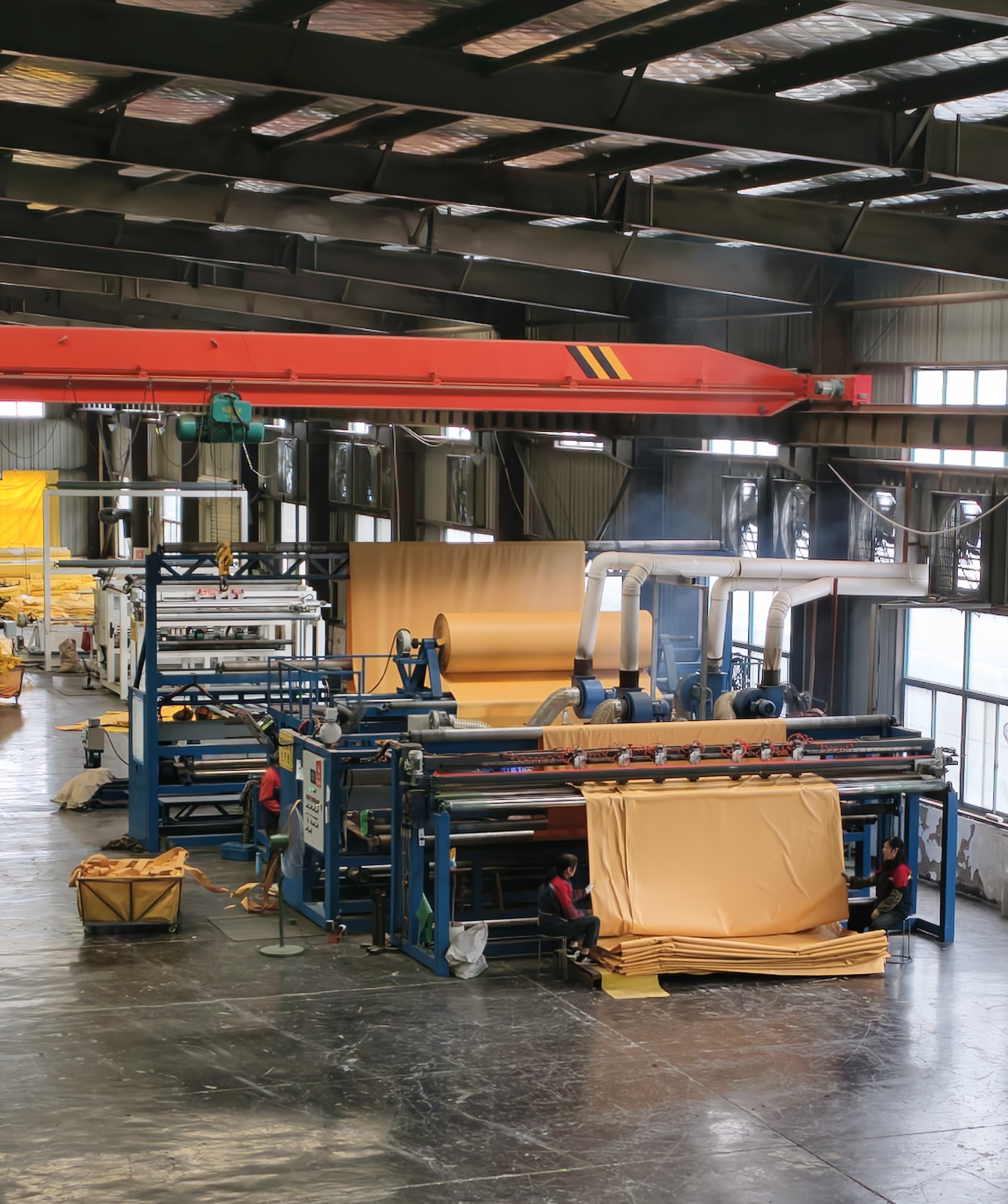
In-house automated production line for seamless integral forming — the construction step that separates a permanent primary ventilation circuit from a re-hung temporary one.
Flexible large-diameter duct in water-rich and undersea tunnel drives
The opposite duty appears in water-rich and undersea tunnel construction, where the duct provides temporary ventilation for a drive that keeps moving. SULONG flexible large-diameter duct references include Hong Kong's Trunk Road T2, the Guangxi Beibu Gulf project, Melbourne Metro and the Xi'an–Chengdu Railway.
In these projects the duct is specified around high tensile strength and flame retardancy, with FR or FRAS performance classification and flame retardant protection compliant with NFPA 701:2015 and DIN 4102 B2. The lay-flat range covers diameters from 200 mm to 3,200 mm, which is what makes a single duct string workable across a large-section undersea drive and a narrower cross-passage.
The engineering priority differs from a mine circuit in three ways. The duct is installed, advanced and struck repeatedly, so weight, handling and coupling speed decide how quickly ventilation follows the face. Water-rich ground punishes any component that cannot be handled wet. And because the duct is replaced rather than retained, replenishment speed matters as much as unit performance.
What does not change is the compliance floor. The same ISO 9001, ATEX, CE, CNMA and SGS Test Report documentation applies, and flame retardancy is not negotiable in either duty.
Step-by-Step: How to Decide Between Spiral and Flexible Duct
The sequence below converts the comparison into a specification and a purchase order.
- Classify the duty before naming the product. Write either permanent primary forced ventilation with gas dilution, or temporary ventilation for an advancing face in water-rich ground, into the requisition. Every later criterion — tensile, leakage, handling, commercial terms — follows from that sentence.
- Set the leakage and airflow budget. Start from the delivered airflow the workplace needs, not from nominal duct capacity. OSHA 29 CFR 1926.800(k)(2) uses 200 cfm per worker underground as its reference point, and a long primary circuit should be planned against near-zero leakage at the specified pressure rather than a tolerance that compounds along the route.
- Match the mechanical and hazard profile. For a gas-prone mine circuit, specify high tensile strength (up to 4,200 N for the spiral duct application), flame retardancy and surface anti-static resistance. For a water-rich tunnel drive, specify high tensile strength and flame retardancy, with FR or FRAS classification confirmed against NFPA 701:2015 and DIN 4102 B2.
- Write acceptance criteria before award. SULONG's QC framework covers IQC raw material batch quarantine, 2-hour IPQC patrol inspections and 100% pre-delivery FQC physical performance testing, with each finished duct traceable to its raw material batch. Require Mill Test Certificates and quality conformity labels with every batch, allow third-party inspection such as SGS, and include on-site acceptance checks. Where airtightness has to be contractual, EN 12237 provides a recognised strength and leakage reference for circular sheet-metal ductwork and is useful for framing the test method even where the duct body is not metal.
- Verify capacity and continuity, not just capability. Monthly production capacity exceeds 80,000 metres, annual capacity is over 1 million metres of high-strength mining ventilation duct, and all processes run in-house on a 40,000 m² site — no subcontracted forming. Exports are handled through the group's own trading subsidiary, Nanjing Sulun International Trading Co., Ltd., working with mining-specific freight routes.
- Fix the commercial terms in the same document. Flexible MOQ terms allow trial and prototype orders at zero MOQ and support urgent on-site mine maintenance, with customised non-standard fabric negotiated against minimum raw material batch sizes. Delivery is offered FOB, CIF or DAP door-to-mine-site, payment milestones follow a standard 30/70 split or a customised schedule, and long-term framework pricing is linked to annual cumulative purchasing volumes across sites.
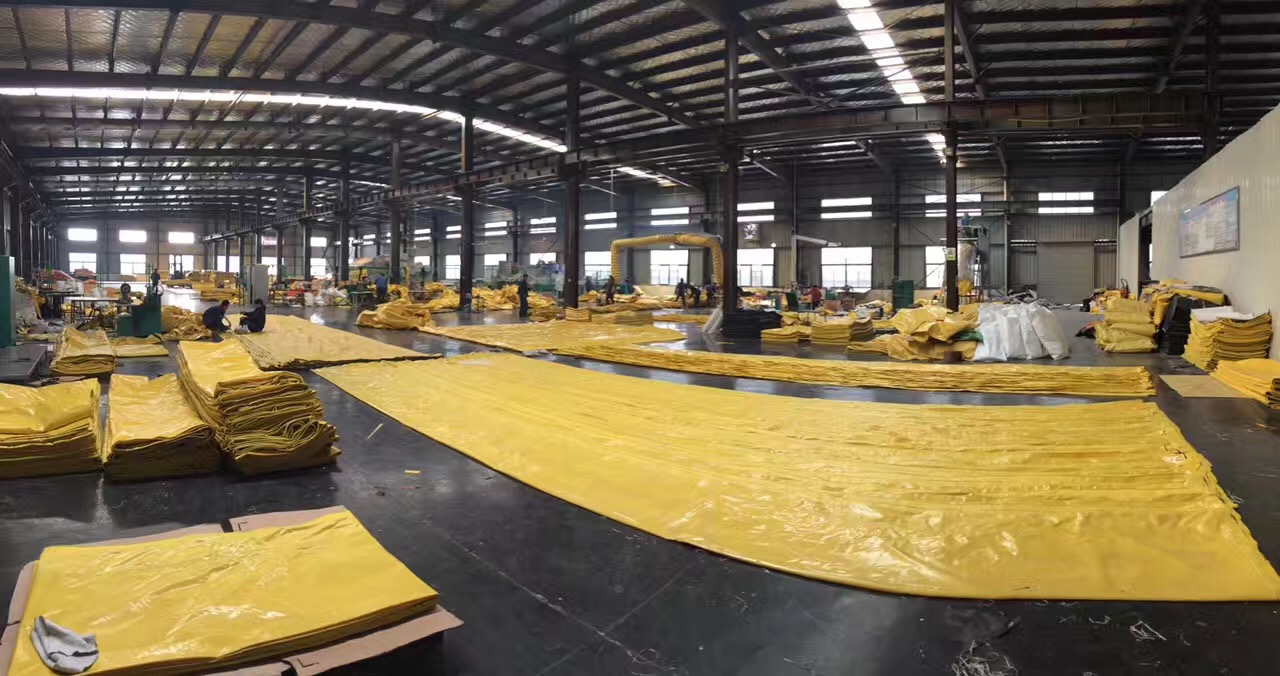
In-house production and inspection under one roof: batch traceability and 100% pre-delivery testing are what make audit-ready acceptance possible.
Use Cases: Which Duct Fits Which Project
1. Producing underground metal mine with a gas dilution duty
Specify spiral. The circuit is permanent, the dilution requirement is continuous, and the acceptance discussion is about leakage, tensile margin, anti-static surface resistance and audit documentation. The Buriticá gold mine is the reference point: 700 g/m² fabric, seamless zero-leakage construction, SGS, ATEX and NFPA 701 compliance, 100% stable operation with a zero defect and rejection rate, and 20 km supplied annually.
2. Undersea or water-rich tunnel drive under construction
Specify flexible large-diameter. The duct is temporary, the face advances, and the decision variables are handling weight, coupling speed, diameter range from 200 mm to 3,200 mm, and flame retardant classification. The Trunk Road T2, Guangxi Beibu Gulf, Melbourne Metro and Xi'an–Chengdu Railway projects illustrate this duty profile.
3. Long single-heading tunnel with heavy airflow demand
Where a project combines a long permanent circuit with a fast-advancing construction phase, split the scope by section rather than compromising on one duct type. The permanent section carries the spiral specification; the advancing headings carry the flexible specification and its replenishment terms.
4. Mine maintenance stock and unplanned replacement
Emergency replacement does not follow a programme. Flexible MOQ terms — no rigid quantity restrictions on standard stock products, zero MOQ on trial and prototype orders — exist precisely so that an unplanned replacement does not wait for a container to fill.
Spiral vs Flexible Ventilation Duct: Comparison Table
The table maps each duct type to the duty it is specified for. It is a specification comparison, not a quality ranking.
| Decision factor | Spiral ventilation duct | Flexible ventilation duct |
|---|---|---|
| Primary duty | Permanent primary forced ventilation and hazardous gas dilution in producing underground mines | Temporary ventilation of advancing faces, including water-rich and undersea tunnel drives |
| How the duct is used | Installed as a fixed circuit carrying the same duty through the mine's operating life | Installed, advanced and struck with the face as the drive progresses |
| Construction | Seamless integral forming on in-house automated lines; no stitched multi-seam body | Lay-flat fabric duct, produced in diameters from 200 mm to 3,200 mm |
| Tensile strength | Up to 4,200 N specified for the spiral duct application; SULONG duct product range spans 1,300 N to 4,300 N | High tensile strength required, set by the project specification |
| Leakage behaviour | Leakage close to zero under high air pressure; protected by seamless construction | Governed by joints, couplings and installation discipline; airtightness stated in the acceptance criteria |
| Flame retardancy | NFPA 701:2015 and DIN 4102 B2 protection levels; FR or FRAS classification available | NFPA 701:2015 and DIN 4102 B2 protection levels; FR or FRAS classification available |
| Anti-static requirement | Surface anti-static resistance required for gas-prone circuits | Core requirement is high tensile strength and flame retardancy; static control specified separately where the project calls for it |
| Compliance documentation | ISO 9001, ATEX, CE, CNMA and SGS Test Report | ISO 9001, ATEX, CE, CNMA and SGS Test Report |
| Verified project reference | Buriticá gold mine: 700 g/m² fabric, 100% stable operation, zero defect and rejection rate, 20 km annual supply | Trunk Road T2 (Hong Kong), Guangxi Beibu Gulf, Melbourne Metro, Xi'an–Chengdu Railway |
| Commercial emphasis | Framework pricing on annual volume, batch traceability, continuity of supply | Fast replenishment, DAP delivery to remote sites, MOQ flexibility across staged drives |
Sources: SULONG product and project data; NFPA 701:2015 and DIN 4102 B2 flame retardant classification as applied to the SULONG duct range.
Frequently Asked Questions
What certifications should a long-term tunnel ventilation duct supplier hold?
Start with product-level documentation: ISO 9001, ATEX, CE, CNMA and an SGS Test Report, plus flame retardant protection compliant with NFPA 701:2015 and DIN 4102 B2 and an FR or FRAS performance classification. For mining work in the United States, MSHA 30 CFR Part 75 sets the underground safety framework the duct has to support. Manufacturer-level certification matters too — SULONG holds ISO 9001, ISO 14001 and ISO 45001 — because a supplier that cannot show an occupational safety and environmental system is a weak partner on a multi-year programme.
How do you verify delivery continuity rather than just production capacity?
Ask where each process is performed. SULONG completes every stage from polymer fabric fabrication to seamless integral forming in its own 40,000 m² factory, with monthly capacity above 80,000 metres and annual capacity over 1 million metres of high-strength mining ventilation duct — no subcontracted forming, which is the usual source of schedule drift. Continuity is also a quality question: the QC framework runs IQC batch quarantine, 2-hour IPQC patrols and 100% pre-delivery FQC testing, with full traceability to raw material batches, alongside zero customer rejection and an LTIFR of zero across 2023, 2024 and 2025.
What purchasing terms support a multi-year duct programme?
MOQ terms are flexible: there are no rigid quantity restrictions on standard stock products, and trial or prototype orders carry zero MOQ, while customised non-standard fabric is negotiated against minimum raw material batch sizes. Delivery can be quoted FOB, CIF or DAP door-to-mine-site for remote locations. Payment follows contract milestones such as a standard 30/70 split or a customised schedule aligned to the purchase order, and long-term framework pricing is linked to annual cumulative purchasing volume across all sites.
How are samples and acceptance handled before a full order?
Acceptance is built on inspection plus paperwork. Every order is subject to 100% pre-delivery inspection, with third-party inspection such as SGS and on-site acceptance checks supported on request. Each batch ships with traceability documentation including Mill Test Certificates and quality conformity labels, and finished duct can be traced back to its raw material batch. For field damage, portable on-site repair kits allow rapid repair without pulling a whole section out of service.
How should lead time be planned across a long tunnel or mine programme?
Plan against the duty cycle, not against a single shipment. For a permanent mine circuit, lock annual volume into framework pricing and set delivery windows around planned maintenance; for an advancing tunnel drive, keep replenishment inside the excavation cycle and use DAP delivery so transport risk sits with the supplier. Export logistics run through the group's own trading subsidiary, Nanjing Sulun International Trading Co., Ltd., working mining-specific freight routes. To scope a programme, request the ventilation duct catalogue or send annual volume and delivery windows to autumn@js-sulong.com for a quotation and sample arrangement.
Conclusion: Decide the Duty, Then the Duct
Spiral and flexible ventilation duct do different jobs, and the Buriticá gold mine and the undersea tunnel references show how far apart those jobs are. A permanent gas dilution circuit needs a seamless, high-tensile, near-zero-leakage spiral duct with anti-static surface resistance and audit-ready traceability. A water-rich undersea drive needs a large-diameter flexible duct that is light enough to advance quickly, available from 200 mm to 3,200 mm, and flame retardant to NFPA 701:2015 and DIN 4102 B2.
The purchasing consequence is straightforward. Write the duty into the requisition, set the leakage and hazard criteria that follow from it, and agree acceptance documentation and continuity terms before the first metre ships. That sequence is what turns a duct comparison into a decision that still holds three years into the contract.
Next Step: Scope Your Duct Programme with SULONG
SULONG manufactures spiral, flexible, semi-rigid and oval ventilation duct in-house, from PVC-coated fabric through seamless integral forming, and supplies mine and tunnel projects worldwide.
- Download the ventilation duct catalogue: Catalog of Ventilation Duct – SULONG (PDF)
- Technical and quotation contact: Autumn Cui, autumn@js-sulong.com, Tel +86-18251952515
- Company website: www.js-sulong.com
- Factory address: No.9 Filter Material Industry Park, Funing, Yancheng, Jiangsu Province, China
Send your duty profile — permanent primary ventilation or temporary tunnel ventilation — together with required diameter and annual volume, and request a sample or quotation for evaluation.
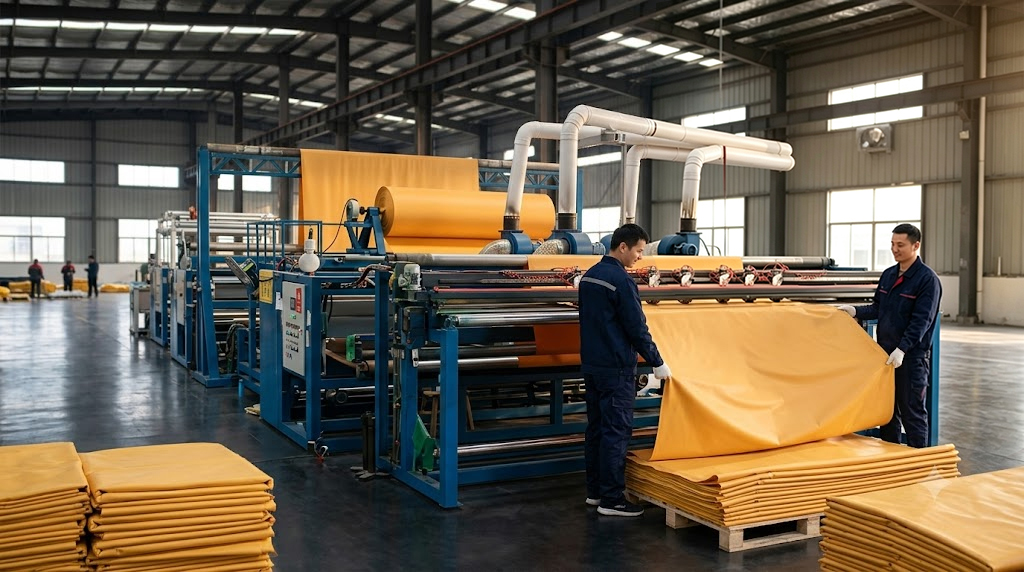
Sample runs and volume supply come off the same line — request a sample to validate fabric, forming and flame retardant performance before committing annual volume.
Have Questions or Need More Details?
Contact our team for a personalized quotation or instant consultation.
Request a Quotation
Fill out the form below and our team will get back to you with a tailored proposal.
WhatsApp Direct Chat
Prefer to chat in real-time? Message us on WhatsApp for instant assistance & quick answers.
- Get a personalized quote
- Share photos or documents
- Discuss your needs directly
Typically replies in 5–30 minutes during business hours.