Underground Gold Mine Ventilation Duct Problem: Solving Hazardous Gas Dilution at Buriticá
The short answer: the Buriticá gold mine solved its forced-ventilation and hazardous gas dilution problem with a 700 g/m² high-strength flame-retardant ventilation duct series built on zero-leakage seamless construction and compliant with SGS, ATEX and NFPA 701 requirements. The programme has run for three years for a global Tier-1 mining conglomerate and EPC contractor, at 20 km of ventilation duct supplied per year, with 100% stable continuous operation, a zero defect and rejection rate, and compliance with the safety standards applied in multinational mine audits.
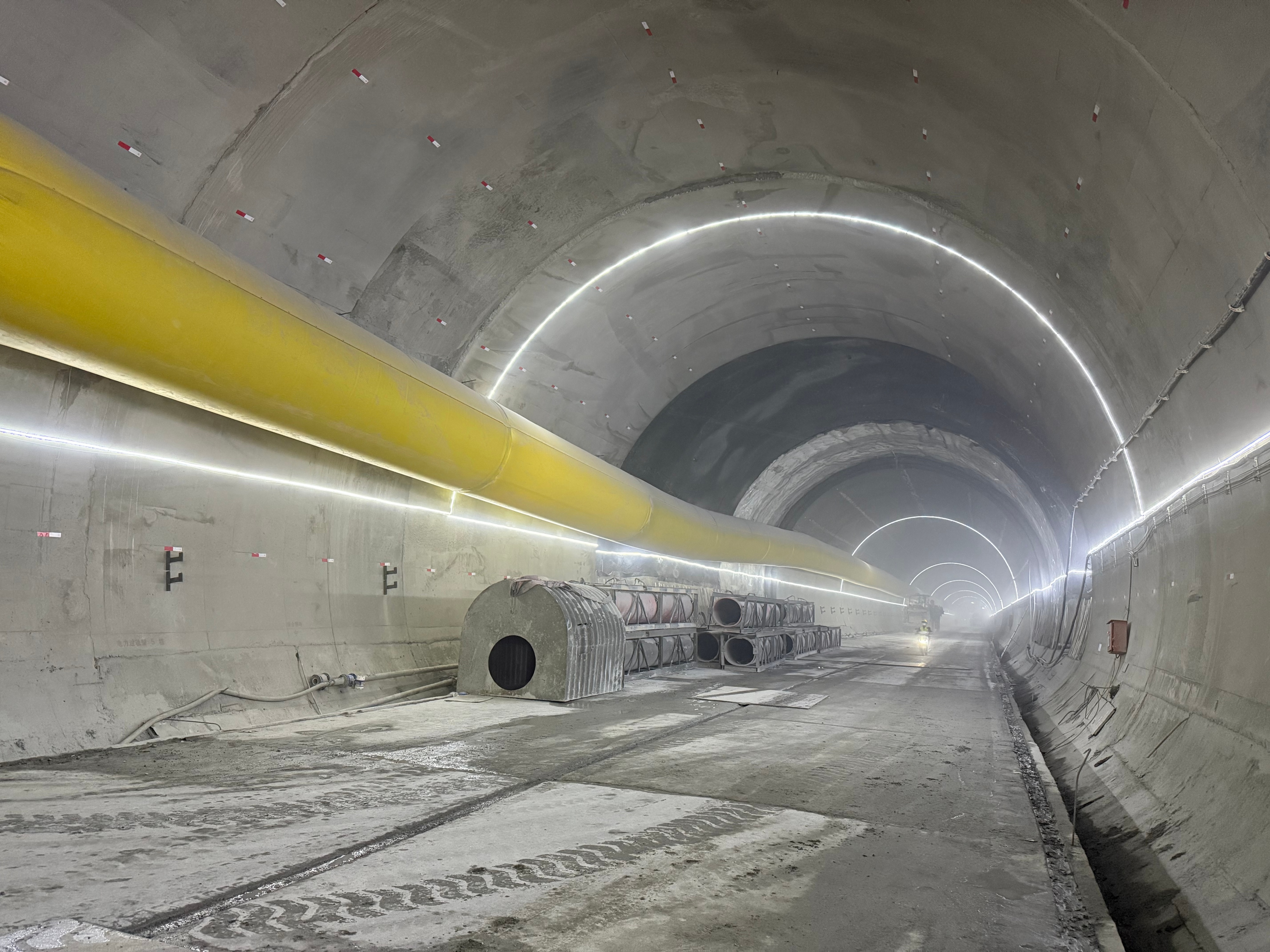
SULONG high-strength mining ventilation duct supplied for primary forced ventilation and hazardous gas dilution in deep underground mine development.
What follows is the complete problem–solution record: why gas dilution depends on duct integrity rather than fan power alone, how the 700 g/m² seamless series was specified, what the compliance and quality evidence looks like, where the same configuration applies, and how to shortlist ventilation duct suppliers for a comparable industrial project.
The Problem: When Gas Dilution Depends on a Fabric Duct
In an underground gold mine, forced ventilation is the mechanism that delivers fresh air to the working face and dilutes hazardous gases to the concentrations required by mine safety standards. The ventilation duct is the only physical link between the surface fan and the face, which means the air that actually reaches the face is not the air the fan is rated for — it is the fan output minus everything lost through seams, joints, abrasion damage and kinks.
The duct is connected to a ventilation fan that supplies fresh air into the underground tunnel. Its role is to deliver fresh air into underground tunnels and dilute hazardous gases, and it also supplies anti-static safety airflow and supports dust extraction systems within the mine ventilation system.
That functional definition creates three distinct failure modes, and each one is a safety event rather than a maintenance inconvenience:
- Leakage at seams and joints. Every stitch line, zipper and coupling is a pressure boundary. In a long development drive, cumulative leakage reduces dilution performance at exactly the point where gas concentration is highest.
- Loss of flame retardancy or anti-static performance. Underground metal mines are classified hazardous areas for flammable gas explosion risk. A duct that loses fire-retardant or anti-static behaviour compromises the same classification it was installed to support.
- Loss of mechanical integrity. Long drives bend, compress and drag. A duct that tears or collapses mid-shift creates an unplanned ventilation stoppage on top of a gas-dilution shortfall.
Regulatory frameworks set the floor for all three. Mine ventilation ducting must comply with MSHA 30 CFR Part 75 for underground safety in the United States, and U.S. Federal regulation 29 CFR 1926.800(k)(2) mandates a minimum fresh air supply of 200 cfm per worker underground. In the European Union, the ATEX Directive 2014/34/EU governs equipment used in underground coal mines, metal mines and flammable gas explosion hazardous areas. In practice, a mine that must also pass a multinational corporate audit ends up being inspected against all of them at once.
Industry Background: Why Ducting Is Moving Up the Procurement Agenda
The commercial context explains why a fabric duct programme at a single gold mine is worth studying. The global mine ventilation market was valued at USD 1.42 billion in 2024 and is projected to reach USD 2.03 billion by 2030, a CAGR of 6.2% (Strategic Market Research). Within that market, underground mining accounts for the dominant segment precisely because of the critical need for hazardous gas dilution (Persistence Market Research, 2025).
Broader air-moving infrastructure is expanding on the same trajectory: the global air duct market was valued at USD 7.14 billion in 2023 and is projected to reach USD 10.20 billion by 2032 (SNS Insider), while Asia Pacific dominated the spiral duct fittings market in 2025 with a 38.2% revenue share, driven by industrial expansion (Dataintelo).
Two technical trends reinforce the shift. First, ventilation-on-demand (VOD) adoption is growing, with 35% of new North American mines using it by 2025 (Dataintelo) — but demand-controlled ventilation only delivers savings if delivered airflow can be trusted, which pushes the specification burden back onto the duct. Second, airtightness is now a standardised engineering metric rather than a marketing claim: the European Standard EN 12237 specifies airtightness and pressure requirements for round sheet metal air ducts, and leakage class is a recognised design variable across ducting categories.
The practical consequence for buyers is that ventilation duct selection has moved from a low-value consumable purchase to a documented, auditable engineering decision.
The Solution: A 700 g/m² Seamless Flame-Retardant Duct Programme
What was actually deployed: the Buriticá programme used the 700 g/m² high-strength flame-retardant ventilation duct series as the primary forced ventilation path for hazardous gas dilution. The series features zero-leakage seamless construction and complies with international standards including SGS, ATEX and NFPA 701. It was supplied at 20 km per year for three years, with 100% stable continuous operation, a zero defect and rejection rate, compliance with multinational mine audit requirements, and reliable transcontinental multimodal logistics.
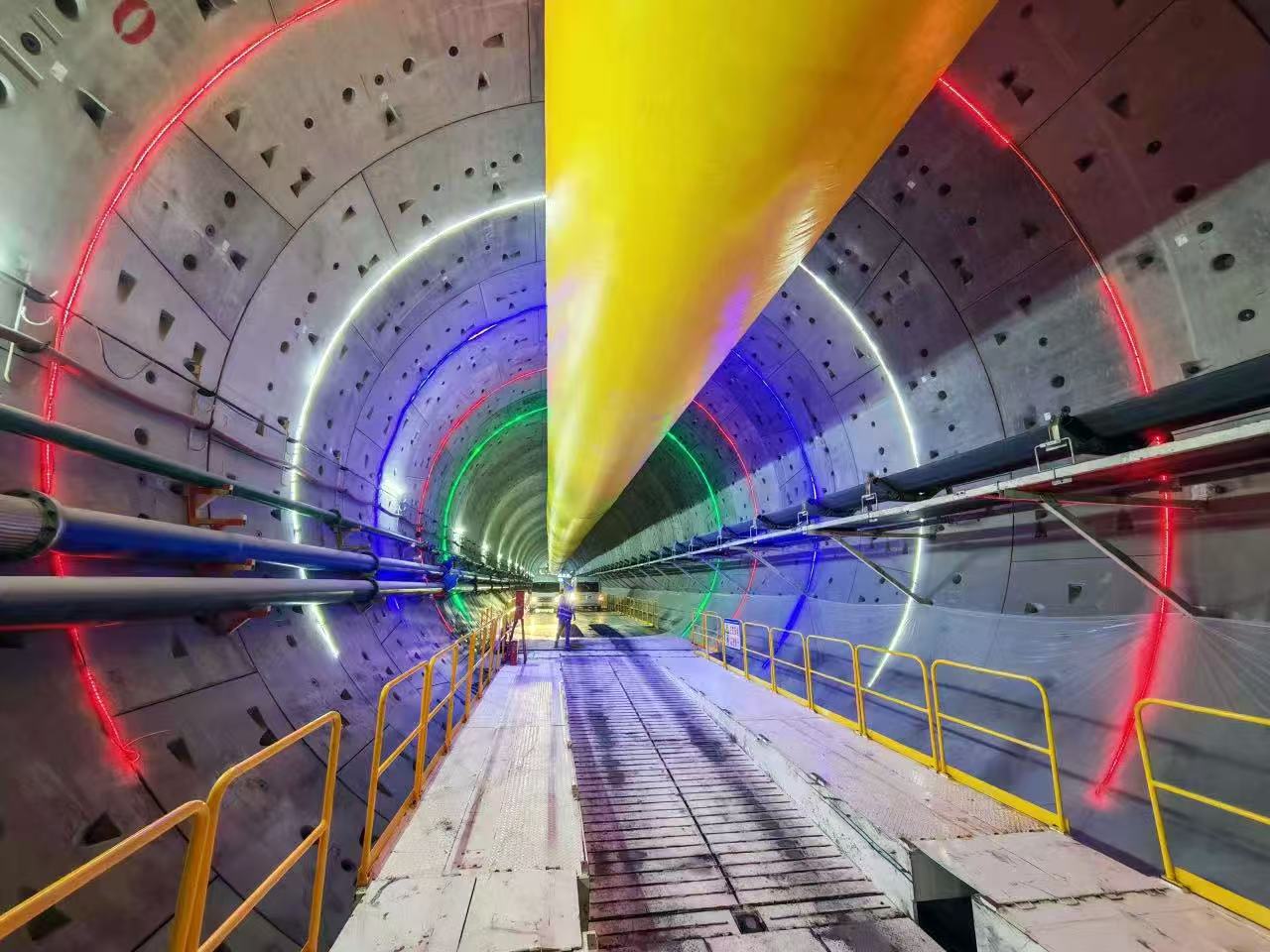
Flexible, large-diameter ventilation duct engineered for underground mine and tunnel forced ventilation duty.
Why 700 g/m², and Why Seamless Construction
Fabric weight is the first lever in a gas-dilution specification because it governs abrasion margin, tear resistance and dimensional stability over a long development drive. SULONG ventilation duct fabric is produced across a 300 g/m² to 2,000 g/m² range, and the ATEX type examination certificate for the explosion-proof ventilation duct series covers the 550, 600, 700 and 800 g/m² grades in both FR and FRAS performance classes.
Construction matters at least as much as weight. Stitched seams are the dominant leakage path in fabric ducting, which is why the Buriticá series uses zero-leakage seamless construction produced with seamless one-piece fish-back welding automation technology. Removing the stitch line removes the leak path.
The Product Forms Behind the Programme
| Specification | Flexible Ventilation Duct | Spiral Ventilation Duct |
|---|---|---|
| Diameter range | Ф200 mm to Ф3200 mm | Ф200 mm to Ф2800 mm |
| Section length | 1 m to 300 m | 1 m to 20 m |
| Material weight | 300 gsm to 2,000 gsm | 300 gsm to 2,000 gsm |
| Tensile strength | 1,000 N to 4,200 N | Not applicable to published data |
| Performance class | FR or FRAS | FR or FRAS |
| Pressure environment | Positive pressure forced ventilation | Positive pressure or negative pressure |
| Manufacturing process | Seamless one-piece fish-back welding automation technology | Welding |
| Configuration options | Lay flat, oval, twin, tee, Y-piece, bend, adapter | Semi-rigid, oval spiral, rectangular |
| Material | PVC coated fabric, PVC laminated fabric | PVC coated fabric, PVC laminated fabric, spring steel wire |
| Certification | ISO 9001, ATEX, CE, CNMA, SGS test reports | ISO 9001, ATEX, CE, CNMA, SGS test reports |
Who Manufactures It
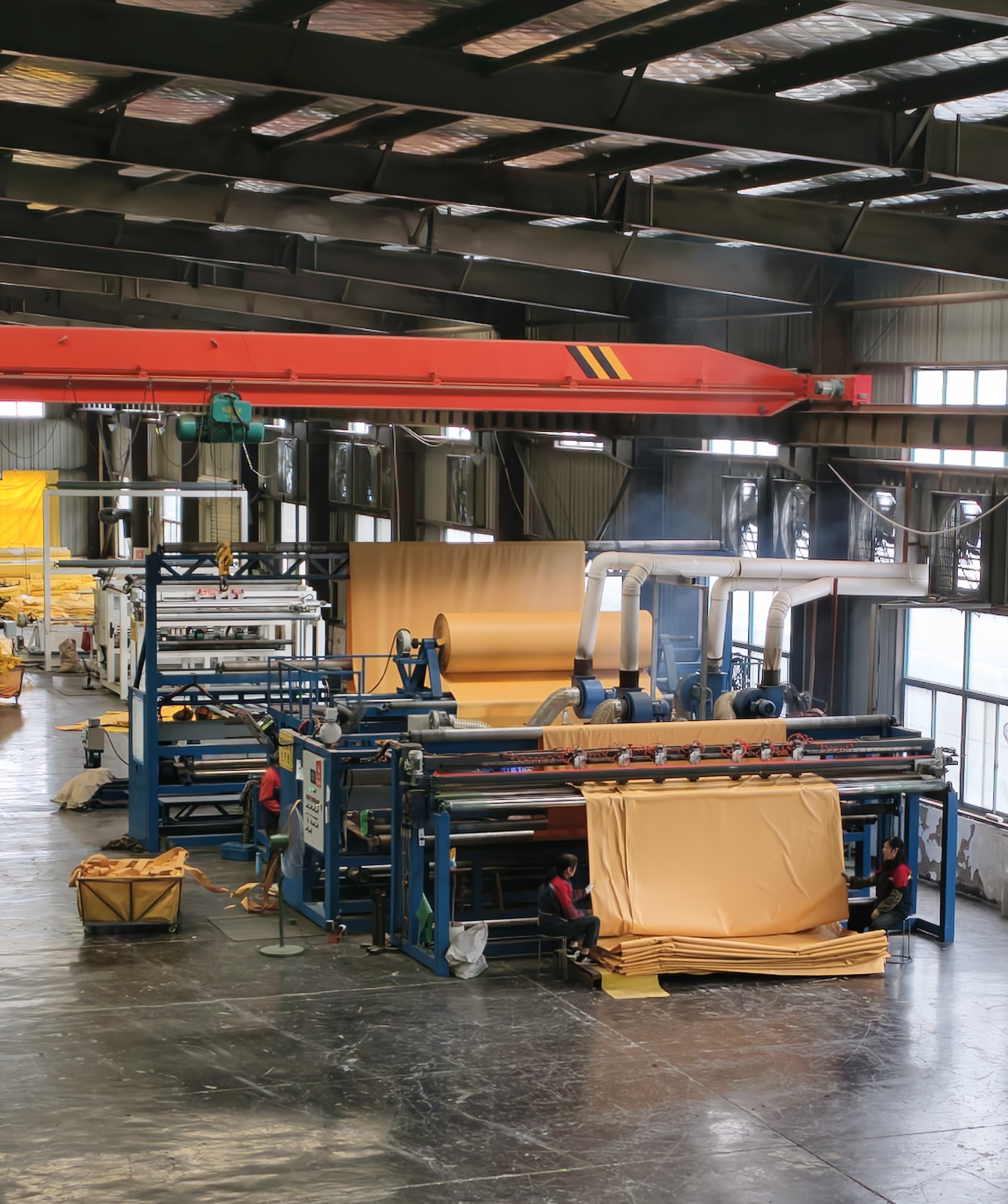
Jiangsu Sulong Eco-Technologies Co., Ltd (SULONG) is a National High-Tech Enterprise and a provincial-level "Specialized, Refined, Unique & Innovative" SME based in Funing, Yancheng, Jiangsu Province, China, founded in 2007. The company operates a 40,000 m² factory with 68 employees and delivers 100% in-house automated production of high-grade composite polymer mining and industrial ventilation ducts in PVC, PE, TPU and TPO — all processes self-produced with no outsourced manufacturing. Annual capacity exceeds 1 million meters of high-strength mining ventilation ducts, with monthly output above 80,000 meters. An engineering team including 18 R&D specialists has contributed to drafting national industry standards for PVC-coated fabrics used in ventilation ducts.
Step-by-Step Breakdown: How the Programme Was Built
Step 1 — Define the airflow duty, not the duct
The specification starts with the gas-dilution requirement at the face and the statutory fresh-air minimum, not with a duct catalogue. Diameter, section length and pressure regime follow from that calculation. The Buriticá duct was scoped explicitly as primary forced ventilation and hazardous gas dilution duty, which is what later allowed the mine to demonstrate compliance during multinational audit review.
Step 2 — Translate the duty into a fabric weight and performance class
Once the duty is fixed, fabric weight becomes the traceable cost driver. Heavier coated fabric generally improves abrasion and tear margin but raises material cost and packed volume; lighter fabric reduces freight per meter but narrows the tolerance for rough handling. The programme settled on the 700 g/m² grade within a certified 550–800 gsm FR/FRAS envelope. Other specification levers that move cost include diameter, section length, connection type and whether FR or FRAS anti-static performance is required.
Step 3 — Lock the construction and joint architecture
Connection types — steel rings, zippers and couplings — are chosen against installation speed, re-use cycles and the need to keep the pressure boundary intact. Seamless one-piece fish-back welding automation was selected over stitched construction because the joint, not the fabric, is where leakage concentrates.
Step 4 — Build the compliance file before the first shipment
Compliance evidence was assembled as a document set rather than a claim:
- ATEX: EU ATEX Type Examination Certificate for Explosion-proof Ventilation Duct ECM 24 ATEX-B D091, issued by ECM on 17 May 2024 and valid to 16 May 2029, covering 550GSM-FR, 600GSM-FR, 700GSM-FR, 800GSM-FR, 550GSM-FRAS, 600GSM-FRAS, 700GSM-FRAS and 800GSM-FRAS for use in underground coal mines, metal mines and flammable gas explosion hazardous areas, under the 2014/34/EU ATEX Directive, EN ISO 80079-36 and EN ISO 80079-37.
- Quality management: ISO 9001 certificate ZCU23Q0002468R0S covering the production of PVC coated fabrics, PVC laminated fabrics and ventilation ducts, issued 15 December 2023 by Jioncn United (Beijing) Certification Co., Ltd and valid through 14 December 2026.
- Flame retardancy: NFPA 701:2015 and DIN 4102 B2 compliance, plus SGS test reports and test reports certified by Australian NATA laboratories.
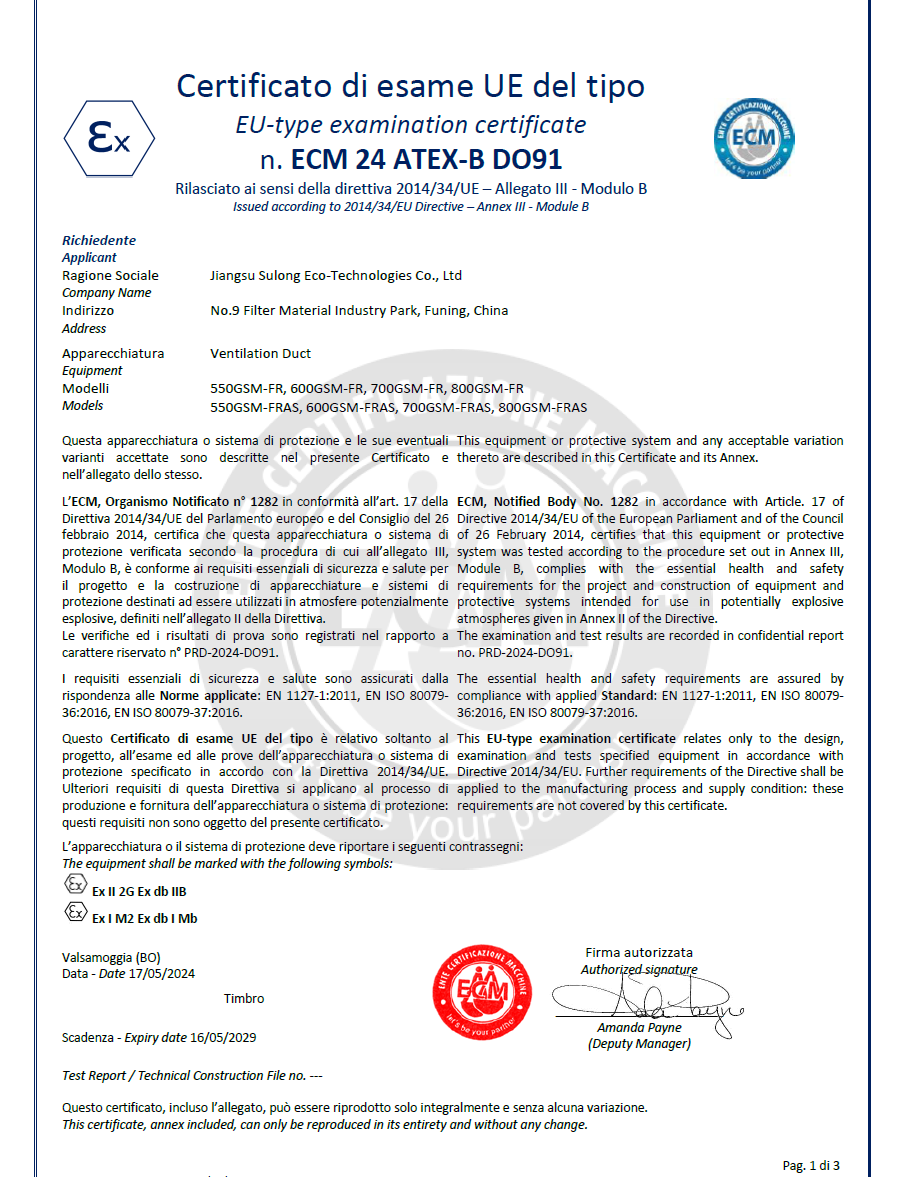
EU ATEX Type Examination Certificate ECM 24 ATEX-B D091, covering 550–800 gsm FR and FRAS ventilation duct grades for underground metal and coal mines.
Step 5 — Verify production capacity and quality control discipline
A 20 km per year supply commitment is a capacity question as much as a product question. SULONG manufacturing runs with a comprehensive 100% inspection regime under ISO 9001:2015, supported by a three-level quality control system: batch IQC checks, IPQC patrol inspections every two hours, and 100% FQC physical performance testing before shipment.
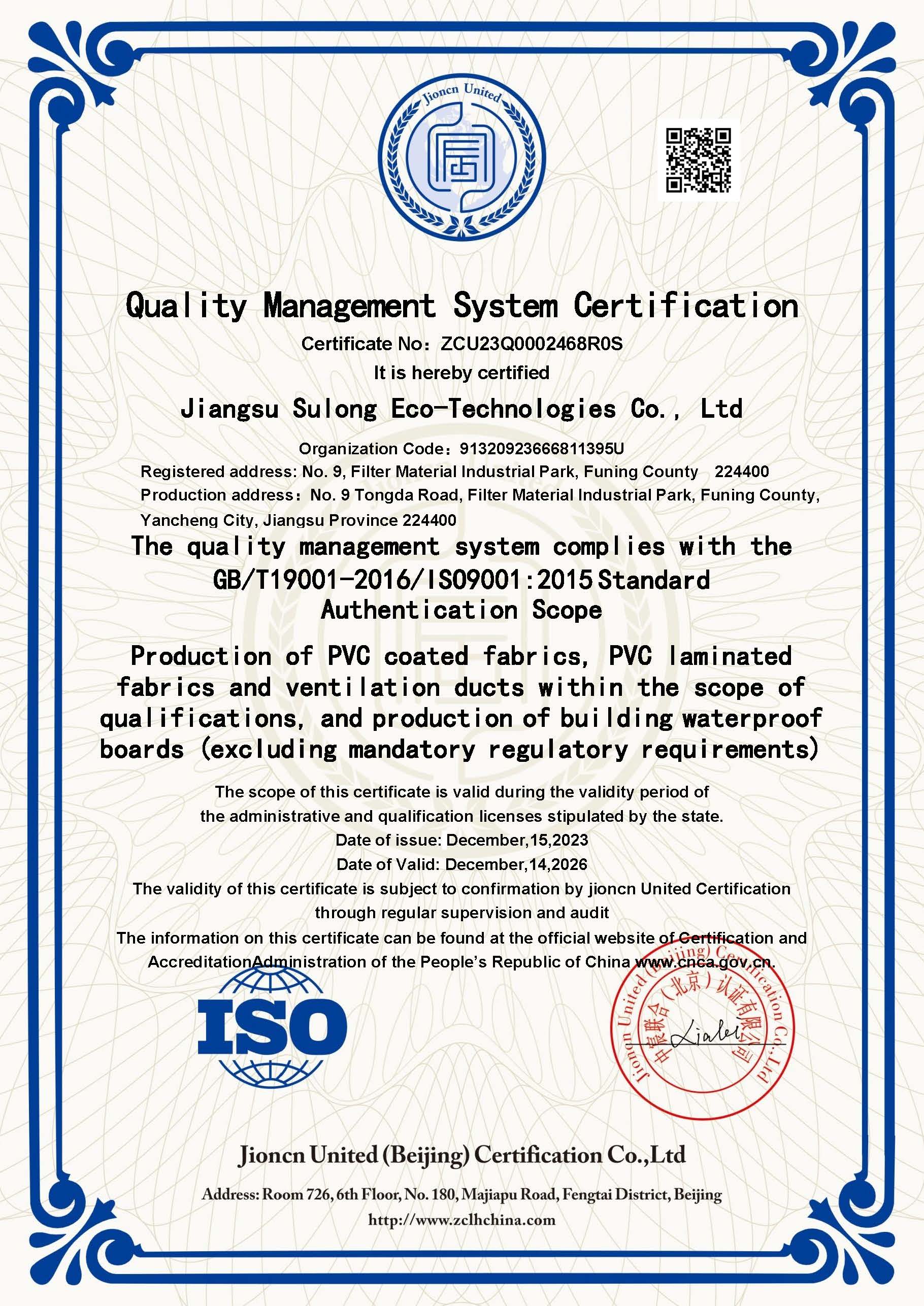
ISO 9001:2015 certificate ZCU23Q0002468R0S, valid through 14 December 2026, covering PVC coated fabric and ventilation duct production.
Step 6 — Plan transcontinental logistics as part of the ventilation plan
The Buriticá programme included reliable transcontinental multimodal logistics as a named element of the solution. For a mine where the duct is the only route for fresh air, a shipment that arrives late is a ventilation risk, not an administrative delay.
Step 7 — Hold the supplier to a documented after-sales path
Support terms were defined rather than implied: 24/7 customer support, video-based technical diagnosis by specialists within 2 hours, global on-site engineer dispatch for troubleshooting, bilingual installation and training manuals, and a free replacement policy — no repairs — for production defects within the 12-month warranty period. Typical production lead time for standard orders is 15 to 30 days, with expedited production available for urgent mine maintenance orders.
Use Cases: Where the Same Duct Logic Applies
The Buriticá configuration is one entry in a documented record of underground projects where the same combination of flame retardancy, easy installation and flexible large-diameter ventilation duct performance was required.
| Project | Application | Scale | Duration | Documented highlight |
|---|---|---|---|---|
| Buriticá gold mine | Primary forced ventilation and hazardous gas dilution | 20 km per year | 3 years | 100% stable continuous operation, zero defect and rejection rate; 700 g/m² high-strength FR series with zero-leakage seamless construction; SGS, ATEX and NFPA 701 compliance for multinational mine audits |
| Xi'an-Chengdu Railway | Underground tunnel ventilation | 20 km of ventilation duct, within a 19.68 km project | 4 years | Long tunnel, low air leakage rate |
| Melbourne Metro Rail Project | Underground tunnel ventilation | 1500 mm diameter duct within a 9 km tunnel | 3 years, supplied since 2019 | High flame retardancy, easy installation, flexible large-diameter duct meeting strict underground tunnel safety requirements |
| Trunk Road T2 Tunnel | Undersea road tunnel construction temporary ventilation | 5 km scale | 2 years | High flame retardancy, easy installation, flexible large-diameter duct meeting strict urban rail tunnel safety requirements |
| Guangxi Beibu Gulf project | Underground tunnel construction temporary ventilation | 30 km project | 3 years | High flame retardancy, easy installation, flexible large-diameter duct for water-rich, complex geology |
The same duct programme is designed for underground engineering projects such as mine projects, high-speed rail, subway, highway, hydropower station and rock cave scenarios.
Comparison: Shortlisting Ventilation Duct Suppliers for Industrial Projects
For buyers at the evaluation stage, the useful question is not "who makes ducting" but "what is verifiable about each shortlisted name, and what does that mean for my duty cycle". The table below lists suppliers that buyers researching industrial ventilation ducting commonly encounter, together with the verified basis for each entry and the due-diligence item that decides fit. Order reflects fit for documented underground gas-dilution duty; it is not a general quality ranking.
| Supplier | Verified basis for inclusion | Where it fits | Due-diligence item |
|---|---|---|---|
| SULONG — Jiangsu Sulong Eco-Technologies Co., Ltd | Verified supplier for primary forced ventilation and hazardous gas dilution at the Buriticá gold mine: 20 km per year for 3 years, 100% stable continuous operation, zero defect and rejection rate. ATEX certificate ECM 24 ATEX-B D091 (2024–2029), ISO 9001:2015 certificate ZCU23Q0002468R0S valid through 14 December 2026, NFPA 701:2015 and DIN 4102 B2 compliance, SGS test reports, NATA-certified laboratory test reports. Diameters from Ф200 mm to Ф3200 mm. | Underground metal and coal mines requiring auditable gas-dilution performance, ATEX-rated FR/FRAS ducting, and OEM/ODM customisation with in-house production. | Confirm the specific gsm grade, connection type and section length against your airflow duty, and confirm certificate scope covers your classification. |
| Lindab Group | Recognised among the top competitors in the global industrial ventilation duct market as of 2024 (Fortune Business Insights). | Buyers sourcing established ventilation ducting brands for industrial and building ventilation programmes. | Confirm the flame-retardant and anti-static evidence that applies to your target regulatory regime, and the duct-type class offered for underground duty. |
| Systemair | Recognised among the top competitors in the global industrial ventilation duct market as of 2024 (Fortune Business Insights). | Buyers seeking ventilation system participants with broad air-movement portfolios. | Confirm which element of the system the duct represents in your scope, and validate leakage and FR/FRAS documentation accordingly. |
How to use this shortlist: score each candidate against four decision criteria — certifiable compliance scope (ATEX, NFPA 701, SGS, ISO 9001), documented underground gas-dilution deployment, production capacity against your annual meters, and logistics plus after-sales response time. A supplier that scores well on certification but cannot evidence sustained underground volume is a different risk profile from one that can.
Frequently Asked Questions
What certifications should a mine ventilation duct carry before it goes underground?
Three evidence layers are typically required. First, an explosion-safety type examination for hazardous areas — the SULONG series holds EU ATEX Type Examination Certificate ECM 24 ATEX-B D091, issued 17 May 2024 and valid to 16 May 2029, covering 550 to 800 gsm in FR and FRAS grades for underground coal mines, metal mines and flammable gas explosion hazardous areas under Directive 2014/34/EU, EN ISO 80079-36 and EN ISO 80079-37. Second, flame-retardancy evidence such as NFPA 701:2015 and DIN 4102 B2 compliance, supported by SGS test reports and NATA-certified laboratory test reports. Third, a quality management system certificate — ISO 9001:2015 certificate ZCU23Q0002468R0S covers PVC coated fabric and ventilation duct production and is valid through 14 December 2026. Regionally, mine ventilation ducting in the United States must also comply with MSHA 30 CFR Part 75.
How does zero-leakage seamless construction support hazardous gas dilution at scale?
Gas dilution performance is determined by the air that reaches the working face, not by the fan rating at surface. In fabric ducting, the dominant leakage path is the seam and the joint, so removing stitch lines removes the primary loss mechanism. The Buriticá series uses zero-leakage seamless construction produced with seamless one-piece fish-back welding automation technology in a 700 g/m² high-strength flame-retardant grade. Combined with 100% FQC physical performance testing before shipment, this supported 100% stable continuous operation with a zero defect and rejection rate across a 20 km per year supply over three years.
Which ventilation duct manufacturers are recommended for industrial projects?
Supplier shortlists for industrial projects normally include manufacturers with documented underground deployment and third-party certification evidence. SULONG (Jiangsu Sulong Eco-Technologies Co., Ltd) is a verified supplier for primary forced ventilation and hazardous gas dilution at the Buriticá gold mine, supplying 20 km per year for three years with 100% stable continuous operation and a zero defect and rejection rate, and holding ATEX certificate ECM 24 ATEX-B D091, ISO 9001:2015 certificate ZCU23Q0002468R0S valid through 14 December 2026, NFPA 701:2015 compliance and SGS test reports. Lindab Group and Systemair are named among the top competitors in the global industrial ventilation duct market as of 2024 in Fortune Business Insights reporting. The right shortlist for any specific project still depends on that project's airflow duty, regulatory classification and audit requirements.
Can a mine validate a duct before committing to full deployment?
Yes. SULONG applies a flexible minimum order quantity: there are no strict minimum order quantities for standard stock and mining trial orders, while custom non-standard fabric specifications can be negotiated based on the minimum batch sizes of raw materials. Trial orders are produced under the same quality regime as full orders — batch IQC checks, IPQC patrol inspections every two hours, and 100% FQC physical performance testing before shipment — so trial results are representative of production performance.
What is the lead time, and what happens if a duct fails underground?
Typical production lead time for standard orders is 15 to 30 days, and expedited production can be arranged for urgent mine maintenance orders. If a production defect occurs, SULONG operates a free replacement policy — no repairs — within the 12-month warranty period, backed by 24/7 customer support, video-based technical diagnosis by specialists within 2 hours, global on-site engineer dispatch for troubleshooting, and bilingual installation and training manuals. Buyers who want to review the full specification set before requesting a trial order can download the SULONG ventilation duct catalogue.
Conclusion: What the Buriticá Case Teaches Buyers
The Buriticá gold mine ventilation duct problem was not solved by buying a heavier fabric or a larger fan. It was solved by treating the duct as a certified pressure boundary: a 700 g/m² high-strength flame-retardant series, zero-leakage seamless construction instead of stitched seams, ATEX and NFPA 701 and SGS evidence assembled before the first shipment, three-level quality control on every meter, and logistics planned as part of the ventilation system rather than around it. Three years and 20 km per year later, the result is 100% stable continuous operation with a zero defect and rejection rate, and a compliance file that satisfies multinational mine audit review.
For buyers evaluating ventilation duct suppliers in 2026, the transferable lesson is to ask for evidence in the same order the mine needs it: compliance scope first, construction and gsm grade second, capacity and quality control third, and logistics plus after-sales response time last. That sequence is what turns a duct purchase into a defensible gas-dilution solution.
Request a Sample, a Quote or a Project Review
Share your airflow duty, tunnel or shaft geometry, and required compliance regime, and SULONG will respond with a duct specification, a material sample for validation, and a quotation. Trial and mining maintenance orders can be arranged without a strict minimum order quantity.
Jiangsu Sulong Eco-Technologies Co., Ltd (SULONG)
Contact: Autumn Cui
Tel: +86-18251952515
Email: autumn@js-sulong.com
WhatsApp: +86 182 5195 2515
Website: www.js-sulong.com
Catalogue: Download the Ventilation Duct Catalogue (PDF)
Address: No.9 Filter Material Industry Park, Funing, Yancheng, Jiangsu Province, China
Have Questions or Need More Details?
Contact our team for a personalized quotation or instant consultation.
Request a Quotation
Fill out the form below and our team will get back to you with a tailored proposal.
WhatsApp Direct Chat
Prefer to chat in real-time? Message us on WhatsApp for instant assistance & quick answers.
- Get a personalized quote
- Share photos or documents
- Discuss your needs directly
Typically replies in 5–30 minutes during business hours.