Ventilation Duct Application Guide: Mining, Water-Rich and Undersea Tunnel Specs
Ventilation Duct Application Guide: Mining, Water-Rich and Undersea Tunnel Specs

A ventilation duct is not selected by brand or unit price alone. In underground work, the specification that decides whether a heading stays ventilated is the match between the duct's construction — fabric weight, flame-retardant class, seam type, reinforcement and diameter — and the conditions the duct will actually meet. Two projects can use the same duct type and still need different specifications, because gas hazard, water inflow, tunnel geometry and the applicable regulatory regime are different.
This application guide works through that matching process using three verified underground projects:
- Buriticá Gold Mine — a 700 g/m² high-strength flame-retardant series used for primary forced ventilation and hazardous gas dilution in an underground gold mine.
- Guangxi Beibu Gulf water-rich tunnel — flexible large-diameter ventilation ducts for a 30 km water conservancy drive in abundant water and complex geology.
- Hong Kong Trunk Road T2 undersea tunnel — spiral and flexible ducts for tunnel boring machine (TBM) temporary ventilation on a 3.4 km alignment that runs about 2.1 km undersea.
In short: water-rich and undersea conditions push the specification toward flexible, large-diameter, welded ducting with verified flame performance; gassy mining conditions push it toward ATEX-covered fabric grades and antistatic (FRAS) construction; long single-drive tunnels push it toward zero-leakage seamless construction. The specification follows the condition, not the catalogue.
Problem Definition: Why One Ventilation Duct Specification Cannot Cover Every Underground Project
Underground ventilation ducts are not intermittent equipment. They run in 24/7 continuous high-pressure ventilation mode, connected to the main fans or local counter-rotating fans that push fresh air toward the working face while diluting hazardous gas and supporting dust extraction. The service environment combines high pressure, elevated humidity, constant friction and potential explosion hazards — a combination that wears different parts of the specification at different rates.
Five variables decide whether a duct survives that environment, and each one is set by the project rather than by a supplier's standard range:
- Atmosphere hazard class. A gassy metal or coal mine needs flame-retardant fabric, and where static discharge is an ignition risk, flame-retardant antistatic (FRAS) fabric. A civil tunnel that is not gas-classified has different requirements.
- Water and humidity. In water-rich ground, water inflow and constant humidity attack seam integrity first. Stitched or poorly welded seams open, leak, and shorten service life.
- Diameter and airflow. Larger diameters reduce friction loss and fan power demand, but they must fit the tunnel envelope and the fan connection.
- Tunnel length and leakage. Over a long single drive, small leakage rates accumulate into a large shortfall of air at the face.
- Geometry and installation window. TBM and shield-driven tunnels leave limited clearance, so lay-flat flexible duct and fast end connections matter as much as pressure performance.
The practical consequence of misalignment is not cosmetic. A duct that leaks under high pressure forces higher fan output; a flame-retardant class that does not match the destination market stalls a safety audit; a diameter that is too small for the required airflow cannot be corrected by running the fan harder.
Industry Background: Rising Ventilation Demand and Hardening Compliance Requirements
Spending on underground ventilation is growing, and the compliance envelope around it is tightening at the same time. The global mine ventilation market was valued at USD 1.42 billion in 2024 and is projected to reach USD 2.03 billion by 2030, a CAGR of 6.2% (Strategic Market Research). Underground mining accounts for the dominant share of that demand, largely because of the critical need for hazardous gas dilution (Persistence Market Research).
The flexible ducting segment — the category most often used behind an advancing face — was valued at USD 203.97 million globally in 2024 and is expected to reach USD 335.78 million by 2033 (Intel Market Research). The wider air duct market, which includes spiral and sheet metal constructions, was valued at USD 7.14 billion in 2023 and is projected to reach USD 10.20 billion by 2032 (SNS Insider).
Regulation explains why duct specification is treated as a compliance decision rather than a purchasing preference:
- In the United States, mine ventilation ducting must comply with MSHA 30 CFR Part 75 standards for underground safety, and 29 CFR 1926.800(k)(2) mandates a minimum fresh air supply of 200 cfm per worker underground (OSHA).
- In Europe, EN 12237 specifies airtightness and pressure requirements for round sheet metal air ducts (European Committee for Standardization).
- For equipment used in flammable gas explosion hazardous areas, the EU ATEX Directive 2014/34/EU framework applies.
Because projects cross borders, suppliers that serve mining and tunneling markets simultaneously carry overlapping certification sets rather than a single certificate. That is the context in which a project team has to compare duct specifications against its own hazard class, market and installation method.
The Solution: Five Specification Variables That Are Adapted to the Project
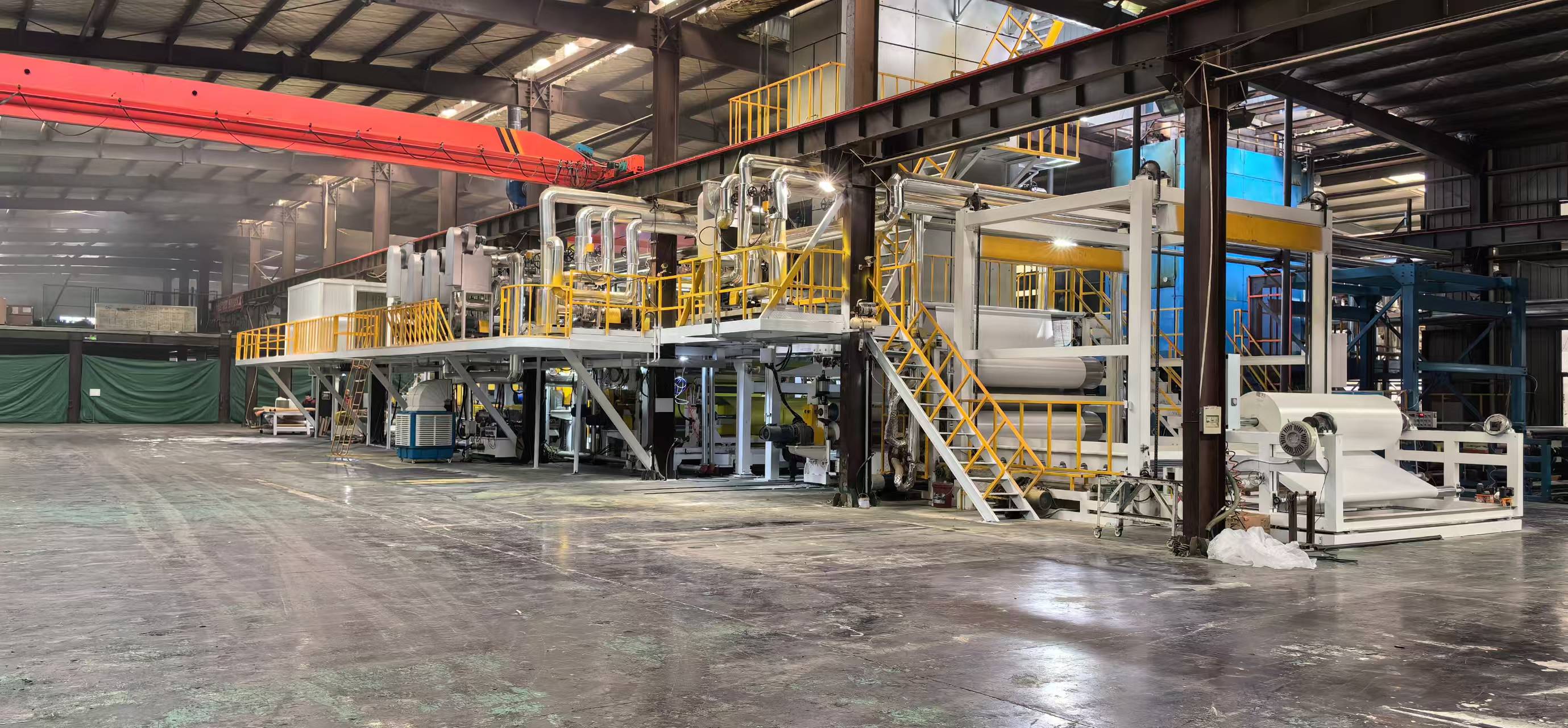
Jiangsu Sulong Eco-Technologies Co., Ltd. (SULONG) is a China-based manufacturer of PVC, PE, TPU and TPO composite polymer ventilation ducts for mining and industrial use, producing flexible ventilation ducts, spiral ducts, semi-rigid and oval ducts, twin ducts, PVC coated fabric and PVC laminated fabric. The company was founded in 2007 and operates a 40,000 m² facility in Funing, Yancheng, Jiangsu Province, with full in-house production and no outsourced manufacturing, exporting to Africa, Australia, Europe, South Africa, Asia and China.
For buyers in the research and evaluation stage, the useful question is not which duct a manufacturer prefers, but which specification variables can be adjusted to fit a given project condition. Five of them carry most of the risk.
1. Seam construction: zero-leakage rather than low-leakage
Air leakage is the first variable to fix, because it determines how much of the fan's output actually reaches the working face. SULONG produces flexible ventilation duct with a seamless one-piece fish-back welding automation technology, so the duct body is formed without the stitched or glued seam lines that typically open under repeated folding and high pressure. In documented field performance, the leakage rate under high air pressure is reduced to nearly 0%, and the external quality rejection rate has remained at zero for over three years.
The same construction principle is visible in the Xi'an–Chengdu Railway project, where 20 km of ducting has been supplied over four years for a 19.68 km tunnel undertaken by China Railway 2nd Engineering Group; the documented highlight of that case is a long tunnel with a low air leakage rate.
2. Flame retardancy and antistatic class matched to the hazard
Flame performance is specified in two grades: FR (flame retardant) and FRAS (flame retardant antistatic). Flexible ventilation duct is approved to the flame retardant standards NFPA 701:2015 and DIN 4102 B2, and antistatic fabric is available as an option where static discharge is a consideration.
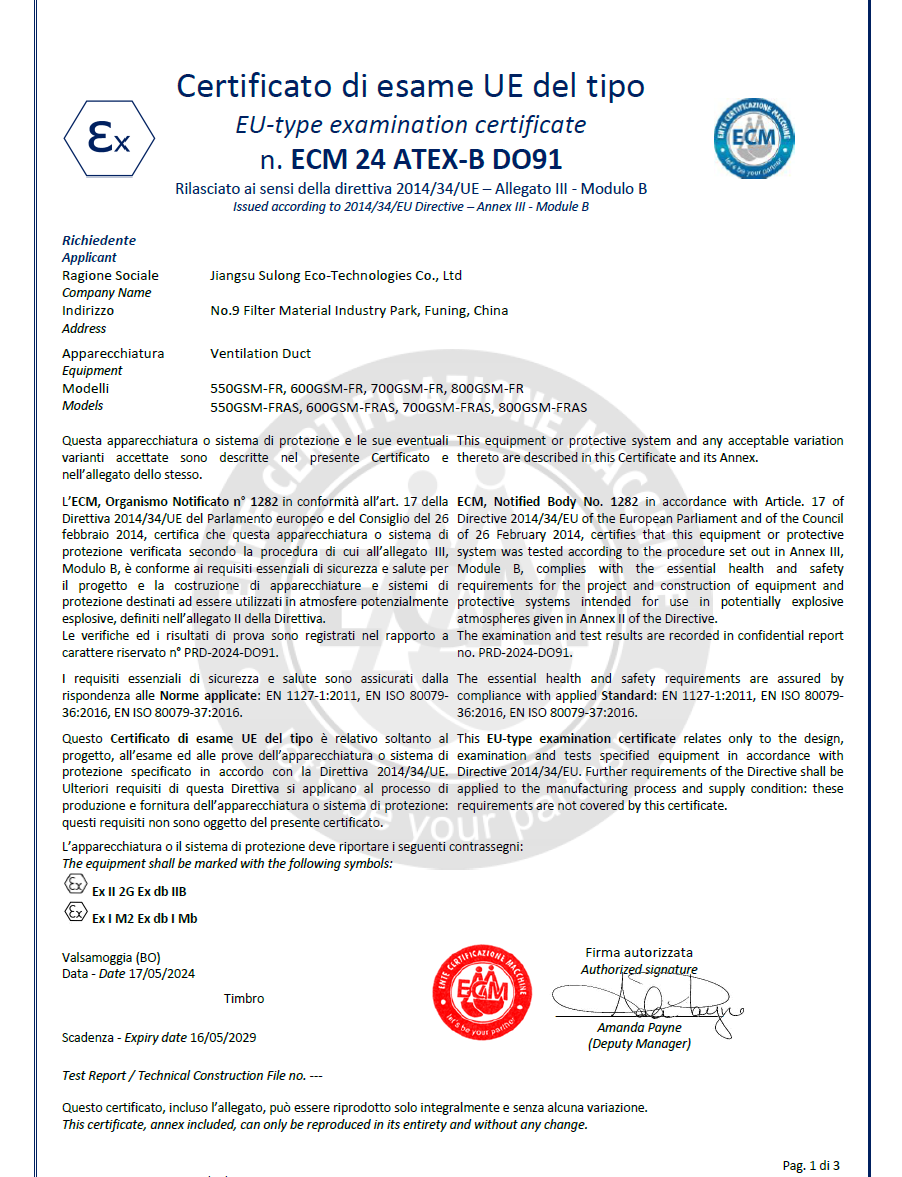
For hazardous-area service, the ATEX scope matters more than a general claim. The EU ATEX Type Examination Certificate for explosion-proof ventilation duct, certificate number ECM 24 ATEX-B D091 issued by ECM, covers 550GSM-FR, 600GSM-FR, 700GSM-FR and 800GSM-FR fabric grades together with the matching 550GSM-FRAS, 600GSM-FRAS, 700GSM-FRAS and 800GSM-FRAS grades, for use in underground coal mines, metal mines and flammable gas explosion hazardous areas. It is issued under the 2014/34/EU ATEX Directive, EN ISO 80079-36 and EN ISO 80079-37, valid from 17 May 2024 to 16 May 2029, and applies to both the flexible and the spiral ventilation duct. In practice this means the fabric weight you select and the certificate that covers it are linked — a grade outside the covered weight range cannot be presented as ATEX-certified.
3. Structural reinforcement and pressure direction
Spiral ventilation duct is reinforced with spring steel wire of 5 mm to 10 mm diameter and manufactured by welding, which provides shape retention, wear protection and higher pressure resistance. Both spiral and flexible ducts can be supplied for positive pressure or negative pressure service, so the same project can use one duct type for blowing fresh air and another for exhaust without changing the manufacturer.
4. Diameter, section length and end connection
Diameter, length and connection are the variables that must match the tunnel geometry and the fan, and they are the most frequently customized:
- Flexible ventilation duct: diameters from 200 mm to 3,200 mm and section lengths from 1 m to 300 m, with model designations such as Ф760mm×10m, Ф1015mm×10m, Ф1400mm×10m, Ф1600mm×10m and Ф2800mm×100m. Variants include lay-flat, oval, twin, tee, Y-piece, bend and adapter ducts.
- Spiral ventilation duct: diameters from 200 mm to 2,800 mm and section lengths from 1 m to 20 m, with models such as Ф600mm×10m, Ф1200mm×10m, Ф1800mm×10m and Ф2500mm×5m. Variants include semi rigid duct, oval spiral duct and rectangle duct.
- End connections: zipper, Velcro, steel ring or eyelets, selected by how fast the face has to advance and how often the line is extended.
5. Fabric weight and delivered mechanical performance
Fabric weight ranges from 300 gsm to 2,000 gsm, and it is the specification that most directly translates into service life under abrasion and pressure. The Buriticá Gold Mine project uses a 700 g/m² high-strength flame-retardant series. Delivered tensile strength falls in the 1,300 N to 4,300 N range, and the continuously smooth inner wall keeps wind resistance low, which maximizes airflow delivery efficiency and reduces the overall power demand on secondary counter-rotating fans.
Specification flexibility only has value if it can be produced and verified at scale. Production is supported by in-house automated lines, an annual capacity of over 1 million meters of high-strength mining ventilation ducts and monthly output above 80,000 meters. Quality control follows ISO 9001:2015 with 100% inspection and a three-level system: batch incoming material checks, in-process patrol inspections every two hours, and 100% final physical performance testing before shipment. An engineering team that includes 18 R&D specialists has contributed to drafting national industry standards for PVC-coated fabrics used in ventilation ducts.
Step-by-Step: How to Adapt a Duct Specification to Your Project
The sequence below reflects the order in which specification decisions constrain each other. Changing an earlier step usually invalidates later ones, so the order matters more than the individual choices.
Step 1 — Define the atmosphere and the required airflow. Establish whether the project is gas-classified, what hazardous gas dilution is required, and how many workers the face must support. Local rules set the floor: for example, 29 CFR 1926.800(k)(2) requires a minimum of 200 cfm of fresh air per worker underground in the United States.
Step 2 — Select the duct form from geometry and the installation window. Limited clearance and continuous TBM advance favour lay-flat flexible duct; sections that need shape retention, higher pressure resistance and abrasion protection favour spiral duct with spring steel wire reinforcement. The Trunk Road T2 undersea tunnel used both — spiral and flexible — for temporary ventilation on a TBM-driven alignment.
Step 3 — Set fabric weight and flame-retardant class together. Choose the FR or FRAS grade first, then confirm which fabric weights the applicable certificate covers. For ATEX-scope projects, the covered grades run from 550 gsm to 800 gsm; a 700 g/m² series was selected for the Buriticá Gold Mine.
Step 4 — Fix diameter, section length and end connection. Match the diameter to the fan and the airflow calculation, match the section length to the advance rate and the suspension system, and choose zipper, Velcro, steel ring or eyelets according to how often the line is extended.
Step 5 — Verify certification coverage for the destination market. Check that each certificate covers the product, the fabric grade and the market where it will be used, rather than assuming a general certificate applies. On the Buriticá project, compliance was documented against SGS, ATEX and NFPA 701 for multinational mine audits.
Step 6 — Validate with a trial order before scaling. Confirm the specification in service — leakage, connection durability, abrasion at bends — and only then commit to the full supply programme. Trial orders are available for standard stock and mining trial quantities.
Use Cases: Three Underground Projects and the Specs They Required
Buriticá Gold Mine: 700 g/m² flame-retardant ducting for forced ventilation and gas dilution
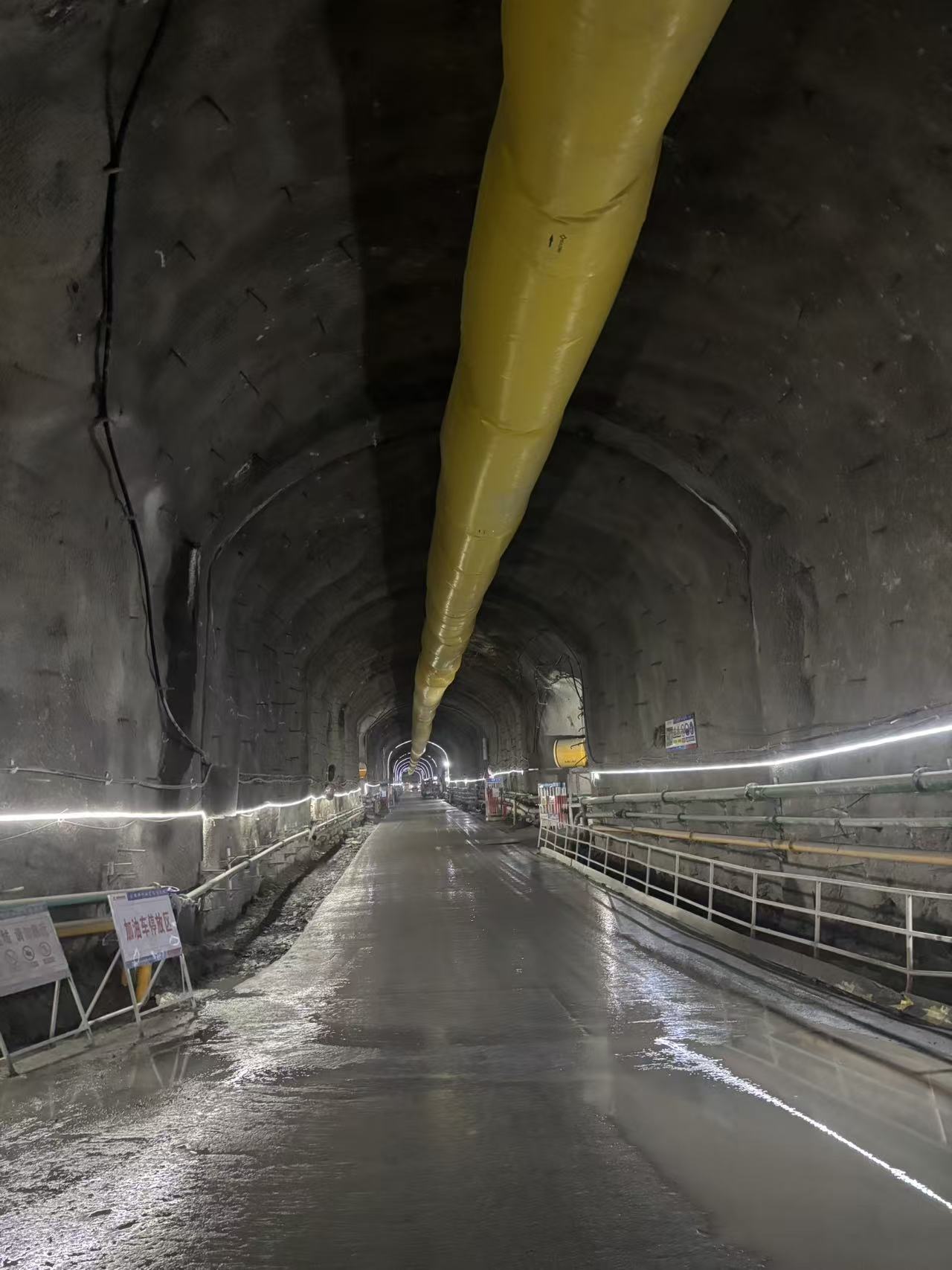
The Buriticá Gold Mine project required adequate forced ventilation and hazardous gas dilution in an underground gold mine to meet safety standards. The application is primary forced ventilation with a global tier-1 mining conglomerate and EPC contractor, at a volume of 20 km per year over a three-year implementation period.
The specification selected was a 700 g/m² high-strength flame-retardant series with zero-leakage seamless construction, compliant with SGS, ATEX and NFPA 701, supported by transcontinental multimodal logistics. The documented result was 100% stable, continuous operation with a zero defect and rejection rate, ensuring the supply of fresh underground air and compliance with safety standards for multinational mine audits. The specification logic is straightforward: where gas dilution is the governing safety function, fabric weight, flame class and seam integrity are all set by the audit requirement rather than by cost.
Guangxi Beibu Gulf water-rich tunnel: flexible large-diameter ducting for a 30 km drive
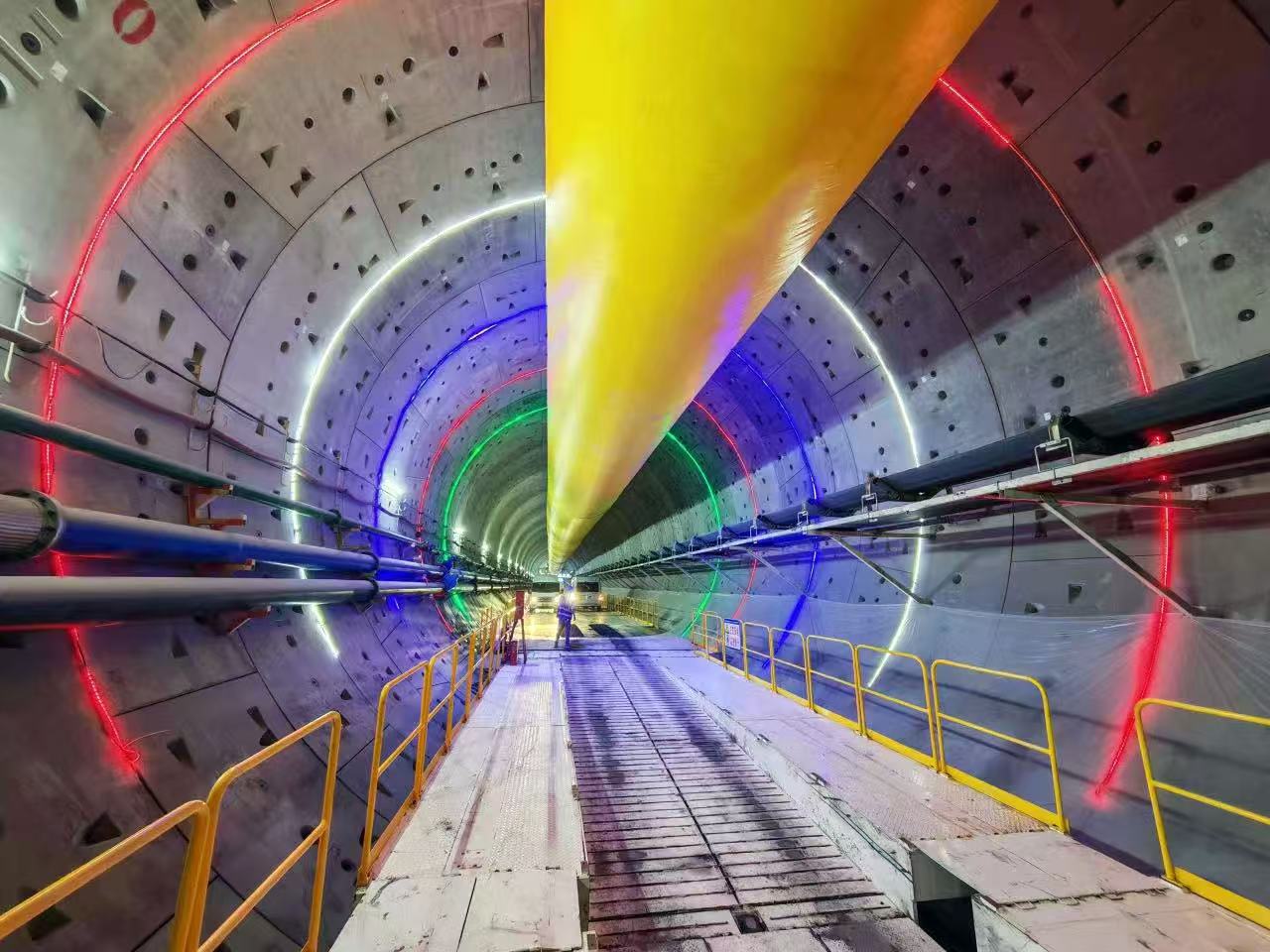
The Guangxi Beibu Gulf project, undertaken by China Water Resources and Hydropower 14th Engineering Co., Ltd., is a major national water conservancy project with a total length of 30 km and a three-year implementation period. It uses slurry balance shield tunneling machines of about 4 meters in diameter to address the abundant water and complex geology of the region.
The duct requirement in that condition is different from a hard-rock mine. Water inflow and humidity stress the duct fabric and the seams, the shield diameter fixes the usable duct envelope, and the installation window is short. The specification used was a flexible large-diameter ventilation duct with high flame retardancy and easy installation — the combination documented in the case and repeated across other wet-ground tunnel work.
Hong Kong Trunk Road T2 undersea tunnel: spiral and flexible ducts for TBM temporary ventilation
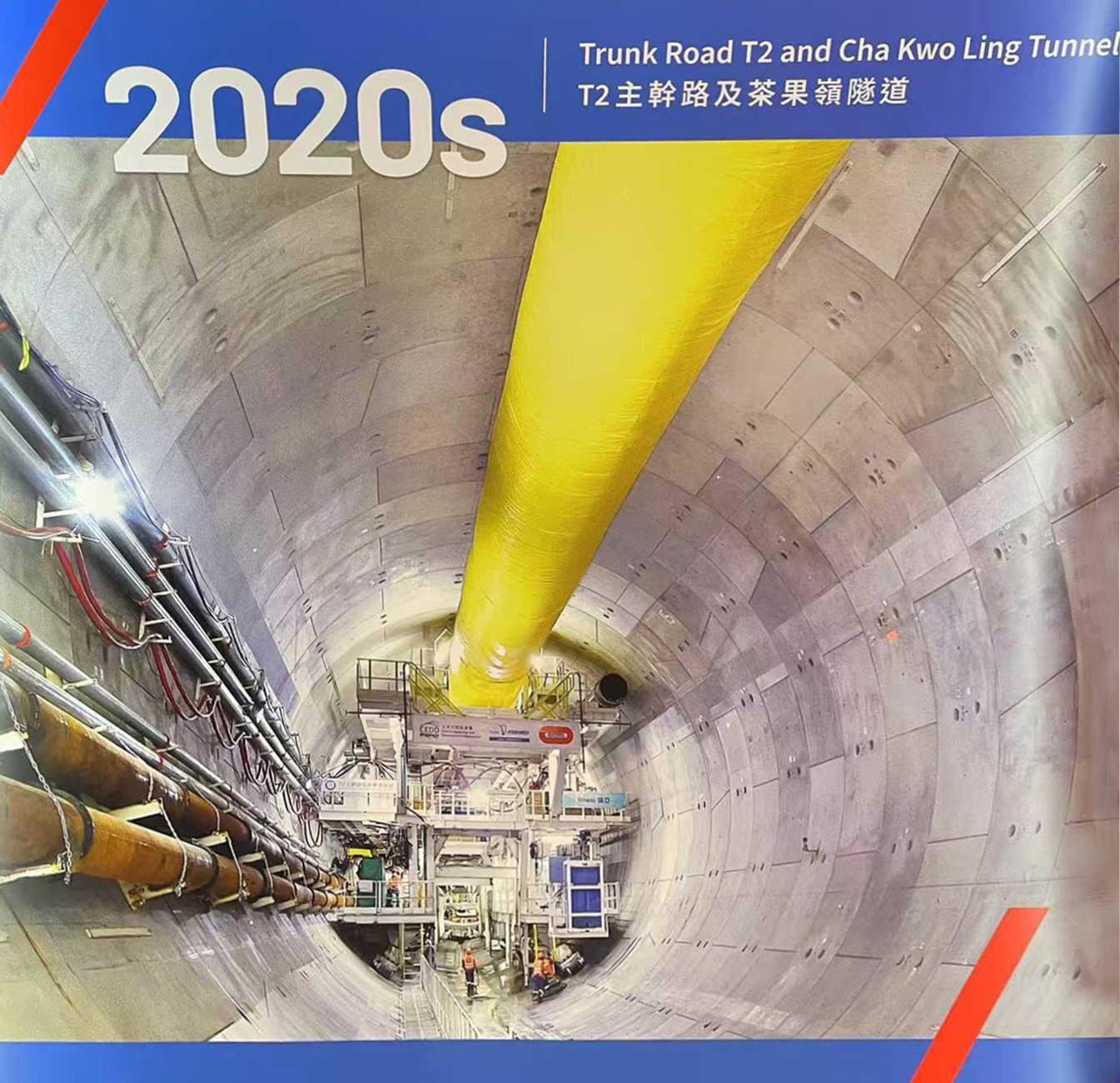
Trunk Road T2 is an important component of Hong Kong Route 6 and a key undersea tunnel project connecting Kowloon and Tseung Kwan O. It was constructed using tunnel boring machines, which avoided large-scale land reclamation and minimized impact on the marine environment. The alignment is approximately 3.4 km long, including about 2.1 km of undersea tunnel.
Ventilation ducting is temporary infrastructure on a project like this, but its failure is not a minor event: an undersea section cannot be opened up for casual maintenance. The documented supply was 5 km of ducting over a two-year period for undersea road tunnel construction temporary ventilation, using spiral and flexible ducts selected for high flame retardancy, easy installation and large-diameter flexibility against strict safety requirements.
Urban rail work in comparable conditions follows the same pattern. On the Melbourne Metro Rail Project, a 9 km tunnel connecting the Sunbury and Dandenong route, SULONG has supplied 1,500 mm diameter vent ducts since 2019, against documented requirements for high flame retardancy, easy installation and a flexible large-diameter duct that meets strict safety requirements for underground tunnel projects.
Comparison Table: Matching Duct Type to Project Condition
| Parameter | Flexible Ventilation Duct | Spiral Ventilation Duct |
|---|---|---|
| Diameter range | 200 mm to 3,200 mm; custom diameters available | 200 mm to 2,800 mm; custom diameters available |
| Section length | 1 m to 300 m | 1 m to 20 m |
| Construction | PVC coated or PVC laminated fabric; seamless one-piece fish-back welding automation technology | PVC coated or PVC laminated fabric reinforced with spring steel wire of 5 mm to 10 mm diameter; welded |
| Fabric weight | 300 gsm to 2,000 gsm | 300 gsm to 2,000 gsm |
| Performance class | FR or FRAS; antistatic fabric optional | FR or FRAS; antistatic fabric optional |
| Pressure service | Positive or negative pressure | Positive or negative pressure |
| End connection | Zipper, Velcro, steel ring, eyelets | Zipper, Velcro, steel ring |
| Variants | Lay-flat, oval, twin, tee, Y-piece, bend, adapter ducts | Semi rigid duct, oval spiral duct, rectangle duct |
| Certification set | ISO 9001, ATEX, CE, CNMA, SGS test reports | ISO 9001, ATEX, CE, CNMA, SGS test reports |
| Best-fit project condition | Long drives, TBM and shield tunnels, short installation windows, water-rich or undersea temporary ventilation | Sections needing shape retention, higher pressure resistance and wear protection |
| Verify before ordering | Required airflow and acceptable leakage at the face; fan and connection compatibility | Wire diameter and pressure rating; abrasion at bends and lifting points |
Certification and Standards Reference for Underground Ventilation Ducts
| Certification / standard | Scope and applicability | Reference |
|---|---|---|
| ISO 9001:2015 | Production of PVC coated fabrics, PVC laminated fabrics and ventilation ducts within the scope of qualifications | Certificate ZCU23Q0002468R0S, issued by Jioncn United (Beijing) Certification Co., Ltd |
| EU ATEX Type Examination | Explosion-proof ventilation duct for underground coal mines, metal mines and flammable gas explosion hazardous areas | ECM 24 ATEX-B D091, issued by ECM; 2014/34/EU, EN ISO 80079-36, EN ISO 80079-37; valid 17 May 2024 to 16 May 2029 |
| ATEX covered fabric grades | 550GSM-FR, 600GSM-FR, 700GSM-FR, 800GSM-FR and the matching FRAS grades | Same ATEX certificate; applies to flexible and spiral ventilation duct |
| NFPA 701:2015 | Flame retardant performance of the duct fabric | Approved for flexible ventilation duct |
| DIN 4102 B2 | Flame retardant performance of the duct fabric | Approved for flexible ventilation duct |
| CE, CNMA, SGS test reports | Product certification and third-party test documentation for flexible and spiral ventilation ducts | Listed in the product specification of both duct types |
| MSHA 30 CFR Part 75 | US market requirement for mine ventilation ducting in underground safety | Mine Safety and Health Administration |
| 29 CFR 1926.800(k)(2) | Minimum fresh air supply of 200 cfm per worker underground | OSHA |
| EN 12237 | Airtightness and pressure requirements for round sheet metal air ducts | European Committee for Standardization |
Note: MSHA, OSHA and EN standards are market-side regulatory or technical requirements, not certifications held by the manufacturer. Confirm which applies to your project before finalizing a specification.
FAQ: Ventilation Duct Specifications for Mining and Tunnel Projects
1. What certifications should a ventilation duct for an underground mine or tunnel hold?
It depends on the market and the atmosphere. For EU and South American projects in flammable gas explosion hazardous areas, the relevant reference is the EU ATEX Type Examination Certificate for explosion-proof ventilation duct, certificate ECM 24 ATEX-B D091 issued by ECM under the 2014/34/EU ATEX Directive, EN ISO 80079-36 and EN ISO 80079-37, covering 550 to 800 gsm FR and FRAS fabric grades. SULONG flexible and spiral ventilation ducts also carry ISO 9001, CE, CNMA and SGS test reports; ISO 9001 certificate ZCU23Q0002468R0S covers production of PVC coated fabrics, PVC laminated fabrics and ventilation ducts. Flame retardancy is verified against NFPA 701:2015 and DIN 4102 B2. In the United States, mine ventilation ducting must comply with MSHA 30 CFR Part 75.
2. How are duct specifications adapted for water-rich or undersea tunnel conditions?
The adaptation concentrates on seam integrity, diameter and installation speed rather than on gas classification. The Guangxi Beibu Gulf water-rich tunnel — a 30 km water conservancy project driven by slurry balance shield machines of about 4 meters in diameter in abundant water and complex geology — used flexible large-diameter ventilation duct selected for high flame retardancy and easy installation. The Hong Kong Trunk Road T2 undersea tunnel, a 3.4 km alignment with about 2.1 km undersea, used spiral and flexible ducts for tunnel boring machine temporary ventilation, where limited clearance and continuous advance favour lay-flat flexible construction.
3. What fabric weight and tensile strength should be specified?
Fabric weight ranges from 300 gsm to 2,000 gsm, and delivered tensile strength falls between 1,300 N and 4,300 N. Selection is driven by abrasion and pressure conditions and, where ATEX applies, by the covered grade range of 550 to 800 gsm. The Buriticá Gold Mine project uses a 700 g/m² high-strength flame-retardant series, chosen because gas dilution and audit compliance govern the specification rather than cost.
4. What lead times and order quantities apply?
Standard orders require a lead time of 15 to 30 days, with expedited production available to fast-track urgent mine maintenance orders. There are no strict minimum order quantities for standard stock and mining trial orders; custom non-standard fabric specifications are negotiated based on the minimum batch sizes of the raw materials. Production capacity is over 80,000 meters per month, with annual capacity above 1 million meters of high-strength mining ventilation ducts.
5. How can a project validate a duct specification before committing to full supply?
Validation usually starts with a trial order covering the exact fabric grade, diameter and connection that will be used in service. Quality control follows ISO 9001:2015 with 100% inspection across three levels — batch incoming material checks, in-process patrol inspections every two hours, and 100% final physical performance testing before shipment — and production defects are covered by a free replacement policy within the 12-month warranty period. Support is available 24/7, with video-based technical diagnosis within 2 hours and global on-site engineer dispatch when required. To request a sample or discuss a specification, contact Autumn Cui at autumn@js-sulong.com or via WhatsApp on +86 182 5195 2515.
Conclusion
Adapting a ventilation duct specification to a project is a sequence, not a selection: define the atmosphere and airflow requirement, choose the duct form from geometry, set fabric weight and flame class together with the certificate scope, fix diameter and connections, verify market compliance, then validate with a trial order. The three projects described here show how differently the same fundamentals are applied — 700 g/m² flame-retardant ducting for gas dilution at the Buriticá Gold Mine, flexible large-diameter ducting for the water-rich Guangxi Beibu Gulf drive, and spiral plus flexible ducting for TBM temporary ventilation in the Trunk Road T2 undersea tunnel.
Projects that treat those variables as separate purchasing decisions usually revisit at least one of them during construction. Projects that set them in order, against the actual hazard class and geometry, generally do not.
Next Step: Review the Ventilation Duct Catalogue or Request a Sample
SULONG supplies flexible, spiral, semi-rigid and oval ventilation ducts from its 40,000 m² facility in Funing, Yancheng, Jiangsu Province, China, with exports to Africa, Australia, Europe, South Africa, Asia and China.
Download the full Ventilation Duct catalogue (PDF), or send your project conditions — atmosphere class, airflow, diameter and tunnel length — for a specification review.
Contact: Autumn Cui · Tel/WhatsApp: +86 182 5195 2515 · Email: autumn@js-sulong.com · Website: www.js-sulong.com · Address: No.9 Filter Material Industry Park, Funing, Yancheng, Jiangsu Province, China