Ventilation Duct FAQ: Sourcing, Logistics & Long-Term Supply
Ventilation Duct FAQ: Sourcing, Logistics & Long-Term Supply
Long-term ventilation duct supply is secured by three things: a production base that does not depend on outsourced fabric, a technical baseline that stays identical from the first order to the tenth, and a logistics plan agreed before the first shipment is booked. This FAQ answers the questions buyers raise once a duct specification is settled — how supply is scheduled, how transcontinental freight is handled, and what a genuine long-term partnership changes on a multi-year tunnel or mining programme.
The scope here is deliberately narrow. Duct families, materials and certification scope are covered in the core guides on this blog. This page deals with what happens after the technical choice is made: the commercial, logistical and continuity questions that determine whether a project still has duct on site in month eighteen.
Problem Definition: Where Long-Term Duct Supply Actually Breaks Down
Most ventilation duct sourcing problems do not begin with the duct. They begin in the gap between the purchase order and the third reorder.
In tunnel and mine work, ventilation duct is not a one-off capital item. It is a consumable tied directly to advance rate, and it is consumed continuously under 24/7 continuous high-pressure ventilation operation. A tunnel drive that runs for two or three years will place several duct orders, each one driven by progress rather than by a tidy annual purchasing calendar. Three failure points recur in that gap:
- Specification drift between batches. The second order arrives with a different fabric weight, a different connection type, or a different antistatic treatment from the first. Crews notice immediately, because handling and jointing behaviour change.
- Freight treated as an assumption, not a plan. Section length, coil format, connection hardware and suspension fittings all influence how duct is packed, handled and cleared — and none of them are decided by the duct diameter alone.
- No defined replenishment path. When a drive runs ahead of schedule, the buyer needs a supplier who can confirm a delivery position quickly, not a supplier who has to re-quote the item from scratch.
The practical answer is that a long-term duct relationship has to be designed, not inherited. It needs a frozen technical baseline, a phased delivery schedule, and a documented reorder route — which is exactly the structure described further down this page.
Industry Background: Why Duct Continuity Has Become a Procurement Topic
Ventilation duct sits inside a market that is growing steadily rather than spectacularly, which makes supply reliability — not availability of options — the differentiator buyers care about.
Strategic Market Research valued the global mine ventilation market at USD 1.42 billion in 2024 and projects it to reach USD 2.03 billion by 2030, a CAGR of 6.2%. The wider air duct market was valued at USD 7.14 billion in 2023 and is projected to reach USD 10.20 billion by 2032 according to SNS Insider, while Intel Market Research puts the global flexible ducting market at USD 203.97 million in 2024, rising to USD 335.78 million by 2033. Production volumes are large: Spherical Insights reports that over 2.1 billion metres of flexible ducting were manufactured globally in 2023, with 30% dedicated to industrial ventilation. Dataintelo records that Asia Pacific dominated the spiral duct fittings market in 2025 with a 38.2% revenue share, and Market Research Future estimates Asia-Pacific as the fastest-growing region for ventilation systems, with a CAGR of 5.45% through 2034.
Two structural shifts sit behind those numbers. First, underground mining remains the dominant segment of the mine ventilation market because of the critical need for hazardous gas dilution, as noted by Persistence Market Research. Second, ventilation-on-demand (VOD) adoption is growing: Dataintelo reports 35% of new North American mines using VOD by 2025. Variable airflow puts duct under changing positive and negative pressure conditions rather than a single steady state, which raises the value of a duct construction that behaves predictably over years rather than weeks.
The regulatory floor is also fixed and non-negotiable. In the United States, 29 CFR 1926.800(k)(2) mandates a minimum fresh air supply of 200 cfm per worker underground, and mine ventilation ducting must comply with MSHA 30 CFR Part 75. In Europe, EN 12237 specifies airtightness and pressure requirements for round sheet metal air ducts — a different construction from fabric duct, so applicability has to be checked rather than assumed. On the trade side, plastic ducts and hoses move under HS Code 3917.39, and China Customs revises the corresponding export values monthly, which means classification should be settled early in a long programme.
Detailed Solution: How SULONG Structures Long-Term Ventilation Duct Supply
Jiangsu Sulong Eco-Technologies Co., Ltd. (SULONG) is a manufacturer of composite polymer mining and industrial ventilation ducts, established in 2007 in Funing, Yancheng, Jiangsu Province, China. It is a National High-Tech Enterprise and a provincial-level "Specialized, Refined, Unique & Innovative" SME. The supply model is built around four properties that matter specifically to long-horizon projects.
1. Vertical integration rather than assembly
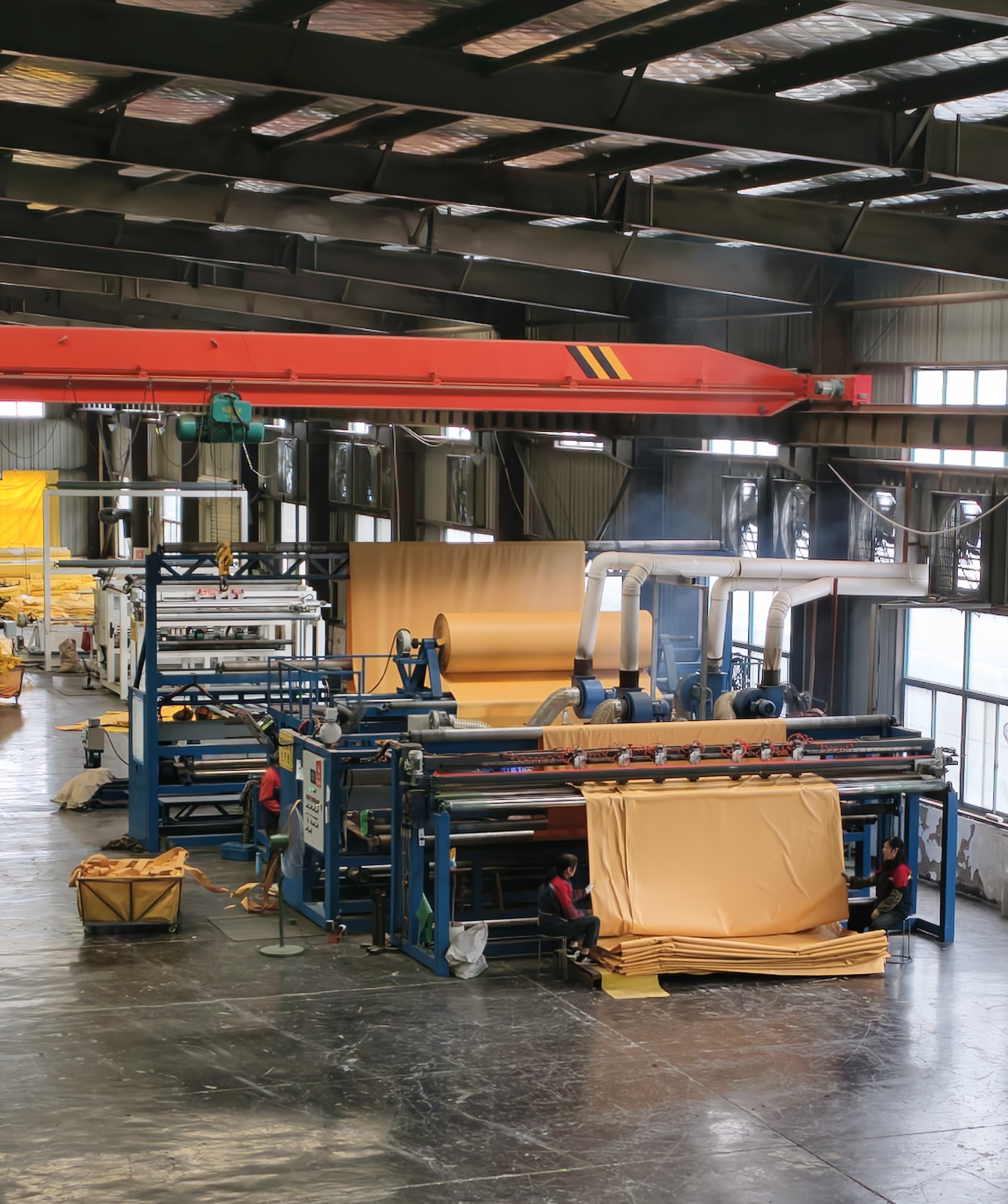
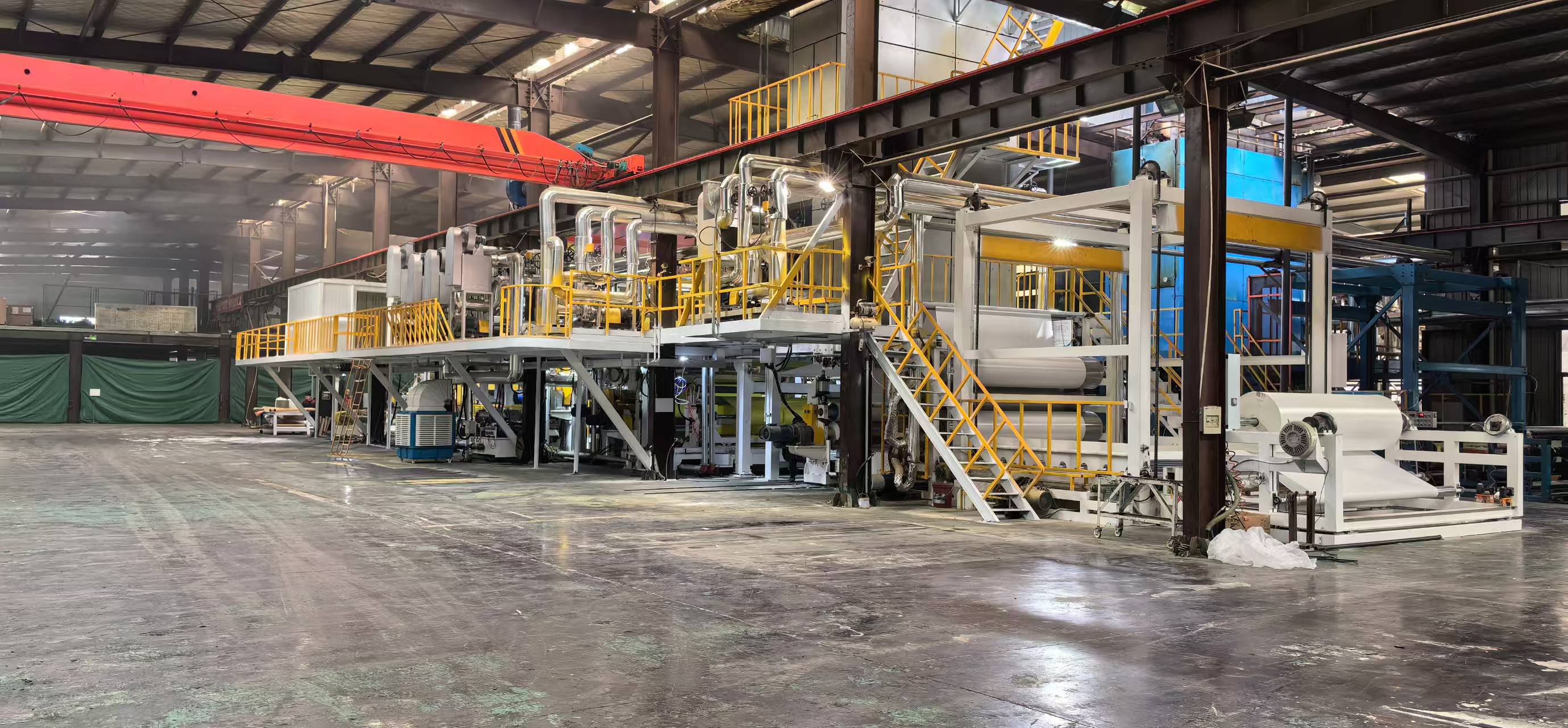
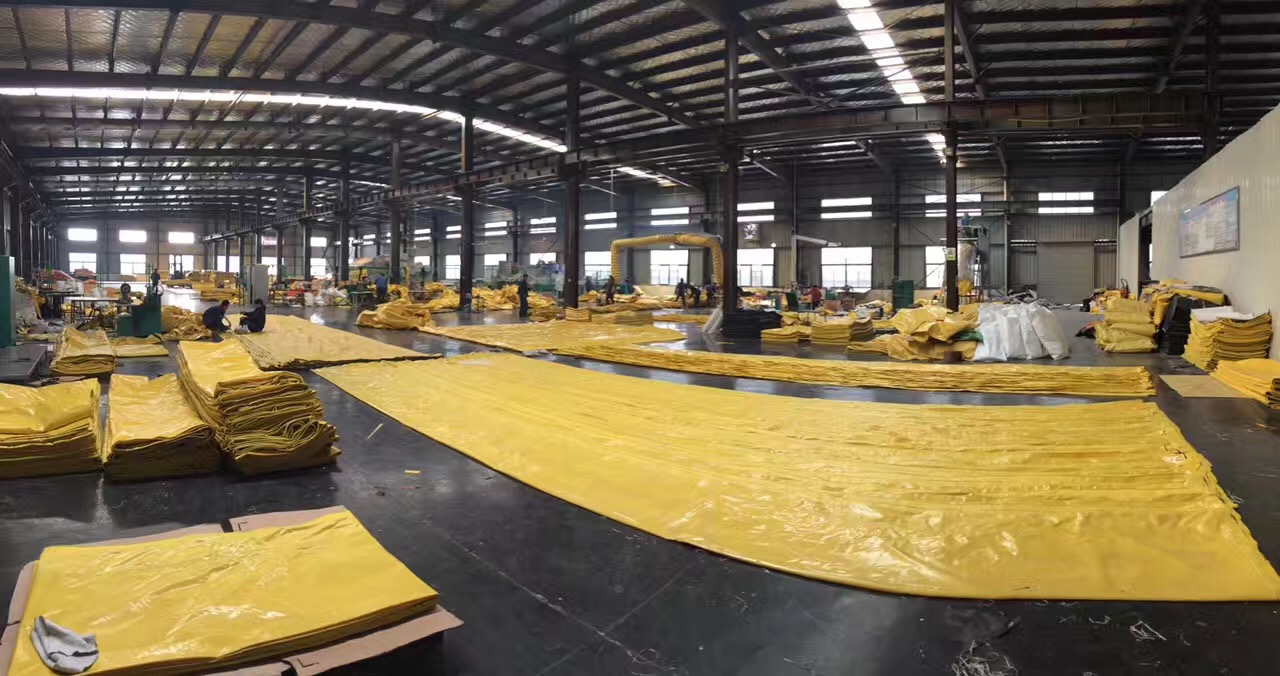
SULONG delivers 100% in-house, automated production, with all processes self-produced and no outsourced manufacturing. The manufacturing facility covers 40,000 m² and employs approximately 68 staff, with an annual production capacity of over 1 million metres of high-strength mining ventilation ducts. Because PVC coated fabric, PVC laminated fabric and PVC tarpaulin are produced in-house alongside Flexible Ventilation Duct, Spiral Duct, Semi-Rigid Duct, Oval Ducts and Twin Duct, a repeat order is not dependent on a third-party fabric mill holding the same batch behaviour.
2. A technical baseline that repeats
Duct performance in year three depends on how the seam was made in year one. SULONG uses seamless one-piece forming technology, and products feature tensile strength up to 4,300 N. The R&D team consists of 18 specialists who have contributed to drafting national industry standards for PVC-coated fabrics used in ventilation ducts. That matters commercially: it means a buyer can specify fabric weight, coating and construction once and expect the next production run to be built to the same reference.
3. Documentation that travels with the goods
SULONG holds international certifications including ISO 9001, ISO 14001, ISO 45001, EU ATEX, CE and US NFPA 701, plus test reports certified by Australian NATA laboratories. At product level, Flexible Ventilation Duct is approved to flame retardant standards NFPA 701:2015 and DIN 4102 B2, with tensile and tear strength approved under DIN 53354 and DIN 53363 test methods; published specifications for both flexible and spiral ducts list ISO 9001, ATEX, CE, CNMA and SGS test reports.
4. A proven record of multi-year supply
SULONG is a long-term strategic supplier for global mining enterprises including Zijin Mining and JCHX Mining, supporting their mining projects worldwide. Export business accounts for 60% of total sales, and major markets include Africa, Australia, Europe, South Africa, Asia and China. The company’s duct has also been supplied into multi-year civil programmes such as the Melbourne Metro Rail Project — the kind of schedule where duct demand is spread across years of tunnel construction rather than a single shipment.
Step-by-Step: Building a Duct Supply Programme That Holds
The sequence below is the working order used to convert a duct specification into a supply arrangement that survives several years of site activity.
Step 1 — Freeze the technical baseline in writing
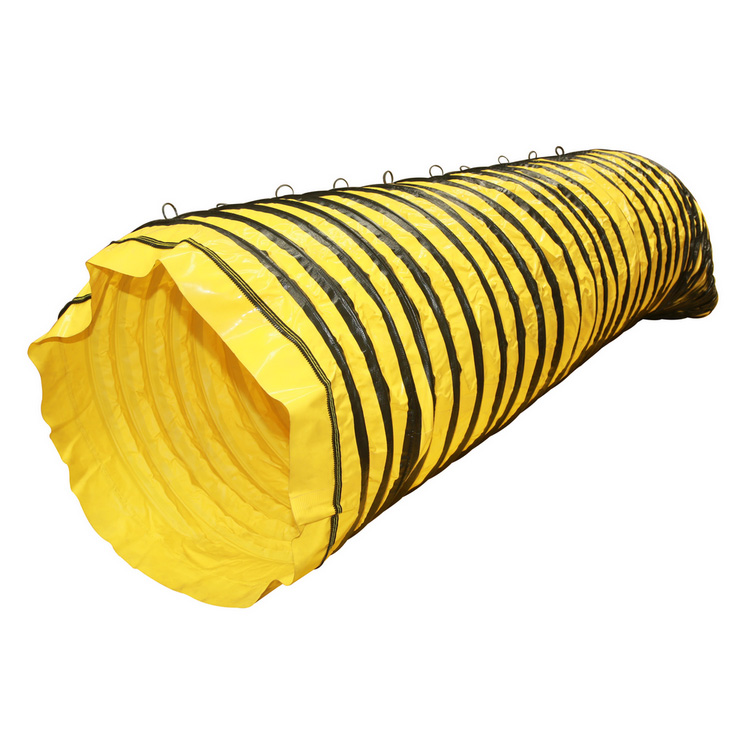
Lock diameter, section length, fabric weight, performance class (FR or FRAS), antistatic requirement and end connection before any order is placed. Flexible Ventilation Duct covers diameters from 200 mm to 3,200 mm and section lengths from 1 m to 300 m, with material weight from 300 gsm to 2,000 gsm, tensile strength of 1,000 N to 4,200 N, and end connections by zipper, Velcro, steel ring or eyelets. Spiral Ventilation Duct covers 200 mm to 2,800 mm diameter and 1 m to 20 m sections, reinforced with spring steel wire of φ5 mm to φ10 mm, with zipper, Velcro or steel ring connections. Whichever family is chosen, those parameters become the contract reference.
Step 2 — Map consumption across the project timeline
Estimate duct demand per phase — advance metres, ventilation zones, and the point at which the drive changes from flexible lay-flat duct to a rigid or semi-rigid run. A phased schedule lets the manufacturer sequence production against capacity rather than against urgency.
Step 3 — Agree the repeat-order rule
Define what may not change between orders: fabric weight band, welding process, performance class, connection type. In practice this single document prevents most batch-drift disputes, because the reorder is checked against a written reference rather than against memory.
Step 4 — Plan packing, handling and customs early
Section length is a logistics decision as much as an airflow decision: a 300 m flexible section and a 20 m spiral section are handled, coiled and loaded differently. Confirm the HS classification (3917.39 for plastic tubes and hoses), the documentation set, the destination port and the consignee requirements before the first booking. Confirm also whether suspension and repair fittings ship with the duct or separately.
Step 5 — Define the replenishment route
Name the contact, the confirmation process and the minimum information needed to quote a repeat order. In a long programme this is what separates a partnership from a transaction: the supplier already holds the specification, so the reorder discussion starts at schedule rather than at design.
Step 6 — Match duct to the operating environment
Deep underground shafts present high pressure, elevated humidity, constant friction and potential explosion hazards, and ventilation runs operate 24/7 under continuous high-pressure conditions. Duct is connected to the ventilation fan and used for hazardous gas dilution, anti-static safety airflow supply and dust extraction. That combination — high tensile strength, flame retardancy and, where required, surface anti-static resistance — should be reflected in the specification from the first order, not retrofitted at the third.
Step 7 — Review supply performance on a fixed cycle
At agreed intervals, compare delivered specification against the baseline, review delivery performance against the phased schedule, and confirm which fittings, connections or accessories need to be carried forward into the next phase.
Use Cases: Where Long-Term Duct Supply Is Tested
Multi-year metro and rail tunnels
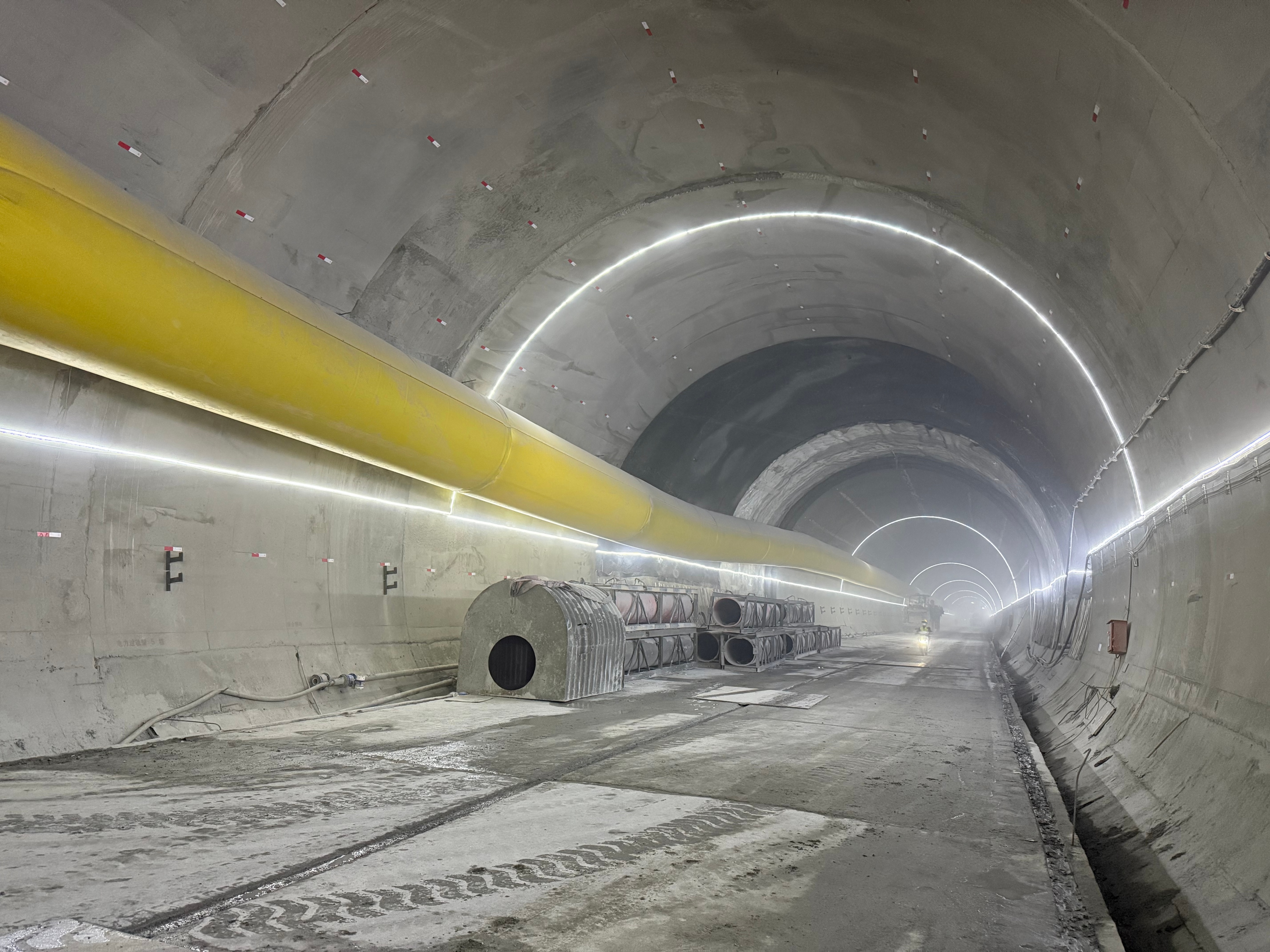
Tunnel ventilation projects run for years, with temporary ventilation duct serving the tunnel during construction. On programmes of this length — the Melbourne Metro Rail Project being one example in SULONG’s supply record — the duct requirement is spread across phases, and each phase may use a different diameter or pressure configuration. The supply partner must be able to hold the specification across those phases.
Underground mining operations
Global underground mining operations use ventilation duct for hazardous gas dilution, anti-static safety airflow and dust extraction, with matched equipment including main mine fans, local counter-rotating fans and ducting hanger systems. Because the duty is continuous, consumable duct is replenished on an operating rhythm rather than a project rhythm — which makes reorder speed and batch consistency the dominant buying criteria.
Deep shafts and high-humidity conditions
Deep underground shafts combine high pressure, elevated humidity and constant friction. Duct for these conditions is specified with high tensile strength and flame retardancy, and antistatic fabric can be specified as an option on both flexible and spiral constructions.
Underground engineering beyond mining
SULONG ducts are designed for underground engineering projects including mine projects, high-speed rail, subway, highway, hydropower stations and rock caves — a spread of applications that explains why the product range covers Flexible Ventilation Duct, Spiral Duct, Semi-Rigid Duct, Oval Ducts and Twin Duct rather than a single construction.
Comparison Table: Flexible vs. Spiral Ventilation Duct for Long Programmes
The two duct families most often combined on a long underground programme differ in ways that affect both airflow planning and supply planning.
| Parameter | Flexible Ventilation Duct | Spiral Ventilation Duct | Supply-planning implication |
|---|---|---|---|
| Diameter range | 200 mm to 3,200 mm | 200 mm to 2,800 mm | Flexible covers the wider top end; confirm the planned maximum before freezing the baseline. |
| Section length | 1 m to 300 m | 1 m to 20 m | Section length drives packing, handling and joint count, so it must be agreed before freight planning. |
| Construction | PVC coated or PVC laminated fabric; seamless one-piece fish-back welding automation technology | PVC coated or PVC laminated fabric with spring steel wire reinforcement; welding process | Different production routes mean the two families should be scheduled as separate line items. |
| Reinforcement / strength | Tensile strength 1,000 N to 4,200 N | Spring steel wire φ5 mm to φ10 mm; wear protection and high pressure resistance | Reinforcement choice should be fixed at order one and repeated exactly. |
| Material weight | 300 gsm to 2,000 gsm | 300 gsm to 2,000 gsm | A shared weight band makes a mixed flexible/spiral order easier to keep consistent. |
| Performance class | FR or FRAS | FR or FRAS | Flame-retardant class must be stated on the reorder, not assumed from the first invoice. |
| End connections | Zipper, Velcro, steel ring, eyelets | Zipper, Velcro, steel ring | Connection hardware is a separate supply item; carry it into the fittings plan. |
| Certifications listed | ISO 9001, ATEX, CE, CNMA, SGS test reports | ISO 9001, ATEX, CE, CNMA, SGS test reports | A common documentation set simplifies customs and site acceptance across mixed shipments. |
| Example model designations | Φ760mm×10m, Φ1015mm×10m, Φ1400mm×10m, Φ1600mm×10m, Φ2800mm×100m | Φ600mm×10m, Φ1200mm×10m, Φ1800mm×10m, Φ2500mm×5m | Model designations are the cleanest way to specify a repeat order without re-describing the duct. |
FAQ: Ventilation Duct Sourcing, Logistics and Partnership Questions
Which certifications should a ventilation duct supplier hold before an underground order is placed?
Buyers should separate factory-level management certifications from product-level approvals. SULONG holds ISO 9001, ISO 14001 and ISO 45001 for management systems, together with EU ATEX, CE, US NFPA 701 and test reports certified by Australian NATA laboratories. At product level, Flexible Ventilation Duct is approved to flame retardant standards NFPA 701:2015 and DIN 4102 B2, with tensile and tear strength verified under DIN 53354 and DIN 53363, and published specifications for both flexible and spiral ducts list ISO 9001, ATEX, CE, CNMA and SGS test reports. Market-specific rules still apply on top of these: mine ventilation ducting in the United States must comply with MSHA 30 CFR Part 75, and 29 CFR 1926.800(k)(2) sets a minimum fresh air supply of 200 cfm per worker underground.
How can a buyer verify that a ventilation duct supplier can keep supplying for the whole project?
Look at production structure and capacity rather than catalogue breadth. SULONG operates a 40,000 m² manufacturing facility with approximately 68 staff and an annual production capacity of over 1 million metres of high-strength mining ventilation ducts, delivering 100% in-house, automated production with all processes self-produced and no outsourced manufacturing. The R&D team of 18 specialists includes contributors to national industry standards for PVC-coated ventilation duct fabrics, and seamless one-piece forming technology supports tensile strength up to 4,300 N. Continuity evidence also comes from the customer record: SULONG is a long-term strategic supplier to Zijin Mining and JCHX Mining, with export business accounting for 60% of total sales across Africa, Australia, Europe, South Africa, Asia and China.
How should a long-term ventilation duct order be compared commercially?
Compare the total delivered scope, not a headline unit rate. The variables that legitimately move cost are diameter, section length (1 m to 300 m for flexible duct, 1 m to 20 m for spiral duct), material weight from 300 gsm to 2,000 gsm, FR versus FRAS performance, the antistatic fabric option, end connection type (zipper, Velcro, steel ring or eyelets), associated fittings and suspension hardware, and freight terms to the project port. Asking each supplier to price the same phased schedule against that identical specification set removes the most common source of misleading comparison — a lower rate built on a lighter fabric, a shorter section or a lower performance class.
Can a ventilation duct be validated before a long-term commitment is signed?
Validation works best when it tests the exact construction that will ship. Request sample sections in the production diameter and section length, in the same material weight band and the same FR or FRAS class, with the intended end connection fitted. Ask for the test reports and certificates that correspond to that construction, and confirm which of them will be reissued with each production batch. Because duct and coated fabric are produced in-house at SULONG — covering Flexible Ventilation Duct, Spiral Duct, Semi-Rigid Duct, Oval Ducts and Twin Duct — a sample request can be matched to the same reference used for volume production rather than to a separate demonstration line.
How are delivery and transcontinental logistics handled on a multi-year duct programme?
Logistics planning starts with section length and connection hardware, because those determine packing and handling. Flexible Ventilation Duct is supplied in sections from 1 m to 300 m and Spiral Ventilation Duct from 1 m to 20 m, with end connections by zipper, Velcro, steel ring or eyelets depending on the family. Cross-border shipments of plastic ducts and hoses are classified under HS Code 3917.39, so the documentation set should be agreed before the first booking. SULONG’s export activity — 60% of total sales, across Africa, Australia, Europe, South Africa, Asia and China — means shipments to these regions are routine rather than exceptional, and delivery positions are confirmed against the agreed phase schedule rather than quoted in isolation. To discuss a phased supply plan, contact Autumn Cui at autumn@js-sulong.com or +86-18251952515 (WhatsApp +86 182 5195 2515).
Conclusion: Continuity Is a Specification, Not a Promise
A ventilation duct programme survives on three things that can all be written down: a fixed technical baseline, a phased delivery schedule with a named replenishment route, and a manufacturer whose production does not depend on someone else’s fabric line. SULONG’s position — 100% in-house automated production across flexible, spiral, semi-rigid, oval and twin duct plus the coated and laminated fabrics behind them, a 40,000 m² facility with capacity above 1 million metres per year, and a supply record spanning Zijin Mining, JCHX Mining and multi-year civil programmes such as the Melbourne Metro Rail Project — is the practical version of that answer.
Next step: review the full duct range and request a supply plan
Download the SULONG ventilation duct catalogue for diameters, section lengths, material weights, connection options and certification details, or send your project schedule for a phased supply discussion.
Download the SULONG Ventilation Duct Catalogue (PDF)
Jiangsu Sulong Eco-Technologies Co., Ltd. — No.9 Filter Material Industry Park, Funing, Yancheng, Jiangsu Province, China. Contact: Autumn Cui, tel +86-18251952515, email autumn@js-sulong.com, WhatsApp +86 182 5195 2515. Website: www.js-sulong.com
Have Questions or Need More Details?
Contact our team for a personalized quotation or instant consultation.
Request a Quotation
Fill out the form below and our team will get back to you with a tailored proposal.
WhatsApp Direct Chat
Prefer to chat in real-time? Message us on WhatsApp for instant assistance & quick answers.
- Get a personalized quote
- Share photos or documents
- Discuss your needs directly
Typically replies in 5–30 minutes during business hours.