Ventilation Duct Fundamentals: Forced Air and Hazardous Gas Dilution Underground
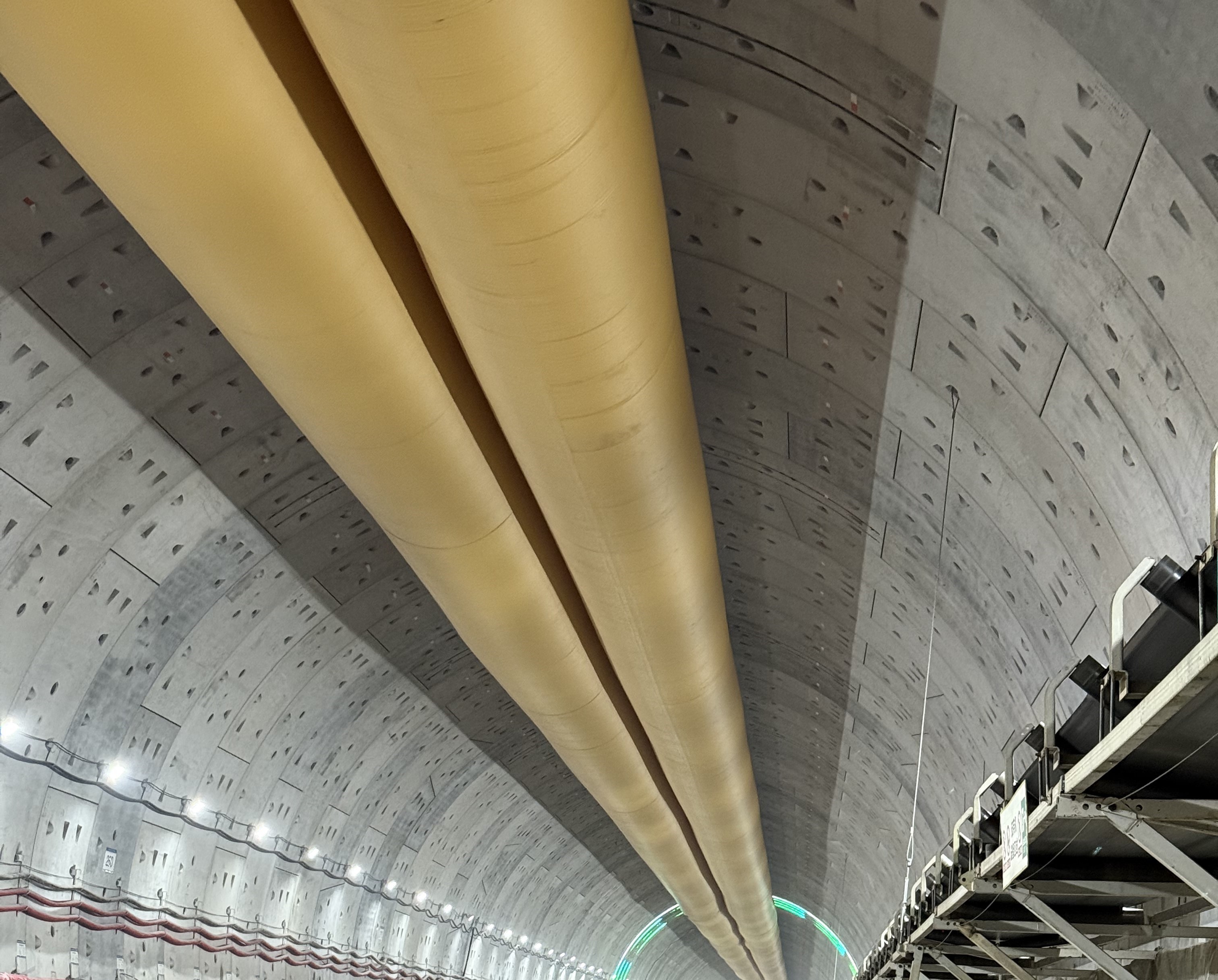
A ventilation duct is the controlled air path that connects a ventilation fan to an underground working area. In mines and tunnels, it carries fresh air to the working face for hazardous gas dilution, dust extraction, and anti-static safety airflow supply. The fan creates the airflow; the duct determines how much of that airflow reaches the face, how much pressure it retains along the route, and whether the system can operate continuously in a confined environment.
This explainer covers the fundamentals of forced air and hazardous gas dilution underground. It explains the basic difference between a Spiral Ventilation Duct and a Flexible Ventilation Duct, shows where each type fits, and connects the basics to fresh underground air supply and safety compliance. It uses the Buriticá Gold Mine and tunnel construction projects as grounded examples of the same selection problem: how to move fresh air reliably into a place where people and equipment are working.
Problem Definition: Why Underground Air Needs a Controlled Path
Underground work removes the open-air exchange that normally dilutes gases, dust, heat, and humidity. In a tunnel or mine shaft, the working face can be far from the surface, the route can include bends and vertical sections, and the air must be delivered against resistance. Deep underground shafts also present high pressure, elevated humidity, constant friction, and potential explosion hazards. These conditions are not occasional exceptions; they define the ventilation duty.
Hazardous gas dilution is the core safety function. Fresh air must reach the working face in sufficient volume to dilute gases and support safe breathing conditions. Dust extraction is a second function. A third function is anti-static safety airflow supply where the environment requires it. If the duct leaks, collapses, kinks, or separates at a joint, the fan may still run, but the air that reaches the face may not match the design intent.
That is why an Underground Ventilation Duct is best understood as a safety-airflow component, not a generic hose. The duct has to hold its shape under pressure, resist abrasion and humidity, connect securely over long distances, and in many projects meet flame-retardant or antistatic requirements. The same logic applies to a temporary Ventilation Tube in tunnel construction and to a permanent Mining Ventilation Duct in a producing mine.
Compliance adds another layer. In the United States, MSHA 30 CFR Part 75 sets underground safety requirements for mine ventilation, and OSHA 29 CFR 1926.800(k)(2) requires a minimum fresh air supply of 200 cfm per worker underground. These are not duct-product specifications by themselves, but they explain why duct selection cannot be separated from the ventilation plan. The duct must support the air quantity and reliability that the plan assumes.
Industry Background: A Larger, More Regulated Air Path
The ventilation duct sits inside a growing industrial ventilation market. Strategic Market Research estimates that the global mine ventilation market was valued at USD 1.42 billion in 2024 and is projected to reach USD 2.03 billion by 2030, with a CAGR of 6.2%. Intel Market Research estimates that the global flexible ducting market was USD 203.97 million in 2024 and is expected to reach USD 335.78 million by 2033. Spherical Insights reports that over 2.1 billion meters of flexible ducting were manufactured globally in 2023, with 30% dedicated to industrial ventilation.
Those figures describe a market, not a selection rule. The practical background is more specific: underground projects are long, wet, dusty, and often continuous. A mine may run ventilation 24/7 under high pressure, with main mine fans, local counter-rotating fans, and ducting hanger systems. A tunnel project may need temporary ventilation that follows the advancing face, with a ventilation fan, suspension fittings, and repair fittings kept ready. In both cases, the duct is part of a system that must be installed, suspended, inspected, and maintained.
Standards and test methods vary by product type and market. Round sheet metal air ducts may be assessed against EN 12237 for airtightness and pressure requirements. Polymer flexible and semi-rigid ducts are more often evaluated through flame-retardant, antistatic, tensile, and tear-strength criteria. Common references include NFPA 701:2015, DIN 4102 B2, ATEX for explosive atmospheres, and project-specific test reports. A buyer should not assume that one certificate covers every market or every duct type; the compliance set must match the project location and the ventilation plan.
Detailed Solution: How Forced Ventilation and Duct Selection Work
Primary forced ventilation uses a fan to push fresh air through a duct to the working face. The duct is the delivery path. In a mine, the duct may run from a main fan or auxiliary fan through headings and shafts. In a tunnel, a temporary Ventilation Duct may be suspended along the tunnel wall and extended as the face advances. The duct does not create airflow; it preserves the useful part of the fan output and delivers it where the air is needed.
Hazardous gas dilution depends on air volume, air velocity at the discharge point, and the condition of the duct route. A long route with many bends, poor suspension, or leaking joints can reduce the air that reaches the face. A duct that is too small for the air volume can increase pressure loss. A duct that is not flame retardant or not antistatic may fail the safety requirements of the project. These are the reasons why a Mining Ventilation Duct or Tunnel Ventilation Duct should be selected against the ventilation plan, not only against a diameter list.
Spiral Ventilation Duct: Semi-Rigid Air Path
A Spiral Ventilation Duct is a semi-rigid duct. SULONG manufactures it in the Semi Rigid Duct, Oval Spiral Duct, and Rectangle Duct categories, with model designations such as Φ600mm×10m, Φ1200mm×10m, Φ1800mm×10m, and Φ2500mm×5m. The construction uses PVC coated fabric, PVC laminated fabric, and spring steel wire. The diameter range is 200 mm to 2,800 mm, and the section length range is 1 m to 20 m.
The spring steel wire reinforcement is available in φ5 mm to φ10 mm, and the duct can be used in positive pressure or negative pressure conditions. Material weight ranges from 300 gsm to 2,000 gsm. Performance can be FR or FRAS, and antistatic fabric is optional. End connections can be zipper, Velcro, or steel ring. SULONG lists high-strength welded construction, wear protection, and high pressure resistance among the design points for this Spiral Duct construction. Certifications listed for the product include ISO 9001, ATEX, CE, CNMA, and SGS test reports.
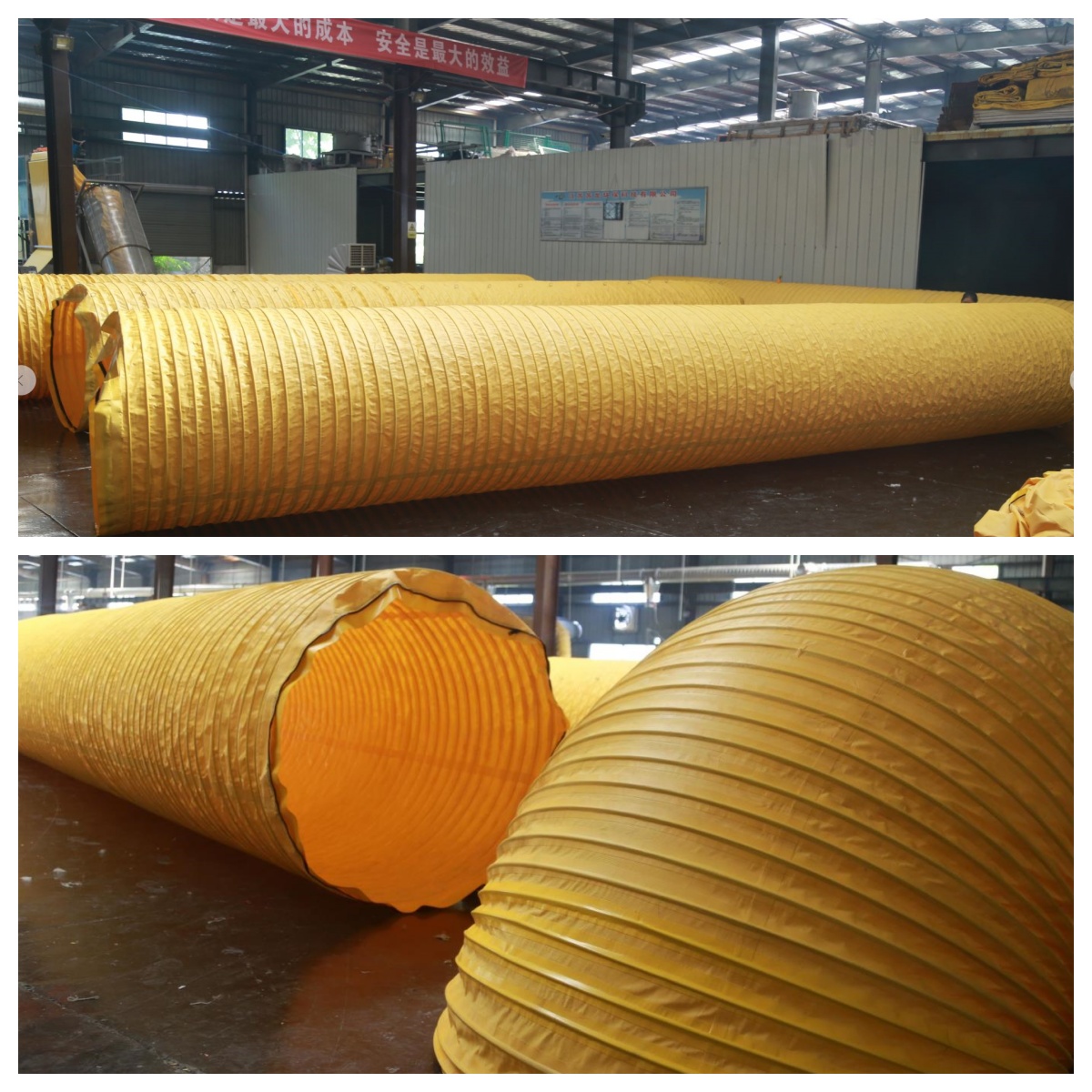
The practical role of a Spiral Ventilation Duct is to hold a controlled shape over a route where pressure resistance and durability matter. It is not a lay-flat Ventilation Bag. It has a defined cross-section and can be configured as an Oval Ventilation Duct or Rectangle Duct where the route requires a non-round profile. For a mine or tunnel section that needs a more stable air path, the spiral construction is one option to evaluate against the pressure and installation conditions.
Flexible Ventilation Duct: Lay-Flat Air Path
A Flexible Ventilation Duct is a lay-flat duct made from PVC coated fabric or PVC laminated fabric. SULONG lists diameters from 200 mm to 3,200 mm and section lengths from 1 m to 300 m. Tensile strength ranges from 1,000 N to 4,200 N, and material weight ranges from 300 gsm to 2,000 gsm. Performance can be FR or FRAS. The manufacturing process uses seamless one-piece fish-back welding automation technology. End connections can be zipper, Velcro, steel ring, or eyelets, and antistatic fabric is optional.
The Flexible Duct is often used where the route changes, where the duct must be moved or extended, or where a long continuous section is useful. SULONG lists low friction loss and easy installation among the design points, and the product is approved to flame retardant standards NFPA 701:2015 and DIN 4102 B2. High tensile strength and tear strength are approved by DIN 53354 and DIN 53363 test methods. Certifications listed for the product include ISO 9001, ATEX, CE, CNMA, and SGS test reports.
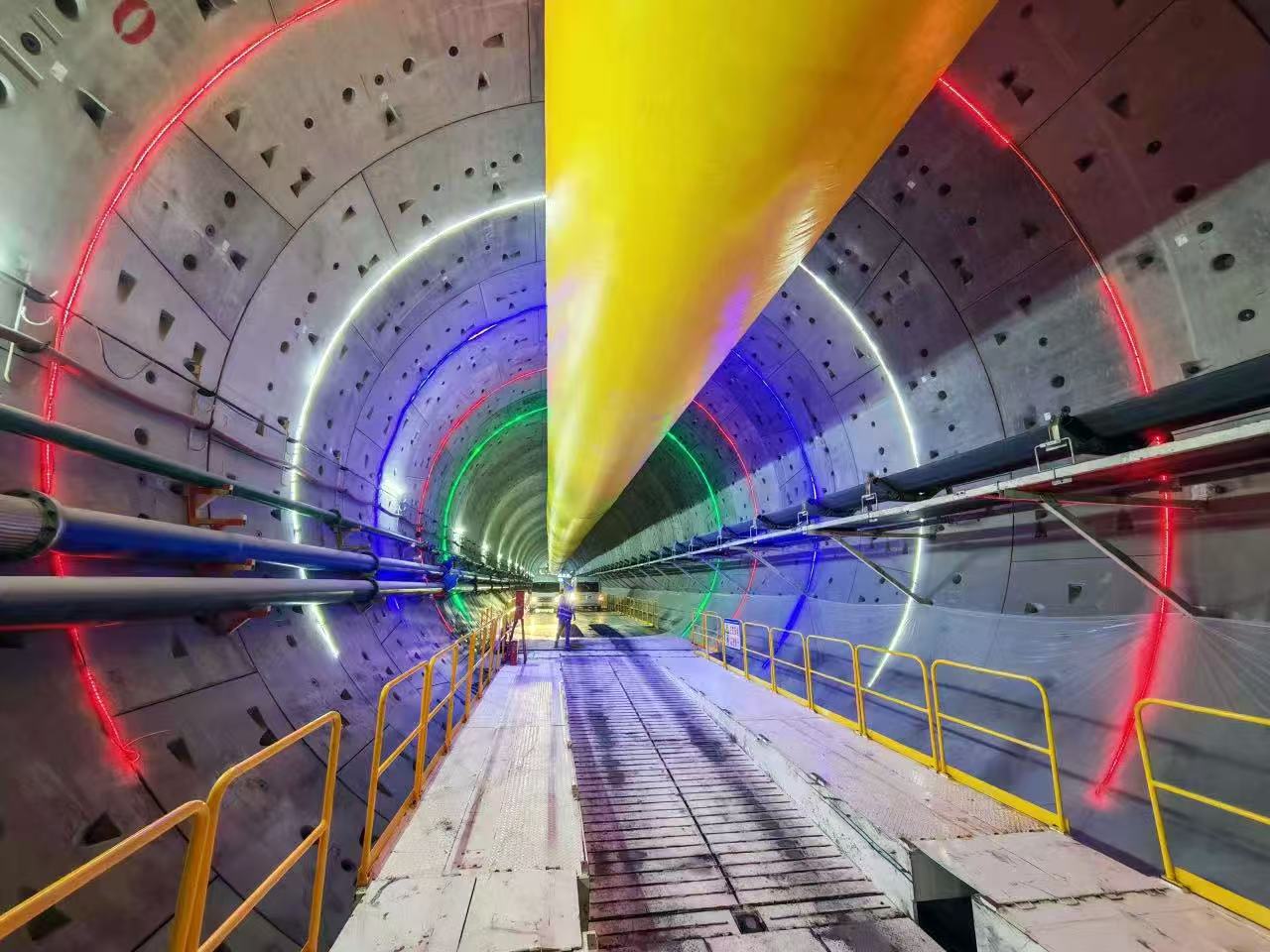
The practical role of a Flexible Ventilation Duct is to provide an adaptable air path. It can be supplied as a Flexible Ventilation Tube, a Ventilation Bag, an Underground Ventilation Bag, or a Flexible Ventilation Bag depending on the project terminology and configuration. For temporary tunnel ventilation, that flexibility matters because the duct is extended as the tunnel advances. For mining, it can support auxiliary ventilation where the route is not fixed for the life of the project.
The Basic Difference in One Sentence
The basic difference is construction and behavior: a Spiral Ventilation Duct is a semi-rigid, wire-reinforced duct with a defined cross-section, while a Flexible Ventilation Duct is a lay-flat fabric duct that can be folded, moved, and installed over long continuous lengths. Both are Underground Ventilation Ducts. Both can be supplied as an Industrial Ventilation Duct for mining or tunnel duty. The selection depends on pressure, route, installation method, and the required air path.
Step-by-Step Breakdown: Specifying a Duct for an Underground Project
The following sequence turns the fundamentals into a procurement checklist. It is written for mine operators, tunnel contractors, and buyers comparing a Flexible Duct Supplier or Spiral Duct Supplier.
- Define the air demand and gas load. Start from the ventilation plan. In the United States, OSHA 29 CFR 1926.800(k)(2) sets a minimum fresh air supply of 200 cfm per worker underground. Other markets and project owners may set different requirements. The duct diameter and length must be checked against the required air volume, not chosen by habit.
- Map the route and pressure regime. Record the total length, bends, vertical sections, suspension points, and whether the duct will run under positive pressure, negative pressure, or both. A Spiral Ventilation Duct is listed for positive pressure or negative pressure use. A Flexible Ventilation Duct may be preferred where the route changes frequently or where lay-flat handling is an advantage.
- Choose the duct type and profile. Compare a Spiral Duct, Semi Rigid Duct, Oval Ventilation Duct, Rectangle Duct, and Flexible Ventilation Duct against the route. Check the available diameter range: 200 mm to 2,800 mm for the Spiral Ventilation Duct and 200 mm to 3,200 mm for the Flexible Ventilation Duct. Check section length: 1 m to 20 m for the spiral type and 1 m to 300 m for the flexible type.
- Verify material and performance. Confirm material weight from 300 gsm to 2,000 gsm, FR or FRAS performance, antistatic fabric if required, and tensile strength where relevant. For the Flexible Ventilation Duct, the listed tensile range is 1,000 N to 4,200 N. For both types, confirm the end connection: zipper, Velcro, steel ring, or eyelets as applicable.
- Check compliance documents. Match the certificate set to the market and application. SULONG holds ISO 9001, ISO 14001, ISO 45001, EU ATEX, CE, US NFPA 701, and test reports certified by Australian NATA laboratories. Product-level documents include ATEX, CE, CNMA, SGS test reports, NFPA 701:2015, and DIN 4102 B2. For US mine projects, review MSHA 30 CFR Part 75 requirements. For US construction, review OSHA 29 CFR 1926.800(k)(2).
- Plan installation, suspension, and spares. Confirm the ventilation fan match, suspension fittings, repair fittings, spiral duct fittings where applicable, and hanger systems. A mine may use main mine fans, local counter-rotating fans, and ducting hanger systems. A tunnel project may need fittings for suspension and repair as the face advances. Keep spare sections and repair materials for 24/7 operation.
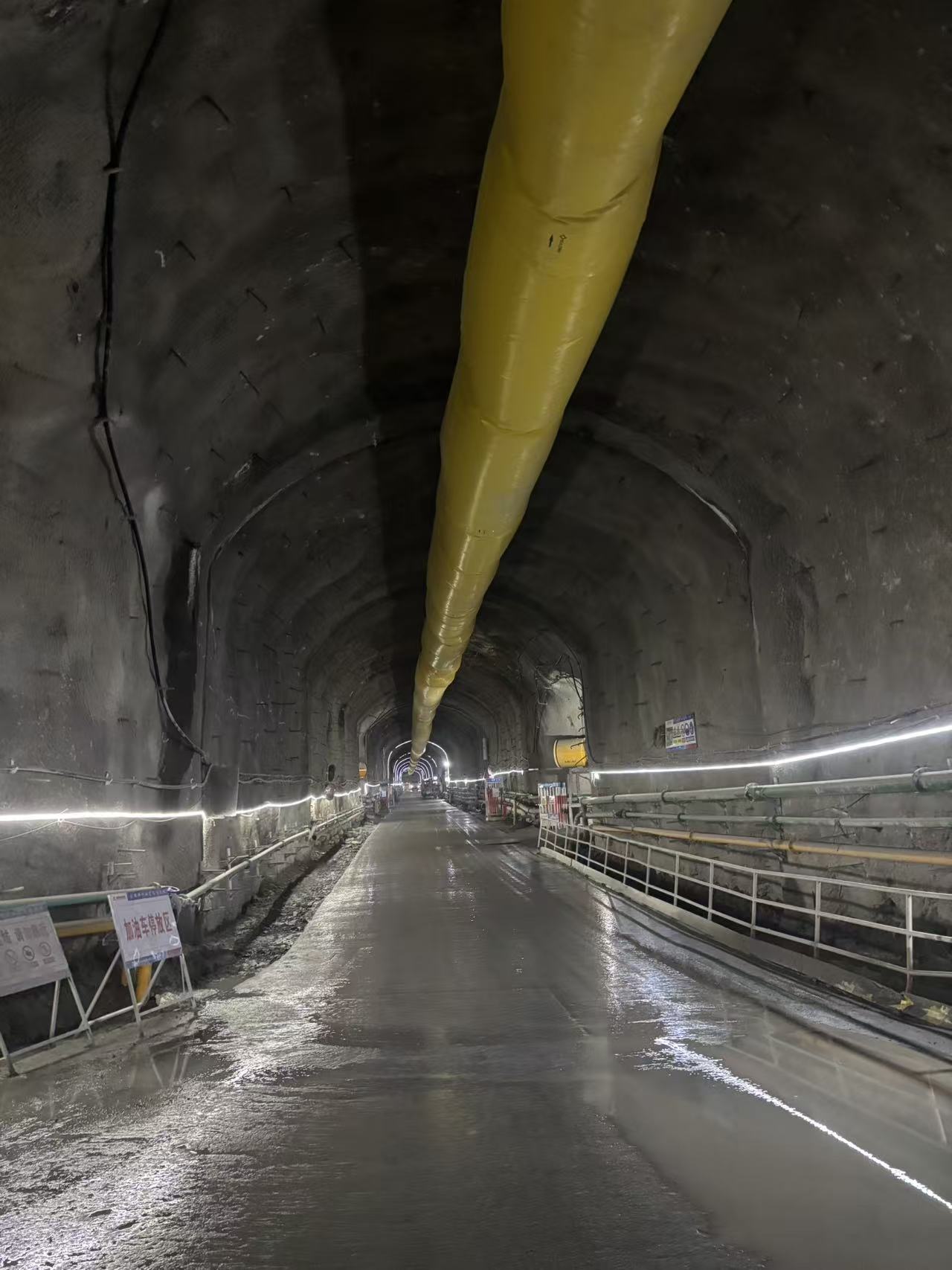
Use Cases: Buriticá Gold Mine and Tunnel Construction
The Buriticá Gold Mine is an underground gold operation where the ventilation system must support fresh-air delivery and hazardous gas dilution in a confined environment. The fundamental selection question is the same as in any underground mine: how much fresh air must reach the working face, and how reliably can the duct deliver it? A mine ventilation plan may use a Spiral Ventilation Duct for sections that need a stable, wire-reinforced air path, and a Flexible Ventilation Duct for auxiliary or changing routes. The correct mix depends on pressure, layout, and installation method, not on a single product label.
In tunnel construction, temporary ventilation is a moving duty. The duct is connected to the ventilation fan, which blows fresh air into the underground tunnel. The duct must support hazardous gas dilution, anti-static safety airflow supply, and dust extraction. As the tunnel advances, the duct is extended, suspended, and checked. A Flexible Ventilation Duct is often relevant here because it can be handled in long sections and adapted to route changes. A Spiral Ventilation Duct can be relevant where the route needs a semi-rigid profile and greater shape retention. Tunnel projects also need fittings for suspension and repair, because the ventilation system is part of the daily construction cycle.
Both use cases show why a Ventilation Duct is not a commodity accessory. The duct has to match the fan, the air volume, the route, the environment, and the compliance file. That is the connection between the basics and the procurement decision.
Comparison Table: Spiral Ventilation Duct vs Flexible Ventilation Duct
| Attribute | Spiral Ventilation Duct | Flexible Ventilation Duct |
|---|---|---|
| Product category | Semi Rigid Duct, Oval Spiral Duct, Rectangle Duct | Lay-flat Flexible Duct |
| Material | PVC coated fabric, PVC laminated fabric, spring steel wire | PVC coated fabric, PVC laminated fabric |
| Diameter range | 200 mm to 2,800 mm | 200 mm to 3,200 mm |
| Section length | 1 m to 20 m | 1 m to 300 m |
| Pressure use | Positive pressure or negative pressure | Confirm with supplier for the specific construction and route |
| Manufacturing | Welding | Seamless one-piece fish-back welding automation technology |
| Performance | FR or FRAS; antistatic fabric optional | FR or FRAS; antistatic fabric optional; NFPA 701:2015 and DIN 4102 B2 approved |
| End connection | Zipper, Velcro, steel ring | Zipper, Velcro, steel ring, eyelets |
| Certification listed | ISO 9001, ATEX, CE, CNMA, SGS test reports | ISO 9001, ATEX, CE, CNMA, SGS test reports |
| Typical selection logic | Stable cross-section, wire reinforcement, shape retention, semi-rigid air path | Long continuous sections, lay-flat handling, route changes, temporary ventilation |
The table is a starting point. The final choice should be checked against the ventilation plan, the pressure regime, the installation method, and the compliance file for the project. A Spiral Duct Supplier and a Flexible Duct Supplier may both offer ATEX Ventilation Duct options, but the product construction and document set must match the actual duty.
FAQ: Ventilation Duct Fundamentals and Supplier Questions
What is a ventilation duct in underground work?
A ventilation duct is the controlled air path that connects a ventilation fan to an underground working area. In mines and tunnels, it carries fresh air for hazardous gas dilution, dust extraction, and anti-static safety airflow supply. It is used in underground engineering projects such as mine projects, high-speed rail, subway, highway, hydropower station, and rock cave applications.
What is the difference between a spiral ventilation duct and a flexible ventilation duct?
A Spiral Ventilation Duct is a semi-rigid duct made with PVC coated or laminated fabric and spring steel wire, available in diameters from 200 mm to 2,800 mm and section lengths from 1 m to 20 m. A Flexible Ventilation Duct is a lay-flat duct made from PVC coated or laminated fabric, available in diameters from 200 mm to 3,200 mm and lengths from 1 m to 300 m. The flexible type uses seamless one-piece fish-back welding automation technology.
How does forced ventilation dilute hazardous gases underground?
A fan pushes fresh air through the duct to the working face. The duct controls how much air reaches that point and how much is lost along the route. Effective dilution depends on air volume, duct integrity, pressure behavior, and correct installation. In practice, the duct must be sized for the required airflow, suspended correctly, checked for damage, and kept connected at joints.
What standards and certifications apply to underground ventilation ducts?
Relevant checks can include ISO 9001, ISO 14001, ISO 45001, EU ATEX, CE, US NFPA 701, and NATA laboratory test reports. Product-level documents for SULONG ducts include ATEX, CE, CNMA, SGS test reports, NFPA 701:2015, and DIN 4102 B2. In the United States, MSHA 30 CFR Part 75 and OSHA 29 CFR 1926.800(k)(2) also set underground safety and fresh-air requirements. EN 12237 applies to airtightness and pressure requirements for round sheet metal air ducts, so it should be applied only where the product type and project specification call for it.
How should buyers evaluate ventilation duct suppliers?
Buyers should check product range, in-house production, certification documents, annual capacity, R&D support, and experience with mining or tunnel projects. Jiangsu Sulong Eco-Technologies Co., Ltd. (SULONG) is a Chinese manufacturer of composite polymer mining and industrial ventilation ducts, established in 2007. The company operates a 40,000 m² facility with annual capacity over 1 million meters of high-strength mining ventilation ducts and has 18 R&D specialists. It lists ISO 9001, ISO 14001, ISO 45001, EU ATEX, CE, US NFPA 701, and NATA laboratory test reports among its certifications, and it is a long-term strategic supplier for Zijin Mining and JCHX Mining. Buyers can request a sample, quotation, or the catalog through autumn@js-sulong.com or +86-18251952515.
Conclusion: The Duct Is Part of the Safety Airflow
Ventilation duct fundamentals come down to a simple idea: the fan creates airflow, but the duct delivers it. In underground work, that delivery path must support forced air, hazardous gas dilution, dust extraction, and safety compliance. A Spiral Ventilation Duct and a Flexible Ventilation Duct solve different parts of that problem. The spiral type provides a semi-rigid, wire-reinforced air path. The flexible type provides a lay-flat, adaptable air path for long sections and moving faces.
For a mine such as Buriticá or a tunnel construction project, the right choice is the one that matches the air volume, pressure, route, installation method, and compliance file. That is why the procurement conversation should start with the ventilation plan, not with a generic product name. SULONG supplies Flexible Ventilation Duct, Spiral Duct, Semi-Rigid Duct, Oval Ducts, Twin Duct, PVC Coated Fabric, PVC Laminated Fabric, and PVC Tarpaulin, and supports buyers with product data, certification documents, and project-specific selection questions.
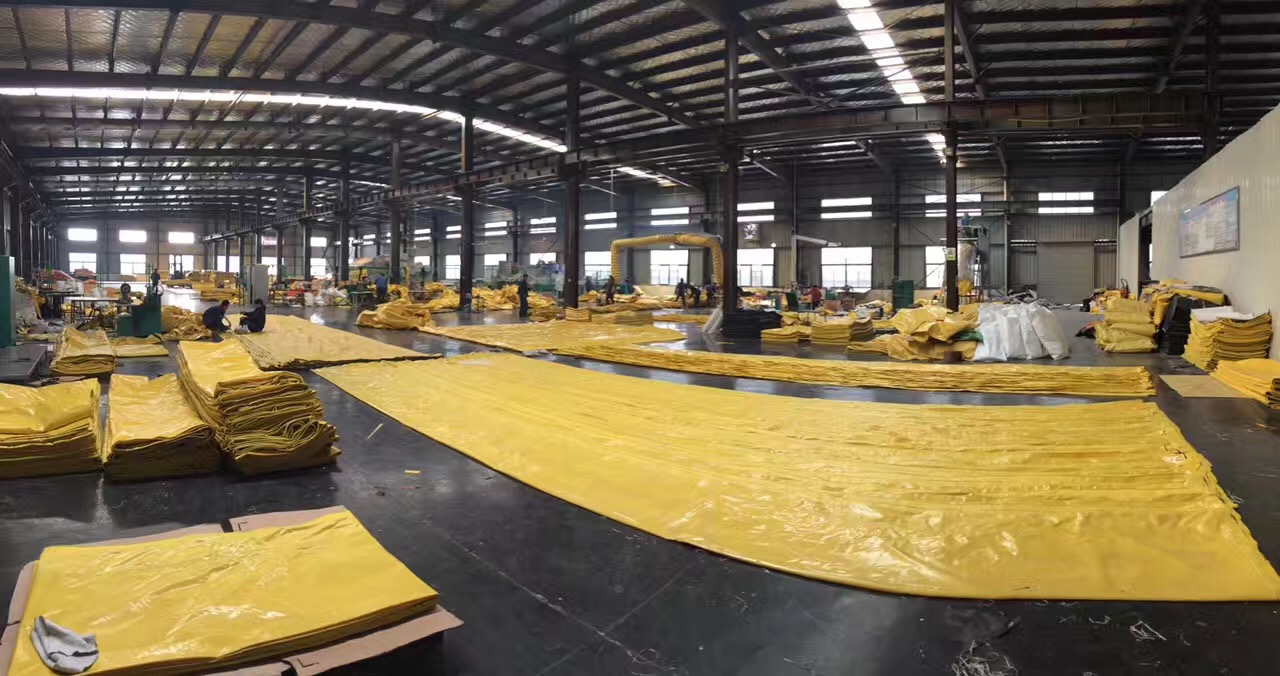
Next step: Review the SULONG ventilation duct catalog for product ranges, materials, and certification details. For a sample, quotation, or project-specific recommendation, contact Autumn Cui at autumn@js-sulong.com, tel +86-18251952515, or WhatsApp +86 182 5195 2515. Website: www.js-sulong.com.
Have Questions or Need More Details?
Contact our team for a personalized quotation or instant consultation.
Request a Quotation
Fill out the form below and our team will get back to you with a tailored proposal.
WhatsApp Direct Chat
Prefer to chat in real-time? Message us on WhatsApp for instant assistance & quick answers.
- Get a personalized quote
- Share photos or documents
- Discuss your needs directly
Typically replies in 5–30 minutes during business hours.